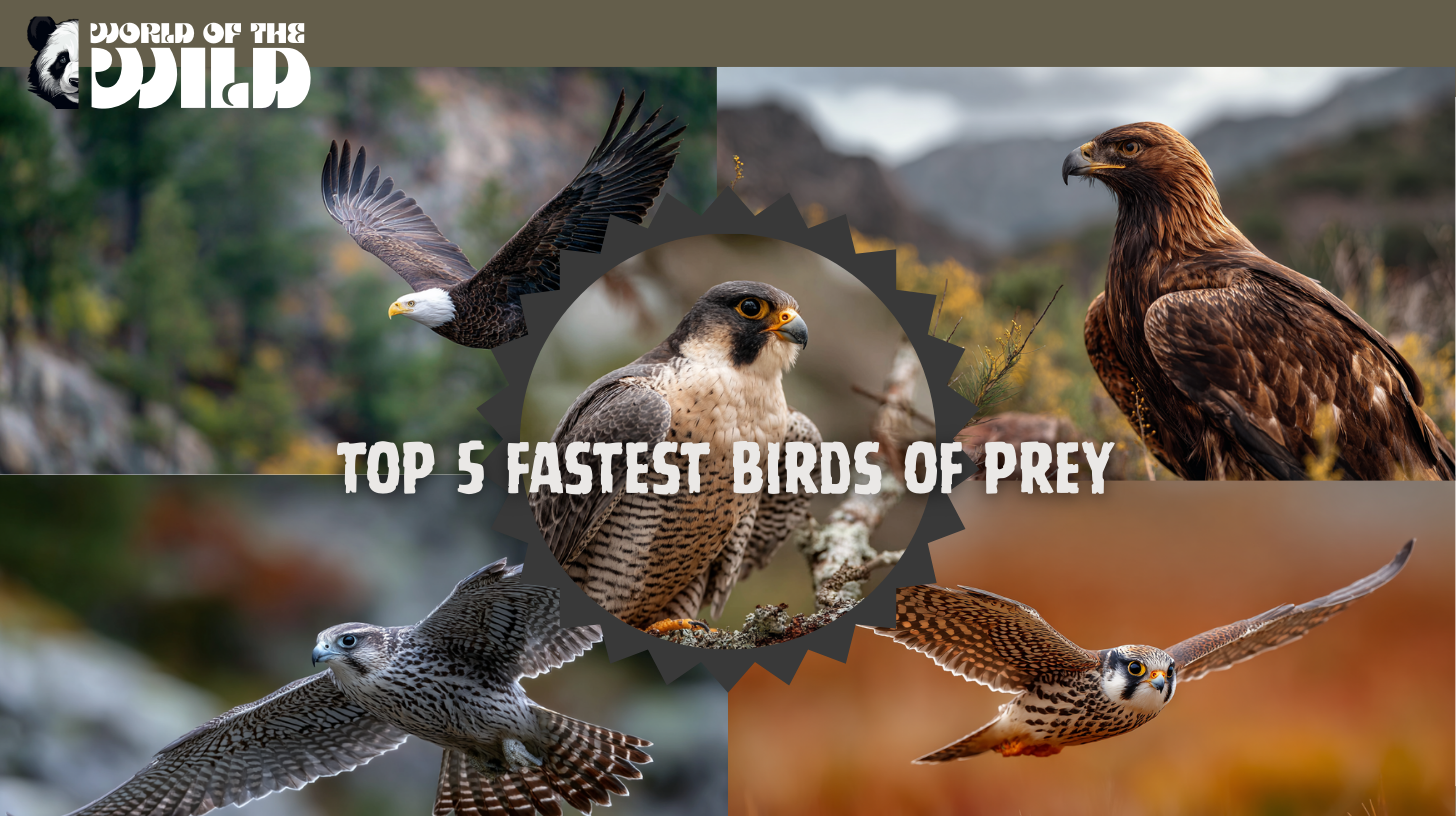

When it comes to aerial supremacy, few creatures command the skies like the fastest birds of prey. These magnificent raptors have evolved into nature’s most efficient aerial hunters, combining breathtaking speed with deadly precision. From power-diving falcons that shatter speed records to eagles that dominate mountainous terrain, these birds represent millions of years of evolutionary perfection. Whether soaring on thermal currents or executing lightning-fast strikes, these five species demonstrate why birds of prey reign as the undisputed masters of speed in the animal kingdom. Join us as we explore the extraordinary adaptations, hunting strategies, and remarkable facts about nature’s fastest feathered predators.
5. Bald Eagle – The Patriotic Powerhouse
Scientific Name: Haliaeetus leucocephalus
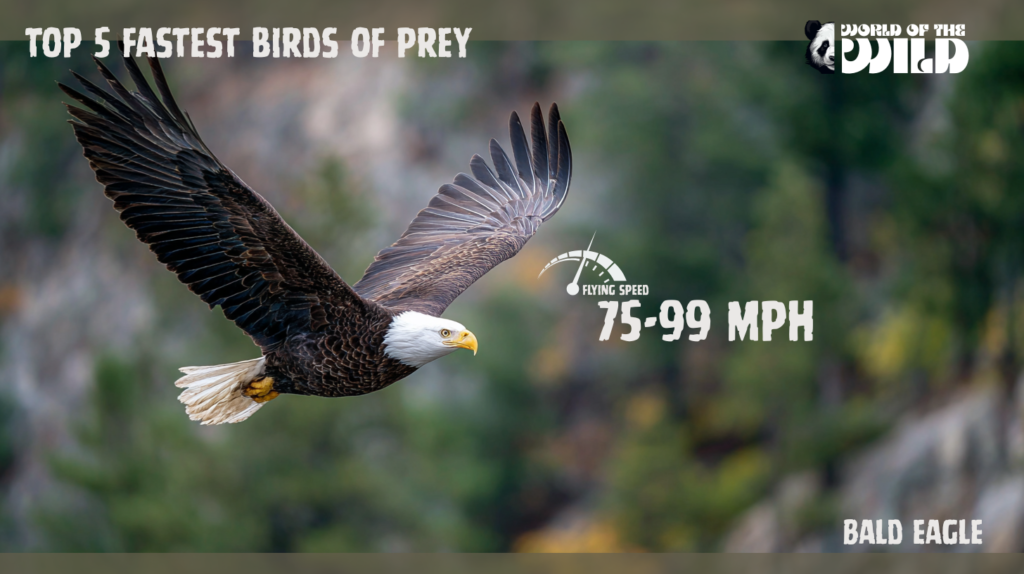
The iconic Bald Eagle, America’s national symbol, isn’t just a pretty face on the dollar bill. These impressive raptors can reach speeds of 75-99 mph (120-160 km/h) during pursuit flight and when diving toward prey.
Adult Bald Eagles are unmistakable with their brilliant white heads and tails contrasting against dark brown bodies, standing 28-38 inches tall with wingspans reaching an impressive 6-7.5 feet. Despite their name, these eagles aren’t bald – their white head feathers simply give that appearance.
Inhabiting regions near large bodies of water throughout North America, from Alaska to Florida, Bald Eagles are primarily piscivorous, feeding mainly on fish which they snatch from water surfaces with their powerful talons. They’ll also hunt waterfowl, small mammals, and aren’t above stealing meals from other birds.
These opportunistic hunters possess vision 4-5 times sharper than humans, allowing them to spot fish from miles away. After facing near-extinction due to DDT pesticide use, Bald Eagles have made a remarkable comeback, with their conservation status upgraded from Endangered to Least Concern.
Surprising Fact: Bald Eagles don’t develop their distinctive white head and tail until they’re 4-5 years old – juveniles are completely dark brown!
4. Eurasian Hobby – The Dragonfly Destroyer
Scientific Name: Falco subbuteo
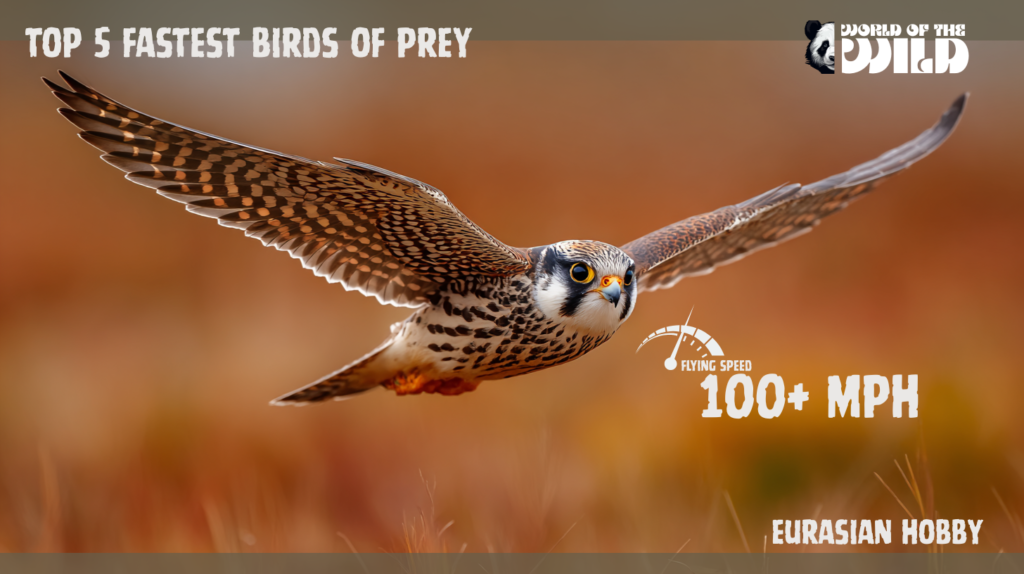
Don’t let its small size fool you – the Eurasian Hobby is a speed demon capable of reaching 100+ mph (160+ km/h) in pursuit of aerial prey. This sleek falcon specializes in hunting the fastest insects and small birds mid-flight.
Measuring just 12-14 inches long with a 30-inch wingspan, the Eurasian Hobby resembles a miniature Peregrine Falcon with slate-gray upperparts, heavily streaked underparts, and distinctive rusty-red thighs and undertail coverts. Their swept-back, sickle-shaped wings enable exceptional aerial agility.
Breeding across Europe and Asia before migrating to Africa for winter, these hobbies frequent open woodlands, farmlands, and wetlands. Their diet consists primarily of large insects like dragonflies, beetles, and moths, but they’re skilled enough to catch swifts and swallows – some of the fastest flying birds.
What makes the Eurasian Hobby truly remarkable is its ability to hunt and eat on the wing. These aerial acrobats can catch a dragonfly, transfer it from talons to beak, consume it mid-flight, and continue hunting without missing a beat.
Surprising Fact: Eurasian Hobbies sometimes hunt in the evening twilight, catching bats using their exceptional maneuverability!
3. Gyrfalcon – The Arctic Assassin
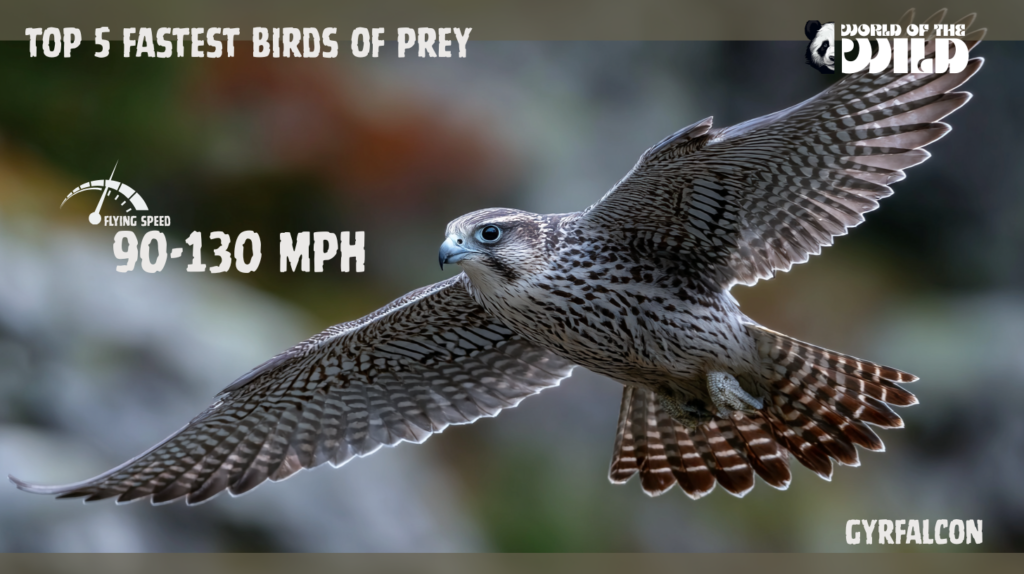
Scientific Name: Falco rusticolus
The Gyrfalcon, the world’s largest falcon species, combines impressive size with remarkable speed, reaching 90-130 mph (145-209 km/h) in horizontal pursuit flight – faster than most falcons fly when not diving.
These Arctic hunters display stunning color variation, ranging from almost pure white to dark gray-brown morphs. Adults measure 20-25 inches long with wingspans up to 63 inches and can weigh up to 4.5 pounds – twice the size of Peregrine Falcons. Their broader wings and longer tails provide exceptional maneuverability in their harsh Arctic environment.
Gyrfalcons inhabit the Arctic and subarctic regions of North America, Europe, and Asia, thriving in tundra, coastal cliffs, and mountainous terrain where few other raptors venture. They’re specialized hunters of ptarmigan and waterfowl but will take Arctic hares, lemmings, and other ground squirrels.
Unlike other falcons that rely heavily on diving attacks, Gyrfalcons often pursue prey in direct, powerful horizontal flight, using raw speed and stamina to run down their quarry. They’re built for endurance hunting in extreme cold, with denser plumage than any other falcon.
Surprising Fact: In medieval falconry, Gyrfalcons were reserved exclusively for kings and considered more valuable than their weight in gold!
2. Golden Eagle – The Mountain Monarch
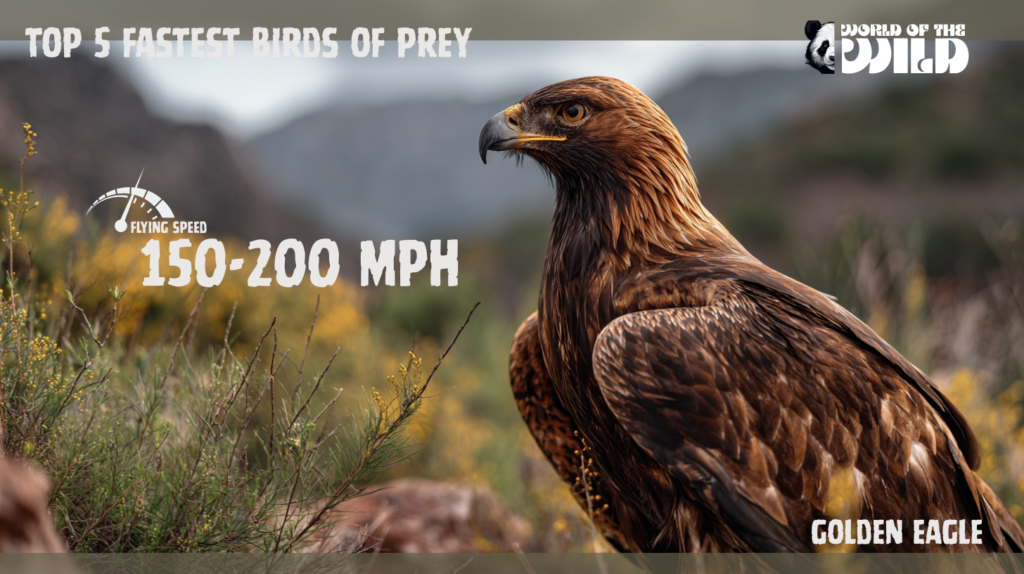
Scientific Name: Aquila chrysaetos
The Golden Eagle is a study in power and grace, capable of diving at speeds exceeding 150-200 mph (241-322 km/h) when stooping on prey. These magnificent raptors rank among the largest and most formidable birds of prey in North America.
Golden Eagles are truly golden, with lustrous bronze-gold feathers on their heads and necks contrasting with dark brown plumage. With wingspans reaching 7.5 feet and females weighing up to 15 pounds, they’re built for both power and precision. Their feathered legs, unlike Bald Eagles’ bare legs, distinguish them immediately.
These adaptable hunters occupy diverse habitats across the Northern Hemisphere, from Arctic tundra to desert mountains and grasslands. Golden Eagles are versatile predators, hunting rabbits, hares, ground squirrels, marmots, and even full-grown foxes and young deer. They’ve been observed hunting in pairs, with one bird flushing prey while its partner attacks.
Their hunting strategy combines patient soaring with devastating high-speed attacks. Golden Eagles can spot a rabbit from over two miles away and will fly low over terrain, using landscape features to surprise prey.
Surprising Fact: Golden Eagles have been recorded killing and carrying off animals weighing up to 15 pounds – their own body weight!
1. Peregrine Falcon – The Undisputed Speed Champion
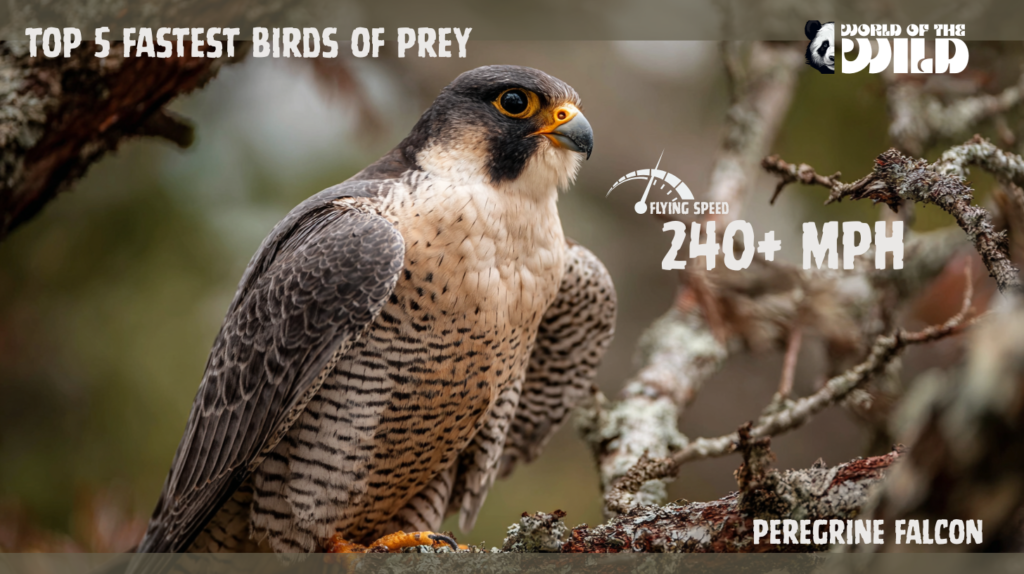
Scientific Name: Falco peregrinus
Claiming the crown as the fastest animal on Earth, the Peregrine Falcon reaches mind-boggling speeds of over 240 mph (386 km/h) during its characteristic hunting stoop (high-speed dive). No other creature, on land, sea, or air, can match this velocity.
These medium-sized raptors measure 14-19 inches long with wingspans of 3.3-3.6 feet. Peregrines display blue-gray backs, barred white underparts, and distinctive black “moustache” markings on their faces. Their aerodynamic bullet-shaped bodies and stiff, pointed wings are perfectly engineered for speed.
Found on every continent except Antarctica, Peregrines have adapted to diverse environments from Arctic tundra to tropical rainforests, and increasingly, urban skyscrapers. These bird specialists feed almost exclusively on other birds, catching prey mid-flight with spectacular aerial pursuits and devastating stoops.
The Peregrine’s hunting technique is breathtaking: it climbs high above its target, then folds its wings and plummets downward, striking prey with clenched talons in a blow that can instantly kill. Special adaptations including a cone-shaped bone in their nostrils regulate air pressure during high-speed dives, while a third eyelid protects their eyes.
Surprising Fact: A diving Peregrine experiences G-forces that would cause most animals to black out – they’ve evolved special adaptations to their cardiovascular system to handle the stress!
Conclusion
These five remarkable birds of prey showcase nature’s incredible diversity in design and adaptation. From the Peregrine Falcon’s record-shattering dives to the Golden Eagle’s mountain mastery, each species has evolved unique strategies for aerial dominance. These magnificent raptors remind us why wildlife conservation matters – protecting these incredible hunters ensures future generations can witness their breathtaking displays of speed and skill.
Explore more fascinating wildlife content on World of the Wild and discover what makes our planet’s creatures extraordinary!