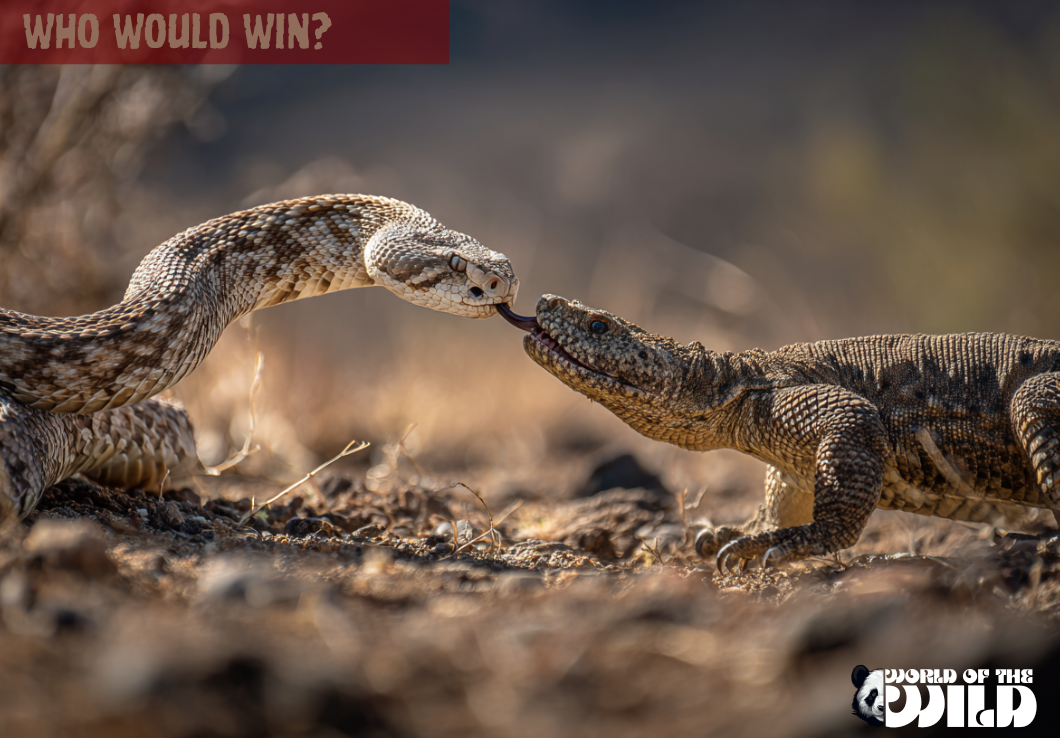

The Contenders
In the sun-scorched deserts of the American Southwest, two venomous titans reign supreme—but what happens when these toxic terrors cross paths?
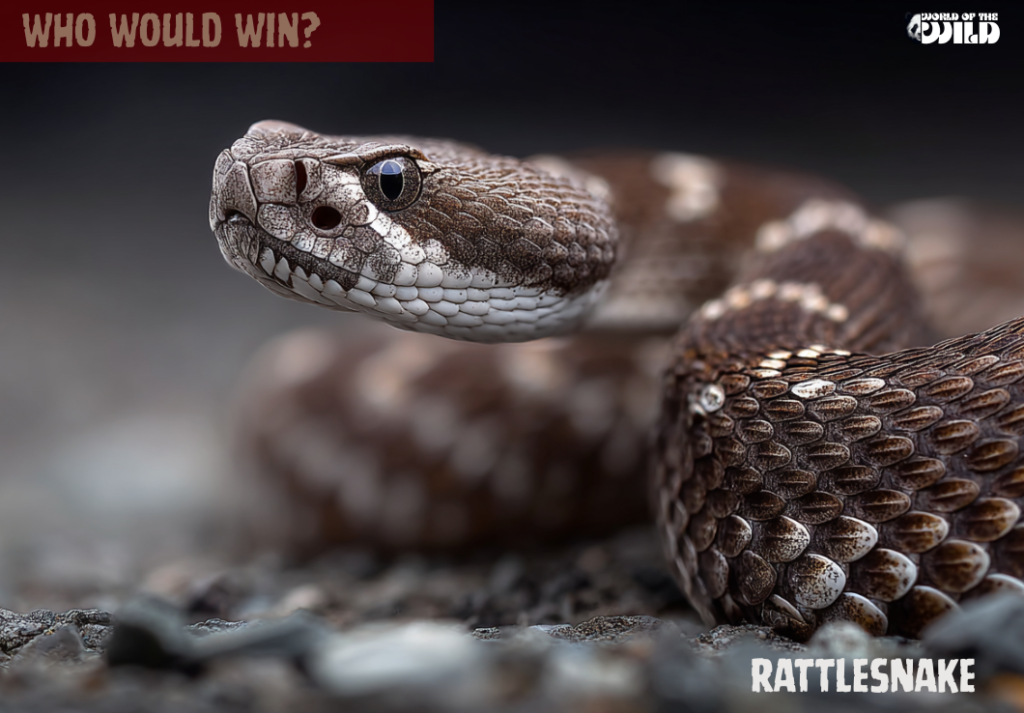
In the left corner, we have the Western Diamondback Rattlesnake, nature’s perfectly engineered striking machine. With lightning-fast reflexes, heat-seeking superpowers, and enough venom to drop a full-grown human, this serpent is the undisputed quick-draw champion of the desert.
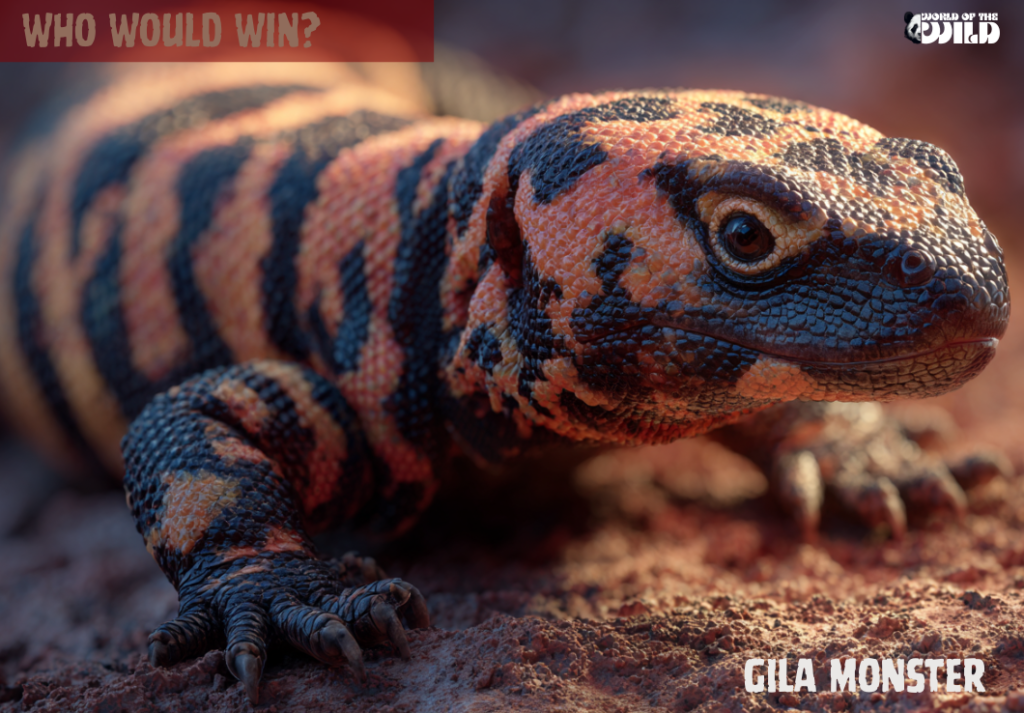
In the right corner, meet the Gila Monster, the armored tank of the lizard world. One of only two venomous lizards on the planet, this beaded bruiser packs a neurotoxic punch and a bite that locks on like a medieval torture device. Slow? Maybe. Deadly? Absolutely.
Tonight, we settle the ultimate question: When venom meets venom, who walks away?
Tale of the Tape
| Category | 🐍 Rattlesnake | 🦎 Gila Monster |
|---|---|---|
| Size/Weight | 3-7 feet long; 5-15 lbs (Western Diamondback) | 18-24 inches long; 3-5 lbs |
| Speed | Strike speed: 1/10th of a second; movement: slow | Movement: 1 mph max (extremely slow) |
| Bite Force/Weaponry | Hypodermic fangs; hemotoxic venom; strikes at 6+ feet distance | Powerful crushing jaws; neurotoxic venom; vice-grip bite |
| Special Abilities | Heat-sensing pits detect prey; rattle warning system; can strike from coiled position | Thick, bony scales act as armor; can hold bite for 10+ minutes; stores fat in tail |
Physical Advantages
The Rattlesnake’s Arsenal:
- Lightning Strike: The rattler can launch a strike faster than you can blink—delivering venom through needle-sharp, hollow fangs that fold back when not in use
- Range Superiority: Can strike up to two-thirds of its body length, meaning a 6-foot rattler has a 4-foot danger zone
- Thermal Vision: Heat-sensing pits between the eyes and nostrils allow it to “see” warm-blooded prey in complete darkness
- Hemotoxic Venom: Destroys blood cells, causes massive tissue damage, and can lead to hemorrhaging—designed to immobilize prey quickly
The Gila Monster’s Advantages:
- Living Armor: Those beautiful beaded scales aren’t just for show—they’re osteoderms (bony deposits) that create a nearly impenetrable shield against bites and strikes
- The Vice Grip: Unlike snakes that strike and release, the Gila monster bites down and holds on, chewing venom into the wound through grooved teeth
- Neurotoxic Cocktail: Venom attacks the nervous system, causing excruciating pain, rapid blood pressure drops, and respiratory problems
- Low Profile Target: Its stout, ground-hugging build makes it a difficult target, and vital organs are well-protected under thick scales
The Battle Scenario
The afternoon sun beats down on a rocky outcrop as our Gila monster emerges from beneath a creosote bush, tongue flicking, searching for bird eggs. Suddenly, the distinctive buzz of a coiled Western Diamondback fills the air. The rattlesnake, feeling threatened by the approaching lizard, raises its head in the classic S-curve strike position, rattle vibrating its warning. The Gila monster, surprisingly, doesn’t retreat—it’s been threatened by plenty of desert predators before, and its armor has never failed.
The rattlesnake strikes first—SNAP—its fangs flash forward at blistering speed, slamming into the Gila monster’s shoulder. But here’s the problem: those fangs, designed to penetrate soft-skinned mammals, skitter across the osteoderms like knives on a stone. The snake recoils, repositioning. It strikes again, this time catching the Gila monster on the softer tissue near the throat. Venom pumps into the wound. The Gila monster hisses but continues its slow, deliberate advance. Rattlesnake venom is devastating… to mammals. But reptiles? They’re far more resistant.
Now the Gila monster is within range, and those powerful jaws snap shut on the rattlesnake’s midsection. The snake thrashes violently, coiling around the lizard, striking repeatedly at the armored head—but it’s like punching a brick wall. The Gila monster’s venom begins to flow as it grinds its grooved teeth back and forth. Unlike the quick-acting mammal hunter, the Gila monster is built for a war of attrition. It holds on. And holds on. The rattlesnake’s strikes become weaker as the neurotoxin spreads. Ten minutes later, the Gila monster releases its grip and slowly ambles away, leaving a battered and dying rattlesnake in the dust.
The Verdict: Gila Monster Wins
Winner: Gila Monster (7/10 encounters)
Here’s the cold, scientific truth: this matchup is a classic case of armor versus speed, and armor wins more often than you’d think.
The rattlesnake’s venom and lightning strike are phenomenally effective against its natural prey—warm-blooded mammals with thin skin and fast metabolisms. But the Gila monster presents three insurmountable problems:
- The Armor Problem: Those thick osteoderms deflect most strikes to non-vital areas. Even when fangs penetrate, they rarely reach deep enough to deliver a full venom load.
- Venom Resistance: Reptiles have significantly slower metabolisms than mammals, and many desert reptiles have evolved some resistance to other reptiles’ venom. The rattlesnake’s hemotoxic venom, while painful, won’t incapacitate the Gila monster quickly—if at all.
- The Persistence Factor: Once the Gila monster lands a bite on the snake’s vulnerable, scale-covered body, it’s game over. That crushing jaw pressure combined with neurotoxic venom chewed into the wound is something the rattlesnake has no evolutionary answer for.
The rattlesnake’s only path to victory is landing multiple perfect strikes to the Gila monster’s soft underbelly or mouth—a difficult target on a low-riding, armored opponent. Meanwhile, the Gila monster only needs to land one solid bite and hold on.
Mother Nature’s Lesson: In the desert, sometimes slow and steady doesn’t just win the race—it wins the death match. The Gila monster’s ancient armor and tenacious bite style prove that millions of years of evolution created a reptile that even the desert’s deadliest viper can’t crack.