
37
CLASSIFICATION
- Kingdom: Animalia
- Phylum: Chordata
- Class: Mammalia
- Order: Carnivora
- Family: Mustelidae
- Genus: Gulo
- Species: G. gulo
- Common Name: Wolverine, Glutton, Carcajou
PHYSICAL SPECIFICATIONS
Dimensions
- Total Length: 65-107 cm (26-42 in)
- Tail Length: 17-26 cm (6.7-10.2 in)
- Shoulder Height: 30-45 cm (12-18 in)
- Weight (Male): 12-18 kg (26-40 lbs); maximum recorded: 32 kg (71 lbs)
- Weight (Female): 8-12 kg (18-26 lbs)
Body Configuration
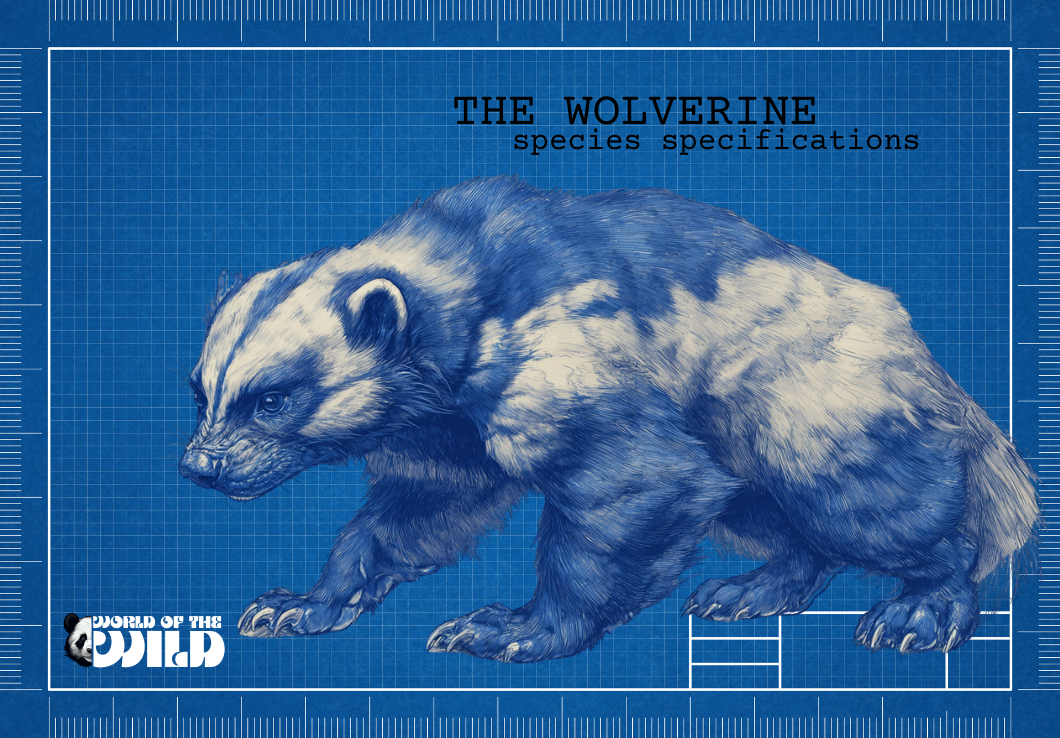
- Build Type: Stocky, muscular, low-slung
- Body Shape: Bear-like appearance despite mustelid classification
- Leg Configuration: Short, powerful legs with wide paws
- Paw Dimensions: Disproportionately large (12-13 cm wide)
- Paw Design: Semi-retractable claws; snowshoe-like structure for weight distribution
Exterior Features
- Coat Type: Dense, hydrophobic fur (dual-layer)
- Primary Coloration: Dark brown to black
- Secondary Markings: Pale brown/blonde lateral stripe from shoulder to rump
- Facial Markings: Light facial mask
- Coat Density: 200-300 hairs per cm²
- Guard Hair Length: Up to 10 cm
Dental Specifications
- Dental Formula: I 3/3, C 1/1, P 4/4, M 1/2 = 38 teeth
- Bite Force: Estimated 224 N (exceptional for body size)
- Jaw Configuration: Rotated upper molars 90° for enhanced shearing
- Special Adaptations: Capable of crushing frozen meat and bone
PERFORMANCE CHARACTERISTICS
Locomotion
- Top Speed: 48 km/h (30 mph) in short bursts
- Sustained Travel Speed: 8-15 km/h (5-9 mph)
- Daily Range: Up to 24 km (15 miles) typical; 64+ km (40 miles) possible
- Climbing Capability: Excellent; can scale near-vertical surfaces
- Swimming Capability: Competent swimmer
- Snow Performance: Superior; minimal sinking due to paw design
Strength & Combat
- Strength-to-Weight Ratio: Exceptional among mammals
- Prey Takedown Capacity: Animals 5-10x own body weight
- Defensive Capability: Will confront bears and wolf packs
- Territorial Defense Range: Up to 620 km² (240 sq mi) for males
Sensory Systems
- Olfactory Range: Can detect carrion under 6+ meters (20 ft) of snow
- Vision: Moderate; adapted for low light
- Hearing: Acute
- Tactile: Highly developed via vibrissae (whiskers)
ENVIRONMENTAL SPECIFICATIONS
Operating Temperature Range
- Optimal Range: -40°C to 15°C (-40°F to 59°F)
- Extreme Tolerance: -50°C to 25°C (-58°F to 77°F)
- Thermal Regulation: Excellent; thick fur and low surface-area-to-volume ratio
Habitat Requirements
- Primary Biomes: Boreal forests, taiga, tundra, alpine regions
- Elevation Range: Sea level to 4,500 m (14,800 ft)
- Territory Size: Males: 240-620 km² (93-240 sq mi)
- Territory Size: Females: 50-350 km² (19-135 sq mi)
- Geographic Distribution: Circumpolar; northern latitudes of North America, Europe, Asia
FUEL & MAINTENANCE
Dietary Specifications
- Classification: Opportunistic carnivore/scavenger
- Primary Fuel Sources: Carrion (40-60% of diet)
- Secondary Sources: Small to medium mammals (rodents, hares, ground squirrels)
- Tertiary Sources: Large ungulates (caribou, deer, moose – typically scavenged or taken when vulnerable)
- Supplementary Intake: Birds, eggs, berries, roots, insect larvae
- Daily Consumption: 0.5-1.5 kg (1-3 lbs) average
- Fasting Tolerance: Can survive weeks without food
- Food Storage: Caches surplus kills in snow or underground
Water Requirements
- Source: Obtained primarily from food; snow consumption
- Daily Intake: Variable; minimal drinking required
OPERATIONAL CHARACTERISTICS
Activity Patterns
- Daily Cycle: Primarily crepuscular and nocturnal
- Seasonal Activity: Active year-round; no hibernation
- Rest Periods: Typically 4-6 hours of sleep in 24-hour cycle
- Denning: Uses snow dens, rock crevices, hollow logs
Behavioral Traits
- Social Structure: Solitary except during breeding
- Territoriality: Highly territorial; scent-marking via anal glands
- Aggression Index: Very high; fierce and tenacious
- Intelligence: High problem-solving capability
- Vocalization: Grunts, growls, screams; generally quiet
REPRODUCTION SPECIFICATIONS
Breeding Parameters
- Sexual Maturity: 2-3 years
- Breeding Season: May-August
- Gestation Period: 30-50 days (plus delayed implantation: 7-8 months total)
- Litter Size: 1-5 kits (typically 2-3)
- Birth Weight: 85-105 g (3-3.7 oz)
- Weaning Age: 9-10 weeks
- Independence Age: 5-7 months
- Breeding Interval: Every 2 years typical
Lifespan
- Wild Lifespan: 7-12 years typical; maximum 13 years
- Captive Lifespan: Up to 17 years
- Mortality Factors: Starvation, predation (wolves, bears), human hunting/trapping
CONSERVATION STATUS
- IUCN Status: Least Concern (global)
- Population Trend: Stable to declining (region-dependent)
- Estimated Global Population: <300,000 individuals
- Primary Threats: Habitat fragmentation, climate change, trapping, reduced prey availability
- Protected Status: Varies by jurisdiction; protected in some areas, managed harvest in others
NOTABLE FEATURES & ADAPTATIONS
- Frost-resistant fur: Used historically by Arctic peoples for parka ruffs (frost doesn’t adhere)
- Anal scent glands: Produce strong musk; nicknamed “skunk bear”
- Delayed implantation: Embryo development pauses for months
- Cache behavior: Sophisticated food storage in permafrost
- Scavenging efficiency: Jaw and teeth adapted to consume entire carcasses including bone
- Low reproductive rate: Compensated by high adult survival and longevity
Model Designation: Gulo gulo
Manufacturer: Evolution (approx. 0.5 million years of refinement)
Production Status: Ongoing (wild populations)
Warranty: No warranty expressed or implied