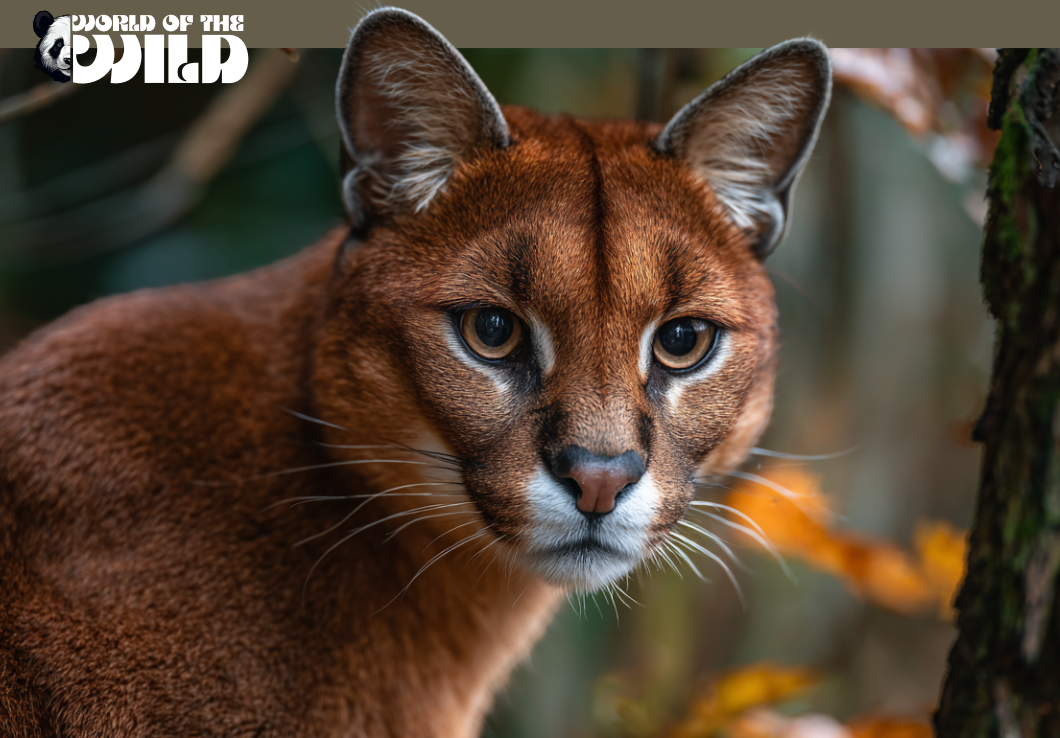

Deep within the emerald tangle of Central Africa’s rainforests, a ghost moves silently through the undergrowth. It is not a leopard, though it shares that cat’s muscular grace. It is not a serval, though it roams some of the same territories. It is the African Golden Cat — one of the least-studied, most elusive wild cats on Earth — and for centuries, it has slipped through the fingers of scientists and storytellers alike.
While lions dominate savanna folklore and cheetahs race across wildlife documentaries, the African Golden Cat lives an almost entirely secret life. Forest-dwelling, fiercely solitary, and astonishingly adaptable, this medium-sized predator occupies one of the planet’s most biodiverse ecosystems and yet remains largely invisible to the outside world. Local communities have long associated it with power and good fortune — hunters in some West African cultures wear its fur as a talisman before pursuing leopards. That mystique is well-earned. Even today, much of what scientists know about this cat has been pieced together from camera traps, scattered sightings, and a handful of captive individuals. What has emerged is the portrait of a truly extraordinary animal — one that deserves far more attention than it receives.
Facts
- Masters of disguise: The African Golden Cat is one of the most color-variable wild cats in the world. A single population can contain individuals ranging from tawny gold to deep chestnut red to slate grey — a range of variation that baffled early naturalists into thinking they were looking at multiple species.
- Forest elephant companions: The cat appears to be closely linked to forest elephant activity. Elephants create clearings and disturb vegetation, which in turn increases small mammal populations — the golden cat’s primary prey. Some researchers believe the cat’s survival may be indirectly tied to elephant conservation.
- Camera-shy pioneer: The first confirmed photographs of African Golden Cats in the wild weren’t obtained until the early 2000s, thanks to remote camera traps. Before that, wild behavior was almost entirely undocumented.
- Arboreal when needed: While primarily a ground hunter, the African Golden Cat is a capable climber and has been photographed resting in trees — behavior that helps it avoid larger predators and ambush prey from above.
- Named before it was understood: The species was formally described by European scientists in 1827, but due to its enormous color variation and reclusive nature, researchers continued debating whether it was one species or several for well over a century.
- Surprisingly vocal: Unlike many secretive cats, the African Golden Cat has been recorded using a diverse range of vocalizations including purring, meowing, growling, and a distinctive gurgling call — hinting at a richer social communication system than previously assumed.
- Local names reveal cultural depth: In various Central and West African languages, the cat’s name translates roughly to “brother of the leopard” — a nod both to its power and its mysterious, parallel existence alongside that more famous predator.
Species
Classification:
| Rank | Classification |
|---|---|
| Kingdom | Animalia |
| Phylum | Chordata |
| Class | Mammalia |
| Order | Carnivora |
| Family | Felidae |
| Genus | Caracal |
| Species | Caracal aurata |
The African Golden Cat was long placed in its own genus, Profelis, but genetic analysis has since confirmed its placement within the genus Caracal, making it a close relative of both the caracal (Caracal caracal) and the serval (Leptailurus serval). Together, these three species form an African lineage of medium-sized cats that diverged from a common ancestor several million years ago.
Subspecies:
Two subspecies are currently recognized:
- Caracal aurata aurata — Found across West and Central Africa, including regions of Senegal, Guinea, Côte d’Ivoire, and into the Congo Basin. This subspecies tends to occupy lowland rainforest habitat.
- Caracal aurata celidogaster — Found primarily in East and Central Africa, including Uganda, Kenya’s western forests, and parts of Tanzania. This subspecies may exhibit slightly different coat patterning and is associated with montane and transitional forest environments.
The distinction between these subspecies is based on geographic range and subtle morphological differences, though genetic studies are still refining our understanding of their boundaries.
Appearance
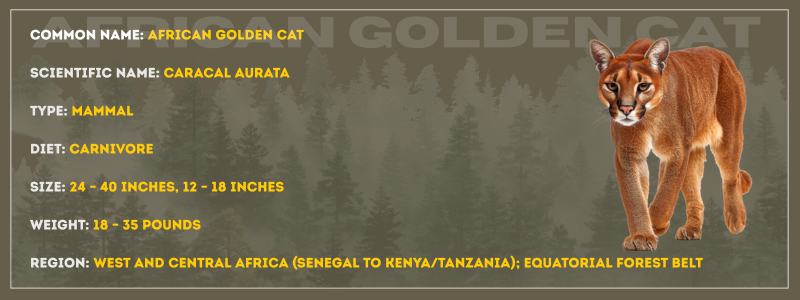
The African Golden Cat is a compact, powerfully built feline, intermediate in size between a domestic cat and a leopard. Adults typically measure between 24 and 40 inches in body length, with a tail adding an additional 12 to 18 inches. They stand roughly 18 to 20 inches at the shoulder and weigh between 18 and 35 pounds, with males being considerably larger than females.
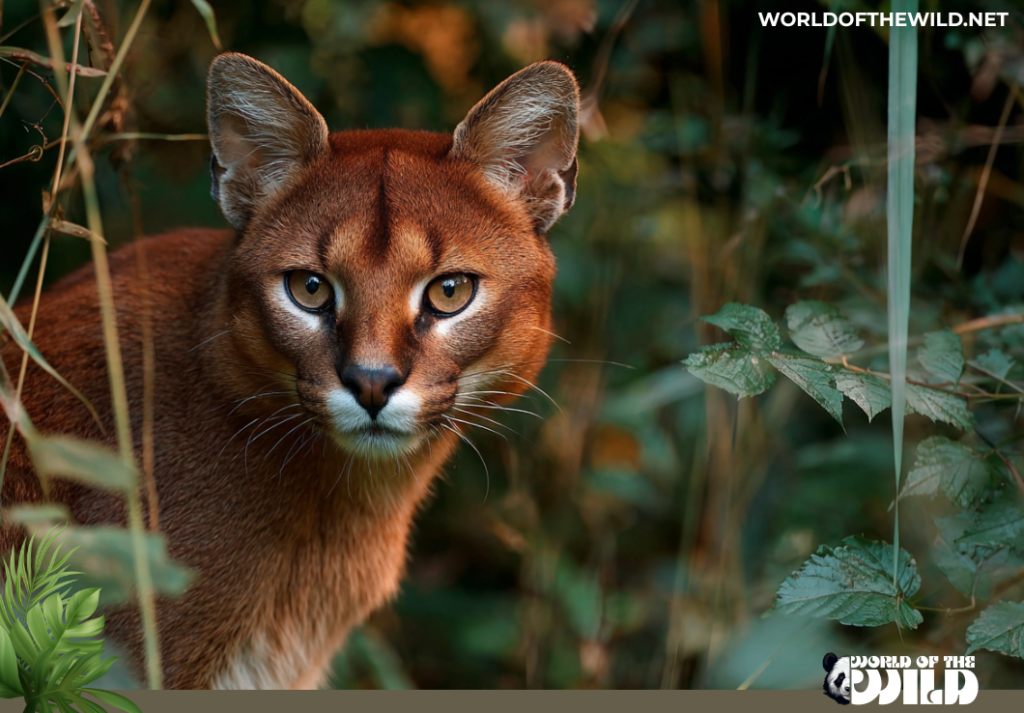
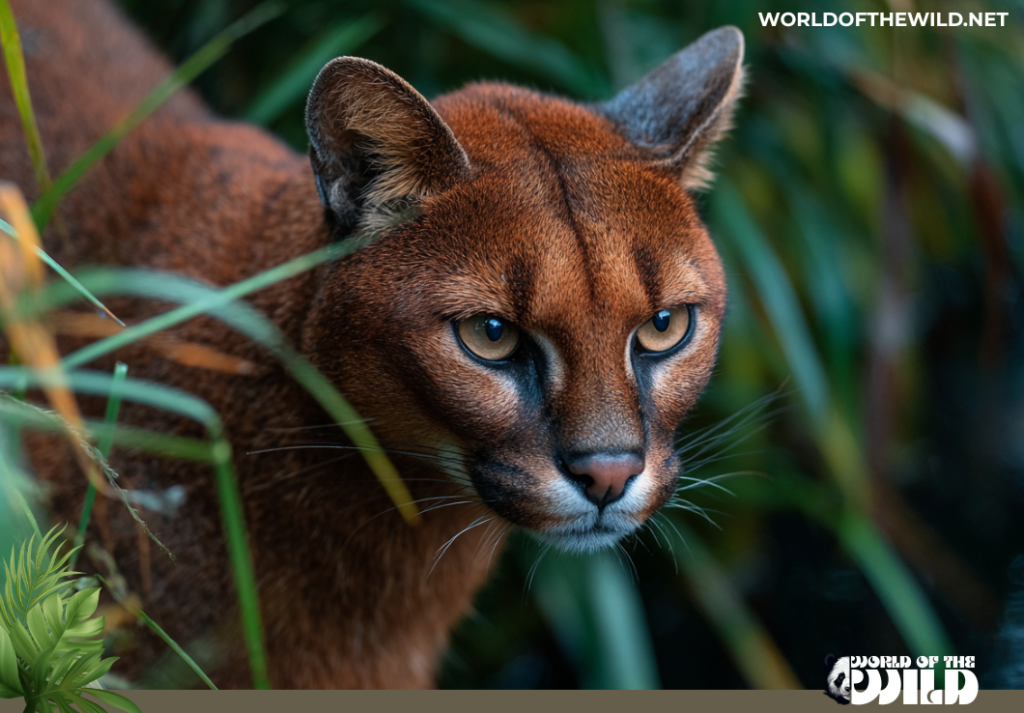
What immediately sets this cat apart is its extraordinary coat variation. No other wild cat species spans such a wide palette: individuals can be golden-orange, deep russet, dark brown, or smoky grey, and this variation occurs not just between regions but within the same population — sometimes within the same litter. Some individuals are heavily spotted across the body; others show faint, ghostly markings; and still others appear almost entirely unmarked. The underparts are typically paler, often white or cream, and the face usually bears distinctive markings: dark lines running from the inner corners of the eyes, white patches around the muzzle, and a pale line above each eye.
The ears are small and rounded — unlike the tufted ears of its caracal cousin — and the paws are large relative to body size, an adaptation for moving through dense, uneven forest terrain. The tail is relatively short compared to many forest cats, with a dark stripe running along the upper surface. The overall build is stocky and muscular, conveying a sense of dense, coiled power.
Behavior
The African Golden Cat is predominantly solitary and secretive, spending the majority of its time concealed within dense forest undergrowth. Activity patterns appear to be both nocturnal and crepuscular, though camera trap data suggests it is sometimes active during daylight hours — particularly in areas with lower human disturbance or in cooler montane forests.
Like most felids, individuals maintain home ranges that are marked with scent, urine spray, and scratch marks on trees and logs. Males hold larger territories that overlap with those of multiple females, while females maintain smaller, more exclusive ranges tied closely to prey availability. Direct confrontations between adults are likely rare, as chemical and vocal communication allows individuals to assess one another’s presence and avoid unnecessary conflict.
The cat hunts primarily by stalking and ambush, using the dense forest understory to creep within striking distance of prey before launching a rapid attack. Its large paws provide excellent grip on uneven forest floors, and its muscular body enables it to overpower animals that are sometimes surprisingly large relative to its own size. Documented prey items suggest it is a highly opportunistic hunter, willing to tackle a wide range of prey depending on availability.
Intelligence in wild felids is difficult to measure directly, but the African Golden Cat’s ability to thrive across such a diverse range of habitat types — from sea-level rainforest to montane forest above 10,000 feet — suggests strong behavioral flexibility and problem-solving capacity. Captive individuals have been noted to be curious and investigative, though also intensely wary.
Evolution
The family Felidae originated in Asia approximately 10 to 15 million years ago and subsequently dispersed across the globe through multiple waves of migration. The lineage that would eventually produce the African Golden Cat, the caracal, and the serval represents one of Africa’s earliest felid colonizations, with the group likely establishing itself on the continent sometime during the Miocene epoch, between 8 and 10 million years ago.
Molecular clock studies suggest that the African Golden Cat and the caracal diverged from their common ancestor approximately 2.9 to 3.4 million years ago — a period coinciding with significant climatic shifts in Africa, including the expansion and contraction of tropical forest belts. It is plausible that these habitat changes drove the divergence between the forest-adapted golden cat and the more open-habitat caracal, each lineage specializing in a different ecological niche.
No direct fossil record has yet been attributed to the African Golden Cat’s immediate ancestors, making its evolutionary history difficult to trace in fine detail. However, comparative genomics has helped establish its phylogenetic relationships firmly within the Caracal lineage, separating it from the earlier hypothesis that it was more closely related to the ocelot lineage of the Americas. The modern African Golden Cat, as we know it, represents a successful forest specialist that has persisted across millions of years of African environmental change.
Habitat
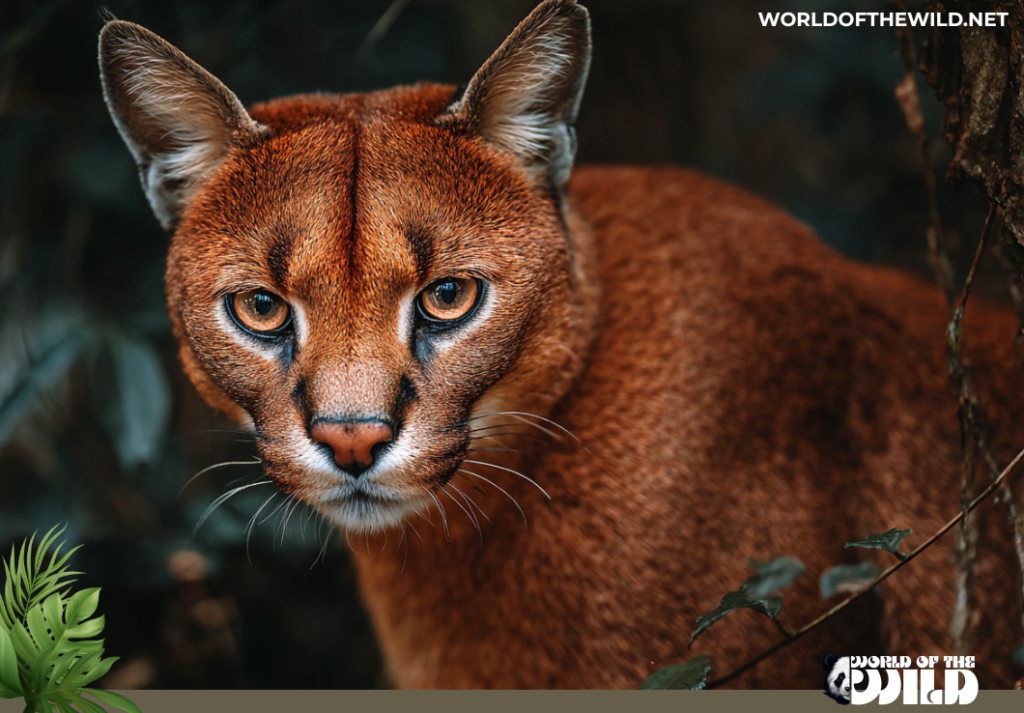
The African Golden Cat occupies a geographic range that follows the contours of the African equatorial forest belt, stretching from Senegal and Guinea in the west, eastward through the Congo Basin, and into Uganda, Rwanda, Kenya, and northern Tanzania in the east. It is closely associated with moist, closed-canopy forest and is rarely recorded in open savanna or arid environments.
Within this range, the cat demonstrates surprising altitudinal flexibility. It has been documented from sea-level coastal forests all the way up to montane forests at elevations exceeding 10,000 feet — including bamboo forest zones and Afro-alpine heath habitats on the slopes of mountains like the Rwenzoris and the Aberdares. This altitudinal range is unusual among African felids and suggests strong physiological and behavioral adaptability.
The specific features of preferred habitat include dense understory vegetation for concealment, abundant fallen logs and rocky outcrops for denning and resting, access to water, and healthy populations of small to medium-sized mammalian prey. Areas disturbed by logging or agricultural encroachment tend to have lower golden cat densities, though the species has occasionally been recorded in degraded secondary forest — indicating some tolerance for altered landscapes if prey remains available. Protected areas such as Gabon’s Lopé National Park, Uganda’s Bwindi Impenetrable Forest, and Cameroon’s Dja Faunal Reserve are among the strongholds where the species is regularly detected.
Diet
The African Golden Cat is a strict carnivore and a generalist predator within its forest environment. Its diet varies considerably based on geographic location and prey availability, but studies using camera traps, scat analysis, and direct observation have revealed a broad prey base.
Small to medium-sized mammals form the backbone of its diet. Rodents — including forest rats, squirrels, and giant pouched rats — are frequently taken, as are hyraxes, small duikers (miniature forest antelopes), and small monkeys. The cat’s ability to take duikers, which can weigh up to 30 pounds, is particularly impressive given its own body weight, and speaks to the strength and ferocity of its attacks. Birds are also taken opportunistically, and there is evidence of predation on livestock in areas adjacent to forest settlements — a behavior that unfortunately brings it into conflict with local communities.
Hunting technique relies heavily on stealth. The cat uses the dense forest understory to approach prey undetected, moving slowly and low to the ground before launching a rapid, decisive strike. The killing bite is typically delivered to the nape or throat of the prey animal. There is no evidence that the African Golden Cat caches its kills in trees the way leopards do, though it may drag carcasses short distances to cover before feeding.
Predators and Threats
Natural Predators
In its forest habitat, the African Golden Cat faces predation risk primarily from larger carnivores. Leopards are the most significant natural predator, sharing overlapping habitat across much of the golden cat’s range. Large pythons and crowned eagles may also occasionally take juveniles or smaller adults. The species’ secretive, nocturnal behavior is likely an evolutionary response to these predation pressures — staying hidden reduces encounter rates with larger predators.
Human-Caused Threats
The most serious threats facing the African Golden Cat today are all anthropogenic in nature:
- Habitat loss and fragmentation: The tropical forests of West and Central Africa are being cleared at alarming rates for commercial logging, agricultural expansion (particularly palm oil and cocoa), and small-scale subsistence farming. As forest cover shrinks and becomes fragmented into isolated patches, golden cat populations become increasingly isolated, reducing gene flow and long-term viability.
- Bushmeat hunting: The African Golden Cat is caught in snares set for other forest animals, particularly duikers and other ungulates. Bycatch in the commercial bushmeat trade is a poorly quantified but significant threat across the Congo Basin and West Africa.
- Targeted hunting: In some regions, the cat is deliberately hunted for its pelt, which is used in ceremonial contexts and traditional medicine. Demand is localized but persistent.
- Climate change: Shifts in rainfall patterns and temperatures are projected to alter the extent and composition of equatorial African forests, potentially reducing suitable habitat for a species so closely tied to closed-canopy forest environments.
Reproduction and Life Cycle
Relatively little is known about the African Golden Cat’s reproductive behavior in the wild, and most detailed information comes from observations of captive individuals. Breeding appears to occur year-round, without a strongly defined seasonal peak — a pattern common among tropical forest felids where prey availability remains relatively stable throughout the year.
Courtship involves the typical felid behaviors of scent marking, calling, and physical interaction. Gestation lasts approximately 75 days, shorter than that of larger cats but consistent with other medium-sized felids. Litters are small, typically consisting of one to two kittens, though litters of three have been recorded. Kittens are born in a secluded den — a hollow log, rocky crevice, or dense thicket — and are initially blind and helpless.
Maternal care is provided entirely by the female. Kittens begin to accompany their mother on hunts at approximately two to three months of age and are likely fully independent by six to nine months. Sexual maturity is reached at around eleven months in females, though males may take longer to establish independent territories. In captivity, individuals have lived for up to twelve to fifteen years, and wild lifespans are estimated at eight to twelve years, though definitive data is sparse. As with most wild felids, mortality is likely highest in the first year of life.
Population
The African Golden Cat is currently listed as Vulnerable on the IUCN Red List of Threatened Species — a classification that reflects ongoing population declines driven primarily by habitat loss and hunting. The species is not considered imminently at risk of extinction, but the trajectory of its population is downward, and the threats driving that decline show no sign of abating.
Precise global population estimates do not exist for the African Golden Cat, primarily because the species is so difficult to survey. Its secretive forest habitat, nocturnal habits, and low densities make standard wildlife counting methods ineffective. Camera trap studies in individual protected areas have produced local density estimates, but extrapolating these to range-wide totals carries enormous uncertainty. What is known is that the species has been extirpated from or has become exceedingly rare in many areas where it was previously recorded, particularly in heavily deforested parts of West Africa such as Nigeria and Ghana.
Protected areas — particularly in Gabon, Cameroon, the Democratic Republic of Congo, and Uganda — are believed to harbor the most significant remaining populations. The relative political stability and large forest cover of Gabon in particular may make it a critical refuge for the species. However, even protected areas face pressure from poaching and encroachment, and the long-term security of these populations cannot be taken for granted.
Conclusion
The African Golden Cat is a reminder of how much of the natural world remains beyond our full understanding. In an era when wildlife documentaries can bring lions and polar bears into our living rooms in stunning detail, this forest phantom continues to elude us — known more through camera trap glimpses and fragmented data than through sustained scientific observation. That mystery is part of its fascination. But it is also a warning.
We risk losing this animal before we have truly come to know it. The forests it depends on are disappearing at extraordinary speed. The bushmeat trade claims untold numbers in snares set for other species. Climate projections paint an uncertain future for the equatorial forest belt. And yet conservation investment in the African Golden Cat remains a fraction of what flows toward charismatic megafauna.
The most important thing we can do for this cat right now is protect its forests — support organizations working to reduce deforestation in Central and West Africa, advocate for stronger protections in key wildlife corridors, and push for better funding of camera trap research that can finally begin to close the enormous gaps in our knowledge. The African Golden Cat has kept its secrets for millions of years. It deserves the chance to keep them for millions more.
Quick Facts
| Catagories | Details |
|---|---|
| Scientific Name | Caracal aurata |
| Diet Type | Carnivore |
| Body Length | 24 – 40 inches |
| Tail Length | 12 – 18 inches |
| Shoulder Height | ~18 – 20 inches |
| Weight | 18 – 35 pounds |
| Region Found | West and Central Africa (Senegal to Kenya/Tanzania); equatorial forest belt |