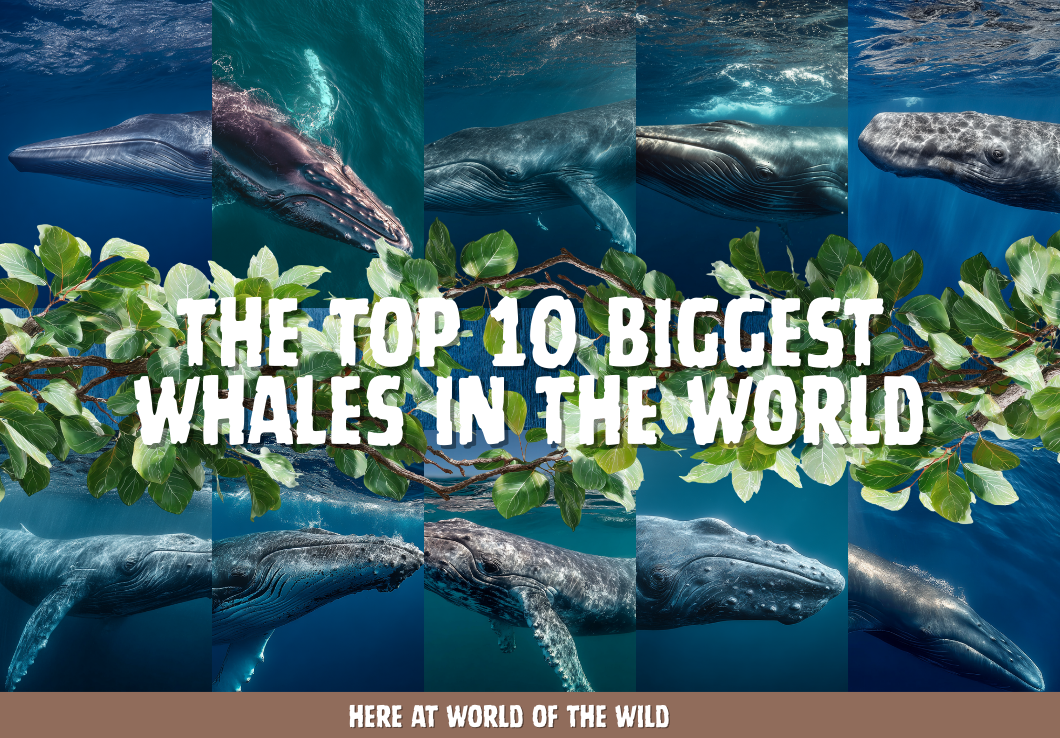

From the frozen Arctic to the sun-warmed tropics, whales are the undisputed giants of the ocean. These magnificent marine mammals have roamed Earth’s seas for millions of years, evolving into some of the most awe-inspiring creatures our planet has ever produced. But just how big do they get? Here is a countdown of the ten largest whale species on Earth, ranked by their extraordinary size. This includes The Top 10 Biggest Whales in the World.
#10 — Minke Whale
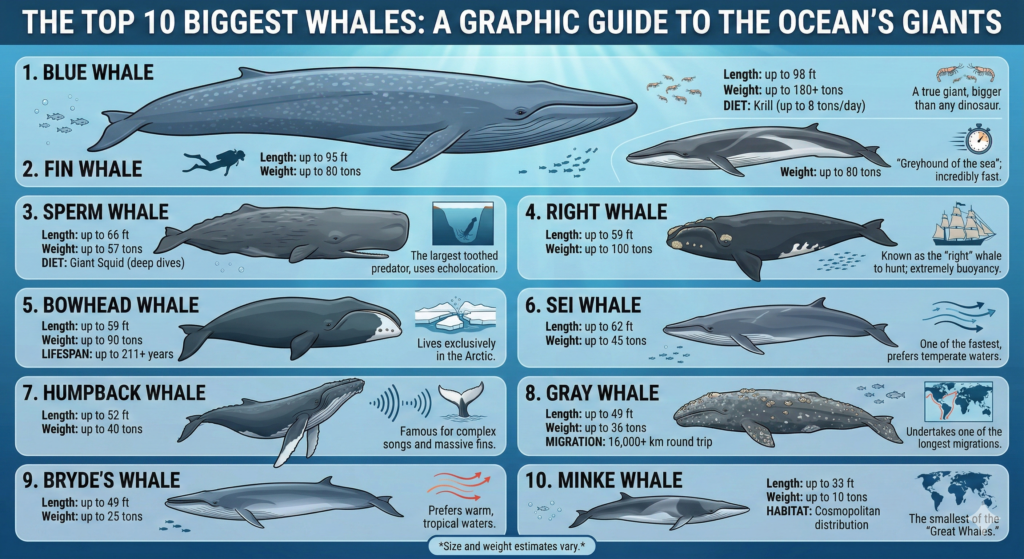
Average Length: 23–30 ft | Average Weight: 5–10 tons
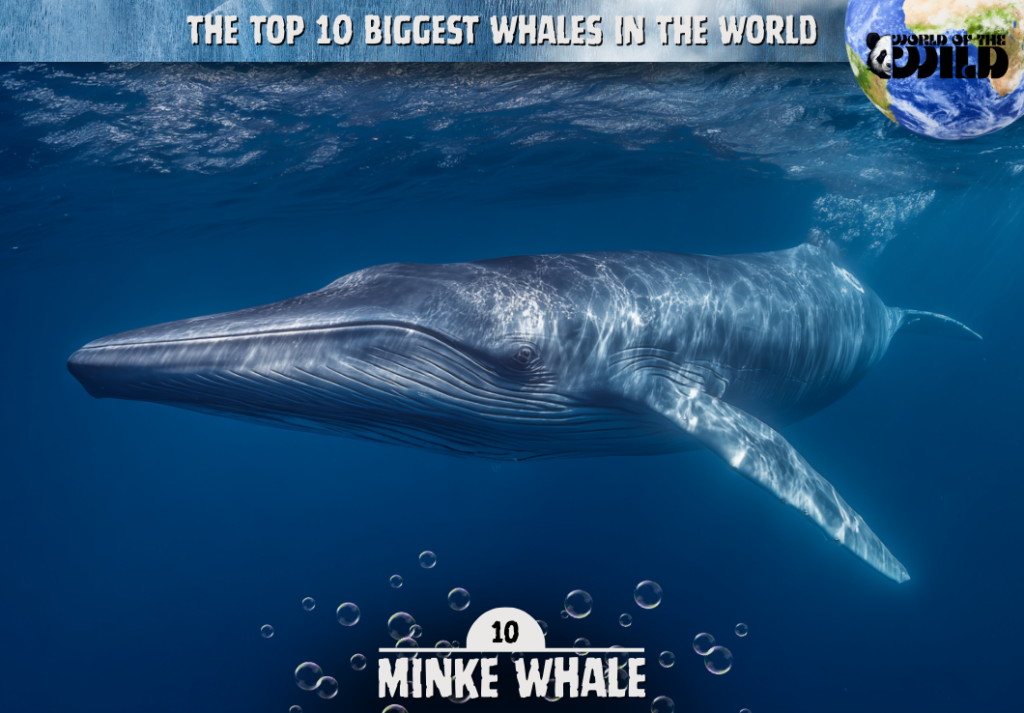
The Minke Whale is the smallest entry on this list, but don’t let that fool you — it is still a remarkably large and powerful animal. Minkes typically grow between 23 and 30 feet in length and weigh anywhere from 5 to 10 tons, with females generally growing larger than males. They have a sleek, streamlined body with a distinctive pointed snout and a pale chevron-shaped stripe across each flipper that makes them relatively easy to identify.
Minke Whales are found in virtually every ocean on Earth, from polar waters near the Arctic and Antarctic ice edges to tropical seas near the equator. They are highly adaptable and opportunistic feeders, consuming a wide variety of prey including small schooling fish such as herring, mackerel, and sand lance, as well as krill and other crustaceans. They are lunge feeders, accelerating rapidly into prey patches with their mouths wide open. Despite being the smallest of the baleen whales, Minke Whales are among the most numerous and are frequently spotted on whale-watching expeditions worldwide.
#9 — Bryde’s Whale
Average Length: 40–55 ft | Average Weight: 13–28 tons
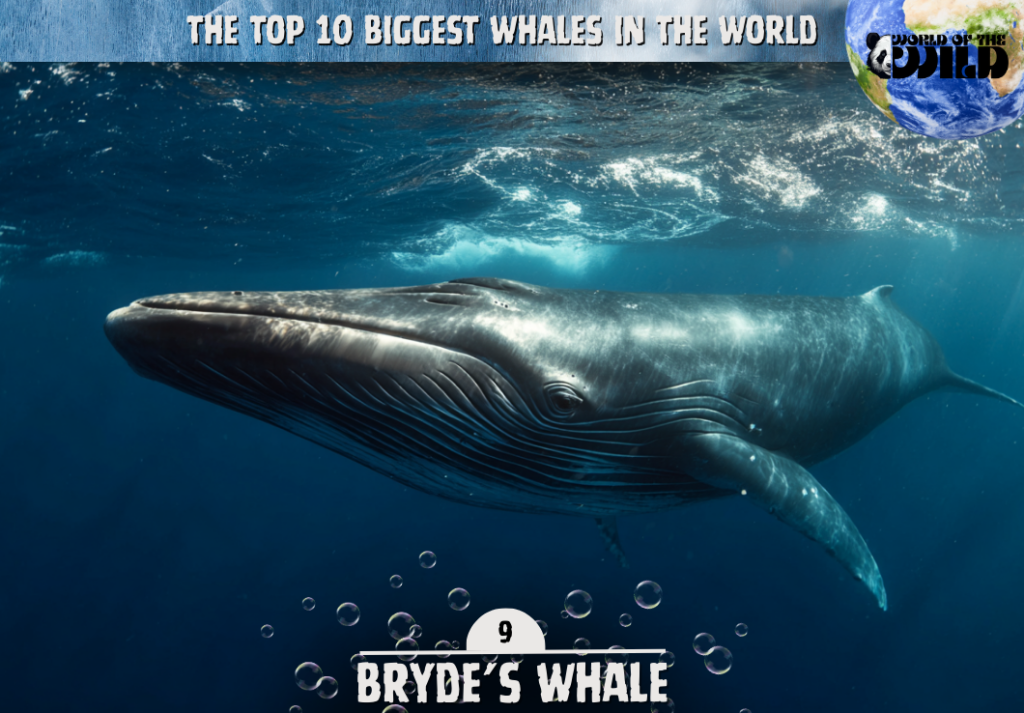
Bryde’s Whale (pronounced “Broodus”) is named after Johan Bryde, the Norwegian consul to South Africa who helped establish the first whale processing factories there in the early 20th century. These whales are a mid-sized baleen species, reaching lengths of 40 to 55 feet and weighing between 13 and 28 tons. One of their most distinctive features is the presence of three prominent ridges running along the top of their rostrum (snout), unlike most other baleen whales which have only one.
Bryde’s Whales are true warm-water specialists, found exclusively in tropical and subtropical seas where water temperatures remain above 60°F (16°C). They inhabit the Pacific, Atlantic, and Indian Oceans, often staying relatively close to productive coastal upwelling zones. Unlike most of their baleen whale relatives, Bryde’s Whales do not undertake long seasonal migrations to polar feeding grounds. Instead, they remain year-round in warm waters and feed on a diverse diet of fish, squid, and crustaceans. They are energetic, unpredictable swimmers known for suddenly changing direction — a behavior that can make them challenging to study in the wild.
To Learn More About The Awesome Bryde’s Whale Click Here
#8 — Gray Whale
Average Length: 43–49 ft | Average Weight: 30–40 tons
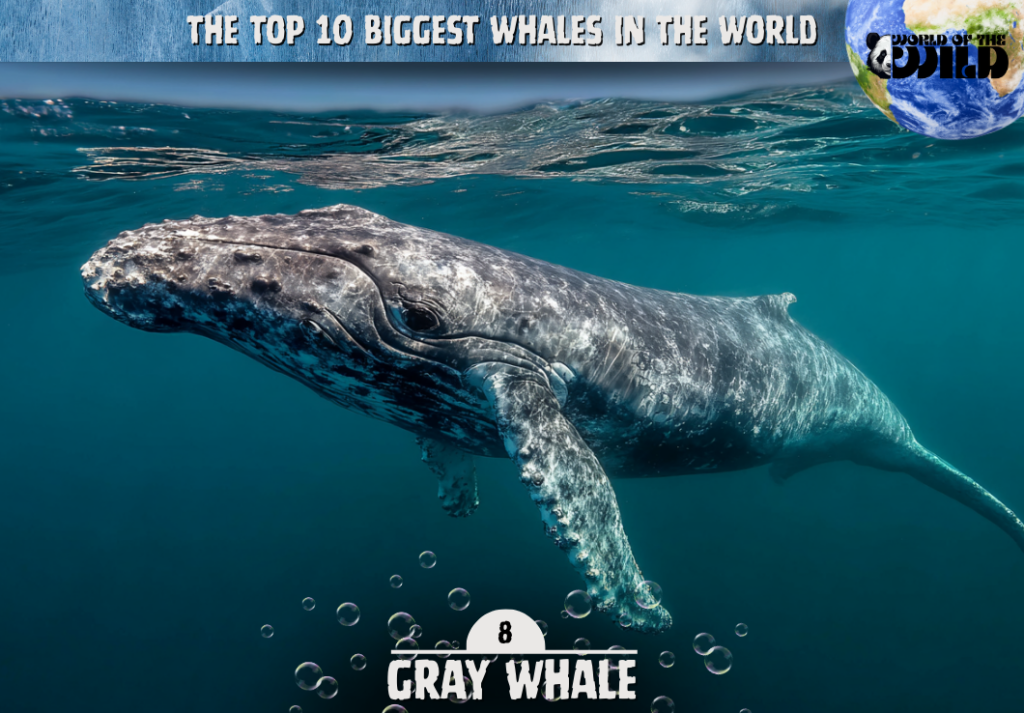
The Gray Whale is one of the most recognizable and beloved whale species in the world, famous for its extraordinary annual migrations along the Pacific coast of North America. Adults typically grow between 43 and 49 feet in length and weigh between 30 and 40 tons. Their mottled gray skin is heavily encrusted with barnacles and whale lice, giving them a rugged, ancient appearance that is entirely unique among cetaceans.
Gray Whales are bottom feeders — a highly unusual feeding strategy among baleen whales. They dive to the seafloor and use their muscular snouts to suck up sediment, filtering out amphipods, tube worms, ghost shrimp, and other small invertebrates through their coarse baleen plates. They are often observed rolling onto their sides to dig feeding pits into the muddy ocean floor. Gray Whales primarily inhabit the shallow coastal waters of the North Pacific, spending summers feeding in the nutrient-rich waters of the Bering and Chukchi Seas before embarking on one of the longest migrations of any mammal on Earth — traveling up to 12,000 miles round-trip to breed and calve in the warm lagoons of Baja California, Mexico.
#7 — Humpback Whale
Average Length: 46–56 ft | Average Weight: 25–40 tons
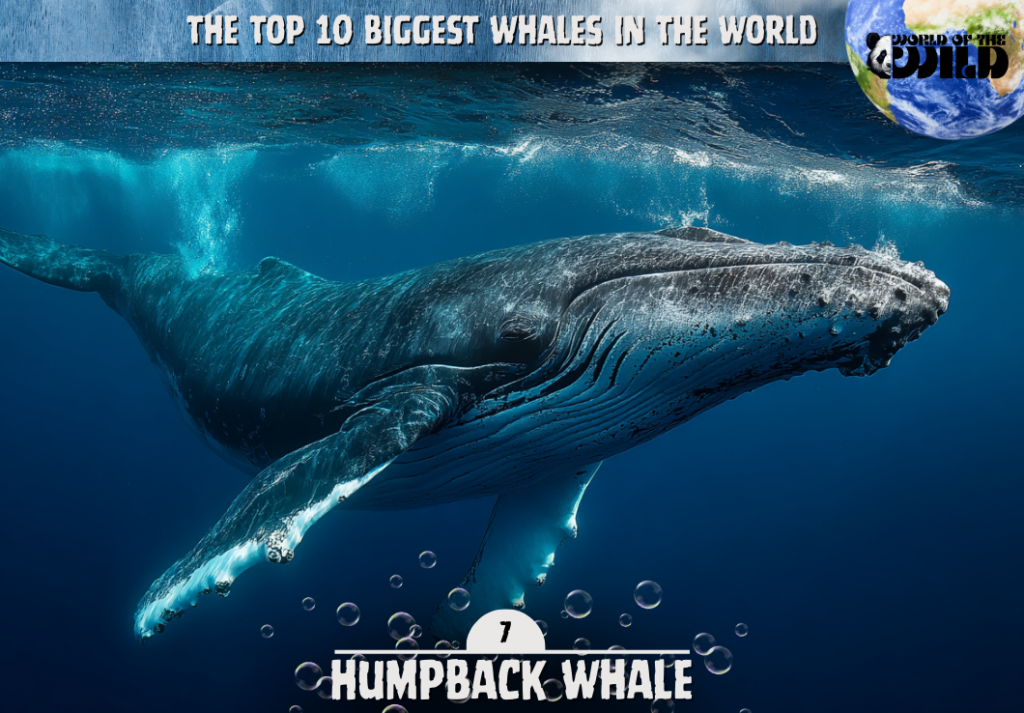
The Humpback Whale is perhaps the most famous and beloved whale in the world. Instantly recognizable by their enormously long pectoral fins — which can reach up to one-third of their total body length — and their dramatic, acrobatic behavior, Humpbacks are the showstoppers of the cetacean world. They grow to between 46 and 56 feet long and weigh 25 to 40 tons, with females typically being larger than males. Their knobby, irregular body profile and distinctive black-and-white tail flukes make individual identification possible, and scientists maintain catalogues of thousands of known individuals.
Humpback Whales are found in all of the world’s major oceans and are renowned for their complex and hauntingly beautiful songs, which males produce during the breeding season and which can last for hours. They are acrobatic, powerful hunters that use a remarkable technique called bubble-net feeding, in which groups of whales work cooperatively to blow spiraling columns of bubbles that corral fish into a tight, concentrated ball before lunging upward to engulf them. Their diet consists primarily of krill, herring, mackerel, and other small schooling fish. Humpbacks undertake some of the longest migrations of any mammal, traveling from polar feeding grounds to tropical breeding grounds each year.
#6 — Sei Whale
Average Length: 45–65 ft | Average Weight: 20–45 tons
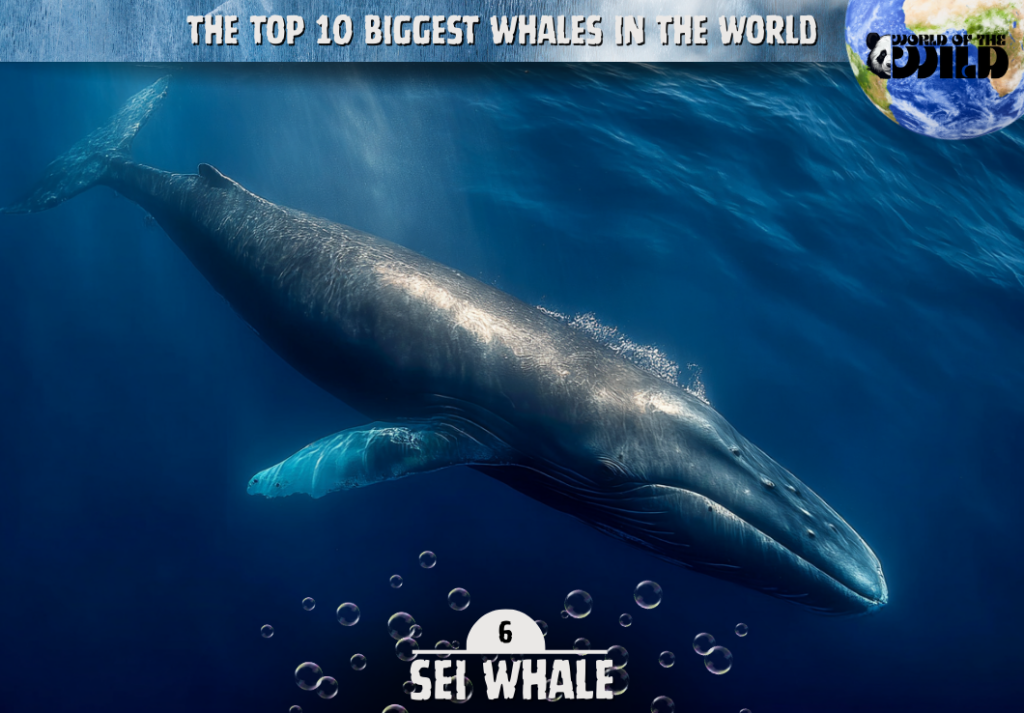
The Sei Whale is one of the least well-known members of the rorqual family, yet it ranks among the fastest and most elegantly built of all the great whales. Reaching lengths of 45 to 65 feet and weighing 20 to 45 tons, the Sei is a slender, streamlined animal capable of bursts of speed exceeding 30 miles per hour — making it one of the fastest cetaceans on the planet. Its name comes from the Norwegian word for pollock, a fish that appears off the coast of Norway at the same time as the whales each year.
Sei Whales are found across all major ocean basins, preferring deep, open offshore waters in temperate and subpolar zones. Unlike many other baleen whales, Sei Whales are highly flexible in their feeding strategy, capable of both skimming the surface for copepods and small crustaceans like a Right Whale and lunge feeding on schools of fish like a Fin Whale. Their diet typically includes copepods, krill, squid, and small fish depending on availability. Sei Whales tend to be solitary or found in small groups, and they were heavily targeted by the commercial whaling industry in the 20th century after populations of larger whales had been depleted. Their numbers have partially recovered but remain significantly below historical levels.
#5 — Bowhead Whale
Average Length: 46–59 ft | Average Weight: 75–100 tons
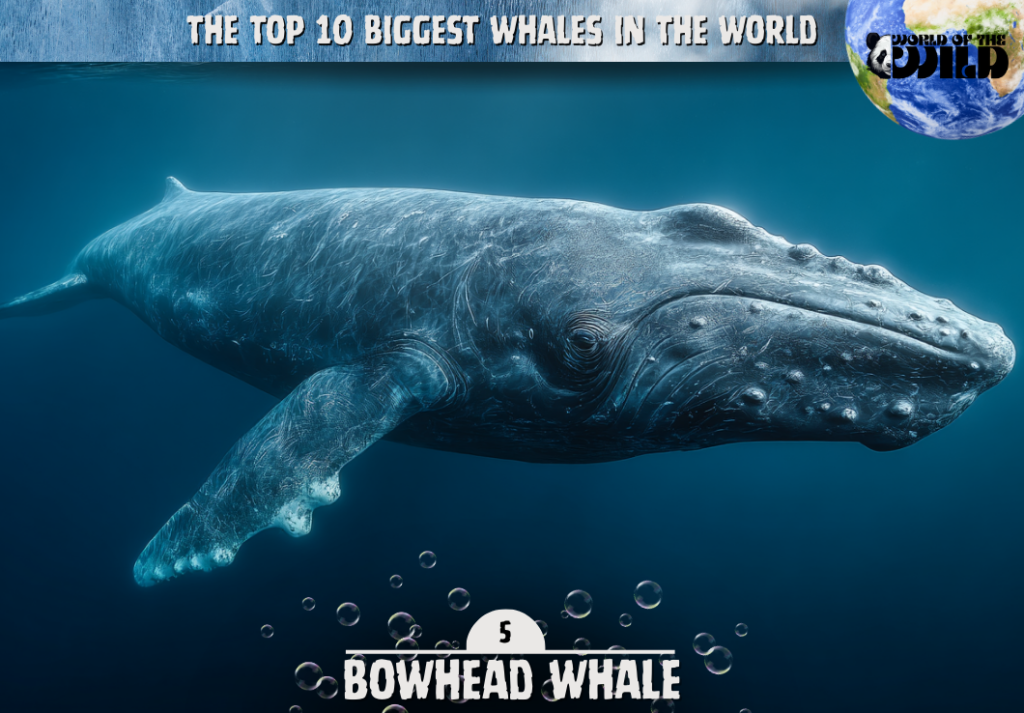
The Bowhead Whale is the true giant of the Arctic, a massively built animal evolved to thrive in some of the most inhospitable conditions on Earth. While not the longest whale on this list, the Bowhead is an extraordinarily heavy animal, with adults weighing between 75 and 100 tons and possessing the thickest blubber of any whale — up to 20 inches deep — to insulate them from the frigid polar cold. Their enormous, arched jaw gives them their common name, and their bow-shaped skull is so strong and thick that they can break through sea ice up to two feet thick to breathe.
Bowhead Whales spend their entire lives in Arctic and sub-Arctic waters, following the retreating sea ice northward in summer and moving south in winter. They are among the longest-lived animals on the planet — some individuals are believed to exceed 200 years of age, making them the oldest known mammals on Earth. Ancient harpoon points have been found embedded in living Bowhead Whales, dating back more than 100 years. They feed almost exclusively on tiny zooplankton, copepods, and krill, filtering enormous quantities of them through their very long, fine baleen plates — the longest baleen of any whale, reaching up to 13 feet in length.
#4 — Right Whale
Average Length: 45–60 ft | Average Weight: 60–100 tons
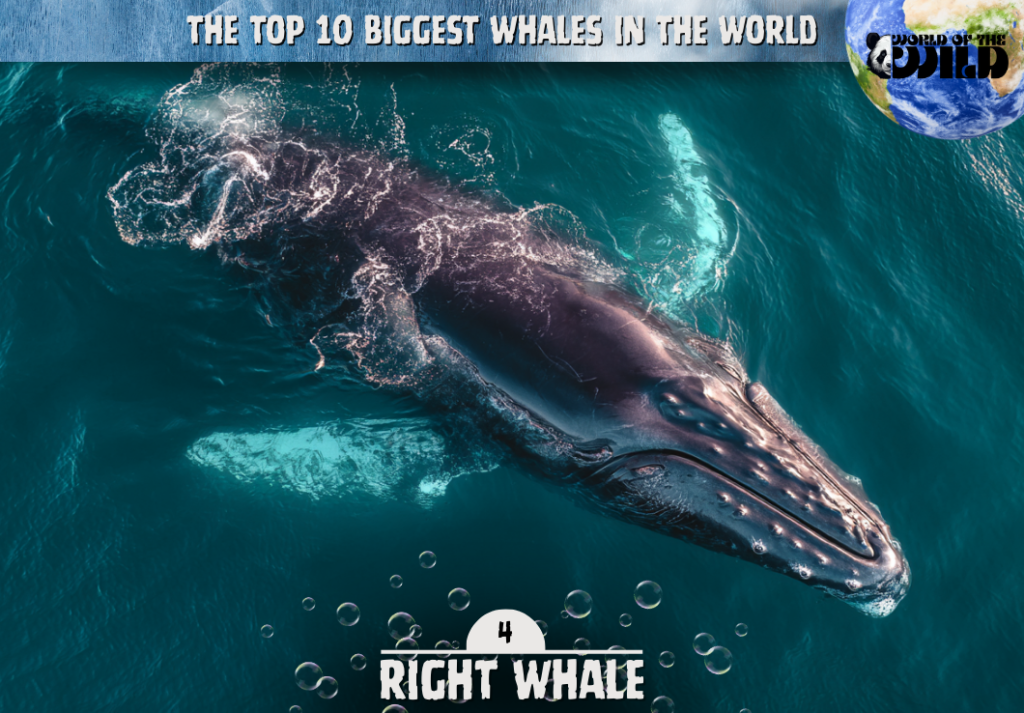
The North Atlantic, North Pacific, and Southern Right Whales are three closely related species that share a common tragedy: they were so ruthlessly hunted by early whalers that all three remain critically endangered today. Their name itself is a grim reminder of this history — they were considered the “right” whale to hunt because they were slow-moving, floated when killed, and yielded enormous quantities of valuable oil and baleen. Adults reach 45 to 60 feet in length and weigh a massive 60 to 100 tons, making them one of the heaviest animals alive despite not being the longest.
Right Whales are rotund, robust animals characterized by their callosities — rough, raised patches of tough skin on their heads that are colonized by whale lice and give each individual a unique pattern used by researchers for identification. They are slow, deliberate surface skimmers, swimming with their enormous mouths open at the surface to filter copepods and other tiny zooplankton from the water through their long, fine baleen plates. They inhabit coastal and shelf waters of the North Atlantic, North Pacific, and Southern Hemisphere. The North Atlantic Right Whale is one of the most endangered large animals on Earth, with fewer than 360 individuals remaining, threatened by ship strikes and entanglement in fishing gear.
#3 — Sperm Whale
Average Length: 49–67 ft | Average Weight: 35–57 tons
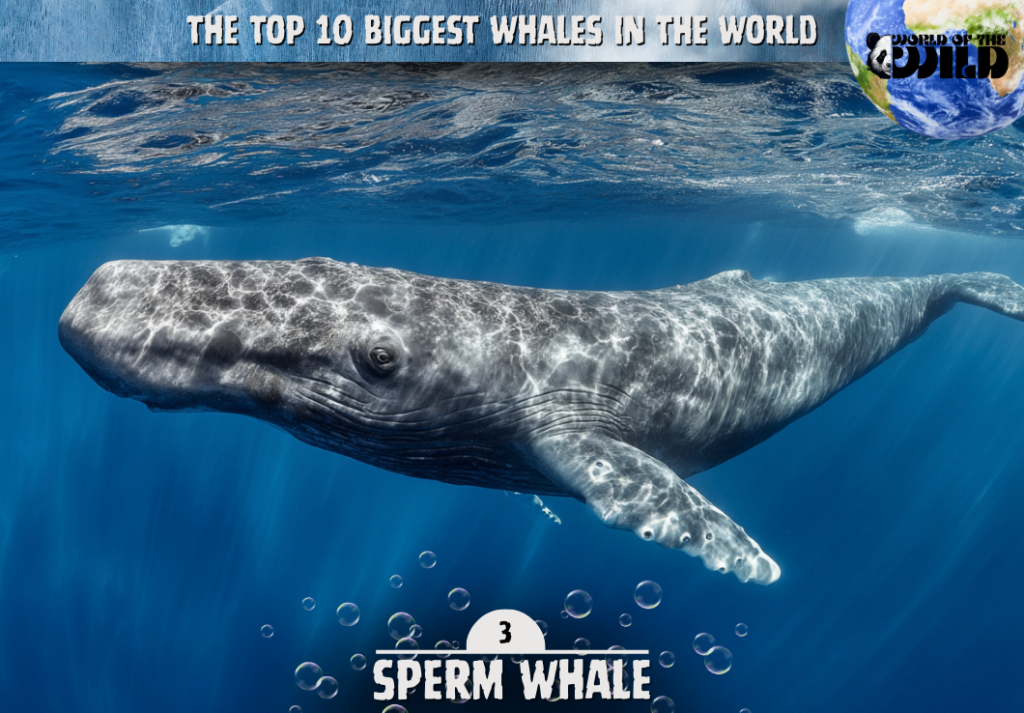
The Sperm Whale is the largest toothed animal that has ever lived on Earth — a record it holds not just among whales, but among all known species in history. Large males can reach 67 feet in length and weigh up to 57 tons, though females are considerably smaller. Their enormous, block-like head accounts for up to one-third of their total body length and houses the spermaceti organ, a massive structure filled with a waxy, oil-like substance that was prized by whalers and may play a role in echolocation and buoyancy regulation.
Sperm Whales are found in all deep oceans of the world and are legendary deep divers. They routinely dive to depths exceeding 3,000 feet in search of prey and can hold their breath for up to 90 minutes, making them one of the deepest-diving mammals on the planet. Their primary prey is giant and colossal squid, along with large fish, which they locate using the most powerful biological sonar system on Earth — clicks so loud they have been measured at over 230 decibels. The circular sucker scars of giant squid are commonly found on Sperm Whale skin, evidence of titanic deep-sea battles far beyond human sight. Immortalized by Herman Melville’s Moby Dick, the Sperm Whale remains one of the most mythologized and fascinating creatures in the natural world.
#2 — Fin Whale
Average Length: 65–85 ft | Average Weight: 40–80 tons
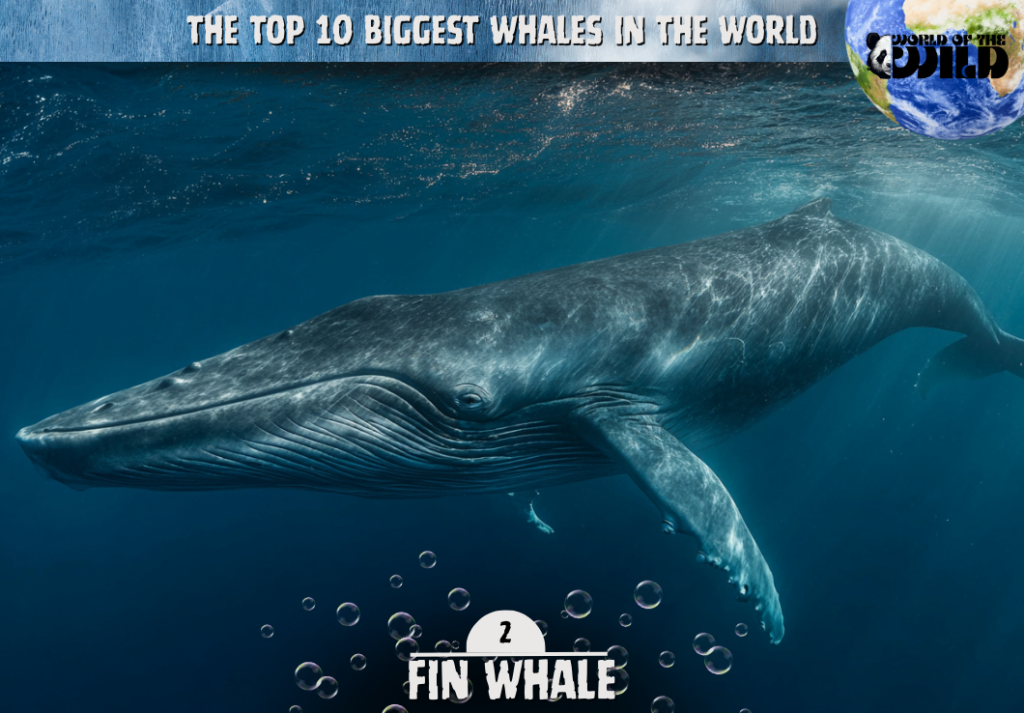
The Fin Whale is the second-largest animal on Earth — a title it has held since long before humans began keeping records. Reaching lengths of 65 to 85 feet and weighing between 40 and 80 tons, the Fin Whale is a creature of breathtaking scale and elegance. It has a strikingly asymmetrical coloration pattern — the lower right jaw is brilliant white while the lower left is dark gray — a feature unique among large animals and thought to play a role in cooperative herding of prey. Its sleek, torpedo-shaped body and powerful flukes make it one of the fastest of the great whales, capable of sustaining speeds of over 23 miles per hour.
Fin Whales are found in all major ocean basins and are particularly abundant in temperate and polar waters with high productivity. They are deep-water, open-ocean animals that tend to avoid shallow coastal environments. Their diet consists primarily of krill, small schooling fish such as herring, capelin, and sand lance, and squid. Like many other rorquals, they are lunge feeders, accelerating rapidly and engulfing enormous volumes of water and prey before pushing the water out through their baleen plates. Fin Whales were among the most heavily targeted species during the 20th century commercial whaling era, and their populations remain significantly depleted, though they are slowly recovering in some parts of their range.
#1 — Blue Whale
Average Length: 80–100 ft | Average Weight: 100–200 tons
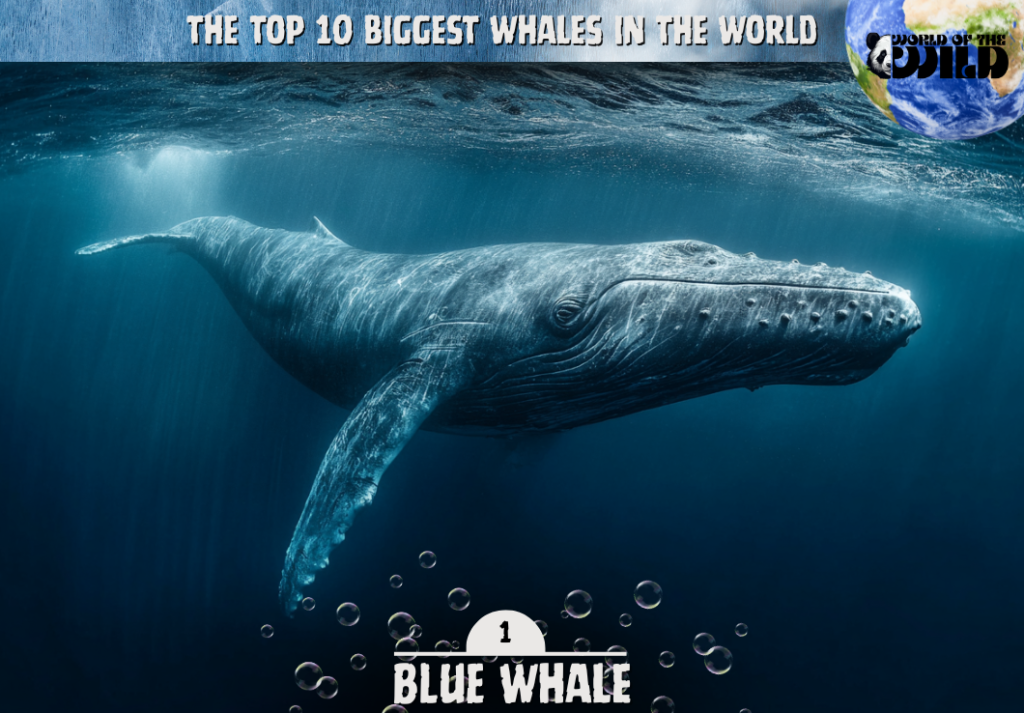
The Blue Whale is the largest animal ever known to have existed on Earth — larger than any dinosaur, larger than any other creature in the 3.5-billion-year history of life on this planet. The numbers associated with Blue Whales are almost incomprehensible. Adults regularly reach 80 to 100 feet in length, with the largest confirmed individual measuring 110 feet. They weigh between 100 and 200 tons — the equivalent of roughly 30 full-grown African elephants. Their heart alone can weigh as much as 1,300 pounds and is large enough for a small child to crawl through its arteries. A Blue Whale’s tongue weighs as much as an elephant. Their calls, reaching up to 188 decibels, are the loudest sounds produced by any animal and can be heard across entire ocean basins.
Despite their almost supernatural size, Blue Whales feed almost exclusively on some of the smallest creatures in the ocean — krill. During feeding season in polar and subpolar waters, a single Blue Whale may consume up to 6 tons of krill per day, lunging through dense swarms with its enormous pleated throat expanded to engulf thousands of gallons of krill-rich water at once. Blue Whales are found in all of the world’s major oceans and undertake long seasonal migrations between polar feeding grounds and warmer tropical or subtropical waters where they breed and calve. Commercial whaling in the 20th century devastated Blue Whale populations — reducing them from an estimated 350,000 individuals to just a few thousand — and they remain endangered today. Yet in certain feeding hotspots, witnessing a Blue Whale surface is an experience that reminds even the most seasoned naturalists of the profound and humbling majesty of life on Earth.
From the acrobatic Humpback to the colossal Blue Whale, these ten species represent the pinnacle of evolution in the marine world. As our understanding of their intelligence, complexity, and ecological importance continues to grow, so too does our responsibility to protect them — not just as individual species, but as the living architects of healthy ocean ecosystems.