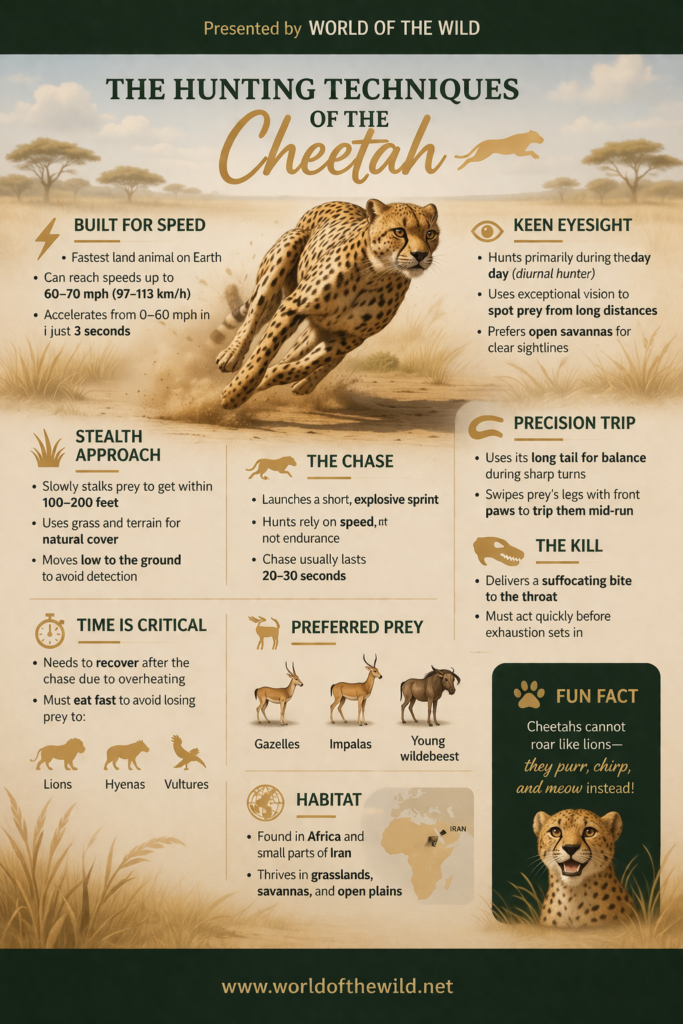

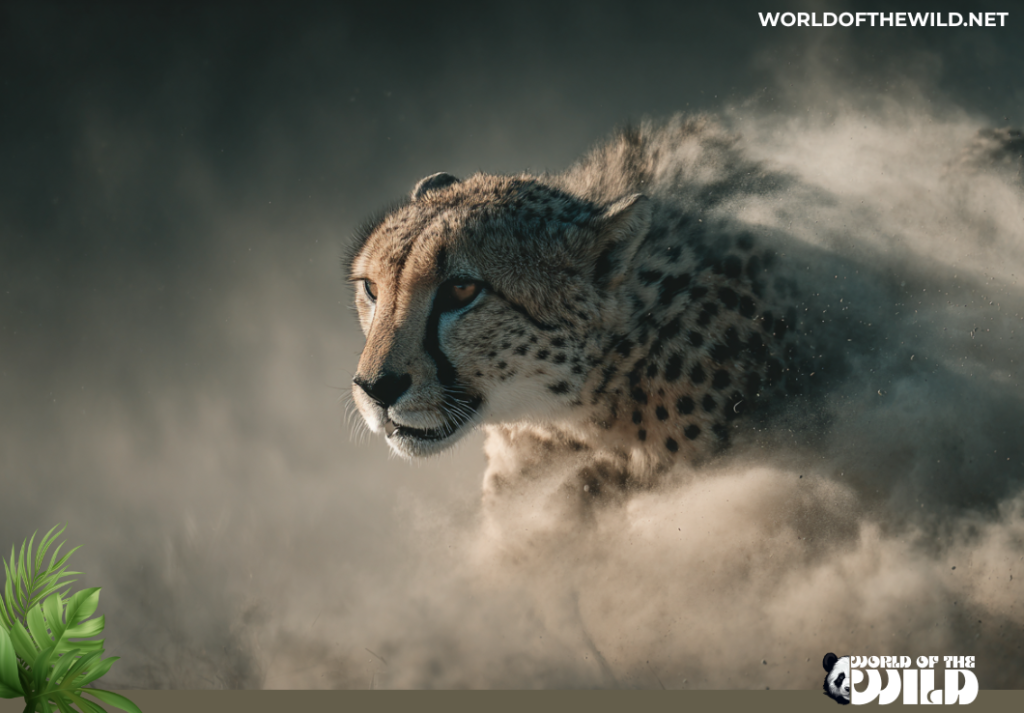
There is a moment — fleeting, almost imperceptible — when a cheetah shifts from stillness to explosive motion. One second it is crouched low in the golden grass, amber eyes locked on a distant Thomson’s gazelle. The next, it is a blur of spotted muscle and raw velocity, accelerating faster than a sports car, covering ground in strides that seem to defy biology itself. In that single, breathtaking instant, millions of years of evolutionary engineering are on full display.
The cheetah is unlike any other big cat on Earth. It does not ambush from trees like a leopard. It does not rely on brute strength like a lion. Instead, it has bet everything — its entire evolutionary identity — on speed, precision, and an almost surgical understanding of how prey moves. It is the sprint specialist of the African savanna, a creature so specialized for the hunt that its body has been reshaped down to the molecular level for one singular purpose: catching what no other predator can.
But speed alone does not make the cheetah a master hunter. What makes it truly remarkable is the intelligence, strategy, and physical artistry woven into every chase. This is the story of how one of nature’s most iconic animals turns a deadly pursuit into a breathtaking science.
Facts
- A cheetah can accelerate from 0 to 70 mph (112 km/h) in just three seconds — faster than most production sports cars on the market.
- Unlike all other big cats, cheetahs cannot roar. Instead, they produce a distinctive, high-pitched vocalization called a chirp or “churr,” which sounds remarkably similar to a bird.
- A cheetah’s claws are semi-retractable, functioning more like cleats on a sprinter’s shoes than the retractable weapons of other big cats. This gives them superior grip on the ground during high-speed chases.
- During a full sprint, a cheetah’s stride can reach 25 feet (7.6 meters) in length, and at top speed, its feet touch the ground for less than half the time they are airborne.
- The distinctive black “tear marks” running from the inner corners of a cheetah’s eyes to the sides of its mouth are not just decorative — they are believed to reduce sun glare and sharpen focus on prey in bright, open environments, much like a football player’s eye black.
- Cheetahs are the only big cats that are active primarily during the day (diurnal), having evolved this behavior partly to avoid competition with nocturnal predators like lions and leopards.
- After a high-speed chase, a cheetah must rest for up to 30 minutes before it can eat, as its core body temperature rises to near-dangerous levels and its respiratory system needs time to recover.
Species
The cheetah belongs to the following taxonomic classification:
- Kingdom: Animalia
- Phylum: Chordata
- Class: Mammalia
- Order: Carnivora
- Family: Felidae
- Genus: Acinonyx
- Species: Acinonyx jubatus
The genus Acinonyx is monotypic, meaning the cheetah is its only living member — a testament to just how evolutionarily distinct this animal is from all other cats. Within the species, scientists currently recognize four primary subspecies, each occupying a distinct geographic range:
The Southeast African Cheetah (Acinonyx jubatus jubatus) is the most numerous subspecies, found across southern and eastern Africa, including the open plains of Namibia, Botswana, Zimbabwe, and Tanzania. It is the “reference” subspecies most people picture when they imagine a cheetah.
The Northeast African Cheetah (Acinonyx jubatus soemmeringii) inhabits the savannas and semi-arid zones of countries such as Ethiopia, Sudan, and South Sudan. Considerably rarer, this subspecies faces intense pressure from habitat degradation.
The Asiatic Cheetah (Acinonyx jubatus venaticus) is the most critically endangered subspecies on Earth. Once widespread from the Middle East to India, it now clings to survival in the remote desert plateaus of Iran, with fewer than 50 individuals estimated to remain. Genetically distinct from its African cousins, the Asiatic cheetah represents a profoundly important evolutionary lineage on the brink of extinction.
The Northwest African (Saharan) Cheetah (Acinonyx jubatus hecki) roams the harsh, mountainous terrain of the Sahara and Sahel across countries like Algeria, Niger, and Mali. Exceptionally elusive, it is rarely photographed and remains one of the least-studied large carnivores in the world.
A fifth subspecies, the East African Cheetah (Acinonyx jubatus raineyi), found in Tanzania and Kenya, is recognized by some taxonomic authorities, though debate over its distinct status continues within the scientific community.
Appearance
The cheetah is immediately recognizable, and every aspect of its appearance tells the story of a body engineered for extreme performance.
In terms of size, adult cheetahs stand approximately 28 to 35 inches (71–89 cm) at the shoulder and measure 44 to 56 inches (112–142 cm) in body length, with a tail adding another 26 to 33 inches (66–84 cm). This gives them a total length that can exceed 7.5 feet (2.3 meters) from nose to tail tip. Despite appearing large, they are notably slender — adult cheetahs typically weigh between 77 and 143 pounds (35–65 kg), making them considerably lighter than lions or leopards of similar height.
The cheetah’s coat is a pale golden to tawny yellow, blanketed with approximately 2,000 solid black spots, each roughly the size of a thumbnail. These spots serve as camouflage in dappled grassland light. Beneath the belly, the coat transitions to white, and the fur is short and coarse — aerodynamic rather than plush.
The body itself is a marvel of functional design. The cheetah has a deep, narrow chest that houses an enlarged heart and lungs capable of extraordinary oxygen exchange during a sprint. Its long, flexible spine acts like a coiled spring, extending and contracting with each stride to dramatically lengthen its gait. The long, muscular tail functions as a counterbalance and rudder, enabling sharp mid-sprint directional changes at 70 mph — something that would send any other animal tumbling.
The head is small and rounded, with high-set eyes providing a wide field of vision ideal for scanning open grasslands. Those iconic tear marks — bold black lines running from eye to jaw — are thought to minimize glare from the harsh equatorial sun, sharpening the cheetah’s visual acuity in the same way athletes paint black stripes under their eyes.
Perhaps most uniquely, the cheetah’s paws are narrow and hard, with blunt, non-fully-retractable claws that remain partially exposed at all times, functioning like track spikes for grip on loose terrain.
Behavior
The cheetah’s behavioral world is as carefully tuned as its body. Unlike lions, which form complex social groups, cheetahs are primarily solitary animals, though with important exceptions. Females live and hunt alone, raising cubs independently. Males, by contrast, sometimes form small, stable coalitions — usually brothers from the same litter — that cooperate to defend territory and occasionally take down larger prey together.
Communication among cheetahs is rich and varied. They chirp and churr to call cubs or greet other cheetahs, produce a high-pitched yelp when distressed, and emit a unique stuttering vocalization called a “stutter-bark” during tense social encounters. Remarkably, cheetahs also purr continuously, both on the inhale and exhale — a trait shared with small cats but absent in true big cats like lions and tigers.
Cheetahs are intensely diurnal, hunting predominantly in the early morning and late afternoon to exploit optimal light conditions and avoid competing with peak-activity nocturnal predators. They spend a significant portion of their day scanning the landscape from elevated vantage points — termite mounds, fallen logs, or rocky outcroppings — surveying for both prey and threats.
Intelligence plays a larger role in cheetah behavior than their reputation as “pure sprinters” might suggest. Studies have shown that cheetahs learn hunting techniques through observation and practice, and that experienced individuals select prey based on careful assessment of vulnerability — targeting individuals that are young, injured, or lagging at the edges of a herd. This decision-making process, happening in seconds, represents a form of rapid strategic cognition that researchers are only beginning to fully appreciate.
One particularly striking behavioral adaptation is the cheetah’s avoidance strategy around dominant predators. Because cheetahs cannot defend their kills against lions, hyenas, or even large groups of vultures, they have evolved to eat extremely quickly and to be highly vigilant while doing so. A cheetah may lose up to 50% of its kills to kleptoparasitism — the theft of prey by other animals — making efficient hunting not just a preference, but a survival imperative.
Evolution
The cheetah’s evolutionary story is one of the most dramatic in the mammalian world, marked by ancient origins, near-extinction bottlenecks, and a lineage that once spanned multiple continents.
The family Felidae first emerged approximately 25 million years ago, but the cheetah’s own genus, Acinonyx, diverged from the ancestral big cat lineage roughly 8 million years ago — far earlier than previously thought, based on recent molecular studies. This makes the cheetah one of the oldest distinct lineages in the cat family tree.
Fossil evidence reveals that cheetah-like cats were once far more widespread. Species such as Acinonyx pardinensis — the “giant cheetah” — roamed Europe and Asia during the Pliocene epoch, roughly 3 to 4 million years ago. Remarkably similar in structure but significantly larger than modern cheetahs, these ancient relatives confirm that the speed-specialized body plan is an evolutionary strategy of ancient and proven success. Cheetah fossils have also been discovered in North America, suggesting the lineage crossed the Bering land bridge in both directions during glacial periods.
The modern cheetah is believed to have originated in Africa, with Asiatic populations likely colonizing the Middle East and Central Asia within the past million years. However, the most critical event in cheetah evolutionary history is not its rise, but its near-fall.
Genetic studies have revealed that all living cheetahs are extraordinarily similar at the genetic level — so similar that skin grafts between unrelated individuals are routinely accepted without rejection, something that would never occur between genetically diverse individuals. This phenomenon points to one or more severe population bottlenecks — catastrophic collapses in cheetah numbers — that occurred roughly 10,000 to 12,000 years ago, coinciding with the end-Pleistocene mass extinction event that wiped out many large mammals worldwide. During this period, cheetah populations may have been reduced to only a handful of individuals.
The consequence of this bottleneck is a species carrying extremely low genetic diversity — a vulnerability that affects immune function, reproductive rates, and the capacity to adapt to new diseases and environmental pressures. It is a ghost of a near-extinction still haunting every living cheetah today.
Habitat
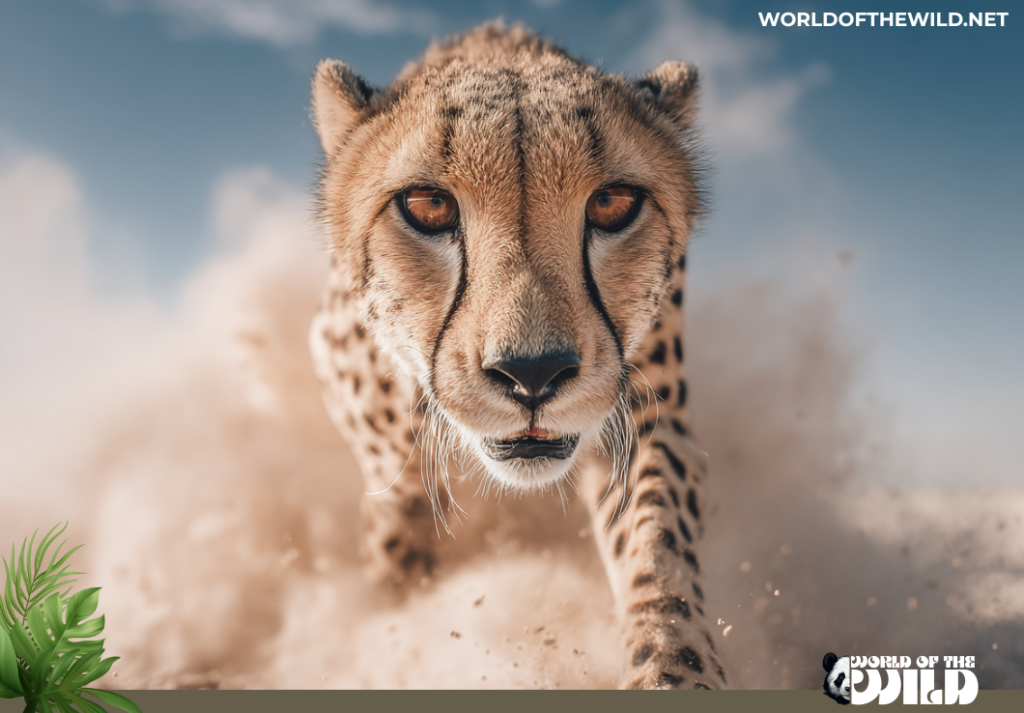
The cheetah is most closely associated with the open savannas and grasslands of sub-Saharan Africa, and it is here that the species reaches its greatest densities. Countries like Namibia, Botswana, Zimbabwe, Kenya, and Tanzania host the largest remaining populations. Namibia alone is considered the global stronghold of the cheetah, home to the largest free-ranging population on Earth — a fact driven largely by the species’ presence on private farmlands and livestock ranches.
But the cheetah is a more habitat-flexible animal than commonly assumed. It also occupies thornbush savannas, open woodland edges, semi-arid scrublands, and even montane grasslands at altitude. In the Sahara, the critically rare Northwest African subspecies has been photographed navigating rugged mountain ranges and vast desert plateaus — a far cry from the classic Serengeti tableau.
The Asiatic cheetah, now confined to Iran, inhabits arid plateau landscapes and mountainous desert terrain, demonstrating that the species once thrived in conditions very different from African grasslands.
What unifies cheetah habitats across this range is a common thread: openness. The cheetah is a visual predator and a sprint hunter. It needs long sightlines to spot prey, open terrain to accelerate, and sufficient prey biomass to sustain its energetically expensive lifestyle. Habitats fragmented by agriculture, fencing, or dense woodland fundamentally undermine the cheetah’s ability to hunt and survive.
The species is estimated to have lost over 90% of its historical range, a reduction that has compressed once-continuous populations into isolated, vulnerable pockets.
Diet
The cheetah is an obligate carnivore, deriving all nutrition from animal prey. Its diet is dominated by small to medium-sized ungulates — hoofed mammals that share its open-grassland habitat. The primary prey species vary by region but typically include Thomson’s gazelle, springbok, impala, reedbuck, and young wildebeest or zebra.
In areas where large ungulate populations are sparse, cheetahs will also take hares, guinea fowl, and smaller ground-dwelling birds. Male coalitions, hunting cooperatively, are capable of pursuing and subduing larger prey such as adult wildebeest or waterbuck — prey far beyond the reach of a solitary female.
The hunt itself is a masterwork of athletic execution layered over calculated strategy.
The Stalk. Before any sprint, the cheetah invests heavily in approach. Moving through grass with extraordinary patience, it closes the distance to within 50 to 100 meters (160 to 330 feet) of its target. This phase can last 30 minutes or more. During the stalk, the cheetah selects its quarry with precision — assessing the herd, identifying which individual is most isolated, slowest, or most vulnerable.
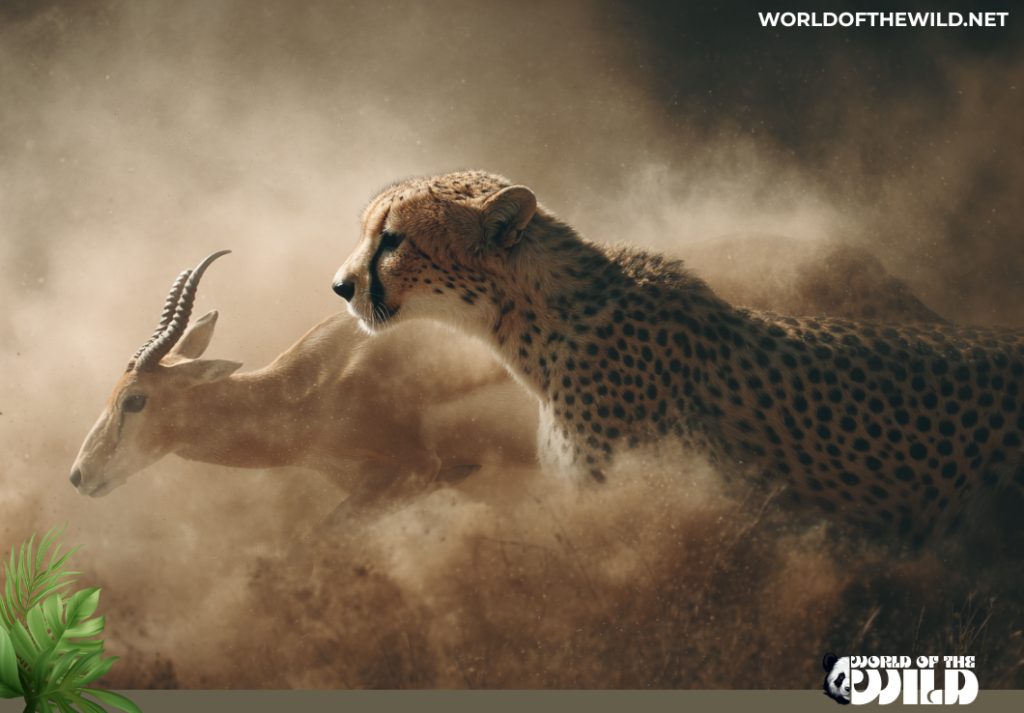
The Sprint. Once committed, the cheetah accelerates with explosive speed. The chase typically lasts between 20 and 60 seconds and covers a distance of 200 to 300 meters (650 to 1,000 feet). It rarely extends beyond 500 meters — not because the cheetah lacks stamina, but because overheating becomes a serious physiological risk beyond that threshold. During the sprint, the cheetah’s respiratory rate surges from around 60 breaths per minute to over 150 breaths per minute.
The Trip. The cheetah uses a specialized technique to bring down prey — a high-speed trip executed with a forepaw equipped with a distinctive dewclaw, a sharp, hooked claw on the inner foreleg specifically adapted for this purpose. A precisely timed swipe at the fleeing animal’s hindquarters or flank knocks it off balance, sending it tumbling to the ground.
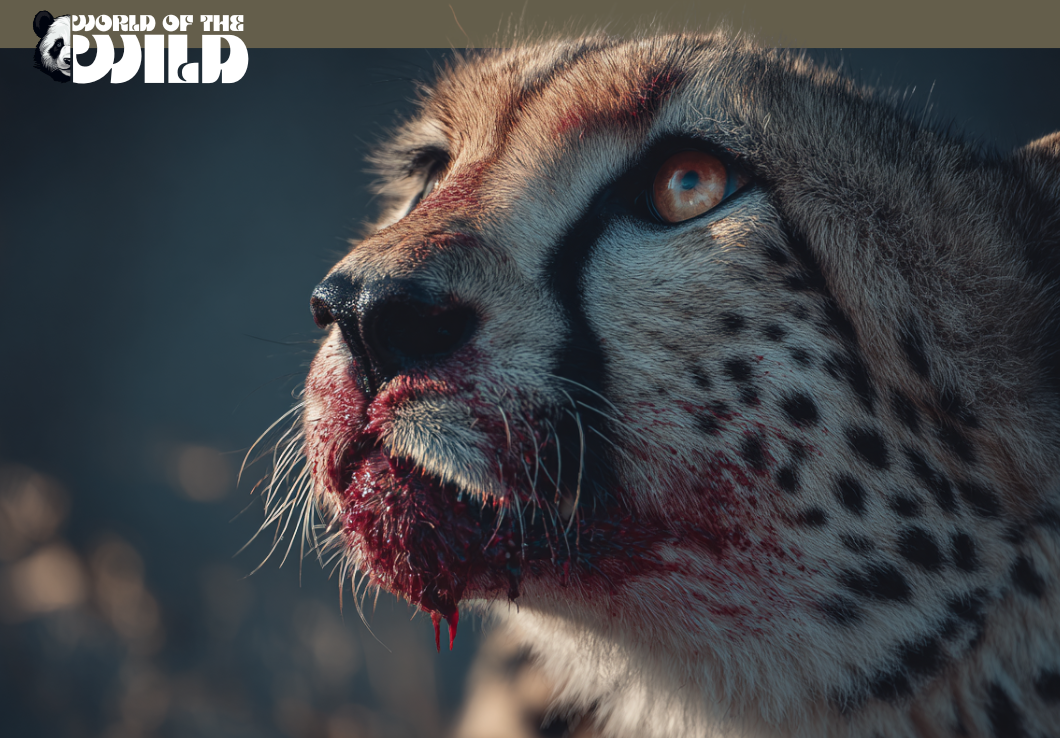
The Kill. Once the prey is down, the cheetah immediately delivers a suffocating bite to the throat, clamping the trachea closed and maintaining the grip for several minutes until the animal asphyxiates. Unlike lions, which kill with a crushing bite to the skull or neck vertebrae, the cheetah lacks the jaw strength for such a technique. The throat hold is a more methodical, prolonged kill — efficient for an animal with more slender jaw musculature.
The Recovery and Feeding. Following the kill, the cheetah is exhausted and overheated. It must rest — sometimes for up to 30 minutes — before it can begin feeding. This recovery window is a period of acute vulnerability. The cheetah, panting heavily beside its kill, must watch the horizon for approaching lions, hyenas, or jackals that will attempt to steal the meal. Eating quickly becomes a matter of survival, and cheetahs have been documented consuming prey in under 15 minutes when under threat.
Cheetahs hunt with an overall success rate of approximately 40 to 70% — among the highest of any large African predator — a testament to the precision of their technique. However, given the energy expenditure per hunt and the frequency of kleptoparasitism, they must hunt almost daily to meet their caloric needs.
Predators and Threats
Despite being a formidable predator, the cheetah is itself a surprisingly vulnerable animal, pressed on multiple sides by both natural competition and human-driven threats.
Natural Predators and Competitors
Adult cheetahs have few natural predators, but cubs face devastating mortality rates. Lions, leopards, and hyenas are responsible for the deaths of a significant proportion of cheetah cubs — some studies suggest that up to 90% of cheetah cubs do not survive to adulthood in areas with high lion and hyena densities. This is one of the most striking statistics in African wildlife ecology. Even adults must be constantly vigilant — a cheetah cornered by a lion or spotted hyena clan has little recourse, as it cannot fight effectively and survives by fleeing.
Competition for prey and space with lions, leopards, African wild dogs, and spotted hyenas also places constant pressure on cheetah populations, forcing them into suboptimal habitats or pushing them onto human-managed lands.
Human-Caused Threats
The most serious long-term threats to the cheetah are anthropogenic — driven by human activity.
Habitat Loss and Fragmentation is the leading driver of cheetah decline. Agricultural expansion, livestock farming, and human settlement have consumed vast tracts of savanna across Africa and Asia, reducing the large, connected landscapes that cheetahs require. Fragmented habitat isolates populations, reduces gene flow, and restricts prey availability.
Human-Wildlife Conflict is a critical issue, particularly in Namibia and other areas where cheetahs coexist with livestock farmers. Cheetahs that take livestock — often because wild prey is scarce — are frequently killed by farmers in retaliation, a practice historically responsible for significant population declines.
The Illegal Wildlife Trade poses a growing threat, particularly in East Africa and the Arabian Peninsula. Cheetah cubs are captured from the wild and sold as exotic pets in Gulf states, where the demand for status animals remains high. The trade is devastating not only because of the cubs taken but because entire litters — and sometimes their mothers — are killed or removed from wild populations during capture operations.
Climate Change represents an emerging threat, altering prey distribution, expanding drought conditions, and degrading cheetah habitat across the Sahel, East Africa, and Central Asia.
Reproduction and Life Cycle
The cheetah’s reproductive strategy reflects the precarious nature of its existence — producing multiple offspring to overcome the crushing attrition of cub mortality.
Mating
Cheetahs have no fixed mating season and can breed throughout the year, though births may peak during periods of higher prey availability. Females are solitary and nomadic, and mating encounters are brief. A male or male coalition may follow a receptive female for several days, engaging in repeated mating before the pair separates. Females raise cubs entirely without paternal involvement.
Gestation and Birth
Gestation lasts approximately 90 to 95 days, after which the female gives birth to a litter of three to five cubs, though litters as large as eight have been recorded. Cubs are born in dense vegetation, concealed in thickets, rocky outcroppings, or tall grass. They are born blind and helpless, weighing just 8 to 10 ounces (250–300 grams). A distinctive mantle of silver-grey fur on their dorsal side provides camouflage and may mimic the coloration of the honey badger — a fiercely aggressive animal that many predators avoid — providing the cubs a degree of protective mimicry.
Cub Development
Cubs begin to accompany their mother on hunts at around 6 weeks of age, observing and practicing pursuit behavior with prey that the mother deliberately releases alive for training purposes. This educational dimension of cheetah motherhood is one of the most compelling examples of active skill transfer in the animal kingdom.
At around 18 months of age, cubs become independent. Siblings often remain together as a group for several additional months before females disperse to live alone and young males form coalitions.
Lifespan
In the wild, cheetahs typically live 10 to 12 years, though many die far earlier due to injury, disease, or predation. In captivity, where threats are eliminated and nutrition is consistent, individuals have been recorded living up to 17 years.
Population
The cheetah is currently classified as Vulnerable on the IUCN Red List of Threatened Species — a designation that, while less alarming than Endangered or Critically Endangered, masks a deeply concerning trajectory of decline.
The global wild cheetah population is estimated at approximately 6,500 to 7,000 individuals, distributed across roughly 23 African countries and a tiny remnant population in Iran. This represents a catastrophic reduction from historical numbers and a range contraction of over 90% from the species’ former distribution, which once stretched from Africa through the Middle East, Central Asia, and into India.
The largest single population — around 3,500 individuals — resides on private farmland in Namibia, making that country the unlikely global headquarters of cheetah conservation. The Serengeti-Mara ecosystem in East Africa supports another significant population. Across much of West and Central Africa, however, cheetah populations are fragmented, poorly documented, and believed to be in severe decline.
The Asiatic cheetah’s situation is categorically more urgent. With fewer than 50 individuals surviving in Iran’s central desert plateau, it teeters on the very edge of extinction. Despite intensive conservation efforts by the Iranian government and international partners, no captive breeding program has yet successfully produced surviving offspring, and the subspecies continues to decline.
Population trend assessments are unambiguous: cheetah numbers are declining across virtually all populations. The combination of habitat loss, human conflict, cub mortality, and the illegal pet trade creates a converging set of pressures that current conservation infrastructure is struggling to address at scale.
Conclusion
The cheetah is more than the world’s fastest land animal. It is a living demonstration of what evolution can achieve when pressure, time, and ecological circumstance align — a creature refined across millions of years into an instrument of breathtaking precision and speed. From the semi-retractable claws that grip the earth like sprinter’s cleats, to the flexible spine that launches each 25-foot stride, to the strategic intelligence that selects the right prey before the sprint even begins — every element of the cheetah’s being is devoted to the hunt.
And yet, for all its perfection, the cheetah is fragile. Its low genetic diversity leaves it biologically vulnerable. Its need for open, prey-rich landscapes puts it in direct conflict with an expanding human footprint. Its cubs die at staggering rates. Its kills are stolen by competitors it cannot challenge. And across both Africa and Asia, its numbers are quietly, steadily falling.
The cheetah does not need our admiration — it has earned that a thousand times over. What it needs is space, coexistence, and the political and financial will to protect the landscapes on which it depends. Supporting organizations working on human-wildlife conflict mitigation in Namibia, the conservation of the Asiatic cheetah in Iran, or the dismantling of illegal exotic pet trade networks are all tangible ways that awareness can translate into action.
The blur of gold and black that streaks across the savanna may feel permanent, like a fixture of the natural world that will always be there. But the data tells a different story. The cheetah’s next sprint may be its most important yet — a race not against a gazelle, but against extinction.
Quick Reference
| Scientific Name | Acinonyx jubatus |
| Diet Type | Carnivore (obligate) |
| Body Length | 44–56 inches (3.7–4.7 feet), plus a 26–33 inch tail |
| Shoulder Height | 28–35 inches (2.3–2.9 feet) |
| Weight | 77–143 pounds |
| Region Found | Sub-Saharan Africa (primary range); small remnant population in Iran (Asiatic subspecies); historically across Middle East, Central Asia, and Indian subcontinent |