
Somewhere deep in the rainforests of the Democratic Republic of the Congo, a community of apes wakes to the sounds of the jungle. They groom one another with tenderness, share food without a fight, and resolve their tensions through touch rather than teeth. They are not humans — but in ways that make scientists do a double-take, they are startlingly close to us.
Meet the bonobo (Pan paniscus) — one of our two closest living relatives, sharing approximately 98.7% of our DNA, yet arguably the least understood of the great apes. While chimpanzees have dominated the popular imagination for decades, the bonobo has largely remained in the shadows, tucked away in one of the most inaccessible and politically turbulent corners of the world. The result is an animal both deeply familiar and profoundly alien: a species that seems to have independently arrived at many of the social tools humans prize most — empathy, conflict resolution, altruism, and cooperation — while doing so in ways that still have the power to shock us.
To study the bonobo is to confront questions about ourselves: about power, sex, violence, and peace. It is also to reckon with the urgent reality that this extraordinary creature is disappearing, quietly and relentlessly, from the only place on Earth it has ever lived.
Facts
- Bonobos are the only great apes found exclusively in one country. Their entire wild range exists within the Democratic Republic of the Congo, making them uniquely vulnerable to political instability and habitat loss.
- They are matriarchal. Unlike chimpanzees, bonobo societies are largely led by females — even though males are physically larger. A female’s social status often determines her son’s rank within the group.
- Bonobos are the only non-human animals known to engage in face-to-face copulation regularly. Along with humans, they use sexual behavior as a social bonding tool, not merely a reproductive act.
- They are born with dark faces. Unlike chimpanzees, whose faces lighten with age, bonobo infants are born with dark pigmentation on their faces — a feature that distinguishes them visually from birth.
- Bonobos have been observed sharing food with strangers. In controlled studies, bonobos willingly fed unfamiliar individuals even when there was no direct benefit to themselves — a behavior once thought unique to humans.
- They have a distinctive high-pitched voice. Bonobo vocalizations are notably higher in pitch than those of chimpanzees, including a distinctive peeping call used during feeding and social bonding.
- Bonobos have never been observed killing members of their own species in the wild. This places them in stark contrast to chimpanzees, which engage in organized lethal violence — and is one reason they have been called “the peaceful ape.”
Species
| Taxonomic Rank | Classification |
|---|---|
| Kingdom | Animalia |
| Phylum | Chordata |
| Class | Mammalia |
| Order | Primates |
| Family | Hominidae |
| Genus | Pan |
| Species | Pan paniscus |
The bonobo belongs to the genus Pan, which it shares with its closest relative, the common chimpanzee (Pan troglodytes). Together, the two Pan species represent humanity’s nearest living kin — closer to us than they are to gorillas or orangutans. There are four recognized subspecies of the common chimpanzee (P. t. troglodytes, P. t. schweinfurthii, P. t. verus, and P. t. ellioti), but the bonobo has no recognized subspecies — it is considered a single, unified taxon.
The species was formally described by German-American anatomist Ernst Schwarz in 1929, initially as a subspecies of the chimpanzee. It was later elevated to full species status based on a range of morphological and behavioral distinctions. For much of the 20th century, the bonobo was commonly called the “pygmy chimpanzee,” a misleading name since bonobos are not significantly smaller than common chimpanzees and are now largely distinguished by entirely different traits.
Appearance
At first glance, a bonobo may resemble a slender, graceful chimpanzee — but the differences, once known, become unmistakable. Bonobos are more lightly built, with a longer, more slender torso, and distinctly longer legs relative to their body size. Their shoulders are narrower and their heads are rounder and smaller than those of common chimps.
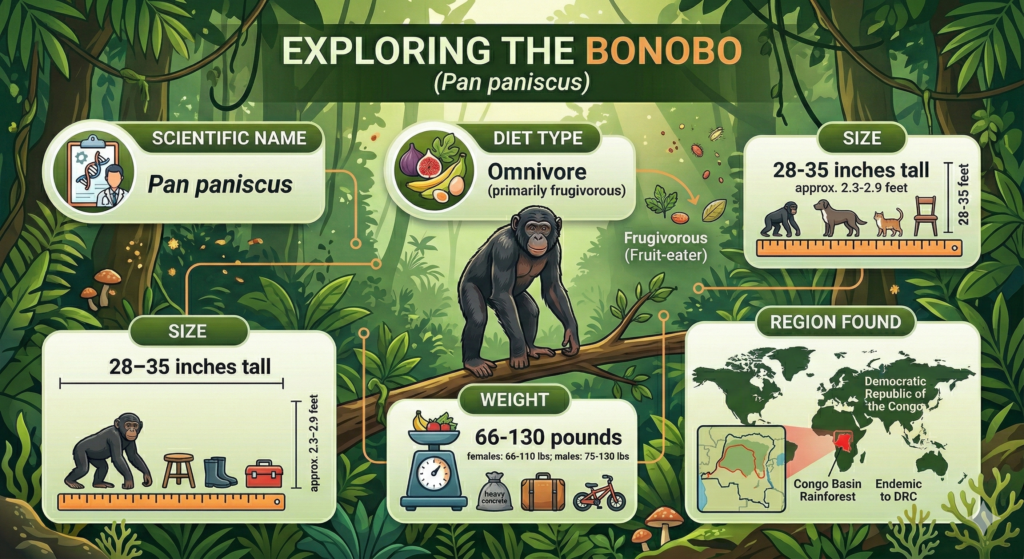
Adult bonobos stand roughly 28 to 35 inches tall when upright, and their arm-to-leg proportions give them a slightly more upright posture than chimpanzees, lending them an almost uncanny similarity to the silhouette of early hominids. Males typically weigh between 75 and 130 pounds, while females are somewhat lighter, generally ranging from 66 to 110 pounds.
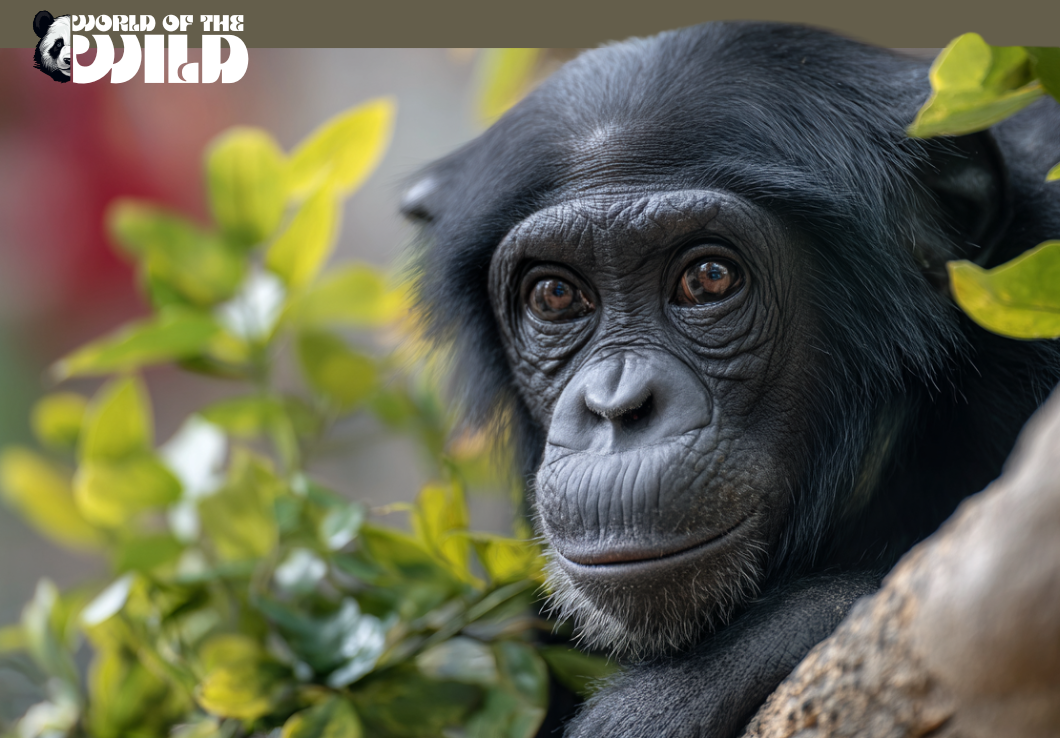
Their faces are mostly dark — sometimes entirely black — a trait that persists from infancy through adulthood (unlike chimpanzees whose faces often lighten or become mottled with age). They sport a distinctive pink or reddish lip and often have a small tuft of white hair at the tail base, a trait retained even in mature adults. The hair on their heads grows longer and tends to part naturally in the middle, giving them a somewhat human-like appearance that has struck many first-time observers. Hands and feet are large and dexterous, built for both gripping branches and manipulating objects with precision.

Behavior
Bonobo society is one of the most complex and nuanced in the animal kingdom — and in many ways, the most surprising.
Social Structure: Bonobos live in fission-fusion communities, meaning that while a community may number 30 to 80 individuals, they split into smaller subgroups that wander, forage, and sleep together, then reunite and reorganize over time. Unlike chimpanzees, where dominant males rule through aggression and coalition, bonobo communities are effectively led by high-ranking females. A female’s rank is influenced heavily by her age and social connections, and she can outcompete and suppress even physically larger males through alliance and social maneuvering.
Communication: Bonobos communicate through an elaborate repertoire of vocalizations, facial expressions, gestures, and touch. Their calls include screams, barks, hoots, and a distinctive series of high-pitched peeps. They also demonstrate a sophisticated understanding of pointing and symbolic communication, and studies in captivity have shown bonobos capable of learning and using lexigrams — symbols representing words — to communicate meaningfully with humans.
Sexuality as Social Currency: Perhaps the most remarked-upon aspect of bonobo behavior is the role of sexual contact as a social bonding mechanism. Bonobos use genital contact — between all age and sex combinations — to defuse tension, greet one another, reconcile after conflict, and cement alliances. This behavior is not simply about reproduction; it is a form of social currency that helps maintain group cohesion without recourse to violence.
Intelligence and Empathy: Bonobos display remarkable cognitive abilities. They have demonstrated self-recognition in mirrors, an indicator of self-awareness found in only a handful of species. They are skilled at reading the emotional states of others, and studies have documented spontaneous helping behavior — bonobos assisting unfamiliar individuals without any prompting or reward. Their capacity for empathy and cooperation is considered among the most developed of any non-human species.
Evolution
The story of the bonobo’s evolutionary origins is intertwined with one of Africa’s most dramatic geological events: the formation of the Congo River.
Bonobos and common chimpanzees share a common ancestor that lived approximately 1.5 to 2 million years ago. The leading hypothesis for their divergence is that a population of ancestral apes became isolated on the south bank of the Congo River — the second-longest river in Africa — when the river widened and deepened sufficiently to act as a geographic barrier. The apes on the south bank evolved separately from those to the north, eventually becoming the bonobo, while the northern populations gave rise to the various subspecies of the common chimpanzee.
This geographic isolation on the southern bank had profound ecological consequences. The region was lush and resource-rich, with abundant fruit and terrestrial plants — particularly Herbaceous Ground Vegetation (HGV) — reducing competition for food. With less pressure to compete over resources, it is theorized that aggression became less advantageous, and social bonds — particularly female alliances — became the dominant currency of survival. Over hundreds of thousands of years, this ecological context may have shaped many of the bonobo’s distinctively cooperative and affiliative behaviors.
Bonobos and humans share a common ancestor approximately 6 to 7 million years ago — the same timeline as chimpanzees — placing both Pan species equidistant from us in evolutionary terms. Interestingly, some researchers have proposed that early Homo may have resembled the bonobo’s social model more closely than the chimpanzee’s, suggesting that studying bonobos may offer clues to understanding the social foundations of our own evolution.
Habitat
The bonobo exists in a world that is at once extraordinary and embattled. Their range is entirely confined to the Democratic Republic of the Congo (DRC), occupying a roughly arc-shaped zone south of the Congo River and north of the Kasai and Sankuru rivers. This range encompasses much of the Congo Basin rainforest — the second-largest tropical rainforest on Earth after the Amazon.
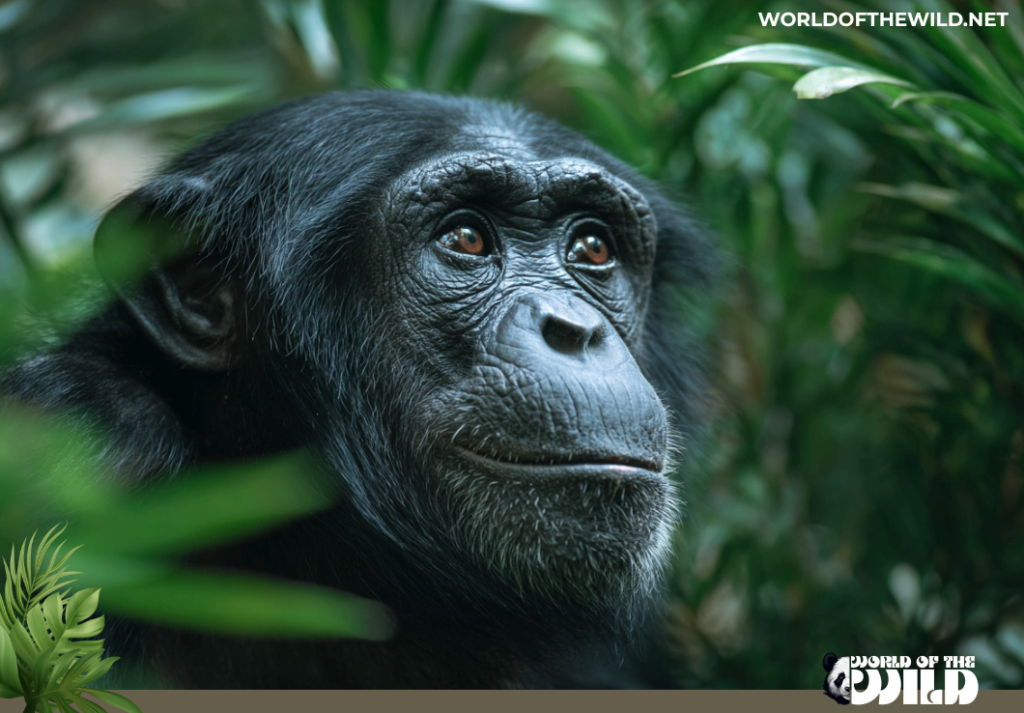
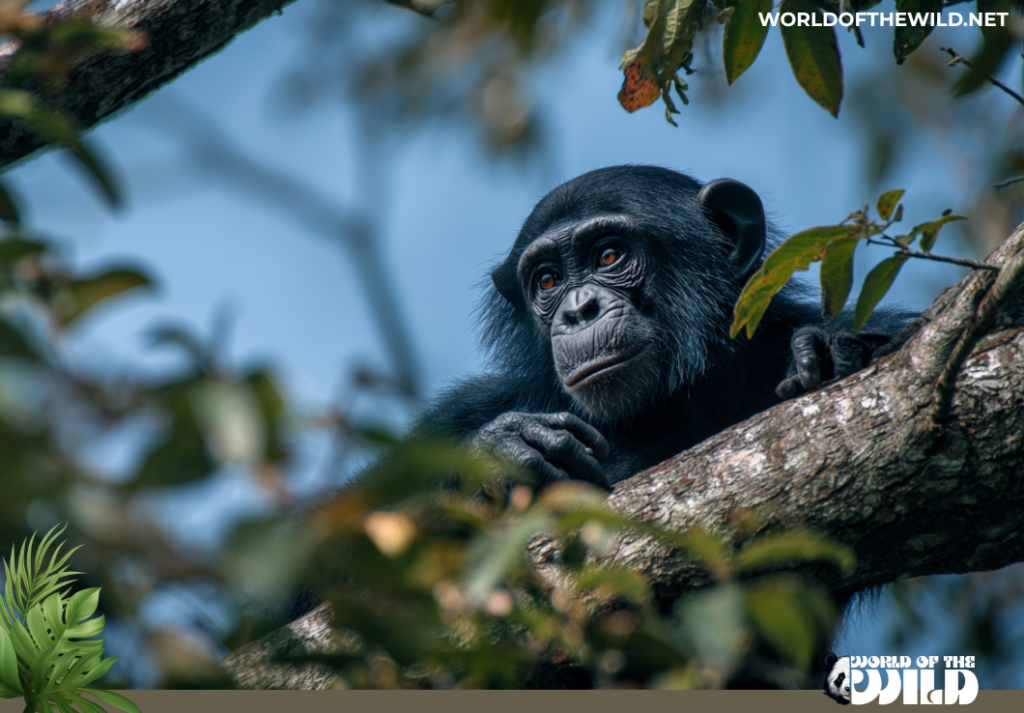
Bonobos inhabit primary and secondary lowland tropical rainforests, with a preference for dense, closed-canopy forest with a rich understory. They are highly dependent on forest that produces abundant fruit year-round, and unlike chimpanzees, they also exploit swampy forest areas and seasonal floodplains, thriving in conditions that other great apes might find inhospitable. Their ability to subsist on the herbaceous vegetation found in these wetter zones helps them maintain food security even when fruit is scarce.
Elevations typically range from near sea level to roughly 1,500 meters, though most populations are concentrated in lowland zones. The Congo Basin offers extraordinary biodiversity — the region is a refuge for forest elephants, okapis, and hundreds of bird species — creating a habitat that, while increasingly threatened, remains one of the most ecologically intact in Africa.
Diet
Bonobos are omnivores, though the overwhelming majority of their diet is plant-based. Ripe fruit is their preferred food and primary caloric source, sought across vast home ranges that can span dozens of square miles. Their diet shifts seasonally and by location, but consistently includes:
- Fruit (the dietary cornerstone — figs, berries, and other tropical fruits)
- Herbaceous vegetation, including leaves, stems, and the pith of plants — particularly important during periods of fruit scarcity
- Seeds and nuts
- Mushrooms
- Invertebrates — including insects, worms, and grubs
- Small vertebrates — occasionally, including small mammals, though far less frequently than in chimpanzees
Bonobos are primarily day foragers, using their memory of the forest landscape to navigate efficiently between fruiting trees. Females with infants often forage in smaller subgroups, while mixed-sex parties may travel together during periods of fruit abundance. Unlike chimpanzees, bonobos rarely engage in coordinated hunting and show much less inclination toward predatory behavior. Their terrestrial herbaceous vegetation (THV) consumption — ground-level plants rich in protein and fiber — is one of their key ecological adaptations, providing nutritional resilience when the forest’s fruit supply fluctuates.
Predators and Threats
Natural Predators: In their dense rainforest habitat, bonobos face relatively few natural predators as adults. Their primary threats in the wild include:
- Leopards (Panthera pardus): The most significant natural predator, capable of ambushing both adults and juveniles.
- Crocodiles (Crocodylus niloticus): A risk at river crossings and water sources.
- Large raptors: May occasionally prey on young or infant bonobos.
Adult bonobos in groups have few natural enemies, and their social cohesion offers considerable protection. Infants and juveniles are most vulnerable.
Human-Caused Threats: The existential threats to bonobos are overwhelmingly human in origin:
- Habitat Loss and Deforestation: Logging — both legal and illegal — agricultural expansion, and charcoal production are destroying and fragmenting the Congo Basin rainforest at an accelerating rate. Habitat loss isolates bonobo populations, reduces genetic diversity, and eliminates the continuous forest corridors they depend on.
- Bushmeat Hunting: Bonobos are hunted for bushmeat, both for local consumption and for trade. Though protected by national and international law, enforcement is deeply inadequate across much of their range.
- The Wildlife Trade: Infants are captured for the illegal exotic pet trade — a practice that typically involves killing the mother. Even a small number of removals can have devastating effects on local populations.
- Political Instability: The DRC has suffered decades of conflict, which undermines conservation efforts, empowers armed groups that engage in poaching, and displaces communities into forested areas where subsistence hunting increases pressure on wildlife.
- Disease: Like all great apes, bonobos are susceptible to human diseases, including respiratory illnesses and Ebola. Increased human encroachment makes disease transmission a growing risk.
Reproduction and Life Cycle
Bonobo reproduction is a slow, deliberate affair — a biological strategy that invests heavily in each individual offspring at the cost of overall reproductive rate.
Sexual Maturity and Mating: Females reach sexual maturity between 9 and 12 years of age, males somewhat later, around 14 to 15 years. Females experience a prolonged period of sexual swelling — a visible, pink swelling of the perineal region that signals reproductive status — but this swelling lasts far longer relative to the actual fertile window compared to chimpanzees, making it difficult to determine when ovulation actually occurs. This reproductive ambiguity is thought to play a role in reducing male-male competition.
Mating is promiscuous, with females mating with multiple males and males having no guarantee of paternity. This may reduce infanticide risk, as males cannot be certain which offspring are and are not theirs.
Gestation and Birth: After a gestation period of approximately 240 days (roughly 8 months), females give birth to a single infant. Twins are extremely rare. Births can occur at any time of year, though some studies suggest seasonal variation linked to food availability.
Parental Care: Bonobo mothers are extraordinarily devoted caregivers. Infants are carried ventrally (clinging to the mother’s chest) for the first several months, then dorsally as they grow. Weaning occurs gradually, typically between 4 and 5 years of age, and young bonobos remain closely associated with their mothers well into adolescence. Maternal status directly influences a son’s social rank — a remarkable form of intergenerational social inheritance.
Interbirth Interval: Females typically give birth every 4 to 6 years, one of the longest interbirth intervals among primates. This, combined with the long period of juvenile dependency, means that a female may raise only four or five offspring over her lifetime.
Lifespan: Bonobos in the wild are estimated to live 40 years or more, with captive individuals reaching their mid-to-late 50s. The oldest known captive bonobo, a female named Kosana at the Frankfurt Zoo, lived to approximately 55 years.
Population
The bonobo is classified as Endangered on the IUCN Red List of Threatened Species — a designation that reflects both the severity of the threats it faces and the troubling trajectory of its population.
Estimating bonobo numbers is extraordinarily difficult. Their forest habitat is vast, remote, and largely inaccessible — particularly given the ongoing instability across much of the DRC. Current estimates suggest a total wild population of somewhere between 15,000 and 20,000 individuals, though some assessments place the number lower. The population is neither stable nor recovering: across much of their range, bonobo numbers are declining, driven by habitat loss and hunting.
Key strongholds include the Salonga National Park — the largest tropical rainforest national park in Africa and a UNESCO World Heritage Site — and the Sankuru Nature Reserve, established in 2007 as one of the largest protected areas in Africa specifically to safeguard bonobo habitat. Conservation organizations including the Bonobo Conservation Initiative, the African Wildlife Foundation, and the Zoological Society of Milwaukee maintain programs focused on community-based conservation, anti-poaching efforts, and bonobo sanctuary rehabilitation.
In captivity, bonobos are maintained in a number of accredited zoological institutions worldwide, with breeding programs managed through coordinated species survival plans. However, captive populations are small and can never substitute for wild conservation.
The window for effective action is narrowing. Without sustained investment in both habitat protection and community engagement — ensuring that local people benefit from and participate in conservation — the bonobo’s future remains genuinely uncertain.
Conclusion
The bonobo forces us to ask harder questions about what we think we know. About violence and peace. About hierarchy and cooperation. About what it means to be human — and what it might mean to be something adjacent to human, looking back at us across the forest.
In an era when the narrative of nature is often framed as red in tooth and claw, the bonobo offers a quietly radical counterpoint: that empathy, cooperation, and social bonding are not uniquely human inventions, but deep evolutionary strategies with ancient roots. That peace, too, can be adaptive.
And yet this animal — our mirror, our evolutionary neighbor, our philosophical provocation — is sliding toward silence in the only forests it has ever known. The threats are real. The timeline is short. But the bonobo has survived for hundreds of thousands of years through intelligence, flexibility, and the power of social bonds.
Perhaps the question is whether we can do the same — whether we can extend those bonds beyond our own species, across the river, into the forest, and choose to protect what remains.
The bonobo cannot save itself. But we still can.
Quick Reference
| Field | Details |
|---|---|
| Scientific Name | Pan paniscus |
| Diet Type | Omnivore (primarily frugivorous) |
| Size | 28–35 inches tall (approx. 2.3–2.9 feet) |
| Weight | 66–130 pounds (females: 66–110 lbs; males: 75–130 lbs) |
| Region Found | Democratic Republic of the Congo (Central Africa) |