
There is something almost paradoxical about the Convict Cichlid. It is small enough to fit in the palm of your hand, yet bold enough to terrorize fish twice its size. It is common enough to be found in pet stores across the globe, yet complex enough to fascinate behavioral ecologists and aquarium hobbyists alike. Dressed in bold black-and-white stripes that earned it its notorious nickname, this Central American freshwater fish punches so far above its weight class that it has become one of the most studied cichlids in the scientific world. Whether you are a seasoned aquarist, a lover of wildlife, or simply someone who appreciates animals that refuse to be underestimated, the Convict Cichlid — Amatitlania nigrofasciata — is a creature absolutely worth knowing.
Facts
- Fearless defenders: Convict Cichlids are so aggressively protective of their eggs and young that they have been documented successfully chasing away fish more than ten times their own body size.
- Rapid breeders: A single breeding pair can produce a new clutch of eggs every four to six weeks under favorable conditions, making them one of the most reproductively efficient cichlids in captivity.
- Invasive outliers: Thanks to accidental and intentional releases, Convict Cichlids have established wild populations far outside their native range, including in Australia, Japan, Mexico, and the southern United States.
- Monogamous bonds: Unlike many fish species, Convict Cichlids form remarkably stable pair bonds. Mated pairs actively coordinate during spawning and fry-rearing, displaying a level of biparental cooperation rare in the fish world.
- Color-shifting females: While males are typically gray with black stripes, females go through a striking transformation during breeding, developing vivid orange or red patches on their bellies — a visual signal that signals reproductive readiness.
- Cognitive standouts: Research has shown that Convict Cichlids can recognize individual members of their own species and adjust their social behavior accordingly, a surprisingly sophisticated cognitive ability for a fish.
- Cave nesters by nature: In the wild, Convict Cichlids prefer to lay their eggs in sheltered caves, crevices, and under rocky overhangs, where they can more easily defend their clutch from predators.
Species
The Convict Cichlid occupies a well-defined position within the vast and diverse order of perch-like fishes. Its full taxonomic classification is as follows:
- Kingdom: Animalia
- Phylum: Chordata
- Class: Actinopterygii (Ray-finned fishes)
- Order: Cichliformes
- Family: Cichlidae
- Genus: Amatitlania
- Species: Amatitlania nigrofasciata
The genus Amatitlania itself is relatively small and closely clustered within the broader cichlid family. The Convict Cichlid was once classified under the genus Archocentrus and, before that, under Cichlasoma — a historically broad catch-all genus that has since been significantly revised as molecular phylogenetics has clarified evolutionary relationships.
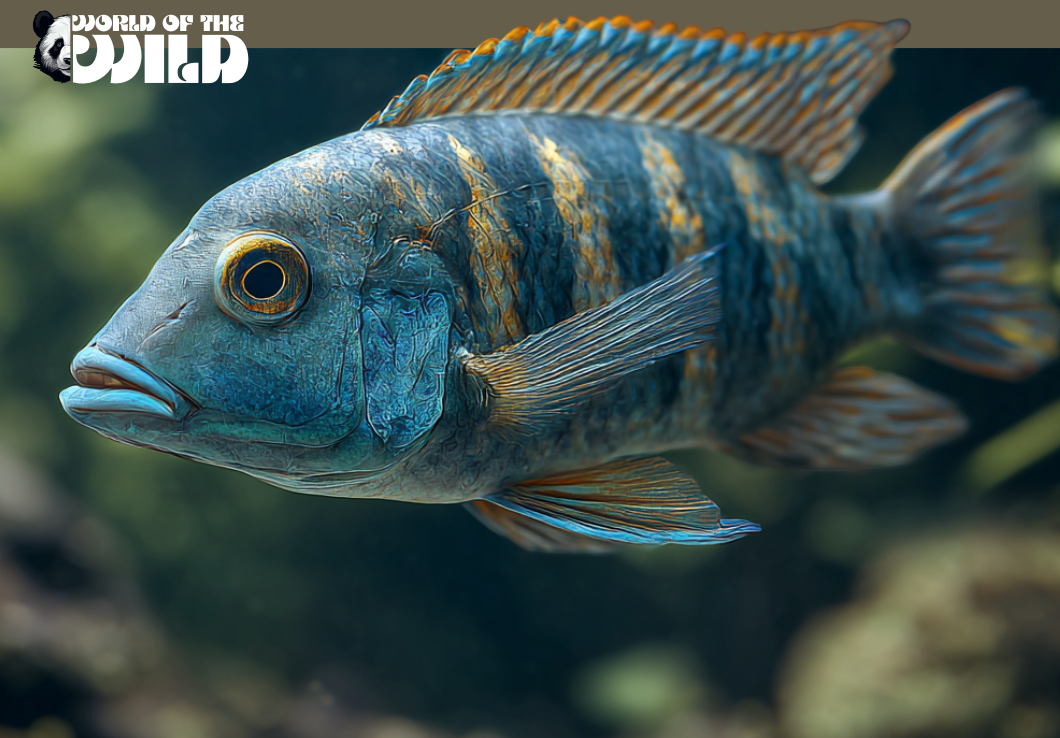
Several closely related species share the Amatitlania genus and bear a strong family resemblance to the Convict. Amatitlania siquia, sometimes called the Honduran Red Point Cichlid, is native to the Río Siquia and surrounding drainages in Nicaragua and Honduras. It differs subtly in coloration, with males showing bluish iridescence on the fins and body. Amatitlania coatepeque, found near Lake Coatepeque in El Salvador, is another close relative distinguished by minor differences in scale counts and geographic distribution. Amatitlania kanna from Panama rounds out the genus as another distinct species, separated by molecular data and habitat range.
A leucistic (white or pink) variant of the Convict Cichlid also exists in the aquarium hobby, known as the Pink Convict or White Convict. This color morph lacks melanin in its pigmentation, resulting in a pale pink or cream body with faint markings. While striking in appearance, this form is entirely a product of selective breeding and does not exist in the wild.
Appearance
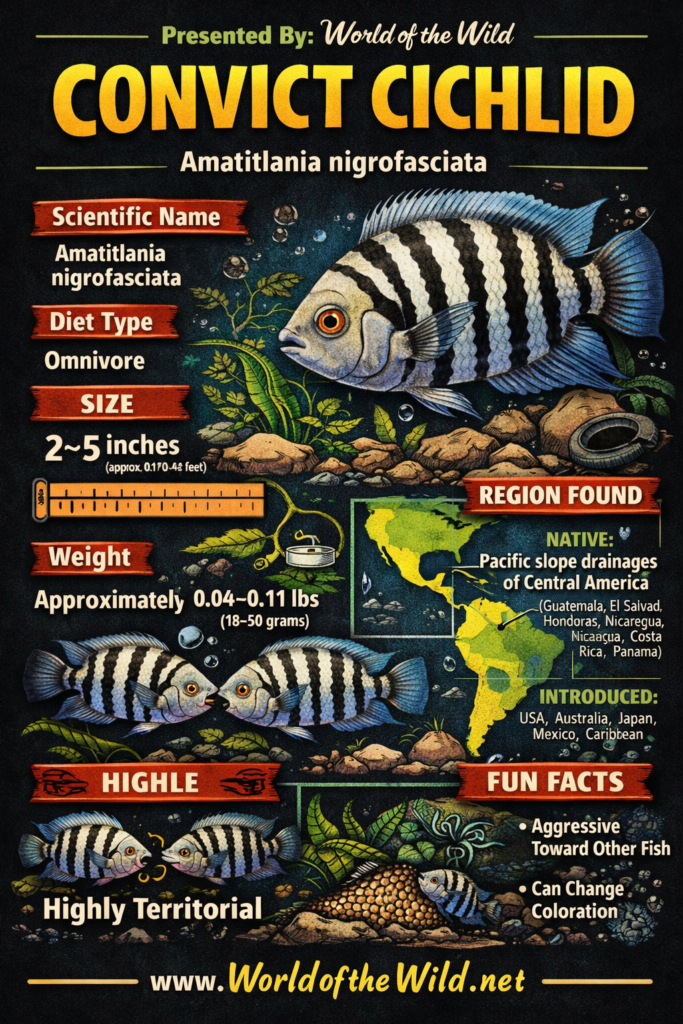
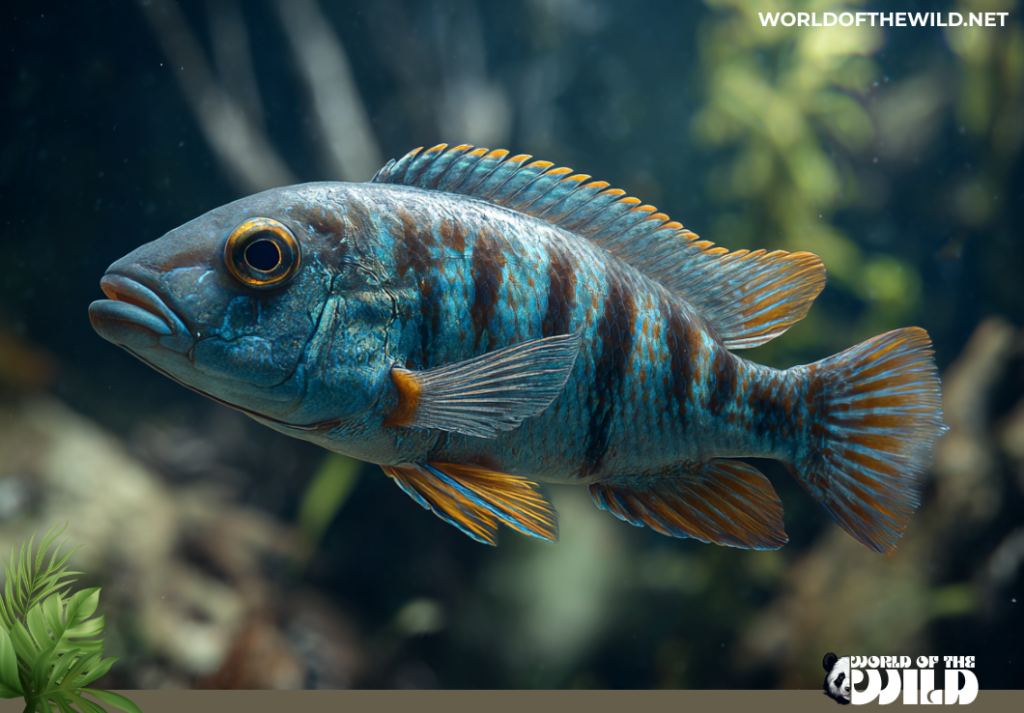
The Convict Cichlid is a compact, laterally compressed fish with an oval-shaped body and a slightly arched dorsal profile. Adults typically reach 2 to 4 inches in length, though males in particularly healthy, well-fed environments can occasionally approach 5 inches. Females are generally slightly smaller than males.
The most immediately recognizable feature is, of course, the striping. The body is a pale bluish-gray to silver base color, overlaid with 8 to 9 bold, vertical black bars that run from the dorsal surface down toward the belly — an unmistakable pattern that closely resembles the uniform of an old-fashioned prison convict, and the origin of the fish’s common name. These stripes are present in both sexes, though their intensity can vary with the fish’s mood, health, and stress level, darkening dramatically when the fish is agitated or establishing territory.
Sexual dimorphism is notable in this species. Males tend to be larger, develop a more pronounced cranial hump (a fatty deposit on the forehead) as they mature, and have longer, more pointed dorsal and anal fins. Females, by contrast, are slightly rounder in body shape and develop that distinctive orange-to-red patch on the lower abdomen and flanks during breeding condition — a splash of warm color that contrasts dramatically against the monochrome striping of the rest of the body.
The fins are themselves noteworthy. The dorsal fin runs nearly the entire length of the back and features both spiny rays anteriorly and soft rays posteriorly, a hallmark of cichlids. The tail fin is broad and fan-shaped. The overall coloration, while seemingly simple, shifts with remarkable fluidity depending on social context, and a fully colored-up breeding pair in peak condition is genuinely striking.
Behavior
The Convict Cichlid’s behavioral repertoire is one of the most compelling aspects of this species, and it is no coincidence that it has become a model organism for studies on aggression, parental care, and pair bonding in teleost fishes.
Aggression and Territoriality
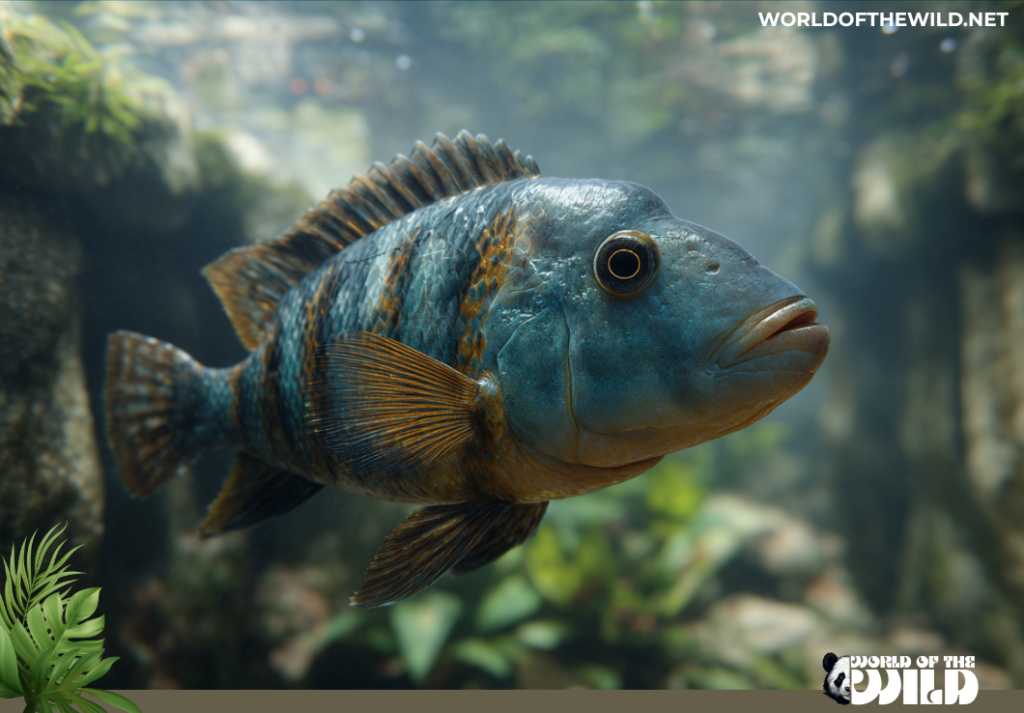
Simply put, Convict Cichlids are exceptionally aggressive for their size. They are highly territorial, particularly during breeding, and will relentlessly chase, fin-nip, and harry any fish — regardless of species or size — that ventures too close to their chosen territory. This aggression is not random; it is calculated and sustained. A breeding pair will work in tandem to repel threats, with each partner taking on a slightly different defensive role — the male typically engaging larger intruders while the female guards the fry more closely.
Social Structure
Outside of the breeding context, Convict Cichlids can be kept in groups, though hierarchies quickly establish themselves and subordinate individuals can be subjected to significant bullying. They are not a schooling fish in the traditional sense; rather, they are individualistic and socially aware, each fish maintaining awareness of others around it.
Communication
Like many cichlids, Convicts communicate through a combination of visual signals (body posture, fin flaring, color intensification), lateral line vibrations (low-frequency water movements sensed through sensory organs along the body), and chemical cues (pheromone-like compounds released into the water). During courtship, pairs engage in elaborate side-by-side shimmering displays, jaw-locking sparring (which paradoxically functions as both aggression and mate assessment), and a series of ritualized fin movements.
Intelligence and Problem Solving
Research published in behavioral ecology journals has demonstrated that Convict Cichlids possess individual recognition abilities — they can distinguish familiar individuals from strangers and modulate their aggression accordingly. They have also shown the capacity to adjust parental investment strategies based on perceived threat levels in their environment, suggesting a degree of behavioral flexibility more commonly associated with vertebrates far higher on the evolutionary tree.
Daily Activity
In the wild, Convict Cichlids are diurnally active, meaning they are most active during daylight hours. They spend significant portions of their day patrolling territory, foraging along the substrate, and — during breeding season — attending to eggs or fry.
Evolution
The cichlid family (Cichlidae) as a whole is one of the most species-rich vertebrate families on Earth, with over 1,700 recognized species and estimates suggesting the true number may exceed 3,000. The family’s evolutionary origin is believed to trace back to a freshwater lineage that diverged from other perciform fishes somewhere between 80 and 100 million years ago, during the Cretaceous period.
The center of cichlid diversity is sub-Saharan Africa, particularly the Great Rift Valley lakes of Tanganyika, Malawi, and Victoria, which together host hundreds of endemic species that arose through extraordinary adaptive radiation. However, a significant secondary diversification occurred in the Neotropics — the freshwater systems of Central and South America — after an ancestral cichlid lineage colonized the region, likely through trans-Atlantic dispersal or via ancient land connections, a topic still debated among biogeographers.
Central American cichlids, the group to which the Convict Cichlid belongs, represent a relatively recent radiation within the broader cichlid clade. Molecular clock analyses suggest that the diversification of the Central American cichlid fauna accelerated following the closure of the Isthmus of Panama approximately 3 million years ago, which dramatically altered freshwater drainage patterns and created new ecological niches.
The genus Amatitlania itself is believed to have diverged from related genera — including Cryptoheros and Archocentrus — relatively recently in geological terms. The precise relationships within this group were only substantially clarified in the 2000s and 2010s through mitochondrial DNA and nuclear marker analyses, which reshuffled many of the older, morphology-based classifications that had grouped these fish together in the now-abandoned catch-all genus Cichlasoma.
Habitat
The Convict Cichlid is native to the Pacific slope drainages of Central America, with its range extending from Guatemala and El Salvador in the north through Honduras, Nicaragua, and Costa Rica to Panama in the south. It is most commonly associated with the rocky, fast-moving streams and rivers that drain westward toward the Pacific Ocean, though it also occurs in lakes and slower-moving bodies of water.
Within these freshwater systems, Convict Cichlids show a strong preference for rocky substrates, which provide both the caves and crevices they need for nesting and the visual complexity that allows them to establish and defend territories. They are frequently found in areas with moderate to fast water flow, though they are also highly adaptable and can thrive in slower, more vegetated environments.
Water chemistry in their native habitat tends toward the warmer end of tropical parameters: temperatures typically range from 68°F to 82°F (20°C to 28°C), with a pH between 6.5 and 8.0 and moderate hardness. This broad tolerance for water chemistry is one of the key reasons the species has proven so successful as an aquarium fish and, unfortunately, as an invasive species. Convict Cichlids are notably hardy; they can tolerate a wider range of temperatures, pH levels, and water quality conditions than many other cichlids, allowing them to establish feral populations in habitats as diverse as the warm springs of Nevada, the waterways of Queensland, Australia, and irrigation canals in Japan.
Natural vegetation such as submerged roots, aquatic plants, and leaf litter also feature in their habitat, providing additional cover and foraging opportunities.
Diet
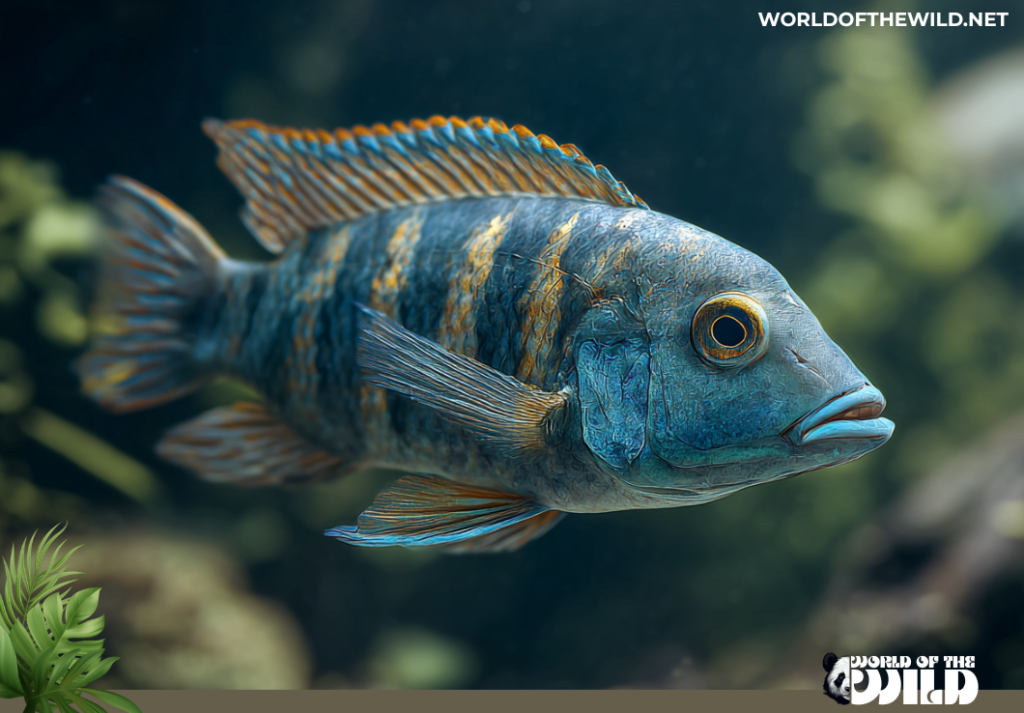
The Convict Cichlid is an omnivore with a broadly opportunistic feeding strategy. In its natural habitat, its diet consists of a wide variety of food sources, reflecting both the nutrient diversity of tropical stream ecosystems and the fish’s own behavioral flexibility.
Primary food sources in the wild include:
- Algae and aquatic plant material — scraped from rock surfaces and substrate
- Small invertebrates — including insect larvae, worms, and small crustaceans
- Detritus — organic matter and decomposing material on the streambed
- Small fish — though not a primary food source, fry and very small fish may be consumed opportunistically
Convict Cichlids are benthic foragers, meaning they primarily feed along the bottom and substrate rather than in open water. They use their slightly protrusible mouths to pick, scrape, and sift through material on the substrate. Their teeth are structured for this generalist diet — fine, comb-like rows that allow them to rasp algae from surfaces while also being capable of grasping small invertebrate prey.
This dietary versatility is another factor in their success as both a captive fish and an invasive species. In aquarium settings, they will readily consume prepared pellet foods, freeze-dried bloodworms, blanched vegetables, and live or frozen invertebrates. In the wild, introduced populations have demonstrated the ability to out-compete native species for food resources precisely because of this feeding flexibility.
Predators and Threats
Natural Predators
In their native Central American range, Convict Cichlids face predation from a range of aquatic and semi-aquatic predators. Larger piscivorous fish such as snook (Centropomus spp.), bass, and larger cichlid species present threats to juveniles and smaller adults. Wading birds — including herons and egrets — are significant predators at the water’s edge. Aquatic snakes, particularly species adapted to freshwater foraging, and small crocodilians in some parts of the range also present occasional threats.
The species’ legendary parental aggression has likely evolved, at least in part, as a direct response to these predation pressures. A pair of Convict Cichlids actively guarding a clutch of fry is a formidable obstacle for even determined predators.
Human-Caused Threats
Within their native range, Convict Cichlids face the pressures typical of freshwater fish across Central America:
- Habitat degradation: Deforestation, agricultural runoff, and the sedimentation of streams and rivers have reduced and degraded habitat quality across much of their native range.
- Water pollution: Pesticide runoff, industrial discharge, and poor waste management in rapidly urbanizing Central American countries have impacted water quality in many river systems.
- Dam construction: Hydroelectric development has altered flow regimes and fragmented populations in several river systems.
- Invasive species competition: Ironically, while the Convict Cichlid is itself an invasive species in many parts of the world, within its native range it can face competition from introduced tilapia and other exotic species.
Conversely, the Convict Cichlid’s role as an invasive species in its non-native range represents a significant ecological threat to native freshwater biodiversity. Introduced populations in Australia, Hawaii, Japan, and parts of the continental United States have been implicated in the decline of native fish and invertebrate species through competition, predation, and habitat alteration.
Reproduction and Life Cycle
The reproductive biology of the Convict Cichlid is, in many respects, the defining feature of the species — and the aspect of its biology most frequently cited in the scientific literature.
Pair Bonding and Courtship
Convict Cichlids are biparental substrate spawners that form relatively stable pair bonds. Courtship begins with a series of mutual displays: the pair swims side by side, shimmering their bodies, flaring fins, and engaging in ritualized mouth-wrestling (jaw-locking) that serves simultaneously as aggression and mate assessment. Once a pair bond is established, the partners work cooperatively to select and prepare a spawning site — typically a flat rock surface, the floor of a cave, or a cleared patch of substrate.
Spawning
The female deposits 100 to 300 eggs per clutch (sometimes more in large, well-fed females), attaching them adhesively to the chosen surface in a compact, organized mat. The male immediately fertilizes the eggs with a pass of his own. Both parents then take up close guard positions, fanning the eggs with their fins to ensure oxygenation and picking away any unfertilized or fungused eggs to protect the healthy clutch.
Larval Development and Parental Care
Eggs hatch in approximately 48 to 72 hours at typical tropical temperatures. The wriggling larvae (sometimes called “wigglers”) are often moved by the parents into pre-dug pits in the substrate, where they continue to develop while being guarded. After approximately 5 to 7 days, the fry become free-swimming and begin foraging independently, though parental supervision continues for several more weeks.
The intensity of parental care displayed by Convict Cichlid parents is remarkable. Both parents actively escort the fry cloud through the environment, positioning themselves on the outside of the group to intercept threats, and the pair will mount coordinated, aggressive defense responses to any perceived danger — including the hand of an aquarist reaching into the tank.
Lifespan
In the wild, Convict Cichlids likely live for 3 to 5 years, though exact data is limited. In aquarium conditions, with consistent water quality and diet, lifespans of 8 to 10 years have been reported, with some individuals potentially exceeding this.
Sexual Maturity
Convict Cichlids reach sexual maturity relatively quickly — typically within 6 to 9 months of age — and can begin breeding soon thereafter. This rapid maturation, combined with frequent spawning cycles, contributes to their success both in the aquarium hobby and as an invasive species in the wild.
Population
The Convict Cichlid is currently listed as Least Concern on the IUCN Red List of Threatened Species. This assessment reflects the species’ wide natural distribution, its high reproductive rate, its adaptability to a broad range of environmental conditions, and its established presence in numerous non-native regions worldwide.
No precise global population estimate is available for this species, as is the case for the vast majority of freshwater fish. However, within its native Central American range, the Convict Cichlid is considered locally abundant across much of its distribution, particularly in rocky, fast-flowing streams where suitable nesting habitat is available.
Population trends within the native range are considered stable, though localized declines have been noted in areas experiencing severe habitat degradation, deforestation-driven sedimentation, or heavy agricultural pollution. The species’ tolerance for a wide range of water quality conditions provides a degree of buffer against habitat deterioration that more sensitive freshwater species lack.
In non-native regions, introduced populations have proven remarkably self-sustaining. Feral populations have been documented in the United States (particularly in thermal spring systems in Nevada and Arizona), Australia, Japan, Mexico (outside the native range), and several Caribbean island systems. These introduced populations are, by various measures, thriving — which, while a testament to the species’ resilience, simultaneously underscores the ecological risks posed by their presence in ecosystems not adapted to their particular brand of competitive intensity.
The species’ popularity in the global aquarium trade ensures that captive populations are enormous, and it remains one of the most widely kept cichlids in the world.
Conclusion
The Convict Cichlid is, in every meaningful sense, a fish that earns its reputation. It is tough, intelligent, fiercely devoted to its offspring, and possessed of a personality that seems almost outsized for an animal that rarely exceeds four inches in length. From the rocky streams of Honduras to aquariums in living rooms across the globe, this small striped fish has made itself impossible to ignore — whether as a subject of scientific study, a beloved aquarium resident, or an unwelcome ecological interloper in waters far from home.
What makes the Convict Cichlid truly significant, beyond its individual fascination, is what it tells us about the extraordinary complexity hidden within even the most “ordinary” of animals. Its biparental care system rivals that of many birds and mammals in sophistication. Its behavioral flexibility has allowed it to colonize environments that would defeat far larger, seemingly more robust species. And its story — of an animal thriving so completely that it has overflowed beyond its own ecosystem — serves as a potent reminder of how fragile the balance of freshwater biodiversity can be.
For conservationists and aquarists alike, the Convict Cichlid represents both a call to responsibility and a reason for genuine wonder. If you keep one — or simply take the time to learn about one — approach it with the respect it has more than earned.
Quick Reference
| Scientific Name | Amatitlania nigrofasciata |
| Diet Type | Omnivore |
| Size | 2–5 inches (approx. 0.17–0.42 feet) |
| Weight | Approximately 0.04–0.11 lbs (18–50 grams) |
| Region Found | Native: Pacific slope drainages of Central America (Guatemala, El Salvador, Honduras, Nicaragua, Costa Rica, Panama); Introduced: USA, Australia, Japan, Mexico, Caribbean |