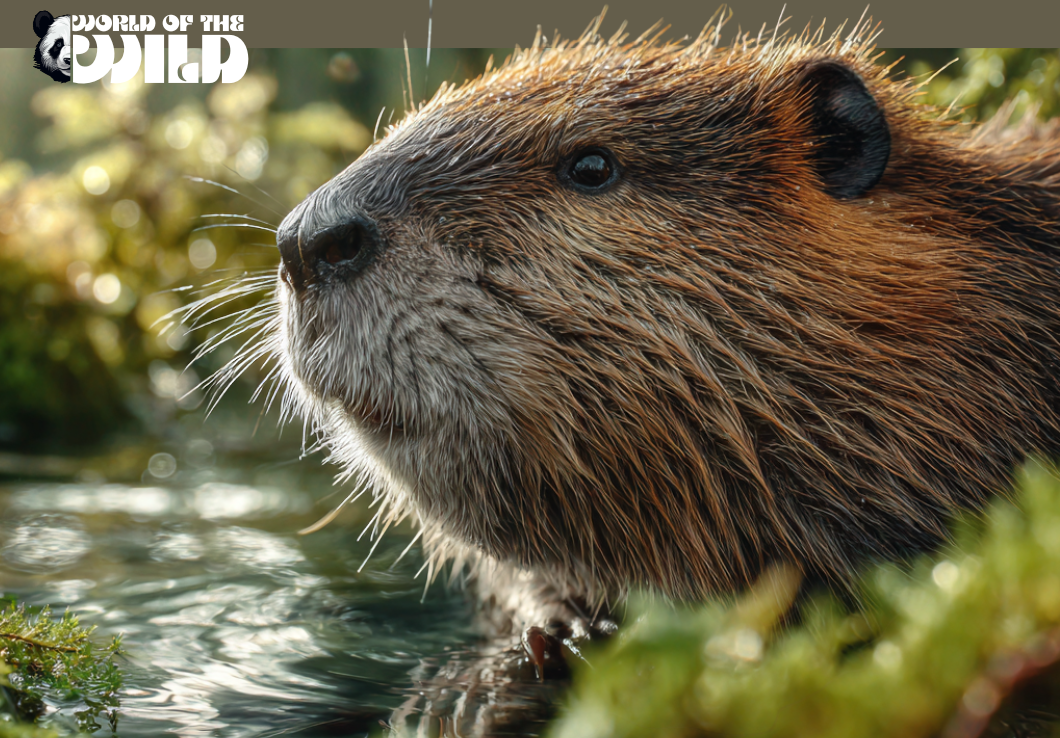

There are few animals on Earth that have so dramatically shaped the landscape around them — not through brute force or explosive population growth, but through sheer ingenuity and tireless effort. The North American Beaver (Castor canadensis) is one of nature’s most extraordinary architects, a creature whose compulsion to build has redirected rivers, created wetlands, and forged entire ecosystems from scratch. Long before humans ever picked up a shovel, beavers were engineering the North American continent, flooding valleys and raising water tables with methodical precision.
Once hunted to the brink of extinction for their impossibly soft fur, beavers have made a remarkable comeback — and scientists are only now beginning to fully appreciate just how vital these buck-toothed builders are to the health of the natural world. From drought mitigation to carbon sequestration, the humble beaver punches far above its weight. This is the story of an animal that doesn’t just live in its environment. It redesigns it.
Facts
- Beavers are the second-largest rodents on Earth, surpassed in size only by the South American capybara.
- Their teeth never stop growing — and are naturally orange. The orange color comes from iron-rich enamel that makes the teeth harder and more resistant to wear than typical mammal teeth.
- A beaver’s lodge can be surprisingly warm. Even in sub-zero temperatures, the interior of a well-insulated lodge can remain above freezing, providing a cozy refuge through brutal winters.
- Beavers have transparent eyelids — essentially built-in swim goggles. These nictitating membranes allow them to see clearly underwater while protecting their eyes.
- Beaver dams can be enormous. The world’s longest known beaver dam, discovered in Northern Alberta, Canada via satellite imagery, stretches over 2,790 feet — nearly half a mile long.
- They communicate through scent, not just sound. Beavers use a secretion called castoreum — produced by special glands near the base of their tail — to mark territory. Castoreum has historically been used in perfumes and even as a food flavoring.
- Beavers can hold their breath for up to 15 minutes, thanks to a slowed heart rate and highly efficient oxygen use during dives.
Species
The North American Beaver occupies a well-defined place in the animal kingdom:
| Rank | Classification |
|---|---|
| Kingdom | Animalia |
| Phylum | Chordata |
| Class | Mammalia |
| Order | Rodentia |
| Family | Castoridae |
| Genus | Castor |
| Species | Castor canadensis |
The family Castoridae was once far more diverse, containing dozens of species across the ancient world. Today, only two species survive: the North American Beaver (Castor canadensis) and the Eurasian Beaver (Castor fiber). Though they look nearly identical and share remarkably similar behaviors, the two species are not interfertile — they have different chromosome counts (the North American species has 40 chromosomes; the Eurasian has 48) and diverged from a common ancestor millions of years ago.
Within Castor canadensis, taxonomists have historically recognized over a dozen subspecies based on geographic variation, though most modern authorities consolidate these into a smaller number of recognized forms. Among the more notable are C. c. canadensis (the widespread nominate subspecies), C. c. mexicanus (found in the American Southwest and Mexico, now critically reduced in range), and C. c. pacificus (found along the Pacific coast). These subspecies differ subtly in skull morphology and body size, though they are largely indistinguishable to the untrained eye.
Appearance
The North American Beaver is unmistakable in its design — a body built not for grace, but for function. Adults are robust and barrel-shaped, covered in a dense double-layered coat. The outer layer consists of long, coarse guard hairs that repel water, while the underlayer is a thick, velvety underfur that traps air and insulates against cold water — a natural wetsuit that served as the obsession of the fur trade for over two centuries.
Coloration ranges from medium to dark brown across most of the body, with slightly paler undersides. The fur can appear almost reddish-brown in certain lights. Their large, flat, paddle-shaped tail — perhaps their most iconic feature — is covered not in fur but in scaly, leathery skin, and is used for swimming, balance, and communication. When slapped against the water, it produces a loud crack audible from a great distance, serving as an alarm signal.
Their hind feet are fully webbed for powerful swimming, while their smaller forepaws are nimble and dexterous — almost hand-like — used for carrying mud, sticks, and food with impressive precision. Their incisors are large, self-sharpening, and perpetually growing; as the softer dentine behind the hard enamel wears away faster, the teeth maintain a naturally chisel-sharp edge ideal for felling trees.
Adult beavers typically measure 35 to 46 inches in body length (roughly 3 to nearly 4 feet), with the tail adding another 12 to 18 inches. They stand about 12 inches tall at the shoulder and weigh between 35 and 60 pounds, though particularly large individuals can exceed 70 pounds.
Behavior
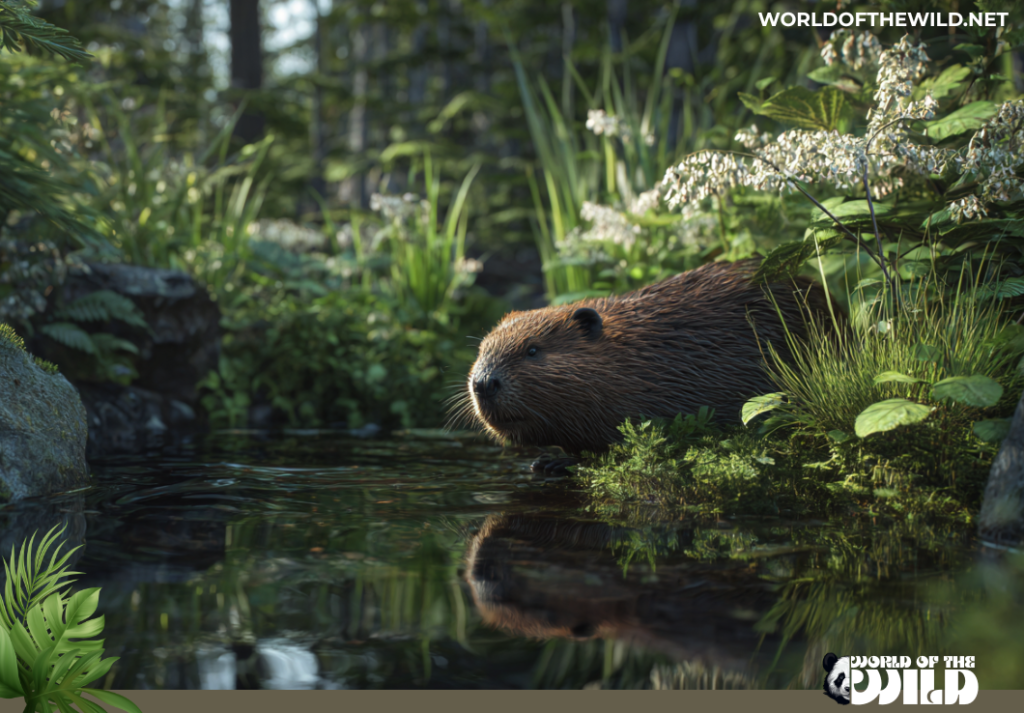
Beavers are fundamentally social animals, living in close-knit family units called colonies. A typical colony consists of a monogamous breeding pair and up to four offspring from the current and previous year. Young beavers, called kits, remain with their parents for about two years before being nudged — sometimes forcibly — out of the family territory to establish their own.
The signature behavior of the beaver, of course, is dam building. Triggered by the sound of running water (an acoustic cue that signals an uncontrolled waterway), beavers compulsively gather branches, logs, mud, and stones to dam streams and create ponds. These ponds serve multiple purposes: they provide safe underwater access to food caches, protect lodge entrances from predators, and facilitate the transportation of heavy building materials. Beavers are primarily nocturnal, doing most of their foraging and construction work under the cover of darkness.
Their lodges — dome-shaped mounds of sticks and mud built in the center of or along the edge of their ponds — are architectural marvels of the animal world. The interior chambers are plastered smooth with mud and may contain separate areas for sleeping, feeding, and drying off. Critically, the entrance tunnels are located below the waterline, making the lodge nearly impenetrable to wolves, bears, and other terrestrial predators.
Beavers are also surprisingly vocal, communicating through whines, hisses, and a range of low-frequency sounds. Scent mounds — piles of mud and debris infused with castoreum and deposited at the edge of their territory — serve as olfactory calling cards to neighboring colonies.
Intelligence-wise, beavers demonstrate genuine problem-solving ability, adapting dam designs to water flow, repairing breaches with precision, and even adjusting the angle and height of dams based on seasonal water levels.
Evolution
The beaver lineage is ancient and was once far more spectacular in scale. The family Castoridae first appears in the fossil record approximately 35 to 40 million years ago, during the Eocene epoch, with origins in North America. Early castorids were diverse in form — some were burrowers, others were semi-aquatic — and the family radiated broadly across the Northern Hemisphere.
The most famous relative of the modern beaver is Castoroides ohioensis, the Giant Beaver, which roamed North America during the Pleistocene epoch until its extinction roughly 10,000 years ago. This creature was the size of a black bear, reaching up to 8 feet in length and weighing as much as 220 pounds. Despite its impressive proportions, evidence suggests the Giant Beaver may have been a poor dam-builder — its teeth were shaped more for grinding aquatic vegetation than for felling trees, suggesting it occupied a very different ecological niche than its modern cousin.
The modern Castor lineage diverged from its Eurasian relatives somewhere between 7 and 10 million years ago, as continental geography shifted and populations became isolated. The evolution of dam-building behavior is believed to have been a key driver of the genus’s success, essentially allowing beavers to manufacture their own ideal habitat wherever they settled.
Habitat
The North American Beaver has one of the broadest geographic ranges of any large North American mammal. Historically, the species ranged across virtually all of North America — from the Arctic treeline in the north to the deserts of northern Mexico in the south, and from the Atlantic to the Pacific. Today, following major population declines and subsequent recovery, beavers occupy a range broadly similar to their historical extent, though they remain absent or rare in parts of the arid Southwest and in heavily altered urban landscapes.
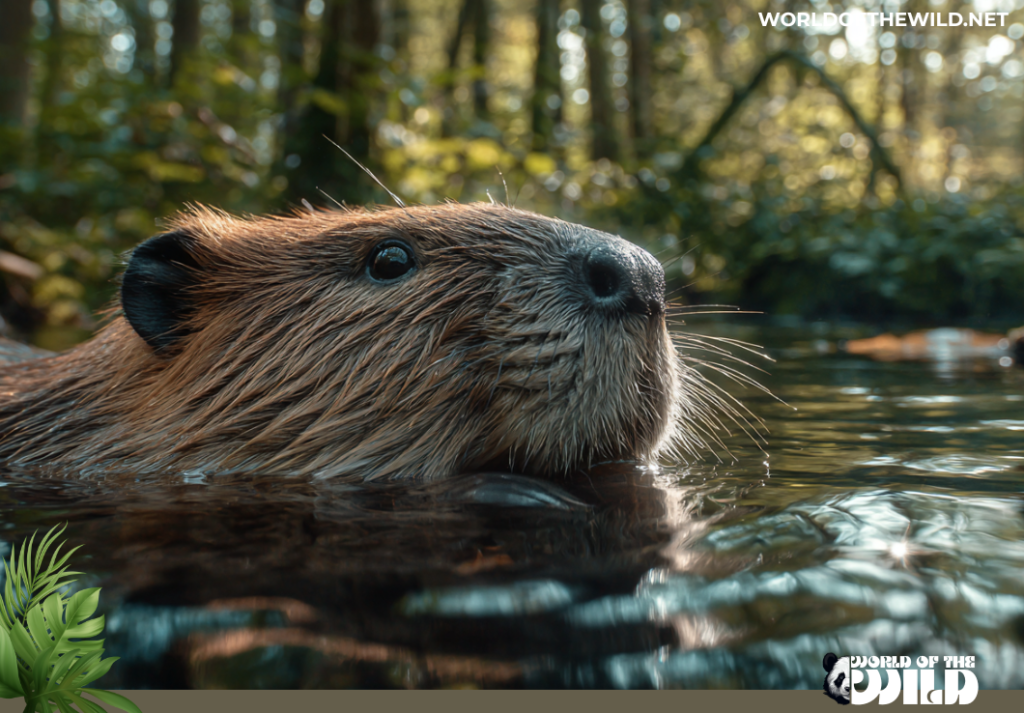
Beavers are quintessential freshwater habitat specialists. They require slow-moving or still water — streams, rivers, lakes, marshes, and ponds — surrounded by woodland vegetation, particularly stands of aspen, willow, birch, cottonwood, and alder. Their preference is for gentle stream gradients where dams can effectively create and hold ponds.
What makes the beaver’s habitat ecology so remarkable is that the animal doesn’t simply find suitable habitat — it creates it. A beaver dam can transform a rapidly draining stream valley into a sprawling wetland complex within months. These beaver-created wetlands are recognized as among the most biodiverse ecosystems in North America, providing habitat for fish, waterfowl, amphibians, invertebrates, and dozens of other mammal species that benefit from the standing water and lush vegetation the beavers maintain.
Diet
The North American Beaver is a strict herbivore, relying entirely on plant matter for nutrition. Their diet shifts significantly by season, which reflects both availability and the demands of surviving a North American winter.
During spring and summer, beavers forage widely on aquatic and riparian vegetation — water lilies, cattails, pondweed, sedges, and grasses. They also consume the leaves, shoots, and bark of a variety of deciduous trees and shrubs, with aspen, willow, alder, birch, and cottonwood being among their favorites.
As autumn approaches, beavers shift into intensive food-caching mode. They fell trees and branches and anchor them underwater near the lodge entrance — creating a submerged “larder” or food cache that remains accessible even when the pond surface freezes over. During winter, beavers rarely leave the water, subsisting almost entirely on this cached bark.
Beavers do not hibernate. Their thick fat reserves, carefully insulated lodge, and reliable food cache allow them to remain active beneath the ice throughout the coldest months, emerging only in mild spells or when food stocks require replenishment.
A beaver’s digestive system is specially adapted to extract maximum nutrition from woody plant material, including a process called cecotrophy — the re-ingestion of specially produced cecal pellets — which allows them to extract nutrients from cellulose that a single pass through the digestive tract would miss.
Predators and Threats
In the wild, North American Beavers face a suite of natural predators, though their combination of aquatic refuge, fortified lodges, and early warning systems makes them difficult prey. Wolves are perhaps their most significant natural predator across much of their northern range, ambushing beavers during the brief window when they venture onto land. Coyotes, bobcats, and mountain lions prey on beavers opportunistically, particularly on young animals or those caught far from water. River otters may occasionally take young kits, and black and brown bears are capable of dismantling lodges if sufficiently motivated. Great horned owls and other large raptors pose a threat to kits caught in the open.
The most devastating threat beavers have ever faced, however, was entirely human. The fur trade of the 17th, 18th, and 19th centuries drove beavers to near-extinction across enormous swaths of their range. By the early 20th century, populations were estimated to have collapsed from a historical high of perhaps 60 to 400 million individuals to fewer than 100,000. This catastrophic decline reshaped entire watersheds as beaver ponds drained and wetlands vanished.
Today, ongoing threats include habitat loss from agriculture, urban development, and stream channelization; lethal control programs where beavers are killed for flooding farmland, roads, or private property; and the fragmentation of riparian corridors that limits population connectivity. Climate change poses an emerging threat as well — though some models suggest warming temperatures and increased drought may actually expand beaver range northward as tundra thaws, the loss of snowpack and altered hydrology in mountain regions may make traditionally prime beaver habitat less viable.
Reproduction and Life Cycle
Beavers are among the most loyal of all wild mammals, forming monogamous pair bonds that typically last for life. Breeding occurs once per year, usually in January or February, while the pair is sheltered within their winter lodge.
After a gestation period of approximately 107 days, the female gives birth in late spring — typically May or June — to a litter of 1 to 6 kits, with an average of 3. Unlike many rodents, beaver kits are remarkably precocious at birth — they are born fully furred, with their eyes open, and are capable of swimming within hours of birth, though they are too buoyant to dive effectively for the first few weeks.
Both parents are actively involved in raising the young. Kits nurse for approximately 6 to 8 weeks, transitioning to solid food — tender vegetation, bark, and twigs — while still receiving parental guidance on foraging and construction. The previous year’s offspring, now yearlings, also contribute to kit care and colony maintenance in a cooperative family structure that is unusual among rodents.
Kits typically remain with the colony for two full years before dispersal. This dispersal phase is one of the most dangerous periods of a beaver’s life, as young animals must travel overland through unfamiliar territory to find unoccupied waterways. Many are killed by predators or vehicles during this journey.
Beavers reach sexual maturity at around 2 years of age and in the wild typically live 10 to 15 years. In captivity, lifespans of over 20 years have been recorded.
Population
The North American Beaver is currently listed as Least Concern on the IUCN Red List — a status that represents one of conservation’s genuine success stories. From that low point of fewer than 100,000 animals in the early 20th century, populations have rebounded dramatically thanks to the widespread abolition of commercial fur trapping regulations, active reintroduction programs, and the expansion of wildlife protection legislation including the U.S. Migratory Bird Treaty Act framework and national park protections.
Current population estimates for North America range from approximately 10 to 15 million individuals, with some estimates running higher. Populations are considered stable to increasing across much of Canada and the northern United States, and reintroduction efforts have successfully re-established beavers in many areas of the UK and Europe where Castor fiber had been similarly decimated.
That said, regional populations face significant pressure. In the American Southwest, populations of C. c. mexicanus remain sparse and vulnerable. In heavily urbanized and agricultural regions, beaver-human conflict continues to result in large numbers of animals being lethally removed each year. The challenge for the coming decades is not merely maintaining beaver numbers, but fostering genuine coexistence between humans and beavers — recognizing that the ecological services these animals provide are worth far more than the occasional flooded field.
Conclusion
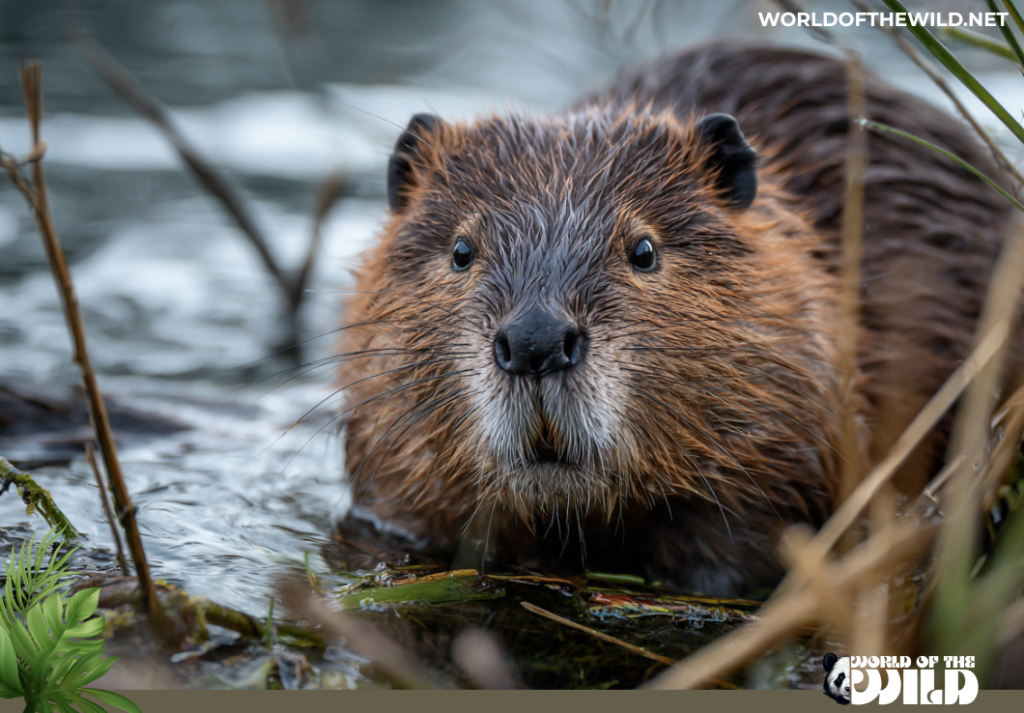
The North American Beaver is far more than a charming symbol of industriousness. It is a keystone species — an organism whose presence or absence reshapes everything around it. Beaver ponds filter water, recharge aquifers, reduce flood peaks, create carbon-storing wetlands, and support biodiversity at a scale no other single North American species can match. Ecologists increasingly refer to beavers as a form of natural infrastructure, and some conservation programs are now actively deploying beaver reintroductions as a low-cost strategy for restoring degraded watersheds and building climate resilience into landscapes.
The story of the beaver is a story of devastation and recovery — a reminder of how quickly we can unravel the work of millions of years of evolution, and how slowly, carefully, those systems can be put back together. As we face a future defined by water scarcity, flooding, and ecological collapse, we would do well to look to the beaver — not as a relic of a wilder past, but as a partner in rebuilding the natural world we’ve spent so long taking apart.
The next time you see a pond where a stream used to run, or a flash of a broad flat tail disappearing beneath dark water at dusk — recognize it for what it is. You are watching one of the oldest, most effective, and most essential engineers on the planet, clocking in for another night’s work.
Quick Reference
| Scientific Name | Castor canadensis |
| Diet Type | Herbivore |
| Body Length | 35–46 inches (~3 to nearly 4 feet); tail adds 12–18 inches |
| Weight | 35–60 lbs (occasionally exceeding 70 lbs) |
| Region Found | North America — Canada, United States (most regions), northern Mexico |