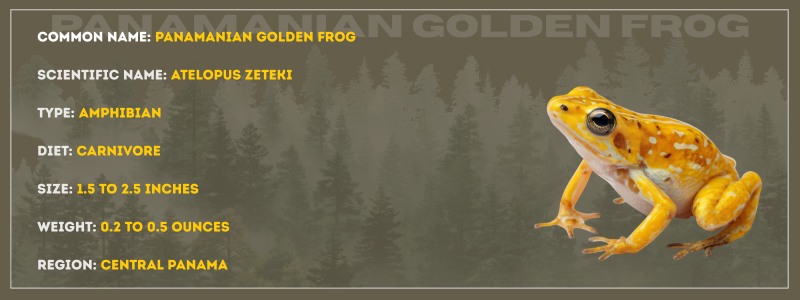

Imagine a creature so deeply woven into a nation’s cultural identity that it appears on lottery tickets, pottery, and T-shirts — a symbol of good luck cherished for centuries. Now imagine that this same creature has effectively vanished from the wild, surviving today only in the careful, climate-controlled rooms of captive breeding facilities. That is the heartbreaking paradox of the Panamanian Golden Frog (Atelopus zeteki), one of the most iconic and critically endangered amphibians on Earth.
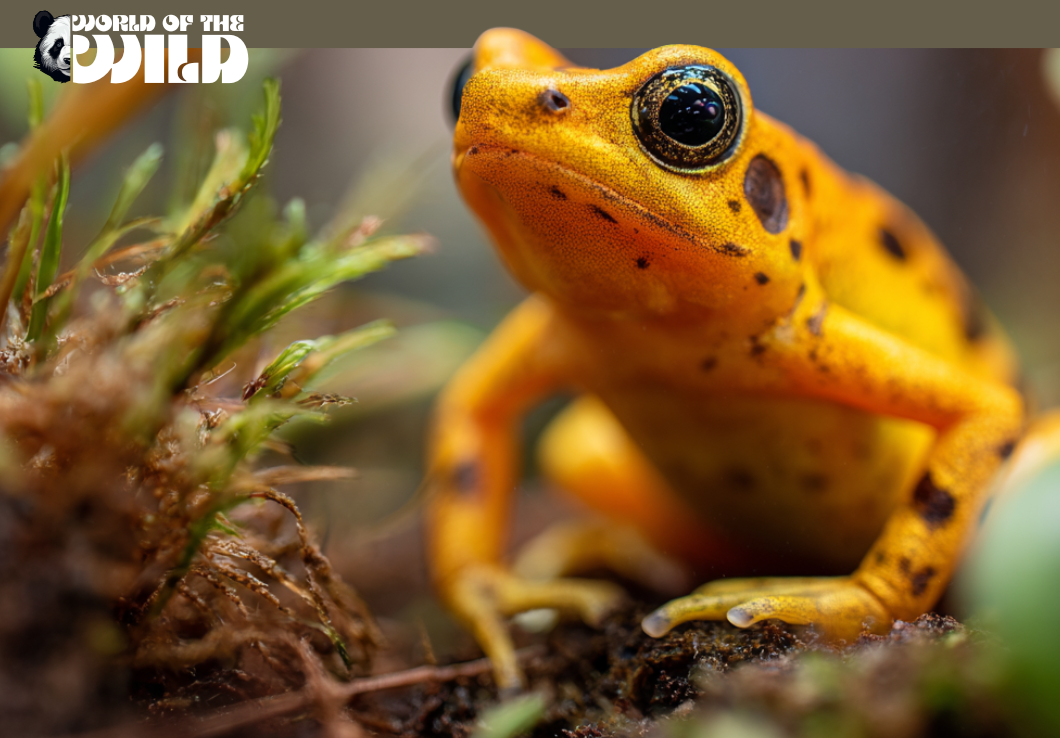
Draped in vivid, sun-yellow skin adorned with bold black markings, this tiny frog punches far above its weight in terms of scientific significance, cultural meaning, and ecological value. It produces one of the most potent natural toxins ever discovered, communicates in ways almost unheard of in the amphibian world, and has become a rallying symbol for global amphibian conservation. To understand the Panamanian Golden Frog is to understand both the breathtaking wonder of biodiversity and the very real cost of losing it.
Facts
- The Panamanian Golden Frog is the national animal of Panama and is widely considered a symbol of good fortune in Panamanian folklore — spotting one in the wild was historically believed to bring prosperity and luck.
- Despite being called a “frog,” it is technically a toad, belonging to the family Bufonidae, the true toads.
- It produces a water-soluble neurotoxin called zetekitoxin (ZTX), which is chemically distinct from the batrachotoxins found in poison dart frogs and so potent that even tiny amounts can be lethal to predators.
- The species communicates using semaphore-like hand-waving gestures — a behavior called “foot-flagging” — making it one of the very few amphibians known to use visual signals in addition to vocalizations.
- The Panamanian Golden Frog is believed to be extinct in the wild as of the early 2010s, wiped out primarily by the chytrid fungal disease chytridiomycosis.
- The frog plays a starring role in “Project Golden Frog,” a multinational conservation collaboration involving zoos, aquariums, and the Panamanian government dedicated to preserving the species and eventually reintroducing it into the wild.
- Its skin coloration is a textbook example of aposematism — the use of bright colors to warn predators of toxic danger.
Species
The Panamanian Golden Frog sits within the broader tapestry of life as follows:
| Rank | Classification |
|---|---|
| Kingdom | Animalia |
| Phylum | Chordata |
| Class | Amphibia |
| Order | Anura |
| Family | Bufonidae |
| Genus | Atelopus |
| Species | Atelopus zeteki |
Atelopus zeteki belongs to the genus Atelopus, commonly known as harlequin toads or stubfoot toads, a diverse and tragically imperiled group of over 100 species found across Central and South America. Within this genus, the Panamanian Golden Frog is most closely related to Atelopus varius, the variable harlequin toad, and the two were once considered the same species. Some taxonomists recognize two informal “forms” of A. zeteki based on slight variations in coloration and pattern between populations from different river systems in central Panama, though these have not been formally described as distinct subspecies. The broader Atelopus genus is itself in severe crisis — more than two-thirds of its species are threatened or have experienced dramatic population collapses since the 1980s, making it one of the most endangered genera of vertebrates on the planet.
Appearance
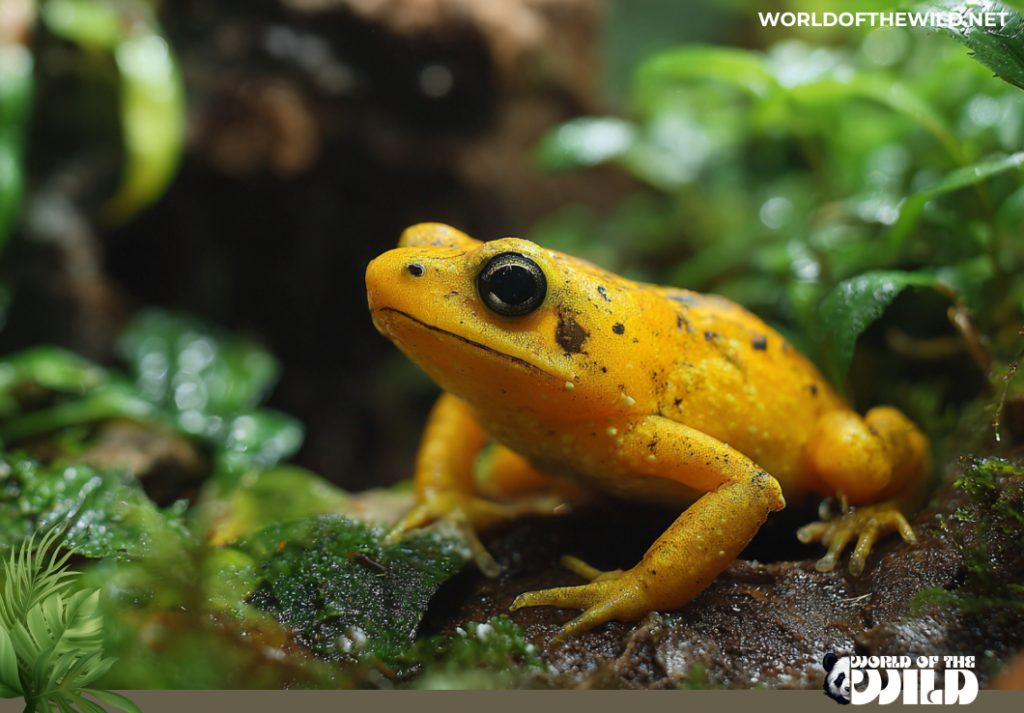
The Panamanian Golden Frog is a strikingly beautiful animal whose appearance almost seems designed to demand attention — which, from an evolutionary standpoint, it absolutely is. Adults range from about 1.5 to 2.5 inches in length, with females being noticeably larger than males, a common trait known as sexual dimorphism in amphibians. Females can weigh up to 15 grams (roughly 0.5 ounces), while the smaller males typically weigh between 3 and 12 grams.
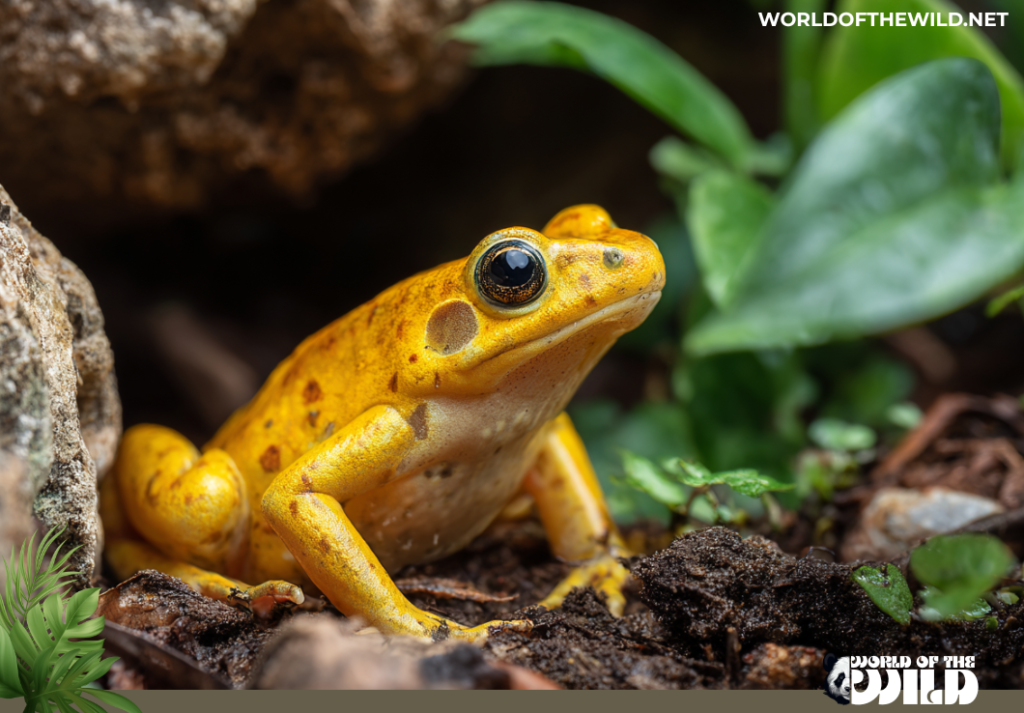
Its base coloration is a vivid, almost luminous yellow-gold, ranging in some individuals to a more yellowish-green hue. Scattered across this golden canvas are irregular, sharply defined black spots and blotches that vary uniquely between individuals, much like fingerprints. The skin has a slightly warty texture on the back, consistent with its classification as a toad, while the underside tends to be smoother and paler. The eyes are large and golden-brown, positioned high on a relatively narrow, pointed head. The limbs are slender and long for a toad, giving it a more frog-like silhouette, and the fingers and toes lack the webbing seen in more aquatic species. Male frogs develop darkened nuptial pads on their forelimbs during breeding season, which help them grip females during amplexus.
Behavior
The Panamanian Golden Frog is primarily diurnal — active during daylight hours — which is somewhat unusual among amphibians but makes sense for a creature that relies on its vivid coloration to warn off predators. It doesn’t need the cover of darkness when its very appearance says, “Don’t even think about it.”
One of the most extraordinary aspects of its behavior is its use of visual communication. Living near fast-moving streams where the sound of rushing water drowns out most vocalizations, these frogs have evolved a remarkable alternative: they wave their limbs in deliberate, semaphore-style gestures to communicate with one another. Males use foot-flagging to establish territory, warn rivals, and signal to females. This behavior is rare among vertebrates generally and almost unheard of in amphibians, placing the Panamanian Golden Frog in an elite class of visually communicating animals.
Males are territorial and will compete aggressively for prime stream-side real estate, sometimes wrestling rivals into the water. They are not particularly social outside of the breeding season, and individuals tend to have relatively small home ranges anchored to specific stretches of rocky stream. Despite their toxic skin, they are not immune to stress and are sensitive to environmental disturbances, making them excellent bioindicators of ecosystem health.
Evolution
The amphibians as a class have an ancient lineage stretching back roughly 370 million years, making them among the earliest vertebrates to colonize land. The order Anura — the frogs and toads — emerged during the Triassic period, approximately 250 million years ago, and has diversified enormously since.
The family Bufonidae, to which the Panamanian Golden Frog belongs, is thought to have originated in South America and spread northward through Central America as the Isthmus of Panama formed roughly 3 million years ago during the Great American Biotic Interchange. This geological event was transformative for life in the Americas, allowing species to migrate between formerly separated continents and driving rapid evolutionary diversification.
The genus Atelopus is considered relatively ancient within the Bufonidae family, and its members likely diversified rapidly in the complex, mountainous terrain of the Andes and Central American highlands, where geographic isolation between river valleys and ridge systems would have encouraged speciation. The evolution of potent skin toxins in Atelopus species — and the accompanying bright warning coloration — represents a highly successful antipredator strategy that has evolved independently multiple times across amphibian lineages, a striking example of convergent evolution. The specific compound zetekitoxin found in A. zeteki is chemically unique enough to suggest it has had a long, independent evolutionary history within this lineage.
Habitat
The Panamanian Golden Frog is endemic to Panama — meaning it exists nowhere else on Earth outside of human care. Within Panama, its historical range was concentrated in the central highlands, particularly in the regions around El Valle de Antón, Coclé Province, and the Río Chagres watershed on both sides of the Continental Divide. This is a remarkably restricted range for a national symbol, spanning only a handful of valleys and river systems.
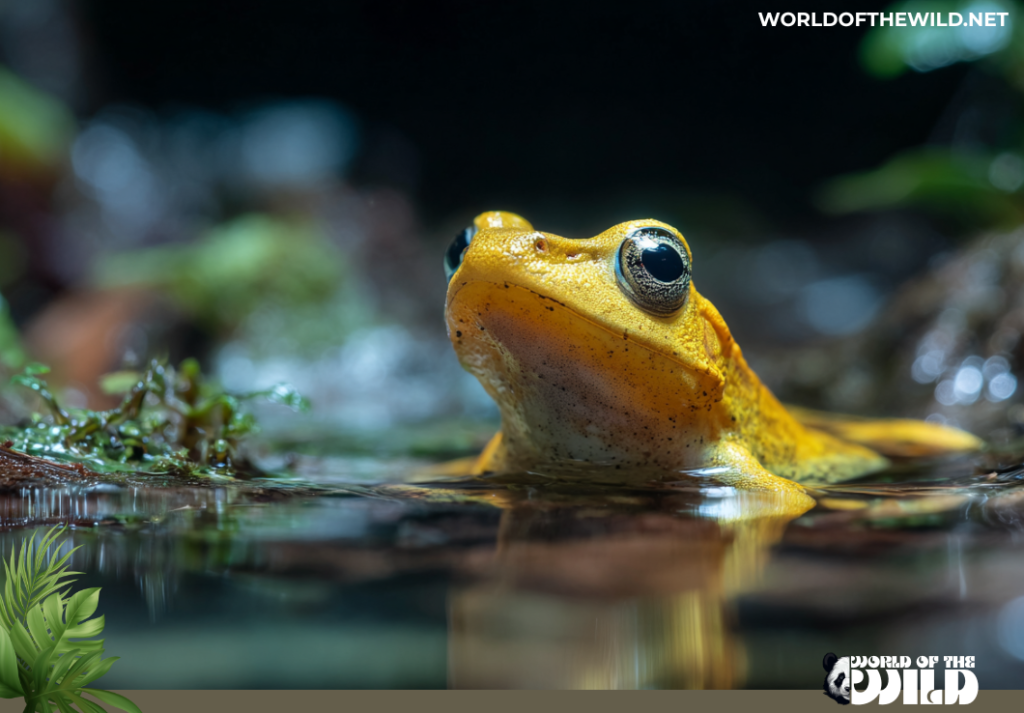
The frog’s preferred habitat is the rocky, fast-flowing mountain streams and adjacent cloud forest and premontane wet forest that characterize the Panamanian highlands, typically at elevations between about 300 and 1,300 meters above sea level. These streams are cold, clear, well-oxygenated, and surrounded by dense, humid vegetation. The frogs are closely tied to the streamside environment: they breed in the water, their tadpoles develop in stream pools sheltered from the strongest currents, and adults shelter under rocks, leaf litter, and mossy banks nearby. The humidity of the surrounding forest is critical, as amphibians breathe partially through their skin and are highly vulnerable to desiccation. The loss or degradation of even small sections of this specific microhabitat can have outsized consequences for local frog populations.
Diet
The Panamanian Golden Frog is a carnivore, specifically an insectivore, relying almost entirely on small invertebrates for its nutritional needs. Like most anurans, it is an opportunistic sit-and-wait predator — it positions itself in a promising location and uses its long, sticky tongue to snatch passing prey with remarkable speed and precision.
Its diet consists primarily of small insects such as beetles, ants, flies, and springtails, as well as other tiny invertebrates including mites and small spiders that are found in the leaf litter and on streamside vegetation. Tadpoles, by contrast, are algae scrapers, using specialized mouthparts to graze on biofilms and algae growing on submerged rocks in their stream habitat. This shift in diet between larval and adult stages is a hallmark of amphibian biology and reflects the dramatic ecological transformation that occurs during metamorphosis. The accumulation of toxins in the adults is believed to be partly diet-mediated — the frogs sequester and modify chemical compounds from their prey to produce or enhance their own defensive toxins, a strategy shared with other toxic amphibians.
Predators and Threats
In their natural environment, Panamanian Golden Frogs’ primary defense against predation is, of course, their potent skin toxins backed by their unmistakable warning coloration. Nonetheless, they are not entirely without natural predators. Some snake species, particularly those that have evolved tolerance to amphibian toxins, may attempt to prey on them. Certain birds and small mammals that are inexperienced or unaware of their toxicity may also occasionally attack them, usually to their immediate regret.
But natural predation pales in comparison to the existential threats posed by humans and human-driven change. The most catastrophic of these is chytridiomycosis, a fungal disease caused by Batrachochytrium dendrobatidis (Bd), which has driven the Panamanian Golden Frog to functional extinction in the wild. Bd likely spread to Panama through a combination of global trade in amphibians and contaminated water supplies, and it devastated frog populations with terrifying speed in the early 2000s. The fungus attacks the skin of amphibians, disrupting their ability to regulate water and electrolytes, essentially causing the animals to die of a heart attack.
Beyond disease, the species faces significant pressure from habitat destruction driven by deforestation, agricultural expansion, and human settlement in its highland range. Water pollution from pesticide runoff and sewage degrades the stream habitats that the frog depends on. Climate change poses a growing threat by altering temperature and precipitation patterns in the highlands, potentially making the habitat less suitable and stressing already vulnerable populations. Finally, historic collection for the illegal pet trade, while not the primary driver of decline, placed additional pressure on wild populations before they collapsed.
Reproduction and Life Cycle
Breeding in the Panamanian Golden Frog is a streamside affair, tied closely to the seasonal rhythms of rainfall and temperature in the Panamanian highlands. Males establish territories along streams and use a combination of vocalizations — a soft, whistling call — and their distinctive foot-flagging semaphore to attract females and warn away rivals. Competition among males can be intense, with larger males generally more successful at securing and defending prime territories near the water.
When a female selects a mate, the male grasps her around the waist in a prolonged embrace called amplexus, which can last for several hours or even days. The female deposits her eggs in strings directly into the water, typically anchored to rocks or submerged vegetation in calmer sections of the stream, away from the strongest current. A single clutch can contain anywhere from 200 to over 600 eggs, a relatively high number that reflects the significant mortality eggs and tadpoles face in the stream environment.
The eggs hatch into tadpoles within a few days to a couple of weeks depending on water temperature. The tadpoles are adapted to life in flowing water, with strongly muscled tails and sucker-like mouths for clinging to rocks and grazing on algae. They develop through a series of stages over several weeks to months before undergoing metamorphosis and emerging as tiny, fully formed froglets. These juveniles are initially paler and less dramatically patterned than adults, gradually developing their full golden coloration over the following months as they mature.
Sexual maturity is reached at around one to two years of age. In the wild, Panamanian Golden Frogs were estimated to live for approximately 10 to 12 years, though the data on wild longevity is limited given how rapidly wild populations disappeared. In captivity, individuals have lived for more than a decade under optimal care.
Population
The Panamanian Golden Frog is classified as Critically Endangered on the IUCN Red List — the highest threat category before extinction. More starkly, the species is widely considered to be functionally extinct in the wild, with no confirmed wild sightings in over a decade in most of its former range. A small number of isolated individuals may persist in remote, as-yet-unsurveyed areas, and Panamanian conservation organizations occasionally report unconfirmed sightings, but these remain unverified.
Today, the species survives in captivity through coordinated efforts involving over 50 institutions in the United States, Europe, and Panama. Thousands of individuals are maintained in carefully managed breeding programs, preserving the genetic diversity of the species against the day when it may be possible to reintroduce them to the wild. However, reintroduction remains a distant hope as long as Bd remains endemic in Panamanian streams. Researchers are actively exploring strategies including the use of probiotic skin bacteria to confer some resistance to the fungus, targeted environmental treatment, and selective breeding for disease resilience — but none of these approaches has yet reached a stage where large-scale wild reintroduction is feasible or safe.
Conclusion
The Panamanian Golden Frog is far more than a beautiful face on a lottery ticket. It is a marvel of evolutionary ingenuity — a creature that developed one of nature’s most potent chemical defenses, learned to communicate through gesture across the roar of mountain streams, and captured the hearts of an entire nation. Its story is also a warning: a vivid, golden-colored reminder of how quickly we can lose species that have taken millions of years to evolve, and how thoroughly human activity — from global trade to deforestation to climate change — can unravel the fabric of biodiversity.
But it is not yet a story with a fixed ending. The dedicated scientists, zookeepers, and conservation organizations working tirelessly to keep this species alive in captivity represent a genuine beacon of hope. If we can solve the problem of chytridiomycosis — and researchers around the world are working hard to do exactly that — the Panamanian Golden Frog could once again wave its golden hand from the rocky banks of a highland stream.
The question is whether we will act with enough urgency, funding, and commitment to give it that chance. The frog has always been a symbol of good luck in Panama. Perhaps it’s time for humanity to return the favor.
Quick Reference
| Scientific Name | Atelopus zeteki |
| Diet Type | Carnivore (insectivore) |
| Size | 1.5 – 2.5 inches (0.125 – 0.21 feet) |
| Weight | 0.007 – 0.033 lbs (3 – 15 grams) |
| Region Found | Central Panama (endemic); captive populations maintained worldwide |