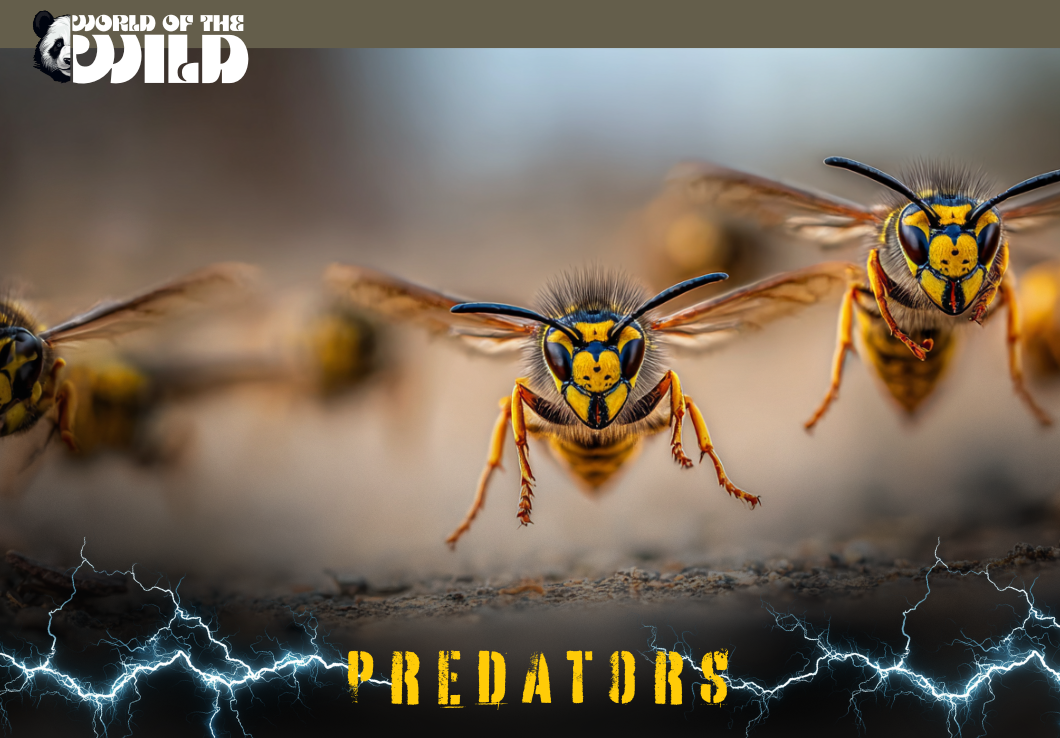

Yellow jackets are among the most recognizable and feared insects in North America. With their distinctive black and yellow striped bodies and aggressive defensive behavior, these social wasps command respect from humans and animals alike. However, despite their formidable stingers and colonial defense systems, yellow jackets are far from invincible. In fact, they face predation from a surprising array of animals across multiple taxonomic groups. From massive bears to tiny dragonflies, nature has equipped numerous species with the ability to overcome the yellow jacket’s defenses and feast on these protein-rich insects.
Understanding the natural predators of yellow jackets not only provides fascinating insight into ecosystem dynamics but also offers practical knowledge for those seeking natural pest control solutions. In this article, we’ll explore the diverse cast of predators that keep yellow jacket populations in check, examining how each has adapted to deal with these stinging insects.
Mammalian Predators: The Heavy Hitters
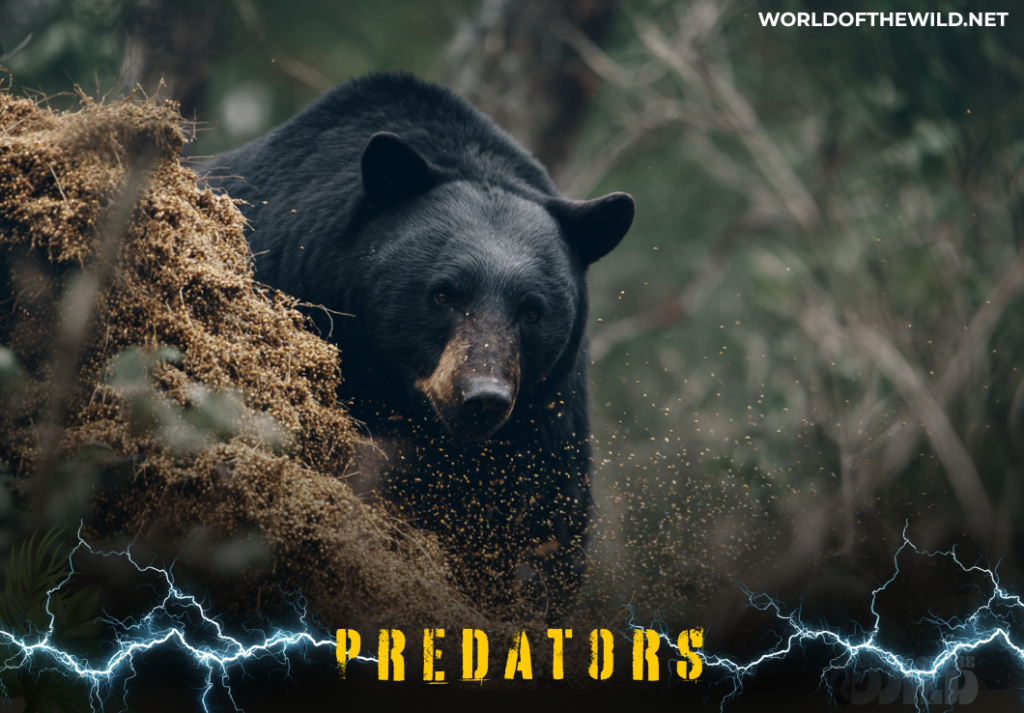
Black Bears
When it comes to yellow jacket predation, black bears are the undisputed champions among North American mammals. These powerful omnivores actively seek out yellow jacket nests, particularly those built underground in abandoned rodent burrows—the preferred nesting sites for many species. Bears possess several adaptations that make them particularly effective yellow jacket hunters.
Their thick fur provides substantial protection against stings, allowing them to endure the angry swarm of defenders while tearing open nests to access the protein-rich larvae and pupae inside. While adult yellow jackets contribute to a bear’s diet, the real prize is the developing brood. Insects constitute a significant portion of a black bear’s diet, with some studies suggesting that protein from insects can represent up to 25% of their nutritional intake during certain seasons.
Interestingly, if you examine bear scat in areas with high yellow jacket populations, you’ll often find the undigested exoskeletons of adult wasps, evidence of their recent feast. Bears typically raid nests at night or during early morning hours when the wasps are less active and confined to their colony, making them easier targets.
Skunks
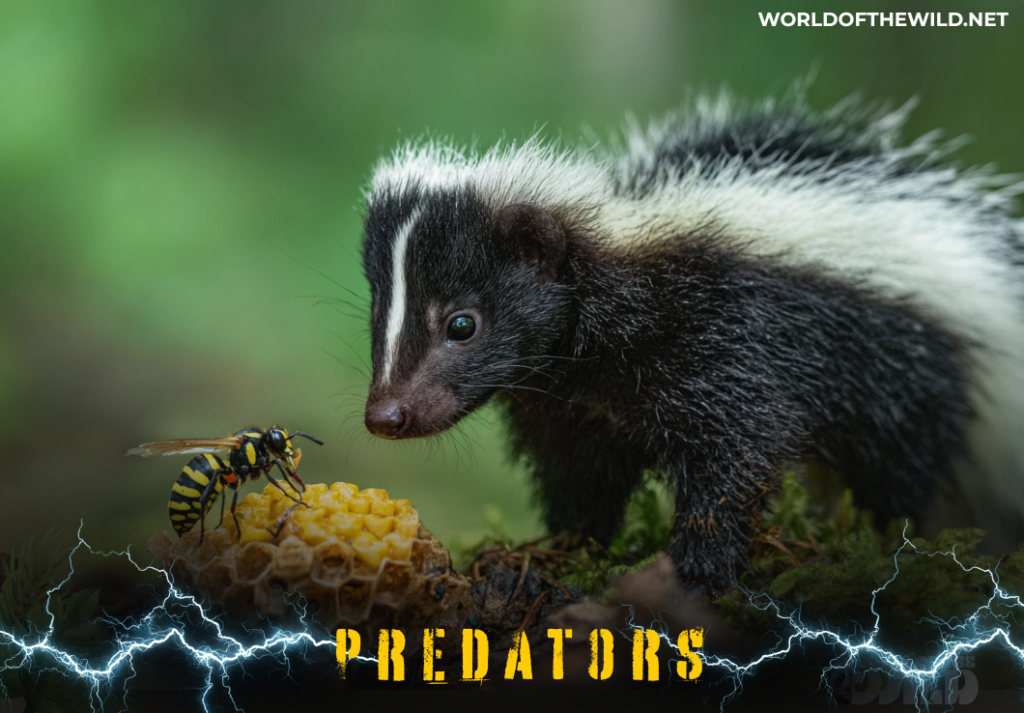
Skunks rank among the most important natural predators of yellow jackets, particularly in controlling ground-nesting populations. These nocturnal mammals have developed a remarkably effective strategy for exploiting yellow jacket colonies. Under the cover of darkness, skunks use their sensitive noses to locate underground nests, then employ their powerful claws to dig into the colony entrance.
What makes skunks particularly well-suited for this dangerous work is their thick fur and relatively low sensitivity to wasp venom. While they certainly get stung during their raids, skunks seem remarkably tolerant of the pain. They methodically excavate the nest, consuming adult wasps, larvae, and pupae with equal enthusiasm. In studies conducted in Georgia and Indiana, researchers identified raccoons and skunks as the primary yellow jacket predators in those regions, with skunks being especially effective at controlling underground colonies.
Raccoons
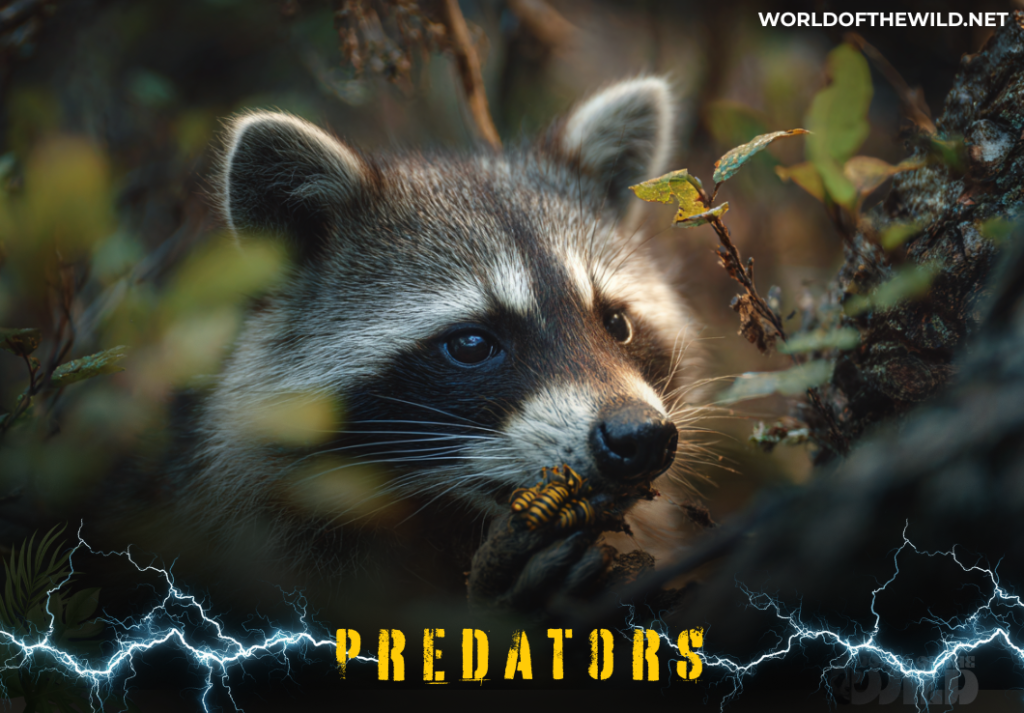
Raccoons are opportunistic omnivores with a taste for yellow jackets that rivals their more famous affinity for garbage and pet food. Like skunks, raccoons primarily hunt yellow jacket nests at night, using their nimble paws and acute sense of smell to locate colonies. Their thick fur provides some protection against stings, though they’re not immune to the wasps’ defensive capabilities.
Raccoons have been documented as one of the top yellow jacket predators in multiple studies across the eastern United States. They’re particularly effective because they combine intelligence with persistence—if a nest is too difficult to access on the first attempt, a raccoon may return multiple times to complete the job.
Badgers, Moles, and Shrews
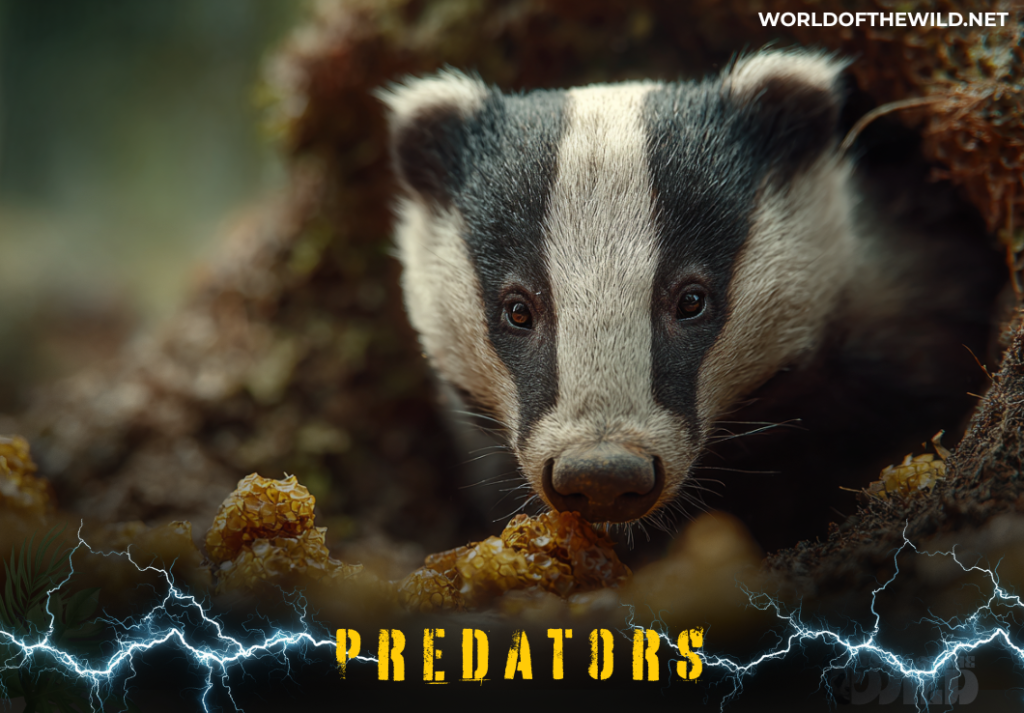
Several smaller mammals round out the list of mammalian yellow jacket predators. Badgers, with their powerful digging abilities and thick skin, occasionally raid yellow jacket nests, though they tend to be less specialized in this behavior than skunks or bears. Their preference tends toward the larvae rather than adult wasps.
Moles and shrews, while much smaller, also contribute to yellow jacket predation, particularly on nests within their tunneling range. These insectivores may encounter yellow jacket colonies while excavating their underground networks and will consume larvae and pupae when the opportunity arises.
Armadillos
In the southern United States, armadillos have emerged as unlikely but effective yellow jacket predators. These armored mammals possess several advantages: sharp digging claws for excavating nests, long snouts for probing into colonies, and natural armor that provides excellent protection against stings. While armadillos aren’t specialists in yellow jacket predation, they’re opportunistic feeders that will readily consume wasp nests when encountered.
Avian Predators: Masters of the Sky
Tanagers: The Specialist Hunters
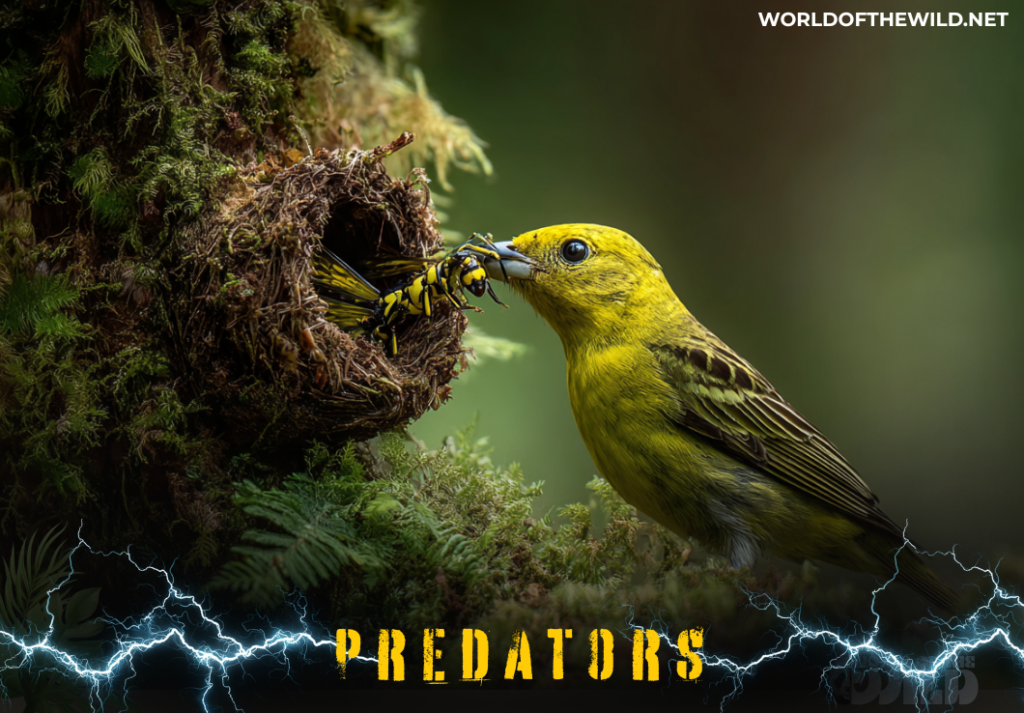
Among birds, tanagers stand out as the most specialized and efficient yellow jacket predators. The Summer Tanager (Piranga rubra), often called the “bee bird,” has earned a reputation among beekeepers and naturalists for its remarkable ability to catch and consume wasps and yellow jackets. These beautiful red birds (males) or yellow-olive birds (females) have developed a sophisticated hunting technique.
Tanagers catch yellow jackets in mid-flight, snatching them from the air with impressive precision. Once captured, the bird doesn’t immediately consume its prey. Instead, it returns to a perch and repeatedly strikes the wasp against a branch, killing it and breaking off the stinger. With eyes closed to protect against venom, the tanager then rubs the wasp against the branch to discharge any remaining venom before finally consuming its meal.
What makes tanagers truly remarkable is their willingness to attack yellow jacket nests directly. They’ve been observed waiting outside nest entrances, picking off workers as they emerge. Some tanagers even tear open paper wasp and yellow jacket nests to access the larvae inside—a behavior that requires both courage and skill given the aggressive response such an intrusion provokes.
Bee-Eaters
The aptly named bee-eaters (family Meropidae) are perhaps the most visually spectacular yellow jacket predators. While most species are found in Africa, Asia, and southern Europe, the European bee-eater occasionally ranges into North America. These brilliantly colored birds have evolved specifically to consume bees, wasps, and other stinging insects.
Bee-eaters employ a similar technique to tanagers, catching insects in flight and then beating them against a hard surface. They instinctively know to remove stingers before consumption—a behavior so hardwired that even juvenile bee-eaters with no prior experience will attempt to remove stingers from their first bee or wasp. The birds may get stung during their early learning attempts, but they quickly master the technique.
Purple Martins
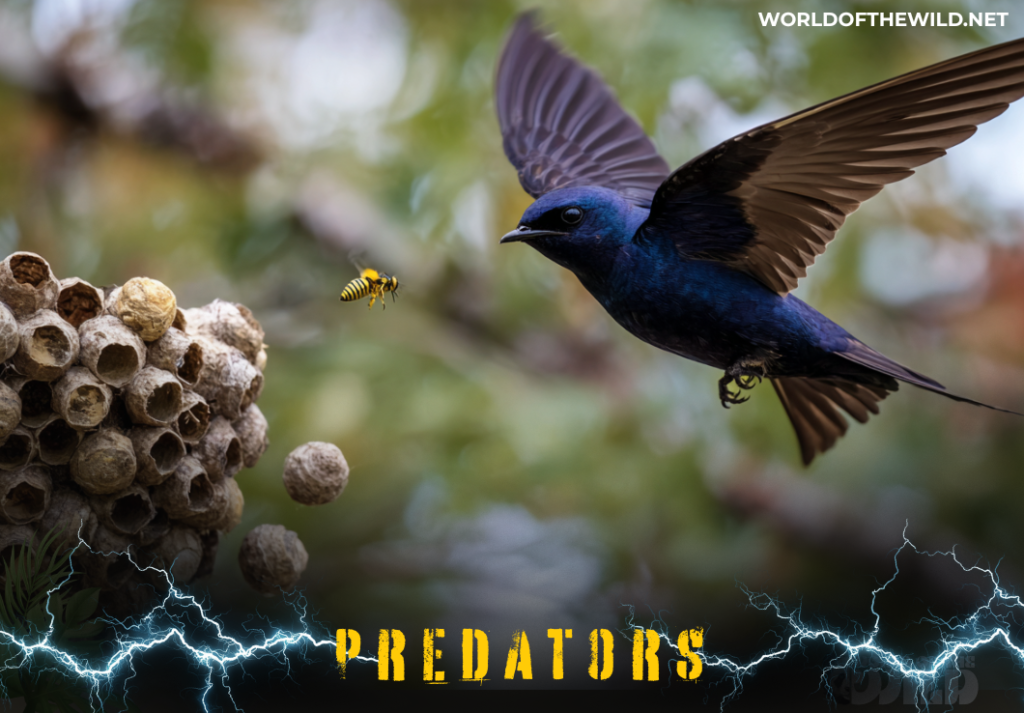
Purple Martins, North America’s largest swallows, are aerial insectivores that consume vast quantities of flying insects, including yellow jackets. These migratory birds catch their prey on the wing during their characteristic swooping flight patterns. While they don’t specialize in yellow jackets like tanagers do, purple martins opportunistically consume these wasps along with other flying insects.
Other Avian Predators
Numerous other bird species include yellow jackets in their diet to varying degrees:
Bluebirds feed on yellow jackets opportunistically, particularly when wasps are abundant. Their smaller size makes them less effective against large colonies, but they’ll pick off individual foragers.
Gray Catbirds are known insect eaters that readily consume yellow jackets along with their varied diet of other insects and berries. They’re named for their distinctive cat-like call and are commonly found in thickets and gardens where yellow jackets forage.
Chickadees and wrens, despite their small size, occasionally tackle yellow jackets, though these typically represent a minor part of their insect-heavy diet.
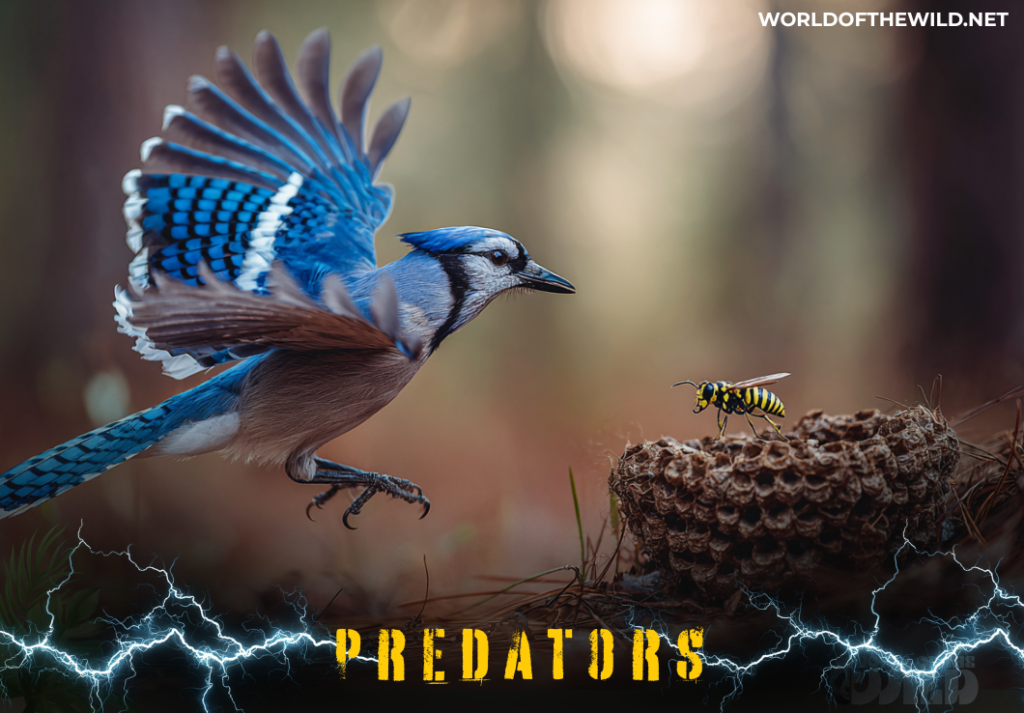
Blue Jays have been documented eating yellow jackets and even raiding nests for larvae. These intelligent, aggressive birds aren’t intimidated by the wasps’ defensive capabilities.
Woodpeckers use their specialized beaks and long tongues to extract yellow jacket larvae from nests built in trees or wooden structures, though they prefer less aggressive prey.
Cedar Waxwings and warblers round out the list of occasional yellow jacket predators, consuming adult wasps when encountered but preferring safer prey options.
Arthropod Predators: Insect Against Insect
Dragonflies
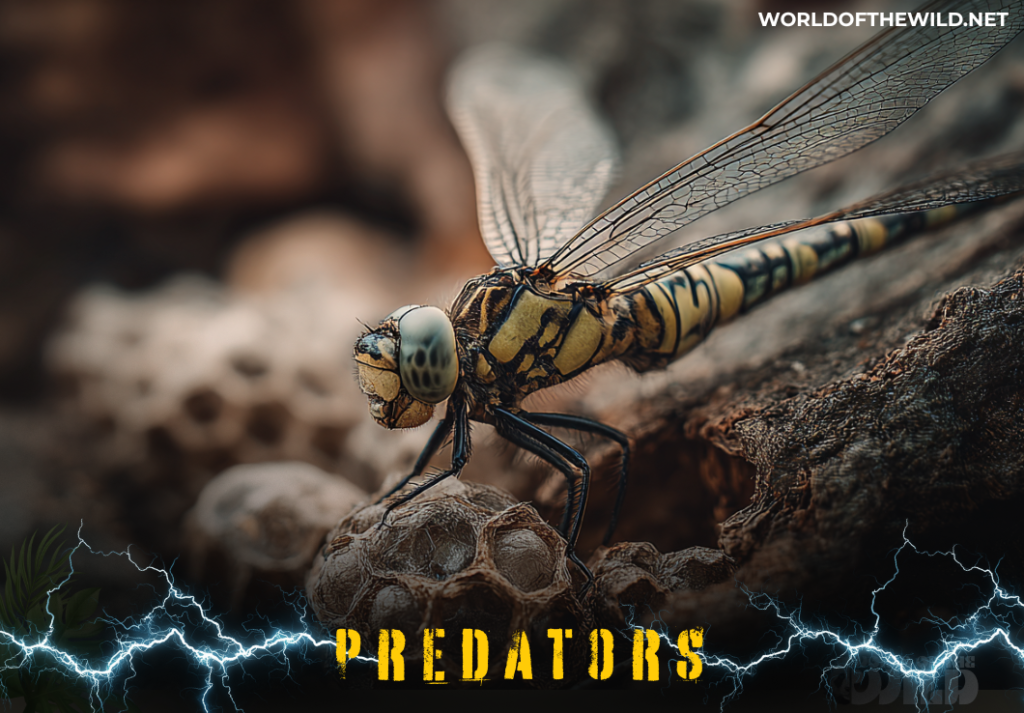
Among invertebrate predators, dragonflies stand out as particularly effective yellow jacket hunters. These aerial predators are considered among nature’s most efficient hunters, with some species achieving prey capture rates exceeding 95%. Adult dragonflies catch yellow jackets in mid-air, using their exceptional vision and aerial agility to intercept wasps during flight.
Dragonflies employ a “basket catching” technique, using their spiny legs to form a basket that traps prey. Once caught, they consume the wasp while still in flight or return to a perch to feed. While dragonfly larvae (naiads) are aquatic and don’t interact with yellow jackets, adult dragonflies can significantly impact local yellow jacket populations, especially near water sources where dragonflies are abundant.
Praying Mantises
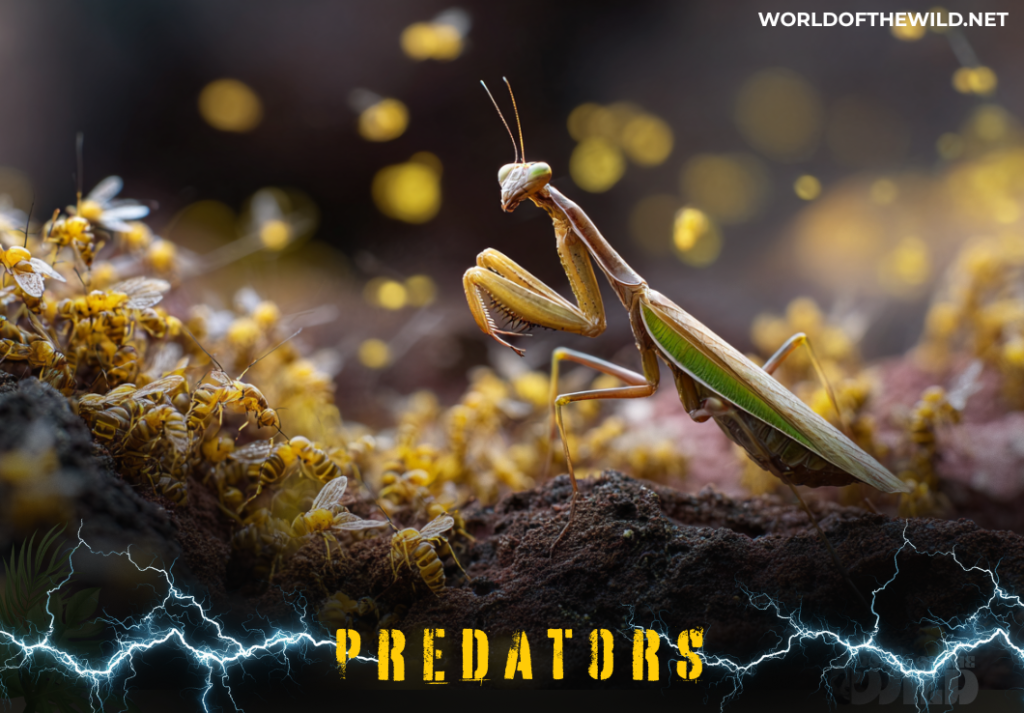
Praying mantises are ambush predators par excellence, and yellow jackets fall well within their dietary preferences. These cryptic hunters blend seamlessly with foliage, remaining motionless for extended periods while waiting for prey to approach. When a yellow jacket ventures within striking distance, the mantis attacks with lightning speed, using its powerful, spiny front legs to capture and hold the wasp.
Larger species like the Chinese Mantis (Tenodera sinensis) are particularly effective at capturing yellow jackets. The mantis’s thick exoskeleton provides some protection against stings, though they typically kill prey quickly using their sharp mandibles. Praying mantises show no hesitation in attacking even aggressive, well-defended insects like yellow jackets, making them valuable allies in gardens plagued by wasp problems.
Spiders
Various spider species prey on yellow jackets, with orb-weaver spiders being particularly effective. These web-building spiders catch wasps that fly into their sticky traps. Once entangled, the yellow jacket is quickly immobilized with silk wrapping and injected with venom. The spider then either consumes its prey immediately or stores it for later consumption.
Orb-weavers and other spiders face some risk when capturing yellow jackets—if the wasp isn’t quickly subdued, it can sting the spider or tear free from the web. However, spiders have evolved efficient venom delivery systems that typically paralyze wasps before they can mount an effective defense.
Robber Flies
These aggressive predatory flies live up to their common name by attacking other flying insects in mid-air. Robber flies inject their prey with venom that both paralyzes and begins digesting the victim from the inside. While they typically target easier prey, robber flies will attack yellow jackets when the opportunity arises.
Parasitoid Wasps and Other Insects
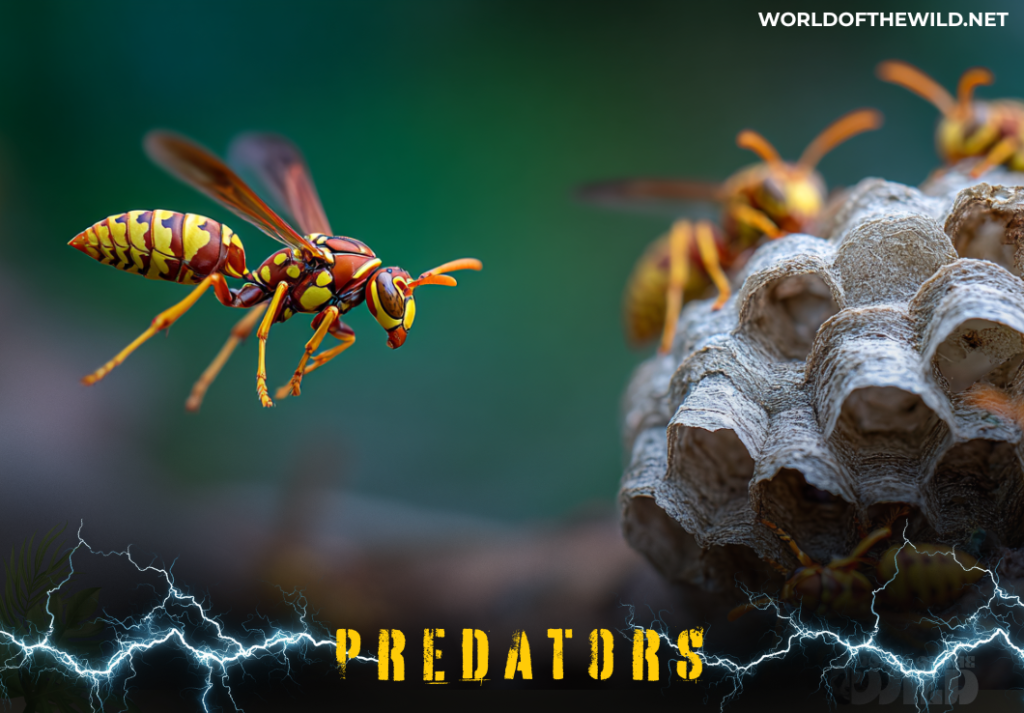
In one of nature’s more ironic twists, some wasp species prey on yellow jackets. Bald-faced hornets and their European cousins have no qualms about attacking and consuming smaller yellow jacket species. Additionally, various parasitoid wasps lay their eggs in yellow jacket larvae, with the developing parasitoid eventually consuming its host.
Centipedes, particularly larger tropical species, will also prey on yellow jackets, using their venomous fangs to quickly subdue these dangerous prey items.
The Ecological Balance
The diverse array of yellow jacket predators highlights the complex web of interactions that govern insect populations in natural ecosystems. While yellow jackets themselves are important predators of pest insects like caterpillars, flies, and beetle grubs, they occupy a middle position in the food chain, providing essential nutrition for numerous species.
For homeowners and gardeners dealing with yellow jacket problems, understanding these natural predators offers potential solutions beyond chemical control. Encouraging birds like tanagers, bluebirds, and purple martins through appropriate habitat management can provide long-term, sustainable population control. Similarly, maintaining populations of dragonflies through water features and avoiding pesticides that harm beneficial insects can help keep yellow jacket numbers in check.
Adaptations and Defenses
The existence of so many yellow jacket predators raises an interesting question: how do these predators overcome the wasps’ defensive capabilities? The answers vary by species but generally involve some combination of:
Physical protection: Thick fur, feathers, or exoskeletons that reduce the impact of stings Behavioral adaptations: Hunting at night when wasps are less active, using specific techniques to remove stingers, or attacking with such speed that wasps can’t mount an effective defense Tolerance: Some predators simply endure the stings, with the nutritional reward outweighing the pain Targeting vulnerable life stages: Many predators focus on larvae and pupae, which cannot sting
Conclusion
Yellow jackets, for all their aggressive reputation, face predation from an impressive diversity of animals. From bears that tear apart entire colonies to tiny dragonflies that snatch individual workers from the air, nature has equipped numerous species with the tools to exploit these abundant insects as a food source. This predation pressure plays a crucial role in maintaining ecological balance, preventing yellow jacket populations from exploding unchecked.
For those interested in natural pest management, fostering populations of yellow jacket predators offers an effective, environmentally friendly approach to controlling these often-unwanted visitors to our outdoor spaces. By understanding and appreciating the complex relationships between predators and prey, we gain deeper insight into the intricate workings of the natural world—and perhaps a little more respect for the animals that routinely tackle prey that most humans would rather avoid entirely.