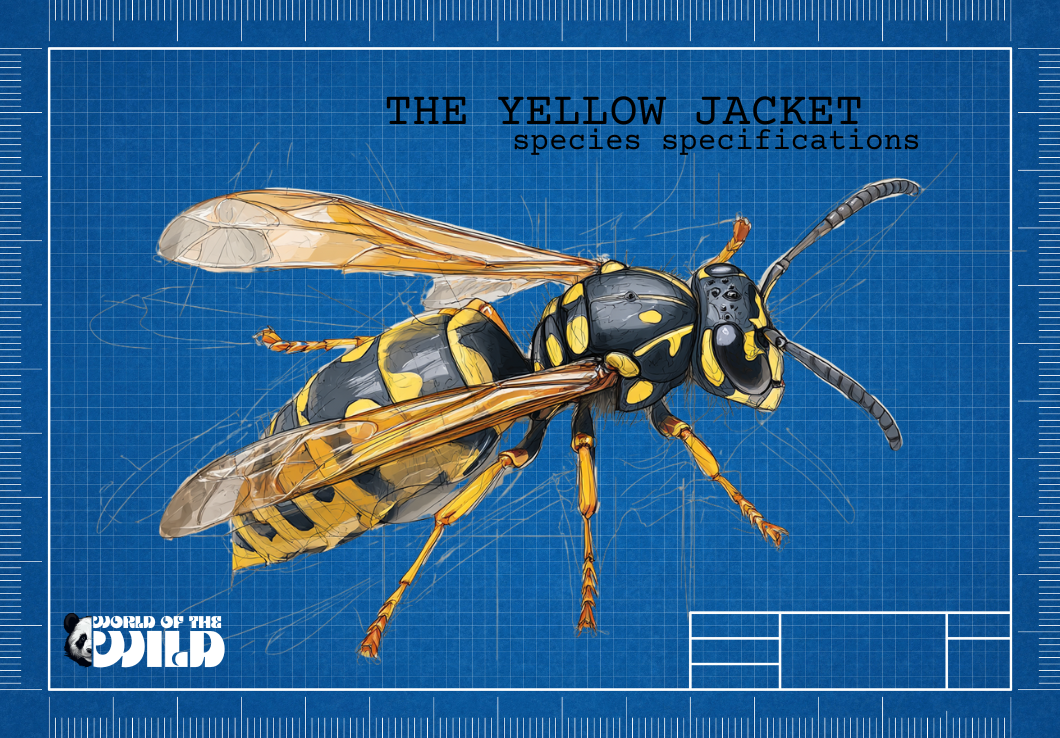

TAXONOMIC CLASSIFICATION
Order: Hymenoptera
Family: Vespidae
Subfamily: Vespinae
Genus: Vespula (most common species) and Dolichovespula
Common Species: Vespula germanica (German yellow jacket), Vespula vulgaris (Common yellow jacket), Vespula maculifrons (Eastern yellow jacket)
PHYSICAL SPECIFICATIONS
Body Length: 10-16 mm (workers), 18-20 mm (queens)
Wingspan: 18-22 mm
Weight: 84-105 mg (workers), 150-200 mg (queens)
Coloration: Black and yellow banded pattern on abdomen; yellow and black markings on head and thorax
Body Segments: Three distinct regions (head, thorax, abdomen)
Appendages: Six legs, four wings, two antennae
Distinguishing Features: Smooth stinger (can sting multiple times), narrow waist, minimal body hair compared to bees
PERFORMANCE CHARACTERISTICS
Flight Speed: 6-8 mph (cruising), up to 15 mph (pursuit)
Flight Range: 300-1,000 meters from nest
Sting Delivery: 2-3 milliseconds (injection time)
Venom Volume: 2-15 micrograms per sting
Multiple Sting Capability: Unlimited (barb-free stinger)
Mandible Force: Sufficient to process wood fiber and prey items
COLONY SPECIFICATIONS
Colony Size: 1,000-4,000 workers (temperate species), up to 15,000+ (perennial colonies in warm climates)
Foundation: Single mated queen (spring)
Development Time: Egg to adult 30-40 days
Colony Lifespan: One season (temperate), multi-year (tropical/subtropical)
Nest Material: Paper (wood fiber mixed with saliva)
Nest Diameter: 30-60 cm (mature colony)
Comb Tiers: 3-8 horizontal layers
OPERATIONAL PARAMETERS
Active Season: Spring through fall (temperate regions), year-round (warm climates)
Daily Activity Period: Dawn to dusk, peak activity 10 AM – 4 PM
Temperature Range: 50-95°F optimal activity
Foraging Distance: Up to 1 kilometer from nest
Food Processing Rate: Can consume their own body weight in food daily during peak season
DIETARY REQUIREMENTS
Primary Fuel (Adults): Carbohydrates from nectar, fruit juice, plant secretions
Protein Sources: Insects, spiders, carrion, meat products
Larval Feed: Processed protein (masticated insects and meat)
Feeding Mechanism: Liquid diet only; solids fed to larvae who produce nutritional secretions for adults
Attraction Factors: Sugars, proteins, fermented substances
DEFENSIVE SYSTEMS
Venom Components: Enzymes (phospholipase, hyaluronidase), peptides (mastoparan), catecholamines
Attack Threshold: Variable; increases with proximity to nest
Alarm Pheromone Range: 3-5 meters
Response Time: 1-2 seconds from threat detection to attack
Group Defense: Coordinated mass attacks when nest threatened
Pain Index (Schmidt Scale): 2.0 out of 4.0
SENSORY CAPABILITIES
Vision: Compound eyes with UV spectrum sensitivity
Olfaction: Highly developed; detects food sources and pheromones at distance
Vibration Detection: Through substrate and air
Chemical Communication: Pheromone-based alarm, trail, and recognition systems
Navigation: Visual landmarks, polarized light detection, magnetic field sensitivity
HABITAT SPECIFICATIONS
Nest Locations: Underground cavities, wall voids, attics, tree hollows, dense vegetation
Entrance Size: 10-25 mm diameter
Preferred Substrate: Protected from direct weather exposure
Territorial Range: 50-100 meter radius around nest
Climate Preference: Temperate to subtropical zones
ECOLOGICAL ROLE
Pollination Contribution: Secondary pollinator while seeking nectar
Pest Control Function: Predation on flies, caterpillars, and other agricultural pests
Decomposition: Scavenging of carrion and organic material
Food Web Position: Prey for birds, mammals, and other insects
INTERACTION WARNINGS
Human Conflict Points: Outdoor dining areas, trash receptacles, fruit trees, ground disturbance near nests
Peak Aggression Period: Late summer to early fall when colony reaches maximum size
Medical Considerations: Allergic reactions occur in 3% of population; anaphylaxis risk for hypersensitive individuals
Multiple Sting Risk: High when nest is disturbed
IDENTIFICATION MARKERS
Yellow jackets are distinguished from similar species by their characteristic folded wings at rest, robust body construction, and alternating yellow and black abdominal bands with minimal hair. Unlike honeybees, they do not die after stinging and show no pollen baskets on hind legs. They exhibit aggressive scavenging behavior uncommon in most other wasps.
Note: Specifications may vary by species and geographic location. Environmental conditions significantly affect colony development and individual performance parameters.