
Beneath the sun-baked longleaf pine savannas of the American Southeast, a creature moves with a quiet patience that has been perfected over millions of years. The gopher tortoise is not flashy. It does not roar, sprint, or strike fear into the hearts of other animals. And yet, ecologists regard it as one of the most consequential animals in its entire ecosystem — a living cornerstone upon which dozens of other species depend. To understand the gopher tortoise is to understand how a single organism can quietly hold a world together.
This remarkable reptile, Gopherus polyphemus, is native to the sandy, fire-maintained uplands of the southeastern United States. It earns its nickname — “nature’s architect” — by constructing deep, elaborate burrows that serve not only as its own refuge but as shelter for hundreds of other species, from Eastern indigo snakes to gopher frogs, burrowing owls, and Florida mice. In a landscape increasingly fractured by development, the gopher tortoise stands as a symbol of ecological integrity and a test of our commitment to coexistence.
Part ancient survivor, part habitat engineer, this tortoise is a creature that commands admiration — not for speed or spectacle, but for endurance, generosity, and ecological genius. Its story is one every nature lover should know.
Facts
Before diving deep, here are some quick, fascinating facts about the gopher tortoise that hint at just how extraordinary this animal is:
- Gopher tortoises can dig burrows up to 65 feet long and 23 feet deep — remarkable feats of engineering carried out entirely with their shovel-like front limbs.
- They are considered a “keystone species,” meaning their presence supports an outsized number of other species. More than 360 species are known to use gopher tortoise burrows as shelter.
- These tortoises are remarkably long-lived — individuals in the wild can live 40 to 60 years, while some in captivity have reportedly survived beyond 100 years.
- Gopher tortoises do not drink standing water directly; they are thought to obtain much of their hydration through the moisture content of the plants they eat.
- They are one of only four North American tortoise species — and the only one native east of the Mississippi River.
- Hatchlings emerge from eggs the size of ping-pong balls and are immediately independent; there is zero parental care after the eggs are laid.
- Gopher tortoises were once used as a food source by Indigenous peoples and early settlers, contributing to population declines that continue to this day.
Species
Taxonomic Classification
| Rank | Classification |
|---|---|
| Kingdom | Animalia |
| Phylum | Chordata |
| Class | Reptilia |
| Order | Testudines |
| Family | Testudinidae |
| Genus | Gopherus |
| Species | G. polyphemus |
Related Species and Genus
The gopher tortoise is one of four species in the genus Gopherus, all native to North America and all adapted to arid or semi-arid environments. Its closest relatives are the Bolson tortoise (Gopherus flavomarginatus) of north-central Mexico — the largest land tortoise in North America — the desert tortoise (Gopherus agassizii and Gopherus mojavensis), which spans the Mojave and Sonoran Deserts of the American Southwest, and the Texas tortoise (Gopherus berlandieri), a smaller species found in the dry brushlands of southern Texas and northern Mexico.
Gopher tortoises have no formally recognized subspecies, though historical populations across their range show some variation in shell shape and size, and researchers have documented minor genetic distinctions between geographically isolated populations — particularly between Florida populations and those farther west in Alabama, Mississippi, and Louisiana.
Appearance
The gopher tortoise is built for two things above all else: digging and endurance. Its body is compact, stocky, and unmistakably designed for a life spent moving in and out of narrow underground tunnels.
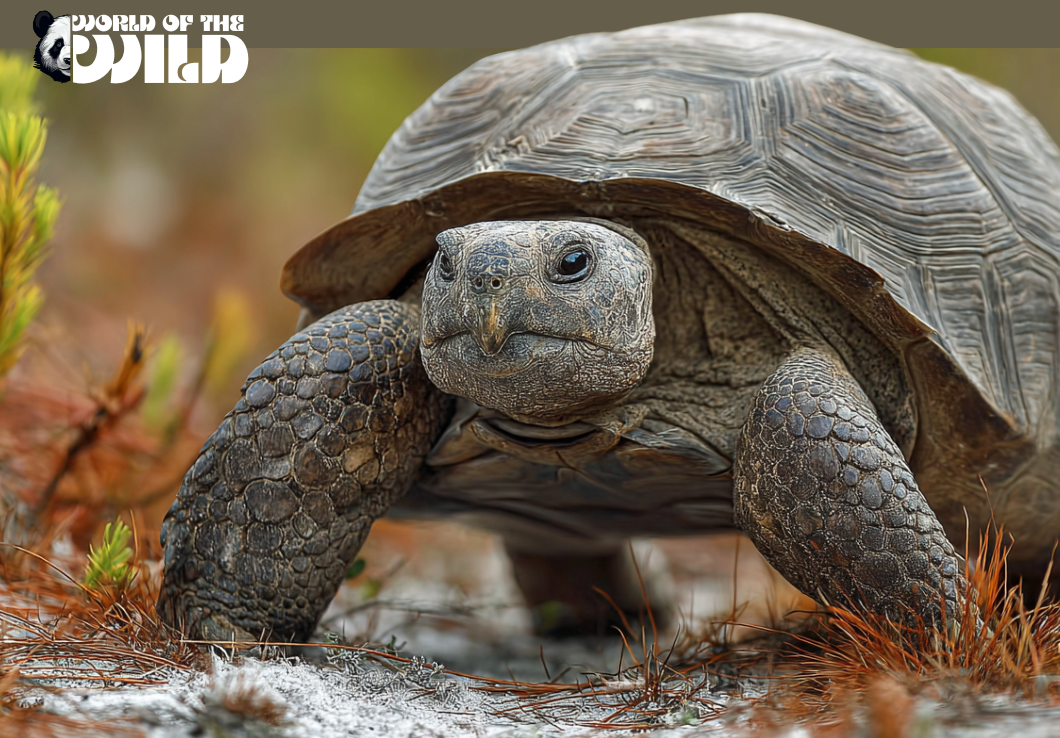
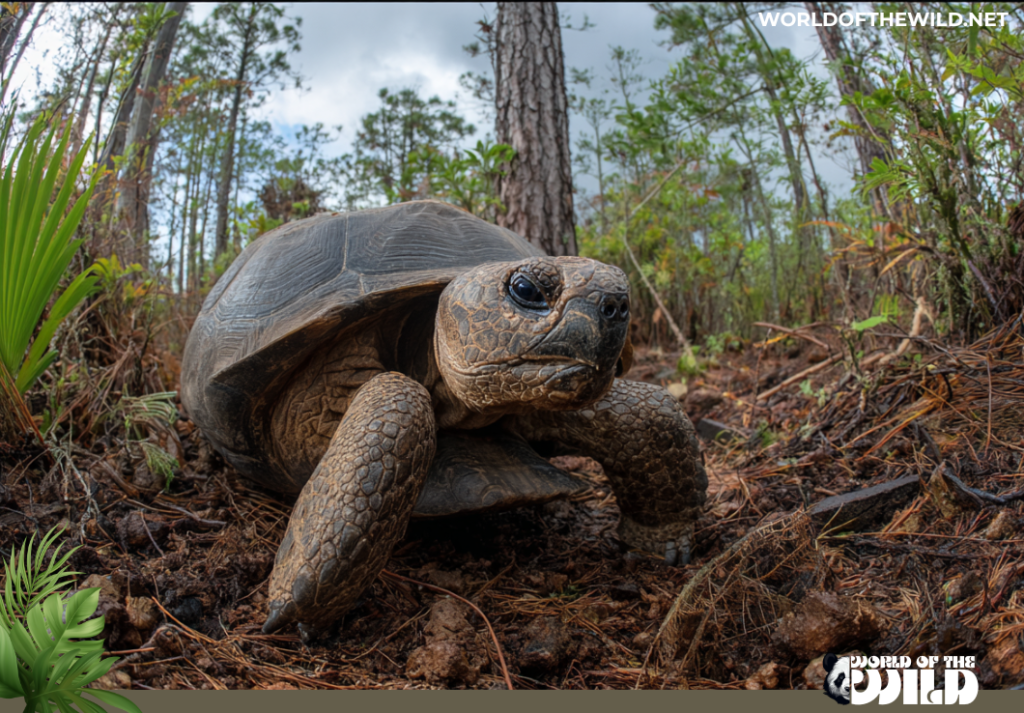
Adults typically measure between 9 and 15 inches in length and weigh between 8 and 15 pounds, though particularly large individuals may occasionally exceed these averages. Males are generally slightly smaller than females. The shell — or carapace — is high-domed, elongated, and ranges in color from a grayish-brown to dark charcoal, often with faint growth rings visible on each scute (the individual bony plates that make up the shell). The plastron, or bottom shell, is yellowish or cream-colored and in males is noticeably concave, an adaptation that facilitates mating. Hatchlings are brightly colored, with yellow and olive markings that fade to gray as they age.
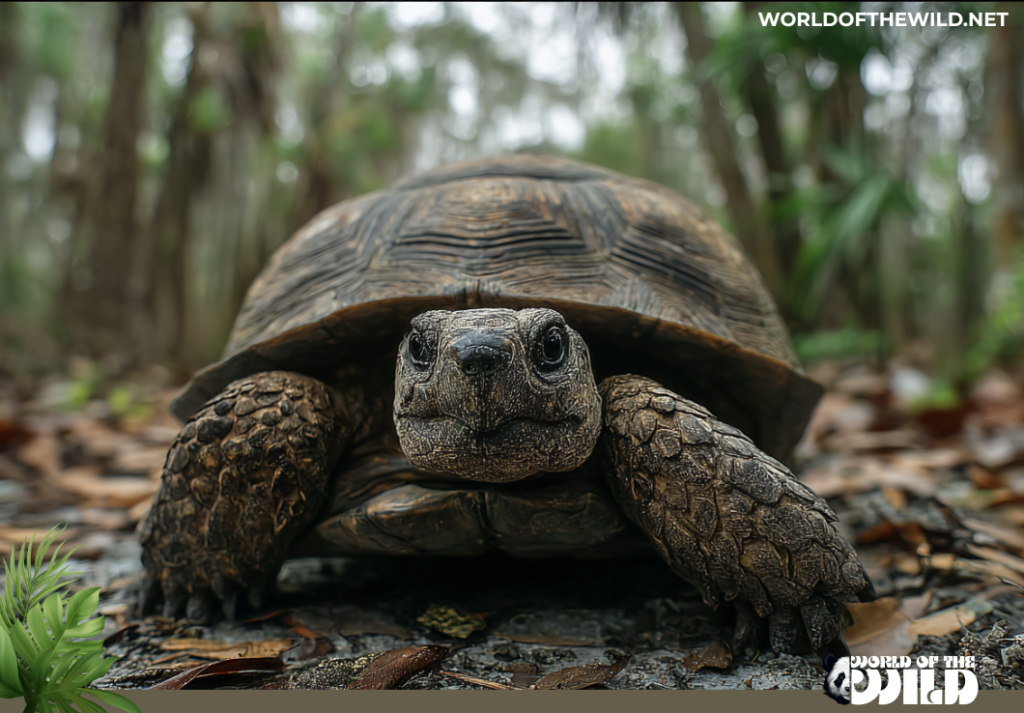
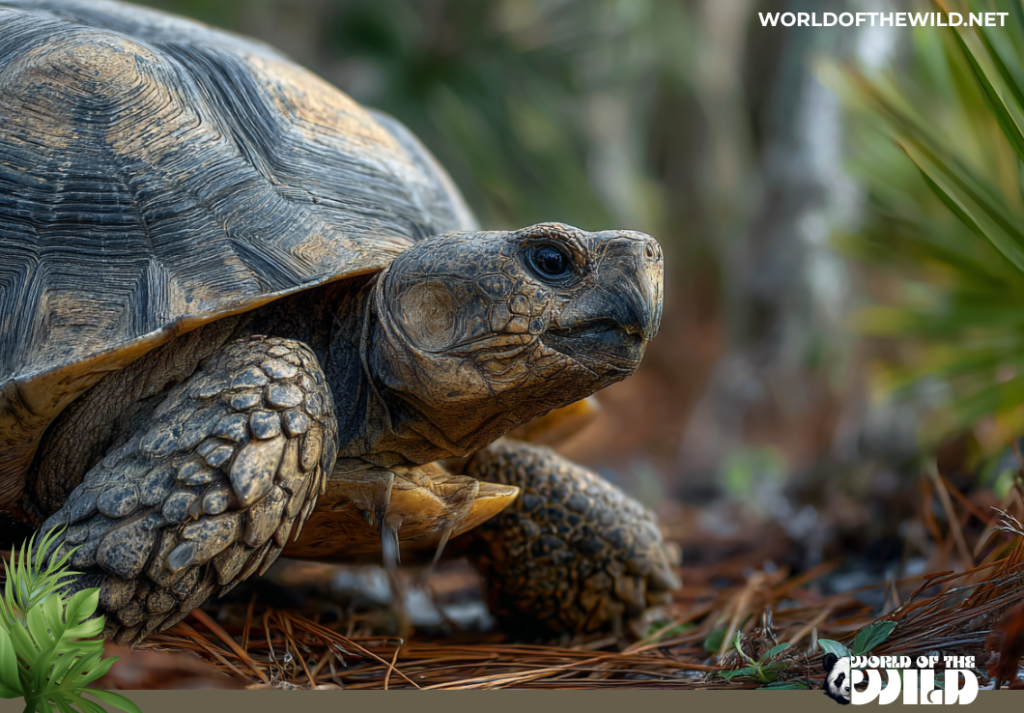
Perhaps the most distinctive physical feature of the gopher tortoise is its front limbs. These are robust, heavily scaled, and flattened — essentially biological shovels. The forelimbs are used with remarkable efficiency to excavate burrows in sandy soil. The hind limbs are equally powerful and elephantine in shape, providing the leverage and traction needed to push soil backward during digging. The feet lack the webbing seen in aquatic turtle species; instead, the toes are tipped with stout, curved claws perfect for gripping and moving earth.
The tortoise’s head is large and rounded, with a blunt snout and jaws well-suited to cropping tough, fibrous grasses and low-growing plants. The eyes are positioned on the sides of the head, offering a wide field of vision — useful for detecting predators while keeping the head close to the ground.
Behavior
The gopher tortoise lives a largely solitary life, spending a significant portion of each day inside or near its burrow. Activity patterns are strongly influenced by temperature: during warm months, individuals emerge in the morning and late afternoon to forage, avoiding the midday heat. In cooler weather, especially during winter in the northern parts of their range, they may remain dormant inside their burrows for extended periods — though true hibernation is uncommon in Florida populations, where winters are mild enough to allow year-round activity.
Their burrow-digging behavior is one of the most ecologically important behaviors of any North American reptile. A single tortoise may maintain multiple burrows simultaneously and can dig new ones throughout its life. These burrows maintain a relatively stable internal temperature and humidity year-round, which is why so many other species — collectively called “commensals” — rely on them. Raccoons, opossums, rabbits, snakes, frogs, insects, and even the critically endangered Eastern indigo snake all use gopher tortoise burrows as refuge from predators, wildfire, and temperature extremes.
Gopher tortoises are not particularly social animals in the traditional sense, but they are not strictly solitary either. Home ranges often overlap, and individuals frequently share burrows or visit one another’s burrows. Some research suggests that tortoises recognize neighbors and may tolerate known individuals more readily than strangers.
Communication is primarily visual and chemical. Males engage in head-bobbing displays and will sometimes push or ram rivals during territorial encounters, using the gular horn — a forward-projecting projection on the front of the plastron — to attempt to flip opponents onto their backs. Despite this occasional aggression, serious injury is rare, and encounters typically resolve quickly.
Though they are not celebrated for their intelligence in the way that mammals are, gopher tortoises demonstrate consistent spatial memory, returning reliably to the same burrow entrances and foraging sites. They appear to learn the layout of their home range over time, navigating familiar terrain with confidence even after long periods of inactivity.
Evolution
The gopher tortoise is a product of deep evolutionary time. The genus Gopherus first appeared in North America roughly 30 to 40 million years ago, during the Eocene and Oligocene epochs, making it one of the oldest living tortoise lineages on the continent. Fossil evidence reveals that ancestors of the modern gopher tortoise were widespread across much of what is now the continental United States, thriving in a variety of environments that included warm, open woodlands and shrublands.
As the North American climate shifted over millions of years — becoming cooler and drier in the interior — populations became increasingly isolated in the warmer, humid southeastern corner of the continent and in the arid regions of the southwest. This geographic fragmentation is believed to have driven the divergence of the four modern Gopherus species from a common ancestor.
Among the most significant evolutionary milestones in the gopher tortoise lineage was the development of its powerful, shovel-like forelimbs — an adaptation that dramatically expanded the ecological niche available to the animal by allowing it to construct its own shelter rather than relying on existing refuges. This burrowing ability also conferred a major survival advantage against fire, a natural and frequent force in the longleaf pine ecosystems that the tortoise calls home.
During the Pleistocene epoch, gopher tortoises coexisted with megafauna such as mastodons, giant ground sloths, and dire wolves. While those enormous animals went extinct at the end of the last ice age, the gopher tortoise survived — a testament to the enduring advantages of its low-energy lifestyle, remarkable longevity, and versatile burrowing behavior.
Habitat
The gopher tortoise is found exclusively in the southeastern United States, with a range spanning Florida, Georgia, South Carolina, Alabama, Mississippi, and Louisiana. The largest and most stable populations exist in Florida, particularly on the sandy, well-drained uplands of the peninsula. Historically, the species ranged much more broadly across the Southeast, but habitat loss has significantly contracted its footprint.
Gopher tortoises are habitat specialists with very precise requirements. They favor open, sunny, upland ecosystems with loose, sandy soils — conditions that allow them to dig and maintain their burrows. The longleaf pine ecosystem, once one of the most extensive ecosystems in North America, is their quintessential habitat. This fire-maintained landscape is characterized by widely spaced pines, an open canopy that allows sunlight to reach the ground, and a ground layer rich in bunch grasses, wildflowers, and low-growing shrubs — all of which form the bulk of the tortoise’s diet.
Fire is essential to this habitat. Without regular low-intensity burns, the understory quickly fills in with dense shrubs and young hardwood trees that shade out the herbaceous ground cover that tortoises depend on for food. Gopher tortoises are therefore closely tied not just to a specific geography, but to a specific ecological process — making the management and restoration of fire-adapted landscapes a critical conservation priority.
Sandy scrub, coastal grasslands, sandhills, and even the edges of agricultural lands can serve as secondary habitat where primary longleaf pine savanna has been lost, but these habitats typically support lower tortoise densities and offer fewer ecological benefits to the wider community of commensal species.
Diet
The gopher tortoise is a strict herbivore, feeding almost exclusively on low-growing vegetation. Its diet is dominated by grasses — particularly wiregrass (Aristida stricta), one of the signature ground-cover plants of the longleaf pine ecosystem — along with broadleaf herbaceous plants, legumes, berries, and the occasional mushroom or cactus pad.
Foraging is done close to the burrow, typically within a home range of a few acres. Tortoises use their beaked jaws to crop vegetation close to the ground, much like a grazing ungulate, though on a much smaller scale. Their digestive systems are adapted for processing fibrous, low-nutrient plant material, relying on a slow metabolic rate and specialized gut bacteria to break down cellulose.
One fascinating aspect of gopher tortoise diet ecology is the role the animal plays in seed dispersal. As tortoises consume berries and fruits, seeds pass through their digestive systems intact and are deposited at new locations — sometimes far from the parent plant — helping to maintain the botanical diversity of their habitat. In this way, the tortoise functions not only as a consumer of the ecosystem but as an active participant in its reproduction.
Gopher tortoises do not hunt, pursue, or capture prey of any kind. They are passive, deliberate foragers that graze at a leisurely pace during the cooler parts of the day, consuming small amounts of vegetation continuously rather than in large meals at once.
Predators and Threats
Natural Predators
Adult gopher tortoises have relatively few natural predators, largely due to the protection offered by their hard shells and their ability to retreat into burrows at the first sign of danger. However, eggs and hatchlings are highly vulnerable and face significant predation pressure. Raccoons, foxes, armadillos, skunks, and fire ants all prey on gopher tortoise nests, digging up and consuming eggs. Young tortoises, whose shells have not yet fully hardened, are taken by a wide range of predators including hawks, crows, snakes, and large wading birds. American crows have been observed waiting near burrow entrances for hatchlings to emerge.
Human-Caused Threats
Far more significant than natural predation are the threats posed by human activity. Habitat loss is the primary driver of gopher tortoise population declines. The conversion of longleaf pine habitat to agriculture, residential development, pine plantations, and urban sprawl has eliminated the vast majority of the tortoise’s historical range. The longleaf pine ecosystem itself has been reduced from an estimated 90 million acres to less than 3 percent of its original extent.
Road mortality is another serious threat, particularly in Florida where high-density tortoise populations overlap with busy roads. Tortoises are slow-moving and frequently attempt to cross roads during the breeding season.
Invasive species pose a growing problem. Fire ants, which are not native to the southeastern United States, aggressively invade nest sites and can kill hatchlings both in the egg and shortly after emergence. Dense invasive grasses can also shade out the native ground cover that tortoises depend on for food.
Fire suppression — the decades-long policy of preventing and extinguishing wildfires — has allowed dense shrubs and trees to overtake open longleaf pine habitats, reducing food availability and making burrow digging more difficult in compacted soils. Climate change is also expected to compound these effects by altering fire regimes, increasing drought stress, and impacting the phenology of the plants that tortoises rely on.
Historically, the collection of gopher tortoises for food — both by Indigenous peoples and, more recently, as a source of meat known informally as “Hoover chickens” during the Great Depression — caused significant population losses. While this practice is now illegal, it has contributed to the reduced baselines from which current populations are recovering.
Reproduction and Life Cycle
Gopher tortoises typically reach sexual maturity between 10 and 21 years of age, depending on the quality of their habitat and the availability of food — a notably long juvenile period that reflects both their slow metabolic pace and their extraordinary potential longevity.
Mating season occurs primarily from April through June, though breeding activity has been recorded outside this window. Males actively seek out females during this time, navigating their home ranges and investigating neighboring burrows. Courtship involves the male approaching and circling the female, often bobbing his head and using his gular horn to investigate and nudge the female before mounting. Competition among males can be intense, with rivals attempting to flip one another using the gular horn — a behavior that can result in one male being left helplessly upended until it can right itself or until a predator finds it.
Females construct a nest in open, sunny areas near the burrow entrance — typically in loose sand where solar radiation will incubate the eggs naturally. A clutch consists of between 3 and 15 spherical, hard-shelled eggs, each roughly the size of a ping-pong ball. Incubation lasts approximately 80 to 110 days, with hatching occurring in late summer or early fall.
Hatchlings emerge fully formed and entirely self-sufficient — there is no parental care whatsoever. Immediately upon hatching, young tortoises must find shelter, locate food, and navigate a world full of predators with shells that are still soft and vulnerable. Survival rates during the first few years of life are low, with many hatchlings falling prey to raccoons, crows, and fire ants before their shells harden sufficiently to offer real protection.
Those that survive the gauntlet of early life can look forward to an extraordinarily long existence. Wild gopher tortoises commonly live 40 to 60 years, and some individuals appear to reach 80 or even 100 years, making them among the longest-lived of all North American reptiles. Because of this longevity, population declines can take decades to become apparent in demographic surveys, and recovery, once decline is arrested, is similarly slow.
Population
The gopher tortoise is currently listed as Vulnerable on the IUCN Red List of Threatened Species — a classification that reflects significant population losses and ongoing pressures, while acknowledging that the species has not yet reached the threshold of Endangered status. At the national level in the United States, the species is listed as threatened under the Endangered Species Act in the western portion of its range (Louisiana, Mississippi, and the western portions of Alabama), where populations have declined most severely. In Florida and the remainder of its range, it is listed as a Species of Special Concern.
Population estimates are difficult to determine with precision, given the wide geographic range and the cryptic nature of the species — tortoises spend a significant portion of their time underground and are not easily surveyed. Current estimates suggest a total population of approximately 700,000 to 1,000,000 individuals, though some researchers believe this figure may be optimistic. The population has declined significantly from historical levels, and fragmentation of remaining populations into isolated clusters raises serious concerns about long-term genetic viability.
Florida holds by far the largest remaining populations, with strongholds in state forests, wildlife management areas, and protected natural lands. Conservation efforts including habitat restoration, prescribed fire programs, and translocation projects — in which tortoises displaced by development are relocated to protected lands — have helped to stabilize some populations. However, the overall trajectory remains one of slow decline in unprotected areas.
Conclusion
The gopher tortoise is a creature that asks very little of the world — a patch of sandy soil, some sunshine, a few low-growing grasses — and in return gives an enormous amount. Its burrows shelter hundreds of species. Its foraging maintains open habitats. Its seed dispersal propagates plant diversity. Its very presence is a signal that an ecosystem is intact, functioning, and alive in all its complexity.
To lose the gopher tortoise would be to lose far more than a single species. It would be to lose the living architecture of an entire ecological community — a cascade of disappearances rippling through hundreds of species that have, over millions of years, woven their survival into the fabric of this one ancient, patient, extraordinary animal.
The good news is that the gopher tortoise is not lost yet. Protected lands, restoration efforts, and a growing public awareness of its ecological importance give genuine reason for hope. But hope without action is insufficient. Supporting longleaf pine restoration initiatives, advocating for prescribed fire policies, volunteering with tortoise monitoring programs, and respecting protected habitats are all meaningful ways that individuals can contribute to the survival of this species.
In the end, the fate of the gopher tortoise is a measure of something larger: our willingness to make room for the wild world, to protect the unspectacular and the slow, the ancient and the unglamorous, because we understand that these creatures are not peripheral to nature — they are its very foundation.
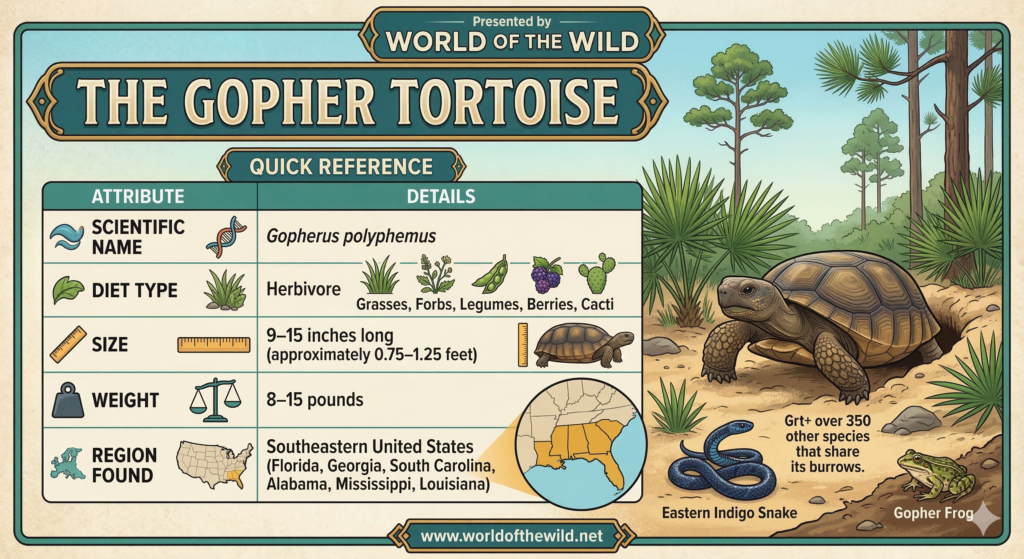
Quick Reference
| Attribute | Details |
|---|---|
| Scientific Name | Gopherus polyphemus |
| Diet Type | Herbivore (grasses, forbs, legumes, berries, cacti) |
| Size | 9–15 inches long (approximately 0.75–1.25 feet) |
| Weight | 8–15 pounds |
| Region Found | Southeastern United States (Florida, Georgia, South Carolina, Alabama, Mississippi, Louisiana) |