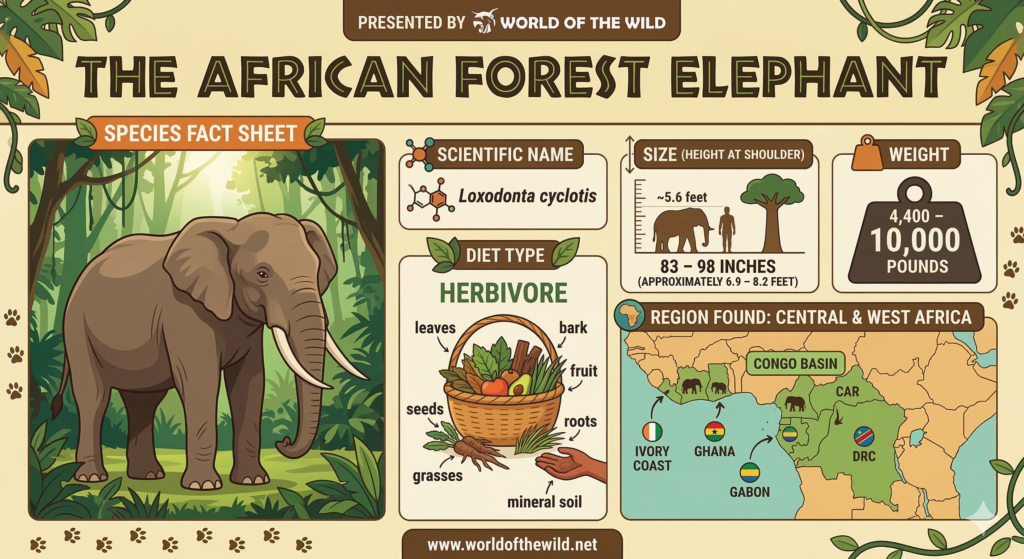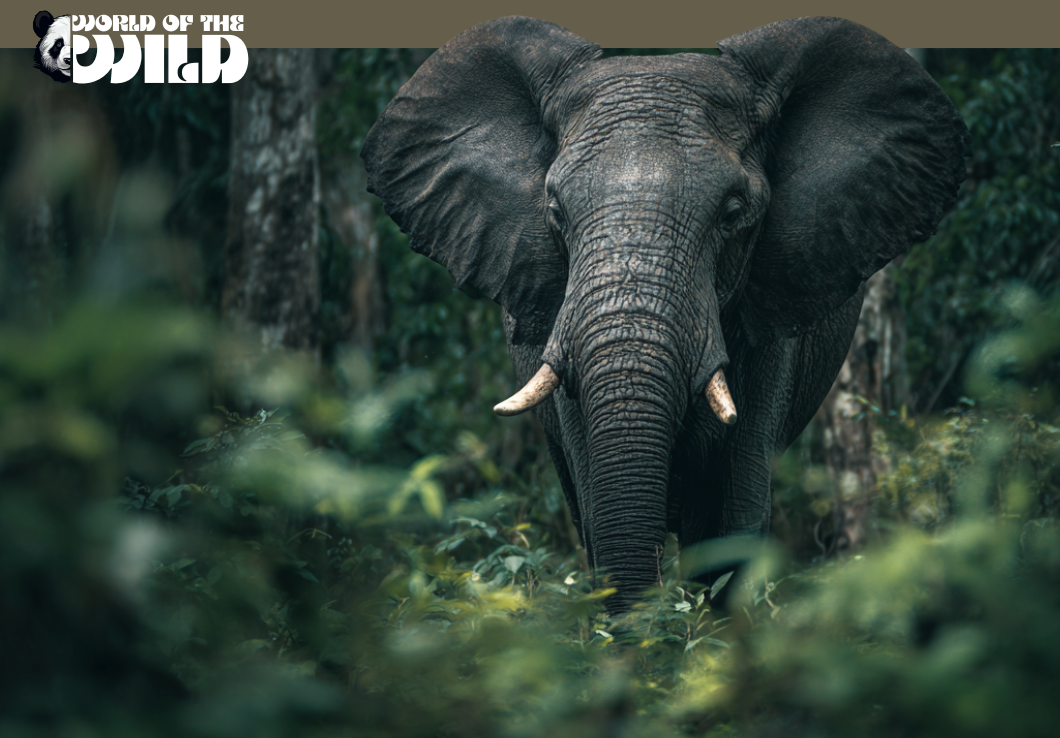

Deep within the dense, ancient rainforests of Central and West Africa, a creature moves like a shadow — massive yet almost imperceptible beneath the cathedral canopy of one of the world’s most biodiverse ecosystems. The African Forest Elephant (Loxodonta cyclotis) is not simply a smaller cousin of the elephant you picture on the open savanna. It is a distinct species in its own right, a keystone architect of the rainforest, and one of the most ecologically vital — yet tragically overlooked — animals on Earth.
For centuries, this elephant lived in relative anonymity, overshadowed by its larger, more visible relative. Scientists didn’t even formally recognize it as a separate species until the early 2000s. Since then, every new discovery about this animal has deepened our awe. It communicates in frequencies humans cannot hear. It shapes entire forests simply by walking through them. And it is disappearing at a rate that should alarm every person on the planet. This is the story of the African Forest Elephant — a giant hiding in plain sight.
Facts
- Trees need them to survive: African Forest Elephants are sometimes called the “mega-gardeners of the forest.” They disperse seeds from hundreds of plant species across vast distances, and some trees have evolved fruits specifically sized to pass through an elephant’s digestive tract.
- They speak in rumbles you can’t hear: Much of their communication occurs via infrasound — low-frequency rumbles below 20 Hz, far beneath the threshold of human hearing. These calls can travel several kilometers through dense forest.
- They’re a recently recognized species: Although long suspected to be different from savanna elephants, African Forest Elephants were only confirmed as a genetically distinct species in 2001. They had been hiding in plain scientific sight for decades.
- Their tusks grow differently: Unlike savanna elephants, whose tusks curve outward and upward, forest elephants have straighter, downward-pointing tusks — an adaptation thought to help them navigate through dense undergrowth.
- They are slow reproducers: Female African Forest Elephants have the longest known interbirth interval of any land mammal, waiting five to six years between calves — making population recovery from poaching devastatingly slow.
- A single elephant can create a clearing: By pushing over trees and trampling vegetation, these elephants create forest clearings called “bais” — natural mineral-rich clearings that dozens of species depend on for nutrition and water.
- Their dung is a biodiversity hotspot: Forest elephant dung is rich in seeds and nutrients. A single deposit can contain seeds from dozens of plant species, supporting insects, birds, and small mammals that feed on or live within it.
Species
The African Forest Elephant occupies the following taxonomic position:
- Kingdom: Animalia
- Phylum: Chordata
- Class: Mammalia
- Order: Proboscidea
- Family: Elephantidae
- Genus: Loxodonta
- Species: Loxodonta cyclotis
For much of the 20th century, the African Forest Elephant was considered a subspecies of the African Bush Elephant (Loxodonta africana). However, genetic analysis published in the early 2000s confirmed that the two are distinct species, having diverged approximately 2–6 million years ago — a split roughly as ancient as the divergence between Asian and African elephants. The two African species can hybridize in narrow transitional zones but remain genetically and morphologically distinct.
A third potential species — the West African Elephant — has been proposed based on genetic data suggesting that forest elephant populations in West Africa may be further differentiated from those in Central Africa. However, this classification remains under scientific debate and has not been formally adopted. The Elephantidae family also includes the Asian Elephant (Elephas maximus) and the extinct Woolly Mammoth (Mammuthus primigenius), offering a rich evolutionary context for understanding where the forest elephant fits in the grand tree of life.
Appearance
The African Forest Elephant is significantly smaller than its savanna counterpart, yet calling it “small” would be a profound misuse of the word. Adult males typically stand between 6.9 and 8.2 feet (roughly 83 to 98 inches) at the shoulder and can weigh between 4,400 and 10,000 pounds, with females being notably smaller. In the world of land mammals, this is still an animal of commanding, extraordinary scale.
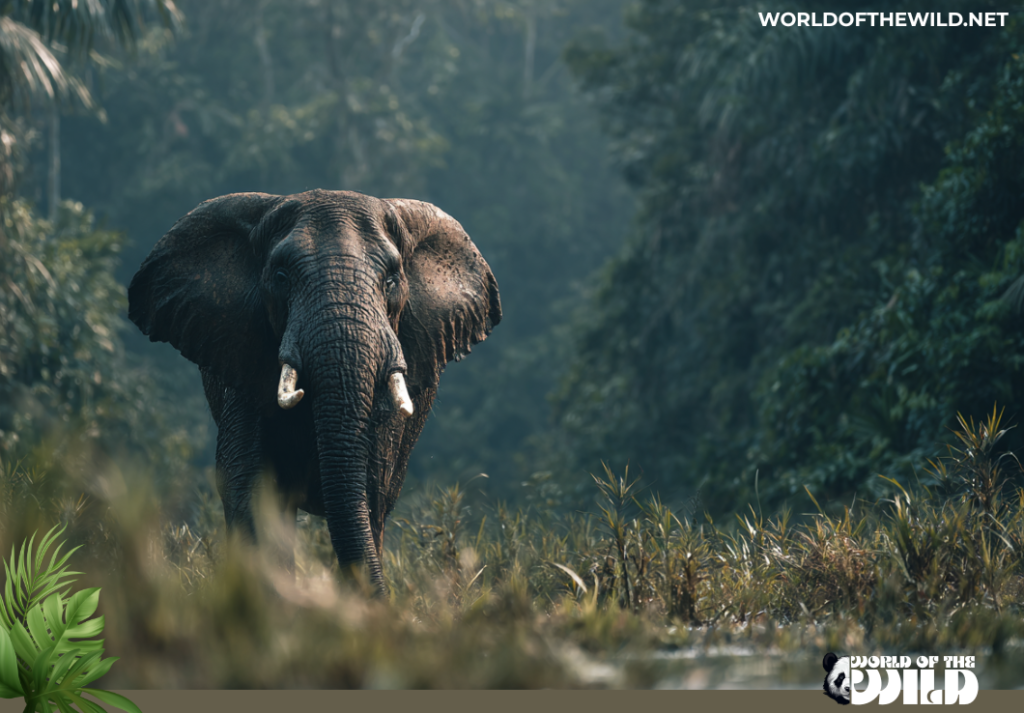
Its skin is a dark, charcoal gray — often darker than the savanna elephant — and tends to remain smoother due to the high humidity of its rainforest environment. Forest elephants have rounder, more oval-shaped ears compared to the large, fan-like ears of the African Bush Elephant. Their head shape is also distinct: more rounded and with a higher, more domed cranium.
The tusks are among the most visually distinctive features. They grow downward rather than curving outward, and are composed of particularly hard, dense ivory — so dense, in fact, that it was historically prized above all other ivory by traders, making these elephants a prime target for poachers. Their feet are proportionally wider and rounder, helping distribute weight on soft, wet forest floors. The trunk, that magnificent evolutionary marvel, is used for everything from drinking and feeding to social bonding and infrasonic communication.
Behavior
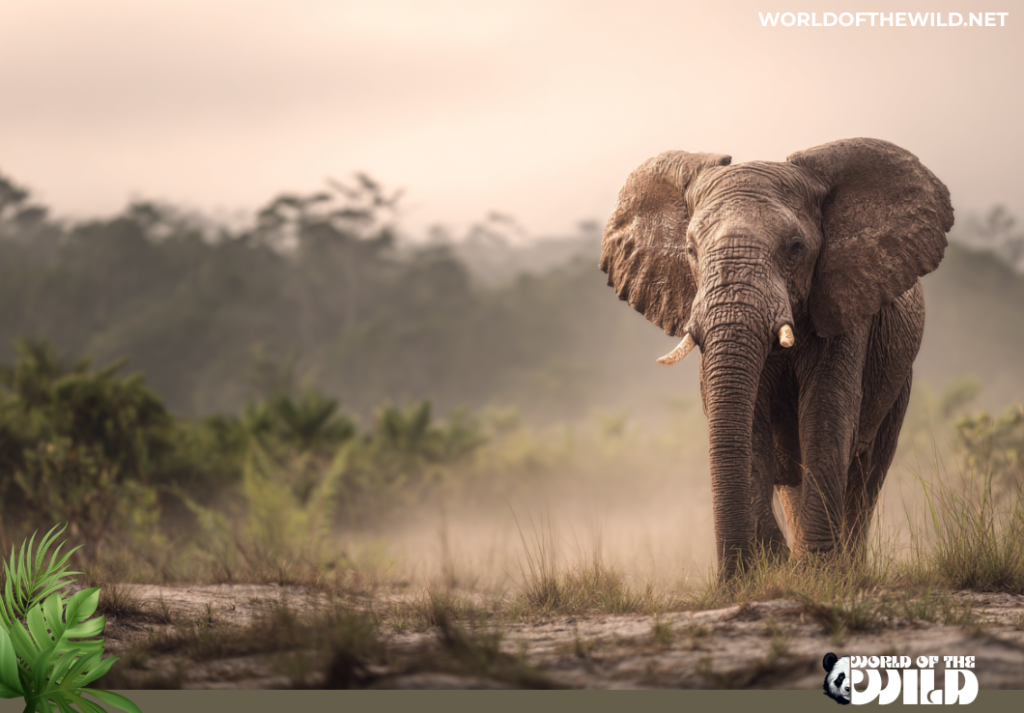
African Forest Elephants are generally more elusive and less studied than savanna elephants, largely because of the impenetrable nature of their habitat. They tend to live in smaller family groups than savanna elephants — typically two to eight individuals — consisting of a matriarch and her female offspring and young calves. Adult males are often solitary or found in loose bachelor associations, joining females only during mating periods.
Their social intelligence is extraordinary. Like all elephants, they demonstrate empathy, mourning behaviors at the remains of deceased individuals, and long-term memory that allows them to recall specific locations, individuals, and past experiences over decades. Matriarchs carry an immense repository of ecological knowledge — where to find water during dry spells, which paths lead to mineral licks, how to navigate around human settlements.
Communication is rich and multifaceted. Beyond the infrasound rumbles that travel through both air and ground (detected by sensitive nerve endings in the feet and trunk), forest elephants use visual signals, tactile contact, and a variety of audible vocalizations including trumpets, roars, and rumbles. Seismic communication — vibrations sent through the ground — may also play a role, though research in this area is still emerging.
Their daily rhythm is governed by the search for food and water. They travel significant distances — sometimes 30 to 50 miles in a day — following ancient trail networks through the forest. These paths, worn down over generations, are so consistently used that some researchers describe them as elephant “highways.”
Evolution
The evolutionary history of elephants is one of the most dramatic sagas in all of natural history. The order Proboscidea — to which all elephants belong — first appeared approximately 55 million years ago in Africa, represented by pig-sized creatures such as Eritherium azzouzorum. Over tens of millions of years, this lineage diversified explosively, giving rise to more than 160 known species across multiple families, including the mastodons, gomphotheres, and the iconic mammoths.
The family Elephantidae, which includes all living elephants, emerged around 6–7 million years ago. African and Asian elephant lineages diverged approximately 6 million years ago. Within Africa, the split between Loxodonta africana (Bush Elephant) and Loxodonta cyclotis (Forest Elephant) is estimated to have occurred somewhere between 2 and 6 million years ago — a divergence driven by the gradual differentiation of African habitats as savannas expanded and rainforests contracted and fragmented over geological time.
The forest elephant’s physical adaptations — denser bones, straighter tusks, smaller rounded ears, compact body — reflect millions of years of evolution in a closed-canopy environment where navigating dense vegetation, conserving moisture, and moving quietly through shadows were paramount to survival. The lineage that eventually became today’s forest elephant was shaped as much by the forest itself as any single genetic mutation or environmental pressure.
Habitat
The African Forest Elephant is found primarily in the rainforests of Central and West Africa, with the Congo Basin representing the heart of its range. Key countries include the Democratic Republic of Congo, Gabon, Cameroon, Central African Republic, Republic of Congo, Ivory Coast, Liberia, and Ghana, among others. Gabon alone is estimated to hold the largest remaining population, sheltering perhaps 60% or more of the global total.
These elephants inhabit dense lowland tropical rainforest, montane forest, and transitional forest-savanna zones. They are particularly drawn to forest clearings known as “bais” — naturally occurring openings in the forest canopy where mineral-rich soils and standing water attract wildlife from across wide areas. These bais, some of which have been used continuously for centuries or longer, serve as critical gathering sites for socialization, mineral supplementation, and research observation.
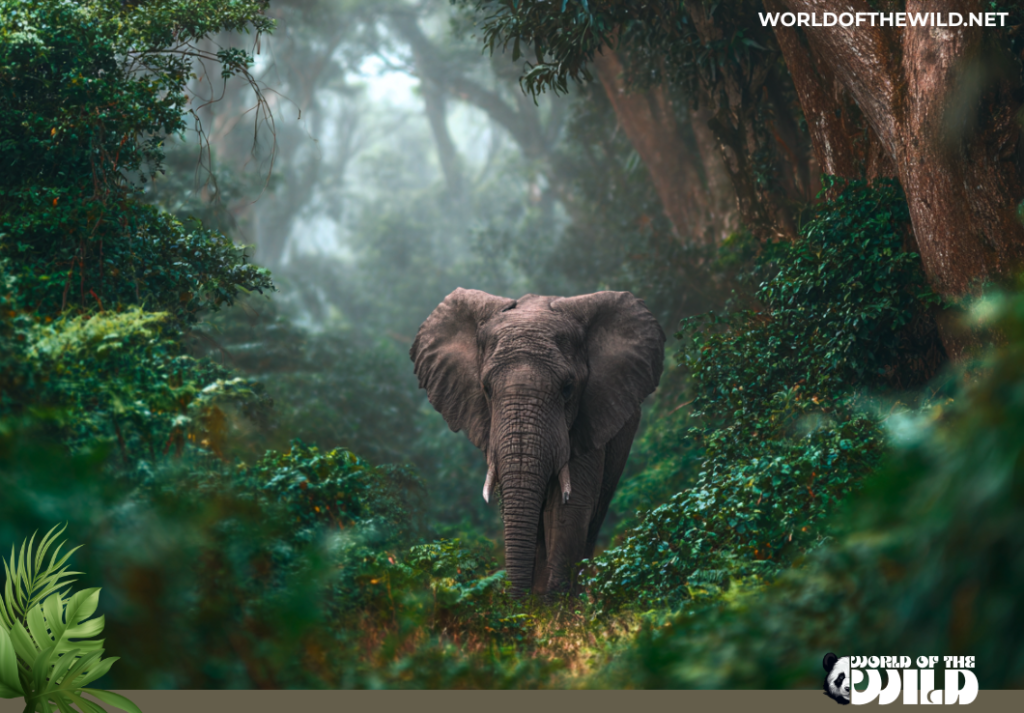
The Congo Basin rainforest — the world’s second-largest tropical rainforest after the Amazon — is the defining landscape of the African Forest Elephant. It is a realm of staggering biodiversity, receiving over 60 inches of rainfall per year and hosting thousands of plant species, hundreds of mammal species, and an almost incomprehensible density of insect life. Within this ecosystem, the elephant does not merely live — it engineers the landscape, creating openings, dispersing seeds, and maintaining the structural complexity of the forest itself.
Diet
The African Forest Elephant is a herbivore of voracious and diverse appetite. An adult can consume between 300 and 400 pounds of vegetation per day, though estimates vary depending on the season and availability of food. Their diet is extraordinarily varied — encompassing leaves, bark, roots, grasses, fruit, seeds, and flowers from hundreds of plant species.
Fruit is particularly important, both nutritionally and ecologically. When an elephant consumes fruit, the seeds pass through its digestive system largely intact and are deposited — often many miles from the parent tree — in a nutrient-rich dung package that acts as a natural fertilizer. Studies have shown that some tree species in Central African forests depend almost entirely on elephants for seed dispersal, and that these trees store vastly more carbon than average forest trees. The loss of forest elephants, researchers have warned, could trigger a cascading collapse in forest carbon storage.
At forest clearings and mineral licks, elephants consume large quantities of mineral-rich soil and water, supplementing their diet with sodium, calcium, and other micronutrients that are scarce in the forest interior. This behavior is not merely opportunistic — it is a physiological necessity that drives their movements across the landscape. Foraging is an almost continuous activity, conducted throughout the day and night, and the elephant’s trunk — capable of detecting scents from miles away — is their primary tool for locating food.
Predators and Threats
In terms of natural predators, adult African Forest Elephants have essentially none. Their size, intelligence, and social cohesion make them virtually invulnerable to attack from any wild predator in the Congo Basin. Lion prides — which occasionally prey on young savanna elephants — are not present in dense rainforest. Leopards and spotted hyenas, while present in forest margins, pose no meaningful threat to an adult elephant. Calves, however, are vulnerable in their earliest months, and groups with young are notably more vigilant and defensive.
The existential threats to this species are almost entirely human in origin, and they are severe.
Ivory poaching is the most immediate and catastrophic threat. The dense, hard ivory of forest elephant tusks was historically the most prized in the ivory trade. Between 2002 and 2013, it is estimated that the Central African forest elephant population declined by approximately 65%. Entire populations were functionally wiped out in certain regions. Though international ivory bans have helped, illegal poaching continues to be a persistent crisis.
Habitat loss and fragmentation driven by logging, agricultural expansion — particularly for palm oil and cocoa — and human settlement increasingly fragments the forest into isolated pockets too small to support viable elephant populations. As forest corridors are severed, populations become genetically isolated and more vulnerable to local extinction.
Human-elephant conflict escalates as human settlements expand into forest margins. Elephants raiding crops lead to retaliatory killings by farmers who see the animals as threats to their livelihoods rather than conservation icons.
Climate change threatens the long-term integrity of the Congo Basin itself, with shifting rainfall patterns and increasing temperatures projected to alter forest composition and elephant food availability over coming decades.
Reproduction and Life Cycle
Reproduction in African Forest Elephants is a slow, deliberate process — one that reflects the enormous investment these animals make in each individual offspring, and one that makes population recovery from large-scale losses devastatingly difficult.
Females reach sexual maturity between 11 and 14 years of age. Males, though biologically capable of reproduction somewhat earlier, typically do not successfully mate until their late twenties or thirties, when they are large enough to compete with other males. During periods of heightened reproductive readiness known as musth — characterized by elevated testosterone, temporal gland secretions, and increased aggression — males will travel widely in search of receptive females.
Gestation lasts approximately 22 months, the longest of any land mammal. Females typically give birth to a single calf, weighing around 200 to 300 pounds. Twins are exceedingly rare. The interbirth interval — the time between successive calves — is estimated at five to six years in forest elephants, longer than in savanna elephants, reflecting the higher energetic demands of the rainforest environment.
Calves are raised within the matriarchal family group and are dependent on their mothers for several years. Allomothering — the practice of other females, often older sisters or aunts, helping care for calves — is well documented and reflects the deep social bonds within elephant groups. Calves nurse for two to three years but begin sampling solid food within their first few months of life.
In the wild, African Forest Elephants can live between 60 and 70 years, though poaching pressure means that few individuals now survive to old age. The depth of knowledge and social experience carried by long-lived matriarchs is irreplaceable — and its loss ripples through the entire social fabric of a population.
Population
The African Forest Elephant is classified as Critically Endangered on the IUCN Red List — a status updated in 2021 when the species was formally evaluated separately from the savanna elephant for the first time. This is the highest risk category short of extinction in the wild.
Current global population estimates are deeply uncertain given the difficulty of conducting surveys in dense rainforest, but most credible estimates place the total population somewhere between 100,000 and 150,000 individuals. For context, this represents a catastrophic decline from historical numbers — the species is thought to have lost more than 86% of its potential range and has been eliminated from vast portions of West Africa where it once thrived.
Population trends remain downward in most areas, driven by continued poaching and habitat loss. Gabon and the Republic of Congo currently hold the most significant remaining populations, and forest-based protected areas in these countries represent some of the last refugia where stable or recovering populations persist. Conservation organizations, local governments, and indigenous communities are working collaboratively in various regions to establish and enforce protection, but the scale of the challenge is immense.
Conclusion
The African Forest Elephant is more than an animal. It is a living ecological process — a force of nature that shapes forests, sequesters carbon, disperses the seeds of ancient trees, and carries within its memory the accumulated wisdom of generations. To lose this species would be to unravel something profound and irreplaceable at the heart of one of Earth’s last great wildernesses.
The story of the African Forest Elephant is also a story about us — about the choices humanity is making right now regarding ivory markets, land use, conservation investment, and our willingness to share the planet with creatures that were here long before we were. This is not a distant, abstract crisis. It is happening in the forests of Gabon and the DRC today, in the ledgers of ivory smugglers, in the smoke of burning trees.
The forest elephant has survived ice ages, continental shifts, and millions of years of evolutionary change. Whether it survives us is a question only we can answer. Support organizations working to protect Central African forests, advocate for stronger international ivory trade enforcement, and remember: every tree in the Congo Basin tells a story that may have begun with an elephant.
Quick Reference Table
| Field | Details |
|---|---|
| Scientific Name | Loxodonta cyclotis |
| Diet Type | Herbivore (leaves, bark, fruit, seeds, roots, grasses, mineral soil) |
| Size (Height at Shoulder) | 83 – 98 inches (approximately 6.9 – 8.2 feet) |
| Weight | 4,400 – 10,000 pounds |
| Region Found | Central and West Africa (Congo Basin, Gabon, DRC, Cameroon, CAR, Ivory Coast, Liberia, Ghana) |