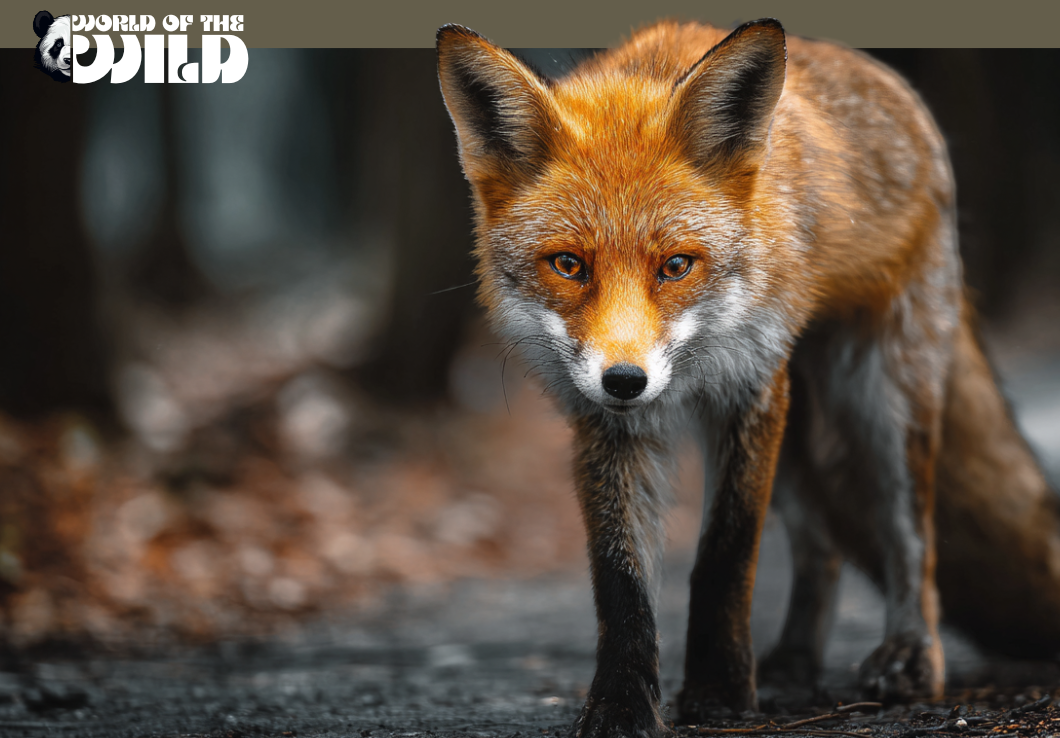

Few animals have captured the human imagination quite like the Red Fox. It prowls through our folklore as the trickster, the schemer, the sly opportunist outwitting everyone around it. It appears in Aesop’s fables, Native American legends, East Asian mythology, and European fairy tales with a consistency that suggests something deeper than mere storytelling tradition — a genuine, cross-cultural recognition that this animal is, in some fundamental way, extraordinary. And the science backs it up entirely.
The Red Fox (Vulpes vulpes) is the most widely distributed wild carnivore on Earth. It has colonized every continent except Antarctica, thriving in Arctic tundra, scorching deserts, dense forests, mountain ranges, and — perhaps most remarkably — the sprawling cities of the modern world. It is an animal that does not merely adapt to change; it seems to relish it. Intelligent, resourceful, acutely perceptive, and breathtakingly beautiful, the Red Fox is a masterclass in evolutionary success. This is its story.
Facts
- They use the Earth’s magnetic field to hunt: Red foxes are among the very few mammals known to use magnetoreception — the ability to sense magnetic fields — to help locate and pounce on prey hidden beneath snow or thick vegetation. Researchers observed that foxes hunting in a northeast magnetic direction were significantly more successful, suggesting they use the magnetic field as a targeting system.
- Their pupils are slit-shaped like a cat’s: Unlike most members of the dog family, red foxes have vertically slit pupils — an adaptation they share with cats and other ambush predators that gives them exceptional low-light vision and precise depth perception.
- Urban foxes are changing genetically: Studies of city-dwelling red foxes in the United Kingdom have detected measurable morphological and behavioral changes compared to rural populations, including shorter, wider snouts and altered stress hormones — early-stage domestication-like evolution happening in real time.
- They can hear a watch ticking 40 yards away: Red foxes have extraordinarily sensitive hearing, capable of detecting sounds at frequencies between 1 and 72 kHz and locating prey underground with pinpoint accuracy simply by sound alone.
- Their tail is a multitool: The bushy tail, called a “brush,” serves as a balance aid during high-speed chases, a warm wrap during cold nights, a communication flag during social interactions, and even a counterweight for sharp directional changes while running.
- They have a scent gland on their tail: Located near the base of the tail, the supracaudal gland produces a distinctive musk used in scent-marking and individual recognition. Each fox’s scent signature is as unique as a fingerprint.
- They cache food with impressive precision: Red foxes routinely bury surplus food for later retrieval, and studies show they can remember the locations of dozens of caches simultaneously — and will deliberately move a cache if they suspect another animal has been watching them bury it.
Species
The Red Fox holds the following taxonomic classification:
- Kingdom: Animalia
- Phylum: Chordata
- Class: Mammalia
- Order: Carnivora
- Family: Canidae
- Genus: Vulpes
- Species: Vulpes vulpes
Within this single species, the diversity is remarkable. Taxonomists have recognized anywhere from 9 to over 45 subspecies depending on the classification system used, reflecting the immense geographic spread and local adaptation of the red fox across the globe. Among the most recognized and well-studied are:
The European Red Fox (V. v. crucigera) — the nominate-like population across Britain and much of Western Europe, the model for much classical behavioral research.
The North American Red Fox (V. v. fulva) — long debated as a possible separate species, this population is now understood to include both native lineages and descendants of foxes introduced from Europe during colonial times.
The Eurasian Red Fox (V. v. vulpes) — the largest and most widespread subspecies across continental Europe and Asia.
The Desert Fox variants — several subspecies adapted to arid environments in the Middle East and Central Asia exhibit notably paler, sandier coloration as camouflage against their environment.
The genus Vulpes also contains 11 other living species, including the Arctic Fox (Vulpes lagopus), the Kit Fox (Vulpes macrotis), the Swift Fox (Vulpes velox), and the Fennec Fox (Vulpes zerda) — the smallest fox species, famous for its enormous ears. The Red Fox is the largest member of the genus and is considered the most successful canid on Earth by virtually every ecological metric.
Appearance
The Red Fox is one of the most visually striking wild mammals in the Northern Hemisphere, combining an almost painterly palette of warm colors with an elegance of form that makes it instantly recognizable. Adults typically stand between 13 and 20 inches (roughly 1.1 to 1.7 feet) at the shoulder and measure 18 to 35 inches in body length (approximately 1.5 to 2.9 feet), with an additional 12 to 22 inches of tail. They weigh between 6 and 30 pounds, with males (called “dogs”) being somewhat larger than females (called “vixens”).
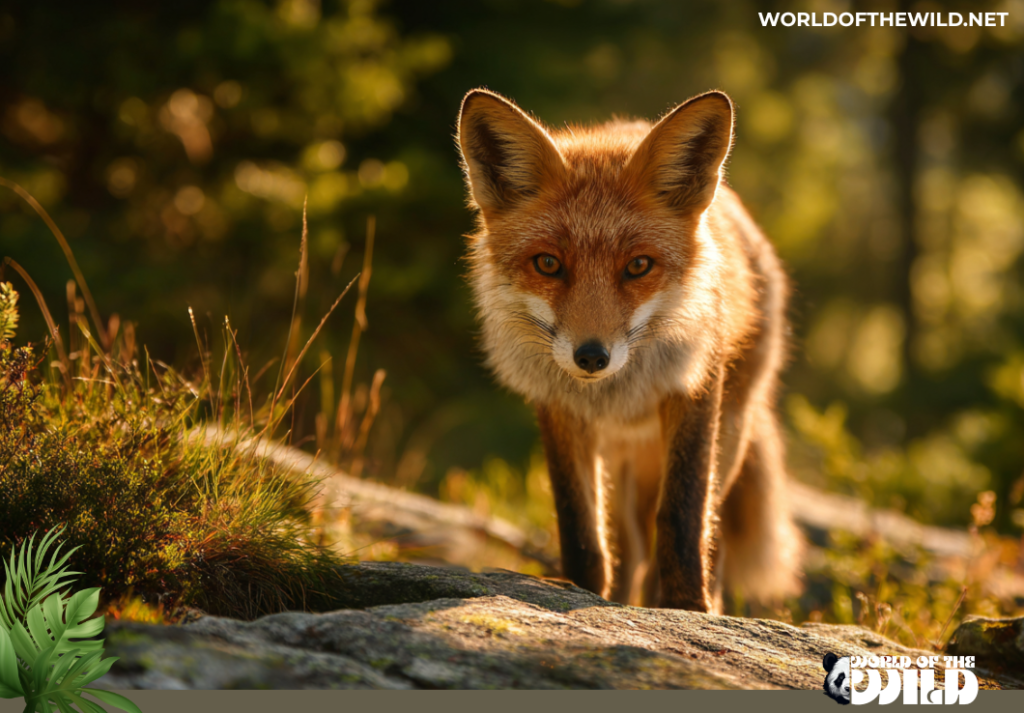
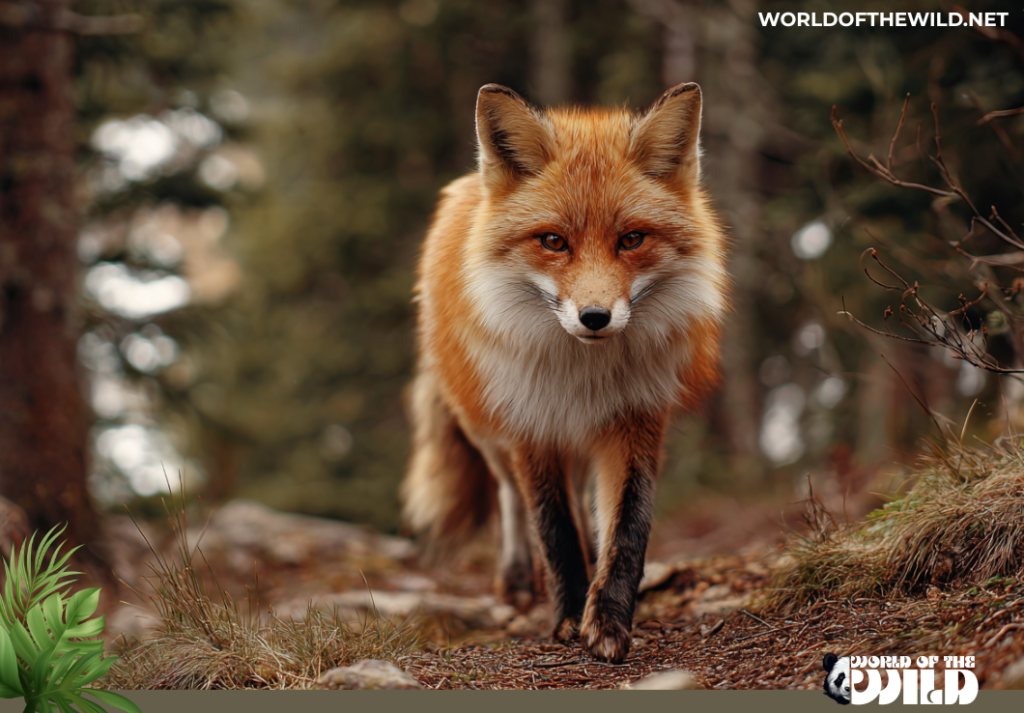
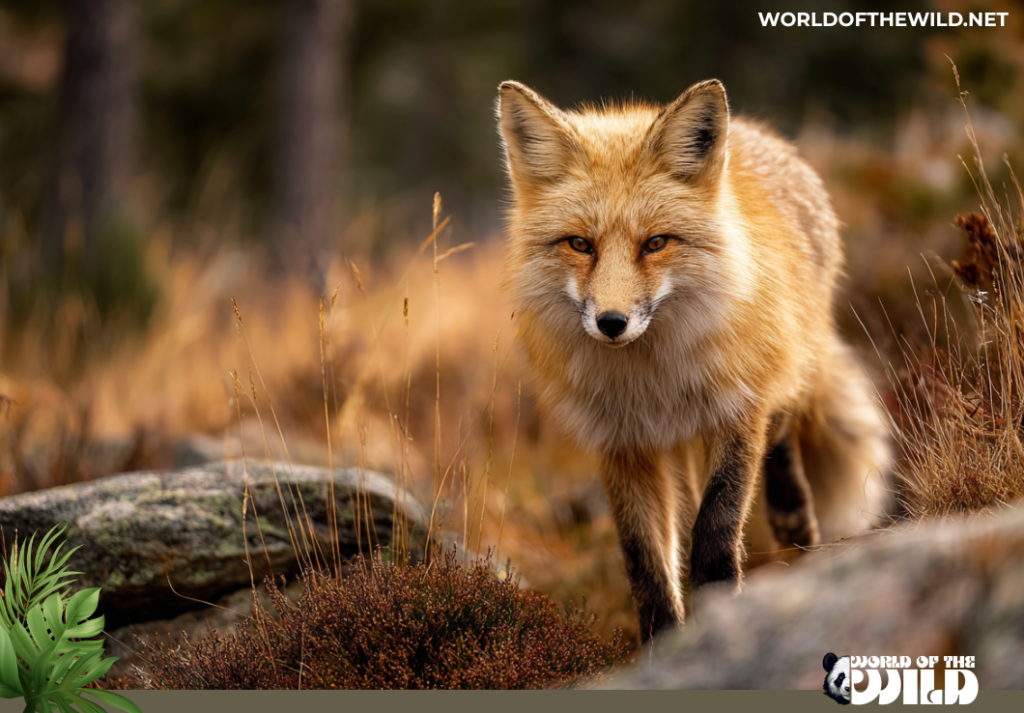
The classic coloration features a rich, flame-orange to deep russet coat across the back, flanks, and top of the head. The chest, belly, inner ears, and the tip of the tail are typically white or cream-colored, while the legs and the backs of the ears are often black — creating a bold, three-toned contrast that has made the red fox an enduring symbol of wild beauty. The muzzle is long and tapered, the ears large, upright, and mobile, and the eyes a striking amber or golden-yellow with those characteristic vertical slit pupils.
However, the red fox is far more variable in appearance than its name implies. Several natural color morphs exist within the same species. The Cross Fox displays a dark stripe running down the back and across the shoulders, forming a cross pattern over the classic reddish base. The Silver Fox — a melanistic morph — ranges from dark gray to nearly jet black, often with silver-tipped guard hairs that give the coat an iridescent shimmer. The Marble Fox and other piebald variants occur as well, and regional populations across its vast range show considerable variation in coat depth, body size, and ear proportions.
The tail — the brush — is invariably full and magnificent, densely furred and often nearly as long as the animal’s body. In winter, the coat thickens substantially across all populations, adding warmth and dramatically enhancing the apparent size of the animal.
Behavior
The Red Fox occupies a fascinating behavioral middle ground — neither the highly social pack animal of the wolf, nor the truly solitary drifter of some mustelids. The basic social unit is the mated pair or a small family group consisting of an adult male, one or more vixens, and their cubs, sometimes supplemented by “helper” vixens (usually daughters from a previous year) who assist in cub-rearing. Group size and social complexity vary considerably by habitat, with urban foxes often showing surprisingly intricate social structures.
Foxes are primarily crepuscular and nocturnal — most active around dawn, dusk, and through the night — though urban populations have adapted to human schedules and are frequently spotted during daylight hours. They are highly territorial, with home ranges that vary from less than half a square mile in resource-rich urban environments to over 20 square miles in sparse northern landscapes. Territories are maintained through a complex system of scent-marking using urine, feces, and secretions from multiple scent glands.
Their intelligence is exceptional within the canid family. Red foxes demonstrate problem-solving abilities, causal reasoning, and behavioral flexibility that rival some primates in experimental settings. The food-caching behavior described earlier — complete with deliberate deception of potential observers — is particularly striking as evidence of what researchers describe as “theory of mind,” the ability to model the mental states of other individuals.
Vocalizations are extraordinarily varied. Foxes produce at least 28 distinct calls, including the eerie, high-pitched scream of a vixen in heat (often mistaken by suburbanites for a child in distress), the sharp bark of an alarmed animal, the soft whimpering of mother-cub contact calls, and the distinctive “gekkering” — a harsh, rattling chatter produced during aggressive encounters. Communication is also heavily tactile and olfactory within close-range social interactions.
Play behavior persists well into adulthood, a trait associated with high cognitive flexibility. Foxes have been observed playing with objects, chasing birds with apparent joy rather than predatory intent, and engaging in elaborate wrestling matches that seem to serve primarily social bonding functions.
Evolution
The evolutionary story of the Red Fox begins with the ancient diversification of the family Canidae in North America, where the earliest canid ancestors appeared approximately 40 million years ago during the Eocene epoch. The family remained largely confined to North America for tens of millions of years before crossing into Eurasia via land bridges during periods of lower sea levels.
The genus Vulpes — the “true foxes” — diverged from other canids approximately 10–12 million years ago. The direct ancestor of the modern Red Fox is believed to have emerged in the Middle East or Central Asia around 3–4 million years ago during the Pliocene, subsequently spreading across Eurasia and North America as climatic conditions and land connections permitted. Fossil evidence of Vulpes vulpes itself or its immediate precursors dates back at least 1–2 million years.
The species’ evolutionary success rests on several key milestones: the development of extraordinary sensory systems (particularly hearing and smell), behavioral flexibility enabling exploitation of radically different food sources across diverse habitats, and a reproductive strategy characterized by moderate litter sizes, intensive parental investment, and rapid maturation. These traits, shaped by millions of years of evolution across highly variable environments, created an animal perfectly equipped for the most challenging ecological scenario of the modern world — a planet increasingly dominated by a single unpredictable species called Homo sapiens.
The most fascinating ongoing evolutionary story involves urban foxes, particularly in the United Kingdom, where cities have hosted stable fox populations for over a century. Measurable skeletal, behavioral, and physiological differences between urban and rural populations suggest that human cities may be functioning as a novel selective environment, potentially driving the Red Fox through an early stage of a process resembling self-domestication — a real-time evolutionary experiment playing out in London’s back gardens.
Habitat
The Red Fox holds the remarkable distinction of having the largest natural geographic range of any land mammal in the world. Its native range spans the entirety of Europe, most of Asia (from the Arctic to the subtropical Middle East), northern Africa, and North America from the treeline south to the American Southeast. It has also been introduced — with considerable and often ecologically problematic success — to Australia, where it was released for sport hunting in the 19th century and has since become one of that continent’s most damaging invasive species.
Within this enormous range, the habitat diversity is staggering. Red foxes thrive in Arctic tundra where temperatures plunge to -58°F, in temperate deciduous and boreal forests, across open grasslands and agricultural steppes, in semi-arid scrublands and true desert margins, in coastal dunes and wetland edges, and — perhaps most impressively — in the urban and suburban environments of some of the world’s largest cities. London, Toronto, Zurich, Stockholm, and Tokyo all host substantial fox populations that have learned to navigate traffic, exploit human food waste, and den under garden sheds and railway embankments.
The red fox tends to prefer edge habitats — the transitional zones between different vegetation types where prey diversity is highest and cover is readily available for denning and escape. Agricultural landscapes interspersed with woodlands and hedgerows represent something close to optimal habitat across much of Europe and North America. The fox’s ability to exploit such varied environments is a direct function of its behavioral and dietary flexibility — traits that make it as much an ecological generalist as a specialist.
Diet
The Red Fox is an omnivore of tremendous versatility — perhaps the most dietary-flexible carnivore in the Northern Hemisphere. While it belongs to the order Carnivora, its diet in practice encompasses everything from small mammals and birds to fruits, insects, earthworms, and discarded human food. This flexibility is central to its global success.
The backbone of the diet across most of its range is small mammals, particularly voles, mice, rabbits, and shrews. Foxes are solitary hunters, relying on stealth, acute hearing, and that characteristic “mousing pounce” — leaping high into the air and diving nose-first into snow or grass — to secure prey that may be entirely invisible to the eye. The magnetic compass hunting behavior described in the Facts section is deployed most dramatically during this pounce technique, with the fox apparently using the magnetic field to calibrate the angle of attack relative to the sound source.
Birds and their eggs are taken opportunistically, as are insects (particularly beetles and grasshoppers in summer), earthworms (a major dietary component in wet, temperate climates — foxes can consume hundreds in a single night), amphibians, reptiles, fish, and carrion. In late summer and autumn, fruit becomes a significant component of the diet — berries, apples, plums, and other soft fruits can make up the majority of intake during peak availability. Urban foxes add compost bins, pet food, and discarded takeaway to this already eclectic menu.
This dietary omnivory is not merely a feeding strategy — it is an ecological role. Red foxes regulate small mammal populations, disperse seeds through fruit consumption, and serve as significant consumers of invertebrates, weaving them into food webs at multiple trophic levels simultaneously.
Predators and Threats
Across most of its range, the adult Red Fox sits at or near the top of its local predator guild, with few species capable of or interested in targeting healthy adults. The primary natural predators vary significantly by region. In North America, coyotes are the dominant threat — not merely as predators but as competitors, and coyote expansion is closely associated with fox population suppression or local displacement. Wolves, golden eagles, large owls (particularly the Great Horned Owl targeting cubs), and lynx represent additional natural predators across different parts of the range. In Australia, the introduced Dingo occasionally preys on foxes. Cubs are considerably more vulnerable than adults, falling prey to a wide range of medium-sized predators and birds of prey.
Human-caused threats are more complex and regionally variable than for many other species — and here, the red fox’s story takes an unusual turn compared to most wildlife.
Hunting and persecution have historically been the most significant human pressures. Fox hunting with hounds was a cultural institution in Britain for centuries before being banned in 2004, and foxes are still legally trapped, shot, and snared across much of their range as perceived threats to poultry, game birds, and lambs. In some regions, this persecution is intense and organized.
Road mortality is a leading cause of death for urban and suburban foxes, and is thought to be a significant population-limiting factor in high-density human-occupied landscapes.
Mange — a skin disease caused by the parasitic mite Sarcoptes scabiei — periodically devastates fox populations, particularly in urban areas where population density facilitates rapid spread. Urban fox populations across Europe have experienced cyclical collapses driven by mange outbreaks.
Habitat loss, while less immediately threatening to the red fox than to many species given its adaptability, still represents a long-term pressure, particularly for native North American and boreal populations displaced by intensive agriculture and urban sprawl.
Climate change may actually benefit some red fox populations in the short term — warming Arctic and sub-Arctic regions are allowing red foxes to push further north, where they now compete with and increasingly displace the more specialized Arctic Fox.
Reproduction and Life Cycle
The Red Fox’s breeding season falls primarily in winter across most of the Northern Hemisphere — typically December through February at temperate latitudes — announced with considerable drama by the haunting screams of vixens advertising their reproductive status and the territorial barking of competing males. The mating period, called the “vixen’s season” or “fox mating season,” fills winter nights with an extraordinary acoustic landscape that has startled many an unsuspecting suburban resident.
Courtship involves extensive chasing, mutual grooming, and play behavior. A dominant male will mate with one primary vixen — red foxes are generally considered to be socially monogamous, though genetic studies reveal extra-pair copulations occurring with some regularity. Gestation lasts approximately 52 days, and cubs are born in an underground earth (den) typically excavated by the vixen or adopted from a rabbit warren or badger sett.
Litter sizes range from 1 to 13 cubs, with 4 to 6 being typical. Cubs are born blind, deaf, and covered in short, dark brown-gray fur that bears almost no resemblance to the adult coat. They weigh only 2 to 4 ounces at birth and are entirely dependent on their mother. The male provides food for the nursing vixen during the first weeks, and helper vixens — if present in the group — assist with feeding, guarding, and socializing the cubs.
Eyes open at around 10 to 14 days. By four weeks, cubs begin to emerge from the den, beginning the raucous, chaotic, and endlessly entertaining process of learning to be foxes — wrestling, pouncing, exploring, and developing the social hierarchies that will govern their relationships. Weaning occurs at around 6 to 8 weeks, and cubs typically disperse from their natal territory by autumn — sometimes traveling remarkable distances of 100 miles or more, particularly males.
Sexual maturity is reached within 10 months. Red foxes in the wild typically live 3 to 5 years, with few surviving beyond 6 years due to disease, predation, and road mortality. In captivity, individuals have lived to 14 years or more.
Population
The Red Fox is currently classified as Least Concern on the IUCN Red List — the lowest-risk category — reflecting its extraordinary abundance and distribution. The global population is estimated to number in the tens of millions, with some estimates placing the total between 35 and 58 million individuals worldwide, making it one of the most numerous wild carnivores on Earth.
Population trends are broadly stable or increasing across much of its range, particularly in urban and suburban environments where the fox has proven remarkably adept at colonizing human landscapes. Urban fox populations in the United Kingdom have grown substantially since the mid-20th century and are now a defining feature of most British cities. Similar urban colonization is ongoing across continental Europe, North America, and Japan.
The picture is not uniformly positive, however. In Australia, the red fox is itself classified as an invasive species and is subject to intensive control programs, as it has contributed to the extinction or severe decline of numerous native marsupials and ground-nesting birds. In parts of its native range — particularly some boreal and Arctic-edge regions — populations are subject to significant pressure from trapping, hunting, and cyclic disease outbreaks.
The red fox is also subject to intensive fur farming in parts of Eastern Europe and Russia, where millions of farmed animals exist in conditions entirely separate from wild populations but which raise significant animal welfare concerns.
Conclusion
The Red Fox is a paradox wrapped in a flame-colored coat. It is simultaneously one of nature’s great success stories and a species whose relationship with humanity is fraught with contradiction — hunted and admired, persecuted and protected, vilified as a chicken-coop bandit and celebrated as an icon of wildness and wit. It thrives where countless species struggle, adapts where others cannot, and finds opportunity in the margins and broken edges of a human-dominated world.
Its success should not breed complacency, however. The red fox’s story carries a vital message about the kind of world we are creating — a world increasingly hospitable to the flexible and generalist, and increasingly hostile to the specialized, the rare, and the ancient. The fact that foxes flourish in cities while wolves and lynx retreat into ever-smaller wilderness fragments is not simply a testament to the fox’s ingenuity. It is a mirror held up to the profound transformation of our planet’s wild places.
So the next time you see a red fox — padding across a frost-silvered lawn at dusk, pausing to fix you with those extraordinary amber eyes — take a moment to recognize what you are looking at: millions of years of evolutionary brilliance, perfectly expressed. Then ask yourself what kind of world you want to share with it, and with the countless other creatures that are not quite so good at surviving us.
Quick Reference Table
| Field | Details |
|---|---|
| Scientific Name | Vulpes vulpes |
| Diet Type | Omnivore (small mammals, birds, eggs, insects, earthworms, fruit, carrion, human food waste) |
| Size (Body Length) | 18 – 35 inches (approximately 1.5 – 2.9 feet); shoulder height 13 – 20 inches |
| Weight | 6 – 30 pounds |
| Region Found | Worldwide: Europe, Asia, North America, North Africa, Australia (introduced); all continents except Antarctica |