
Imagine an insect so powerful, so ferociously armed, that indigenous tribes across South America have woven it into some of the most brutal coming-of-age rituals on Earth. Imagine a sting so overwhelming that it has been compared — by those who have survived it — to being shot by a bullet. Welcome to the world of Paraponera clavata, the bullet ant: a creature that, despite measuring little more than an inch in length, commands more fear, respect, and scientific fascination than animals many times its size.
The bullet ant is not merely a curiosity for thrill-seekers and pain enthusiasts. It is a keystone player in the complex ecology of the Neotropical rainforest, a marvel of evolutionary engineering, and a window into the deeply interconnected world of social insects. From the biochemistry of its venom to the breathtaking endurance rituals of the Sateré-Mawé people, the bullet ant occupies a singular place in both the natural world and the human imagination. Once you learn about this insect, you will never look at the rainforest floor the same way again.
Facts
- The bullet ant holds the top position on the Schmidt Pain Index, a scale developed by entomologist Dr. Justin Schmidt who allowed himself to be stung by dozens of insect species. He described the bullet ant sting as “pure, intense, brilliant pain… like walking over flaming charcoal with a three-inch nail embedded in your heel.”
- The pain from a single bullet ant sting can last up to 24 hours, unlike most bee or wasp stings that subside within hours.
- The bullet ant’s venom contains a paralyzing neurotoxin called poneratoxin, a peptide that disrupts sodium ion channels in nerve cells and causes uncontrolled muscle contractions.
- Bullet ants are sometimes called “hormiga veinticuatro” (the 24-hour ant) in parts of Latin America, a nod to the full day of agony that follows a sting.
- The Sateré-Mawé tribe of Brazil use bullet ant stings as part of a warrior initiation ritual, in which young men wear gloves woven with hundreds of sedated-then-awakened bullet ants for ten minutes — and must repeat this ritual 20 times to earn their warrior status.
- Unlike honeybees, bullet ants do not die after stinging. They can sting repeatedly and without limitation.
- Bullet ants are capable of producing sound — they stridulate (rub body parts together) to communicate alarm signals to nestmates.
Species
The bullet ant sits within the grand hierarchy of life as follows:
- Kingdom: Animalia
- Phylum: Arthropoda
- Class: Insecta
- Order: Hymenoptera
- Family: Formicidae
- Genus: Paraponera
- Species: Paraponera clavata
Paraponera clavata is the sole living species in the genus Paraponera, making it a phylogenetically isolated creature with no close living relatives sharing its genus. This singularity speaks to both its unique evolutionary path and the ecological niche it has carved out over millions of years.
The genus Paraponera belongs to the subfamily Paraponerinae, itself considered one of the most ancient and basal subfamilies within the ant family Formicidae. There are no recognized subspecies of Paraponera clavata, though populations across its range can show slight morphological variation in color and body size depending on geographic location and elevation.
A closely related but extinct genus, Paraponera dieteri, has been identified from fossil records in the Dominican Republic and Baltic amber deposits, offering paleontologists a tantalizing glimpse into the ancient lineage from which today’s bullet ant descended.
Appearance
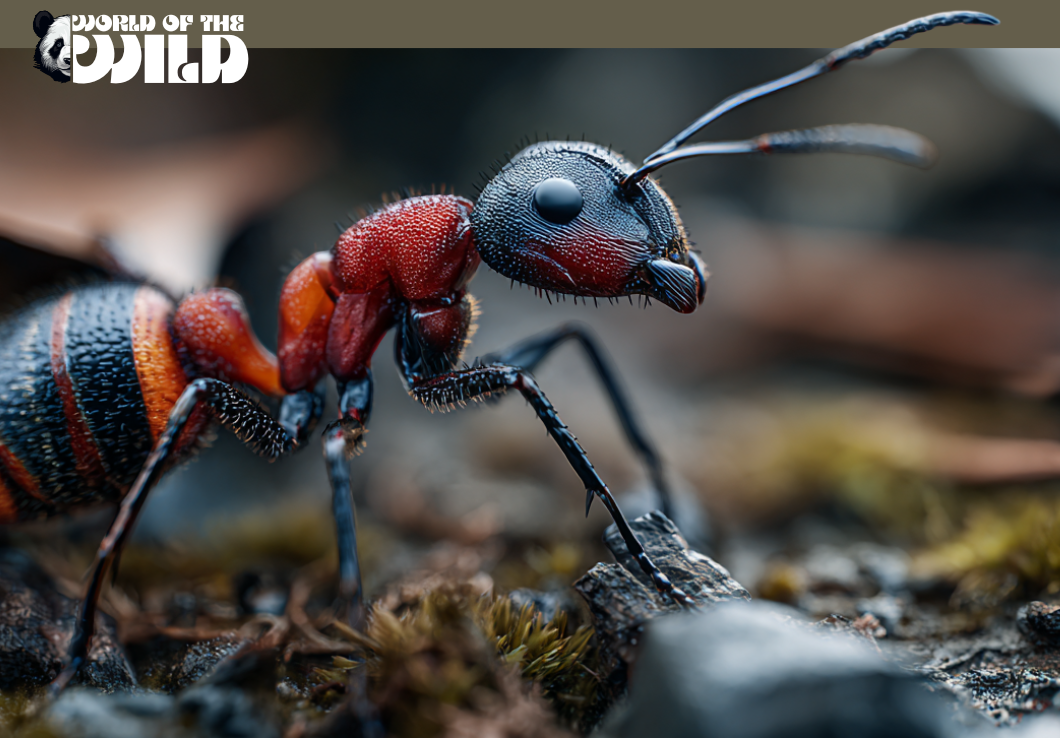
The bullet ant is, by any measure, an imposing insect. Workers typically measure between 0.7 and 1.2 inches (18–30 mm) in length, making them one of the largest ant species in the world. Queens are slightly larger, occasionally exceeding 1.2 inches. Their weight is comparatively light at roughly 0.003 to 0.005 pounds, though what they lack in mass they more than compensate for in menace.
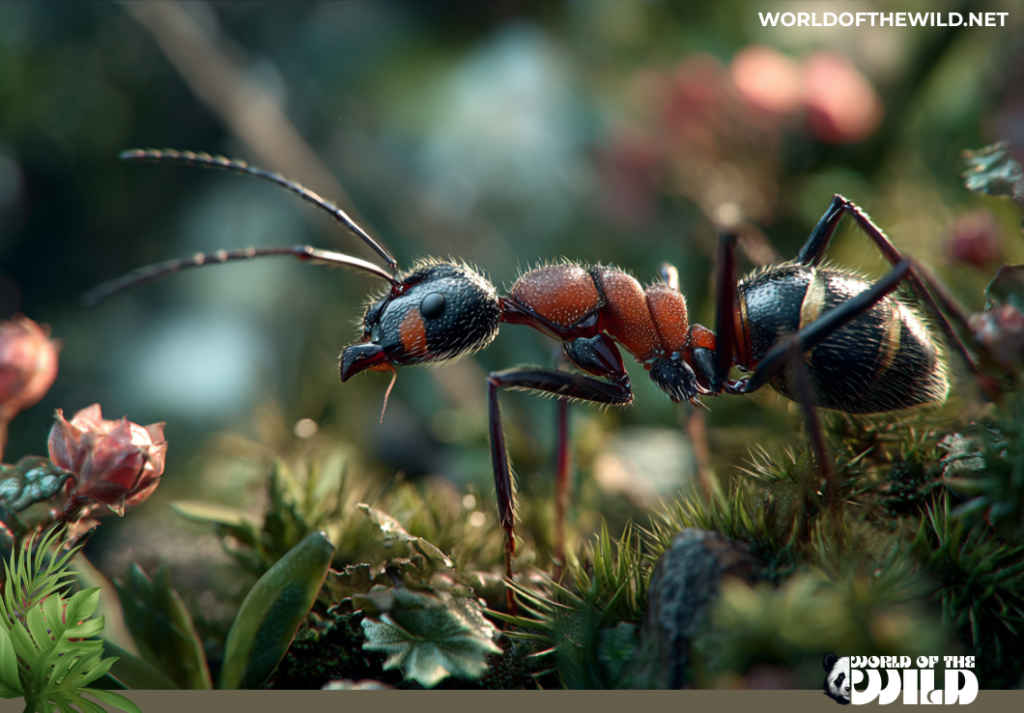
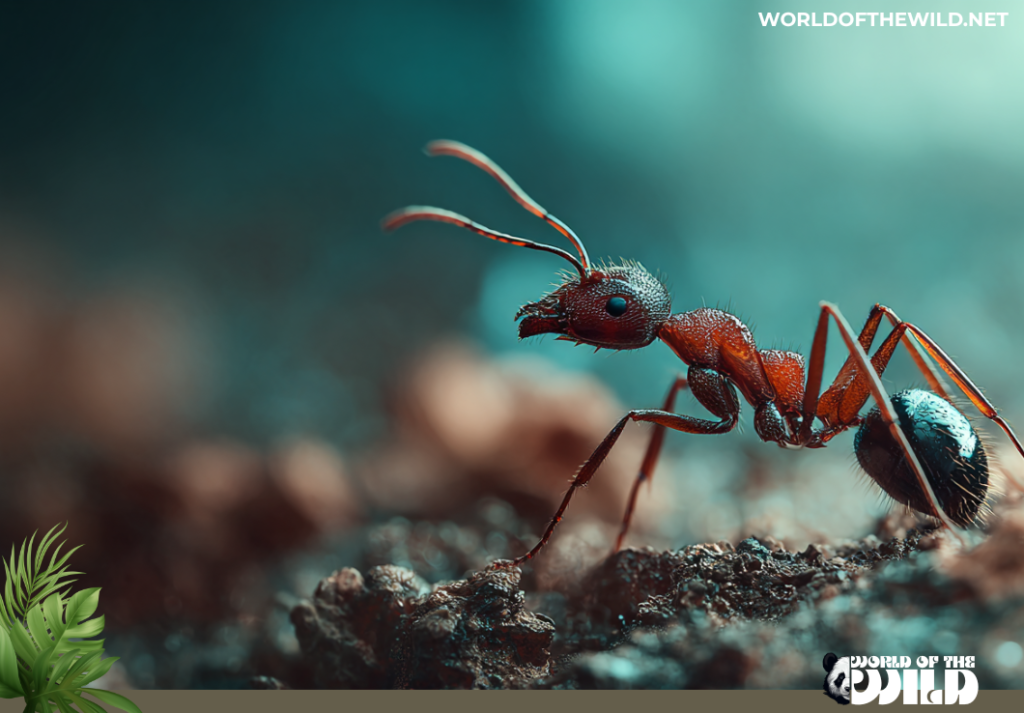
The body of the bullet ant is robust and heavily built, with a distinctly reddish-brown to black coloration that darkens with age. The exoskeleton has a finely sculpted, almost rough texture, giving workers a gritty, formidable appearance when viewed up close. The head is large and well-developed, housing powerful mandibles that can grip and bite with considerable force.
Perhaps the most visually striking feature of the bullet ant is its stinger, located at the tip of the gaster (the rearmost body segment). Unlike the barbed stingers of honeybees, the bullet ant’s stinger is smooth and lancet-like, allowing it to be withdrawn and used again repeatedly. Workers also possess prominent, forward-facing compound eyes that give them excellent spatial awareness within their forested environment. Antennae are long and elbowed — a characteristic feature of ants — and serve as sophisticated sensory instruments for detecting chemicals, vibrations, and environmental cues.
Behavior
Bullet ants are eusocial insects, meaning they live in organized colonies with a clear division of labor between queens, workers, and males. A typical bullet ant colony numbers between 1,000 and 3,000 individuals — modest by ant standards, but each individual compensates for the colony’s smaller size with extraordinary capability.
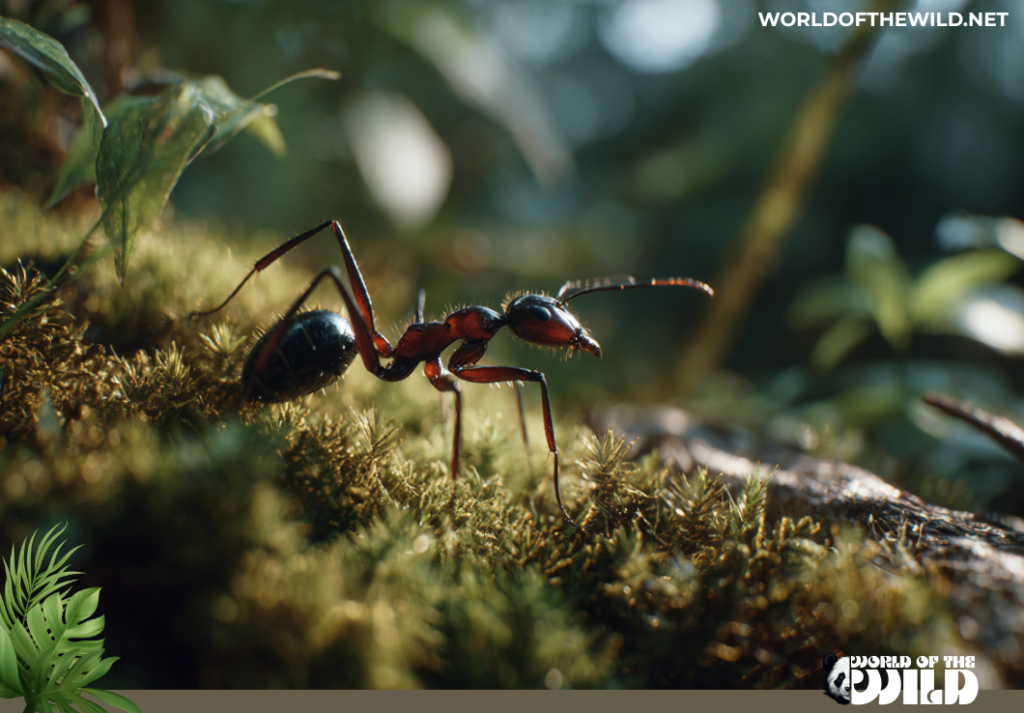
Colonies nest at the base of trees, often in the root systems or soil just beneath the forest floor. Workers are primarily diurnal, foraging during the day along established trails that can extend many meters from the nest. They communicate through a combination of chemical signals (pheromones) and stridulation — a rasping sound produced by rubbing ridged body segments together — which serves as an alarm mechanism when the colony is threatened.
Unlike many ant species, bullet ants do not form the enormous swarm colonies associated with army ants. Instead, they are more deliberate and territorial in their foraging. Workers patrol their home tree vigorously, and when a threat is detected, they release alarm pheromones that mobilize nestmates rapidly. They are known to be aggressive when provoked, and a single disturbed worker can trigger a defensive response from dozens of nestmates within seconds.
One of the most fascinating behavioral adaptations of bullet ants is their role as mutualistic partners with certain trees. Some rainforest trees have evolved to host bullet ant colonies in their root systems, providing shelter and sometimes even nutrients. In return, the bullet ants aggressively defend the tree against herbivores and competing plants — a living, stinging security system.
Evolution
The evolutionary story of the bullet ant stretches back tens of millions of years, rooted in the ancient diversification of the Hymenoptera during the Cretaceous period. Ants themselves are believed to have evolved from wasp-like ancestors approximately 140 to 168 million years ago, and the subfamily Paraponerinae — to which the bullet ant belongs — is considered one of the most basal (primitive) ant lineages still alive today.
This “living fossil” status is significant. Paraponerinae ants retain characteristics that more derived ant lineages have lost or heavily modified, including a functional sting of extraordinary potency. While most modern ant groups have shifted toward chemical warfare or mechanical defense strategies, the bullet ant has retained and refined its venom apparatus as its primary defensive tool — an evolutionary bet that has clearly paid off.
Fossil evidence from amber deposits in the Dominican Republic and the Baltic region has revealed extinct Paraponera-like ants dating back to the Eocene epoch (approximately 34–56 million years ago), suggesting that the genus once had a broader geographic range. As continents shifted and climates changed, the lineage appears to have retreated southward into the stable, humid refuge of the Neotropical rainforest.
The evolution of poneratoxin — the bullet ant’s venom peptide — represents one of the most remarkable examples of biochemical specialization in the insect world. Researchers believe this neurotoxin evolved primarily as a defensive mechanism against vertebrate predators rather than as a hunting tool, a fascinating inversion of how venom is typically framed in nature.
Habitat
The bullet ant calls the Neotropical rainforests of Central and South America home. Its range extends from Nicaragua in the north, through Costa Rica, Panama, Colombia, Venezuela, and Brazil, reaching as far south as Bolivia and Paraguay. Within this vast range, bullet ants are most commonly found in lowland and mid-elevation humid tropical forests, typically at elevations below 1,500 meters (approximately 4,900 feet), though they have been documented at higher altitudes in some regions.
Their preferred microhabitat is the forest floor and the base of large trees, particularly mature trees with extensive root systems that offer stable nesting sites with protection from flooding. Bullet ant colonies are almost invariably found in areas of dense, undisturbed primary forest, as they are highly sensitive to habitat degradation and the loss of canopy cover.
The rainforest environment they inhabit is characterized by high humidity (often above 80%), stable warm temperatures (typically between 22–30°C or 72–86°F year-round), and extraordinary biodiversity. This environment provides the bullet ant with an abundance of foraging resources while also presenting constant ecological pressures from competing species, parasites, and predators. The bullet ant thrives in this complexity, functioning as both predator and prey, defender and decomposer, in one of the world’s most dynamic ecosystems.
Diet
Bullet ants are omnivores, and their diet reflects the extraordinary resource diversity of their rainforest home. Their primary food sources include:
- Nectar and plant secretions, gathered from flowers and extrafloral nectaries (special nectar-producing glands found on some plant stems and leaves)
- Small arthropods and invertebrates, including other insects, spiders, and larvae, which are hunted and carried back to the nest as protein sources
- Insect honeydew, a sugary substance produced by aphids and other sap-feeding insects
- Organic debris and soft plant material, occasionally consumed opportunistically
Foraging workers are remarkable in their efficiency and range, traveling several meters from the nest along established chemical trails to locate food. Unlike predatory ants that rely on coordinated mass attacks, bullet ants are largely solitary hunters, using their size, powerful mandibles, and sting to subdue prey individually. Workers have been observed climbing high into the forest canopy to collect nectar and small prey, demonstrating impressive agility for such large insects.
Food is brought back to the nest and shared through a process called trophallaxis, in which workers exchange liquid food mouth-to-mouth, distributing nutrients throughout the colony including to larvae, the queen, and non-foraging nestmates.
Predators and Threats
Despite their formidable defenses, bullet ants are not without enemies in the natural world. Their primary natural predators include:
- Parasitoid flies of the family Phoridae (humpbacked flies), which lay eggs on or near bullet ants. The larvae then parasitize the ant, consuming it from within — one of nature’s more gruesome survival strategies.
- Certain bird species, particularly well-armored or thick-billed insectivores that have developed behavioral strategies to avoid the sting.
- Army ants (Eciton species), which occasionally raid bullet ant colonies in overwhelming numbers.
- Large vertebrates such as giant anteaters (Myrmecophaga tridactyla), armadillos, and some primates that tolerate or ignore bullet ant stings due to physical adaptations like thick skin, long tongues, and sticky saliva.
On the human side, the greatest threats to bullet ant populations are not direct but systemic:
- Deforestation and habitat loss represent the most significant threat. The Amazon Basin, the bullet ant’s core range, continues to lose forest at alarming rates due to agricultural expansion, cattle ranching, logging, and infrastructure development.
- Climate change threatens to alter temperature and precipitation patterns in the Neotropics, potentially shrinking the range of suitable habitat for a species so tightly adapted to stable humid conditions.
- Pesticide use in agriculture near forested areas can devastate ant populations both directly through chemical exposure and indirectly through the collapse of their food webs.
Reproduction and Life Cycle
Like all ants, bullet ants follow a holometabolous life cycle, passing through four distinct stages: egg, larva, pupa, and adult. At the center of colony reproduction is the queen, who is the sole reproductive female in the colony and can live for several years, continuously producing eggs that sustain and grow the population.
Mating flights — known as nuptial flights — occur seasonally, typically during periods of high humidity that coincide with the wet season in tropical regions. During these events, winged males and virgin queens (called alates) leave established colonies to mate in the air. Males die shortly after mating, while successfully mated queens shed their wings and search for a suitable site to found a new colony.
A new queen begins by laying eggs in a small underground chamber. She initially raises her first cohort of workers entirely on her own metabolic reserves, not eating until the first workers emerge and begin foraging. This founding stage is extraordinarily demanding, and many young colonies fail before becoming established.
Worker bullet ants pass through the larval and pupal stages over a period of approximately several weeks to a few months, depending on temperature and food availability. Once they emerge as adults, workers progress through a series of age-related roles within the colony — a process called temporal polyethism — beginning as nurses that tend larvae and the queen, then transitioning to foraging roles as they age.
Worker lifespan ranges from several months to just over a year. Queens, sheltered within the nest and sustained by worker care, can live significantly longer — potentially 3 to 5 years or more, though precise queen longevity data for wild Paraponera clavata colonies remains an active area of research.
Population
The bullet ant is currently classified as a species of Least Concern on the IUCN Red List of Threatened Species, indicating that, as of the most recent assessments, it does not face an immediate risk of extinction at the global level. Its wide distribution across the Neotropical rainforest belt provides a degree of resilience that many more narrowly distributed species lack.
However, this designation should not be mistaken for invincibility. Precise global population figures do not exist for the bullet ant, as counting individual ants across millions of square kilometers of tropical rainforest is practically impossible. What is known is that populations are dense within suitable habitat but highly sensitive to habitat quality. Areas of primary forest support thriving bullet ant populations, while degraded or secondary forests often show markedly reduced densities or absence entirely.
The broader trend is one of cautious concern. As rainforest habitats across Central and South America continue to fragment and diminish, species like the bullet ant — which require large, intact forest tracts to maintain healthy colony networks — will inevitably face increasing pressure. Monitoring programs and habitat protection initiatives in countries like Costa Rica, Colombia, and Brazil are critical to ensuring that this iconic insect continues to fill its ecological role for generations to come.
Conclusion
The bullet ant is far more than a punchline in the world of extreme pain — it is a sophisticated, ecologically essential, and evolutionarily ancient creature that has thrived in one of Earth’s most competitive environments for tens of millions of years. From its paralyzing neurotoxin and complex colony society to its role as a forest guardian and a symbol of human endurance rituals, Paraponera clavata embodies the astonishing depth of life that the tropical rainforest harbors.
Yet the bullet ant’s continued existence is tied inextricably to the fate of the Neotropical rainforest itself. Every hectare of forest cleared is not just a loss of trees — it is the erasure of entire ecological communities, ancient evolutionary lineages, and chemical libraries that science has barely begun to read. The poneratoxin in a bullet ant’s venom, for instance, holds potential in medical research related to pain management and neurological disorders. Who knows what secrets remain locked within species we have not yet taken the time to understand?
The bullet ant asks nothing of us except to be left alone in its forest home. The very least we can do is fight to ensure that home remains standing.
Quick Reference Table
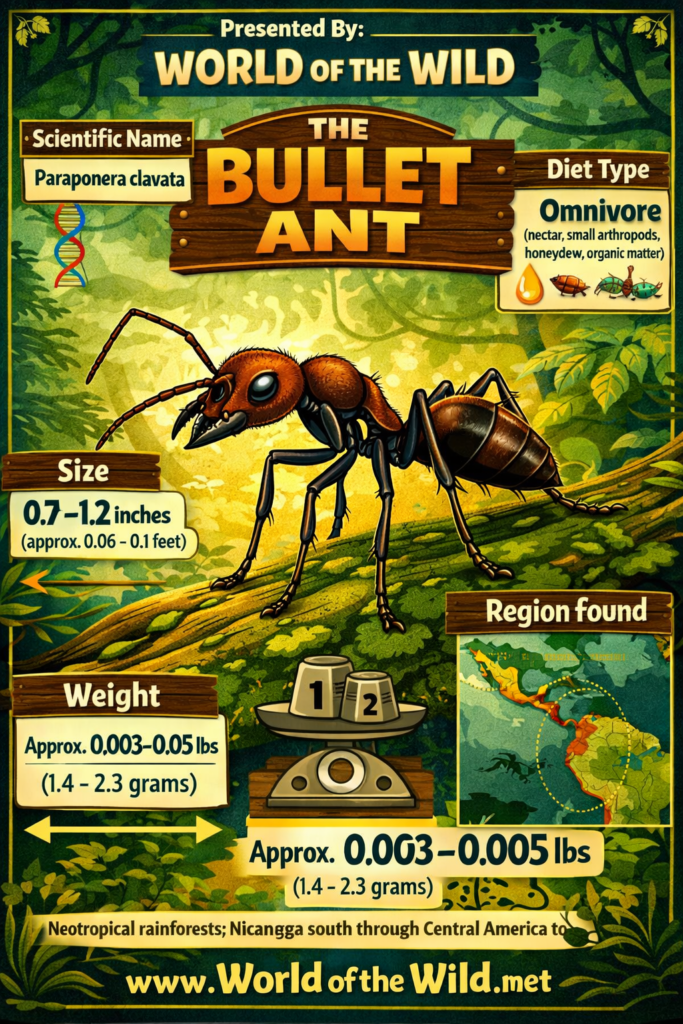
| Scientific Name | Paraponera clavata |
| Diet Type | Omnivore (nectar, small arthropods, honeydew, organic matter) |
| Size | 0.7 – 1.2 inches (approx. 0.06 – 0.1 feet) |
| Weight | Approx. 0.003 – 0.005 lbs (1.4 – 2.3 grams) |
| Region Found | Neotropical rainforests; Nicaragua south through Central America to Bolivia, Brazil, and Paraguay |