
Few animals in the world inspire the same instant sense of wonder as the koala. Perched high in the fork of a eucalyptus tree, round ears framing a broad, leathery nose, this deceptively sleepy creature has become one of the most recognizable symbols on Earth. But beneath that cuddly exterior lies one of nature’s most remarkable survival stories — a highly specialized mammal that has spent millions of years perfecting the art of eating one of the most toxic plants on the planet, sleeping through the difficulty of digesting it, and thriving in an environment that challenges almost every other creature.
The koala is not just a pretty face pinned to a tourism poster. It is a living relic of ancient Australia, a product of extraordinary evolutionary fine-tuning, and — increasingly — a species standing at the crossroads of survival and extinction. Understanding the koala means understanding the fragile, irreplaceable ecosystems of the Australian continent, and why their protection matters for all of us. Let’s climb into the canopy and take a closer look.
Facts
Here are some quick, fascinating facts that might just change how you see this iconic marsupial:
- Not actually a bear. Despite the nickname “koala bear,” koalas are marsupials — far more closely related to wombats and kangaroos than to any bear species. The misnomer dates back to early European settlers who, unfamiliar with marsupials, defaulted to a familiar label.
- Their fingerprints are nearly identical to human fingerprints. Koala fingerprints are so similar to ours that they have reportedly been found at crime scenes and confused forensic investigators. It’s one of the very few examples of convergent evolution producing virtually identical fingerprint ridges.
- They have two thumbs on each front paw. Two opposable thumbs on each forelimb give koalas an exceptionally powerful grip — perfect for clinging to smooth-barked eucalyptus trees for hours on end.
- A koala’s brain is smooth. Unlike most mammals, koalas have a smooth (lissencephalic) cerebral cortex with relatively few folds. Scientists believe this may be an evolutionary energy-saving measure tied to their low-calorie diet.
- They can survive without drinking water — mostly. The name “koala” is believed to derive from an Aboriginal word meaning “no water” or “no drink.” Koalas obtain the bulk of their hydration directly from eucalyptus leaves, though they have been observed drinking water during extreme heat events.
- Each koala has a preferred tree. Individual koalas often develop strong attachments to specific eucalyptus trees within their home range, returning to the same branches repeatedly over years.
- They communicate with surprisingly loud bellows. Despite their size, male koalas can produce deep, resonant bellowing calls audible from hundreds of meters away — a sound that resembles a combination of a snore and a belch, but serves as a powerful territorial broadcast.
Species
Full Taxonomic Classification:
| Rank | Classification |
|---|---|
| Kingdom | Animalia |
| Phylum | Chordata |
| Class | Mammalia |
| Order | Diprotodontia |
| Family | Phascolarctidae |
| Genus | Phascolarctos |
| Species | Phascolarctos cinereus |
The koala is the sole surviving member of the family Phascolarctidae, making it a genuinely singular creature from a taxonomic standpoint. All of its close relatives are extinct.
Within the species Phascolarctos cinereus, three informal geographic subspecies are commonly recognized, though formal taxonomic delineation remains debated among scientists:
- Queensland Koala (P. c. adustus): Smaller in body size with shorter, thinner fur — an adaptation to the warmer, subtropical climate of northern Australia.
- New South Wales Koala (P. c. cinereus): Intermediate in size and fur thickness, representing the “typical” koala of popular imagination.
- Victorian/South Australian Koala (P. c. victor): The largest of the three, with noticeably thicker, woollier fur to cope with cooler southern temperatures. These individuals can appear significantly more robust than their northern counterparts.
Appearance
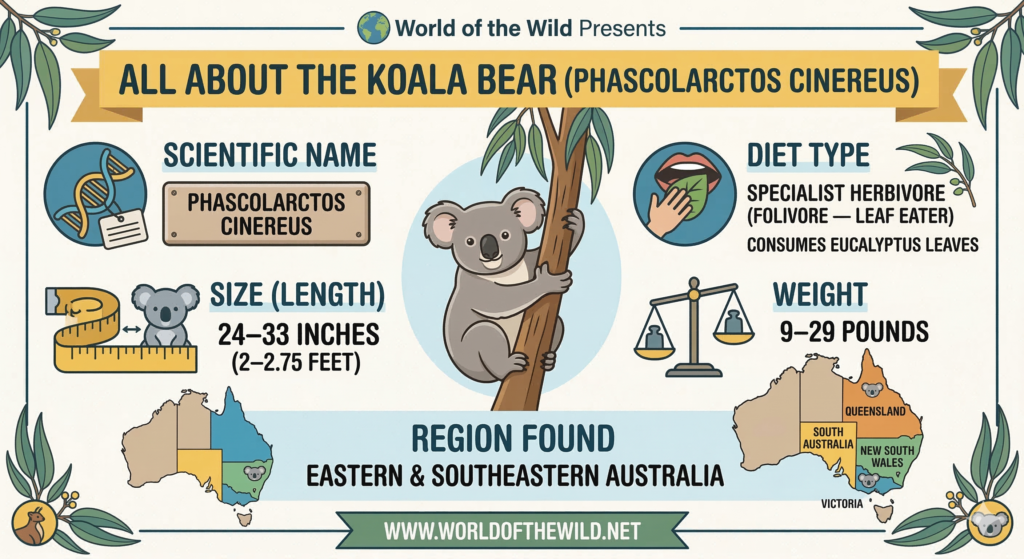
The koala is instantly recognizable, a product of millions of years of adaptation to arboreal life in Australian eucalyptus forests. Adults typically measure between 24 and 33 inches (2 to 2.75 feet) in body length and weigh anywhere from 9 to 29 pounds, with considerable variation depending on sex, age, and geographic location. Males are noticeably larger than females — a classic example of sexual dimorphism — and southern koalas are substantially bulkier than their northern counterparts.
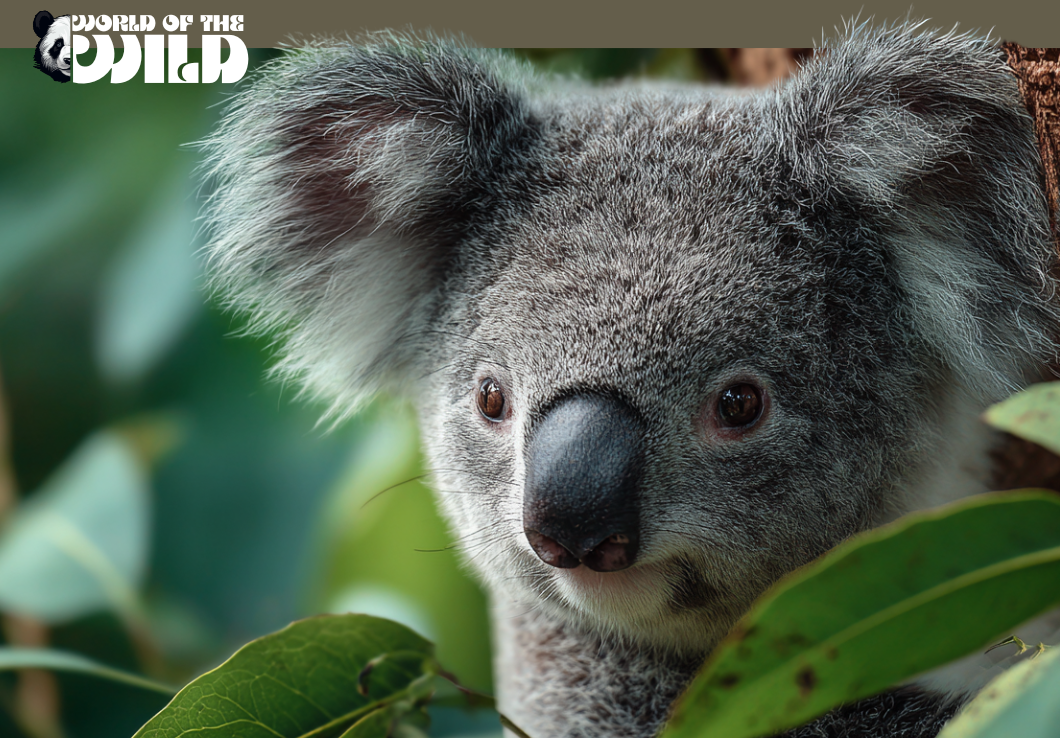
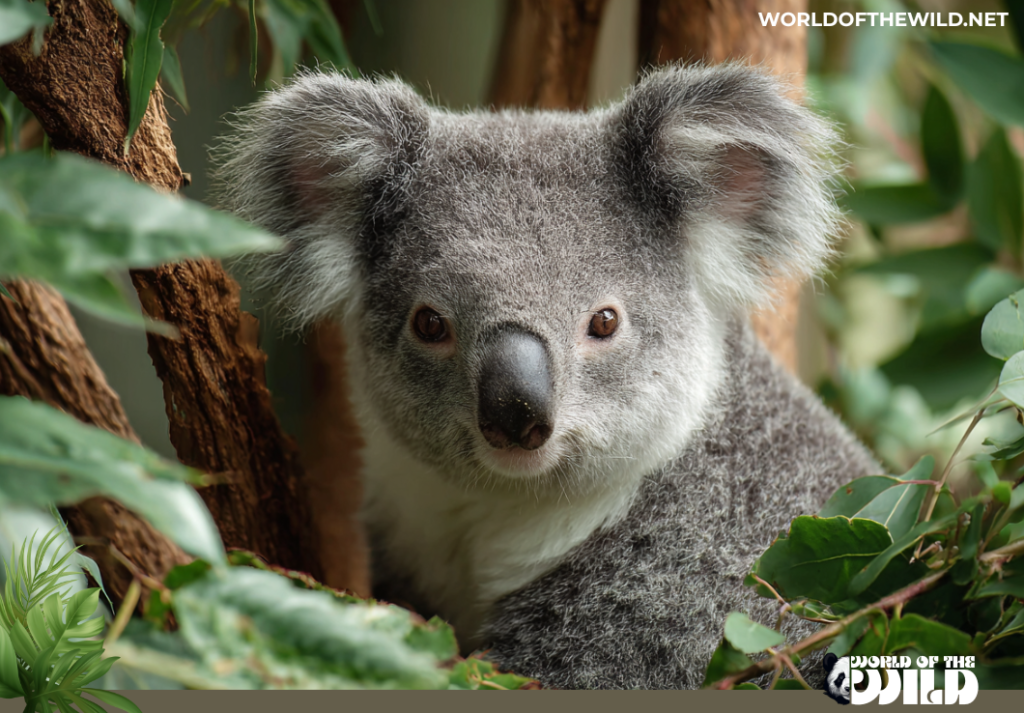
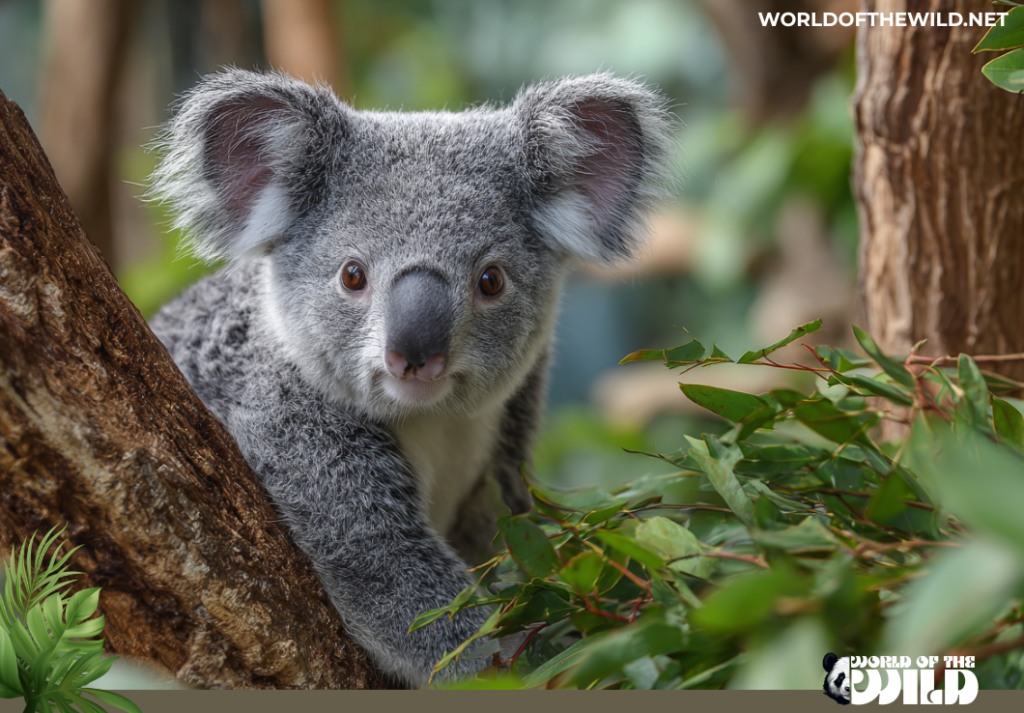
Their most distinctive feature is the large, rounded leathery nose, which dominates the face and serves as a highly sensitive olfactory organ — essential for identifying the dozens of eucalyptus species and selecting leaves with the right chemical balance. Flanking that nose are two large, round, forward-facing eyes that give the koala a somewhat owlish, perpetually surprised expression.
The ears are large and fluffy, edged with white fur, and excellent at picking up sound across wooded terrain. The body is covered in dense, woolly fur that ranges from light gray to brown, typically with a white or cream-colored chest and inner limbs. Southern subspecies display noticeably richer, thicker coats. Males possess a dark brown sternal scent gland in the center of the chest, which they rub against trees to mark territory.
The limbs are powerfully built for climbing, and each foreleg ends in that distinctive double-thumbed paw. The feet have a fused second and third toe that acts as a grooming comb. Koalas also possess a vestigial tail — essentially invisible externally — and a tough, cartilaginous pad on their rear end that acts like a built-in sitting cushion for long hours wedged in tree forks.
Behavior
Koalas are famously sedentary. On average, they sleep or rest for 18 to 22 hours per day — a behavioral adaptation directly tied to their diet. Eucalyptus leaves are extraordinarily fibrous, low in nutrition, and laced with phenolic compounds and terpenes that are toxic to most animals. Digesting them demands enormous metabolic energy, and the most efficient strategy is simply to do as little as possible while the gut works.
Despite their sleepy reputation, koalas are not entirely passive. They are largely solitary animals, with individual home ranges that overlap but are rarely shared simultaneously. Males are territorial and spend active periods — mostly at night — moving between trees, scent-marking, bellowing, and occasionally engaging in aggressive physical confrontations with rival males. Females are somewhat less territorial but maintain their own ranges and social hierarchies.
Communication is multifaceted. Beyond the famous bellow of males, koalas produce a range of vocalizations including squeaks, screams, and gentle murmuring sounds between mothers and joeys. Scent marking via the sternal gland and urine plays a crucial role in conveying information about identity, reproductive status, and territorial boundaries.
Koalas are selective and sophisticated foragers. Australia has over 700 eucalyptus species, but koalas typically feed on only 30–50 of them, and within that set, they show highly individual preferences — a single koala may strongly favor just a handful of species in its local area. This selectivity may be partly learned from the mother during the joey phase, suggesting a cultural dimension to their foraging behavior.
Their intelligence, long underestimated, is increasingly recognized as more complex than their smooth brain might suggest. Research has shown koalas are capable of behavioral flexibility, problem-solving in novel situations, and precise sensory evaluation of food quality.
Evolution
The evolutionary story of the koala stretches back at least 25 to 30 million years, rooted in the ancient supercontinent of Gondwana as it fragmented and Australia drifted northward into increasing aridity. The family Phascolarctidae was once far more diverse than it is today, with multiple genera and species occupying a range of ecological niches across ancient Australia.
Among the most notable extinct relatives is Koalemus ingens, a giant koala that lived during the Pleistocene epoch and may have weighed more than twice as much as modern koalas. Other extinct members of the family include genera like Litokoala, Perikoala, and Nimiokoala, which lived between roughly 24 and 5 million years ago and help trace the gradual specialization toward an arboreal, folivorous (leaf-eating) lifestyle.
The critical evolutionary transition was the increasing adaptation to eucalyptus. As Australia dried out following its separation from Antarctica and the great rainforests gave way to sclerophyll woodland, the ability to exploit abundant but chemically defended eucalyptus became a survival superpower. Koalas evolved a highly specialized liver capable of detoxifying eucalyptus compounds, an elongated digestive tract with an extraordinarily long caecum (up to 6.6 feet), and the unique sensory apparatus needed to select the least toxic leaves.
By the time modern Phascolarctos cinereus appeared in the fossil record — approximately 15 to 16 million years ago in forms recognizable as essentially modern koalas — the lineage had achieved a remarkable ecological specialization that remains almost unparalleled in the mammal world.
Habitat
Koalas are found exclusively in eastern and southeastern Australia, ranging from far-north Queensland down through New South Wales, Victoria, and into South Australia. They are absent from Western Australia, Tasmania, and the Northern Territory, though they have been introduced to some offshore islands such as Kangaroo Island.
Their habitat is defined almost entirely by the presence of eucalyptus (gum) forest and woodland — specifically the species of eucalyptus they prefer. They are found in a diverse range of woodland types, from the wet sclerophyll forests of Victoria and the Great Dividing Range to the drier, sparser box-ironbark woodlands of inland New South Wales and Queensland.
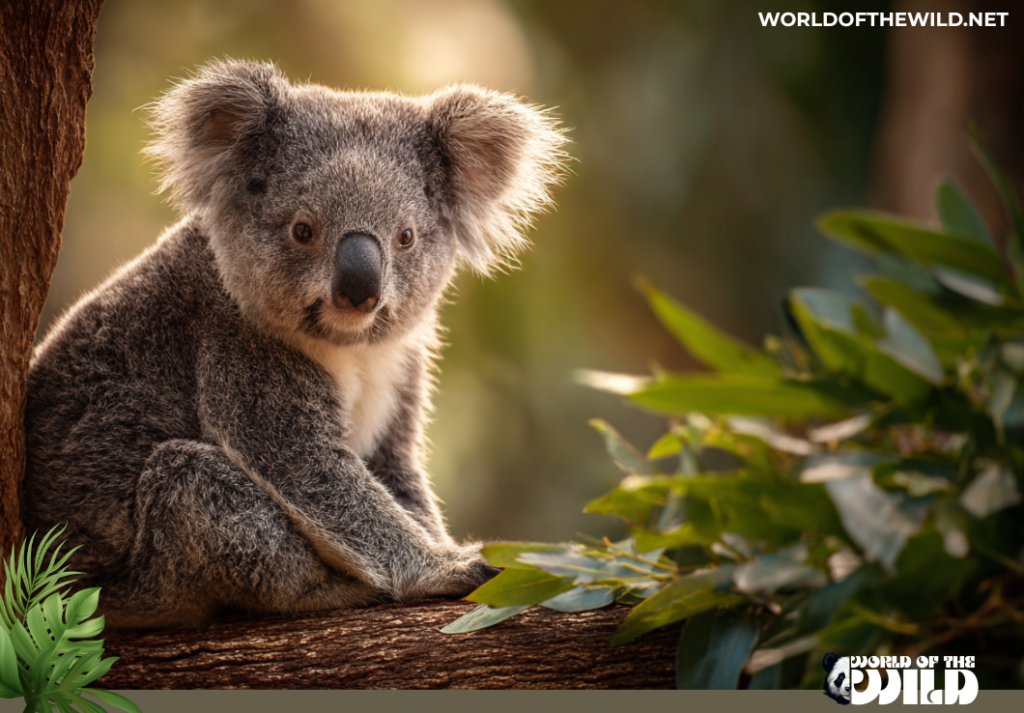
Koalas are entirely arboreal and spend the vast majority of their lives in trees, descending only to move between trees or — rarely — to drink. They prefer large, mature trees with smooth or lightly furrowed bark that makes climbing easier, and they typically rest in the upper canopy or main fork of the tree where airflow is greatest — a strategy for thermoregulation in the Australian heat.
Population density varies enormously across their range, from dense aggregations in areas with high-quality food trees to sparse, isolated pockets in degraded or fragmented landscapes. Critically, koalas are highly dependent on connectivity between tree stands to allow movement, gene flow, and recolonization after local disruptions — making habitat fragmentation one of the gravest threats to their survival.
Diet
Koalas are specialist herbivores — and among the most specialized of all herbivorous mammals. Their diet consists almost entirely of eucalyptus leaves, making them one of the few large mammals on Earth capable of subsisting on a food source so toxic, fibrous, and nutritionally sparse that virtually nothing else will eat it.
A single koala may consume between 200 and 500 grams of leaves per day, depending on size, season, and the nutritional quality of available foliage. Foraging primarily occurs at night, with koalas using their highly developed sense of smell to select leaves carefully — assessing not just species but individual leaves within a tree for optimal balance of nitrogen content (nutrition) and toxic secondary compounds (danger).
The eucalyptus leaves they prefer tend to be higher in nitrogen and lower in toxins, but the koala’s specialized liver can neutralize compounds that would be lethal to most other animals. Their extraordinarily long caecum — sometimes called the hindgut fermentation chamber — houses microbial communities that assist in breaking down the tough, fibrous plant material.
Interestingly, koala dietary preferences are partly learned behavior: mother koalas feed their joeys a specialized substance called pap — a type of soft, partially digested fecal matter rich in gut microbes — which inoculates the joey’s digestive system and helps transmit food preferences from generation to generation. It is one of the most remarkable examples of microbial inheritance in the animal kingdom.
Predators and Threats
Natural Predators
In their native range, koalas face relatively few natural predators, particularly as adults. The primary threats from wildlife include:
- Dingoes (Canis lupus dingo): The most significant natural predator of adult koalas, particularly in areas where dingo populations are healthy.
- Large Pythons: Carpet pythons and other large constrictors occasionally prey on koalas, particularly juveniles.
- Powerful Owls and Wedge-tailed Eagles: Capable of taking joeys or young individuals.
- Goannas (monitor lizards): May target joeys or vulnerable individuals.
Adult koalas in trees are largely safe from most ground-based predators, and their primary defense is to simply climb higher and remain still.
Human-Caused Threats
The far graver danger to koalas comes from human activity, and the threats are compounding:
- Habitat Loss and Fragmentation: Land clearing for agriculture, urban development, and infrastructure has devastated koala habitat across their range. Australia has one of the highest deforestation rates in the developed world, and eucalyptus woodland continues to disappear.
- Vehicle Strike: Roads through koala habitat are a leading cause of mortality. Koalas descending to move between trees are highly vulnerable to vehicle collisions.
- Dog Attacks: Domestic and stray dogs kill thousands of koalas each year as suburban development expands into bushland.
- Disease: Chlamydia (a bacterial infection specific to koalas) is rampant across many populations, causing blindness, reproductive failure, and death. Koala retrovirus (KoRV) also compromises immunity and is linked to increased cancer rates.
- Climate Change: Increasing temperatures, prolonged drought, and the rising frequency and intensity of bushfires — devastatingly demonstrated by the 2019–2020 Black Summer fires, which killed or displaced an estimated 60,000 koalas — pose an existential threat to already stressed populations.
- Heat Stress: As temperatures rise, eucalyptus leaves dry out and become less hydrating, driving koalas to the ground in search of water — where they become far more vulnerable.
Reproduction and Life Cycle
Koalas have a fascinating and somewhat complex reproductive system, as befits a marsupial. Breeding season typically runs from October through May in the Southern Hemisphere, peaking during the warmer months.
Males are polygynous and will mate with multiple females within their range. Mating involves vigorous competition between males, with dominant individuals gaining access to more females. Males use bellowing calls to advertise their presence and size, and physical confrontations — involving biting and clawing — can be intense.
After a gestation period of just 30 to 35 days — among the shortest of any mammal — a single joey is born in an extraordinarily altricial (undeveloped) state: blind, earless, hairless, and barely the size of a jellybean (approximately 2 cm, or less than an inch). Using well-developed forelimbs and an instinctive climbing reflex, the joey crawls unaided from the birth canal to the mother’s backward-facing pouch (an adaptation that prevents dirt from entering during digging — inherited from wombat-like ancestors) and attaches to one of two teats.
The joey spends the next six to seven months developing inside the pouch, growing fur, eyes, and full sensory capability. At around 6–7 months, it begins poking its head out of the pouch. From 7 months, it transitions to the pap-feeding stage, consuming the mother’s specialized microbe-rich fecal matter to develop its gut flora. By 12 months, most joeys are riding on the mother’s back rather than in the pouch, and they are weaned and independent by approximately 18 months of age.
Females typically breed once per year and begin reproducing at around 3–4 years of age. Males mature slightly later. In the wild, koalas live approximately 10 to 15 years, with females generally outliving males. In captivity, individuals have survived beyond 20 years.
Population
The koala’s conservation status was formally upgraded to Endangered on the IUCN Red List — and in parts of Australia under domestic legislation — reflecting a catastrophic decline in numbers over recent decades.
Current population estimates vary considerably due to the difficulty of surveying arboreal animals across vast, fragmented habitats, but credible estimates place the total wild koala population at somewhere between 32,000 and 58,000 individuals, with some researchers suggesting the figure may be lower. This represents a dramatic fall from historic numbers; some estimates suggest Australian koala populations may have declined by more than 50% in the past two decades alone.
The picture is uneven across the continent. Queensland and NSW populations have suffered the steepest declines, with some regional populations functionally collapsed. Victorian and South Australian populations are currently more stable and, in some areas, locally overabundant — though they are also vulnerable to future climate and fire events.
The 2019–2020 Black Summer bushfires were a watershed moment in public awareness of the koala’s plight, burning through an estimated 24 million acres of bushland — including critically important koala habitat — and directly killing or injuring tens of thousands of individuals. The fires prompted the Australian government to formally list koalas as Endangered under the Environment Protection and Biodiversity Conservation Act in 2022, a status applying to Queensland, NSW, and the Australian Capital Territory.
Without significant intervention — including large-scale habitat restoration, wildlife corridor creation, disease management, and aggressive climate action — the trajectory of koala populations remains deeply concerning.
Conclusion
The koala is more than an ambassador for Australian tourism. It is a biochemical marvel, an evolutionary enigma, and a living measure of the health of one of the world’s most unique ecosystems. From its toxin-neutralizing liver and double-thumbed grip to the quiet wisdom encoded in a mother’s pap-feeding ritual, every aspect of this animal tells a story of deep, patient adaptation to a singular continent.
But that story is now under threat like never before. The combination of habitat destruction, disease, climate change, and human encroachment has pushed a species that has weathered 25 million years of Australian transformation to the edge of a very different kind of crisis — one of our making, and therefore, one within our power to reverse.
The koala’s survival is not merely a conservation issue. It is a referendum on what kind of relationship humanity chooses to have with the natural world. If we can protect the koala — with all the habitat, legislation, science, and cultural shift that requires — we protect entire ecosystems, countless other species, and a piece of the planet’s irreplaceable biological heritage. The eucalyptus forests are waiting. The question is whether we’ll act before the last bellowing call fades into silence.
Quick Reference
| Field | Details |
|---|---|
| Scientific Name | Phascolarctos cinereus |
| Diet Type | Specialist Herbivore (folivore — leaf eater) |
| Size (Length) | 24–33 inches (2–2.75 feet) |
| Weight | 9–29 pounds |
| Region Found | Eastern and Southeastern Australia (Queensland, New South Wales, Victoria, South Australia) |