
The Contenders
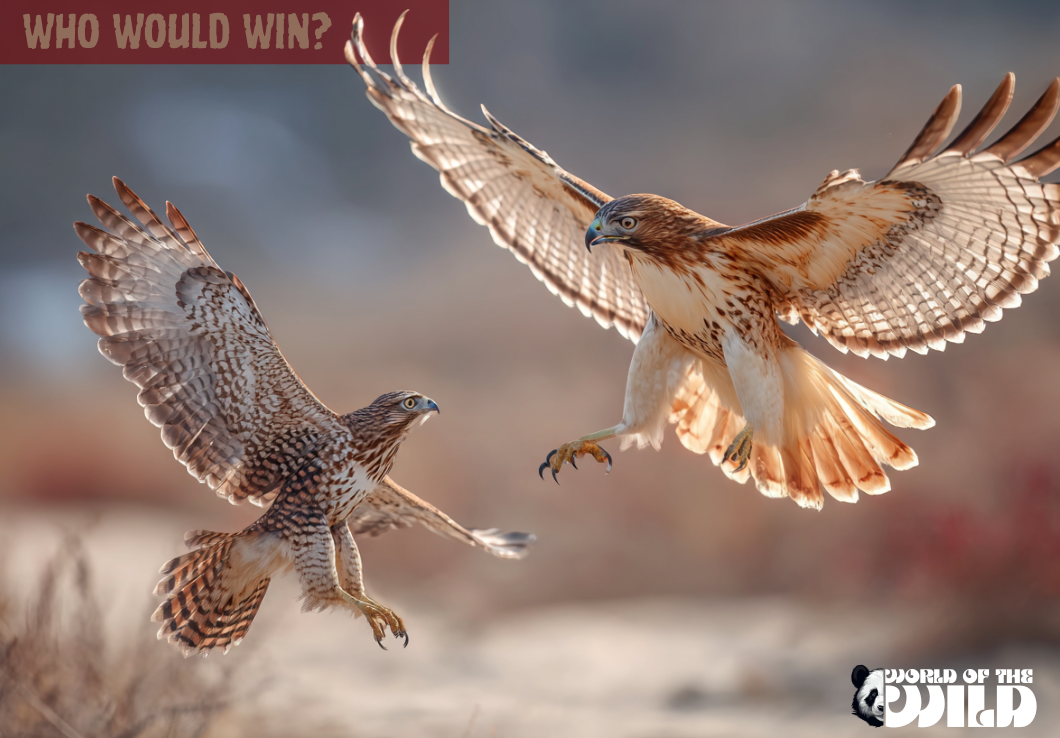
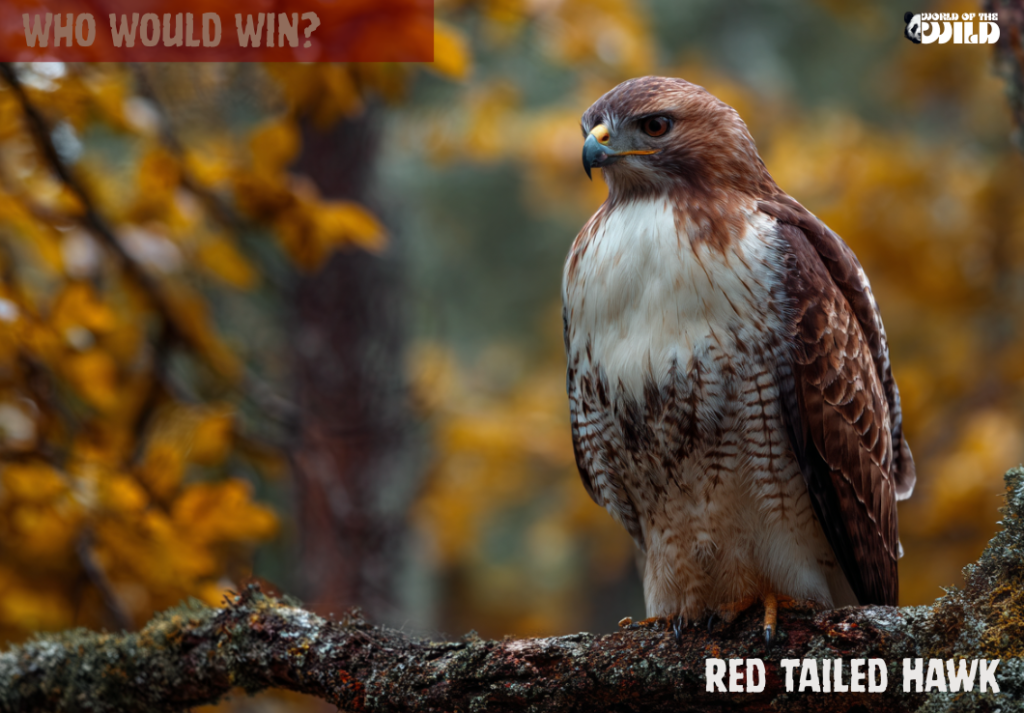
Ladies and gentlemen, welcome to the ultimate aerial showdown! In the red corner, we have North America’s most iconic raptor—the Red-tailed Hawk, a soaring powerhouse with talons that can crush bone and a wingspan that commands the skies. This is the heavyweight champion of the open country, a bird that makes rabbits tremble and sends squirrels diving for cover.
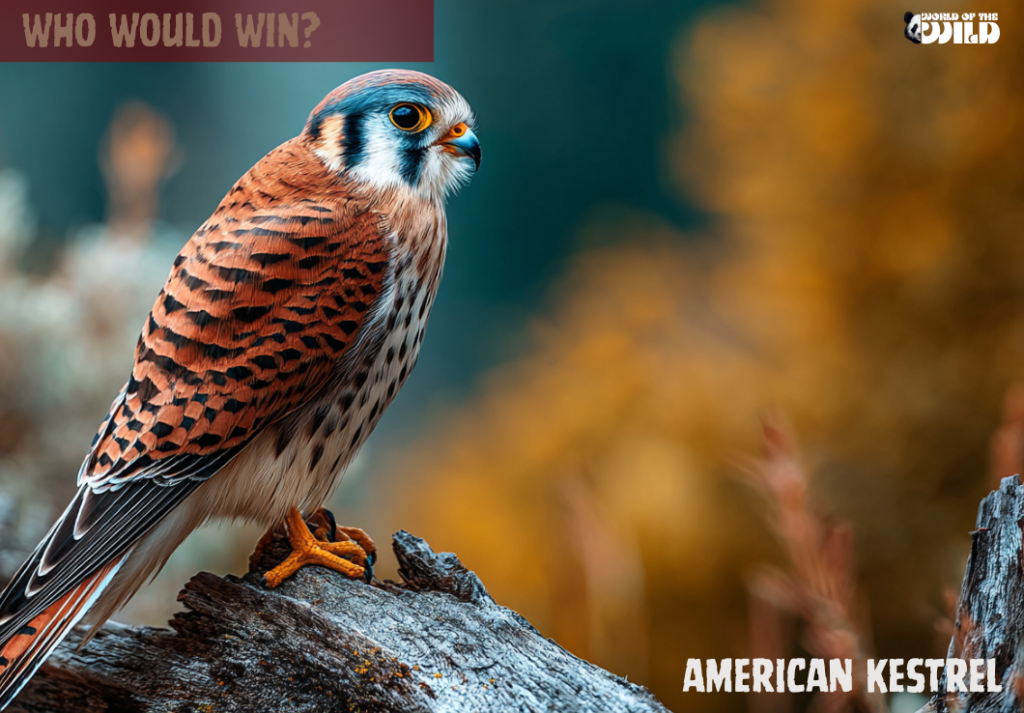
And in the blue corner, meet the American Kestrel—the smallest falcon in North America, but don’t let that fool you! This pint-sized predator is a featherweight fighter with the heart of a lion, equipped with blazing speed, aerial acrobatics that would make a fighter jet jealous, and the ability to hover like a helicopter. Pound for pound, this colorful killer is one of the most efficient hunters in the sky.
But when these two apex predators meet in territorial combat, who walks away—or rather, flies away—victorious? Let’s break it down!
Tale of the Tape
| Category | Red-tailed Hawk | American Kestrel |
|---|---|---|
| Size/Weight | Wingspan: 3.5-4.5 ft / Weight: 1.5-3.5 lbs | Wingspan: 20-24 inches / Weight: 2.8-5.8 oz |
| Speed | Cruising: 20-40 mph / Dive: 120 mph | Cruising: 25-40 mph / Agile hover capability |
| Bite Force/Weaponry | Crushing talons (400+ psi grip), powerful hooked beak | Razor-sharp talons, notched “falcon tooth” beak |
| Special Abilities | Exceptional long-distance vision (8x human), thermal soaring | UV vision (can track rodent urine trails), aerial hovering |
Physical Advantages
The Red-tailed Hawk’s Arsenal: This is where raw power meets predatory perfection. A female Red-tailed Hawk can weigh up to 10 times more than a kestrel—that’s like a house cat facing off against a leopard! Those talons aren’t just for show; they deliver a bone-crushing grip of over 400 psi, capable of instantly killing prey as large as jackrabbits. The hawk’s broad wings provide incredible stability and the ability to carry heavy prey in flight. Its thick leg muscles and massive feet are biological weapons designed for one purpose: overwhelming force. Add in that legendary raptor vision that can spot a mouse from 100 feet in the air, and you’ve got a bird built to dominate.
The American Kestrel’s Edge: Speed, precision, and agility—that’s the kestrel’s game plan. While the hawk is a bruiser, the kestrel is a martial artist. This falcon can change direction on a dime, execute vertical climbs, and hover in place like a avian drone—something the bulkier hawk simply cannot do. That distinctive “falcon tooth” on its beak isn’t decorative; it’s designed to sever the spinal cord of prey with surgical precision. Kestrels also possess the superpower of UV vision, allowing them to track prey in ways hawks can’t even imagine. And let’s not forget: kestrels are true falcons, members of the same family as peregrines, with reflexes honed for high-speed aerial pursuit.
The Battle Scenario
The encounter begins over a sun-drenched meadow in Montana. The Red-tailed Hawk is perched on a fence post, scanning for ground squirrels, when a male American Kestrel enters the hawk’s territory, attracted by the same hunting ground. The kestrel, only 4 ounces of fury, spots the intruder and makes a critical error—it issues a challenge with its rapid “killy-killy-killy” call.
The hawk launches instantly, massive wings beating with purpose. The kestrel’s eyes widen—this is no equal matchup. It banks hard right, using its superior maneuverability to avoid the first pass. The hawk’s talons swipe through empty air as the kestrel executes a barrel roll that would be impossible for the larger bird. For thirty seconds, it’s a masterclass in evasion—the kestrel diving, climbing, hovering, always staying just out of reach. But the hawk is patient and experienced. It uses its superior size to cut off angles, herding the smaller bird like a sheepdog.
Then it happens. The kestrel makes a split-second miscalculation, zigging when it should have zagged. The Red-tailed Hawk’s talons close around the kestrel’s body like a vice. There’s a brief flutter of russet and blue feathers, one desperate cry, and it’s over. The hawk doesn’t even need to use its beak. The sheer crushing power of those talons, combined with the massive size differential, ends the fight in seconds. The hawk mantles over its fallen opponent, not out of malice, but simple territorial dominance.
The Verdict: RED-TAILED HAWK WINS
Scientific Reasoning: This isn’t even a fair fight, folks. The Red-tailed Hawk wins 9.5 times out of 10, and here’s why: size matters in the raptor world, and the hawk has an overwhelming advantage—we’re talking about a predator that’s 8-10 times heavier than its opponent.
While the American Kestrel’s agility and speed are genuinely impressive, they’re adaptations for hunting insects, small birds, and mice—not for combat with a bird that hunts prey the kestrel’s own size. The hawk’s talons alone could crush the kestrel’s entire body. In documented territorial disputes between raptors, the larger bird almost always prevails through sheer intimidation, and if physical contact occurs, the size advantage becomes insurmountable.
The only scenario where a kestrel wins is if it successfully evades and escapes—which, to be fair, might happen occasionally thanks to that incredible agility. But in a true confrontation where escape isn’t an option? The Red-tailed Hawk’s combination of size, strength, and weaponry makes it the undisputed champion of this matchup.
Nature’s lesson: When a featherweight challenges a heavyweight, courage matters—but physics matters more.