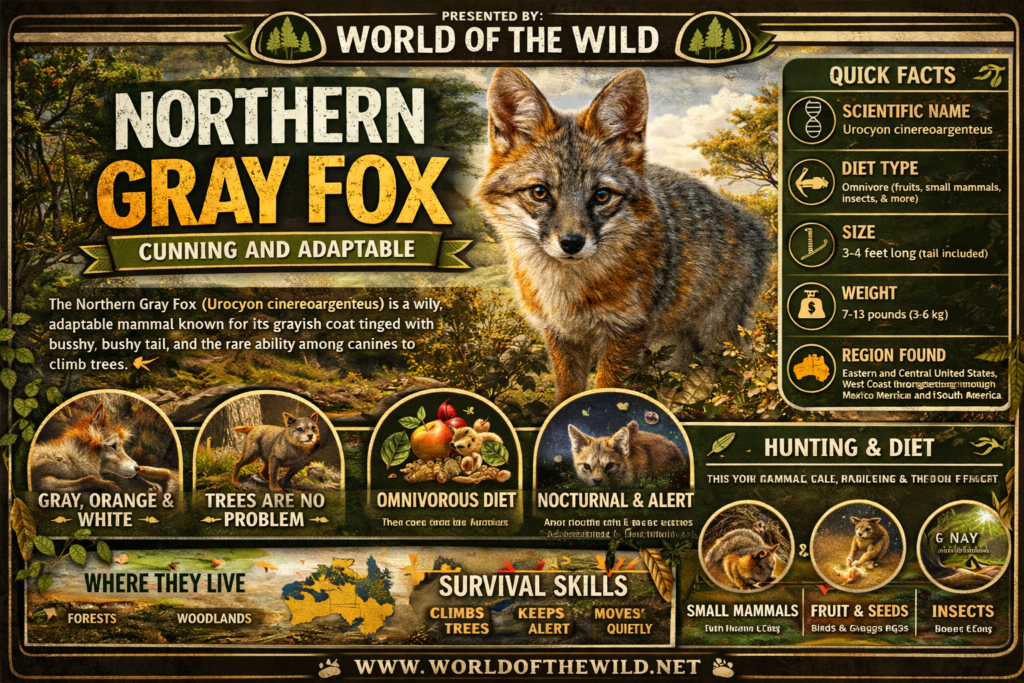

When most people picture a fox, they imagine the classic red fox — russet fur blazing against a snowy landscape, cunning eyes glinting in the cold. But lurking quietly in the forests and brushlands of North America is a fox that defies nearly every expectation we have of its kind. The Northern Gray Fox (Urocyon cinereoargenteus) is an animal of remarkable contradictions: ancient yet adaptive, secretive yet widespread, canine yet capable of climbing trees like a cat. It is one of the oldest members of the dog family on Earth, and yet it remains largely overlooked by the public, overshadowed by its flashier red cousin. That oversight is a shame — because the gray fox may just be one of the most fascinating wild animals on the continent. With a prehistoric pedigree, a unique set of survival skills, and a quiet resilience in the face of human expansion, this extraordinary creature deserves far more of our attention.
Facts
- It can climb trees. The Northern Gray Fox is one of the only members of the family Canidae capable of scaling trees. It uses sharp, hooked claws and strong foreleg muscles to shimmy up trunks and leap between branches — a skill almost unheard of among dogs and wolves.
- It is among the oldest canids on Earth. Fossil evidence places the gray fox’s genus, Urocyon, in North America roughly 3.6 million years ago, making it one of the most ancient members of the dog family still alive today.
- It has a rotating wrist joint. Unlike most other canids, the gray fox possesses a semi-rotating wrist that gives it a grip similar to that of a cat, contributing to its tree-climbing ability.
- It uses multiple dens simultaneously. A gray fox family may maintain several dens within their territory, rotating between them to avoid predator detection and manage parasite loads.
- Its salt-and-pepper coat is a masterwork of camouflage. The grizzled gray coloring results from banded individual hairs — each one tipped with black — that blend seamlessly into dappled forest light and rocky terrain.
- It is largely nocturnal but surprisingly flexible. While predominantly active at dusk and dawn, gray foxes will adjust their activity patterns based on food availability, temperature, and human presence.
- It produces a distinct bark-like call. Unlike many canids, the gray fox communicates with a sharp, dog-like bark, as well as growls, squeals, and a characteristic raspy “chortle” used between mated pairs.
Species
The Northern Gray Fox belongs to the following full taxonomic classification:
- Kingdom: Animalia
- Phylum: Chordata
- Class: Mammalia
- Order: Carnivora
- Family: Canidae
- Genus: Urocyon
- Species: Urocyon cinereoargenteus
The genus Urocyon is considered one of the most primitive within the family Canidae, separated from all other living canids by a distinct evolutionary lineage that branched off very early in the dog family’s history. The genus contains only two living species: the Northern Gray Fox (Urocyon cinereoargenteus) and the diminutive Island Fox (Urocyon littoralis), which inhabits the Channel Islands off the coast of California and is believed to have descended from gray foxes that made their way to the islands thousands of years ago.
The Northern Gray Fox itself is divided into several recognized subspecies, reflecting its vast geographic range. Among the most well-known are Urocyon cinereoargenteus cinereoargenteus in the eastern United States, Urocyon cinereoargenteus scottii in the American Southwest and Mexico, and Urocyon cinereoargenteus californicus along the Pacific Coast. These subspecies differ subtly in size, coat coloration, and skull morphology, shaped by the varying environments they inhabit.
Appearance
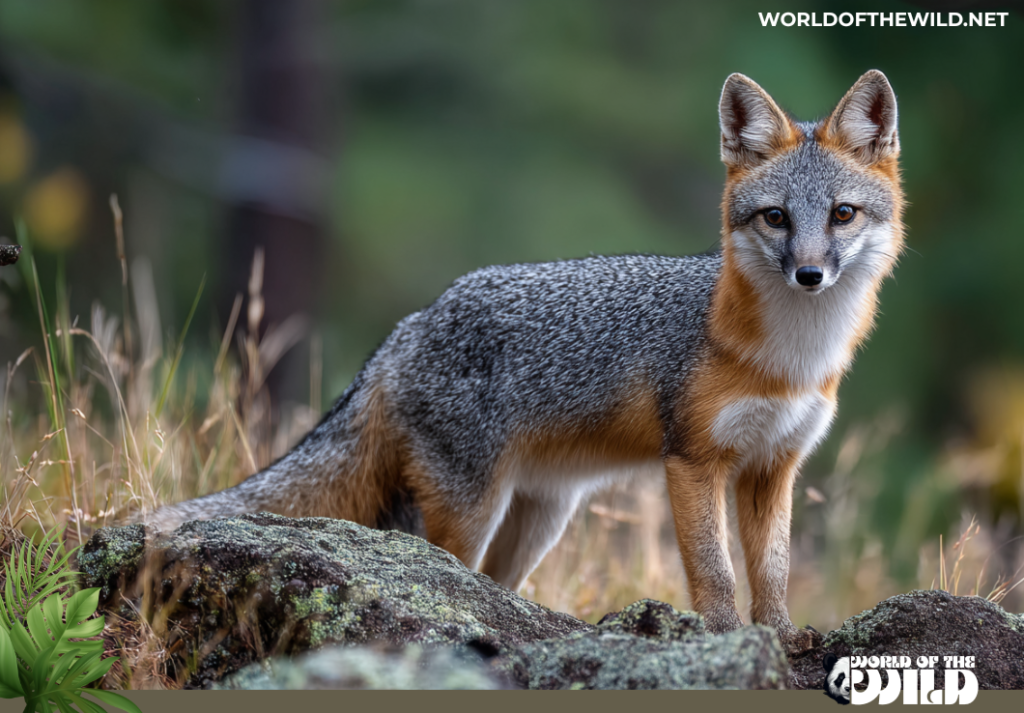
The Northern Gray Fox is a medium-sized canid with a lean, athletic build that speaks to its agile lifestyle. Adults typically measure between 31 and 44 inches in total length, including a tail that accounts for roughly a third of that measurement. They stand approximately 12 to 15 inches tall at the shoulder and weigh between 7 and 13 pounds, though individuals at the northern end of the range tend to be slightly larger due to Bergmann’s Rule.
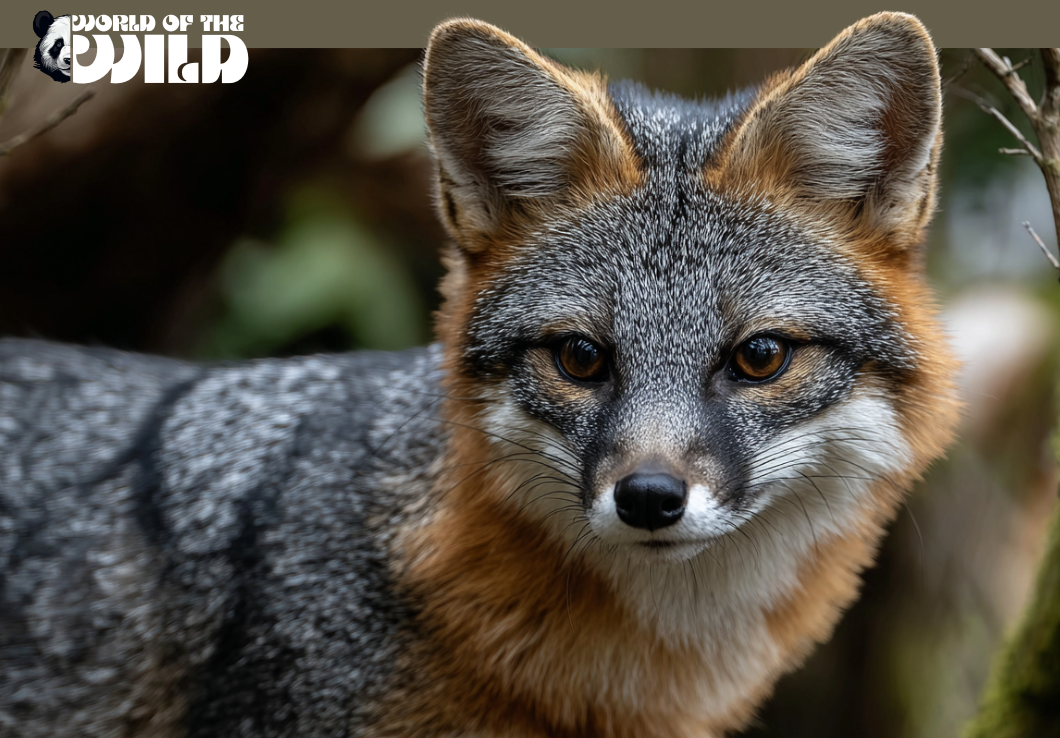
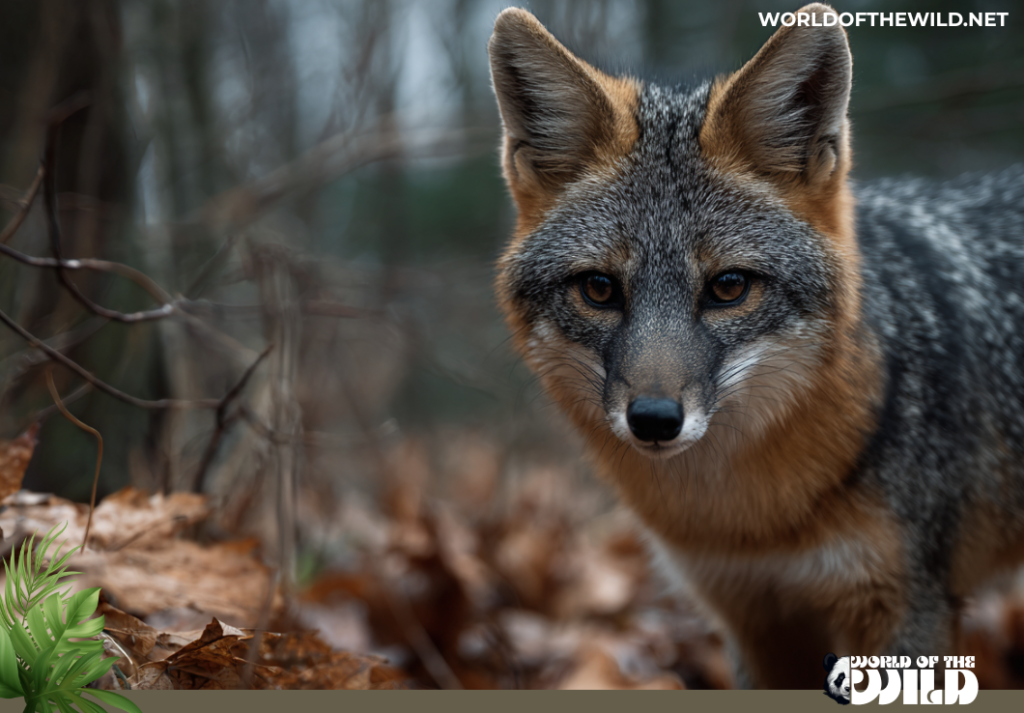
The coat is the gray fox’s most visually striking feature. The back and sides are covered in coarse, grizzled gray fur produced by banded hairs — each strand tipped in black — giving the animal a salt-and-pepper appearance that shifts subtly with the light. Running along the back and continuing down the length of the tail is a bold, black dorsal stripe, which terminates in a black-tipped tail — a key identifier that distinguishes the gray fox from the red fox, whose tail is famously white-tipped.
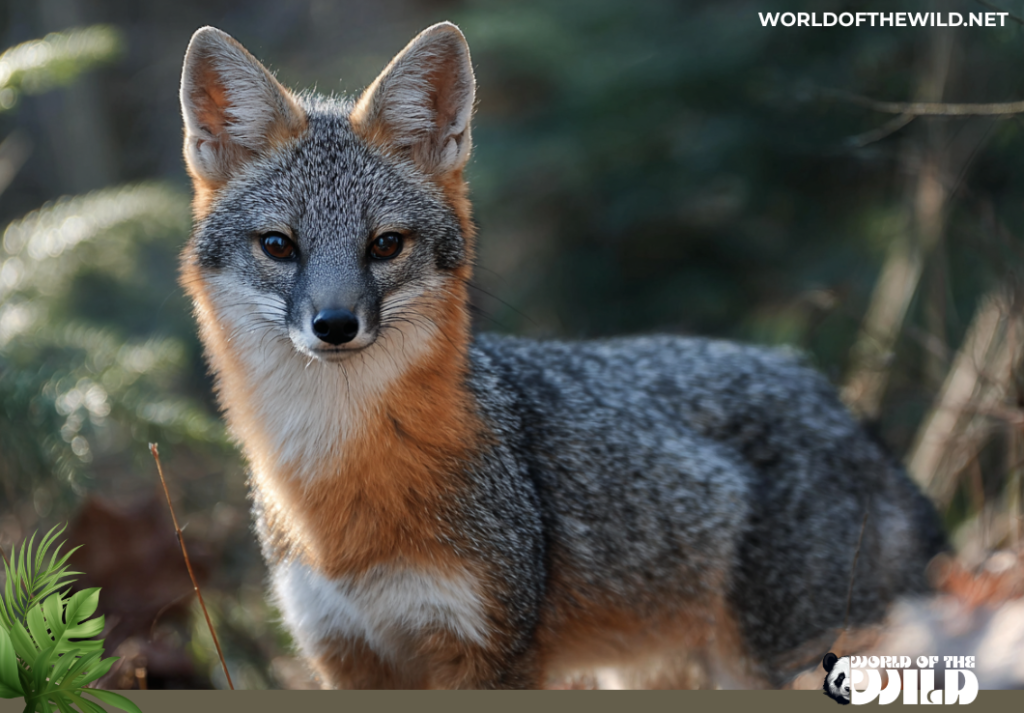
Beneath all that gray, however, is a surprisingly warm palette. The flanks, the sides of the neck, the undersides of the legs, and the area behind the ears are richly colored in rufous — a warm reddish-orange — giving the gray fox a more complex and beautiful appearance than a quick glance might suggest. The belly and throat are pale white or cream. The face is refined, with a narrow muzzle, large amber or golden eyes adapted for low-light vision, and tall, pointed ears lined with tawny fur.
The claws are notably semi-retractile and strongly curved — a rare trait in the dog family — and combined with the rotating wrist, they make this fox far more cat-like in its physical toolkit than any other North American canid.
Behavior
The Northern Gray Fox is predominantly solitary outside of the breeding season, though mated pairs share territories and occasionally travel together during the denning period. Home ranges vary considerably depending on habitat quality and food availability, spanning anywhere from 1 to 5 square miles, though ranges in resource-rich environments tend to be smaller. Gray foxes mark their territories with urine, feces, and secretions from scent glands located near the base of the tail.
One of the defining behavioral traits of the gray fox is its extraordinary tree-climbing ability. When threatened by a predator such as a coyote, gray foxes will sprint to the nearest tree and ascend rapidly using their hooked claws. They have been observed resting, sunning, and even foraging in the branches — behaviors virtually unknown among other members of the dog family. This arboreal tendency is thought to be an ancient adaptation, possibly retained from a forested ancestral environment.
Gray foxes are most active during twilight and nighttime hours, using their excellent night vision and keen sense of smell to navigate their territories and locate food. However, they are behaviorally flexible: in areas with low human disturbance, daytime activity is not uncommon. They are fast runners and agile jumpers, capable of leaping distances of up to 6 feet horizontally between branches.
Communication is multifaceted. Gray foxes bark, growl, squeal, and produce a distinctive raspy cackle or “chortle” that seems reserved for intimate communication between mates. Scent marking plays an equally important social role, conveying information about sex, reproductive status, and territory boundaries to other foxes in the area.
Despite their secretive reputation, gray foxes display a moderate level of behavioral flexibility and problem-solving capacity. They are opportunistic in their foraging, capable of adjusting their diet dramatically based on seasonal availability — a cognitive adaptability that has served them well in a changing landscape.
Evolution
The Northern Gray Fox belongs to one of the oldest and most evolutionarily distinct lineages in the family Canidae. While the family Canidae originated in North America roughly 40 million years ago during the Eocene epoch, the genus Urocyon represents a lineage that diverged from the ancestors of other living canids extraordinarily early — perhaps as long as 9 to 10 million years ago, according to molecular phylogenetic studies. This makes Urocyon more ancestrally primitive than wolves, coyotes, and true foxes of the genus Vulpes, despite the superficial similarities they all share.
Fossil specimens attributed to Urocyon have been found in deposits dating to the Pliocene and Pleistocene epochs, indicating that gray foxes were present in North America well before the Great American Biotic Interchange — the event roughly 3 million years ago when the formation of the Isthmus of Panama allowed animals to migrate between North and South America. The gray fox stayed in North America, while other lineages traveled south.
During the Pleistocene, gray foxes coexisted with an extraordinary array of now-extinct megafauna, including saber-toothed cats, American lions, dire wolves, and short-faced bears. The fact that the gray fox survived the mass extinction event at the end of the last Ice Age — approximately 12,000 years ago — while so many of its contemporary megafaunal neighbors perished is a testament to its behavioral flexibility and generalist lifestyle.
The Island Fox of California’s Channel Islands is thought to have descended from gray foxes transported to the islands by indigenous Chumash peoples, or via natural rafting events, somewhere between 7,000 and 9,000 years ago. Once isolated, Island Fox populations evolved rapidly on each island, with some subspecies becoming the fastest-evolving mammals known to science.
Habitat
The Northern Gray Fox occupies one of the broadest geographic ranges of any North American canid. It is found throughout most of the continental United States — except for parts of the northern Great Plains and Pacific Northwest — extending south through Mexico, Central America, and into the northern reaches of South America in Colombia and Venezuela. It also reaches north into portions of southern Canada, particularly in Ontario and Quebec.
What makes the gray fox so ecologically versatile is its preference for dense, broken terrain rather than open landscapes. Unlike the red fox, which thrives in agricultural and suburban edge habitat, the gray fox is fundamentally a creature of the forest. It favors deciduous and mixed woodlands, brushy chaparral, rocky mountain slopes, swampy bottomlands, and riparian corridors — essentially any environment that provides dense vegetative cover, rocky outcroppings for denning, and trees suitable for climbing.
The availability of trees is seemingly non-negotiable for the gray fox. Studies tracking gray fox movements consistently show a strong preference for forested or shrubby cover, with open fields and clearings used only briefly and cautiously during foraging. Dens are typically established in hollow logs, rock crevices, brush piles, or among the root systems of large trees. Unlike red foxes, gray foxes rarely dig their own burrows, preferring to appropriate existing natural cavities.
Elevation is no barrier: gray foxes have been recorded at sea level in coastal California and at elevations exceeding 9,000 feet in the mountains of the American Southwest and Mexico.
Diet
The Northern Gray Fox is an omnivore of impressive versatility, and its dietary breadth is one of the primary reasons it has thrived across such a diverse range of habitats. Its menu shifts dramatically with the seasons, and this nutritional flexibility is central to its survival strategy.
During spring and summer, animal protein dominates the diet. Gray foxes hunt small mammals — primarily cottontail rabbits, voles, mice, and wood rats — using a characteristic pounce-and-pin hunting technique similar to that of other foxes. They also take birds and their eggs, insects, crayfish, and occasionally reptiles and amphibians. Their acute hearing allows them to detect the movement of small prey beneath leaf litter or snow.
Come autumn, the gray fox pivots dramatically toward plant matter. Fruits, berries, and nuts — including persimmons, wild grapes, blackberries, acorns, corn, and apples — can constitute the majority of the fall diet. This is not incidental foraging; gray foxes actively seek out mast crops and fruiting vegetation and may cache surplus food for later retrieval, though they are less dedicated cachers than red foxes or squirrels.
This seasonal omnivory has an important ecological role: gray foxes are significant seed dispersers. Fruits consumed whole pass through the digestive tract intact and are deposited — sometimes considerable distances from the parent plant — contributing to forest regeneration and plant diversity.
Hunting takes place predominantly at night, with the fox navigating using its sharp eyesight, highly sensitive nose, and directional hearing. When prey is detected, the gray fox moves with quiet, deliberate stalking behavior before launching a quick, decisive pounce.
Predators and Threats
In the wild, the gray fox faces a suite of natural predators, though its tree-climbing ability and preference for dense cover provide considerable protection. Great horned owls are perhaps the most dangerous predators of young gray foxes, capable of silently descending on kits near the den entrance. Bobcats and mountain lions pose a threat in areas where all three species overlap. Coyotes are a significant predator and competitor — where coyote populations are high, gray fox numbers often decline, as coyotes will actively kill gray foxes when they encounter them. Eagles and large hawks occasionally take juveniles.
The domestic dog presents a surprisingly serious threat, particularly in suburban interface zones where gray fox and human settlement overlap. Dog attacks account for a measurable percentage of gray fox mortality in many studied populations.
On the human-caused side of the ledger, habitat loss remains the most pervasive and long-term threat. As deciduous forests are cleared for agriculture, development, and resource extraction, the dense woodland cover that gray foxes require disappears. Unlike red foxes — which often benefit from habitat fragmentation and suburbanization — gray foxes are genuinely forest-dependent, and their populations can decline sharply when woodland connectivity is broken.
Vehicle collisions are a significant source of mortality, particularly as gray foxes cross roads while navigating fragmented landscapes at night. Trapping for the fur trade, while substantially reduced from its historical peak, still occurs in parts of the range. Mange, caused by the parasitic mite Sarcoptes scabiei, can sweep through local populations with devastating effect, and canine distemper virus poses an ongoing disease threat. Rodenticides used to control pest rodents in agricultural and suburban settings enter the gray fox food chain and cause secondary poisoning.
Reproduction and Life Cycle
Gray foxes are seasonally monogamous, forming pair bonds that typically last through the breeding season and, in many cases, across multiple years. The breeding season varies somewhat by latitude, but generally occurs between January and March in most of the range, triggered by increasing day length and corresponding hormonal changes.
Courtship involves mutual grooming, play behavior, and increased scent marking. After mating, both the male (the “dog fox”) and female (the “vixen”) select and prepare a den site, which may be a hollow log, a rock crevice, a dense brush pile, or an excavated burrow beneath a structure. Unlike many canid species, the male gray fox remains closely involved throughout the denning period, provisioning the female during late gestation and bringing food back to the den after the kits are born.
Gestation lasts approximately 53 days, after which the vixen gives birth to a litter of typically 3 to 5 kits, though litters as small as 1 or as large as 7 have been recorded. The kits are born blind, deaf, and covered in dark brown, nearly black fur. Their eyes open at around 10 to 12 days. By 3 weeks, they begin to show the characteristic grizzled gray coloration. Weaning occurs at approximately 6 to 9 weeks.
The male plays an active role in rearing, bringing food to the family and later joining the vixen in teaching the kits to hunt. The young foxes begin exploring outside the den entrance at 4 to 5 weeks and are largely capable of independent foraging by late summer or early fall, typically dispersing from the natal territory between September and November. Sexual maturity is reached at approximately 10 months, meaning that young foxes born in the spring can potentially breed the following winter.
In the wild, gray foxes typically live 4 to 6 years, though individuals have been documented living up to 8 years. In captivity, lifespans of 12 to 15 years have been recorded.
Population
The Northern Gray Fox is currently classified as Least Concern on the IUCN Red List of Threatened Species, reflecting its wide geographic distribution and generally stable population across much of its range. Global population estimates are difficult to pin down precisely given the species’ secretive, nocturnal habits and the challenge of census methods in dense woodland habitat, but the overall population is considered to be in the hundreds of thousands to low millions across its range.
Despite its Least Concern status, the picture is not uniformly rosy. In some regions — particularly in parts of the eastern United States — gray fox populations have shown notable declines over the past several decades. Surveys from states including Virginia, Ohio, and Pennsylvania have indicated population drops that researchers associate with forest fragmentation, increasing coyote pressure, and suburban expansion. The gray fox’s dependence on intact forest habitat makes it more vulnerable to landscape-scale changes than the broad category of “Least Concern” might suggest.
At the subspecies level, some populations face more pressing challenges. The closely related Island Fox, once on the brink of extinction due to predation by golden eagles and disease, has undergone remarkable conservation recovery efforts and has been downlisted from Endangered to Near Threatened — a genuine success story, though one that required intensive human intervention.
Continued monitoring of gray fox populations, particularly in regions of high urban growth and agricultural intensification, is considered essential by wildlife biologists.
Conclusion
The Northern Gray Fox is, in many ways, a living fossil — a window into an ancient North America, carrying in its DNA a history stretching back millions of years before the continents looked anything like they do today. It is a climber in a family of runners, a forest creature in an age of disappearing forests, and a quiet survivor in a landscape increasingly shaped by human decisions. Its grizzled coat, glinting amber eyes, and cat-like claws represent one of evolution’s most elegant experiments in adaptability.
But the gray fox’s resilience has limits. As forests shrink, coyotes expand, and suburban sprawl erases the woodland corridors this species depends on, the quiet adaptability that has carried the gray fox through ice ages and mass extinctions faces its most novel test yet. Protecting mature forest habitat, maintaining wildlife corridors between fragmented woodlands, and reducing the use of rodenticides in areas where wild canids forage are all meaningful steps that landowners, municipalities, and conservation organizations can take to ensure this ancient animal remains part of the North American landscape.
The next time you find yourself at the edge of a darkened forest at dusk, listen carefully. Somewhere in the shadows, a creature older than wolves and wiser than we give it credit for may be watching you from the branches above. The Northern Gray Fox has survived everything this continent has thrown at it. Whether it survives us is, ultimately, up to us.
Quick Reference
| Scientific Name | Urocyon cinereoargenteus |
| Diet Type | Omnivore |
| Size (Length) | 31–44 inches (~2.6–3.7 feet) |
| Weight | 7–13 pounds |
| Region Found | Southern Canada, continental United States, Mexico, Central America, northern South America (Colombia, Venezuela) |