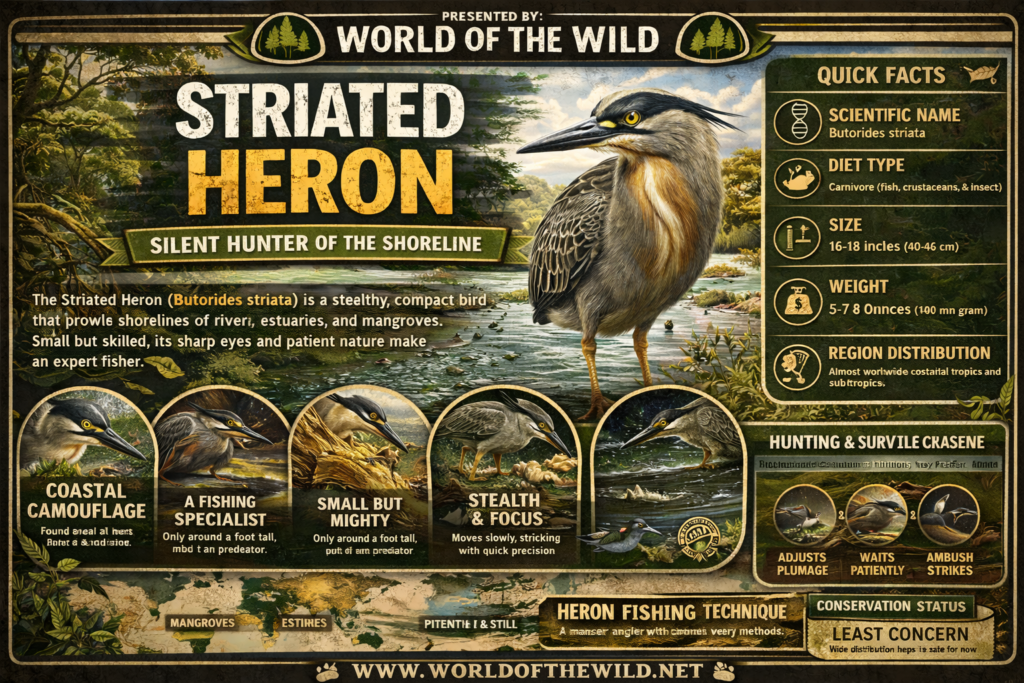

Imagine a predator so patient it mimics a statue, and so clever it uses tools to lure its prey. While the Great Blue Heron grabs the spotlight with its towering stature, its smaller cousin, the Striated Heron (Butorides striata), is quietly mastering the art of the ambush in the world’s wetlands. Often overlooked due to its diminutive size and cryptic plumage, this bird is a marvel of evolutionary ingenuity and a testament to the fact that in the animal kingdom, brains often triumph over brawn.
Intriguing Facts
- The Master Angler: They are one of the few bird species known to use “baiting” techniques, dropping feathers or insects onto the water to lure fish.
- The Crouch: Unlike many tall herons, this species spends much of its time in a hunched, horizontal posture, making it look more like a large, feathered frog.
- A Global Resident: They are found across three continents—South America, Africa, and Asia—as well as various oceanic islands.
- Vocal Alarms: When startled, they emit a sharp, piercing skiew call that acts as an alarm for the entire mangrove or marsh.
- Solo Specialists: They are fiercely territorial and will defend their specific hunting “strike zone” from rivals.
- Night Owls (Sometimes): While primarily diurnal, they are known to be highly active during moonlit nights or at dusk.
Species and Taxonomy
The Striated Heron belongs to the Ardeidae family, which encompasses herons, egrets, and bitterns.
- Kingdom: Animalia
- Phylum: Chordata
- Class: Aves
- Order: Pelecaniformes
- Family: Ardeidae
- Genus: Butorides
- Species: Butorides striata
The taxonomy of this bird has been a subject of much debate. It is closely related to the Green Heron of North America and the Galápagos Heron. Historically, these three were often considered a single species (the Green-backed Heron), but modern genetics generally separates the Striated Heron as its own distinct entity with over 20 recognized subspecies globally.
Appearance
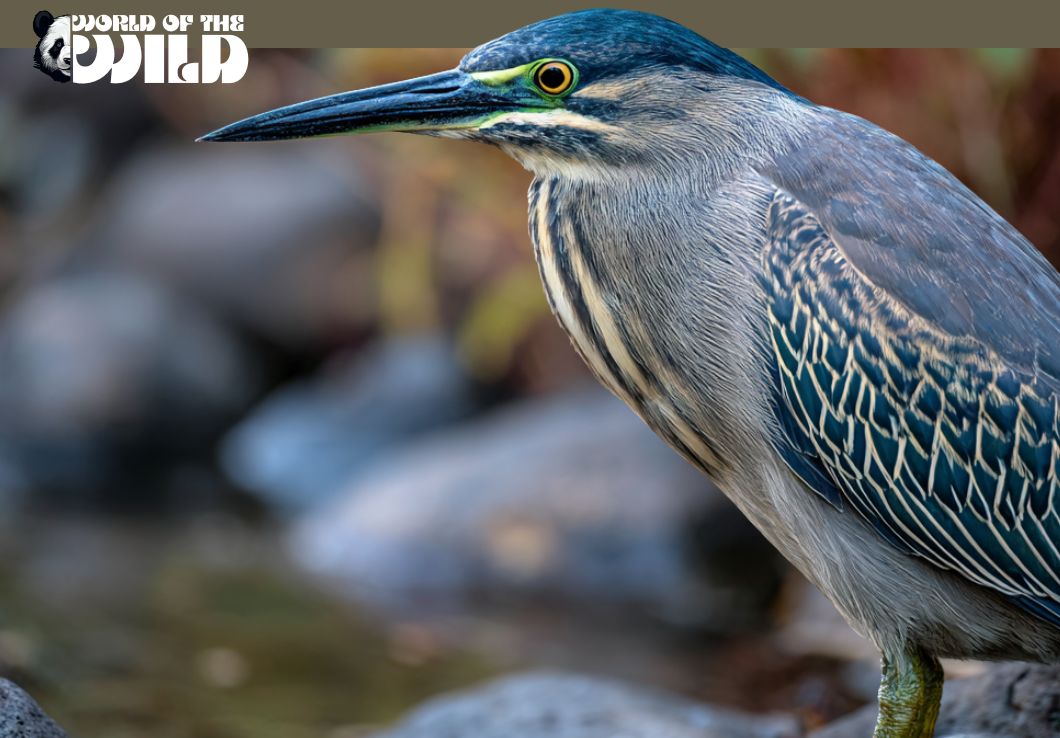
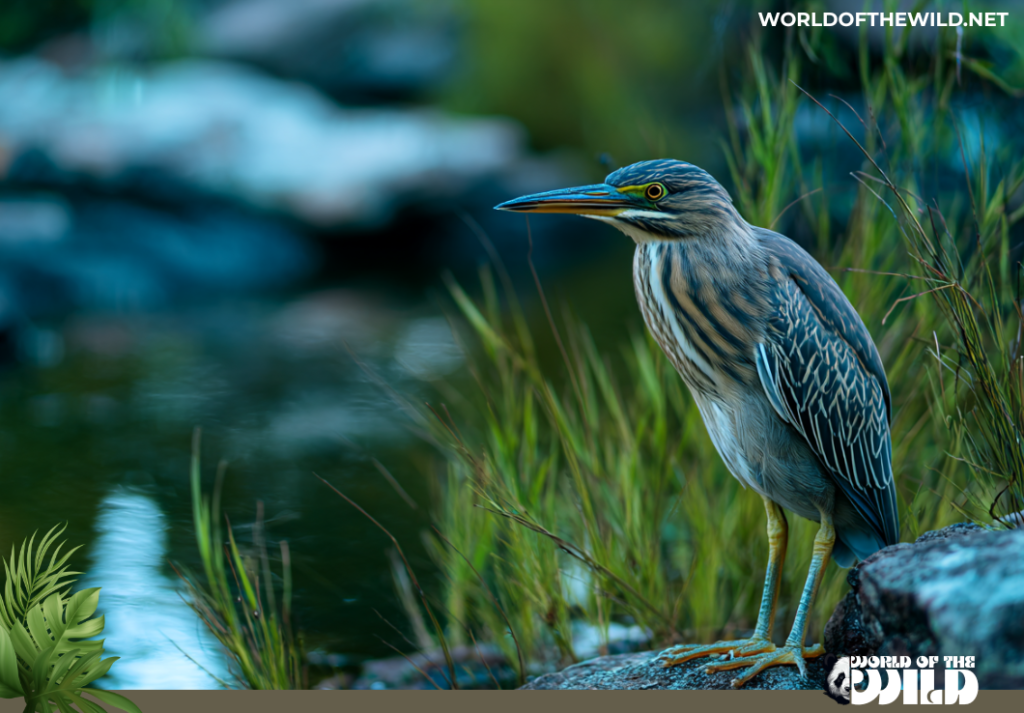
The Striated Heron is a compact, short-legged bird designed for navigating dense vegetation. Adults typically reach a length of 14 to 19 inches.
Its plumage is a sophisticated palette of greys and greens. The back and wings are a deep blue-grey with a metallic green sheen, often featuring fine buff-colored edges on the feathers (the “striations” that give it its name). They sport a distinctive black cap with a small crest that can be raised when the bird is excited or threatened. Their legs are relatively short and range from dull yellow to bright orange during the breeding season.
Behavior
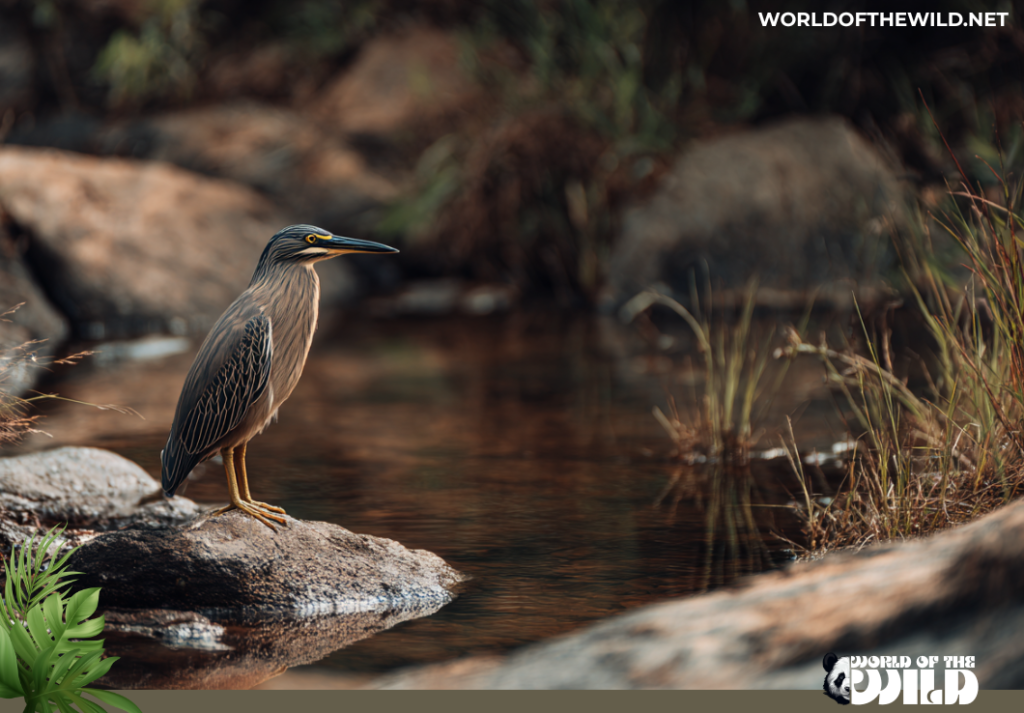
Solitary by nature, the Striated Heron is the “introvert” of the heron world. Its most famous behavior is its tool-using hunting style. It will pick up a small object, like a leaf or a twig, and drop it into the water to see if a fish rises to investigate.
Beyond its intelligence, the heron is a master of the “freeze-frame.” It can hold a single, awkward-looking position for several minutes, waiting for a fish to swim within its $30 \text{ to } 40 \text{ cm}$ strike range. When the moment arrives, its neck extends with lightning speed—a mechanical marvel of biological engineering.
Evolution
The evolutionary history of the Striated Heron is tied to the broader lineage of the order Pelecaniformes. Fossil records suggest that early heron-like ancestors appeared during the Eocene epoch, roughly 55 to 34 million years ago.
The genus Butorides represents an evolutionary shift toward specialization in dense, cluttered environments. While larger herons evolved long legs to wade in open deep water, the Striated Heron evolved a smaller frame and shorter legs to move through tangled mangrove roots and overhanging branches where larger predators cannot reach.
Habitat
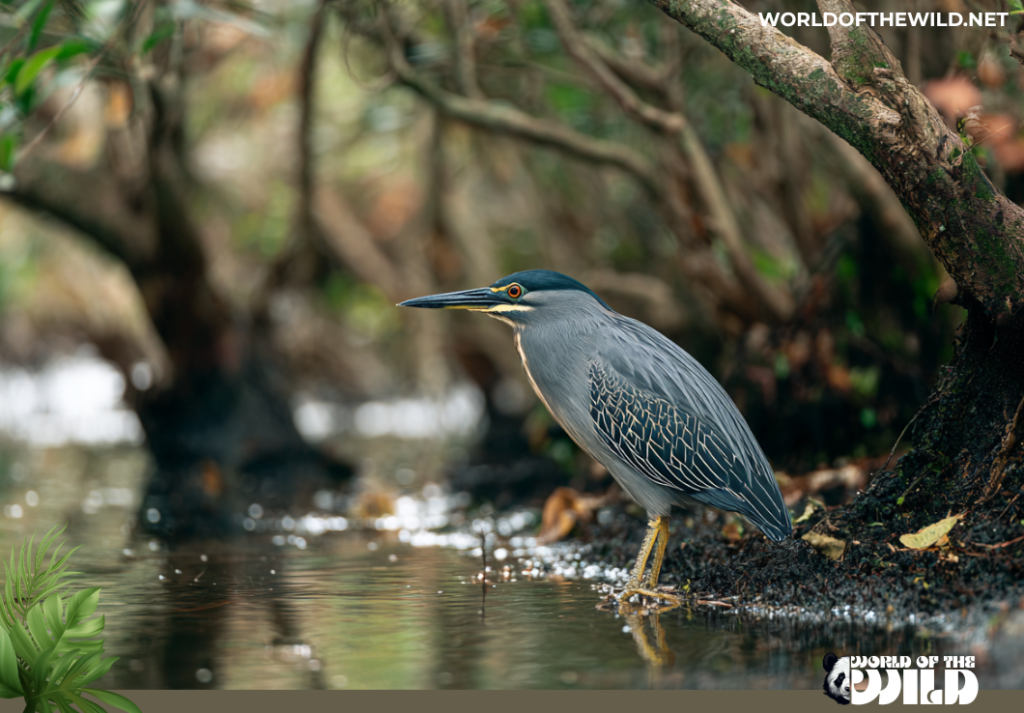
This species is a lover of the water’s edge. You won’t find them in the middle of a vast lake; instead, they haunt the fringes. Their preferred habitats include:
- Mangrove swamps (their primary stronghold).
- Estuaries and salt marshes.
- Riverbanks with heavy overhanging vegetation.
- Man-made canals and rice paddies.
They are found throughout the tropical and subtropical regions of the Old World and South America, favoring areas where land and water create a complex, hiding-place-rich landscape.
Diet
The Striated Heron is a dedicated carnivore. While fish make up the bulk of its diet, it is an opportunistic feeder that isn’t picky about its protein.
Primary food sources include:
- Small fish (minnows, gobies, etc.).
- Frogs and tadpoles.
- Insects and spiders.
- Crustaceans (crabs and shrimp).
- Small lizards or even rodents on rare occasions.
They forage by standing still or slowly stalking, using their sharp, dagger-like bill to impale or snatch prey with precision.
Predators and Threats
In the wild, adult Striated Herons must look out for birds of prey like hawks and eagles, as well as large water snakes and crocodiles. Their nests are particularly vulnerable to monitor lizards, crows, and monkeys.
However, habitat loss is their greatest threat. The destruction of mangrove forests for coastal development and shrimp farming has fragmented their populations. Additionally, water pollution and the accumulation of heavy metals in the fish they eat pose a silent, long-term risk to their reproductive success.
Reproduction and Life Cycle
Mating for the Striated Heron involves elaborate displays where the male stretches his neck, snaps his bill, and performs “circle flights” to attract a female.
They are monogamous for the duration of the breeding season. They build relatively flimsy, platform-like nests out of sticks, usually tucked away in the thickest part of a mangrove or bush about 1 to 10 feet above the water. A clutch typically consists of 2 to 5 pale blue-green eggs. Both parents share the duty of incubation (about 21–25 days) and feeding the chicks. The young fledge in about a month, but they may stay near the parents for a short time to learn the delicate art of “bait fishing.”
Population
The Striated Heron is currently listed as Least Concern by the IUCN. Because they are so widespread and occupy so many different regions, their global population is estimated to be between 5 million and 100 million individuals. While the global trend appears to be stable, certain localized populations in Southeast Asia and parts of Africa are declining due to the rapid urbanization of coastal wetlands.
Conclusion
The Striated Heron is a quiet reminder that intelligence and adaptability are the hallmarks of survival. By turning simple twigs into fishing lures and mastering the art of the shadows, this bird has conquered the tropical world. However, their reliance on the delicate fringe of the world’s wetlands makes them a “sentinel species”—their health reflects the health of our coasts. Protecting the mangroves isn’t just about trees; it’s about ensuring the “Shadow Hunter” always has a place to cast its line.
Quick Reference
| Scientific Name | Butorides striata |
| Diet Type | Carnivore |
| Size | 14 to 19 inches (approx. 1.2 to 1.6 feet) |
| Weight | 0.4 to 0.6 pounds (approx. 180 to 270 grams) |
| Region Found | South America, Africa, Asia, Australia, and various islands |