
In the scorching deserts and arid savannas stretching from West Africa to the Indian subcontinent, a deceptively small serpent claims more human lives than any other snake on Earth. The carpet viper, with its unassuming size and muted earth-tone colors, seems an unlikely candidate for the world’s deadliest snake. Yet this diminutive reptile is responsible for more snakebite fatalities than cobras, black mambas, and all other African snake species combined. What makes this creature particularly fascinating is not just its lethal venom, but its remarkable adaptations—from its water-conserving warning system to its ability to thrive in some of the planet’s harshest environments. The carpet viper represents a perfect evolutionary solution to life in the desert: efficient, aggressive, and perfectly camouflaged.
Facts
The Sound of Death: Unlike most snakes that hiss, carpet vipers produce a distinctive warning sound by rubbing their serrated scales together in a process called stridulation, creating a sizzling noise similar to water hitting a hot plate.
Medical Marvel: The venom of carpet vipers has led to groundbreaking medical advances, particularly in developing anticoagulant drugs like echistatin and ecarin, which are used to treat blood clots and monitor anticoagulation therapy.
Biblical Serpent: Some scholars believe that the carpet viper, specifically Burton’s carpet viper, may be responsible for ancient biblical references to a “fiery flying serpent” in the desert regions.
Climbing Specialists: Despite being primarily ground-dwelling, carpet vipers frequently climb into bushes and trees, especially during rain—up to 80% of the adult population has been observed climbing, sometimes congregating on a single shrub.
Female Venom Advantage: Venom from female carpet vipers is more than twice as toxic on average compared to males, making encounters with female snakes particularly dangerous.
Speed Demons: Carpet vipers are proficient at sidewinding locomotion, allowing them to move with alarming speed across sandy terrain—a crucial adaptation for both hunting and avoiding threats.
Big Four Member: The Indian saw-scaled viper (Echis carinatus) is one of India’s “Big Four” snakes responsible for the majority of snakebite deaths in the country, alongside the Indian cobra, common krait, and Russell’s viper.
Species
Kingdom: Animalia
Phylum: Chordata
Class: Reptilia
Order: Squamata
Suborder: Serpentes
Family: Viperidae
Subfamily: Viperinae
Genus: Echis
The genus Echis, derived from the Greek word for “viper,” currently comprises 12 recognized species distributed across Africa, the Middle East, and South Asia. The most notable species include the West African carpet viper (Echis ocellatus), which causes more snakebite fatalities than all other African snake species combined; the saw-scaled viper (Echis carinatus), found throughout the Indian subcontinent and parts of Central Asia; Burton’s carpet viper or painted carpet viper (Echis coloratus), inhabiting the Middle East’s rocky deserts; the white-bellied carpet viper (Echis leucogaster), the largest species reaching up to 90 cm; and the Northeast African carpet viper (Echis pyramidum), widespread across northeastern Africa and the Arabian Peninsula.
Some species contain recognized subspecies. Echis carinatus has five subspecies distributed across its range, including E. c. carinatus, E. c. astolae, E. c. multisquamatus, E. c. sinhaleyus, and E. c. sochureki. Similarly, Echis pyramidum contains three subspecies: E. p. pyramidum, E. p. leakeyi, and E. p. aliaborri. Recent taxonomic work has also identified newer species such as Echis omanensis in Oman and the United Arab Emirates, demonstrating that our understanding of this genus continues to evolve.
Appearance
Carpet vipers are relatively small snakes, typically ranging from 30 to 60 cm in total length, though the largest species can reach up to 90 cm. Most individuals average between 12 and 24 inches, making them considerably smaller than many other venomous snakes. Despite their modest size, they possess a robust, stout body build that gives them surprising strength.
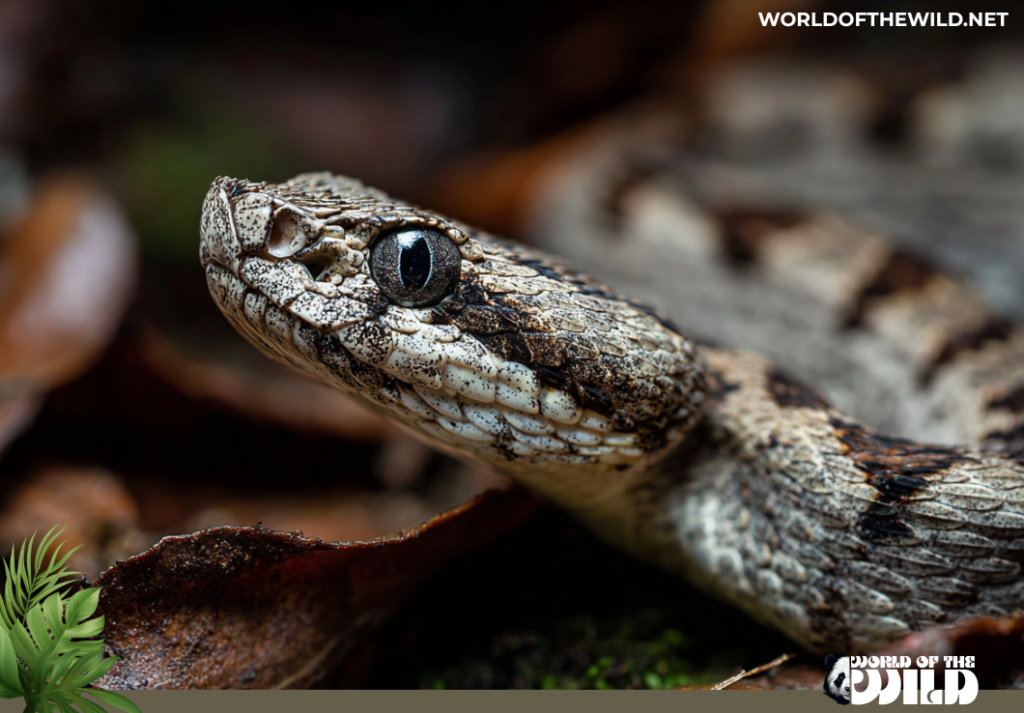
The head is characteristically small, pear-shaped, and distinctly separated from the neck—a feature common to vipers. Large, bulging eyes with vertical elliptical pupils dominate the head, providing excellent vision for nocturnal hunting. The snout is short and rounded, housing nostrils positioned between three shields. The tail is notably short and thin compared to the body.
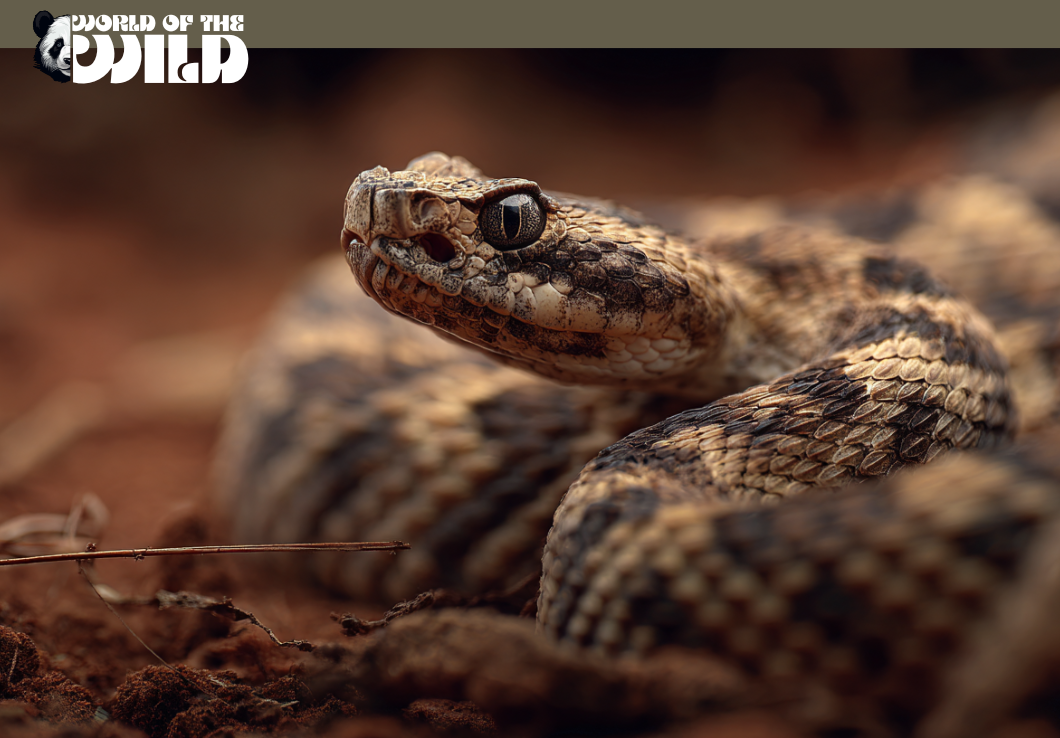
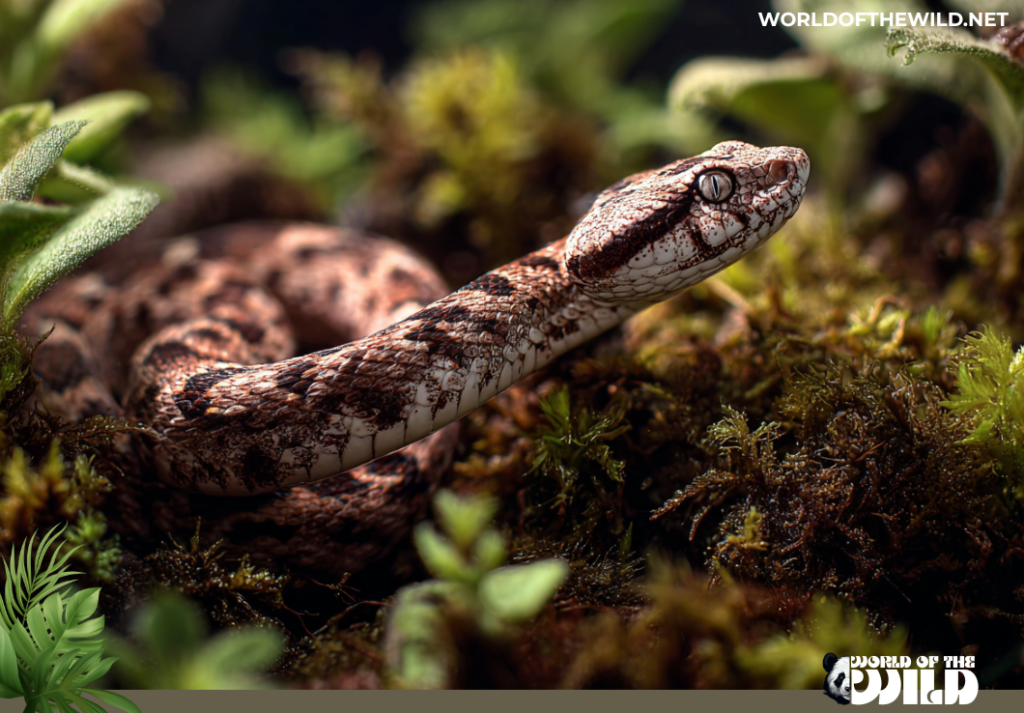
Coloration varies by species and location but generally consists of earth tones that provide excellent camouflage in arid environments. The background color ranges from pale buff, grayish, and reddish to olive or pale brown. Overlaid on this base are variably colored dorsal spots, typically whitish and edged with dark brown, separated by lighter patches. A series of white or pale bow-shaped marks run along the sides. The top of the head often features a distinctive whitish cruciform or trident pattern, with a faint stripe running from the eye to the jaw angle. The belly is typically whitish to pinkish, either uniform or marked with brown dots.
The most distinctive feature is the snake’s scales. All scales are strongly keeled, meaning each has a prominent ridge running down its center, giving the snake a rough texture. The scales along the sides of the body are particularly specialized—they’re arranged at a 45-degree angle and have serrated edges, earning the snake its alternative name, the saw-scaled viper. These serrated lateral scales are the key to the snake’s unique warning display.
Behavior
Carpet vipers are predominantly nocturnal and crepuscular, meaning they’re most active during twilight hours and at night. During daylight, they seek refuge in various shelters including mammal burrows, rock crevices, fallen logs, and beneath rocks or vegetation. In sandy environments, they may partially bury themselves with only their heads exposed, both for protection and ambush hunting. They’re often most active after rainfall or during humid nights when prey is more abundant.
These snakes are highly solitary, typically encountering other carpet vipers only during mating season. In the northern parts of their range where temperatures drop significantly, some species hibernate communally during winter months. Otherwise, they maintain independent territories and lead isolated lives.
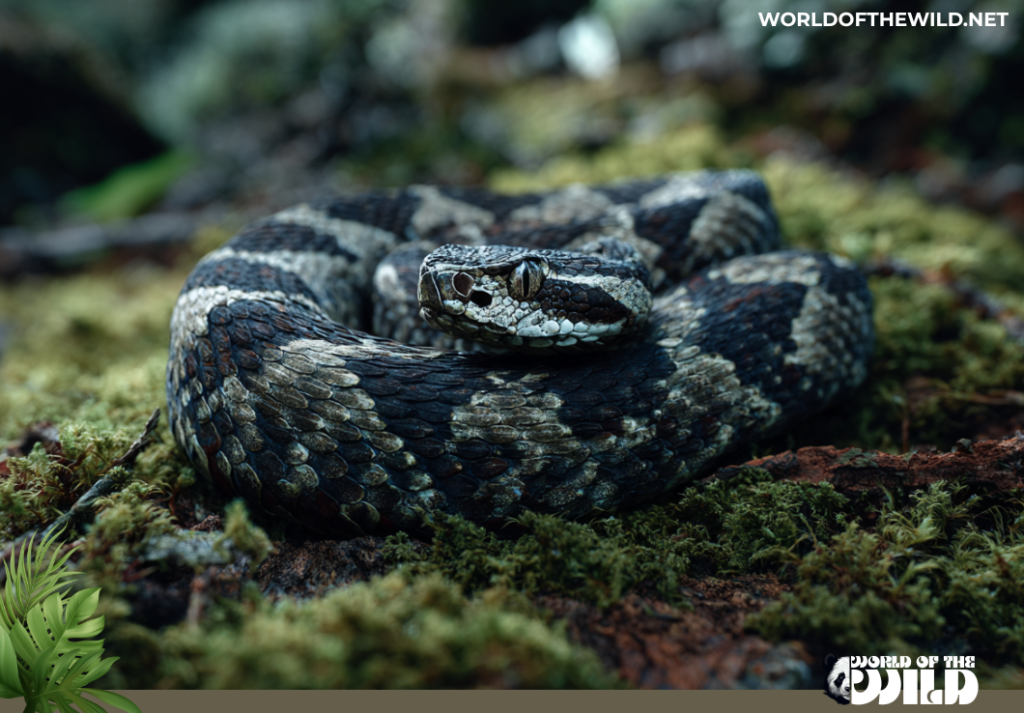
When threatened, carpet vipers display one of the most remarkable defensive behaviors in the snake world. They coil their bodies into a series of parallel, C-shaped loops with the head positioned in the center, forming a defensive posture that resembles a figure-eight or double coil. From this position, they can strike with explosive speed in any direction. Simultaneously, they rub their serrated lateral scales against each other, producing a loud sizzling or rasping sound through stridulation—similar to the sound of water hitting a hot griddle. As the snake becomes more agitated, this behavior intensifies, with faster rubbing producing louder sounds. This unique warning system is thought to have evolved as a water-conservation mechanism, as it prevents the moisture loss that would occur from traditional hissing in their arid habitats.
Carpet vipers have earned a reputation for being extraordinarily aggressive and quick to strike. Unlike many snakes that prefer to flee when confronted, carpet vipers readily hold their ground and attack. Their defensive pose allows them to launch strikes with remarkable speed and accuracy, and they’re easily provoked. This aggressive temperament, combined with their excellent camouflage and habit of remaining motionless until approached, makes accidental encounters particularly dangerous.
For locomotion, carpet vipers are proficient sidewinders, moving across sandy terrain with impressive speed by throwing their bodies sideways in a distinctive S-shaped motion. This specialized form of movement is highly efficient on loose sand and allows them to traverse desert environments rapidly. They’re also capable of conventional serpentine locomotion when needed.
Evolution
The evolutionary history of carpet vipers is intertwined with the broader story of viper evolution, which represents one of the most successful radiations of venomous snakes. The family Viperidae, to which carpet vipers belong, has deep evolutionary roots. While the earliest definitive viper fossils date to the lower Miocene period (approximately 20 million years ago), molecular phylogenetic studies suggest that the Viperidae family originated much earlier, likely in the early Eocene epoch, between 50-56 million years ago.
The subfamily Viperinae, which includes the genus Echis, appears to have originated in the late Eocene to early Oligocene period, roughly 30-40 million years ago. During this time, the world was undergoing significant climatic changes, with increasing aridity in many regions—conditions that would favor the evolution of desert-adapted vipers. Fossil evidence and molecular studies suggest that viperines may have originated in tropical Africa, though their ancestral range remains debated among scientists.
The genus Echis itself represents a relatively recent radiation within the viperine lineage. Phylogenetic analyses place Echis in a well-supported clade alongside the genus Cerastes (horned vipers), indicating these two genera are close evolutionary relatives. This relationship makes biogeographic sense, as both genera are adapted to arid environments and show similar ecological preferences.
The dispersal history of Echis involved multiple colonization events across Africa, the Middle East, and Asia. The most parsimonious scenarios suggest that transoceanic dispersals occurred during the Oligocene period when continental arrangements and sea levels differed from today. The genus successfully radiated into diverse arid habitats, evolving adaptations for desert survival including their water-conserving stridulation behavior, heat tolerance, and the ability to exploit varied prey in resource-poor environments.
Key evolutionary innovations that define the carpet viper lineage include the development of their characteristic serrated lateral scales for sound production, highly potent hemotoxic and cytotoxic venom components optimized for both defense and prey capture, and exceptional camouflage patterns that vary by habitat. The evolution of their aggressive defensive behavior likely represents an adaptation to environments where retreat options are limited and where appearing formidable provides a survival advantage.
Habitat
Carpet vipers inhabit an extensive geographic range spanning multiple continents. In Africa, they’re found from Senegal and Mauritania in the west, across the Sahel region through Mali, Burkina Faso, Niger, Chad, and Sudan, extending south to Nigeria, Cameroon, and parts of Kenya. In northeastern Africa, their range includes Egypt, Eritrea, Ethiopia, Djibouti, and Somalia. The Middle East populations occur in Israel, Palestine, Syria, Jordan, Saudi Arabia, Yemen, Oman, United Arab Emirates, Iraq, and Iran. In Asia, carpet vipers are distributed throughout Pakistan, Afghanistan, parts of Central Asia including Uzbekistan and Tajikistan, India (particularly in the states of Rajasthan, Gujarat, Maharashtra, Uttar Pradesh, and Punjab), Bangladesh, and Sri Lanka.
These snakes are specialists of arid and semi-arid environments. They thrive in deserts, semi-deserts, dry savannas, scrublands, and rocky areas with sparse vegetation. Different species show preferences for specific microhabitats within these broader categories. Burton’s carpet viper favors rocky deserts and stony hillsides, often found at elevations up to 2,000 meters in mountainous regions. The white-bellied carpet viper prefers the transitional zones at desert edges, including arid savannas, the Sahel zone, and well-vegetated dry riverbeds called wadis. The West African carpet viper occasionally ventures into lightly wooded areas but predominantly inhabits savanna grasslands.
Common habitat features include areas with abundant rock formations providing shelter, sandy or rocky substrates suitable for their locomotion and burrowing behaviors, sparse to moderate vegetation including shrubs and small trees which they sometimes climb, and mammal burrows which they frequently occupy. Despite their desert association, they avoid the most extreme desert interiors, instead favoring transitional zones where some vegetation and prey remain available. Their adaptability has also led them into cultivated areas, agricultural lands, and even the outskirts of human settlements, particularly where rodent populations are high—a factor that significantly increases human-snake encounters.
Their distribution is limited by extreme heat and moisture conditions. They generally occur in regions receiving between 100-600 mm of annual rainfall and can tolerate temperatures from near freezing in winter to over 45°C in summer, though they modify their behavior seasonally to cope with temperature extremes.
Diet
Carpet vipers are strict carnivores with a remarkably varied and opportunistic diet that reflects their adaptation to resource-scarce desert environments. This dietary flexibility is likely one of the key factors contributing to their widespread success and abundance in areas where other specialized predators struggle.
Their prey spectrum is impressively broad. Invertebrates form a substantial portion of their diet, particularly for younger snakes. They readily consume locusts, beetles, crickets, and other large insects. They’re effective predators of arachnids, including scorpions and large spiders such as tarantulas, demonstrating their tolerance for potentially dangerous prey. Centipedes and solifugids (camel spiders) are also taken regularly. In some habitats, slugs and earthworms supplement their diet, especially after rains.
Vertebrate prey becomes increasingly important for larger individuals. Small mammals, particularly rodents such as mice, gerbils, and young rats, are favored prey items. The pursuit of rodents often brings carpet vipers into agricultural areas and human settlements, increasing the likelihood of human encounters. They also prey on lizards, including skinks and other small agile species, as well as frogs and toads when available. Small birds and occasionally bird eggs are consumed, though these represent a smaller portion of their diet. Remarkably, carpet vipers will even eat other snakes, including members of their own species, displaying cannibalistic behavior when opportunities arise.
The hunting strategy of carpet vipers is primarily ambush-based. They locate suitable hunting areas where prey traffic is high, often along rodent trails or near burrows, and adopt a coiled position, remaining perfectly still for extended periods. Their excellent camouflage makes them virtually invisible against sandy or rocky backgrounds. When prey ventures within striking distance, the viper explodes into action with remarkable speed, delivering a venomous bite. The venom acts quickly to immobilize the prey through its hemotoxic and cytotoxic effects. After striking, the snake typically releases the prey and allows the venom to take effect, tracking the dying animal by following its scent trail using their forked tongue and Jacobson’s organ.
Like all snakes, carpet vipers swallow their prey whole, beginning with the head. Their flexible jaws and skull allow them to consume prey items larger than their head diameter. After feeding, they typically retreat to a secure location to digest their meal, a process that can take several days depending on prey size.
Predators and Threats
Adult carpet vipers face relatively few natural predators due to their venomous nature and aggressive defensive behavior. However, they’re not entirely immune to predation. Large birds of prey, particularly snake eagles and secretary birds in Africa, are capable of killing carpet vipers, either through aerial strikes or by using their powerful legs to stomp on the snakes. Honey badgers, known for their relative immunity to snake venom and aggressive nature, occasionally prey on carpet vipers. Large monitor lizards may also take smaller carpet vipers when the opportunity arises. Mongoose species, particularly in areas where they coexist with carpet vipers, possess some resistance to venom and will attack these snakes. Other predators of eggs and juveniles include larger snakes, predatory birds, and various carnivorous mammals.
The primary threats to carpet vipers are anthropogenic. Human persecution represents the most significant direct threat. Due to their responsibility for numerous snakebite deaths and injuries, carpet vipers are killed on sight in many communities. This retaliatory killing is understandable given the medical threat these snakes pose, but it can lead to localized population declines. In agricultural areas, farmers actively hunt and kill carpet vipers to protect workers and livestock.
Habitat degradation and loss affect carpet viper populations in some regions. The conversion of natural arid habitats to agricultural land, urban development in desert and semi-desert regions, and overgrazing by livestock that alters vegetation structure all impact their habitat. Climate change poses potential long-term threats through alterations to their arid habitat zones, changes in prey availability and distribution, and shifts in the geographic range of suitable habitat.
Collection pressure exists in certain areas, particularly for the pet trade and for venom extraction. In Egypt and other countries, carpet vipers are sometimes collected for their venom, which has medical and research applications. While sustainable venom extraction programs exist, unregulated collection can impact local populations. Road mortality is increasingly common as road networks expand through their habitat, with many snakes killed while crossing roads at night.
Despite these threats, carpet vipers show remarkable resilience. Their high reproductive rate, adaptability to various habitats within their arid niche, wide geographic distribution, and tolerance of human-modified landscapes allow most populations to persist. They often thrive in agricultural areas where rodent prey is abundant, sometimes reaching higher densities than in natural habitats.
Reproduction and Life Cycle
Carpet vipers exhibit fascinating reproductive diversity across their range. The genus includes both egg-laying (oviparous) and live-bearing (viviparous or more accurately ovoviviparous) species, with reproductive mode varying primarily by geography and species.
African carpet viper species, including Echis ocellatus, Echis pyramidum, and Echis leucogaster, are oviparous. Females lay eggs in protected locations such as abandoned rodent burrows, rock crevices, or beneath logs. Clutch size typically ranges from 6 to 20 eggs, with most species averaging 8-12 eggs per clutch. The eggs are slightly larger than chicken eggs and take approximately 76-79 days to hatch depending on temperature. Some African species exhibit maternal care, with females remaining near their eggs until hatching, though the extent and consistency of this behavior varies.
By contrast, Asian carpet vipers, particularly Echis carinatus and its subspecies found in India, Pakistan, and surrounding regions, are viviparous. In this reproductive mode, females retain fertilized eggs within their bodies. The developing embryos receive nourishment from the egg yolk rather than through a placental connection. After a gestation period of 3-4 months, the female gives birth to live young still encased in thin, transparent membranes from which they quickly emerge. Litter sizes range from 3 to 23 offspring, with most litters containing 8-15 young.
The mating season varies by species and location but generally occurs during cooler months. In northern India, for example, Echis carinatus mates during winter months, with births occurring from April through August, though births have been recorded in other months as well. In West Africa, Echis ocellatus typically lays eggs at the end of the dry season in February or March. Male carpet vipers may engage in combat rituals during breeding season, though this behavior is not as well-documented as in some other viper species.
Newborn carpet vipers measure approximately 115-152 mm in length and are fully equipped with functional venom and fangs from birth. The neonates are immediately independent, receiving no parental care after birth or hatching. They’re capable of hunting small prey such as insects, spiders, and tiny lizards from their first days of life. Young carpet vipers face higher mortality rates than adults, falling prey to a wider range of predators and environmental challenges.
Sexual maturity is typically reached at approximately three years of age, though this can vary based on food availability and environmental conditions. Growth continues throughout life, though at a decreasing rate after maturity.
The lifespan of carpet vipers is remarkably long for snakes of their size. In the wild, they can live 20-24 years under favorable conditions, with some documented individuals reaching 23-24 years. This longevity, combined with their reproductive success and adaptability, contributes significantly to their abundance and persistence across their range. In northern populations that experience cold winters, carpet vipers may hibernate for several months, reducing their annual activity period but allowing them to survive in regions with greater temperature extremes.
Population
The conservation status of most carpet viper species is currently assessed as Least Concern by the International Union for Conservation of Nature (IUCN). This classification reflects their widespread distribution, relatively stable populations, and adaptability to various habitats, including human-modified landscapes. The West African carpet viper (Echis ocellatus), Indian saw-scaled viper (Echis carinatus), Northeast African carpet viper (Echis pyramidum), and most other species in the genus maintain this status.
However, population data for carpet vipers is notably incomplete. The IUCN and other conservation organizations do not provide specific global population estimates for any Echis species. This absence of precise numbers stems from several factors: the snakes’ cryptic nature and excellent camouflage make them difficult to survey, their wide geographic distribution across remote and politically unstable regions complicates research efforts, and limited funding for research on common venomous species directs resources toward more critically endangered animals.
Despite the lack of precise numbers, available evidence suggests that carpet vipers are fairly abundant throughout most of their range. In some areas, particularly in agricultural regions with high rodent populations, they can be locally common. Field studies in West Africa have found that in certain regions, carpet vipers may constitute a significant portion of snakebite cases, with victims potentially occupying up to 10% of hospital beds during peak seasons—an indirect indicator of substantial local populations.
Some species have more uncertain status. The Mali carpet viper has a Data Deficient classification, indicating insufficient information exists to properly assess its conservation status. Other recently described or taxonomically distinct populations, such as Echis omanensis, also lack comprehensive population data.
Population trends appear generally stable for most species, with no evidence of significant widespread declines. However, localized reductions have been documented in areas experiencing intensive agricultural development, urban expansion, or sustained persecution. Conversely, some populations may be increasing in agricultural areas where their primary prey—rodents—thrives.
Several factors contribute to the relatively stable status of carpet vipers. Their generalist diet allows them to exploit various prey types and adapt to changing food availability. Their high reproductive output helps populations recover from local disturbances. Their tolerance of degraded habitats means they can persist in areas unsuitable for more specialized species. Finally, their venomous nature, while making them a target for killing, also ensures that humans tend to avoid their habitat when possible, providing de facto protection in some areas.
Conclusion
The carpet viper stands as one of nature’s most successful yet most feared serpents. Despite their small size and unassuming appearance, these desert dwellers have evolved into highly efficient predators responsible for more human fatalities than any other snake species. Their remarkable adaptations—from the water-conserving stridulation warning system to their potent venom and exceptional camouflage—demonstrate millions of years of evolutionary refinement for life in Earth’s harshest environments.
Beyond their deadly reputation, carpet vipers play crucial ecological roles as both predators of agricultural pests and prey for larger animals. Their venom, while terrifying to snakebite victims, has yielded invaluable medical advances in anticoagulant therapy, demonstrating that even our most feared creatures can contribute to human welfare. The genus’s diversity, with 12 species adapted to specific niches from West African savannas to Indian deserts, showcases the evolutionary success of this group.
While current populations remain stable and widespread, carpet vipers face an uncertain future. Climate change threatens to alter the arid zones they depend upon, while expanding human populations increase conflicts between people and snakes. Conservation of these animals requires a delicate balance—protecting human communities from snakebite while recognizing the ecological importance and medical potential of these remarkable reptiles. Perhaps the greatest tribute to the carpet viper is not fear, but respect for a creature so perfectly adapted to survive in places where few others can, and an appreciation for the complex role they play in maintaining the health of arid ecosystems across three continents.
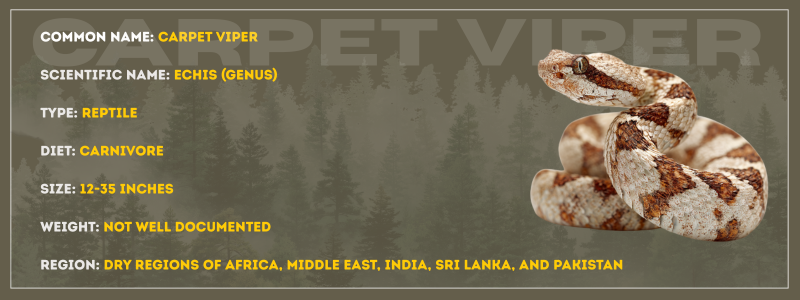
Scientific Name: Echis (genus)
Diet Type: Carnivore
Size: 30-90 cm (12-35 inches), average 30-60 cm
Weight: Not well documented; small and lightweight relative to length
Region Found: Dry regions of Africa, Middle East, India, Sri Lanka, and Pakistan