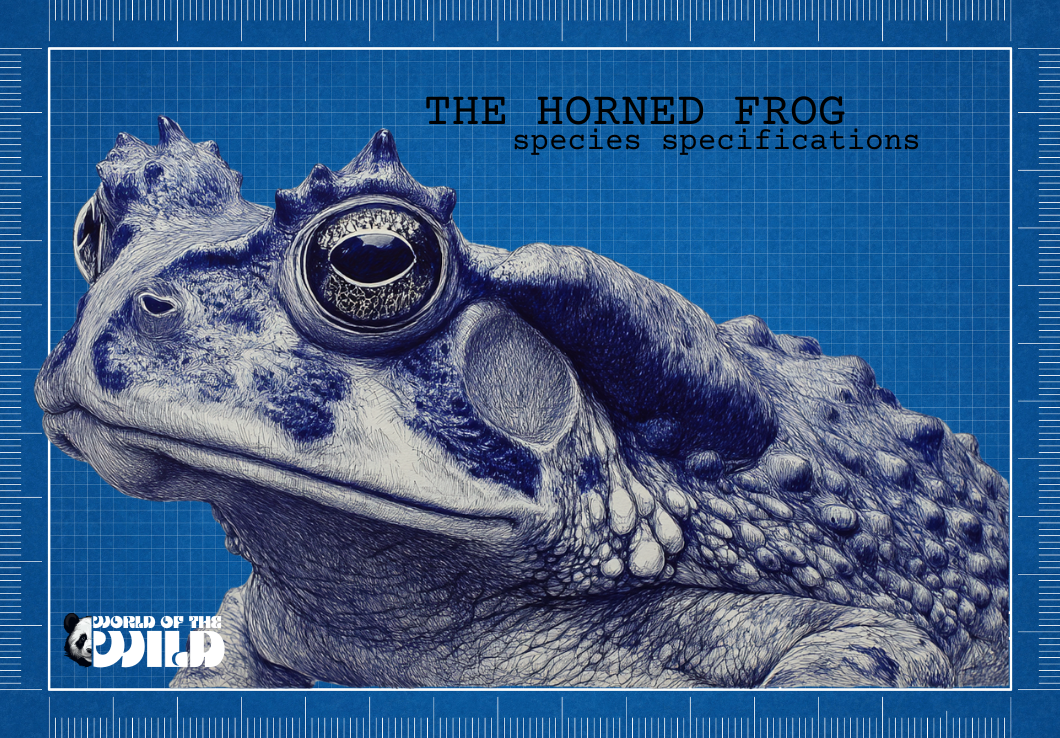

98
Scientific Classification
Kingdom: Animalia
Phylum: Chordata
Class: Amphibia
Order: Anura
Family: Ceratophryidae
Genus: Ceratophrys
Species: C. ornata
Binomial Name: Ceratophrys ornata (Bell, 1843)
Common Names
- Argentine Horned Frog
- Argentine Wide-Mouthed Frog
- Ornate Horned Frog
- Pacman Frog (pet trade name)
- Escuerzo (Spanish)
Physical Specifications
Size Dimensions
- Adult Female Length: 100-150 mm (3.9-5.9 inches)
- Adult Male Length: 80-120 mm (3.1-4.7 inches)
- Sexual Dimorphism: Females significantly larger than males
- Weight Range: 200-500 grams (7-18 ounces)
Morphological Features
- Body Shape: Robust, nearly as wide as long, dorsoventrally flattened
- Head: Extremely large relative to body, approximately 50% of total body width
- Mouth: Exceptionally wide, spanning almost the entire width of head
- Eyes: Positioned dorsally, protruding above head surface
- Horn Projections: Pointed, fleshy appendages above each eye (not true horns)
- Skin Texture: Dry to slightly moist, tuberculated (bumpy)
- Limbs: Short and muscular, with limited mobility
Coloration and Pattern
- Base Colors: Green, lime, bright yellow, olive, brown, or reddish
- Pattern Type: Bold irregular blotches and bands
- Markings: Dark green, brown, or black patches on lighter background
- Ventral Coloration: White to cream, typically unmarked
- Color Variants: Albino, strawberry (red/pink), and high-contrast morphs available in captivity
- Sexual Dichromatism: Males often darker, particularly on throat
Geographic Distribution
Native Range
- Primary Location: Argentina (northern and central regions)
- Secondary Locations: Uruguay, southern Brazil
- Habitat Zones: Pampas grasslands, Chaco region
- Elevation Range: 0-800 meters above sea level
Habitat Requirements
- Ecosystem Type: Temperate to subtropical grasslands, agricultural areas
- Substrate Preference: Loose, easily burrowable soil
- Moisture Requirements: Moderate humidity with access to shallow water
- Cover Requirements: Dense ground vegetation or leaf litter
- Temperature Range: 24-28°C (75-82°F) optimal activity range
Behavioral Specifications
Activity Patterns
- Diel Pattern: Nocturnal/crepuscular
- Seasonal Activity: Most active during warm, rainy season (November-March)
- Dormancy: Aestivation during dry periods, creating mucus cocoon
- Mobility: Sedentary, ambush predator strategy
- Social Structure: Solitary, territorial
Feeding Behavior
- Hunting Method: Sit-and-wait ambush predation
- Prey Detection: Visual and vibrational cues
- Strike Speed: Extremely rapid (approximately 0.07 seconds)
- Feeding Frequency: 1-3 times per week (adults)
- Bite Force: Exceptionally strong relative to body size
Defensive Mechanisms
- Primary Defense: Inflating body to appear larger
- Vocalization: Loud screaming or squeaking when threatened
- Biting: Powerful bite with vomerine teeth
- Camouflage: Cryptic coloration matches leaf litter
- Secondary Defense: Lunging at threats
Dietary Specifications
Natural Diet (Wild)
- Insects (beetles, grasshoppers, crickets)
- Other amphibians (including conspecifics)
- Small rodents (mice, young rats)
- Small reptiles and snakes
- Nestling birds
- Feeding Strategy: Opportunistic carnivore, will attempt to consume any prey that fits in mouth
Nutritional Requirements
- Protein: 45-60% of diet
- Fat: 15-25% of diet
- Calcium:Phosphorus Ratio: 2:1 ideal
- Supplementation Needs: Calcium with D3, multivitamin powder
Reproductive Specifications
Sexual Maturity
- Age to Maturity: 18-24 months
- Size at Maturity: Females >100mm, Males >80mm
Breeding Season
- Primary Period: November to March (rainy season)
- Trigger Factors: Heavy rainfall, temperature increase, photoperiod changes
Reproductive Behavior
- Breeding Site: Temporary pools, flooded grasslands
- Male Advertisement: Loud calling from water’s edge
- Call Type: Low-pitched “moo” or bellowing sound
- Call Frequency: 20-30 calls per minute during peak activity
- Amplexus Type: Axillary (male grasps female behind forelimbs)
- Amplexus Duration: 2-24 hours
Egg and Development Specifications
- Clutch Size: 1,000-4,000 eggs per spawning
- Egg Diameter: 2-3 mm
- Egg Description: Black animal pole, cream vegetal pole, enclosed in jelly capsule
- Incubation Period: 12-25 days (temperature dependent)
- Hatching Size: 4-5 mm total length
Larval Stage
- Tadpole Duration: 15-40 days
- Tadpole Size at Metamorphosis: 40-55 mm
- Tadpole Coloration: Dark brown to olive with gold flecks
- Tadpole Diet: Omnivorous (algae, detritus, small invertebrates, carrion)
- Cannibalistic Tendency: High – larger tadpoles consume smaller siblings
Metamorphosis
- Froglet Size: 15-25 mm snout-vent length
- Development Time to Adult: 10-14 months
Physiological Specifications
Metabolic Characteristics
- Metabolic Type: Ectothermic (cold-blooded)
- Preferred Body Temperature: 24-26°C (75-79°F)
- Critical Thermal Maximum: 35°C (95°F)
- Critical Thermal Minimum: 5°C (41°F)
- Metabolic Rate: Low; can survive extended periods without food
Respiratory System
- Respiration Types: Cutaneous (skin), buccopharyngeal, pulmonary (lungs)
- Primary Method: Cutaneous in water, pulmonary on land
- Oxygen Requirements: Moderate
Water Balance
- Water Absorption: Through ventral pelvic patch
- Dehydration Tolerance: Moderate to high
- Aestivation Capability: Yes, can survive months underground during drought
Longevity
- Wild Lifespan: 4-6 years (estimated)
- Captive Lifespan: 6-10 years
- Maximum Recorded: 15 years in captivity
Captive Care Specifications
Enclosure Requirements
- Minimum Dimensions: 40 liters (10 gallons) for single adult
- Substrate Depth: 5-10 cm (2-4 inches) coconut fiber or soil
- Humidity Range: 60-80%
- Temperature (Day): 24-27°C (75-80°F)
- Temperature (Night): 20-22°C (68-72°F)
- Lighting: Low to moderate, 12-hour photoperiod
- Water Feature: Shallow dish, 2-5 cm deep
Captive Diet
- Primary Foods: Crickets, dubia roaches, earthworms
- Occasional Foods: Pinkie mice, hornworms, silkworms
- Feeding Frequency (Adults): Every 2-4 days
- Feeding Frequency (Juveniles): Daily
- Portion Size: Prey items should be no larger than space between eyes
Health Considerations
- Common Ailments: Metabolic bone disease, obesity, impaction, bacterial infections
- Parasite Susceptibility: Moderate
- Skin Sensitivity: High; sensitive to chemicals and chlorine
- Handling Requirements: Minimal; stress-sensitive
Conservation Status
IUCN Red List Status
Classification: Near Threatened (as of 2004 assessment, may require update)
Population Trends
- Wild Population: Declining in some areas
- Primary Threats: Habitat loss due to agriculture, pesticide use, collection for pet trade
- Protected Status: Listed on CITES Appendix II in some jurisdictions
Conservation Concerns
- Habitat Loss: Conversion of grasslands to agricultural land
- Chemical Exposure: Pesticide and herbicide runoff
- Collection Pressure: Wild collection for international pet trade
- Climate Change: Altered rainfall patterns affecting breeding
Legal Status
International Trade
- CITES Status: May be regulated depending on jurisdiction
- Export Restrictions: Varies by country of origin
Captive Breeding
- Availability: Widely captive-bred for pet trade
- Breeding Difficulty: Moderate; requires environmental manipulation
- Commercial Production: Common; reduces wild collection pressure
Notable Characteristics
Unique Features
- One of the most aggressive predators among frogs
- Possesses vomerine teeth unusual in anurans
- Can consume prey nearly as large as themselves
- Exhibits some of the fastest strike speeds in amphibians
- Capable of vocal intimidation displays
Research Applications
- Model organism for studying amphibian development
- Research on feeding mechanics and biomechanics
- Studies of aestivation physiology
- Toxicology research
Taxonomic Notes
Subspecies
Currently no recognized subspecies, though morphological variation exists across range.
Related Species
- C. cranwelli (Cranwell’s Horned Frog) – closely related, northern Argentina
- C. cornuta (Surinam Horned Frog) – Amazon Basin
- Other Ceratophrys species share similar morphology and behavior
Document Version: 1.0
Last Updated: January 2026
Data Sources: Scientific literature, field observations, captive breeding records