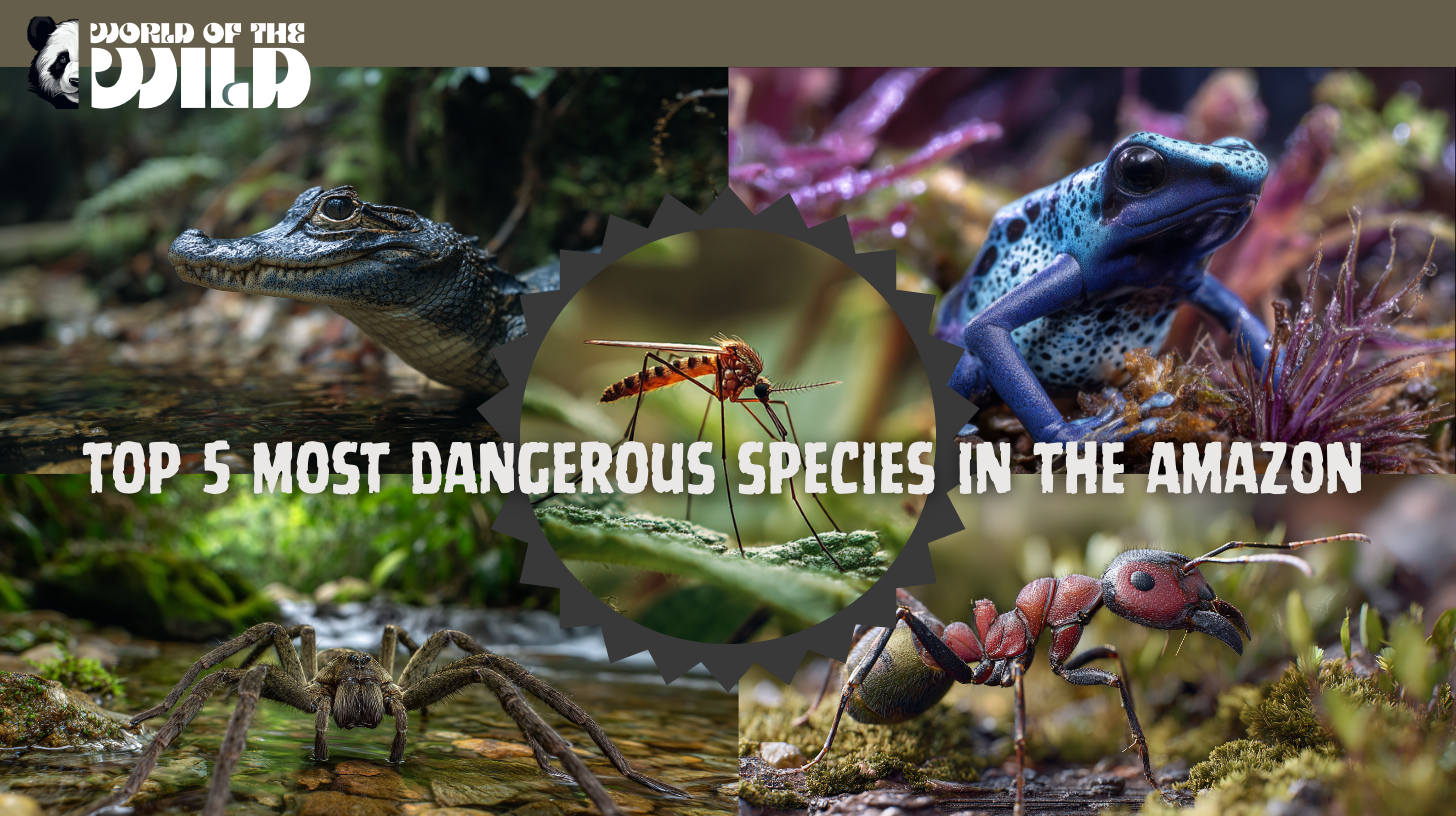

The Amazon rainforest teems with extraordinary wildlife, but beneath its emerald canopy lurks some of nature’s most dangerous animals. These remarkable creatures have evolved potent defenses and deadly weapons that make them formidable inhabitants of the world’s largest tropical rainforest. From microscopic threats to powerful predators, the Amazon’s most dangerous animals command respect and fascination in equal measure. While their beauty captivates wildlife enthusiasts worldwide, their lethal capabilities serve as stark reminders of nature’s raw power. Join us as we explore five of the Amazon’s most dangerous animals—creatures that perfectly embody the delicate balance between wonder and peril in this biodiverse paradise.
5. Poison Dart Frog – A Tiny Amphibian with Lethal Beauty
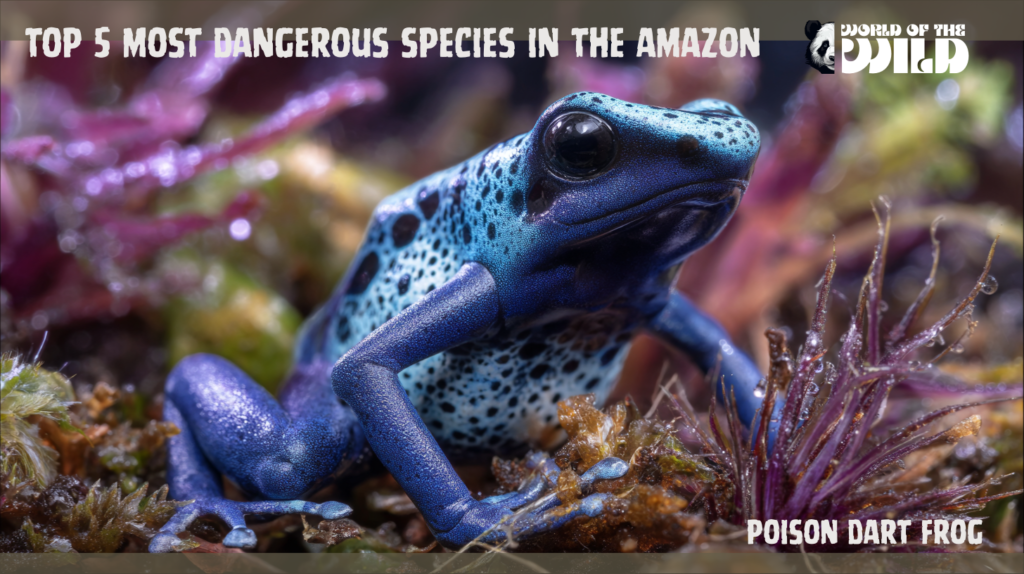
Scientific Name: Dendrobatidae family (multiple species)
Don’t let their jewel-like appearance fool you—poison dart frogs are among the most toxic animals on Earth. These diminutive amphibians, measuring just 0.75 to 2.5 inches long, sport brilliant warning colors in electric blues, vivid yellows, and fiery oranges that signal danger to potential predators.
Found throughout Central and South American rainforests, particularly in Colombia, Ecuador, and Brazil, these frogs inhabit the forest floor and low vegetation near streams. Their skin secretes alkaloid toxins so powerful that indigenous peoples have used them to poison blow darts for hunting—hence their common name. The golden poison dart frog (Phyllobates terribilis) carries enough toxin to kill ten adult humans.
These carnivorous amphibians feed primarily on small insects, including ants, termites, and mites. Remarkably, poison dart frogs aren’t born toxic—they acquire their poisonous properties by consuming specific insects in their natural habitat. Captive-bred frogs fed different diets never develop their deadly defenses.
Conservation Status: Varies by species (some are Near Threatened)
Surprising Fact: Male poison dart frogs are devoted fathers who transport tadpoles on their backs to water-filled tree cavities, then return to feed them unfertilized eggs!
Learn more about the Poison Dart Frog Here
4. Brazilian Wandering Spider – The World’s Most Venomous Arachnid
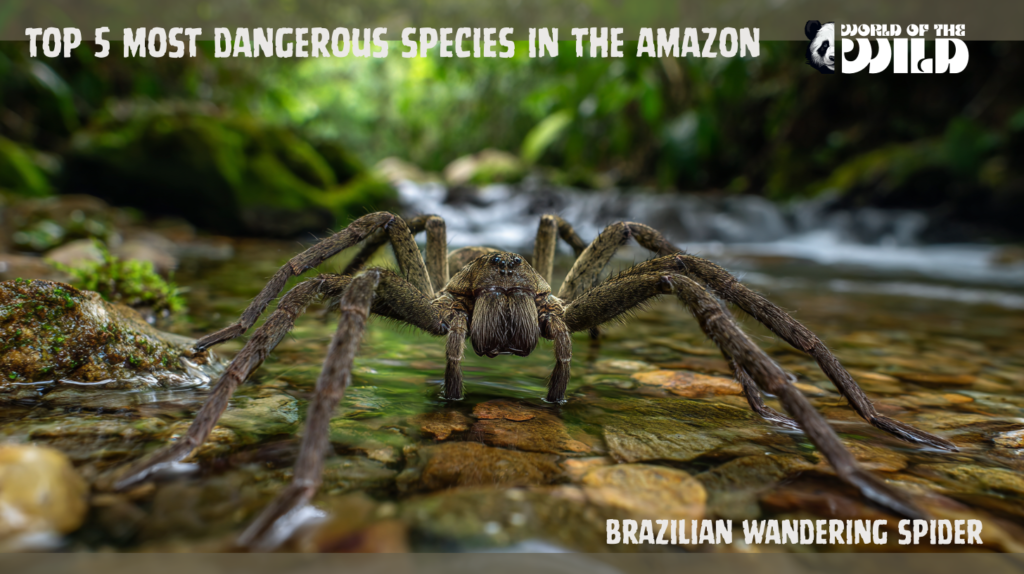
Scientific Name: Phoneutria species
The Brazilian wandering spider holds the Guinness World Record as the most venomous spider on the planet. This aggressive arachnid earned its name from its nocturnal hunting behavior—rather than spinning webs, it actively wanders the rainforest floor searching for prey. With a leg span reaching 5-6 inches and a body length of 2 inches, these spiders are impossible to miss.
Native to South American tropical forests from Brazil to Argentina, these spiders occasionally wander into human dwellings, hiding in clothing, shoes, and banana shipments. Their venom contains a potent neurotoxin called PhTx3, which can cause severe pain, inflammation, loss of muscle control, breathing problems, and potentially death if untreated.
These carnivorous hunters prey on insects, other spiders, small amphibians, and even mice. They’re ambush predators that rely on speed and venom rather than webs. When threatened, Brazilian wandering spiders rear up on their hind legs in a distinctive defensive posture, displaying their red chelicerae.
Conservation Status: Not evaluated
Surprising Fact: Researchers are studying compounds from their venom as potential treatments for erectile dysfunction, as the toxin affects blood flow regulation!
3. Black Caiman – The Amazon’s Apex Predator
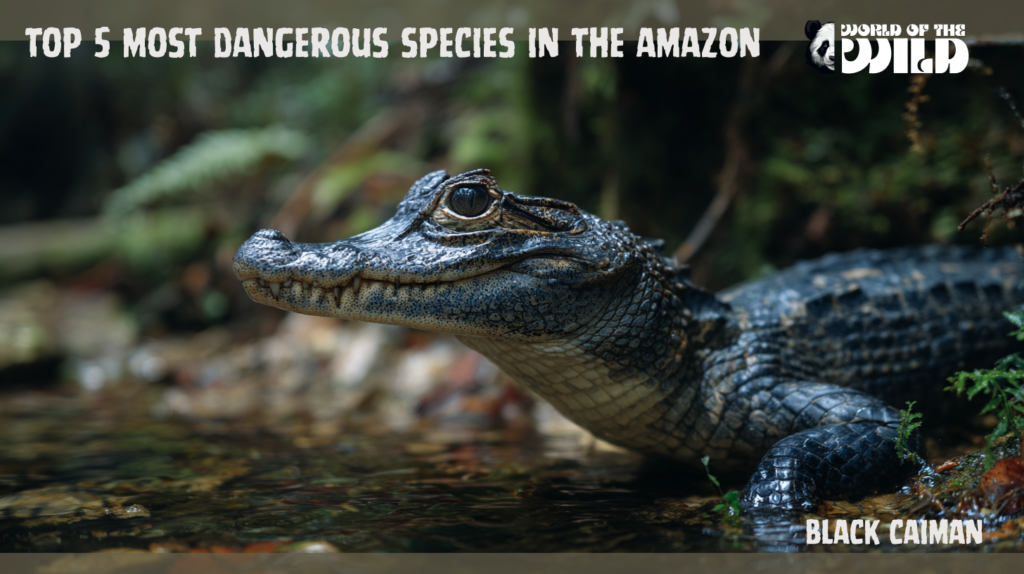
Scientific Name: Melanosuchus niger
The black caiman reigns as the largest predator in the Amazon Basin and South America’s biggest member of the alligator family. These prehistoric-looking reptiles can grow to staggering lengths of 16-20 feet and weigh over 1,000 pounds, with some exceptional males reportedly exceeding these measurements. Their dark, almost black coloration helps them blend into murky waters and provides better camouflage during nocturnal hunting.
Inhabiting slow-moving rivers, lakes, and seasonally flooded savannas across the Amazon Basin—including Brazil, Peru, Ecuador, Colombia, and Bolivia—black caimans dominate their aquatic territories. As apex predators, they have few natural enemies aside from humans and anacondas.
Black caimans are opportunistic carnivores with incredibly diverse diets. Juveniles feed on fish, crustaceans, and insects, while adults consume capybaras, deer, wild pigs, fish, turtles, snakes, and even other caimans. They’ve been documented attacking livestock and, in rare instances, humans. Their powerful jaws generate bite forces exceeding 7,000 pounds per square inch—stronger than a great white shark’s bite!
Conservation Status: Conservation Dependent (recovered from near extinction)
Surprising Fact: Black caimans can hold their breath for up to 90 minutes while waiting motionless for prey to approach!
2. Bullet Ant – The Insect with the World’s Most Painful Sting
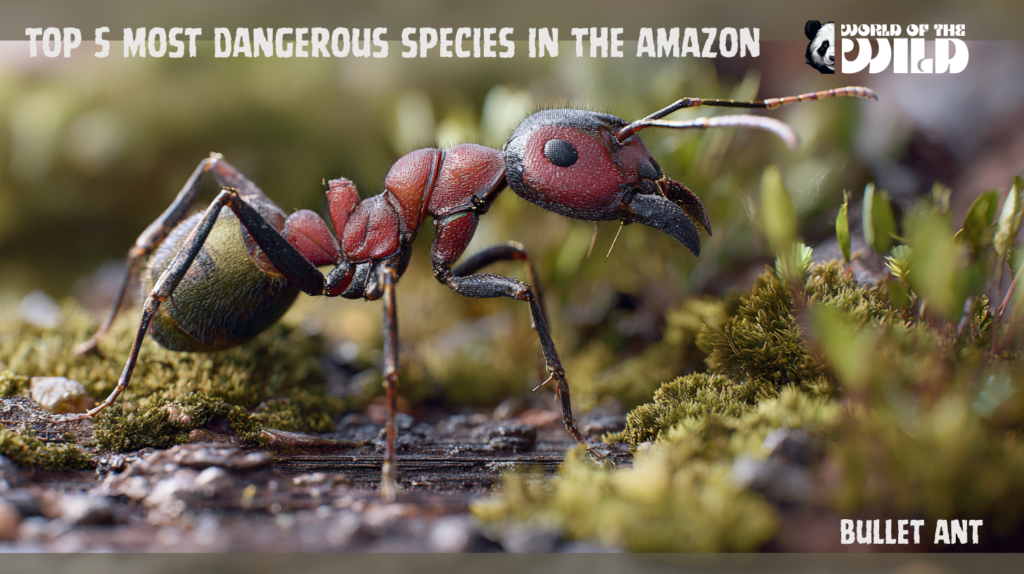
Scientific Name: Paraponera clavata
Imagine experiencing pain comparable to being shot—that’s how the bullet ant earned its fearsome name. This remarkable insect, measuring about 1 inch in length (making it one of the world’s largest ant species), delivers what entomologists rate as the most painful insect sting known to science. On the Schmidt Pain Index, which measures insect sting pain on a scale of 1-4, the bullet ant scores a perfect 4+.
Found throughout humid lowland rainforests from Nicaragua to Paraguay, with significant populations throughout the Amazon Basin, bullet ants nest at the bases of trees and forage both on the ground and in the canopy. They’re named Paraponera (“alongside Ponera,” a primitive ant genus) and clavata (“club-like,” referring to their appearance).
These omnivorous insects feed primarily on nectar and small arthropods. They hunt individually rather than in coordinated groups like many ant species. The excruciating pain from their sting—caused by a neurotoxic peptide called poneratoxin—lasts 12-24 hours and includes symptoms of trembling, nausea, and temporary paralysis.
Conservation Status: Not evaluated (common throughout range)
Surprising Fact: The Sateré-Mawé indigenous people of Brazil use bullet ant stings in manhood initiation ceremonies, requiring young men to wear gloves filled with hundreds of ants for 10 minutes—multiple times!
Learn more about the Bullet Ant here
1. Mosquitoes – The World’s Deadliest Animal
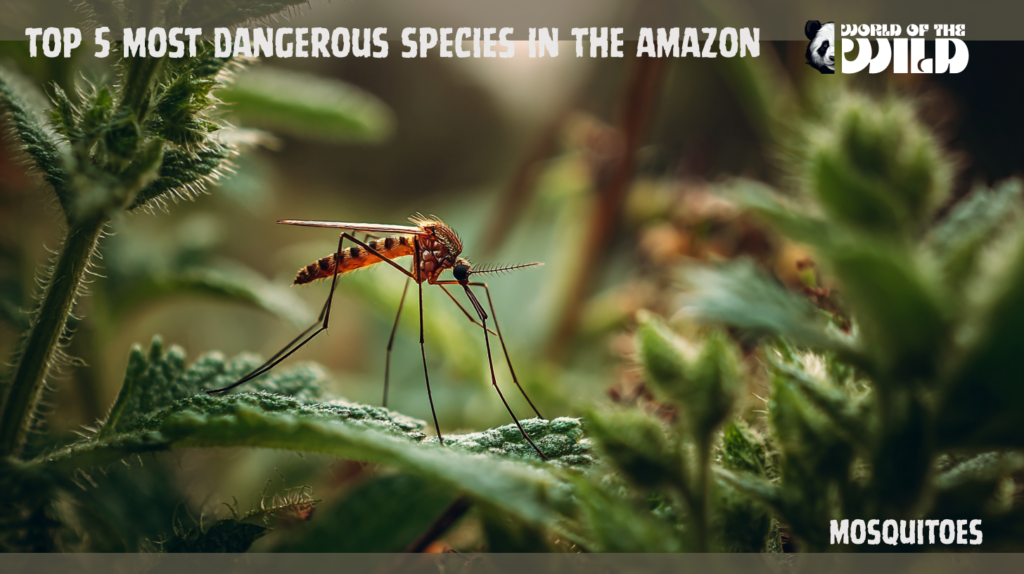
Scientific Name: Culicidae family (various species)
Surprising as it may seem, the mosquito—not lions, sharks, or snakes—is Earth’s deadliest animal to humans. These tiny flying insects, barely 0.15 to 0.4 inches long, cause over 700,000 human deaths annually by transmitting deadly diseases including malaria, dengue fever, yellow fever, Zika virus, and various forms of encephalitis.
Mosquitoes inhabit nearly every terrestrial ecosystem on Earth, but the Amazon rainforest’s warm, humid environment with abundant standing water creates perfect breeding conditions. Species like Anopheles darlingi (primary malaria vector in South America) and Aedes aegypti (spreader of dengue, yellow fever, and Zika) thrive in this region.
Only female mosquitoes bite, requiring blood meals to develop their eggs. Males feed exclusively on nectar and plant juices. Females detect hosts by sensing carbon dioxide, body heat, and specific chemical compounds in human sweat from up to 100 feet away. A female mosquito can drink up to three times her weight in blood during a single feeding.
Conservation Status: Not applicable (common worldwide)
Surprising Fact: Mosquitoes have existed for over 100 million years and once fed on dinosaurs! They’re also the primary pollinators for several orchid species.
Learn more about the Mosquitoe here
Conclusion
The Amazon rainforest’s most dangerous animals remind us that nature’s beauty often conceals formidable defenses and deadly capabilities. From microscopic mosquitoes killing hundreds of thousands annually to massive black caimans dominating river systems, these five creatures represent nature’s incredible diversity and evolutionary ingenuity. Each has earned its place in the complex web of rainforest life through millions of years of adaptation.
Want to discover more fascinating wildlife from around the globe? Explore World of the Wild for in-depth articles, stunning photography, and incredible animal facts that will deepen your appreciation for our planet’s extraordinary biodiversity!