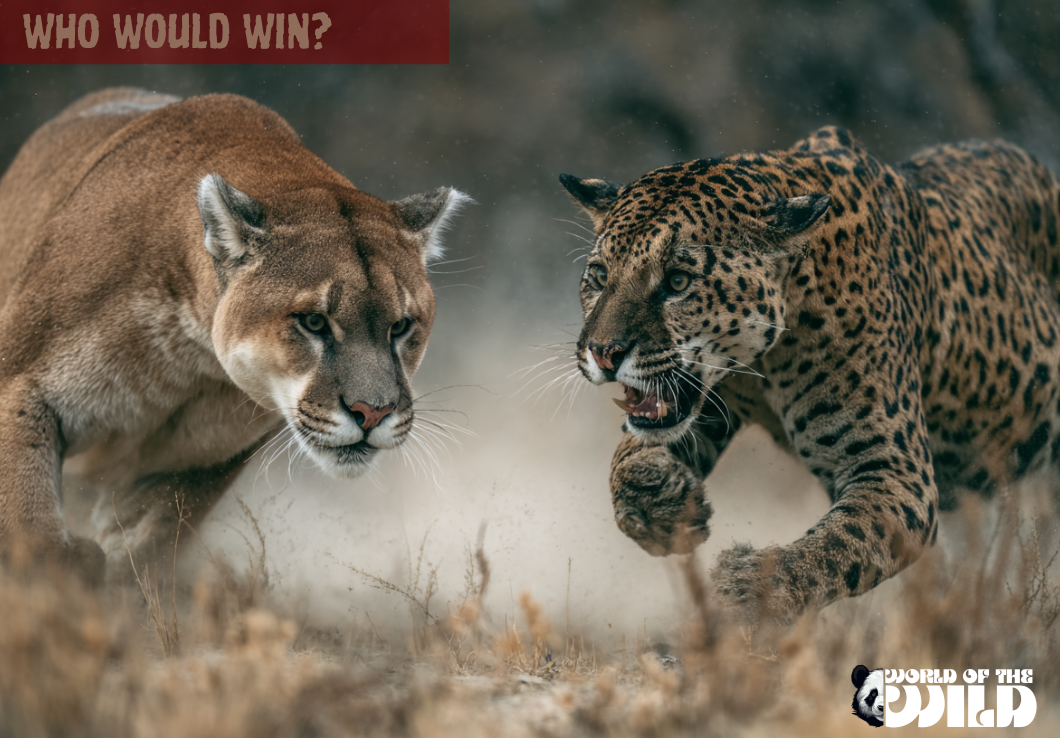

🥊 The Contenders
In the dense forests and rugged mountains where the Americas’ apex predators roam, two legendary hunters reign supreme. In one corner, we have the Mountain Lion (also known as the cougar or puma)—a lean, mean, athletic machine built for explosive power and spectacular aerial assaults. In the other corner, meet the Jaguar—the ultimate bite-force champion of the Americas, a stocky powerhouse with jaws that can crush skulls like walnuts.
Where their territories overlap in Central and South America, these two formidable felines occupy similar ecological niches. Both are solitary, ambush predators at the top of their food chains. But if these apex assassins ever crossed paths over a kill or territory dispute, which predator would walk away victorious? Let’s break down this clash of the titans!
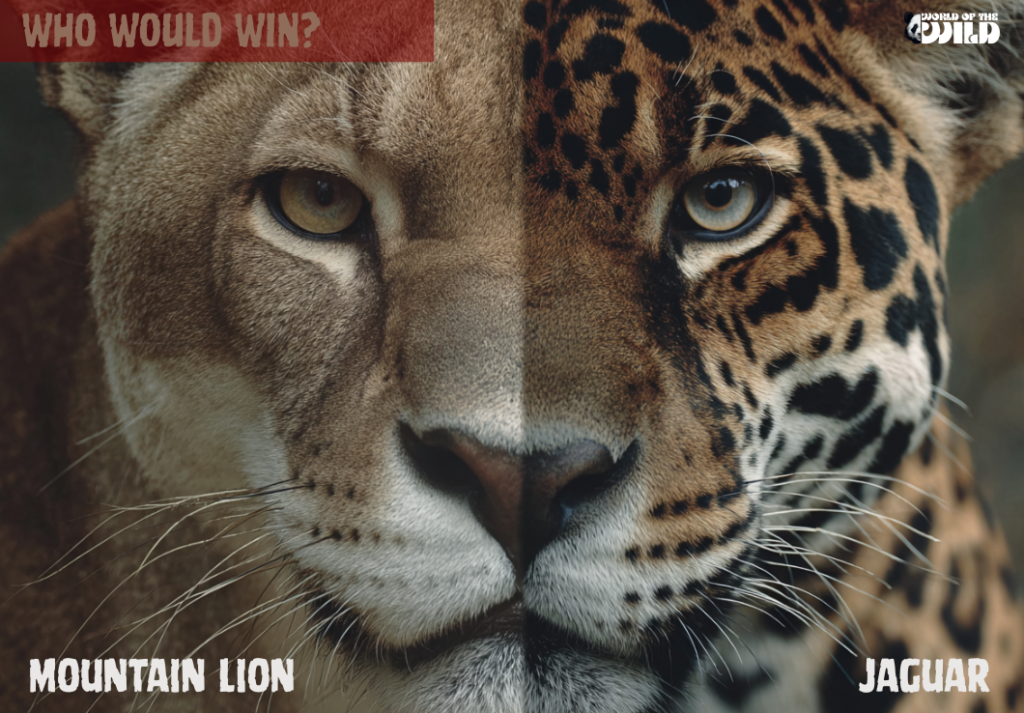
📊 Tale of the Tape
| Category | Mountain Lion | Jaguar |
|---|---|---|
| Size/Weight | 115-220 lbs (males average 150 lbs) | 125-250 lbs (males average 180 lbs) |
| Speed | 50 mph in bursts | 50 mph in bursts |
| Bite Force | ~350-400 PSI | ~1,500 PSI (strongest of any cat relative to size!) |
| Signature Weapon | Suffocating throat bite, incredible leaping ability (40+ ft horizontal, 15 ft vertical) | Skull-piercing canines, devastating jaw strength that crushes bone |
| Special Abilities | Superior agility and endurance, exceptional climber, adaptable to diverse terrain | Exceptional swimmer, can kill caimans and crush turtle shells, stockier build for grappling |
💪 Physical Advantages
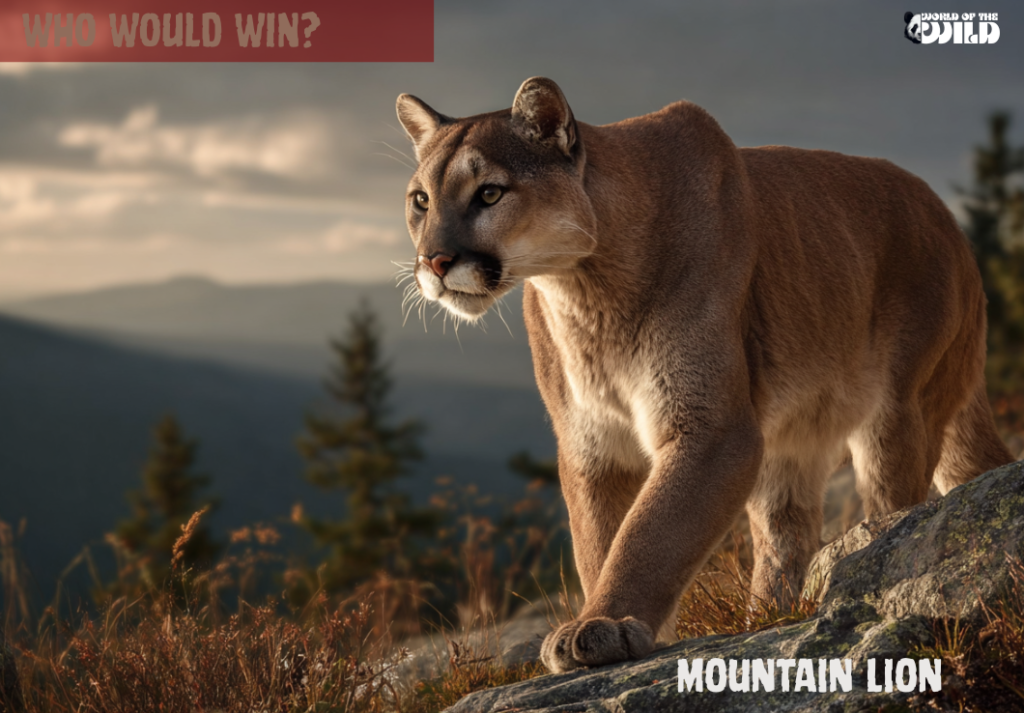
Mountain Lion’s Arsenal:
- Elite Athleticism: The mountain lion is the superior athlete, with longer legs and a more flexible spine that allows for those legendary 40-foot horizontal leaps
- Speed and Agility: Slightly more agile in rapid direction changes, making it harder to pin down
- Reach Advantage: Longer body and limbs give it better range in paw strikes
- Endurance: Built for longer pursuits and sustained activity
- Adaptability: Thrives in varied terrain from mountains to deserts
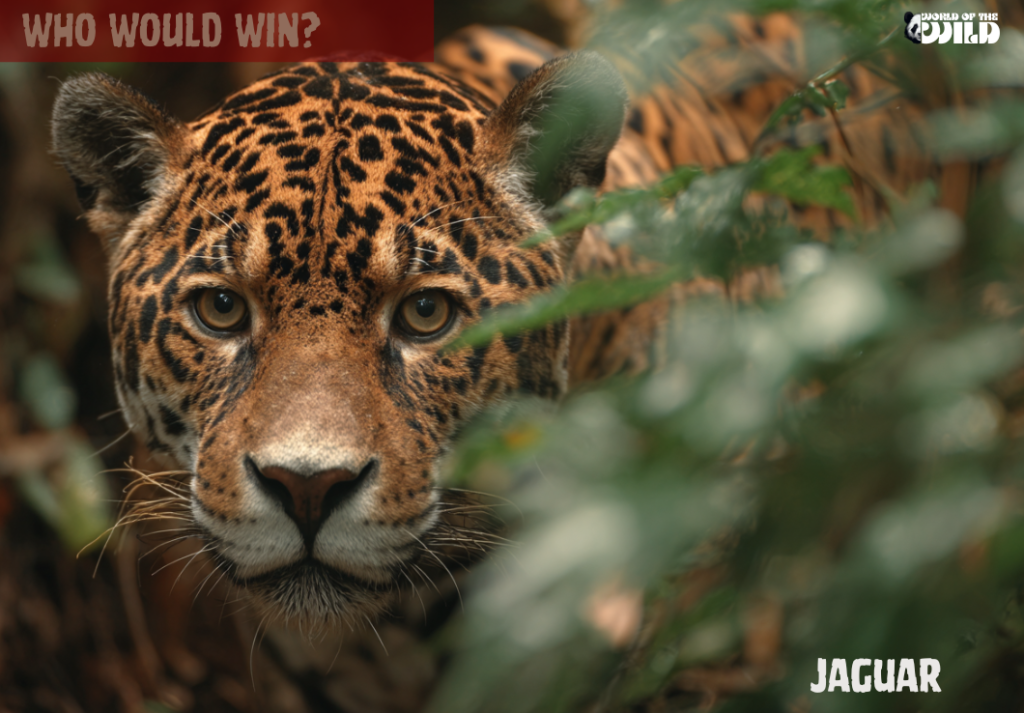
Jaguar’s Arsenal:
- Bite Force Dominance: At 1,500 PSI, the jaguar’s bite is nearly 4x stronger than the mountain lion’s—this is the game-changer
- Compact Power: Stockier, more muscular build means greater strength in close-quarters combat
- Unique Killing Method: Unlike other big cats that suffocate prey, jaguars bite directly through the skull or spine—a one-shot kill technique
- Superior Grappling: Thicker neck and broader shoulders make it harder to take down
- Armored Build: Denser bone structure and muscle mass provides better defense
⚔️ The Battle Scenario
The encounter begins at a river bend where both cats have converged on a freshly killed peccary. The mountain lion arrived first, but the jaguar isn’t backing down. They circle, ears flattened, tails twitching. The cougar makes the first move—lightning fast, it launches a probing paw swipe aimed at the jaguar’s face. The jaguar ducks and counters with a low lunge. For the first minute, the mountain lion’s superior speed is evident—it lands more strikes, dancing in and out of range like a boxer, using its reach advantage. But the jaguar is patient, weathering the assault with its stockier frame absorbing the blows.
Then the tide turns. The jaguar times its move perfectly, catching the mountain lion mid-leap. With shocking strength, it pulls the cougar into a grapple. This is the jaguar’s world now. The mountain lion thrashes, trying to break free with its superior agility, but the jaguar’s low center of gravity and raw power keep it locked in. Claws rake on both sides, but the jaguar works methodically toward its specialty: the head.
The mountain lion feels the pressure building—those massive jaw muscles clamping onto the back of its neck. It’s not the suffocating throat bite the cougar would use, but something far more terrifying. The jaguar’s canines begin to probe for skull or spine. The mountain lion makes a desperate attempt to twist away, using its flexibility to partially escape, but it’s already badly injured. Within seconds, the jaguar adjusts its grip and delivers the signature killing bite—canines piercing through bone. The fight is over.
🏆 The Verdict: JAGUAR WINS
Winner: Jaguar (70-75% of encounters)
While the mountain lion is the more athletic and versatile hunter, the jaguar possesses the one advantage that matters most in a head-to-head fight: overwhelming bite force. Here’s why the rosette-wearing champion takes this matchup:
- The Bite Force Gap is Insurmountable: At 1,500 PSI vs. 400 PSI, the jaguar can deliver catastrophic damage with a single bite. This isn’t just about killing prey—it’s a structural advantage in combat. One solid bite to the skull or spine ends the fight immediately.
- Built for Battle: The jaguar’s stockier, more compact build (often described as “barrel-chested”) makes it superior in grappling scenarios. Once these cats close distance—which is inevitable in a serious fight—the jaguar’s design wins out.
- Proven Skull-Crushers: Jaguars regularly kill caimans (crocodilians with armored hides) and can bite through turtle shells. They’ve evolved to defeat heavily armored prey. A mountain lion’s skull, while formidable, isn’t harder than these targets.
Could the mountain lion win? Absolutely—perhaps 25-30% of the time, especially if it lands an early, lucky strike to a vital area or manages to avoid close combat entirely and escapes. The cougar’s superior speed and agility give it a puncher’s chance, and a perfect ambush could work. But in a sustained battle where both cats are committed to the fight, the jaguar’s superior weaponry and grappling ability make it the odds-on favorite.
In nature’s ultimate cage match, sometimes it’s not about being the fastest or most agile—it’s about having the tool that ends fights. And that tool is the jaguar’s bone-crushing bite. 🐆💀
Nature Note: In reality, both species would likely avoid direct confrontation. These are intelligent predators that understand the risk of injury. An injured predator often becomes a dead predator, so they’d more likely engage in intimidation displays and choose to retreat rather than fight to the death over a single meal.