
Introduction: The Need for Speed in the Wild
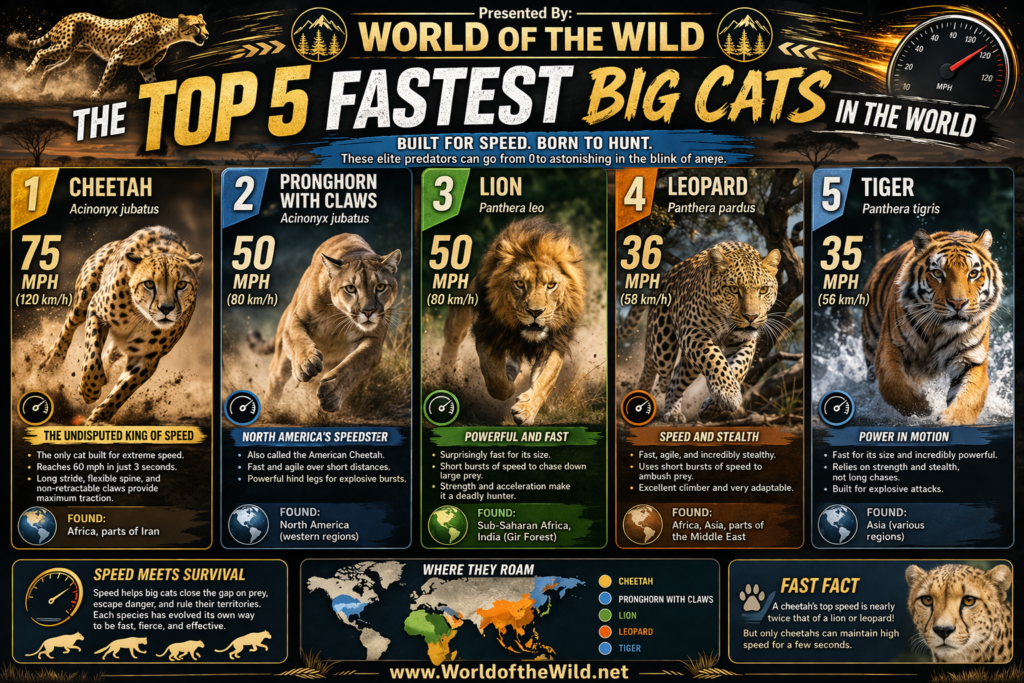
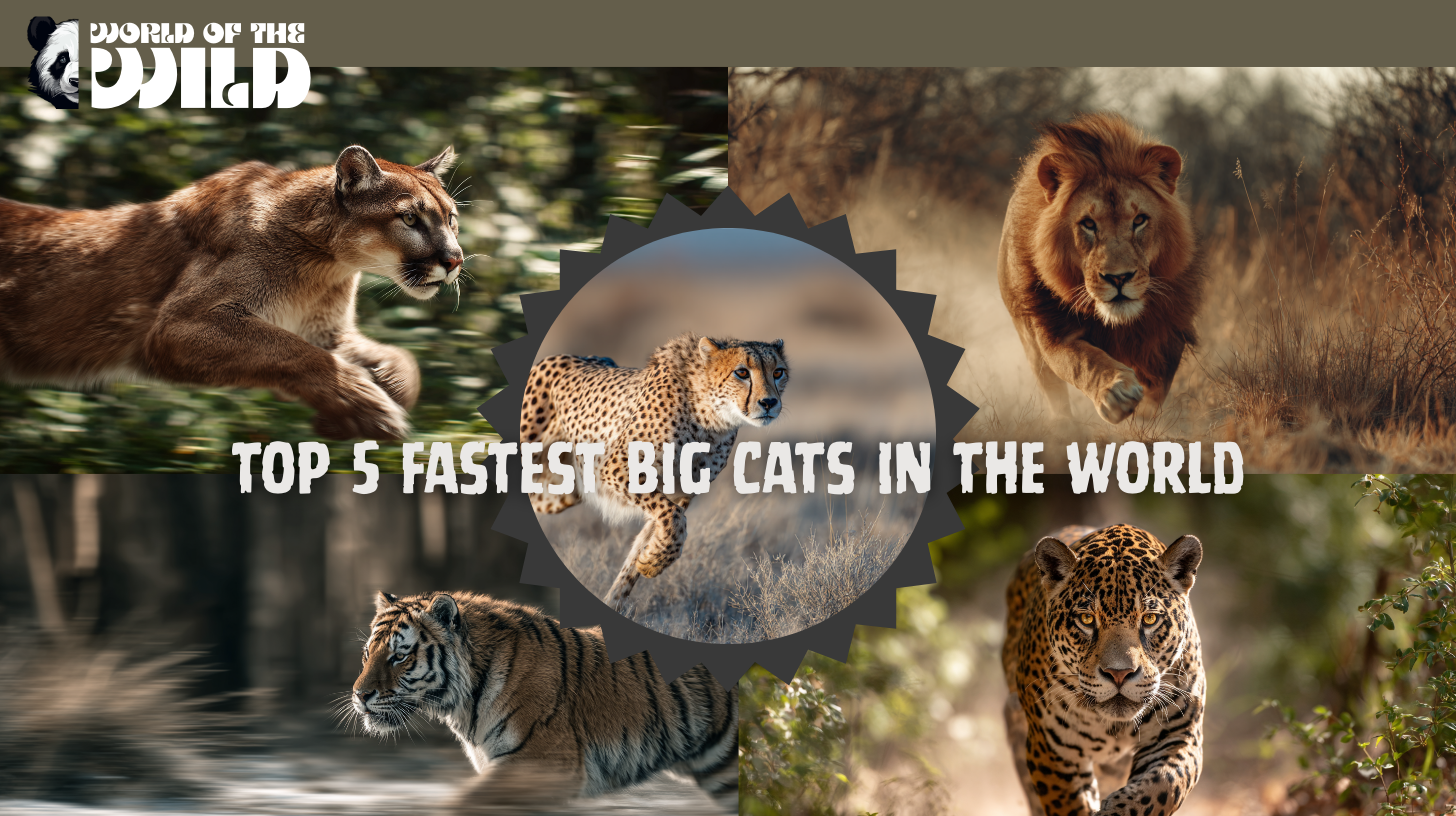
In the untamed corners of our planet, where survival hinges on split-second decisions and explosive bursts of power, few creatures command respect quite like the fastest big cats. These magnificent predators have evolved into living embodiments of speed, combining raw power with aerodynamic efficiency that would make even the most advanced sports cars envious. Whether sprinting across African savannas, leaping through South American rainforests, or stalking prey through Asian jungles, these apex predators represent millions of years of evolutionary refinement.
Speed serves as more than just a hunting advantage for these remarkable felines—it’s often the difference between a successful hunt and starvation, between catching prey and becoming prey themselves. Each of the top 5 fastest big cats has developed unique adaptations that allow them to achieve breathtaking velocities, from specialized muscle fibers to elongated limbs and flexible spines that act like coiled springs.
What makes these animals truly extraordinary isn’t just their top speed, but the incredible acceleration, agility, and hunting intelligence they demonstrate. A cheetah doesn’t merely run fast—it can accelerate from 0 to 60 mph in just three seconds, outperforming most supercars. A cougar can launch itself 40 feet in a single bound. A jaguar possesses a bite force that can crush through turtle shells and crocodile skulls.
In this comprehensive guide, we’ll explore the top 5 fastest big cats, ranking them by their maximum recorded speeds while delving deep into what makes each species a marvel of natural engineering. From their habitats and hunting behaviors to their conservation challenges and surprising quirks, prepare to discover why these animals continue to captivate wildlife enthusiasts and scientists alike.
1. Cheetah – The Undisputed Speed Champion of the Animal Kingdom
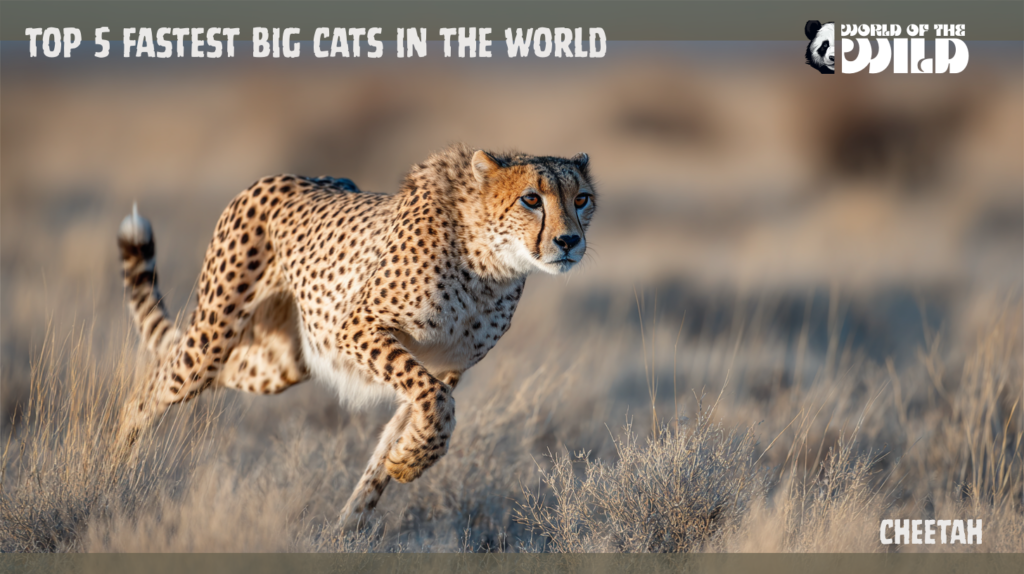
When it comes to terrestrial speed, no creature on Earth can match the cheetah. This sleek, spotted predator holds the title of fastest land animal, capable of reaching mind-bending speeds of up to 70 mph (112 km/h) in short bursts covering distances of 1,600 feet. Even more impressive, cheetahs can accelerate from 0 to 60 mph in approximately three seconds—acceleration that rivals the world’s most elite sports cars.
Scientific name: Acinonyx jubatus
Classification: Family Felidae, Subfamily Felinae
The cheetah’s physical build represents the ultimate expression of form following function. Unlike other big cats with stocky, muscular builds, cheetahs possess a lightweight frame weighing between 75-140 pounds, with long, slender legs and a flexible spine that acts like a spring during sprints. Their semi-retractable claws function like running spikes, providing traction during high-speed chases. The cheetah’s tail, measuring up to 33 inches long, serves as a crucial rudder for balance during the sharp turns often necessary when pursuing agile prey like gazelles and impalas.
Perhaps most distinctive are the cheetah’s “tear marks”—black lines running from the inner corners of their eyes down to the sides of their mouths. These marks aren’t just decorative; they help reduce glare from the sun during daytime hunts, functioning much like the eye black worn by athletes.
Cheetahs primarily inhabit the grasslands and savannas of sub-Saharan Africa, with a critically endangered population of fewer than 50 individuals surviving in Iran. They prefer open habitats where their exceptional vision—they can spot prey from up to 3 miles away—and sprinting ability provide maximum advantage.
As carnivores, cheetahs primarily hunt medium-sized ungulates, including Thomson’s gazelles, springboks, and impalas. Unlike other big cats that rely on stealth and ambush tactics, cheetahs hunt during daylight hours, using their incredible speed to run down prey in spectacular, high-speed pursuits that typically last less than a minute. After reaching their prey, they use a specialized dewclaw to trip their target before delivering a suffocating bite to the throat.
The cheetah’s remarkable speed comes with significant trade-offs. These sprints generate enormous amounts of heat, raising their body temperature to dangerous levels and requiring 20-30 minutes of recovery time. During this vulnerable period, larger predators like lions, leopards, and hyenas often steal their kills—cheetahs lose approximately 50% of their kills to these competitors.
Currently listed as Vulnerable by the IUCN, cheetah populations have declined dramatically, with only about 7,100 individuals remaining in the wild. Habitat loss, human-wildlife conflict, and genetic bottlenecking pose serious threats to their survival.
Surprising Fact: Unlike most cats, cheetahs cannot roar. Instead, they communicate through chirps, purrs, and high-pitched yelps that sound remarkably similar to bird calls—a vocalization so unusual that early European settlers in Africa were often confused by the source of these sounds.
Learn more about the Cheetah here
2. Cougar – The Leaping Ghost of the Americas
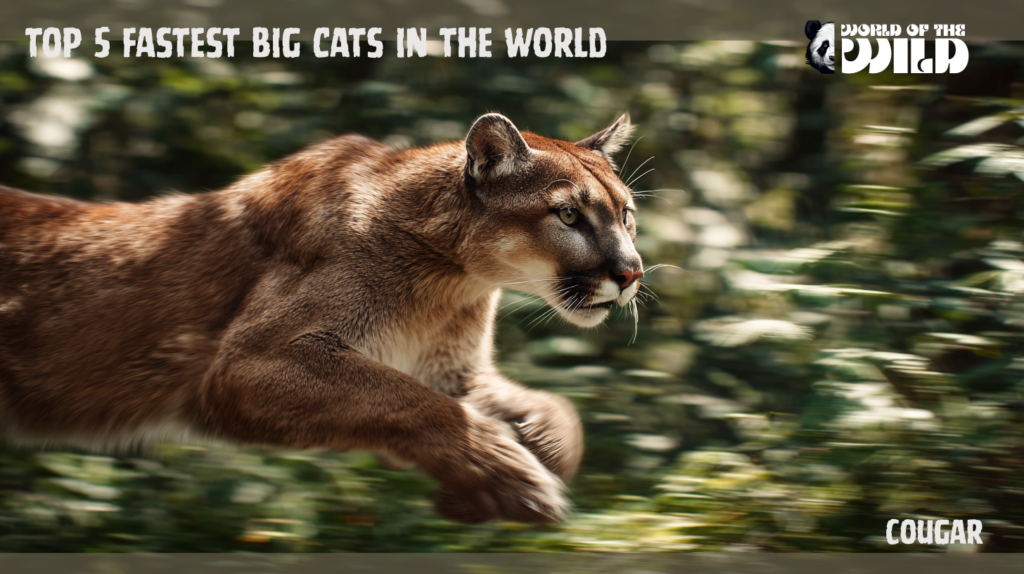
While the cheetah claims the crown for straight-line speed, the cougar—also known as the mountain lion, puma, or panther—earns its place as the second-fastest big cat with recorded speeds of up to 50 mph (80 km/h). What truly sets this powerful predator apart, however, isn’t just its sprinting ability but its explosive leaping power and remarkable adaptability across diverse terrains.
Scientific name: Puma concolor
Classification: Family Felidae, Subfamily Felinae
Cougars possess a muscular, athletic build perfectly suited for ambush hunting and vertical mobility. Adult males typically weigh 115-220 pounds, while females range from 64-141 pounds. Their hind legs are notably longer and more powerful than their front legs, creating a stance that enables extraordinary jumping ability—cougars can leap 40 feet horizontally and 15 feet vertically from a standing position, making them among the best jumpers in the animal kingdom relative to body size.
Their tawny coat, ranging from reddish-brown to silvery-grey, provides excellent camouflage in varied environments. Unlike spotted or striped cats, the cougar’s solid coloration allows it to blend seamlessly into rocky outcrops, forest shadows, and desert scrublands.
These adaptable felines boast the most extensive range of any terrestrial mammal in the Western Hemisphere, from the Canadian Yukon to the southern Andes of Chile. Cougars thrive in diverse habitats including mountains, forests, deserts, and swamps—a testament to their remarkable versatility. This adaptability has earned them recognition in the Guinness Book of World Records for having more names than any other animal, with over 40 different designations in English alone.
As obligate carnivores, cougars are opportunistic hunters with a diet ranging from large ungulates like deer and elk to smaller prey including rabbits, raccoons, and even insects when necessary. An adult cougar can consume 8-10 pounds of meat daily and will often cache larger kills under debris, returning to feed over several days. They employ stealth and patience, stalking to within 50 feet before unleashing a devastating burst of speed combined with those powerful leaps to take down prey, often targeting the neck or throat for a swift kill.
Cougars are predominantly solitary and crepuscular, most active during dawn and dusk. Males maintain territories of 50-150 square miles, which they mark with scrapes, urine, and scat. These territories often overlap with those of several females, though the cats themselves rarely interact except during mating season.
While listed as Least Concern overall, certain cougar subspecies and regional populations face significant threats. The Florida panther, a cougar subspecies, numbers fewer than 200 individuals and remains critically endangered. Across their range, cougars face challenges from habitat fragmentation, vehicle collisions, and conflicts with livestock ranchers.
Surprising Fact: Cougar kittens are born with blue eyes and spotted coats, which fade to their adult coloring by around 2.5 years of age. These spots provide camouflage during their vulnerable early months, when they’re hidden in dens while their mother hunts.
Learn more about the Cougar here
3. Jaguar – The Powerhouse with a Crushing Bite
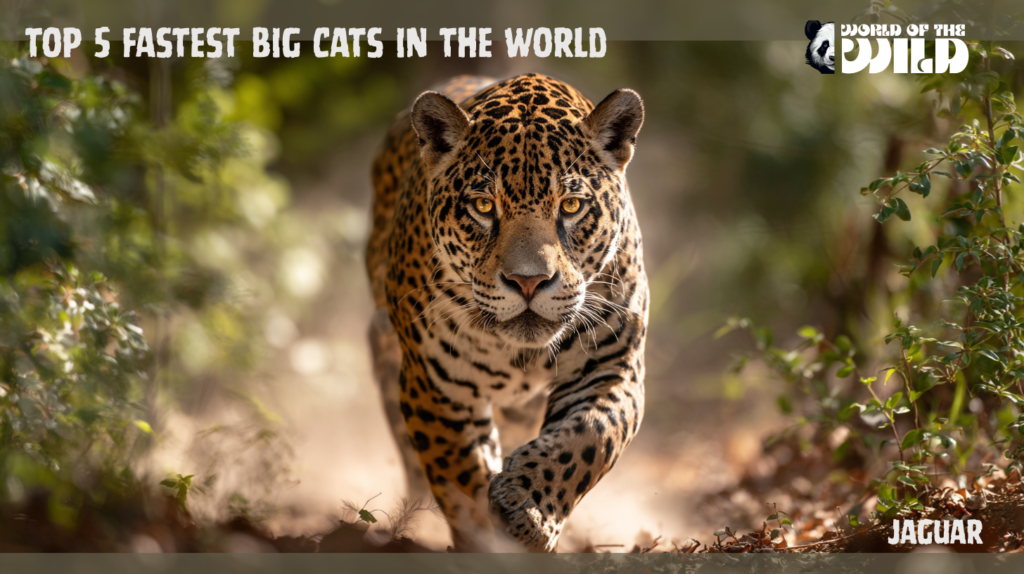
The jaguar combines impressive speed—reaching up to 50 mph (80 km/h)—with sheer brute strength, earning its reputation as the most powerful big cat in the Americas. While it matches the cougar in top speed, the jaguar’s true distinction lies in its incredible bite force, the strongest of any big cat relative to size, powerful enough to pierce through turtle shells, caiman skulls, and even the armor plating of armadillos.
Scientific name: Panthera onca
Classification: Family Felidae, Subfamily Pantherinae
Jaguars possess a stocky, muscular build with a robust skull and massive jaw muscles that generate a bite force exceeding 2,000 pounds per square inch—nearly twice that of a lion. Adult males weigh 126-250 pounds, with females ranging from 100-200 pounds. Their distinctive coat features rosettes (flower-shaped spots) with central spots inside them, distinguishing them from leopards, which have simpler rosette patterns without central spots. Some jaguars exhibit melanism, appearing entirely black—these “black panthers” still have rosettes, visible under certain lighting conditions.
These magnificent predators once roamed from the southwestern United States to northern Argentina, but habitat loss has reduced their range primarily to the Amazon Basin, the Pantanal wetlands of Brazil, and scattered populations in Central America. Jaguars show remarkable habitat versatility, thriving in dense rainforests, open grasslands, seasonally flooded swamps, and even arid scrubland, though they show strong preference for areas near water.
The jaguar’s relationship with water sets it apart from most big cats. Unlike their water-averse relatives, jaguars are excellent swimmers and actively hunt aquatic prey. Their diet includes over 85 different species: capybaras, peccaries, deer, tapirs, fish, caimans, anacondas, and turtles. Their unique hunting technique involves delivering a powerful bite directly to the skull of prey, piercing the brain between the ears—a method distinct from other big cats that typically target the throat.
Jaguars are predominantly solitary and territorial, with males controlling territories of 10-38 square miles that overlap with several female territories. They hunt primarily at night, relying on stealth, patience, and explosive power rather than sustained chases. Their spotted coat provides exceptional camouflage in dappled forest light, allowing them to approach to within striking distance before launching their attack.
Listed as Near Threatened by the IUCN, jaguar populations have declined by approximately 25% over the past two decades. Major threats include deforestation, particularly in the Amazon rainforest, retaliatory killings by ranchers, poaching for their beautiful pelts, and fragmentation of habitat that isolates populations and reduces genetic diversity.
Despite their fearsome reputation, jaguars rarely attack humans. In indigenous cultures throughout their range, jaguars hold sacred status, symbolizing power, fertility, and the connection between the physical and spiritual worlds. The name “jaguar” derives from the indigenous Tupian word “yaguara,” meaning “he who kills with one leap.”
Surprising Fact: Jaguars have been observed deliberately consuming the hallucinogenic vine Banisteriopsis caapi (ayahuasca) and certain psychoactive plants. Scientists speculate this behavior might help them purge intestinal parasites, though some researchers suggest it could alter their sensory perception during hunting—a phenomenon that remains one of the great mysteries of jaguar behavior.
Learn more about the Jaguar here
4. Lion – The Social Speedster of the Savanna
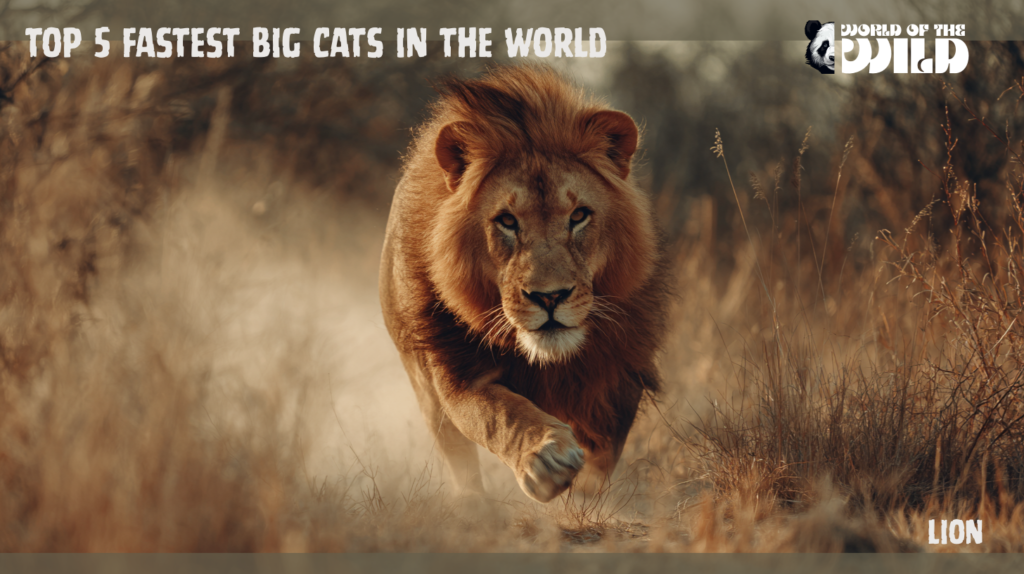
The lion, often called the “king of the jungle” (despite living primarily in grasslands), reaches impressive speeds of up to 50 mph (80 km/h) in short bursts. While matching the jaguar and cougar in maximum velocity, lions distinguish themselves through coordinated pack hunting strategies that make them arguably the most successful big cat predators, with hunt success rates up to 30%—significantly higher than most solitary hunters.
Scientific name: Panthera leo
Classification: Family Felidae, Subfamily Pantherinae
Lions exhibit the most pronounced sexual dimorphism of any big cat. Males weigh 330-550 pounds and sport the iconic mane that serves multiple purposes: protection during fights, indication of health and genetic fitness, and intimidation of rivals and prey. Females, weighing 265-395 pounds, lack manes but serve as the pride’s primary hunters. Mane color and fullness correlate with testosterone levels and overall health—darker, fuller manes indicate prime males, making them more attractive to females but also more conspicuous to prey.
Once widespread across Africa, the Middle East, and even parts of southern Europe and India, lions now occupy only about 8% of their historic range. The vast majority of the approximately 20,000 remaining wild lions inhabit sub-Saharan Africa’s grasslands, savannas, and open woodlands. A critically endangered population of fewer than 600 Asiatic lions survives in India’s Gir Forest National Park.
Lions are unique among cats as the only truly social felines, living in prides of 10-30 individuals consisting of related females, their cubs, and a coalition of 1-4 males. This social structure enables sophisticated cooperative hunting tactics. Female lions typically conduct hunts, using coordinated strategies to encircle prey or drive animals toward concealed pride members. Their prey includes wildebeest, zebras, buffalo, and giraffes—targets often too large or dangerous for solitary hunters.
While females do most of the hunting, males defend the pride’s territory and protect cubs from infanticidal intruders—male coalitions that take over prides often kill existing cubs to bring females into estrus. Male lions can consume up to 70 pounds of meat in a single sitting and, despite their reputation for laziness, spend considerable energy patrolling territories that can span up to 100 square miles.
Lions hunt primarily at night or during cooler hours, relying on stealth and coordinated ambushes rather than sustained chases. Their tawny coloration provides effective camouflage in dry grasslands. Unlike cheetahs, which rely on extreme speed, lions depend on getting within 100 feet of prey before launching their attack, using teamwork to compensate for lower endurance.
Listed as Vulnerable, African lion populations have declined by approximately 43% over the past two decades. Major threats include habitat loss, human-wildlife conflict (particularly retaliatory killings after livestock predation), decline in prey populations, and disease. Trophy hunting and the illegal wildlife trade also contribute to population pressures.
Lions hold cultural significance across human civilizations, appearing in artwork, mythology, and heraldry from ancient Egypt and Mesopotamia to modern national emblems. Their distinctive roar, which can be heard up to 5 miles away, serves to communicate pride location and warn rivals—a sound that has symbolized wild Africa for millennia.
Surprising Fact: Male lions sleep up to 20 hours per day, making them one of the laziest animals in the animal kingdom. This isn’t pure indolence—their massive size and energy-expensive lifestyle, including defending territories and mating, necessitate extensive rest periods to conserve energy for these crucial activities.
Learn more about the Lion here
5. Tiger – The Striped Predator Built for Power and Speed
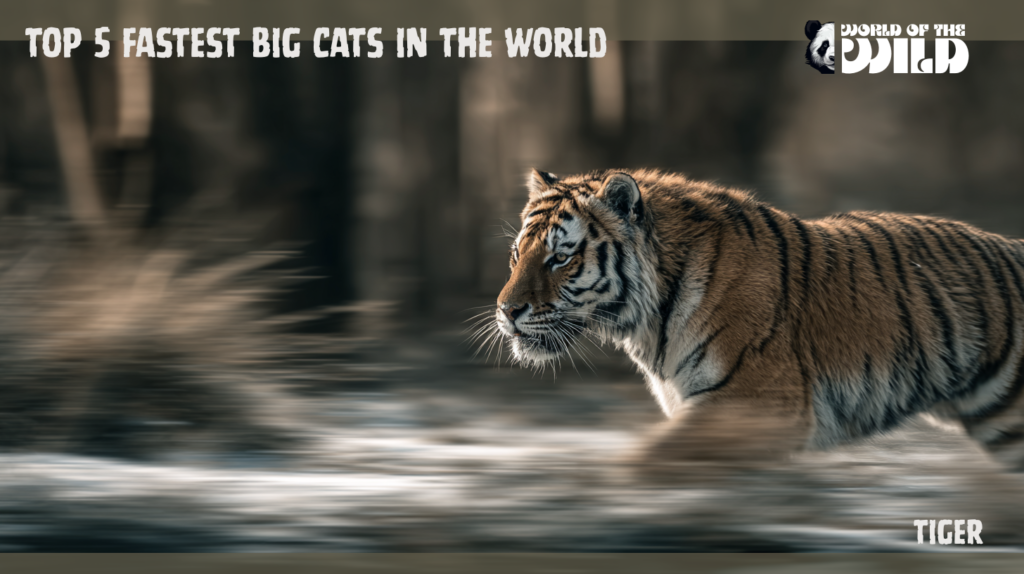
Rounding out our list is the tiger, capable of reaching speeds up to 40-50 mph (64-80 km/h). While slightly slower than the other big cats on this list, tigers compensate with incredible power, stealth, and versatility across diverse habitats. As the largest of all wild cats, with some Siberian tiger males exceeding 660 pounds, they prove that immense size need not preclude impressive speed.
Scientific name: Panthera tigris
Classification: Family Felidae, Subfamily Pantherinae
Tigers possess a muscular, elongated body with powerful shoulders and forelimbs that enable them to bring down prey much larger than themselves, including water buffalo and even young elephants. Their iconic orange coat with distinctive black stripes provides surprisingly effective camouflage in tall grass and forest shadows. Each tiger’s stripe pattern is unique—like human fingerprints—allowing researchers to identify individuals. Some populations include white tigers (leucistic individuals) and extremely rare golden tigers, both color variations resulting from recessive genes.
These magnificent predators once ranged from Turkey to the Russian Far East and south to Indonesia, occupying diverse habitats from tropical rainforests to Siberian snow forests. Today, fragmented populations of approximately 3,900 wild tigers survive primarily in India, Russia, Southeast Asia, and China. Tigers adapt to remarkably varied environments: Siberian tigers endure temperatures dropping to -40°F, while Sumatran tigers navigate steamy equatorial jungles.
As apex predators, tigers are obligate carnivores with diverse diets reflecting their wide geographic range. Prey includes deer, wild boar, water buffalo, and primates, with Siberian tigers occasionally hunting brown bears. An adult tiger requires 15-20 pounds of meat daily, though they can consume up to 88 pounds in a single feeding. Unlike lions, tigers are solitary hunters, relying on stealth, patience, and explosive power to ambush prey from close range.
Tigers are exceptional swimmers—unusual for cats—and will readily enter water to cool off, hunt aquatic prey, or cross rivers. They primarily hunt at night, using their excellent vision in low light conditions and their striped camouflage to approach to within 30 feet before launching a devastating charge. Their attack typically targets the neck or throat, with their powerful bite and massive paws capable of breaking the spine of large prey with a single swipe.
Sadly, all tiger subspecies are endangered or critically endangered, with three subspecies—the Caspian, Javan, and Bali tigers—already extinct. The remaining six subspecies face severe threats from poaching (particularly for use in traditional medicine), habitat destruction, human-wildlife conflict, and depleted prey populations. Tiger conservation has become a global priority, with international programs working to protect remaining populations and restore habitats.
Tigers hold profound cultural and spiritual significance across Asia, appearing in mythology, religion, and art as symbols of power, courage, and royalty. In Hindu mythology, the goddess Durga rides a tiger, while in Chinese culture, tigers represent protection and are considered one of the four sacred animals.
Surprising Fact: Unlike most cats that despise water, tigers are enthusiastic swimmers and have been observed swimming distances of up to 18 miles. In the Sundarbans mangrove forests of India and Bangladesh, tigers regularly swim between islands to hunt and have even been known to attack and kill prey while swimming—a behavior virtually unique among big cats.
Learn more about the Tiger here
Conclusion: Speed, Power, and the Wonder of Big Cats
From the cheetah’s unmatched acceleration to the tiger’s powerful versatility, these five fastest big cats represent the pinnacle of predatory evolution. Each species has carved its own ecological niche, developing unique adaptations that balance speed with power, stealth, and survival. Whether sprinting across African plains, leaping through American mountains, or stalking through Asian forests, these magnificent creatures continue to inspire awe and remind us of nature’s incredible diversity.
As human activities increasingly threaten these apex predators, understanding and appreciating their remarkable abilities becomes ever more crucial. By learning about these animals, we take the first step toward ensuring their survival for future generations to marvel at and study.
Ready to explore more incredible wildlife? Dive deeper into the natural world at World of the Wild, where we bring you closer to Earth’s most fascinating creatures. Subscribe to our newsletter for weekly wildlife insights, or browse our extensive collection of articles on conservation, animal behavior, and the wonders of nature!