
Introduction
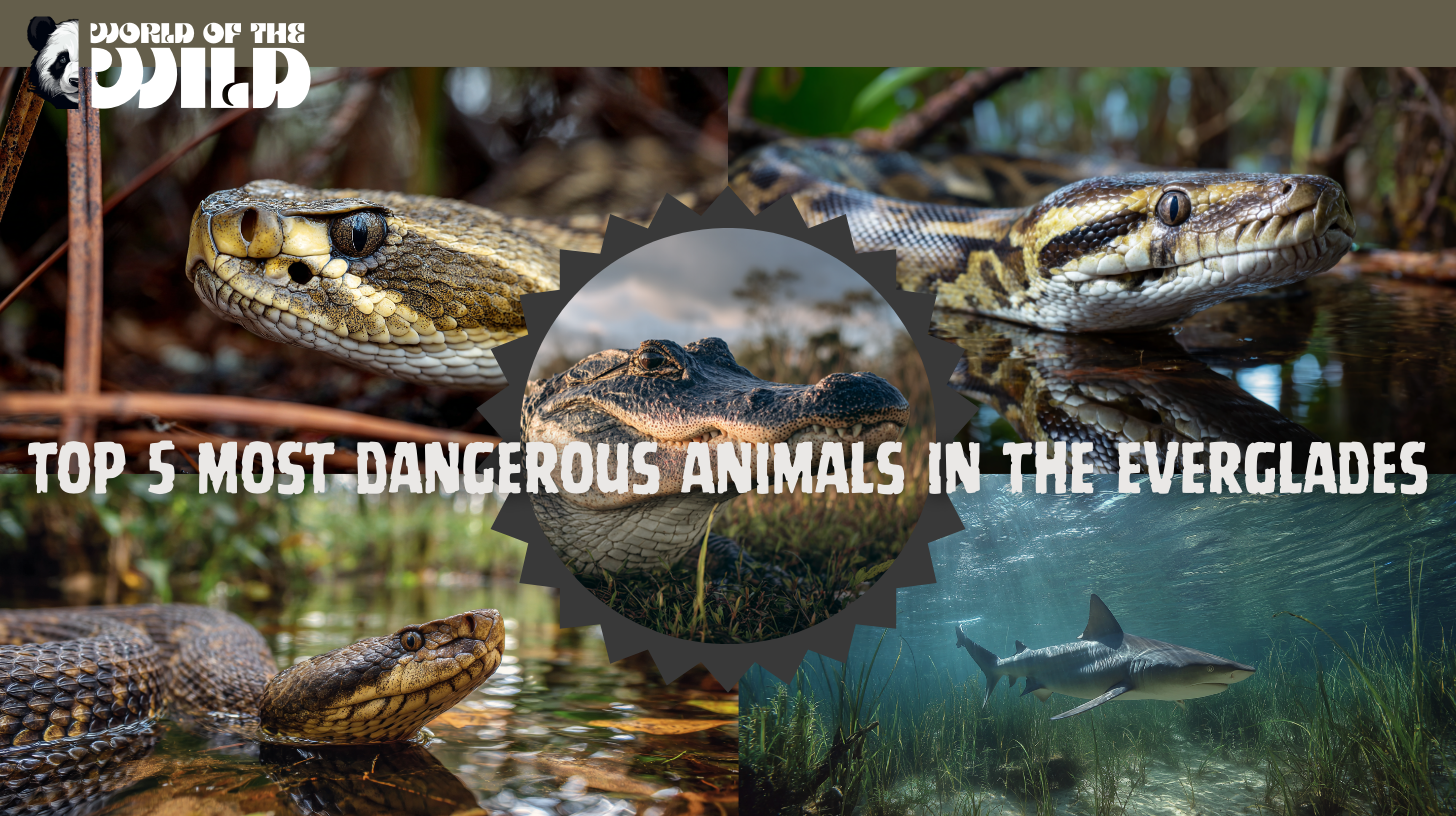
Florida’s wild landscapes—from the murky waters of the Everglades to the coastal estuaries along both coasts—harbor some of North America’s most formidable predators. This subtropical paradise isn’t just home to theme parks and beaches; it’s a thriving ecosystem where ancient reptiles, venomous serpents, and apex predators reign supreme. While these dangerous animals in Florida deserve our respect and caution, they also represent the incredible biodiversity that makes the Sunshine State a wildlife enthusiast’s dream destination.
The dangerous animals featured in this list aren’t just threats to be feared—they’re evolutionary masterpieces that have survived for millions of years, each perfectly adapted to their environment. From armored reptiles that have remained virtually unchanged since the age of dinosaurs to invasive species that have dramatically altered Florida’s ecosystem, these creatures tell stories of survival, adaptation, and the delicate balance of nature.
Understanding these animals is crucial for anyone living in or visiting Florida. Whether you’re hiking through cypress swamps, fishing in brackish waters, or simply exploring the state’s natural areas, knowing which wildlife commands extra caution can mean the difference between a memorable outdoor experience and a dangerous encounter. But beyond safety, appreciating these magnificent creatures deepens our connection to the natural world and reminds us why conservation efforts matter.
In this comprehensive guide, we’ll explore five of Florida’s most dangerous animals, diving deep into what makes each one a force to be reckoned with, where you might encounter them, and the fascinating adaptations that have made them such successful predators. Prepare to gain a newfound respect for the wild side of Florida.
5. Burmese Python – The Silent Constrictor Reshaping the Everglades
Scientific Name: Python bivittatus
Classification: Reptilia, Squamata, Pythonidae
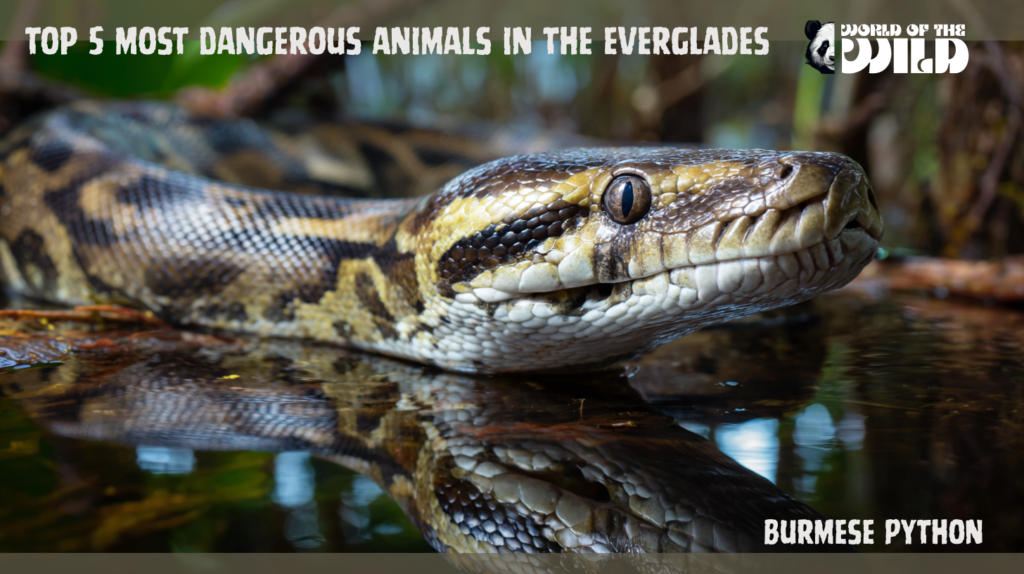
The Burmese python represents one of the most dramatic ecological disruptions in modern American history. This massive constrictor, native to Southeast Asia, has established a breeding population in South Florida that now numbers in the tens of thousands, fundamentally altering the Everglades ecosystem. While not native to Florida, this invasive species has proven so dangerous to the region’s wildlife that it absolutely earns its place among the state’s most formidable animals.
Physical Characteristics and Unique Features
Burmese pythons are among the largest snakes in the world, regularly reaching lengths of 16 to 23 feet, with exceptional specimens exceeding 26 feet. These impressive serpents can weigh up to 200 pounds, with girths as thick as a telephone pole. Their distinctive pattern features dark brown blotches outlined in black against a tan or golden background, creating a beautiful yet intimidating appearance. Their heads are relatively small compared to their massive bodies, but don’t let that fool you—they possess approximately 100 razor-sharp, backward-curving teeth designed to grip prey.
Habitat and Geographic Distribution
In Florida, Burmese pythons have established themselves primarily in the Everglades National Park, Big Cypress National Preserve, and surrounding areas of South Florida. They thrive in freshwater marshes, swamps, and along canal banks. Unlike many reptiles, these pythons are excellent swimmers and have been found in coastal areas and mangrove swamps. Their range continues to expand northward, though cold temperatures limit how far they can permanently establish populations.
Diet and Hunting Behaviors
These ambush predators are devastatingly effective hunters with a diet that has decimated native wildlife populations. Research has shown that in areas heavily populated by Burmese pythons, populations of raccoons have declined by 99.3%, opossums by 98.9%, and bobcats by 87.5%. They consume everything from rodents and birds to deer, alligators, and even the occasional household pet. Pythons hunt by detecting heat signatures through specialized pits along their jaws, striking with lightning speed before wrapping their muscular coils around prey and constricting until cardiac arrest occurs.
What Makes Them Dangerous
While attacks on humans are extremely rare, Burmese pythons are dangerous primarily due to their size and strength. There have been a handful of fatal attacks, mostly involving captive snakes and small children. The real danger lies in their ecological impact—they’re decimating native species that have no evolutionary defenses against these apex predators. A single python can consume dozens of native animals annually, disrupting food chains and threatening endangered species.
Surprising Fact: Female Burmese pythons can lay up to 100 eggs per clutch and have been observed using muscular contractions to generate heat and incubate their eggs—a remarkable behavior called shivering thermogenesis, rare among cold-blooded animals. This gives them a reproductive advantage in Florida’s climate, contributing to their explosive population growth.
4. Florida Cottonmouth (Water Moccasin) – The Swamp’s Venomous Guardian
Scientific Name: Agkistrodon conanti
Classification: Reptilia, Squamata, Viperidae
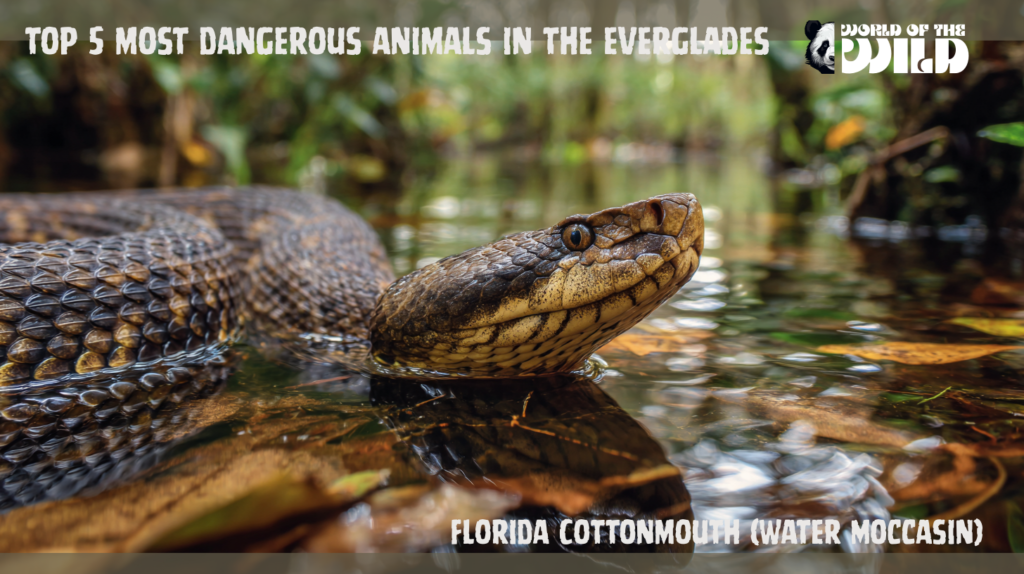
The Florida cottonmouth, commonly known as the water moccasin, is the Sunshine State’s only semi-aquatic venomous snake and one of the most misunderstood reptiles in North America. Recently recognized as a distinct species separate from the eastern cottonmouth, this formidable pit viper patrols Florida’s waterways with an attitude that demands respect. Their common name derives from the brilliant white interior of their mouths, which they display as a warning when threatened—a sight that has startled countless anglers and boaters.
Physical Characteristics and Unique Features
Florida cottonmouths are robust, heavy-bodied snakes typically measuring 30 to 48 inches in length, though exceptional individuals can exceed 6 feet. Adults range from dark brown to olive-green, often with faint crossbands that become obscured with age, making older specimens appear almost entirely black. Juveniles are more vibrantly patterned with distinct reddish-brown bands. The distinctive triangular head, elliptical pupils, and heat-sensing facial pits mark them as pit vipers. When threatened, they often hold their ground rather than fleeing, coiling their bodies and gaping their mouths wide to reveal that characteristic white lining—a final warning before striking.
Habitat and Geographic Distribution
These adaptable predators inhabit virtually every freshwater environment in Florida, from cypress swamps and marshes to lakeshores, rivers, and retention ponds. Unlike other water snakes, cottonmouths are frequently found basking on logs, stumps, or vegetation overhanging water. They’re most active at night during warmer months but can be encountered during the day, especially in spring and fall. Their range extends throughout Florida, with particularly high populations in the Everglades, Okefenokee Swamp region, and along the Gulf Coast.
Diet and Hunting Behaviors
Florida cottonmouths are opportunistic carnivores with a diverse menu including fish, frogs, salamanders, small turtles, baby alligators, birds, small mammals, and even other snakes. They’re ambush hunters, often waiting motionless near water’s edge or on floating vegetation. Younger cottonmouths employ a fascinating hunting technique called caudal luring—wiggling their bright yellow-tipped tails to mimic a worm or grub, attracting curious prey within striking distance. Their hemotoxic venom not only immobilizes prey but begins the digestive process before swallowing.
What Makes Them Dangerous
Cottonmouth bites, while rarely fatal with modern medical treatment, are medically significant and extremely painful. Their venom contains hemotoxins that destroy blood cells, damage tissue, and disrupt blood clotting. Bites can result in severe pain, massive swelling, necrosis, and in untreated cases, loss of limbs or death. Florida reports several hundred venomous snake bites annually, with cottonmouths accounting for a significant portion. Their tendency to stand their ground rather than retreat, combined with their proximity to human activity around water, increases encounter risk.
Surprising Fact: Florida cottonmouths can accurately strike at targets up to one-third their body length away, achieving strike speeds of up to 8 feet per second. Even more remarkable, they can modulate their venom delivery, sometimes administering “dry bites” with little or no venom—possibly a conservation strategy since venom is metabolically expensive to produce.
Learn more in-depth information about the amazing Florida Cottonmouth here at World of the Wild
3. Bull Shark – The Fearless Predator of Fresh and Saltwater
Scientific Name: Carcharhinus leucas
Classification: Chondrichthyes, Carcharhiniformes, Carcharhinidae
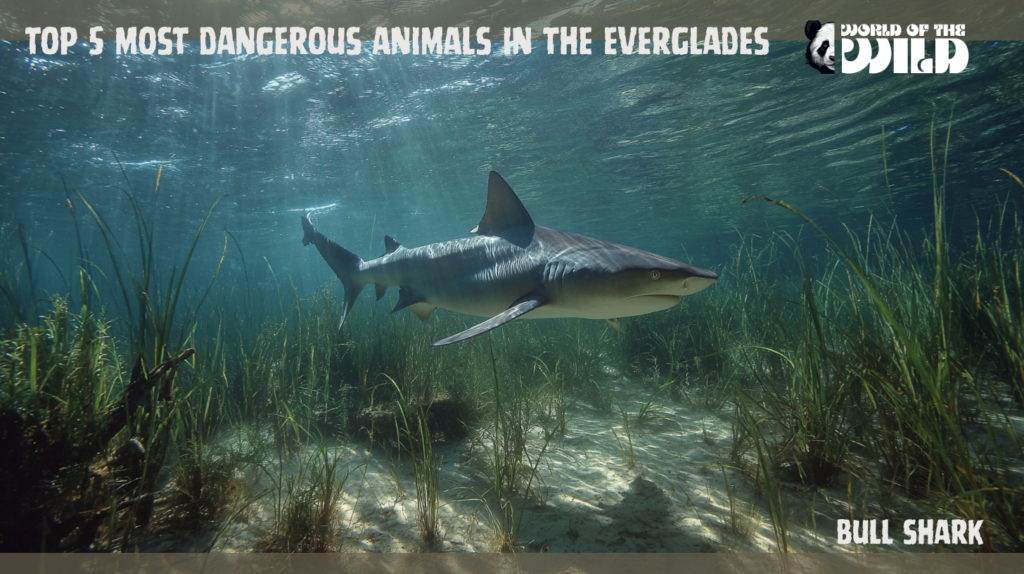
The bull shark deserves its reputation as one of the ocean’s most formidable predators—and one of the most dangerous to humans. Unlike most shark species that stick to saltwater, bull sharks possess a remarkable ability to thrive in both marine and freshwater environments, regularly venturing miles up Florida’s rivers and into brackish estuaries. This adaptation, combined with their aggressive temperament, powerful build, and tendency to inhabit shallow coastal waters where humans swim, makes them particularly dangerous. Many experts consider bull sharks responsible for more nearshore attacks than any other species, including the more famous great white.
Physical Characteristics and Unique Features
Bull sharks are stocky, powerful predators typically reaching 7 to 11.5 feet in length and weighing between 200 and 500 pounds, with females significantly larger than males. They’re characterized by their robust, torpedo-shaped bodies, broad, flat snouts, and small eyes—a build that reflects pure predatory power. Their coloration features gray on top fading to white underneath, providing perfect counter-shading camouflage. Bull sharks possess one of the highest bite forces of any shark species relative to their size, with a bite force measured at over 1,300 pounds per square inch—strong enough to crush sea turtle shells.
Habitat and Geographic Distribution
In Florida, bull sharks frequent coastal waters, bays, estuaries, and remarkably, freshwater rivers. They’ve been documented hundreds of miles up the Mississippi River and regularly patrol Florida’s major waterways including the St. Johns River, Indian River Lagoon, and various Gulf Coast estuaries. During warmer months, they congregate in shallow waters along both Florida coasts, often in murky conditions with limited visibility. Females seek out brackish nursery areas to give birth, with many young bull sharks spending their first years in Florida’s protected estuaries before moving to deeper waters.
Diet and Hunting Behaviors
Bull sharks are apex predators with incredibly varied diets including bony fish, smaller sharks and rays, sea turtles, dolphins, birds, crustaceans, and occasionally terrestrial mammals that venture into water. They’re opportunistic hunters known for their “bump-and-bite” technique—using their snout to investigate potential prey before attacking. Their ability to hunt in murky water is enhanced by excellent electroreception through their ampullae of Lorenzini, which detect electrical fields produced by living organisms. Bull sharks often hunt alone but may congregate around abundant food sources.
What Makes Them Dangerous
Bull sharks are considered one of the three most dangerous shark species to humans (alongside great whites and tiger sharks). Their preference for shallow, murky coastal waters means frequent overlap with human swimmers, surfers, and fishermen. They’re responsible for numerous unprovoked attacks on humans in Florida waters annually, though fatalities remain rare. Their aggressive temperament, powerful build, and high testosterone levels (higher than any other animal, including terrestrial mammals) contribute to their dangerous reputation. The International Shark Attack File attributes more nearshore attacks to bull sharks than any other species.
Surprising Fact: Bull sharks possess specialized kidneys and rectal glands that allow them to osmoregulate—actively controlling their internal salt concentration to survive in freshwater. They can adjust their physiology within hours when moving between salt and freshwater, an ability extremely rare among sharks. This adaptation has allowed bull sharks to be found in Lake Nicaragua, the Amazon River system, and even a golf course pond in Australia!
Learn more about the amazing Bull Shark here at World of the Wild
2. Eastern Diamondback Rattlesnake – The King of North American Vipers
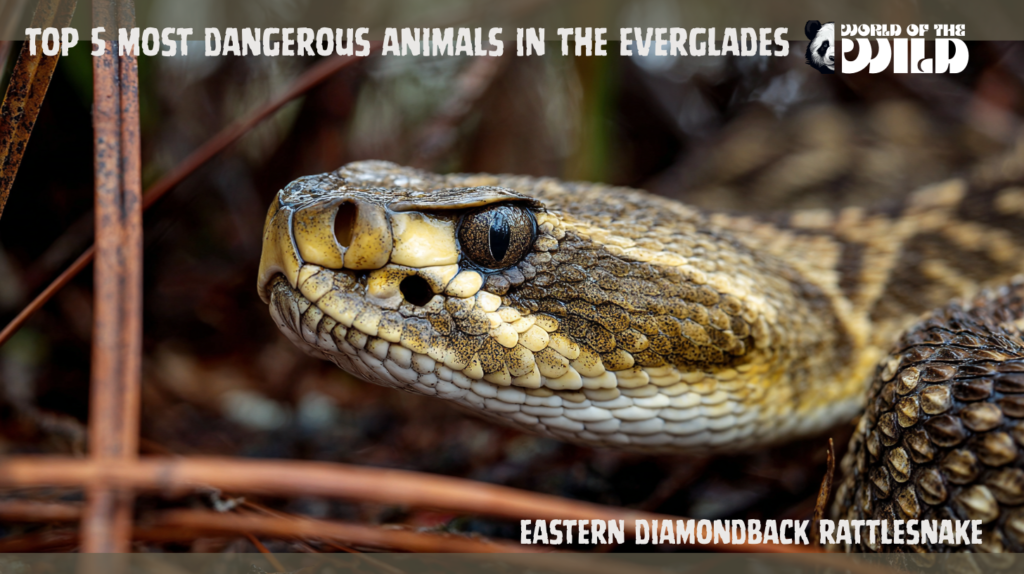
Scientific Name: Crotalus adamanteus
Classification: Reptilia, Squamata, Viperidae
The eastern diamondback rattlesnake reigns as North America’s largest venomous snake and one of the most iconic reptiles of the southeastern United States. This magnificent serpent embodies both beauty and danger, with its geometric diamond pattern and intimidating presence. In Florida’s pine flatwoods, palmetto scrublands, and coastal dunes, this apex predator commands respect from all who encounter it. The distinctive rattle at the tail’s tip—a series of interlocking keratin segments that produce the snake’s legendary warning sound—has saved countless lives by advertising the snake’s presence to potential threats.
Physical Characteristics and Unique Features
Eastern diamondback rattlesnakes are impressive reptiles, typically measuring 3 to 6 feet in length, though exceptional specimens can exceed 8 feet and weigh over 10 pounds. Their most striking feature is the pattern of dark diamond-shaped markings outlined in cream or yellow scales running along their backs. Two diagonal light-colored lines cross their faces, and their tails feature distinctive black and white bands above the rattle. As pit vipers, they possess heat-sensing organs between their eyes and nostrils, allowing them to detect warm-blooded prey even in complete darkness. Their fangs—up to one inch long—are hinged and fold against the roof of the mouth when not in use.
Habitat and Geographic Distribution
These rattlesnakes prefer dry, well-drained habitats including longleaf pine forests, turkey oak sandhills, palmetto flatwoods, and coastal dune systems throughout Florida. They’re often found near gopher tortoise burrows, which provide essential shelter from temperature extremes and fires. Eastern diamondbacks have experienced significant population declines due to habitat loss and persecution, with their range now fragmented across the Southeast. In Florida, healthy populations persist in areas like the Apalachicola National Forest, Archbold Biological Station, and various state wildlife management areas.
Diet and Hunting Behaviors
Eastern diamondbacks are ambush predators that feed primarily on rabbits, cotton rats, squirrels, and ground-dwelling birds. They hunt by lying motionless along game trails or near burrows, waiting for prey to pass within striking range. Their venom is a complex cocktail containing hemotoxins and cytotoxins that rapidly immobilize prey while beginning tissue breakdown. After striking, they typically release the prey and use their forked tongues and Jacobson’s organ to chemically trail the dying animal. A single large meal can sustain an adult rattlesnake for weeks or even months.
What Makes Them Dangerous
The eastern diamondback possesses the most potent venom of any North American pit viper and delivers the largest venom yield per bite—up to 800 milligrams, though the average is 400-450 milligrams. Their venom causes severe tissue damage, internal bleeding, and can lead to shock, kidney failure, and death if untreated. Before the development of antivenom, mortality rates from eastern diamondback bites approached 30%. Even with modern medical care, bites require immediate hospitalization and often result in permanent tissue damage. Their willingness to defend themselves when cornered, combined with their camouflaged appearance, makes accidental encounters particularly dangerous.
Surprising Fact: Eastern diamondback rattlesnakes can live over 20 years in the wild and continue to add a new rattle segment each time they shed their skin, which can occur multiple times per year. Contrary to popular belief, you cannot determine a rattlesnake’s age by counting rattle segments, as terminal segments frequently break off. Additionally, these snakes can strike at distances up to two-thirds their body length, meaning a 6-foot snake has a striking range of approximately 4 feet!
Learn more about the amazing Eastern Diamondback Rattlesnake here at World of the Wild
1. American Alligator – Florida’s Prehistoric Apex Predator
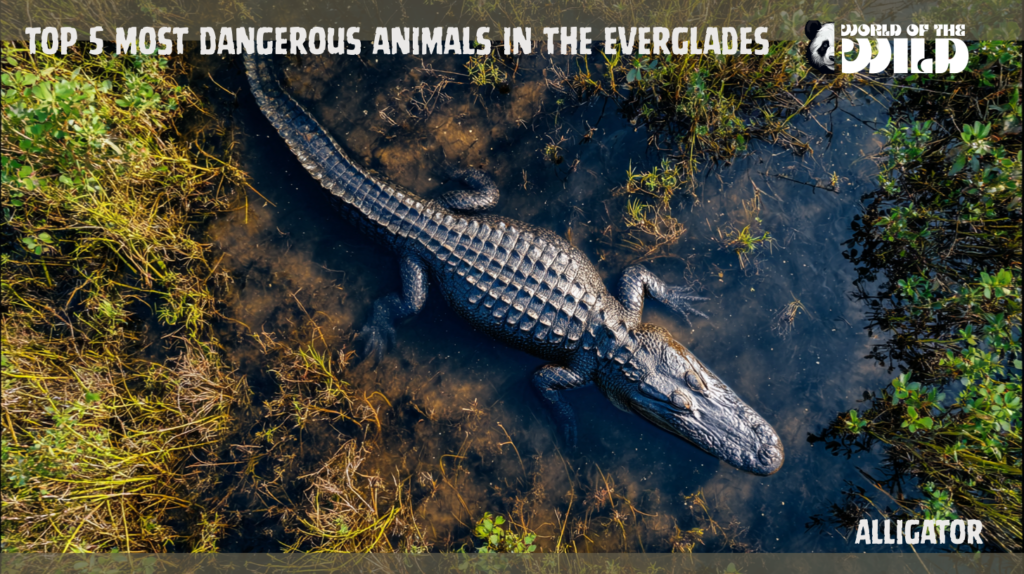
Scientific Name: Alligator mississippiensis
Classification: Reptilia, Crocodylia, Alligatoridae
The American alligator stands as Florida’s undisputed ruler of freshwater habitats and one of the state’s most iconic animals. These living fossils have prowled wetlands largely unchanged for millions of years, representing one of evolution’s most successful designs. With an estimated 1.3 million alligators residing in Florida—meaning virtually every body of freshwater contains at least one—encounters are not a question of if, but when. Despite their abundance and proximity to human development, alligators have garnered both fear and fascination, serving as ambassadors for Florida’s wild places while reminding us that we share this landscape with powerful predators.
Physical Characteristics and Unique Features
American alligators are formidable reptiles with males averaging 11 to 15 feet in length and weighing 500 to 1,000 pounds, while females typically reach 8 to 10 feet. The largest alligator ever officially recorded in Florida measured 14 feet 3.5 inches. Their armored bodies are covered with thick, bony plates called osteoderms embedded beneath their skin, providing protection from rivals and prey. Alligators possess 74 to 80 teeth designed for gripping rather than chewing, and they continuously replace lost teeth throughout their lives—up to 3,000 teeth in a lifetime. Their powerful tails make up nearly half their body length and serve as rudders for swimming and devastating weapons in combat. Perhaps most impressive is their bite force—measured at over 2,900 pounds per square inch, among the strongest of any living animal.
Habitat and Geographic Distribution
American alligators inhabit freshwater environments throughout Florida, including swamps, marshes, rivers, lakes, ponds, and even roadside ditches and golf course water hazards. They can tolerate brackish water but prefer freshwater. These reptiles are found in all 67 Florida counties, with the highest concentrations in the Everglades, Lake Okeechobee, the St. Johns River system, and numerous coastal wetlands. They’ve demonstrated remarkable adaptability to human-altered landscapes, thriving in retention ponds and canals in suburban developments—a testament to their resilience but also a source of human-wildlife conflict.
Diet and Hunting Behaviors
Alligators are opportunistic apex predators with diets that change as they grow. Juveniles consume insects, crustaceans, and small fish, while adults take progressively larger prey including turtles, snakes, fish, birds, and mammals up to the size of deer or wild hogs. They hunt primarily by ambush, remaining motionless with just their eyes and nostrils above water before exploding forward in a burst of speed that can exceed 30 mph over short distances. Alligators employ a hunting technique called the “death roll”—gripping prey and spinning rapidly to disorient, drown, and tear apart animals too large to swallow whole. They often cache large kills underwater beneath logs or in underwater caves, allowing the meat to soften before consumption.
What Makes Them Dangerous
While alligators typically avoid humans, they’re responsible for an average of 8 to 10 unprovoked bites annually in Florida, with approximately one fatal attack every three years. Danger escalates during mating season (April-June) when males become territorial, and in fall when alligators feed heavily before winter. Feeding alligators is not only illegal but extremely dangerous, as it eliminates their natural wariness of humans and associates people with food. Large alligators can drag adult humans into water and are capable of inflicting catastrophic injuries with their powerful jaws. Their prehistoric hunting instincts, combined with their abundance and proximity to human activity, make them Florida’s most dangerous animal.
Surprising Fact: American alligators are remarkable survivors that played a crucial role in their ecosystem even when resting. During droughts, alligators dig “gator holes”—depressions that hold water when surrounding areas dry up. These vital refuges save countless fish, turtles, wading birds, and other wildlife during dry seasons, making alligators a keystone species. Additionally, alligator mothers are devoted parents, guarding their nests for 65 days and protecting hatchlings for up to two years—extraordinary maternal care for a reptile. The gender of hatchlings is determined by nest temperature, with temperatures below 86°F producing females and above 93°F producing males!
Learn more about the amazing Alligator here at World of the Wild
Conclusion
Florida’s most dangerous animals represent far more than threats to human safety—they’re integral threads in the complex tapestry of one of America’s most biodiverse regions. From the American alligator’s prehistoric prowess to the invasive Burmese python’s devastating impact, these five species showcase nature’s raw power and adaptability. Understanding and respecting these magnificent creatures allows us to coexist safely while appreciating the wild heart that still beats throughout the Sunshine State.
Ready to explore more of Florida’s incredible wildlife? Dive deeper into the fascinating world of nature at World of the Wild (www.worldofthewild.net), where we celebrate the remarkable creatures that share our planet. Discover more wildlife profiles, conservation stories, and nature adventures that will inspire your next outdoor exploration!