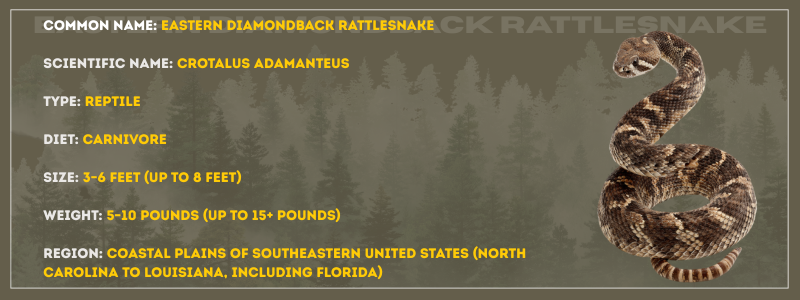

A thick-bodied serpent coils beneath the palmetto fronds, its diamond-patterned scales rippling in the dappled sunlight. The unmistakable buzz of its rattle fills the air—a warning that has echoed through the pine forests and coastal plains of the American Southeast for millions of years. This is the Eastern Diamondback Rattlesnake, Crotalus adamanteus, the largest and perhaps most formidable venomous snake in North America.
Despite its fearsome reputation, this magnificent reptile is far more than a dangerous predator to be avoided. The Eastern Diamondback is an evolutionary masterpiece, a critical ecosystem engineer that controls rodent populations, and increasingly, a symbol of the wild places that are rapidly disappearing from our landscape. Understanding this remarkable creature reveals not just the intricate biology of a top predator, but also the delicate balance of the ecosystems it calls home.
Facts
- The Eastern Diamondback possesses the longest fangs of any rattlesnake species in the world, measuring up to an inch in length and capable of delivering venom deep into prey or threats.
- Unlike most snakes that flee when threatened, Eastern Diamondbacks often stand their ground, coiling defensively and rattling vigorously, making them one of the few snake species that regularly warn potential threats before striking.
- A single Eastern Diamondback can produce enough venom in one bite to kill several adult humans, though they typically inject only a portion of their venom supply in defensive strikes.
- These rattlesnakes have heat-sensing pit organs located between their eyes and nostrils that can detect temperature differences as small as 0.003 degrees Celsius, allowing them to “see” warm-blooded prey in complete darkness.
- Eastern Diamondbacks are surprisingly long-lived for snakes, with individuals in the wild documented to reach over 20 years of age, and captive specimens living even longer.
- The rattle segments on an Eastern Diamondback’s tail do not indicate its age—new segments are added each time the snake sheds its skin, which can happen multiple times per year, and segments can break off over time.
- This species exhibits remarkable site fidelity, often returning to the same den sites, hunting grounds, and even individual gopher tortoise burrows year after year throughout their lives.
Species
The Eastern Diamondback Rattlesnake belongs to the animal kingdom’s hierarchical classification as follows: Kingdom Animalia, Phylum Chordata, Class Reptilia, Order Squamata, Family Viperidae, Genus Crotalus, and Species adamanteus. The genus name Crotalus derives from the Greek word for “castanet,” referring to the distinctive rattle, while adamanteus means “adamantine” or “diamond-like,” describing the bold geometric patterns adorning its back.
The Eastern Diamondback is one of approximately 36 species in the genus Crotalus, which encompasses the true rattlesnakes of the Americas. It is most closely related to other large-bodied rattlesnake species, particularly its western counterpart, the Western Diamondback Rattlesnake (Crotalus atrox). While no subspecies of the Eastern Diamondback are currently recognized, regional variations in size and coloration do exist across its range.
Other notable relatives include the Mojave Rattlesnake (Crotalus scutulatus), the Timber Rattlesnake (Crotalus horridus), and the Canebrake Rattlesnake, which some taxonomists consider a subspecies of the Timber Rattlesnake. The Eastern Diamondback represents the pinnacle of size among these relatives, holding the distinction of being North America’s heaviest venomous snake.
Appearance
The Eastern Diamondback Rattlesnake is an imposing serpent, averaging between three and six feet in length, with exceptional individuals reaching up to eight feet. This makes it not only the longest rattlesnake species but also the heaviest, with large adults weighing between 5 and 10 pounds, and exceptional specimens tipping the scales at 15 pounds or more. Their substantial girth, often as thick as a human forearm, contributes to their intimidating presence.
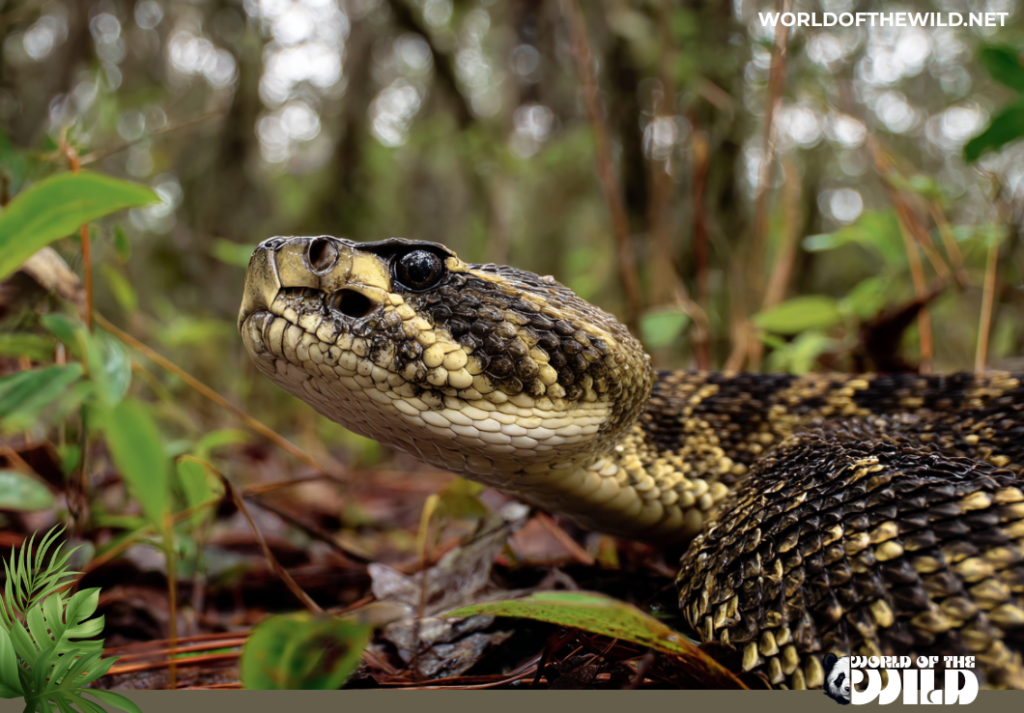
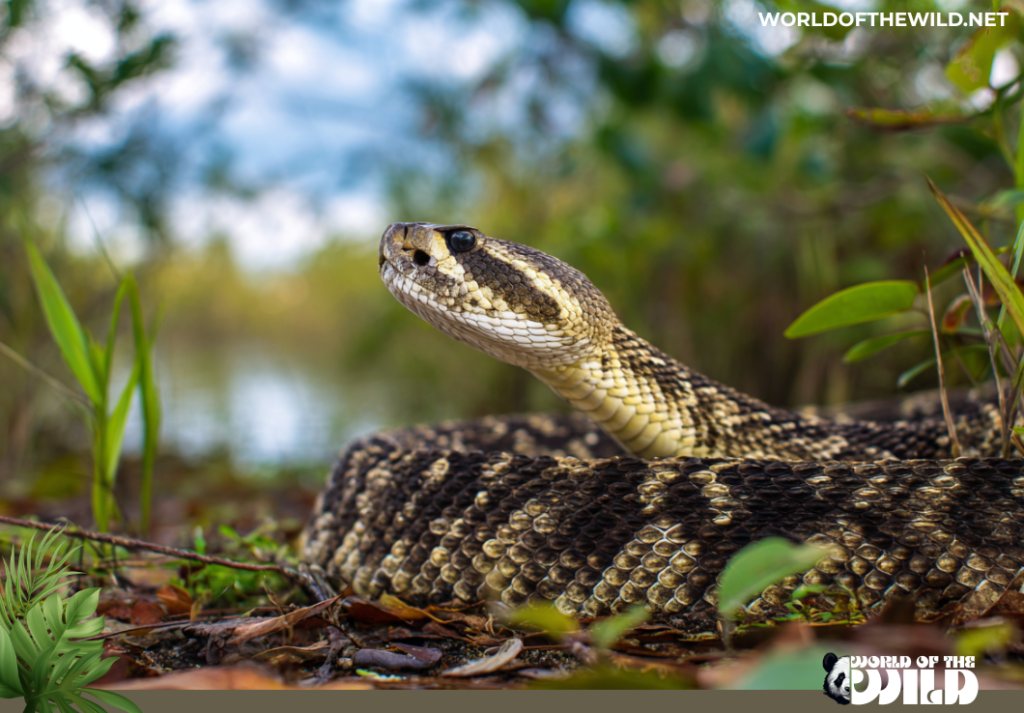
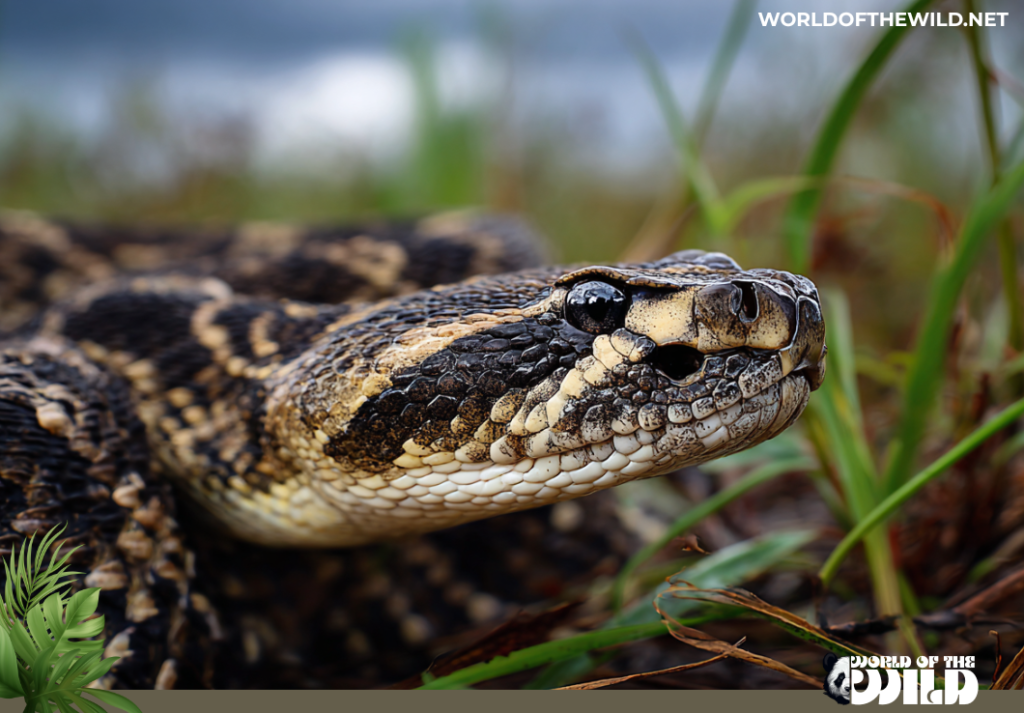
The snake’s most striking feature is the series of dark brown or black diamond-shaped patterns that run the length of its body against a background of brownish-yellow, olive, or grayish-brown. Each diamond is outlined by a row of cream or yellowish scales, creating a strikingly beautiful and intricate mosaic. This pattern provides excellent camouflage among fallen leaves, pine needles, and the dappled shadows of their forest floor habitat.
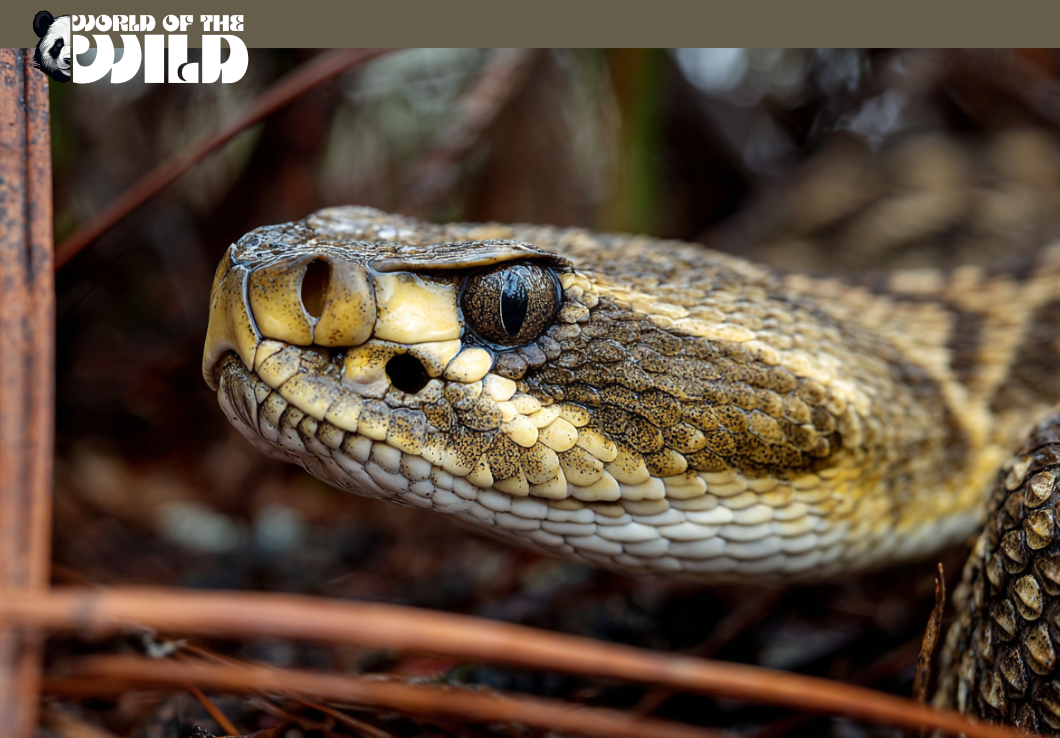
The head is large and distinctly triangular, clearly demarcated from the neck, and features two diagonal light-colored stripes that run from the eye to the jaw. The eyes themselves have vertical, elliptical pupils characteristic of pit vipers. Two facial pits, the heat-sensing organs that give pit vipers their name, are prominently positioned between the nostril and eye on each side of the head.
The tail culminates in the famous rattle, a segmented structure of modified scales that produces the characteristic buzzing sound when vibrated. The tail itself is usually banded with stark black and white or gray rings. Young Eastern Diamondbacks possess the same pattern as adults but often display more vivid coloration, with brighter yellows and more contrasting diamonds.
Behavior
Eastern Diamondback Rattlesnakes are primarily solitary creatures, coming together only during the breeding season or when environmental conditions force multiple individuals to share limited resources like den sites or thermal refugia. They are generally most active during the cooler parts of the day—early morning and evening during warmer months—exhibiting crepuscular behavior patterns. During the hottest summer months, they may become primarily nocturnal, while during cooler spring and fall periods, they shift to diurnal activity to maximize heat absorption.
These snakes are ambush predators par excellence, often spending hours or even days coiled motionless in a strategic location, waiting for prey to come within striking distance. When hunting, they rely heavily on their heat-sensing pit organs to detect warm-blooded prey, remaining perfectly still until the moment of attack arrives. After striking and envenomating prey, they typically release it and wait for the venom to take effect before tracking the animal using their highly developed sense of smell.
Communication in Eastern Diamondbacks centers primarily on chemical signals detected through their forked tongue and Jacobson’s organ, allowing them to track prey, identify potential mates, and detect threats. The iconic rattle serves as an acoustic warning system, a defensive adaptation that alerts potential predators to their presence and venomous nature. Interestingly, recent research suggests that some populations are rattling less frequently, possibly in response to human persecution—snakes that rattle readily are more easily found and killed.
Eastern Diamondbacks demonstrate impressive site fidelity and spatial memory, returning to the same hunting grounds, basking sites, and winter refugia year after year. They heavily utilize gopher tortoise burrows as shelter from temperature extremes and predators, often becoming dependent on these structures for survival. Their intelligence, while difficult to measure in traditional terms, manifests in their ability to learn and remember locations, modify hunting strategies based on prey type, and exhibit individual personality differences in defensive behavior.
Evolution
The evolutionary story of the Eastern Diamondback Rattlesnake extends back approximately 20 to 25 million years to the Miocene epoch, when the rattlesnake lineage first diverged from other pit vipers. The family Viperidae itself has much deeper roots, with fossil evidence suggesting pit vipers emerged during the Oligocene epoch, roughly 30 million years ago. However, the distinctive rattle—the defining characteristic of rattlesnakes—represents a relatively recent evolutionary innovation within the broader viper family.
The genus Crotalus likely originated in Mexico or Central America before diversifying and radiating northward into what is now the United States. The Eastern Diamondback and its close relatives, the Western Diamondback and other large-bodied rattlesnakes, probably shared a common ancestor during the Pliocene epoch, roughly 5 million years ago, before populations became geographically isolated and diverged into distinct species.
Key evolutionary adaptations that define the Eastern Diamondback include the development of sophisticated heat-sensing pit organs, which allow detection of warm-blooded prey in darkness or dense vegetation; highly specialized hemotoxic venom that evolved to immobilize and begin digesting prey; retractable, hinged fangs that can deliver venom deep into prey tissue; and the rattle itself, an evolutionary innovation unique to rattlesnakes that serves as an honest signal of the snake’s dangerous nature.
The evolutionary pressures that shaped the Eastern Diamondback into its current form likely included predation pressure from large birds of prey and mammals, competition with other predators for rodent prey, and the diverse habitat mosaic of pine forests, sandhills, and coastal plains of the southeastern United States. The species appears to be well-adapted to the fire-maintained pine ecosystems that historically dominated much of its range, suggesting a long co-evolutionary relationship with these fire-dependent habitats.
Habitat
The Eastern Diamondback Rattlesnake has a relatively restricted geographic range compared to many North American snake species, primarily inhabiting the coastal plains of the southeastern United States. Its range extends from southeastern North Carolina southward through South Carolina, Georgia, Florida, and into portions of southern Alabama, Mississippi, and extreme eastern Louisiana. The species reaches its highest densities in Florida and coastal Georgia, where suitable habitat remains most abundant.
This rattlesnake shows a strong preference for specific habitat types within its range. Longleaf pine forests represent the historical core habitat for the species, particularly pine flatwoods and sandhills where an open canopy allows sunlight to reach the forest floor, promoting a diverse ground cover of grasses and palmetto. These fire-maintained ecosystems historically covered vast areas of the Southeast before being largely cleared for agriculture and timber production.
Coastal dune habitats, maritime hammocks, and coastal scrub also support Eastern Diamondback populations, particularly in Florida. The snakes utilize a variety of microhabitats within these ecosystems, including palmetto thickets, wiregrass prairies, and the ecotones between different vegetation types. A critical habitat requirement is the presence of gopher tortoise burrows, which provide refuge from temperature extremes, predators, and fire. In areas where gopher tortoises have been extirpated, Eastern Diamondback populations often decline or disappear.
The species is largely absent from heavily forested areas with closed canopies, preferring more open habitats where they can thermoregulate effectively. They are typically found from sea level to only a few hundred feet in elevation, rarely venturing into upland or mountainous regions. During winter months in the northern portions of their range, Eastern Diamondbacks seek out winter refugia such as gopher tortoise burrows, stump holes, or other underground retreats where they can avoid freezing temperatures.
Diet
The Eastern Diamondback Rattlesnake is a strict carnivore, specializing primarily in warm-blooded prey. Adult Eastern Diamondbacks feed predominantly on small to medium-sized mammals, with cotton rats, marsh rabbits, and various species of mice comprising the bulk of their diet. They also consume gray squirrels, young raccoons, opossums, and occasionally take birds, particularly ground-nesting species and their eggs.
Juvenile Eastern Diamondbacks have a somewhat different diet than adults, initially feeding on smaller prey such as lizards, frogs, and small rodents before transitioning to larger mammalian prey as they grow. This ontogenetic diet shift reflects their increasing size and the corresponding increase in venom yield and fang length, which allows them to handle larger prey items safely.
As ambush predators, Eastern Diamondbacks employ a sit-and-wait hunting strategy. They select locations along animal trails, near burrow entrances, or at the base of trees where rodents are likely to travel, then remain motionless for extended periods. When prey comes within range—typically within one to two body lengths—the snake strikes with remarkable speed, often completing the strike in less than a tenth of a second. The long, hinged fangs penetrate deeply, delivering a dose of hemotoxic venom before the snake releases its grip.
The venom serves dual purposes: it immobilizes prey quickly, preventing escape and reducing the risk of injury to the snake from struggling prey, and it begins the digestive process by breaking down tissues. After the strike, the snake uses its tongue to chemically track the envenomated prey, following the scent trail until it locates the now-incapacitated or dead animal. Large prey items may take several days to digest, and Eastern Diamondbacks can survive for months between meals if necessary, making them well-adapted to environments where prey availability fluctuates seasonally.
Predators and Threats
Despite their formidable defensive capabilities, Eastern Diamondback Rattlesnakes face predation from several species. Large birds of prey represent the most significant natural predators, with red-tailed hawks, great horned owls, and particularly red-shouldered hawks known to hunt rattlesnakes. The Crested Caracara, a bird of prey found in Florida, also includes rattlesnakes in its diet. Mammalian predators include feral hogs, which have expanded dramatically across the Southeast and actively hunt and kill snakes, and occasionally bobcats, coyotes, and domestic dogs.
Perhaps the most specialized rattlesnake predator is the Eastern Indigo Snake, North America’s largest native snake species, which is immune to rattlesnake venom and actively hunts them. King snakes also possess resistance to pit viper venom and occasionally prey on juvenile Eastern Diamondbacks. Young snakes face additional predation pressure from a wider array of predators, including larger snakes, wading birds, and small carnivorous mammals.
However, the greatest threats to Eastern Diamondback populations are anthropogenic. Habitat loss represents the primary factor driving population declines. The conversion of longleaf pine forests and other natural habitats to agriculture, urban development, and pine plantations has eliminated an estimated 97 percent of the species’ historical habitat. Remaining habitat fragments are often too small or isolated to support viable populations.
Rattlesnake roundups and persecution by humans have historically killed thousands of Eastern Diamondbacks annually. Although these events have declined or been reformed in recent years, many snakes are still killed on sight due to fear and misunderstanding. Road mortality takes a significant toll, particularly on pregnant females moving to birthing sites. Climate change poses emerging threats through sea-level rise affecting coastal populations, altered fire regimes affecting habitat quality, and potential shifts in prey availability. Additionally, the decline of gopher tortoise populations—themselves a threatened species—removes critical burrow habitat that Eastern Diamondbacks depend upon for survival.
Reproduction and Life Cycle
Eastern Diamondback Rattlesnakes reach sexual maturity relatively late compared to many snake species, typically at four to five years of age for males and six to seven years for females, though this can vary based on growth rates and environmental conditions. The breeding season occurs during the late summer and fall months, typically from July through October, with peak activity in August and September.
During the breeding season, males become more active, traveling greater distances in search of receptive females. When multiple males encounter the same female, they may engage in combat rituals—not biting, but rather wrestling matches where they intertwine and attempt to pin each other to the ground, with the dominant male earning breeding rights. Courtship involves the male following the female, touching her with his chin along her body, and aligning his tail with hers for mating.
Eastern Diamondbacks are ovoviviparous, meaning females retain eggs internally and give birth to live young. The gestation period lasts approximately six to seven months, with females typically giving birth in late summer, from late July through September. Litter sizes range from 7 to 21 offspring, with an average of around 10 to 12, though larger, older females tend to produce larger litters.
Neonates are born fully formed and measure between 12 and 15 inches in length. They possess functional fangs and venom from birth, capable of defending themselves immediately. The newborns feature a distinctive bright yellow or greenish tail tip, which they use as a lure to attract small prey through caudal luring behavior—wriggling the tail to mimic a caterpillar or worm. This yellow tail tip fades as the snake matures.
Female Eastern Diamondbacks provide no parental care after birth, with the young immediately dispersing to find shelter and begin hunting small prey. Female reproductive cycles are biennial or even triennial, meaning females typically reproduce only every two to three years due to the high energetic costs of producing large offspring.
The growth rate depends heavily on prey availability and environmental conditions, but Eastern Diamondbacks generally grow continuously throughout their lives, though growth rates slow considerably after reaching sexual maturity. In the wild, average lifespan is estimated at 15 to 20 years, though individuals in protected environments or captivity can live 25 years or more.
Population
The Eastern Diamondback Rattlesnake is currently not listed under the U.S. Endangered Species Act, though it is considered a candidate species in North Carolina and is listed as threatened or of special concern in several states within its range. The International Union for Conservation of Nature (IUCN) currently classifies the species as “Least Concern,” though many herpetologists argue this classification does not accurately reflect the species’ precarious status and significant population declines.
Estimating the total population of Eastern Diamondback Rattlesnakes is extremely difficult due to their cryptic nature, low population densities, and the vast geographic area they inhabit. No comprehensive population estimate exists for the species, but localized studies suggest dramatic declines. In many areas where the species was once common, it has become exceedingly rare or locally extirpated. Some researchers estimate that populations may have declined by 70 to 90 percent or more from historical levels.
Population trends are decidedly negative across most of the species’ range. The most severe declines have occurred in the northern portions of the range, particularly in North Carolina, South Carolina, and Louisiana, where the species has disappeared from many historical localities. Even in Florida, which harbors the species’ core populations, the Eastern Diamondback has vanished from extensive areas of previously occupied habitat.
Several factors contribute to the difficulty in conserving this species beyond habitat loss and direct persecution. The Eastern Diamondback’s low reproductive rate, late age at maturity, and biennial or triennial reproductive cycles mean populations cannot quickly recover from losses. The species’ dependence on gopher tortoise burrows creates a conservation link between two declining species, meaning effective conservation requires protecting both. Additionally, the fragmented nature of remaining populations raises concerns about genetic isolation and inbreeding depression in small, isolated populations.
Conclusion
The Eastern Diamondback Rattlesnake stands as both an apex predator and an indicator species for the health of the Southeast’s remaining wild places. This magnificent serpent, armored in diamonds and wielding one of nature’s most sophisticated venom delivery systems, represents millions of years of evolutionary refinement. Yet despite its fearsome adaptations, the Eastern Diamondback faces a deeply uncertain future, victim to the same forces that have transformed the longleaf pine forests from one of North America’s dominant ecosystems to scattered remnants.
Understanding and appreciating the Eastern Diamondback requires looking past fear and recognizing the snake’s critical ecological role in controlling rodent populations, its remarkable adaptations, and its intrinsic right to exist in the wild landscapes where it has thrived for millennia. The fate of this species is inseparable from the fate of the fire-maintained pine ecosystems and the gopher tortoises that share its habitat—protecting one means protecting all.
If we are to prevent the Eastern Diamondback from following the path to extinction, we must prioritize habitat conservation and restoration, particularly the preservation and restoration of longleaf pine ecosystems. We must also combat the fear and misunderstanding that leads to unnecessary killing of these animals and support educational efforts that foster coexistence. The Eastern Diamondback Rattlesnake doesn’t need our fear—it needs our respect, our understanding, and our commitment to preserving the wild spaces it calls home.
Scientific Name: Crotalus adamanteus
Diet Type: Carnivore
Size: 3–6 feet (up to 8 feet)
Weight: 5–10 pounds (up to 15+ pounds)
Region Found: Coastal plains of southeastern United States (North Carolina to Louisiana, including Florida)