
Slicing through the water with a torpedo-shaped body built for one purpose—the hunt—the Great White Shark represents nature’s masterwork in predatory design. For over 400 million years, sharks have patrolled Earth’s oceans, and the Great White stands as one of the most formidable survivors of this ancient lineage. Despite their fearsome reputation, largely manufactured by Hollywood and sensationalized media, these magnificent creatures are far more vulnerable than terrifying, facing threats that could push them toward extinction within our lifetime.
The Great White Shark captures our imagination like few other animals can, embodying both our deepest fears and our fascination with the ocean’s unknowable depths. As apex predators, they play an irreplaceable role in maintaining the delicate balance of marine ecosystems, yet we know surprisingly little about their lives beneath the waves. Understanding these remarkable animals is not just an exercise in curiosity—it’s essential for their survival and the health of our oceans.
Facts
- Great White Sharks can detect a single drop of blood in 25 gallons of water and can sense blood from up to three miles away, though this popular claim is somewhat exaggerated—their sense of smell is extraordinary but works best within a few hundred meters.
- These sharks regularly breach completely out of the water when hunting seals, sometimes launching themselves 10 feet into the air in a spectacular display of power that few other shark species can match.
- Great Whites don’t have a single bone in their bodies—their skeletons are made entirely of cartilage, the same flexible material that forms human ears and noses, making them lighter and more agile in water.
- They can go up to three months without eating after a large meal, as their metabolism allows them to store energy efficiently from high-fat prey like seals and sea lions.
- Great White Sharks have been recorded making long-distance migrations of over 12,000 miles, traveling between feeding grounds and mysterious offshore areas that scientists have nicknamed “White Shark Café.”
- Their teeth are arranged in multiple rows and are constantly replaced throughout their lifetime—a single shark may go through 30,000 teeth in its life, with new teeth rotating forward like a conveyor belt every few weeks.
- Great Whites are warm-blooded (more accurately, regionally endothermic), able to maintain their body temperature higher than the surrounding water, which gives them a metabolic advantage when hunting in cold ocean environments.
Species
The Great White Shark belongs to a taxonomic lineage that reveals its place in the natural world:
Kingdom: Animalia
Phylum: Chordata
Class: Chondrichthyes (cartilaginous fish)
Order: Lamniformes (mackerel sharks)
Family: Lamnidae (mackerel sharks)
Genus: Carcharodon
Species: Carcharodon carcharias
The Great White is the sole surviving member of the genus Carcharodon, making it something of a living fossil without any current subspecies. However, some genetic research has suggested potential population structure differences between sharks in different ocean basins, though not distinct enough to warrant subspecies classification.
Within the Lamnidae family, the Great White shares close evolutionary relationships with other formidable predatory sharks, including the Mako sharks (known for their incredible speed), the Porbeagle, and the Salmon shark. These relatives share similar body structures optimized for active predation and possess the same heat-retention adaptations that allow them to maintain elevated muscle temperatures.
The extinct Megalodon (Otodus megalodon) was once thought to be a direct ancestor, but modern research indicates it belonged to a different lineage entirely. The Great White’s actual ancestors include Carcharodon hubbelli and Carcharodon hastalis, which lived during the Miocene epoch.
Appearance
The Great White Shark is built like a living torpedo, with every aspect of its appearance optimized for efficient predation. Adults typically measure between 11 and 16 feet in length, though females grow larger than males. The largest verified specimens have reached approximately 20 feet, with unconfirmed reports of even larger individuals. Weight varies considerably with length, but a 15-foot Great White typically weighs between 1,500 and 2,400 pounds, with exceptional specimens exceeding 5,000 pounds.
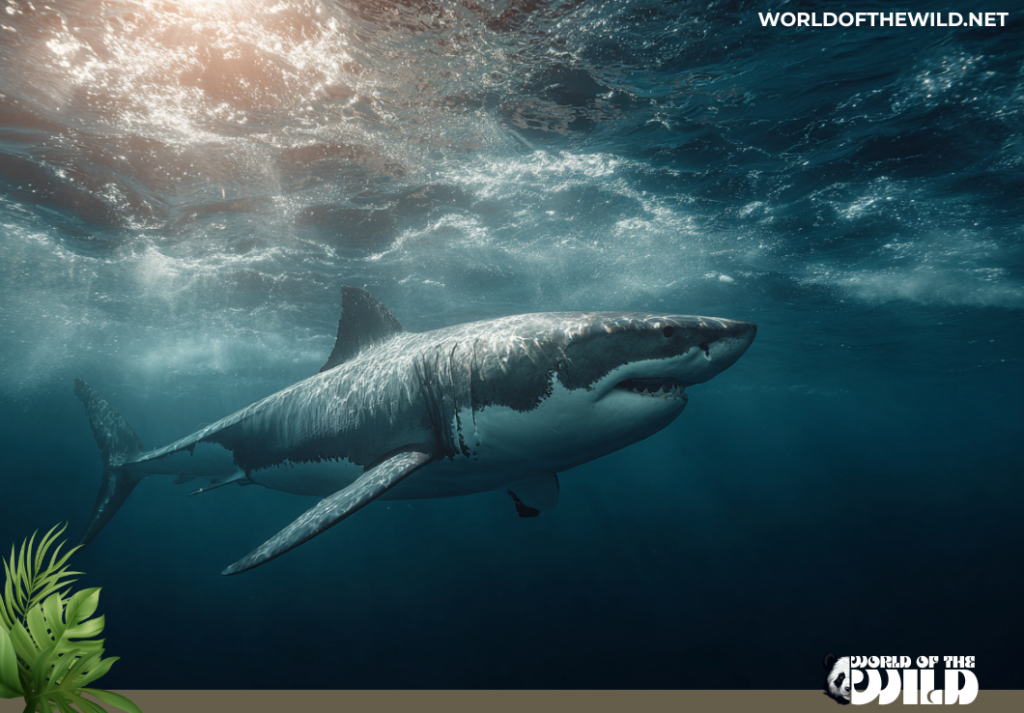
Their coloration follows a pattern called countershading—the dorsal surface ranges from slate gray to brown or even black, while the ventral surface is stark white. This coloring provides camouflage from both above and below: prey looking up sees the white belly against the bright surface, while prey above sees the dark back blending with the murky depths. The dramatic transition between these colors occurs along the shark’s flanks, creating a distinctive visual boundary.
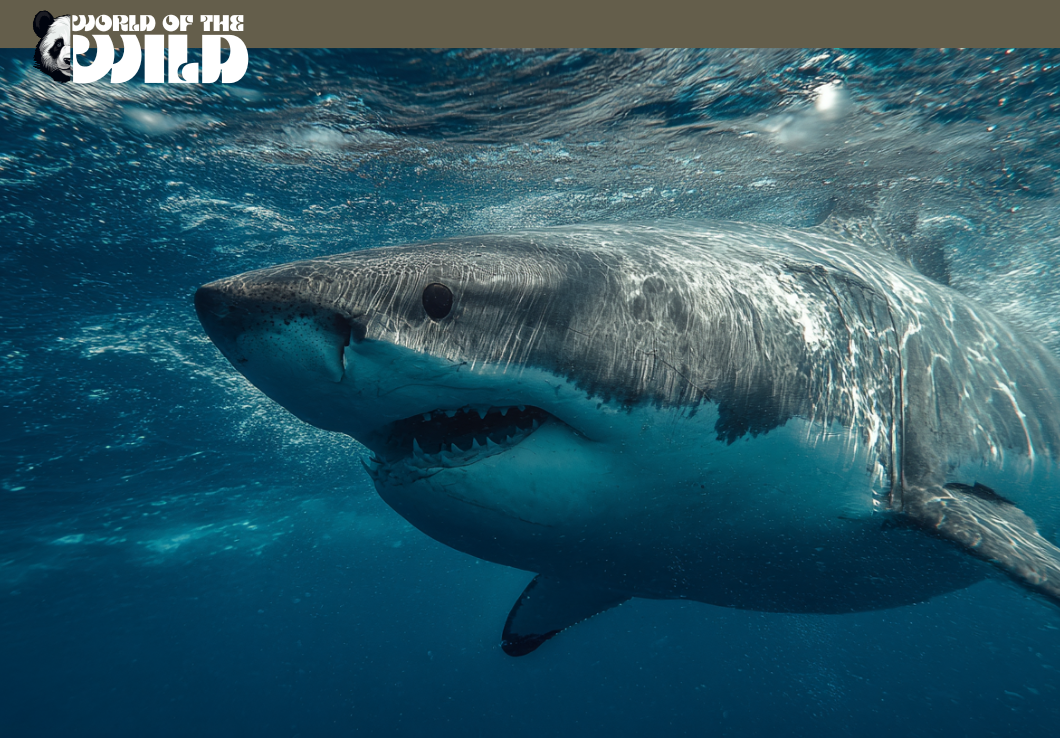
The head is conical and robust, housing a mouth filled with large, serrated triangular teeth designed for gripping and tearing. These teeth can reach up to three inches in length. The eyes are relatively small, dark, and positioned on the sides of the head, providing a wide field of vision. Perhaps most distinctive are the five prominent gill slits on each side, the crescent-shaped tail fin (caudal fin) that provides powerful thrust, and the large triangular dorsal fin that often breaks the surface when the shark swims in shallow water.
Great Whites possess specialized sensory organs called ampullae of Lorenzini—small pores around the head and snout that detect electromagnetic fields produced by living creatures. They also have a keen sense of smell, with olfactory bulbs that make up a significant portion of their brain mass, and a lateral line system running along each side of their body that detects vibrations and pressure changes in the water.
Behavior
Great White Sharks are predominantly solitary hunters, though they occasionally gather in areas with abundant prey and have been observed exhibiting a loose social hierarchy based on size, sex, and residency. These gatherings rarely constitute cooperative hunting, but rather represent a collection of individuals drawn to the same resource-rich area.
Their hunting strategy is a masterclass in ambush predation. Great Whites often patrol at depth beneath their prey, using their dark backs to remain concealed against the ocean floor. When a target is identified—typically by silhouette against the surface—the shark accelerates upward in a vertical rush that can exceed 25 miles per hour. The initial strike is often devastating, with the shark breaching partially or completely out of the water. They typically release their prey after the first bite, waiting for blood loss and shock to weaken the animal before consuming it—a behavior thought to minimize injury from struggling prey.
Communication among Great Whites appears to be largely through body language. Dominant sharks may perform threat displays, including hunched backs, dropped pectoral fins, and exaggerated swimming patterns. Smaller or subordinate sharks typically defer to larger individuals, moving away to avoid confrontation. Despite their fearsome reputation, Great Whites tend to be curious rather than aggressive, often investigating novel objects or creatures with exploratory bites.
Great Whites demonstrate remarkable intelligence for fish. They have been observed learning and remembering the locations of seasonal prey aggregations, adapting hunting techniques based on prey type (seals require different tactics than fish), and even exhibiting play-like behavior. Their brain-to-body ratio is comparable to some mammals, and they appear capable of problem-solving.
One of their most remarkable behaviors is their long-distance migration. Satellite tracking has revealed that Great Whites travel thousands of miles between coastal hunting grounds and open-ocean areas. The purpose of these offshore journeys remains somewhat mysterious, though theories include mating, following prey migrations, or accessing different thermal zones.
Evolution
The evolutionary history of the Great White Shark stretches back through geological epochs, though their exact lineage has been debated and refined as new fossil evidence emerges. Sharks as a group first appeared approximately 450 million years ago, during the Ordovician period, making them older than trees and having survived four of the five major mass extinction events.
The Great White’s more recent ancestors emerged during the Miocene epoch, around 16 million years ago. Carcharodon hubbelli, discovered in Peru in 2013, represents one of the oldest known transitional species with characteristics bridging the gap between ancient broad-toothed sharks and the modern serrated-toothed Great White. These early relatives hunted in warmer waters and likely fed on prehistoric fish and marine mammals.
For decades, scientists believed the Great White descended from the massive Megalodon, a shark that could reach 60 feet in length and ruled the oceans until approximately 3.6 million years ago. However, modern analysis of tooth structure, jaw mechanics, and molecular data has revealed that Megalodon belonged to an entirely different family (Otodontidae) and represents a case of convergent evolution rather than direct ancestry. The Great White’s actual ancestors were smaller, more agile predators in the Lamnidae family.
Carcharodon hastalis, often called the “broad-tooth mako,” lived from about 20 to 3 million years ago and is now considered a direct ancestor or close relative of modern Great Whites. The transition from broad, smooth teeth to the iconic triangular, serrated teeth of today’s Great Whites likely corresponded with a dietary shift toward larger marine mammals as these animals began proliferating during the late Miocene and Pliocene epochs.
The rise of pinnipeds (seals and sea lions) and cetaceans (whales and dolphins) during this period created new ecological niches that the evolving Great White exploited. Their development of regional endothermy—the ability to warm their muscles and vital organs—gave them a metabolic edge that allowed them to hunt effectively in cooler waters where competitors struggled.
Habitat
Great White Sharks inhabit temperate and subtropical coastal waters across nearly all of Earth’s oceans, demonstrating a truly cosmopolitan distribution. They are found along the coasts of California, the northeastern United States, Chile, the Mediterranean Sea, South Africa, Australia, New Zealand, and Japan, among other regions. Their range generally follows waters with temperatures between 54°F and 75°F (12°C to 24°C), though they can tolerate both warmer and colder extremes during their migrations.
These sharks show a strong preference for continental shelf waters and areas around offshore islands, typically at depths of less than 800 feet, though they have been recorded diving to depths exceeding 4,000 feet. They gravitate toward regions with abundant pinnipeds, their primary prey in many areas. Famous Great White hotspots include the waters around Seal Island in South Africa, the Farallon Islands off California, Guadalupe Island near Mexico, and the Neptune Islands in Australia.
Their habitat preferences shift with age and season. Juveniles tend to remain in warmer, shallower nursery areas, often in bays and estuaries where they hunt fish and smaller prey. As they mature, Great Whites expand their range and begin hunting larger prey in deeper, cooler waters. Adults undertake extensive migrations, moving between coastal feeding areas and offshore oceanic zones.
The offshore areas Great Whites visit, such as the White Shark Café—a region halfway between Baja California and Hawaii—remain enigmatic. Sharks gather here during winter and spring, diving repeatedly to depths of 1,000 feet or more in water devoid of obvious prey concentrations. Scientists hypothesize these areas serve as mating grounds, feeding areas for deep-sea species we haven’t yet associated with their diet, or thermal refuges.
Great Whites require specific habitat features: areas with high prey density, appropriate water temperatures for their physiology, and sufficient space for their extensive home ranges. They show remarkable site fidelity to productive hunting grounds, returning year after year to the same locations when seasonal prey aggregations occur.

Diet
The Great White Shark is an apex carnivore with a diet that evolves dramatically as the shark matures. Young Great Whites primarily consume fish, including rays, smaller sharks, and bony fish. As they grow and their hunting capabilities increase, their prey preference shifts toward marine mammals with high fat content, which provide the energy necessary to sustain their large, warm bodies.
Adult Great Whites are specialist hunters of pinnipeds, particularly seals and sea lions, which can constitute the majority of their diet in regions where these marine mammals are abundant. Their predation strategy targets the energy-rich blubber layer, with sharks often consuming the most calorically dense portions of their prey first. A single adult elephant seal can provide enough nutrition to sustain a Great White for several weeks or even months.
Beyond pinnipeds, Great Whites opportunistically feed on other cetaceans, including dolphins and small whales, particularly young, sick, or injured individuals. They will scavenge from whale carcasses, sometimes gathering in groups around these bonanzas. Fish remain part of their diet throughout their lives, with tuna, swordfish, and various shark species all documented as prey items.
Their hunting technique varies by prey type. For fish, Great Whites employ rapid pursuit and capture. For seals and sea lions, they use the dramatic ambush-from-below strategy, delivering a massive initial bite calculated to cause fatal trauma or rapid exsanguination. They possess the highest bite force of any living fish, estimated at over 4,000 pounds per square inch, capable of cutting through flesh, bone, and even thin metal.
Great Whites can detect the electromagnetic signatures of potential prey from several feet away and use their acute sense of smell to locate food from remarkable distances. They appear to prefer prey with high caloric density, demonstrating a sophisticated understanding of energy optimization—attacking prey that provides the best return on their energetic investment.
Predators and Threats
Adult Great White Sharks have few natural predators due to their size and formidable capabilities, effectively sitting at the apex of marine food chains. However, they are not completely without threats from other ocean predators. Orcas (killer whales) have been documented killing Great Whites, particularly along the coast of South Africa and California. These attacks appear calculated and sophisticated, with orcas targeting the sharks’ livers—an organ rich in oil and nutrients. The presence of orcas can cause Great Whites to abandon their hunting grounds for extended periods.
Larger sharks, including other Great Whites, may prey upon juveniles. Young sharks face additional predation pressure from various large predatory fish and sharks until they reach a size that provides safety from most attackers.
The primary threats to Great White Sharks, however, come from human activities. Commercial and recreational fishing operations kill thousands of sharks annually, both as targeted catch and as bycatch. Shark finning—the practice of removing fins for soup while discarding the body—has devastated shark populations worldwide, though Great Whites are sometimes killed for their jaws and teeth, which command high prices among collectors.
Protective beach netting and drum lines, installed to protect swimmers in areas like Australia and South Africa, inadvertently catch and kill Great Whites. While intended to enhance human safety, these measures have questionable effectiveness and demonstrable impacts on shark populations.
Climate change poses emerging threats through ocean warming, acidification, and shifts in prey distribution. As water temperatures change, the distribution of prey species may shift, potentially disrupting the migratory patterns and feeding areas Great Whites have relied upon for thousands of years. Pollution, particularly heavy metals and persistent organic pollutants, bioaccumulates in apex predators, potentially affecting their reproduction and immune systems.
Perhaps most insidiously, the persistent cultural fear of sharks perpetuates tolerance for their killing. This “Jaws effect” has inspired decades of persecution, though shark attacks on humans are exceedingly rare and often cases of mistaken identity.
Reproduction and Life Cycle
Great White Sharks exhibit one of the most fascinating reproductive strategies in the animal kingdom—ovoviviparity, also called aplacental viviparity. Females retain eggs inside their bodies where they develop and hatch internally, with pups born live rather than as eggs. This provides protection during the vulnerable developmental stage and gives newborns a significant size advantage over egg-laying species.
Mating behavior in Great Whites remains largely unobserved due to the difficulty of studying these animals in their natural habitat. Males reach sexual maturity at approximately 26 years of age and around 11-13 feet in length, while females mature later, at approximately 33 years and 14-16 feet. Mating likely involves males biting females to maintain position during copulation, and females often bear scarring that may result from these encounters.
The gestation period is extraordinarily long, estimated at 12 to 18 months, making it one of the longest of any shark species. Litter sizes vary considerably, typically ranging from 2 to 14 pups, with an average of around 7. Remarkably, embryonic Great Whites practice oophagy (egg-eating) and possibly embryophagy (consuming undeveloped siblings) while still in the womb, with the largest and most developed pups consuming unfertilized eggs and smaller embryos to fuel their growth.
Pups are born at approximately 4 to 5 feet in length and are immediately independent—there is no parental care in Great White Sharks. These juveniles instinctively seek out nursery areas, typically shallow, warmer coastal waters that provide abundant small prey and refuge from larger predators, including adult Great Whites. They spend several years in these nursery grounds, gradually expanding their range as they grow.
Growth rates are relatively slow, with sharks adding roughly 10 inches per year during their youth, slowing as they approach maturity. Great Whites are remarkably long-lived animals, with recent research suggesting lifespans of approximately 70 years or more, with some estimates pushing beyond 100 years for the largest females. This longevity, combined with late sexual maturity and low reproductive rates, makes Great White populations extremely vulnerable to overfishing and slow to recover from depletion.

Population
The Great White Shark is currently listed as “Vulnerable” on the International Union for Conservation of Nature (IUCN) Red List, indicating that the species faces a high risk of extinction in the wild. This status reflects declining populations in many regions and the species’ biological characteristics that make recovery challenging.
Estimating global Great White populations is notoriously difficult due to their wide-ranging movements, low densities, and the challenges of studying marine apex predators. The global population is estimated to be in the low thousands to perhaps tens of thousands of individuals, though these numbers are highly uncertain and vary significantly by region. Some specific population estimates include approximately 3,000-5,000 individuals in the northeast Pacific, several thousand around Australia and New Zealand, and highly depleted populations in the Mediterranean and northwest Atlantic.
Population trends vary by location but show concerning declines in many areas. Mediterranean populations are estimated to have declined by more than 90% over the past century, pushing them toward critical endangerment. Populations off the coast of South Africa, once considered robust, have shown signs of decline, partly attributed to orca predation and fishing pressure. In contrast, populations in some protected areas, such as around Guadalupe Island and parts of California, show signs of stability or modest recovery due to conservation measures.
Several factors complicate population recovery. Great Whites reproduce slowly, with females potentially breeding only every two to three years after reaching maturity in their thirties. They suffer high mortality from fishing operations, both targeted and incidental. Their need for large, healthy populations of prey species means that ecosystem degradation indirectly threatens their survival.
Protection status varies globally. Great Whites are protected in the waters of Australia, South Africa, Namibia, Israel, Malta, the Maldives, and parts of the United States, among other locations. International trade in Great White Shark products is regulated under the Convention on International Trade in Endangered Species (CITES), which theoretically provides some protection against commercial exploitation. However, enforcement remains inconsistent, and illegal fishing continues in many areas.
The species’ cultural status as a feared predator has paradoxically both helped and hindered conservation efforts—while ecotourism centered on shark diving has provided economic incentives for protection in some regions, persistent fear drives continued persecution in others.
Conclusion
The Great White Shark embodies the paradox of apex predators in the modern world—supreme in their element yet vulnerable to forces beyond their evolutionary preparation. These magnificent animals have survived multiple mass extinctions, adapted to changing oceans across millions of years, and refined predatory excellence to an art form. Yet they face an uncertain future as human activities reshape their world at a pace evolution cannot match.
Understanding Great Whites reveals them not as mindless killing machines, but as sophisticated, intelligent animals playing an irreplaceable role in ocean ecosystems. By culling sick and weak prey, they maintain the health of prey populations. By regulating prey abundance, they prevent overgrazing of lower trophic levels. Their presence indicates ocean health, and their absence signals ecosystem decline.
The survival of Great White Sharks requires a fundamental shift in how we perceive and interact with apex predators. It demands protected marine areas large enough for their vast ranges, sustainable fishing practices that prevent both targeted killing and bycatch, and continued research to understand their complex lives. Most critically, it requires dismantling the cultural mythology that portrays them as monsters rather than the magnificent evolutionary marvels they truly are.
We stand at a crossroads where our choices will determine whether future generations inherit oceans still patrolled by these ancient hunters or seas diminished by their absence. The question is not whether we can save the Great White Shark—we possess the knowledge and tools to do so. The question is whether we possess the wisdom and will to act before we lose them forever. The ocean, and the Great White Sharks that have shaped its ecosystems for millions of years, await our answer.
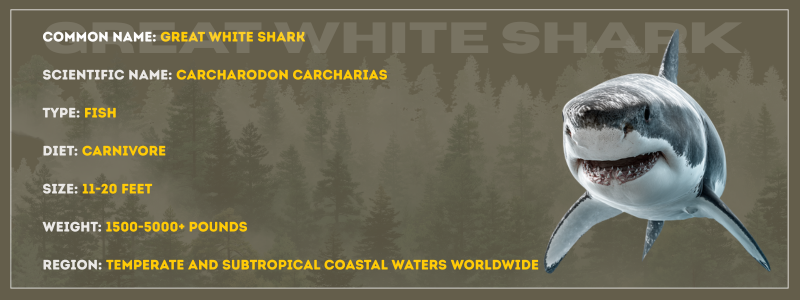
Scientific Name: Carcharodon carcharias
Diet Type: Carnivore
Size: 11-20 feet (average 11-16 feet)
Weight: 1,500-5,000+ pounds (average 1,500-2,400 pounds)
Region Found: Temperate and subtropical coastal waters worldwide, including coasts of California, South Africa, Australia, New Zealand, Mediterranean Sea, northeastern United States, Chile, and Japan