
Imagine a creature that glides through the ocean like a living magic carpet, its body rippling in waves as it navigates the underwater world with balletic precision. The stingray, one of nature’s most elegant yet misunderstood animals, has been silently patrolling ocean floors and river bottoms for over 150 million years. With their distinctive diamond-shaped bodies and infamous venomous tail barbs, these cartilaginous fish represent an evolutionary masterpiece of form meeting function. Far from being the aggressive threats often portrayed in popular media, stingrays are generally peaceful bottom-dwellers that prefer to flee rather than fight, using their defensive weapons only when threatened or accidentally stepped upon. Their fascinating biology, remarkable sensory abilities, and crucial role in marine ecosystems make them one of the ocean’s most captivating inhabitants.
Facts
- Ancient Electroreceptors: Stingrays possess specialized sensory organs called ampullae of Lorenzini that detect electrical fields generated by other animals’ muscle contractions, allowing them to hunt prey buried beneath the sand in complete darkness.
- Breathing While Buried: Unlike most fish, stingrays have spiracles (special openings behind their eyes) that allow them to draw in clean water for breathing while their mouths and gills are buried in sediment.
- Replaceable Weapons: A stingray can have multiple barbed stingers on its tail and will replace them if lost, growing new ones throughout its lifetime—some individuals may shed and regrow their barbs annually.
- Freshwater Invaders: While most species are marine, several stingray species have successfully adapted to live exclusively in freshwater rivers, with some found thousands of miles inland in South American river systems.
- Smart Swimmers: Stingrays have demonstrated impressive cognitive abilities in laboratory studies, including the capacity for social learning, memory retention, and even showing distinct personalities.
- Warm-Blooded Relatives: Some species can regulate their body temperature above ambient water temperature through a process called regional endothermy, keeping their eyes and brain warmer than surrounding waters.
- Camouflage Masters: Many stingrays can change color to match their surroundings and even bury themselves completely in sand within seconds, leaving only their eyes and spiracles exposed.
Species
Taxonomic Classification:
- Kingdom: Animalia
- Phylum: Chordata
- Class: Chondrichthyes (cartilaginous fish)
- Subclass: Elasmobranchii
- Order: Myliobatiformes
- Families: Multiple, including Dasyatidae (whiptail stingrays), Potamotrygonidae (river stingrays), Myliobatidae (eagle rays), and Gymnuridae (butterfly rays)
- Genus and Species: Over 200 species across approximately 29 genera
The term “stingray” encompasses a diverse group of flat-bodied elasmobranchs. Major groups include the whiptail stingrays (Dasyatidae), the most common family with over 80 species like the southern stingray and the roughtail stingray; river stingrays (Potamotrygonidae), exclusively freshwater species found in South American rivers; eagle rays (Myliobatidae), which include the spotted eagle ray with its distinctive spotted pattern; butterfly rays (Gymnuridae), characterized by their extremely wide discs and short tails; and round stingrays (Urotrygonidae), smaller coastal species commonly found in shallow waters.
Each family has evolved unique adaptations for their specific environments, from the massive oceanic manta rays (which are technically a type of ray, though lacking a defensive barb) to the tiny short-nosed electric ray that can generate electrical shocks for defense.
Appearance
Stingrays possess one of the most distinctive body plans in the animal kingdom. Their flattened, disc-shaped bodies are formed by greatly expanded pectoral fins that merge seamlessly with their heads, creating a diamond, circular, or butterfly-shaped silhouette. Size varies dramatically among species, from the diminutive short-nose electric ray measuring just 4 inches across, to the massive short-tail stingray that can reach widths of 7 feet and weights exceeding 770 pounds.
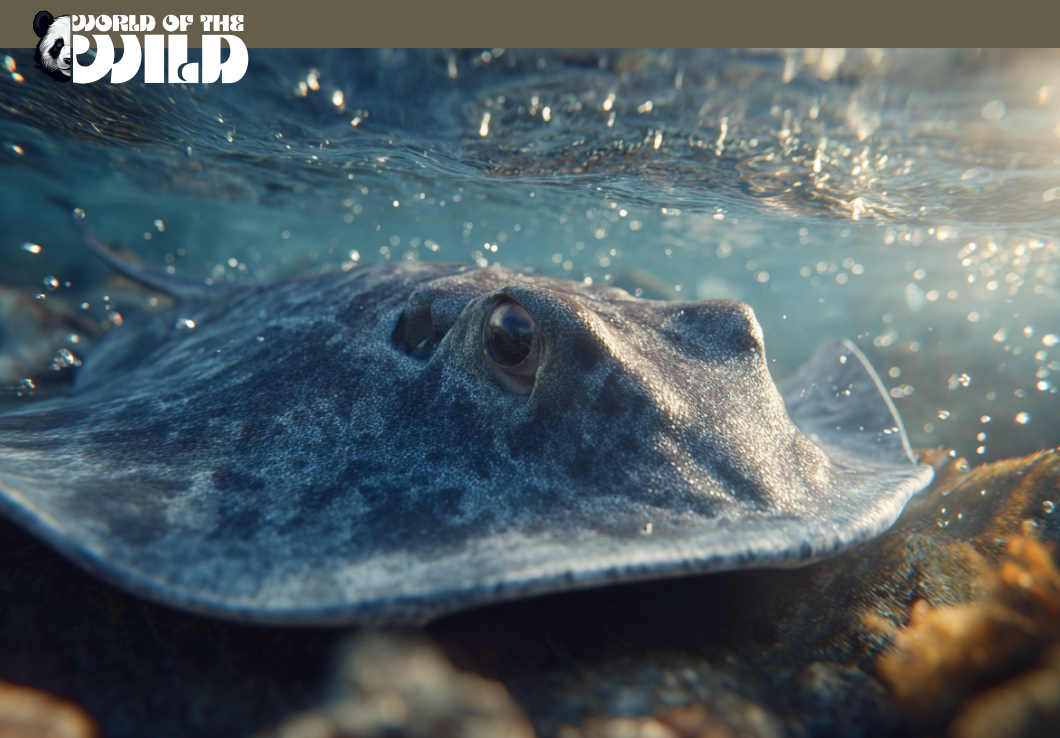
The upper surface typically displays cryptic coloration ranging from sandy brown and gray to olive green or even black, often adorned with spots, stripes, or mottled patterns that provide excellent camouflage against the seafloor. The underside is usually pale white or cream-colored. Their skin texture varies from smooth and velvety to rough like sandpaper, covered with tiny tooth-like scales called dermal denticles.
The most recognizable feature is the whip-like tail, which can be two to three times the length of the body disc. This tail houses one or more serrated, venomous barbs (modified scales) positioned one-third to halfway down its length. The barbs can grow up to 14 inches long in larger species and feature retrograde serrations that make removal difficult and painful.
Their eyes protrude slightly from the top of their heads, providing upward vision, while their mouths, nostrils, and five pairs of gill slits are located on the ventral (bottom) surface. This arrangement allows them to breathe and hunt while lying flat on the ocean floor. Their teeth are arranged in flattened plates, adapted for crushing hard-shelled prey rather than tearing flesh.

Behavior
Stingrays are primarily solitary, bottom-dwelling creatures that spend much of their time partially or completely buried in sand or mud, resting and waiting to ambush prey. They exhibit crepuscular activity patterns, being most active during dawn and dusk, though feeding can occur throughout the day and night depending on tidal cycles and prey availability.
Their primary mode of locomotion is truly mesmerizing—they undulate their enlarged pectoral fins in smooth, wave-like motions that propel them gracefully through the water. Some species also use jet propulsion, forcefully expelling water through their gills to create quick bursts of speed when escaping predators.
Communication occurs through various methods including chemical signals, body language, and even electrical impulses. During mating season, males can be observed following females closely, sometimes biting their disc edges to initiate courtship. Stingrays display surprising intelligence and have been observed using problem-solving skills to access food, recognizing individual humans in aquarium settings, and exhibiting playful behavior.
Their defensive strategy is primarily avoidance—when threatened, they typically swim away rapidly or bury themselves deeper into the substrate. The venomous tail barb is a last resort weapon, deployed only when the ray feels trapped or is accidentally stepped upon. When striking, the ray arches its tail forward with remarkable speed and precision, driving the barb into the threat while simultaneously releasing venom from glands along the barb’s grooves.
Social behavior varies by species. While generally solitary, some species form seasonal aggregations of hundreds or even thousands of individuals during migration or in productive feeding areas. These gatherings provide opportunities for social learning and may offer protection from predators.
Evolution
Stingrays belong to one of the oldest surviving vertebrate lineages on Earth. Their evolutionary history traces back approximately 150-180 million years to the Jurassic Period, though their ancestors—early cartilaginous fish—emerged much earlier, around 400 million years ago during the Devonian Period.
The earliest ray-like fossils suggest that rays diverged from their shark ancestors during the Early Jurassic, developing their characteristic flattened body shape as an adaptation to a bottom-dwelling lifestyle. This body plan proved remarkably successful, allowing them to exploit ecological niches unavailable to their shark cousins.
A significant evolutionary milestone occurred when rays developed their unique pectoral fin structure, which fused with their heads to create the distinctive disc shape. This adaptation provided superior maneuverability along the ocean floor and improved their ability to trap and capture benthic prey. The development of electroreceptive organs (ampullae of Lorenzini) gave them a crucial advantage in detecting hidden prey, while their venomous tail barbs evolved as an effective anti-predator defense.
Fossil evidence shows that ray diversity exploded during the Cretaceous Period (145-66 million years ago), with many modern families already established before the extinction event that killed the dinosaurs. The group survived this catastrophic event and continued diversifying throughout the Cenozoic Era.
Perhaps most remarkable is the relatively recent adaptation of certain lineages to freshwater environments. South American river stingrays diverged from marine ancestors only 20-30 million years ago, evolving physiological adaptations to handle osmotic challenges of freshwater while retaining their characteristic body plan and venomous defenses.
Habitat
Stingrays inhabit an impressive range of aquatic environments across the globe, from frigid polar waters to tropical coral reefs, and from shallow coastal zones to depths exceeding 6,000 feet. They’re found in all oceans and many freshwater systems, with the highest diversity occurring in tropical and subtropical regions of the Indo-Pacific.
The majority of stingray species are marine, preferring coastal and continental shelf waters where sandy, muddy, or silty bottoms provide ideal hunting and hiding grounds. Many species favor estuaries, lagoons, bays, and mangrove habitats where freshwater and saltwater mix, creating nutrient-rich environments teeming with prey. Coral reefs also host several species, particularly eagle rays and whiptail stingrays, which glide over reef structures while hunting.
Temperature preferences vary significantly. Tropical species thrive in waters ranging from 75-85°F, while temperate species tolerate cooler temperatures and often migrate seasonally to follow optimal thermal conditions. Some species undertake remarkable migrations, traveling hundreds of miles between summer feeding grounds and winter habitats.
Freshwater stingrays exclusively inhabit South American river systems, including the Amazon, Orinoco, and Paraná River basins. These species have completely adapted to freshwater existence, living in rivers, flooded forests, and even small streams. They occupy various microhabitats from slow-moving channels with soft bottoms to rocky rapids.
The seafloor substrate is crucial for most species, which require soft sediments for burial and foraging. They excavate prey by flapping their fins to create currents that blow away sand and expose buried organisms. Depth preferences range from the intertidal zone—where some species can be found in mere inches of water—to the deep sea, though most species concentrate in waters less than 200 feet deep where light penetration supports productive ecosystems.
Diet
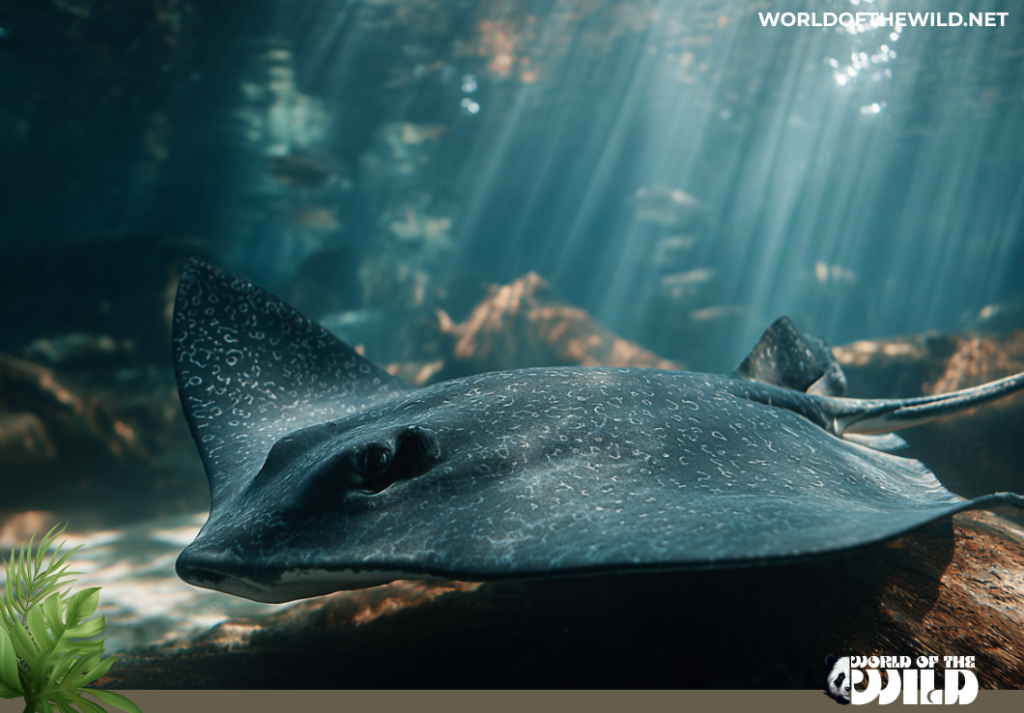
Stingrays are carnivorous predators specializing in bottom-dwelling invertebrates and small fish. Their diet strategy is that of an opportunistic benthic feeder, consuming whatever prey is available in their habitat while showing preferences for certain food types.
Primary food sources include mollusks (clams, oysters, mussels, snails), crustaceans (crabs, shrimp, lobsters), polychaete worms, small fish, and occasionally squid. Their powerful, flattened teeth are perfectly designed for crushing the hard shells and exoskeletons of their prey, grinding them into digestible fragments. Some species consume primarily soft-bodied invertebrates, which they can swallow whole.
Their hunting technique is remarkably sophisticated. Stingrays use their keen sense of electroreception to detect the weak electrical fields produced by buried prey’s muscle contractions and heartbeats, allowing them to hunt effectively in murky water or complete darkness. Once prey is located, they use their pectoral fins to create powerful water jets that excavate the sediment, exposing hidden animals. Some species have also been observed pinning prey against the bottom with their body disc before consuming it.
Feeding typically occurs during crepuscular periods (dawn and dusk) and throughout the night, though tidal cycles also influence activity—many species feed most actively during high tide when they can access shallow areas rich with invertebrates.
Larger species like the short-tail stingray have more diverse diets and occasionally hunt larger fish, octopuses, and even smaller rays. Eagle rays have particularly strong jaws capable of crushing thick-shelled clams and oysters, sometimes causing significant economic damage to commercial shellfish beds.
Juvenile stingrays generally feed on smaller prey items like tiny crustaceans and worms, gradually shifting to larger prey as they mature. Metabolic rates in stingrays are relatively low compared to bony fish, meaning they don’t need to feed constantly and can survive extended periods without food if necessary.
Predators and Threats
Despite their venomous defenses, stingrays face predation from various large marine carnivores throughout their lives. Natural predators include several species of sharks—particularly hammerheads, tiger sharks, bull sharks, and great white sharks—which have developed techniques for attacking rays while avoiding their barbed tails. Hammerhead sharks, in particular, are specialized ray hunters, using their uniquely shaped heads to pin rays to the seafloor. Large groupers, seals, sea lions, and orcas also prey on stingrays when opportunities arise. Even large predatory fish like cobia and tarpon occasionally consume smaller ray species.
However, human activities pose far greater threats to stingray populations worldwide. Overfishing represents the most immediate danger, with stingrays caught as bycatch in trawl fisheries, gillnets, and longline operations targeting other species. Some cultures also deliberately fish stingrays for food, traditional medicine, or the aquarium trade, with meat considered a delicacy in certain regions and dried barbs sold as curiosities or alleged aphrodisiacs.
Habitat destruction severely impacts stingray populations, particularly the degradation of coastal nursery areas like mangroves, seagrass beds, and estuaries due to coastal development, pollution, and dredging operations. Freshwater species face additional pressures from dam construction, which fragments their river habitats and disrupts migration patterns.
Climate change threatens stingrays through ocean acidification (which may affect their prey species), warming waters (forcing range shifts), and altered ocean currents. Pollution, including heavy metals, pesticides, plastics, and industrial chemicals, bioaccumulates in their tissues, potentially affecting reproduction and immune function.
Coastal development also increases human-stingray encounters, resulting in defensive strikes that, while rarely fatal to humans, often lead to retaliatory killing of rays. Beach netting programs designed to protect swimmers sometimes trap and drown stingrays. Additionally, boat strikes injure or kill rays in shallow coastal waters, particularly in areas with heavy recreational boating traffic.
Reproduction and Life Cycle
Stingrays employ a sophisticated reproductive strategy called ovoviviparity (sometimes called aplacental viviparity), wherein females retain fertilized eggs inside their bodies until they develop into fully formed young. This gives offspring a significant survival advantage compared to species that lay eggs externally.
Mating rituals vary among species but typically involve elaborate courtship behaviors. Males pursue females, sometimes for hours or days, biting the edges of their discs to maintain contact. In some species, multiple males may compete for a single female. Copulation occurs when the male inserts one of his two claspers (modified pelvic fins) into the female’s cloaca to transfer sperm. Mating can be vigorous and females often bear scars from mating bites.
Gestation periods range from 2 to 12 months depending on species, water temperature, and maternal nutrition. During development, embryos initially receive nourishment from their yolk sacs. As the yolk depletes, the mother provides additional nutrition through a uterine “milk”—a protein and lipid-rich secretion that embryos absorb through specialized structures.
Litter sizes vary dramatically, from just one or two pups in larger species to up to 15 in smaller species. Newborn rays, called pups, are miniature versions of adults, typically measuring 4-12 inches in disc width and already possessing functional venomous barbs. They’re born live and fully independent, receiving no parental care after birth.
The pups immediately seek shelter in shallow, protected nursery areas where prey is abundant and large predators are scarce. These nursery grounds, often located in estuaries or coastal bays, are critical for juvenile survival.
Stingrays are relatively slow-growing and late-maturing. Sexual maturity is typically reached between 4-8 years of age, depending on species, with females generally maturing later than males. Once mature, females usually reproduce annually or biannually.
Lifespans vary considerably across species, ranging from 8-10 years in smaller species to potentially 25-30 years in larger ones. Growth continues throughout life, though it slows significantly after reaching sexual maturity. This slow reproductive rate—combining late maturity, long gestation, small litter sizes, and extended lifespans—makes stingray populations particularly vulnerable to overfishing and slow to recover from population declines.
Population
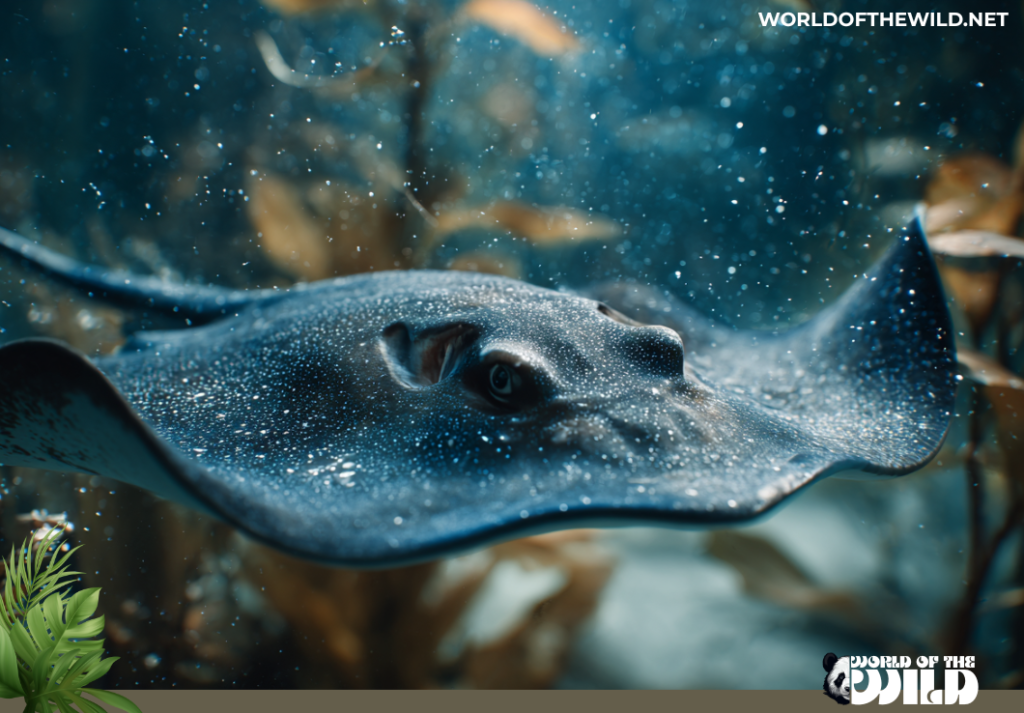
The conservation status of stingrays varies significantly across the approximately 220 recognized species. According to assessments by the International Union for Conservation of Nature (IUCN), stingray conservation status ranges from Least Concern to Critically Endangered, with several species potentially already extinct.
Many common, widespread species like the southern stingray and Atlantic stingray are currently listed as Least Concern or Near Threatened. However, numerous species face serious population declines. Several South American freshwater stingrays are listed as Vulnerable or Endangered due to restricted ranges and specific habitat requirements. The giant freshwater stingray, one of the world’s largest freshwater fish, is classified as Endangered across much of its range due to overfishing and habitat degradation.
Some species have experienced catastrophic declines. The common skate (a close relative) disappeared from much of its historical European range. Several guitarfish and sawfish species—technically rays—are Critically Endangered, with some populations reduced by more than 90% in recent decades.
Estimating global stingray populations proves extremely challenging due to their bottom-dwelling habits, wide distributions, and the difficulty of conducting comprehensive surveys. However, regional studies paint concerning pictures. Some populations have declined by 50-80% in heavily fished areas over the past 50 years. Trawl fishery surveys in the Gulf of Mexico, Southeast Asia, and European waters have documented significant decreases in ray abundance and average size.
The overall trend is alarming: a 2021 comprehensive assessment found that over 30% of shark and ray species worldwide are threatened with extinction, with rays generally facing greater risks than sharks. Coastal species are particularly vulnerable due to their proximity to human activities and important nursery habitats in threatened estuaries and mangroves.
Conservation efforts remain inadequate for most species. Few countries have implemented specific protections for stingrays, and many are still legally caught or killed as bycatch with minimal regulation. Only a handful of species receive protection through marine reserves or fishing restrictions, and enforcement is often lacking.
Conclusion
The stingray represents one of evolution’s most successful designs, a body plan so effective it has persisted virtually unchanged for over 150 million years. These graceful creatures are far more than their infamous defensive barbs—they’re sophisticated predators with remarkable sensory abilities, intelligent behavior, and crucial ecological roles as both predators and prey in marine food webs. From the electric-sensing ampullae that let them hunt blind in murky depths to their elegant swimming style that inspired countless underwater documentaries, stingrays embody the beauty and complexity of ocean life.
Yet despite their evolutionary resilience, these ancient mariners now face unprecedented challenges from human activities. Overfishing, habitat destruction, and climate change threaten populations worldwide, with many species experiencing dramatic declines while receiving minimal conservation attention. The loss of stingrays would reverberate through marine ecosystems, affecting prey populations, nutrient cycling, and the predators that depend on them.
The future of stingrays depends on our willingness to protect critical habitats, reduce bycatch, establish science-based fishery regulations, and address the broader challenges of ocean conservation. These creatures have survived mass extinctions, ice ages, and dramatic environmental shifts over countless millennia. The question now is whether they can survive us. By appreciating their ecological importance and advocating for their protection, we can ensure that future generations will still witness the mesmerizing sight of stingrays gliding gracefully across the seafloor—living testaments to the ocean’s timeless wonders.
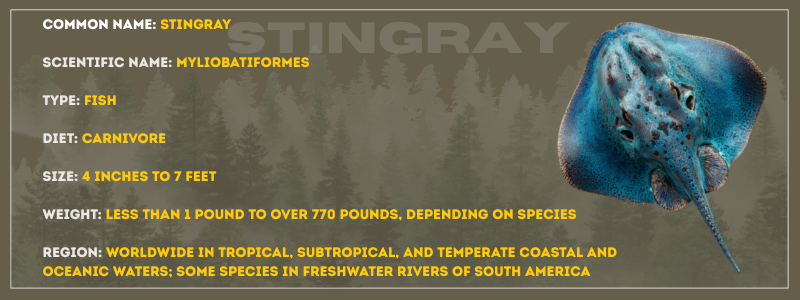
Scientific Name: Myliobatiformes (order level; includes families Dasyatidae, Potamotrygonidae, Myliobatidae, and others)
Diet Type: Carnivore
Size: 4 inches to 7 feet (disc width), depending on species
Weight: Less than 1 pound to over 770 pounds, depending on species
Region Found: Worldwide in tropical, subtropical, and temperate coastal and oceanic waters; some species in freshwater rivers of South America