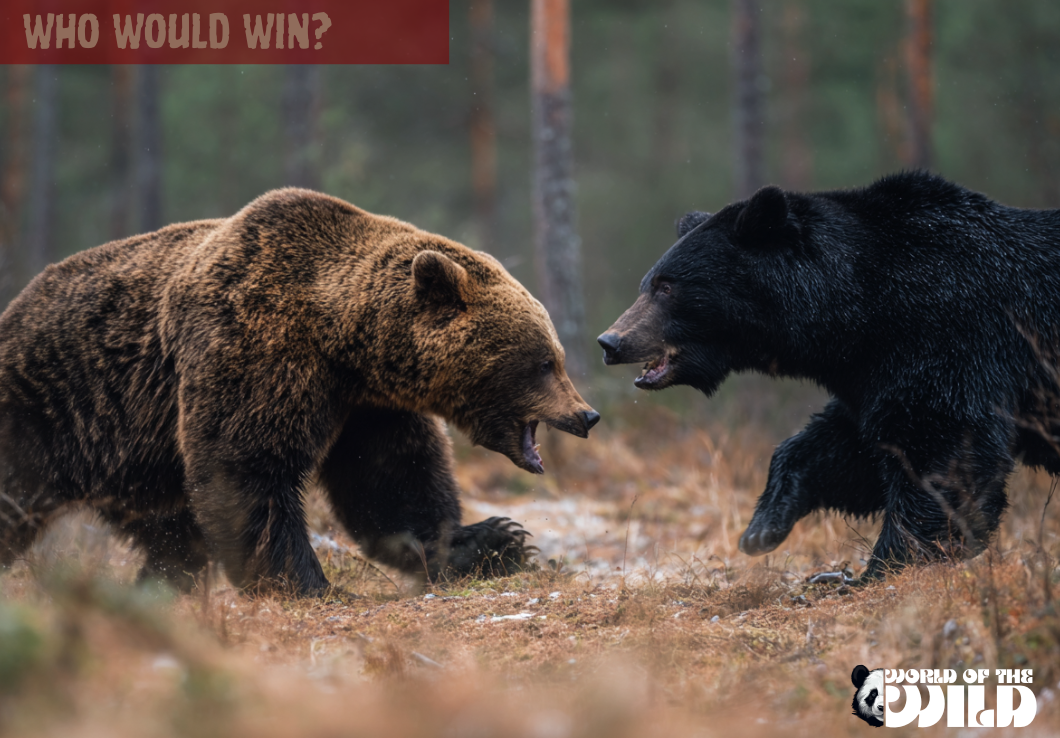

When Two Titans of the North American Wilderness Collide
THE CONTENDERS
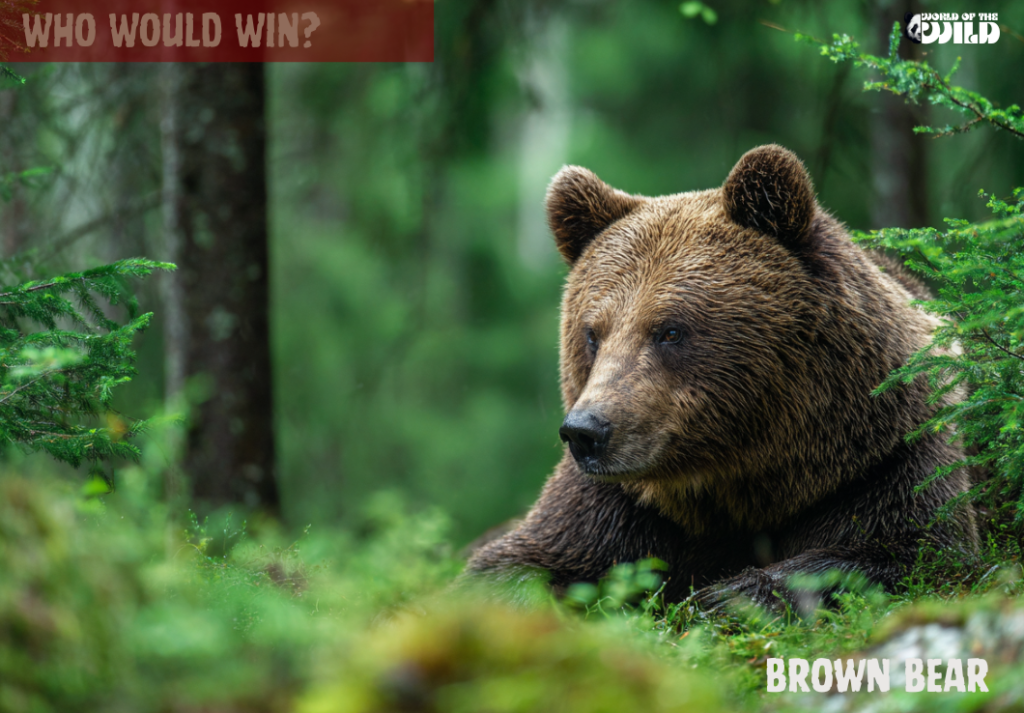
In the left corner, we have the BROWN BEAR (Ursus arctos)—the heavyweight champion of North American forests, a muscle-bound apex predator with a legendary temper and the strength to flip over 700-pound boulders like pancakes. Grizzled, battle-tested, and armed with claws that could rip through a car door, this is nature’s bulldozer.
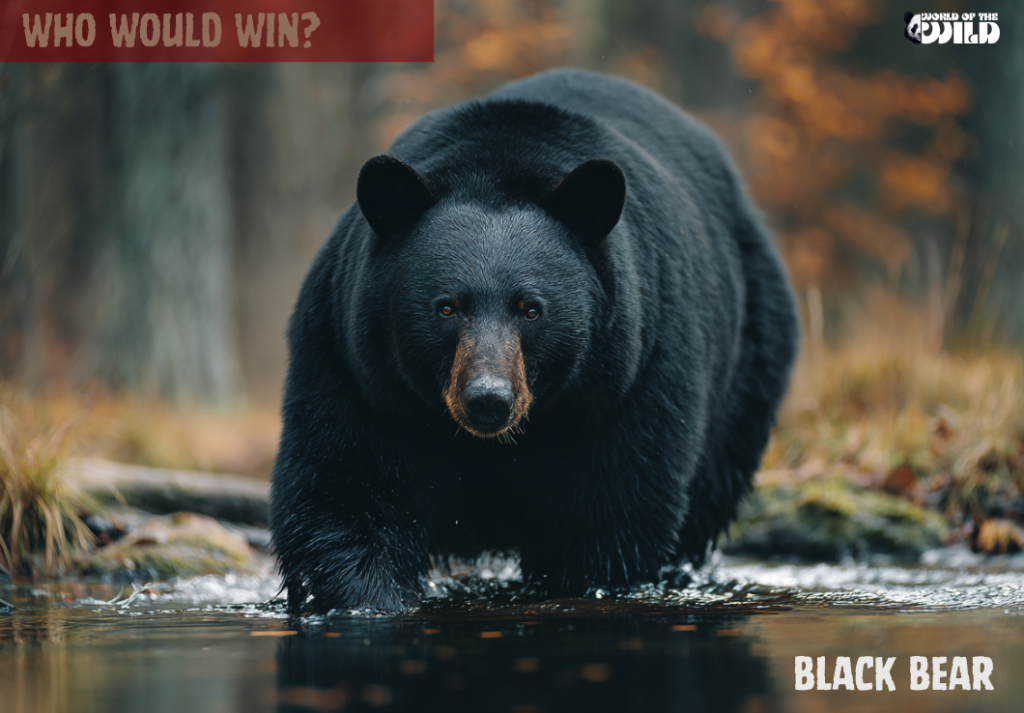
And in the right corner, weighing in at considerably less, the BLACK BEAR (Ursus americanus)—the forest’s opportunistic survivor, lighter on its feet, more adaptable, and equipped with world-class climbing skills. Don’t let the smaller frame fool you; this bear has navigated human civilization better than almost any large carnivore on Earth.
But when these two bruins meet in the wild—and they occasionally do—who walks away victorious?
TALE OF THE TAPE
| Category | Brown Bear (Grizzly) | Black Bear |
|---|---|---|
| Size/Weight | 400-790 lbs (males); up to 1,500 lbs | 130-500 lbs (males); rarely over 600 lbs |
| Speed | 35 mph in short bursts | 30 mph in short bursts |
| Bite Force | ~975 PSI | ~800 PSI |
| Primary Weapons | 2-4 inch claws; massive shoulder hump; bone-crushing jaws | 1-2 inch curved claws; agility; climbing ability |
| Special Abilities | Extreme aggression; excavation power; dominance behavior | Superior tree climbing; better problem-solving; conflict avoidance |
PHYSICAL ADVANTAGES
Brown Bear’s Arsenal:
- The Shoulder Hump: That distinctive muscular hump isn’t just for show—it’s a power plant of muscle that drives digging, swiping, and wrestling movements with devastating force.
- Claw Length & Design: Those 2-4 inch, relatively straight claws are designed for ripping, tearing, and digging through frozen ground. They’re weapons AND excavation tools.
- Sheer Mass: A 700-pound brown bear has double the body weight of an average black bear. That’s like a heavyweight boxer fighting a welterweight.
- Territorial Aggression: Brown bears are notorious for standing their ground and escalating conflicts rather than backing down.
Black Bear’s Arsenal:
- Agility & Climbing: Black bears can scale trees in seconds—an escape option the heavier brown bear simply doesn’t have.
- Curved Claws: Shorter but sharper, these 1-2 inch hooks are precision instruments perfect for climbing and controlled strikes.
- Intelligence: Black bears show remarkable adaptability and problem-solving skills, often choosing tactical retreat over confrontation.
- Speed & Maneuverability: Slightly faster in short sprints and better at quick directional changes in dense forest.
THE BATTLE SCENARIO
A late summer salmon stream in coastal Alaska. Both bears have converged on the same prime fishing spot at dawn.
The black bear arrived first, successfully snagging a sockeye from the shallows. But then it catches a scent on the wind—musk, aggression, and raw power. A massive male grizzly emerges from the willows, head low, shoulder hump rippling. The black bear immediately goes into submissive mode, lowering its head and slowly backing away. But the grizzly isn’t satisfied with intimidation. This is his territory, and he charges.
The black bear makes a critical decision in a split second: fight or flight? It bolts toward the nearest spruce tree, powerful legs pumping. The grizzly closes the gap with terrifying speed—35 mph of fur and fury. Just as the brown bear’s claws swipe the air where the black bear’s hindquarters were a second ago, the smaller bear reaches the tree and rockets upward with the agility of a cat. The grizzly rears up on hind legs, roaring and clawing at the trunk, but at 700 pounds, it cannot follow.
But let’s say there’s no tree. In open terrain, the fight is brutally one-sided. The grizzly uses its weight advantage to bowl the black bear over, pinning it with sheer mass. A massive paw slams down like a sledgehammer—claws raking through fur and hide. The black bear fights desperately, snapping and clawing, even landing a few solid bites. But each swipe from the grizzly is backed by that tremendous shoulder hump, delivering impacts the black bear simply cannot match. Within moments, the smaller bear is overwhelmed, retreating with injuries if it’s fortunate enough to break free, or worse if it’s not.
THE VERDICT: BROWN BEAR WINS
Scientific Reasoning:
This isn’t a fair fight, and nature knows it. The brown bear dominates in 9 out of 10 encounters for the following evidence-based reasons:
- Size Disparity is Decisive: With often double the body mass, the brown bear has an overwhelming physical advantage. In bear conflicts, size is the primary predictor of victory.
- Weaponry Scale: Both bears have claws and teeth, but the brown bear’s are simply bigger and more powerful. That 2-4 inch claw vs. 1-2 inch claw difference might not sound like much, but it translates to deeper wounds and more devastating strikes.
- Behavioral Temperament: Brown bears are hardwired for confrontation and dominance. Black bears, conversely, have evolved to avoid conflict when possible—their survival strategy is flexibility, not fighting.
- Real-World Evidence: In regions where both species overlap (like Yellowstone or coastal Alaska), documented encounters show black bears consistently defer to brown bears at carcasses, fishing sites, and territorial disputes. Wildlife biologists have observed black bears abandoning prime feeding areas the moment a grizzly arrives.
- The Only Black Bear Advantage Requires Escape: The black bear’s only winning strategy is not fighting at all—climbing a tree or fleeing to terrain the grizzly can’t access. In a forced, unavoidable confrontation on open ground, the outcome is virtually predetermined.
WINNER: BROWN BEAR — by knockout, technical superiority, and evolutionary design. The grizzly is simply built for dominance, while the black bear is built for survival through intelligence and adaptability. And in nature, that’s a perfectly respectable strategy.