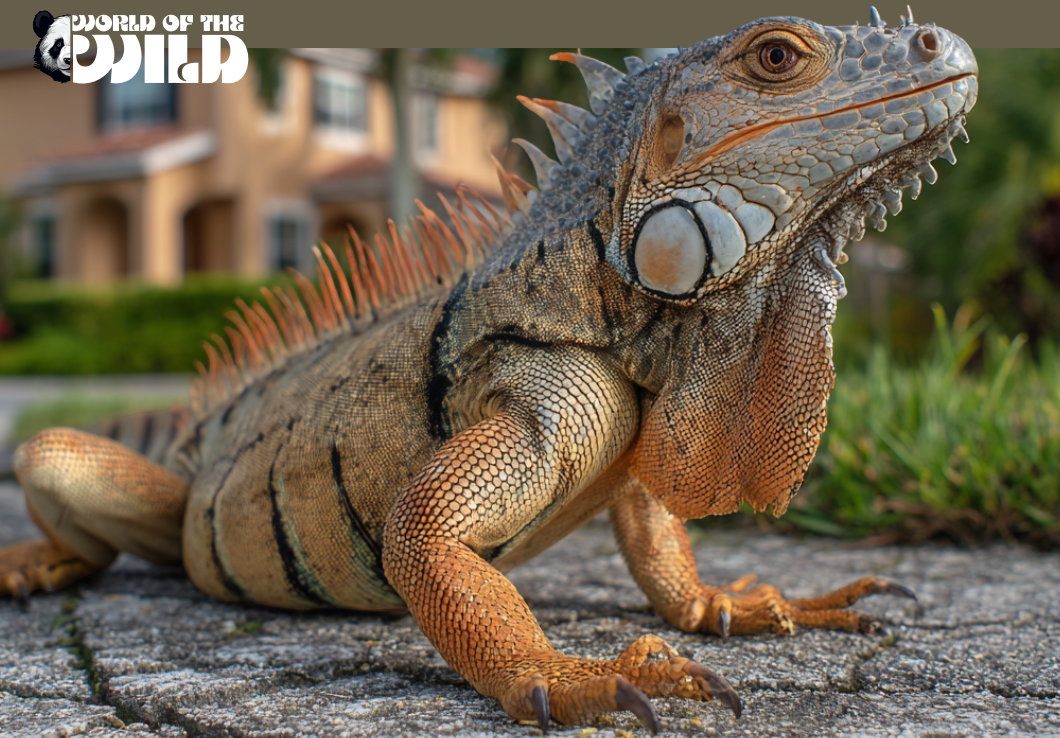

There is a moment that has become increasingly common across South Florida — you step outside onto your patio, reach for your morning coffee, and find yourself staring down a five-foot green iguana perched on your pool deck, flicking its tongue and showing absolutely no intention of leaving. For longtime residents, this scene has gone from shocking to routine. For newcomers, it is a surreal welcome to life in the subtropics. But make no mistake: behind the novelty lies a serious and growing ecological crisis that is reshaping South Florida in ways that scientists, wildlife managers, and residents are only beginning to fully understand.
The green iguana invasion of South Florida is not a recent development, nor is it a problem that emerged from natural causes alone. It is the product of decades of human decisions — some careless, some reckless, and some driven by pure commercial greed — compounded by a climate that could not be more perfectly suited for these sun-loving reptiles. Today, experts estimate that tens of millions of iguanas now roam across Florida, and the damage they are doing to infrastructure, native wildlife, and the environment is staggering. This is the full story of how it happened, why it got so bad, and what — if anything — can be done about it.
How They Got Here: A Problem Made by Human Hands
Green iguanas are not native to North America. They originate from Central and South America, ranging from Mexico down through Brazil, and are found on many Caribbean islands. They evolved in lush tropical forests where predators kept their populations in balance and competition for food was fierce. In their home range, iguanas serve as prey for jaguars, large constrictor snakes, birds of prey, and a host of other predators. In South Florida, almost none of those checks exist.
Green iguanas have been in South Florida since the 1960s, likely arriving from their native home ranges as a result of hurricanes and other natural events, which can sweep animals into ocean currents and deposit them on distant shores. The first confirmed reports of green iguanas in the wild came from the Miami-Dade County communities of Hialeah, Coral Gables, and Key Biscayne along the southeastern coast. These early arrivals were relatively few in number, and at that point, most residents regarded them with curiosity rather than concern.
Then the pet trade got involved, and everything changed.
In the 1980s, the green iguana became one of the top reptiles in the exotic pet trade, and as a result, its population in Florida rocketed. They were sold cheaply in pet shops across the country, marketed as exotic, low-maintenance companions. What buyers often failed to realize was that baby iguanas, which can fit in the palm of a hand, grow quickly and dramatically. A full-grown adult male can reach six feet in length and weigh up to twenty pounds. They become powerful, territorial, and difficult to handle. As thousands of Floridians discovered that their charming little lizard was no longer quite so manageable, many did what felt like the most natural thing in the world — they let it go outside.
Pet owners began releasing iguanas into the wild when they got too large, too aggressive, or too sick. These former pets, along with escapees from pet stores, breeding facilities, and exotic animal shipments, expanded their hold on areas around southern Florida’s bays, canals, ponds, and drainage ditches. A particularly notorious incident reportedly occurred in the 1970s when an exotic pet dealer allegedly released approximately 300 iguanas into the wild in a single act. Whether fully documented or not, events like this one — combined with decades of casual releases by individual pet owners — created a foundation population that never looked back.
By the time wildlife authorities recognized the scale of what was happening, the iguanas were already deeply established. Attempts to address the problem in those early years were minimal and poorly funded. Iguanas were still being sold legally across the state, which meant new animals were constantly being introduced into the ecosystem through accidental escapes and intentional releases. The pipeline of invasive animals never closed, and the population grew.
Life in the Sunshine State: Meet the Green Iguana
To understand why this problem is so difficult to solve, it helps to understand exactly what kind of animal we are dealing with. Green iguanas are, in many ways, perfectly engineered for survival.
Adults typically range from four to six feet long from snout to tail, with males considerably larger than females. Despite their fearsome appearance, they are primarily herbivores. Iguanas are attracted to trees with foliage or flowers, most fruits except citrus, and almost any vegetable. They are opportunistic feeders, and in South Florida’s lush landscape, there is no shortage of food. Ornamental plants, vegetable gardens, flower beds, tropical fruits, and the foliage along canal banks are all on the menu. Research from the University of Florida’s Institute of Food and Agricultural Sciences has identified at least twenty garden and horticultural plant species that iguanas regularly consume in Florida.
Iguanas are cold-blooded reptiles, meaning they rely on external heat sources to regulate their body temperature. South Florida’s warm, sunny climate is essentially paradise for them. They spend their mornings basking in sunlight to warm up, become active through the middle of the day, and retreat to sheltered spots as temperatures drop in the evening. During the rare cold snaps that occasionally sweep through the region, iguanas enter a state of cold stunning — their muscles cease to function properly and they become immobile, often falling from tree branches where they had been sleeping. This phenomenon regularly captures headlines and social media attention, with videos of motionless iguanas littering lawns and sidewalks going viral. However, experts are always quick to point out that the animals are not dead — only temporarily stunned by the cold — and will recover fully once temperatures rise.
Green iguanas are excellent swimmers and can handle both saltwater and freshwater. They can even stay submerged underwater for up to four hours at a time. This makes South Florida’s extensive network of canals, waterways, and coastline ideal territory. They travel easily between neighborhoods by swimming through drainage systems and canal networks, constantly colonizing new areas.
Their reproductive capacity is where the situation becomes truly alarming. Female iguanas reach sexual maturity at around two to three years of age. A single female can lay between twenty-five and seventy-five eggs at a time, and many of those hatchlings survive to adulthood. A female can produce multiple clutches over the course of her lifetime, and iguanas can live for ten to fifteen years in the wild. Do the math, and the population potential is staggering. A single breeding pair can, within just a few generations, give rise to hundreds of animals. In the absence of meaningful predation, those numbers compound relentlessly.
In cleared habitats such as canal banks and vacant lots, green iguanas reside in burrows, culverts, drainage pipes, and rock or debris piles. South Florida’s extensive network of man-made canals serves as an ideal dispersal corridor, allowing iguanas to continuously colonize new areas. The infrastructure of modern South Florida — the very canals and waterways built to manage flooding and development — has inadvertently become the iguana’s highway system.
How Much of Florida Is Affected?
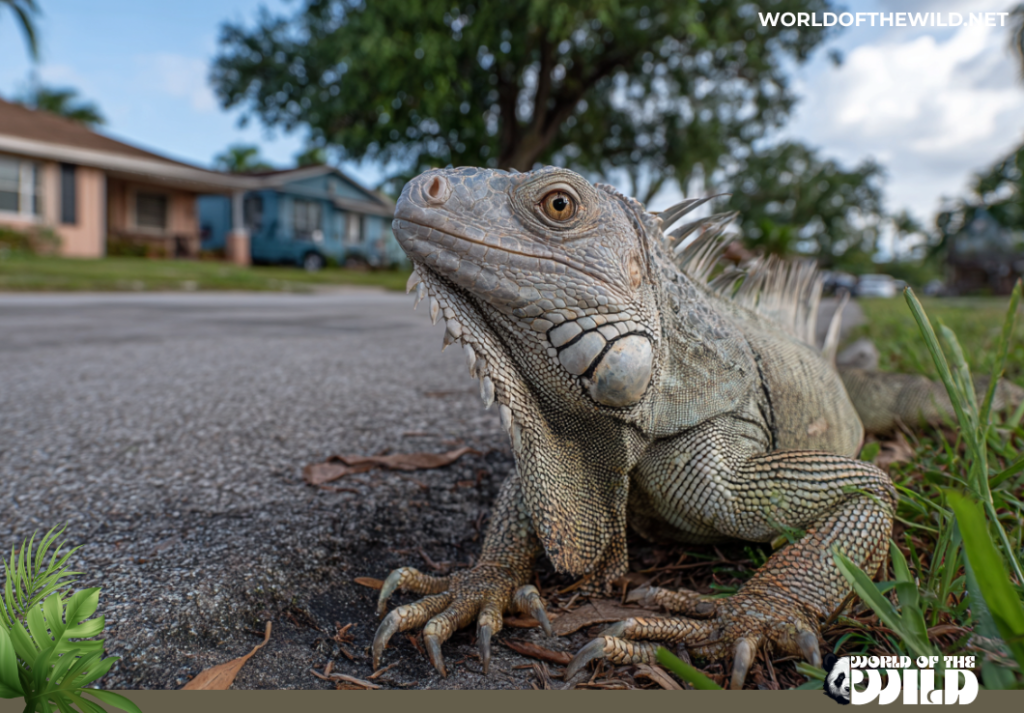
The scale of the infestation is difficult to fully comprehend. Green iguana populations now stretch along the Atlantic Coast in Broward, Martin, Miami-Dade, Monroe, and Palm Beach Counties and along the Gulf Coast in Collier and Lee Counties. Reports of sightings have come in from as far north as Alachua, Highlands, Hillsborough, Indian River, and St. Lucie Counties. While the core population remains concentrated in South Florida, the species is slowly and steadily expanding its range northward.
Wildlife experts estimate there are tens of millions of iguanas across Florida. Although cold winters in northern parts of the state tend to prevent the establishment of permanent breeding populations there, climate change is steadily narrowing the zone where cold acts as a natural population control. Warming temperatures have made Florida an ever more hospitable environment for these animals, and researchers believe iguanas will continue to expand northward as the climate shifts.
The green iguana is not the only iguana species causing problems. South Florida is also home to the Mexican spiny-tailed iguana and the black spiny-tailed iguana, both of which have established invasive populations. The spiny-tailed species tend to be even more aggressive than green iguanas and are especially notorious for raiding the burrows of native wildlife. Together, these three species represent a multi-front invasion that wildlife managers must contend with simultaneously.
The Damage They Are Doing
The idea of iguanas as a charming South Florida curiosity vanishes quickly once you understand the full scope of the damage they cause. Their impact falls into several distinct and serious categories: environmental destruction, infrastructure damage, threats to public health, and economic harm.
Environmental Destruction
Perhaps the most troubling dimension of the iguana invasion is what it is doing to South Florida’s native ecosystems. One of the most serious ways iguanas harm the environment is by outcompeting native species for food. Native animals such as birds rely on specific fruits, flowers, and seeds to survive. Iguanas devour these resources rapidly and aggressively, often stripping an area bare before native wildlife has a chance to feed. When native animals cannot find enough food, their populations begin to decline — and in a region that is home to dozens of already-threatened species, that decline can quickly become irreversible.
The damage goes beyond simple competition for food. Gopher tortoises and burrowing owls create underground nests to lay their eggs. Iguanas invade these burrows, often destroying eggs or taking over the space entirely to lay their own. The burrowing owl is already a species of conservation concern in Florida, and having its nesting habitat hijacked by invasive iguanas adds yet another pressure to a population that is already struggling. The more aggressive spiny-tailed iguanas are especially notorious for raiding burrows and contributing to the decline of vulnerable native species.
In Bahia Honda State Park, green iguanas have been documented consuming nickerbean, which is a host plant of the endangered Miami Blue butterfly. The Miami Blue is one of the most critically endangered butterflies in North America, and its survival depends on the availability of specific host plants. When iguanas eat those plants, they are effectively attacking the butterfly’s entire life cycle. Researchers have also found the remains of native tree snails in the stomachs of green iguanas at Bill Baggs Cape Florida State Park, suggesting that iguanas may be contributing to the decline of endangered tree snail populations as well.
Iguanas also play an unintended role in spreading invasive plants. They consume the seeds of non-native plant species and deposit them in their droppings across wide areas, helping invasive vegetation gain footholds in habitats where it would otherwise struggle to establish. This creates a cascading effect — invasive iguanas helping invasive plants spread, which in turn degrades the habitat further for native species.
Infrastructure and Property Damage
The physical damage iguanas cause to human infrastructure is both dramatic and costly. Iguanas are aggressive burrowers, capable of digging tunnels up to fifty feet underground, and this behavior leads to infrastructure failures including collapsed sidewalks, damaged building foundations, and compromised seawalls. Along the canal-dense landscape of South Florida, this burrowing activity is particularly destructive. When iguanas excavate tunnels in the embankments and walls of canals, they undermine the structural integrity of the flood control systems that communities depend on to manage water during storms and heavy rains.
The financial consequences are not abstract. West Palm Beach spent $1.8 million in 2020 to fix a compromised dam that had been damaged, in part, by iguana burrowing activity. That is $1.8 million from the public purse spent repairing damage caused by an invasive species — money that could have funded parks, schools, or legitimate infrastructure improvements.
In Lake Worth Beach, the iguana population became so out of control that the lizards began getting into electrical substations and triggering multiple power outages. Iguanas would migrate toward transformers to bask on warm equipment, and contact with electrical components would complete a circuit and cause an outage. The city recorded twenty-eight such outages in 2020 alone. Despite intervention efforts, the problem persisted in subsequent years, costing the city both money and the confidence of its residents.
Homeowners face their own litany of iguana-related damage. Gardens are devoured overnight. Pool areas become covered in droppings. Pool equipment and screens are damaged by iguanas seeking entry. Landscaping that took years to establish can be stripped bare in a matter of days. In some cases, iguanas have found their way into homes through open doors, garages, and even — in a scenario that sounds almost comedic until it actually happens to you — through toilets, having traveled up through the plumbing from outside.
Public Health Concerns
Beyond the ecological and structural damage, iguanas pose a genuine public health concern. They are carriers of salmonella, and their droppings can contaminate swimming pools, pool decks, playgrounds, and areas where food is prepared or consumed. When iguanas defecate near water sources or in areas where children play, they leave behind bacteria that can cause serious illness, particularly in young children and immunocompromised individuals. As the population grows and iguanas become increasingly comfortable in residential environments, the frequency of these encounters — and the associated health risks — increases accordingly.
Why Invasive Species Are So Devastating to South Florida
The iguana crisis does not exist in isolation. It is part of a much broader invasive species problem that has made South Florida one of the most heavily invaded ecosystems on the planet. More than 500 non-native fish and wildlife species have been documented in the state, and the vast majority got there through escape or unauthorized release from the exotic pet trade. As a result, South Florida is simultaneously grappling with Burmese pythons in the Everglades, Nile monitor lizards in Cape Coral, Cuban treefrogs in more than thirty-six counties, and numerous other invasive reptiles, fish, and plants that are collectively dismantling ecosystems that took millions of years to develop.
What makes invasive species so particularly destructive is the speed with which they can disrupt ecosystems that evolved without them. Native species have no evolutionary experience with these invaders. They have not developed the behavioral responses, immune defenses, or ecological adaptations needed to compete. Meanwhile, the invasive species itself arrives in a new environment without its natural predators, parasites, and diseases — the biological checks that kept its population in balance back home. The result is often explosive population growth that overwhelms the capacity of the new ecosystem to absorb it.
South Florida’s unique ecology — the Everglades, the mangroves, the coastal hammocks, the Florida Keys — is extraordinarily fragile. It is home to dozens of endangered and threatened species that exist nowhere else on Earth. When invasive species like iguanas are introduced into this environment, the damage can be irreversible. Extinct species do not come back. Ecosystems that collapse do not simply rebuild themselves on a human timescale.
The invasive species crisis also carries enormous economic implications beyond direct property damage. Florida’s tourism industry, worth billions of dollars annually, depends in part on the state’s natural beauty and wildlife. Damage to coral reefs, native bird populations, and iconic natural landscapes affects diving and snorkeling tourism, birding, eco-tourism, and the broader image of Florida as a destination worth visiting. The cost of ecological destruction rarely appears on any single budget line, but it is real, and it is enormous.
What Is Being Done to Control the Iguana Population?
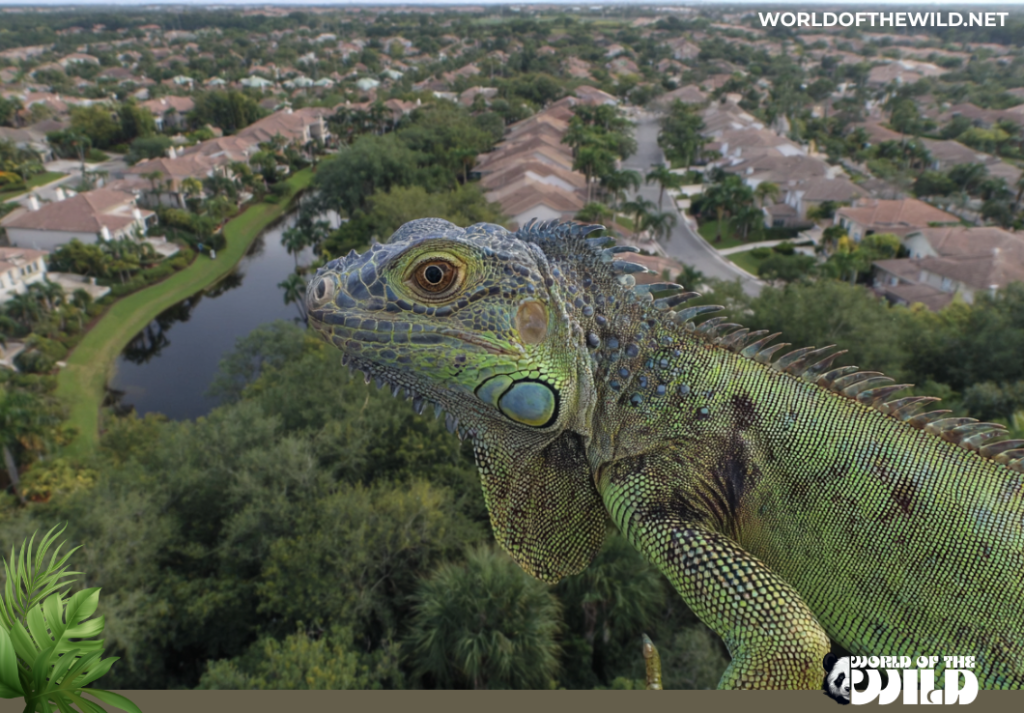
Florida wildlife authorities have gradually shifted from treating iguanas as a nuisance to treating them as a genuine ecological emergency requiring active management.
Green iguanas are not protected in Florida except by anti-cruelty laws and can be humanely killed on private property year-round with landowner permission. Members of the public may also remove and humanely kill iguanas from thirty-two Commission-managed public lands without a license or permit. This represents a significant policy shift — the state is actively encouraging residents and landowners to reduce iguana populations rather than simply tolerating their presence.
In 2021, the Florida Fish and Wildlife Conservation Commission took a major step by adding green iguanas to Florida’s Prohibited Species list. After July 28, 2021, it became illegal to acquire new iguanas as pets. Those who already owned iguanas were required to microchip them and ensure secure containment to prevent escapes. The sale and breeding of green iguanas was fully phased out by mid-2024. Closing off the pipeline of new animals entering the ecosystem is an essential step, though it does nothing to address the tens of millions already living in the wild.
Professional iguana trappers have become a genuine industry in South Florida. Companies specializing in iguana capture, removal, and euthanasia operate across Miami-Dade, Broward, Palm Beach, and Collier counties. Trapping methods range from baited cage traps to pole snares to catch sticks. During cold snaps, when iguanas are cold-stunned and immobile, organized collection efforts allow trappers to remove large numbers of animals efficiently. The FWC and local municipalities have contracted with trapping companies to address particularly severe infestations on public lands.
Some municipalities have taken their own aggressive steps. Various cities have implemented vegetation management programs along canal banks and in areas adjacent to electrical infrastructure to reduce iguana habitat and access. Lake Worth Beach’s efforts near electrical substations brought power-outage events down considerably over several years, demonstrating that targeted local interventions can produce measurable results even if they cannot solve the broader problem.
Research and monitoring efforts are also underway. Scientists from the University of Florida and other institutions are working to better map the geographic distribution of iguanas, understand their population dynamics, and identify more effective control methods. This research informs the strategies that wildlife managers deploy, helping to make removal efforts more targeted and efficient over time.
Can This Problem Be Controlled or Eliminated?
This is the question every concerned South Florida resident wants answered, and the honest answer is not an encouraging one — at least not in the short term.
Wildlife scientists and managers have stated plainly and repeatedly that total elimination of the iguana population is not a realistic goal. The biological reality of the situation makes eradication virtually impossible. With tens of millions of iguanas spread across thousands of square miles, each capable of laying dozens of eggs per year, the mathematics of elimination simply do not work in humanity’s favor. The goal, as uncomfortable as it may be to accept, is management — not victory.
Even intensive trapping programs, while valuable in reducing local populations in targeted areas, face the problem of rapid population rebound. Remove a hundred iguanas from a neighborhood this month, and the surrounding population will expand back into that territory within a year or two. Trapping alone, without sustained follow-through and habitat modification, tends to create a temporary reduction followed by a return to baseline numbers. The evidence suggests that no single intervention, applied in isolation, is sufficient to meaningfully reduce the statewide population over the long term.
What experts do believe is achievable is meaningful population suppression in key areas — around critical infrastructure, in protected natural areas, and in the most heavily affected residential communities. Sustained, consistent removal pressure in these zones, combined with habitat modification that makes areas less attractive to iguanas, can reduce the damage being done even if it cannot eliminate the animals entirely.
The longer-term hope lies in a combination of strategies: continued and strengthened regulation of the exotic pet trade to prevent future invasions, research into potential biological control methods, public education that changes behavior around feeding and habitat modification, and sustained funding for professional removal programs. Some researchers have also explored the possibility of fertility control programs for iguanas, though these remain in early stages and face significant logistical challenges at the scale needed to make a dent in the population.
Climate, ironically, may eventually play a role. Cold weather events — even if increasingly rare — can periodically cause mass cold-stunning events that knock back iguana populations, at least in the northern portions of their Florida range. But as global temperatures continue to rise, even this natural check is likely to weaken over time, potentially allowing iguanas to push even further north and establish permanent populations in areas that previously served as a natural boundary.
What Residents Can Do to Help
While the iguana problem is too large for any individual homeowner to solve alone, there is a meaningful role that every South Florida resident can play in reducing the impact of the invasion.
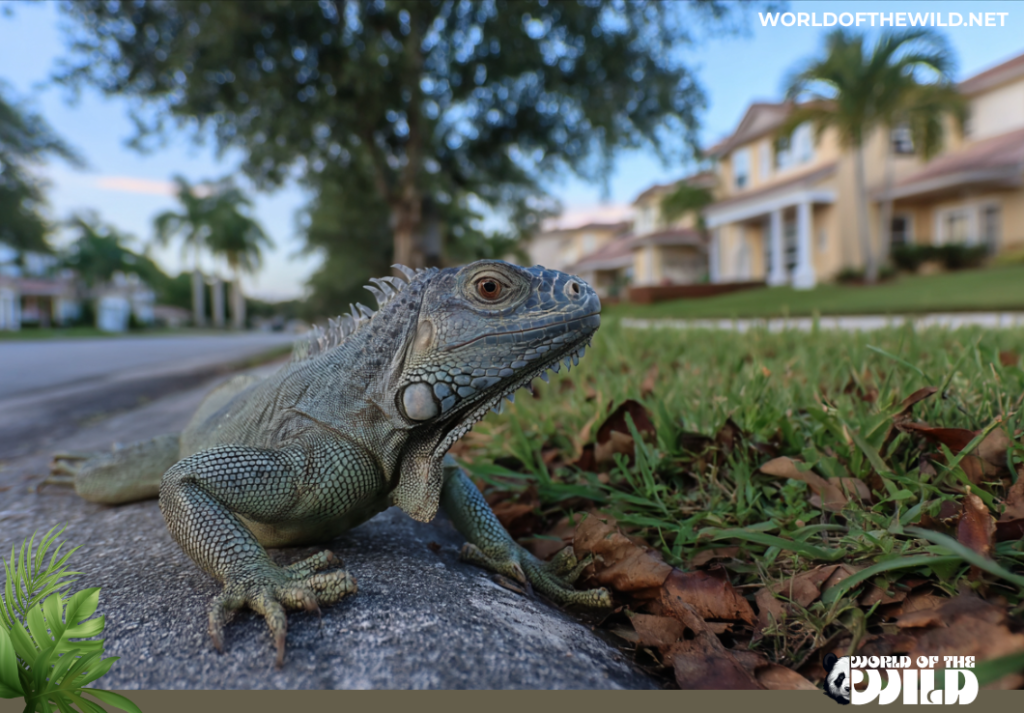
The first and most important thing residents can do is stop feeding iguanas. It seems obvious, but it happens constantly, often out of misguided kindness. Feeding iguanas makes them comfortable around humans, encourages them to return to the same location repeatedly, and ultimately leads to denser populations in residential areas. A fed iguana is not just a personal problem — it becomes a neighborhood problem very quickly.
Modifying your landscape is another powerful tool. Iguanas are attracted to lush, low-growing vegetation, fruit trees, and flowering plants. Homeowners can make their yards significantly less hospitable by removing or relocating plants that iguanas prefer, planting iguana-resistant species such as milkweed and certain citrus varieties, and installing physical barriers like fencing or mesh screens to protect gardens and entry points. The University of Florida’s IFAS Extension program maintains a list of plants that iguanas tend to avoid, which is freely available to homeowners and worth consulting before replanting after an iguana assault on your garden.
Sealing entry points to homes is essential in heavily infested areas. This means checking for gaps around pipes, foundations, and pool equipment, and closing off any space large enough for an iguana to squeeze through. For those with burrowing problems along seawalls or canal banks, professional-grade barriers installed early can prevent excavation damage before it becomes a structural emergency.
If you encounter iguanas on your property, you are encouraged to humanely harass them — make loud noises, spray them with a hose, or disturb their basking spots — to discourage them from settling in. However, residents are strongly advised not to attempt to physically capture or remove iguanas themselves. Despite looking slow and manageable, iguanas are equipped with sharp teeth, powerful claws, and tails capable of delivering a whipping blow at surprisingly high speed. They can and do injure people who handle them without proper training and equipment. Professional trappers should be called for actual removal.
Residents can also report unusual iguana sightings — particularly in areas where they have not previously been seen — to the Florida Fish and Wildlife Conservation Commission through their wildlife alert hotline. This helps researchers track the northward spread of the population and prioritize management resources where they are most needed.
Finally, and perhaps most importantly, residents can support sensible policy. Advocating for continued restrictions on the exotic pet trade, funding for wildlife management programs, and investment in research into long-term control solutions all contribute to a larger systemic response that no individual action can replace. The iguana invasion was created by policy failures and commercial irresponsibility. Fixing it will require policy solutions and sustained public commitment.
A Problem We Made, and One We Must Manage
The iguana invasion of South Florida is, at its core, a story about the consequences of human choices made without regard for ecological impact. We imported these animals by the thousands for our own entertainment. We released them when they became inconvenient. We failed to regulate their trade until the damage was already done. And now, millions of them are embedded in one of the most environmentally sensitive regions in the United States, eating their way through native ecosystems, undermining infrastructure, threatening endangered species, and showing absolutely no signs of leaving.
The lesson of the iguana invasion extends well beyond iguanas. It is a lesson about what happens when exotic species are introduced into ecosystems they did not evolve in, and about the staggering difficulty — and cost — of trying to undo that damage once it has been done. South Florida is simultaneously ground zero for the iguana invasion and a living classroom in invasive species ecology, and the lessons it teaches are ones that wildlife managers, policymakers, and the public would do well to take seriously before the next invasive species crisis emerges.
For the residents of South Florida, the reality is that iguanas are going to be part of the landscape for the foreseeable future. The goal now is not elimination but management — reducing the population pressure on the most sensitive natural areas, minimizing the economic and structural damage in residential communities, and preventing the conditions that allowed this invasion to happen from ever occurring again. That will require sustained effort, serious funding, and the active participation of every community that calls South Florida home.
The iguanas, for their part, are not going anywhere without a fight.
World of the Wild covers wildlife, conservation, and the natural world. For more on South Florida’s invasive species challenges, explore our related articles on Burmese pythons, Nile monitors, and the battle to save the Florida Everglades.