
Imagine an animal so massive it could swallow a small car whole, yet so gentle it glides silently through the ocean like a living island. Now imagine that this magnificent creature — one that has roamed Earth’s oceans for millions of years — could vanish entirely within our lifetime. That is the sobering reality facing the North Atlantic Right Whale, a species teetering so precariously on the edge of extinction that scientists no longer measure its survival in generations, but in individual births and deaths.
Right whales are not just another endangered species on a long and growing list. They are one of the ocean’s most ecologically important megafauna, a keystone of marine biodiversity, and a creature whose fate serves as a direct mirror of humanity’s relationship with the natural world. To know the Right Whale is to understand both the breathtaking grandeur of ocean life and the urgent, desperate race to save it before it slips away forever.
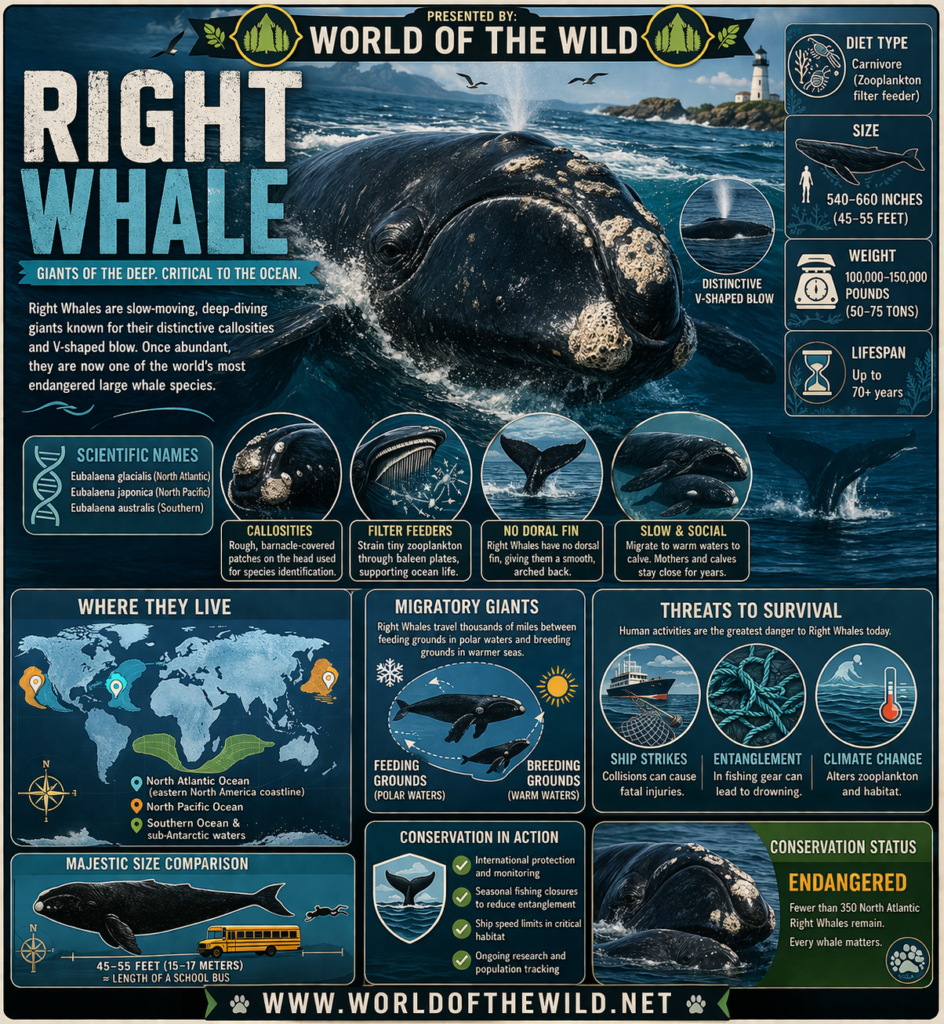
Facts
- The name “Right Whale” was coined by whalers who considered them the “right” whale to hunt — they were slow-moving, floated when dead, and were rich in blubber and baleen, making them tragically easy targets.
- Right whales produce no dorsal fin — a rare anatomical trait among large whales that makes them hydrodynamically distinct and immediately recognizable in the water.
- Their callosities are as unique as fingerprints. The rough, white-yellow patches of hardened skin on a right whale’s head form individual patterns that researchers use to identify specific animals, much like a human face.
- They are one of the loudest animals on Earth. Right whales communicate through low-frequency “up-calls” that can travel hundreds of miles through the ocean — a critical adaptation in a vast, dark, underwater world.
- A single right whale can consume up to 2,700 pounds of food in a single day when feeding conditions are optimal, straining microscopic crustaceans from enormous volumes of seawater.
- North Atlantic Right Whale females reproduce extremely slowly, giving birth to only one calf every three to ten years — one of the lowest reproductive rates of any mammal on Earth.
- Fewer than 370 North Atlantic Right Whales are believed to exist today, making this population one of the most critically imperiled groups of large animals anywhere on the planet.
Sounds of the Right Whale
Species
Right whales belong to a lineage of baleen whales that has fascinated taxonomists and evolutionary biologists for generations. Their full classification is as follows:
- Kingdom: Animalia
- Phylum: Chordata
- Class: Mammalia
- Order: Artiodactyla (previously Cetacea, now subsumed within this order)
- Family: Balaenidae
- Genus: Eubalaena
- Species: Three recognized species
The genus Eubalaena encompasses three geographically distinct species, each occupying a different oceanic region. The North Atlantic Right Whale (Eubalaena glacialis) is found along the eastern seaboard of North America and is the most critically endangered of the three. The North Pacific Right Whale (Eubalaena japonica) ranges across the northern Pacific Ocean and is itself extremely rare, with only a few hundred individuals estimated to remain. The Southern Right Whale (Eubalaena australis) inhabits the waters of the Southern Hemisphere — around South America, South Africa, Australia, and New Zealand — and represents the most stable and numerous of the three species, with a population estimated at around 10,000 to 15,000 individuals.
For many years, all three were lumped together as a single species, but genetic and morphological analysis in the early 21st century confirmed their status as three separate, reproductively isolated species. A closely related species, the Bowhead Whale (Balaena mysticetus), shares the same family (Balaenidae) and exhibits a number of similar characteristics, including the absence of a dorsal fin and the use of baleen plates for filter feeding, though it is adapted specifically for life in Arctic waters.
Appearance
The Right Whale is an animal of extraordinary physical presence. Adults typically range from 45 to 55 feet in length, with females generally larger than males — a pattern of sexual dimorphism common among baleen whales. These massive animals weigh anywhere from 100,000 to 150,000 pounds (50 to 70 tons), placing them among the heaviest animals alive today.
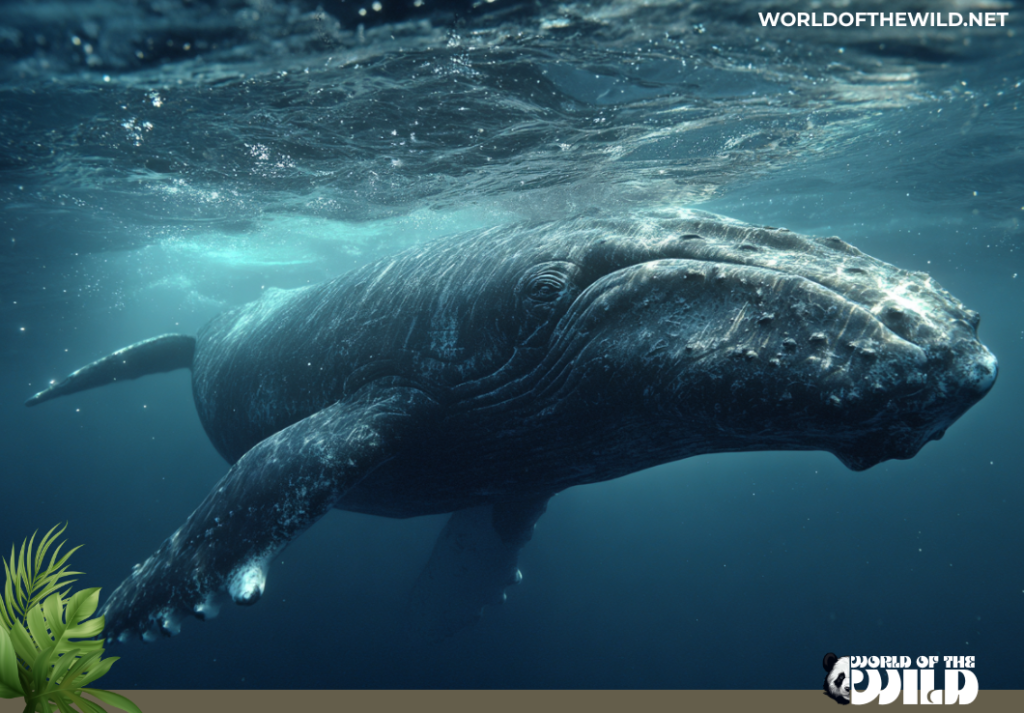
Their body shape is robust and rotund — almost comically so by whale standards — giving them a stocky, barrel-like silhouette that is unlike the sleeker profiles of humpback or blue whales. Their skin is predominantly black or dark gray, though many individuals display irregular white patches on their bellies. The most visually striking feature of any right whale, however, is its callosities — raised patches of roughened, thickened skin concentrated on the rostrum (the top of the head), around the eyes, near the blowhole, along the chin, and on the lower lips. These callosities are colonized by tiny crustaceans called cyamids, commonly known as whale lice, which give the patches their characteristic pale yellow, white, or orange coloration. Each whale’s callosity pattern is unique, providing researchers with a reliable natural ID system.
The head itself is enormous, accounting for roughly one-quarter to one-third of the animal’s total body length. Inside that massive head lies one of the animal’s most remarkable structures: baleen plates that can reach up to eight feet in length. These dark, flexible plates hang from the upper jaw in rows of several hundred and act as a biological sieve, trapping zooplankton as water is pushed out of the mouth. Right whales also possess no dorsal fin, a feature that distinguishes them instantly from most other large whale species. Their broad, deeply notched tail flukes are powerful propulsion organs, and their paddle-shaped pectoral fins help with steering and maneuvering through the water.
Behavior
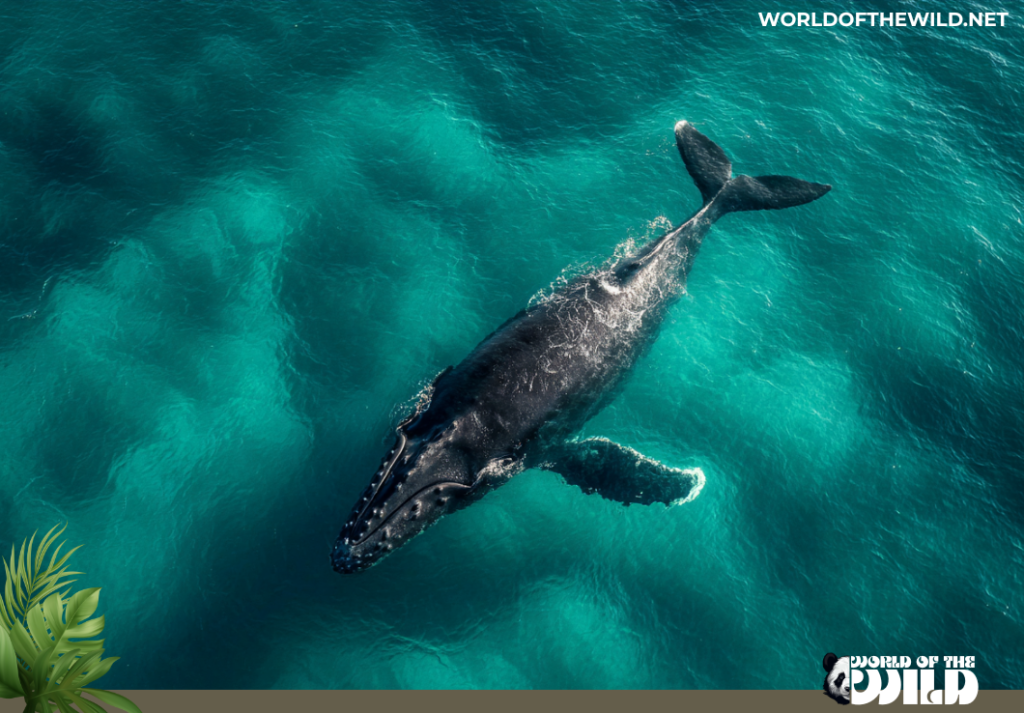
Right whales are generally slow-moving, social animals that spend their time in relatively small groups, though they do not form the tight, long-term social bonds seen in species like orcas or sperm whales. They are frequently observed traveling alone or in loose aggregations, particularly on feeding grounds, where individuals may gather in larger numbers when zooplankton is concentrated.
One of the most distinctive behaviors of right whales is surface activity — they are among the most acrobatic of the great whales, frequently breaching (leaping partially or fully out of the water), lobtailing (slapping the water surface with the tail flukes), and sailing (raising their flukes upright in the wind, possibly to use the surface area as a sail). The purpose of some of these behaviors remains debated, but breaching is thought to be communicative or possibly used to dislodge parasites.
Right whales communicate primarily through low-frequency vocalizations, including the characteristic “up-call” — a rising moan that serves as a contact call between individuals. They also produce gunshot sounds, loud percussive blasts created by slapping the water surface, and a variety of other moans and screams, particularly in social situations. Their hearing is exquisitely tuned to low frequencies, making them highly vulnerable to the chronic noise pollution generated by commercial shipping traffic.
Feeding behavior is another defining characteristic. Right whales are skim feeders, swimming slowly near or at the surface with their mouths open wide, allowing water to flow through their baleen plates and trap dense patches of copepods and other tiny crustaceans. When zooplankton concentrations are high enough, right whales will feed at depth as well, diving for up to 20 minutes at a time.
Evolution
The ancestors of modern whales began their extraordinary evolutionary journey on land approximately 50 million years ago, descending from terrestrial artiodactyls — the same group that gave rise to hippos, deer, and cattle. Over tens of millions of years, these proto-whales gradually returned to the sea, developing increasingly streamlined bodies, losing their hind limbs, and evolving the specialized sensory and anatomical tools of modern cetaceans.
The family Balaenidae — the lineage that includes right whales and bowhead whales — diverged from other baleen whales approximately 20 to 25 million years ago during the Oligocene and Miocene epochs. Fossil evidence suggests that early right whale relatives were already filter feeders with elongated, arched jaws adapted for straining food from the water. The genus Eubalaena itself is thought to have emerged within the past 5 to 10 million years, with the three modern species diverging as oceanic barriers and changing climate patterns separated populations across the globe.
The evolution of baleen — the keratin-based filtration system that replaced teeth in the ancestors of all mysticetes (baleen whales) — represents one of the most consequential transitions in mammalian evolutionary history, allowing these animals to exploit the enormous biomass of small crustaceans and plankton in the world’s oceans. Right whales represent a highly specialized branch of this radiation, perfectly adapted for the slow, continuous skimming of dense plankton patches — an ecological strategy that proved tremendously successful for millions of years, until humans with harpoons arrived.
Habitat
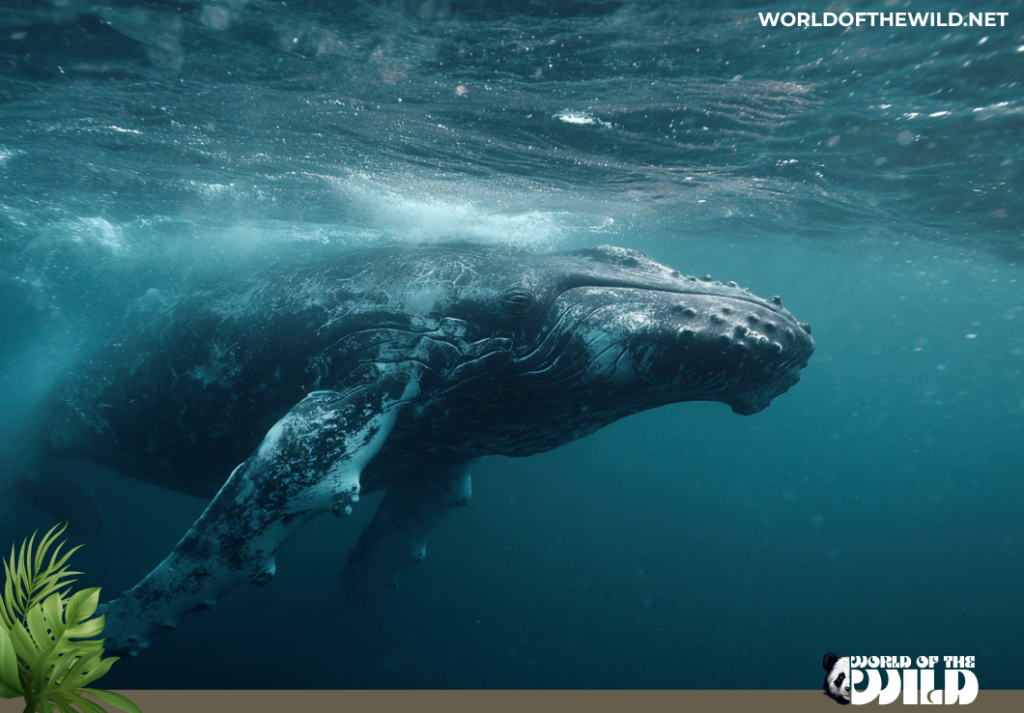
Right whales are found exclusively in temperate and subpolar ocean waters of the Northern and Southern Hemispheres, depending on the species. The North Atlantic Right Whale follows a well-documented seasonal migration along the eastern coast of North America. In winter, pregnant females travel to the shallow coastal waters off Georgia and northern Florida, particularly around the warm waters near Jacksonville, to give birth. In spring and summer, the population migrates northward to rich feeding grounds in the Gulf of Maine, Bay of Fundy, and waters off Nova Scotia and Newfoundland, where cold, nutrient-rich upwellings produce massive blooms of copepods.
These whales favor coastal and shelf waters — relatively shallow, productive zones where the zooplankton they depend on tend to concentrate in dense patches. They are not deep-ocean creatures; they live and feed in the same busy coastal corridors shared by commercial shipping lanes, fishing operations, and recreational boating traffic, which tragically puts them in constant proximity to human activity.
The Southern Right Whale inhabits a broader range, moving between sub-Antarctic feeding grounds and warmer coastal calving waters in South America, southern Africa, and Australia. The waters around Valdés Peninsula in Argentina and the Walker Bay in South Africa are particularly famous as nursery grounds for this species, drawing wildlife tourists from around the world.
Diet
Right whales are obligate carnivores in the most ironic sense — they eat exclusively tiny animals, specifically zooplankton, and are entirely dependent on the predictable seasonal blooms of these microscopic creatures. Their primary prey consists of copepods, particularly the species Calanus finmarchicus in the North Atlantic, which forms the dense, reddish-orange patches of concentrated biomass that right whales seek out. They also consume krill, pteropods (small swimming mollusks), and other small crustaceans when copepods are less available.
Feeding is accomplished through continuous ram filtration, sometimes called skim feeding. A right whale swims forward with its enormous mouth partially agape, forcing water through its baleen plates while trapping zooplankton on the inner surface. Unlike humpback whales, which use bubble-net strategies, or gray whales, which excavate the seafloor, right whales rely almost entirely on swimming into dense prey patches and continuously straining. To make this energetically expensive strategy worthwhile, prey must be extremely concentrated — right whales will not bother feeding unless copepod densities exceed a certain threshold.
In a single productive feeding day, a right whale can consume over 2,700 pounds of copepods, building up the thick blubber reserves needed to sustain them through migrations and the energetically demanding processes of pregnancy and lactation.
Predators and Threats
In nature, adult right whales have very few predators. Orcas (killer whales) are known to occasionally attack right whales, particularly young calves or weakened individuals, and large sharks may pose a minor opportunistic threat. But for most of their evolutionary history, adult right whales were effectively immune to predation — their size and the cold, productive waters they favored offered substantial protection.
Today, the threats that matter are entirely human-made, and they are devastating.
Ship strikes are one of the leading causes of right whale mortality. These slow-moving whales frequently rest or feed near the surface in the same coastal shipping lanes used by massive cargo vessels and tankers. The impact of a large ship moving at speed is catastrophically lethal, and even near-misses can cause debilitating internal injuries that kill whales weeks later.
Entanglement in fishing gear is perhaps the single greatest threat to the species’ survival. Right whales become entangled in the vertical ropes connecting lobster and crab traps to surface buoys, wrapping the lines around their flippers, mouths, and bodies. Entanglement can cause whales to drown immediately, or it can inflict slow, agonizing deaths over months or years as ropes cut into flesh, impede feeding, and exhaust animals dragging heavy gear. Studies suggest that the majority of right whales alive today bear entanglement scars.
Climate change is increasingly disrupting the distribution of the copepod blooms right whales depend on. As the Gulf of Maine — one of the fastest-warming bodies of water on Earth — heats up, copepod populations are shifting northward into Canadian waters that fall outside existing U.S. protected shipping lanes and fishery regulations. Whales following their food are venturing into unprotected zones where strikes and entanglements are more likely.
Noise pollution from commercial shipping degrades the acoustic environment that right whales depend on for communication, navigation, and finding mates, potentially reducing reproductive success in ways that are difficult to measure but deeply concerning.
Reproduction and Life Cycle
Right whale reproduction is among the slowest of any mammal, a biological reality that makes every birth precious and every death a statistical catastrophe for the species.
Mating occurs in “surface active groups” — chaotic, often dramatic gatherings of multiple males competing to mate with a single female. These groups can include a dozen or more males, jostling, rolling, and vocalizing in intense competition. Females appear to mate with multiple partners, and the genetics of right whale sperm suggest that sperm competition — where males produce large volumes of sperm to outcompete rivals inside the female — is a key reproductive strategy.
After successful mating, the gestation period lasts approximately 12 months, with calves born primarily in winter off the coasts of Georgia and northern Florida. Newborn calves are roughly 14 to 18 feet long and weigh around 2,000 to 3,000 pounds at birth. Mothers nurse their calves for approximately one year, and the bond between mother and calf is strong and enduring during this period. Calves are completely dependent on their mothers for nutrition, protection, and learning the migratory routes they will follow for the rest of their lives.
Right whale females reach sexual maturity at around 9 to 10 years of age and, under ideal conditions, give birth every 3 to 5 years. In recent years, however, researchers have documented an alarming increase in the calving interval, now stretching to 6 to 10 years in many females — a likely physiological response to chronic stress, poor nutrition from declining copepod availability, and the cumulative toll of sub-lethal entanglements.
Right whales can live for 70 years or more, though surviving to old age in today’s ocean is increasingly rare. Many whales show evidence of repeated entanglements, ship strike scars, and nutritional stress well before reaching middle age.
Population
The North Atlantic Right Whale is listed as Critically Endangered on the IUCN Red List — the highest level of threat short of extinction in the wild. Current population estimates place the total number of living North Atlantic Right Whales at fewer than 370 individuals, of which fewer than 70 are reproductive females. This is not a stable population; it is a population in active decline, losing more individuals each year to human causes than it is replacing through births.
The trajectory is alarming. In the 1990s and early 2000s, the population had climbed to over 500 individuals following initial protections and whaling moratoriums. But since around 2010, deaths — particularly from entanglement and ship strikes — have outpaced births, and the population has been falling steadily. The years 2017 and 2019 were particularly catastrophic, each recording more than a dozen known deaths in what scientists termed “Unusual Mortality Events.”
The Southern Right Whale offers a stark contrast. With an estimated population of 10,000 to 15,000 individuals and a growth rate of around 6 to 7 percent per year in some areas, it serves as proof that right whales can recover when hunting pressure is removed. The North Pacific Right Whale remains critically rare, with perhaps only 30 to 40 individuals in the eastern North Pacific population.
Conclusion
The Right Whale’s story is, at its heart, a story about choices — the ones we have made, and the ones we still have the power to make. We hunted these animals to the edge of oblivion for centuries, and just when natural recovery seemed possible, we replaced harpoons with ship hulls and fishing ropes and kept killing at the same pace under different pretexts.
But the story is not yet over. Unlike so many species we have lost, the North Atlantic Right Whale still exists. There are still calves being born. There are still mothers teaching their young the ancient migratory routes of their ancestors. Every one of those fewer than 370 animals represents a thread connecting our present to a past where the ocean was alive with them, and a fragile possibility of a future where it could be again.
The solutions are known. Ropeless fishing gear is being developed and tested. Ship speed reductions in critical habitat areas have been shown to reduce strike risk significantly. Stronger regulations, better enforcement, and expanded protected zones are achievable policy goals. What has been lacking is not knowledge or technology, but urgency and political will.
The Right Whale will not wait. Its biology is too slow, its population too small, and the threats it faces too immediate. This is one of those rare conservation moments where action in the next decade will determine whether a species survives or vanishes. We have the rare and weighty privilege of being the generation that decides which way this goes. Choose wisely.
Quick Reference
| Scientific Name | Eubalaena glacialis (North Atlantic); Eubalaena japonica (North Pacific); Eubalaena australis (Southern) |
| Diet Type | Carnivore (zooplankton filter feeder) |
| Size | 540–660 inches (45–55 feet) |
| Weight | 100,000–150,000 pounds (50–75 tons) |
| Region Found | North Atlantic Ocean (eastern North America coastline); North Pacific Ocean; Southern Ocean and sub-Antarctic waters |