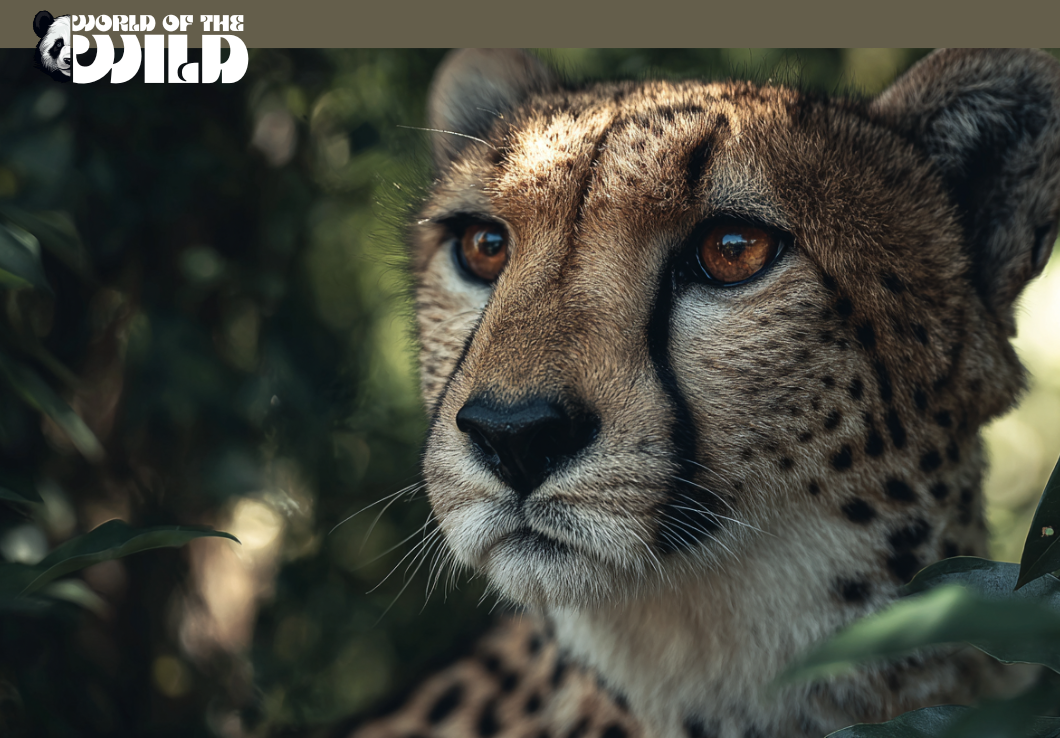

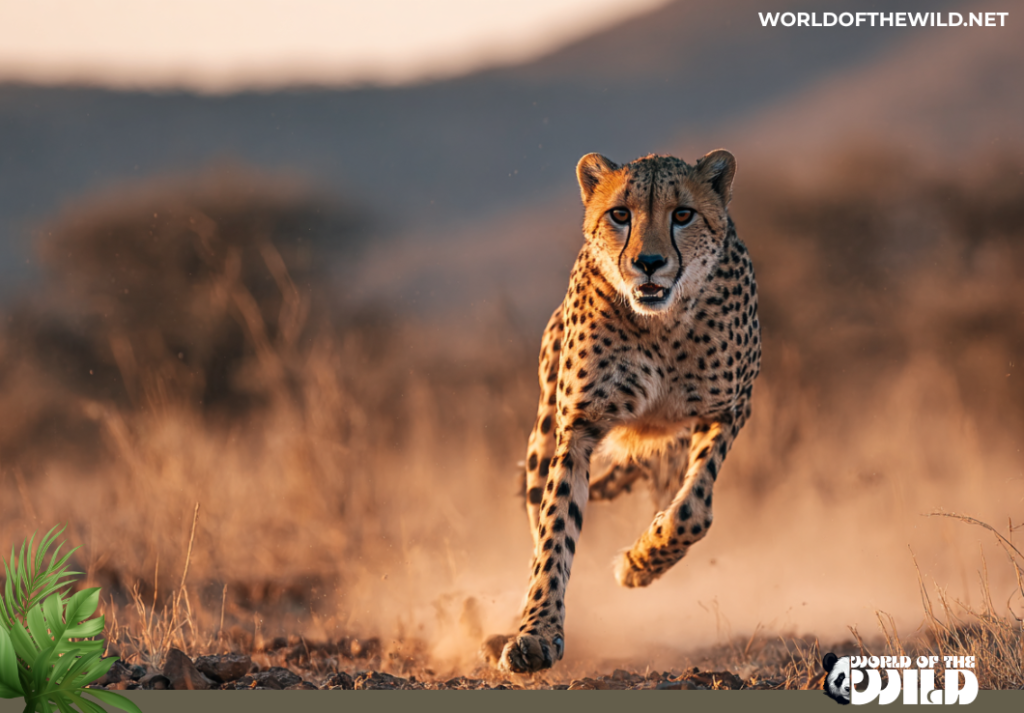
Imagine a bolt of golden lightning streaking across the African savanna, covering the length of a football field in just three seconds. This is the cheetah in full sprint—the fastest land animal on Earth and one of evolution’s most spectacular achievements. Built like a living missile with a body honed by millions of years of refinement, the cheetah represents the ultimate expression of speed in the animal kingdom. Yet despite this remarkable prowess, these magnificent cats face an uncertain future, making them not only a symbol of raw power and grace but also a poignant reminder of nature’s fragility in our rapidly changing world.
Facts
- Non-retractable claws: Unlike other big cats, cheetahs have semi-retractable claws that work like running spikes, providing crucial traction during high-speed chases.
- Tear marks: The distinctive black lines running from their eyes to their mouths aren’t just for show—these “tear marks” help reduce sun glare and improve focus on prey during hunts.
- Acceleration champions: A cheetah can accelerate from 0 to 60 mph in just three seconds, faster than most sports cars.
- Unique vocalization: Cheetahs cannot roar like other big cats; instead, they chirp, purr, and make bird-like sounds to communicate.
- Cooling system: Their large nasal passages allow for increased oxygen intake during sprints, while their thin body helps dissipate heat quickly.
- Low genetic diversity: Cheetahs have remarkably similar DNA across the species, suggesting they survived a genetic bottleneck approximately 10,000 years ago.
- Daytime hunters: Unlike most big cats, cheetahs hunt primarily during daylight hours to avoid competition with larger predators like lions and leopards.
Sounds of the Cheetah
Species
Kingdom: Animalia
Phylum: Chordata
Class: Mammalia
Order: Carnivora
Family: Felidae
Genus: Acinonyx
Species: Acinonyx jubatus
The cheetah belongs to a genus all its own, making it unique among the big cats. Historically, scientists recognized several subspecies based on geographic location, though recent genetic studies have simplified this classification. Today, most experts recognize four to five subspecies:
The Southeast African cheetah (A. j. jubatus) represents the largest population and roams across countries including South Africa, Botswana, and Zimbabwe. The Northeast African cheetah (A. j. soemmeringii) inhabits the Horn of Africa and parts of East Africa. The critically endangered Northwest African cheetah (A. j. hecki), also called the Saharan cheetah, survives in small numbers across the Sahara and Sahel regions. The Asiatic cheetah (A. j. venaticus), once widespread across the Middle East and India, now clings to existence with fewer than 100 individuals remaining in Iran.
An interesting case is the “king cheetah,” once thought to be a separate species due to its distinctive coat pattern featuring blotches instead of spots. Genetic research revealed this to be merely a rare recessive gene mutation found in southern African populations.
Appearance
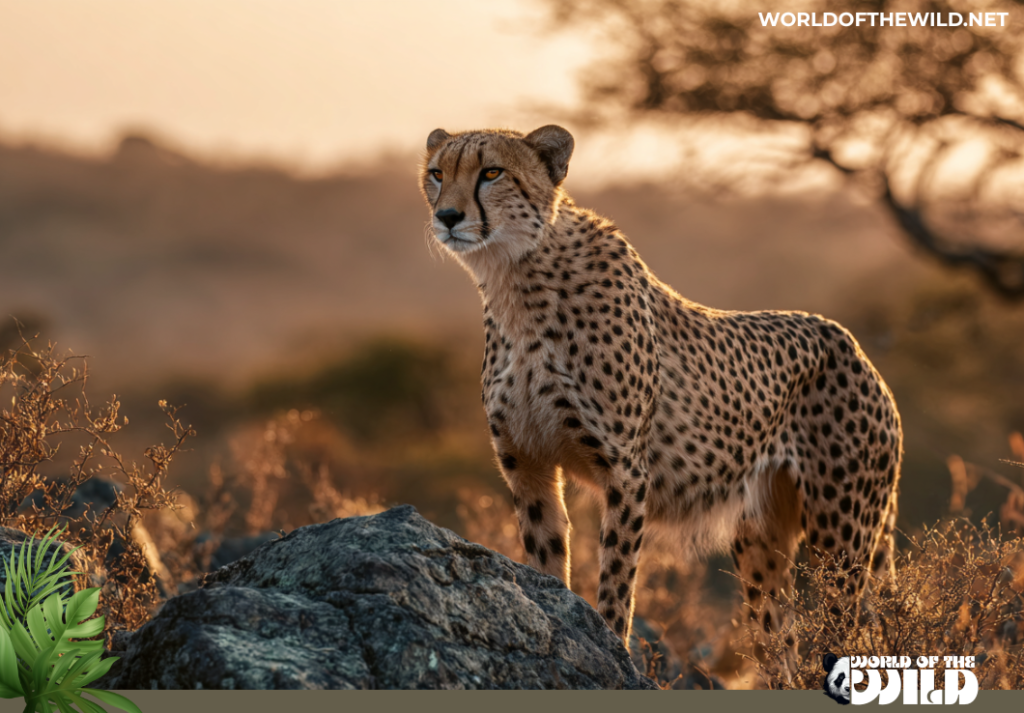
The cheetah’s appearance is a masterclass in form following function. Adults typically measure 3.5 to 4.5 feet in body length, with their distinctive tail adding another 25 to 32 inches. Standing 28 to 35 inches tall at the shoulder, cheetahs are remarkably lightweight for their size, with males weighing between 75 and 140 pounds and females slightly lighter at 70 to 120 pounds.
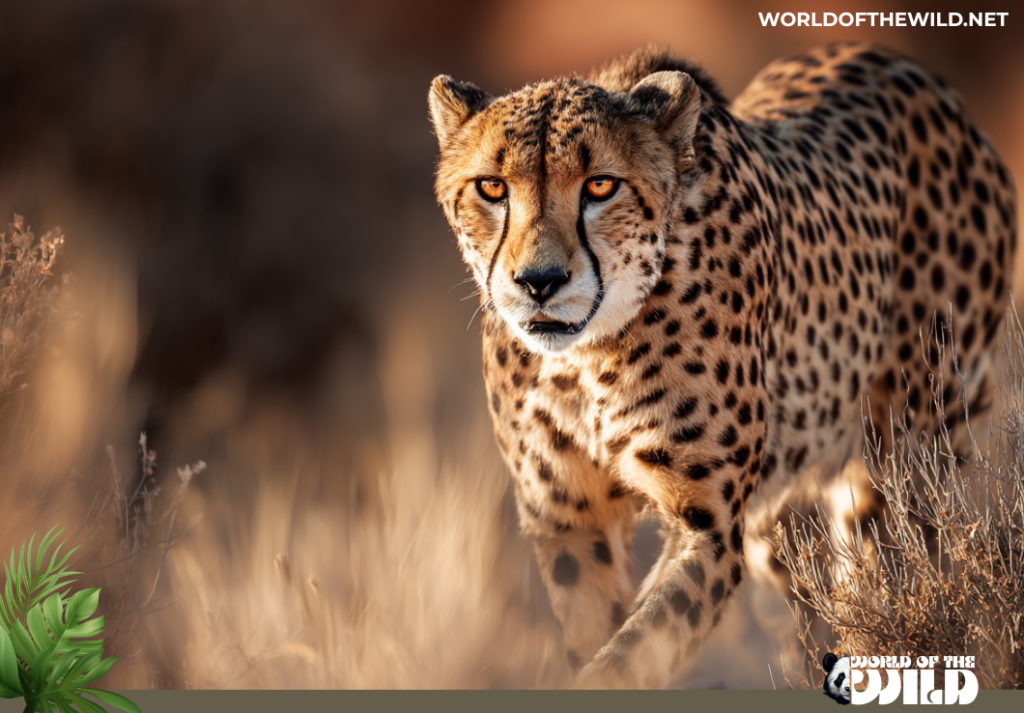
Their coat is covered in solid black spots scattered across a tawny or pale yellow background, with the fur short and coarse to the touch. The belly is typically white or cream-colored. Those signature black “tear marks” create two parallel lines from the inner corners of each eye down to the mouth, a feature that distinguishes cheetahs from leopards at a glance.
The cheetah’s skull is remarkably small and lightweight, with a shortened muzzle that makes room for enlarged nasal passages. Their eyes are positioned high on the skull for excellent forward vision during chases. The body is exceptionally lean and muscular, with a deep chest housing large lungs and a powerful heart. Their spine is incredibly flexible, acting like a spring during each stride.
Perhaps most distinctive are their long, slender legs ending in hard foot pads and those semi-retractable claws. The tail is thick and muscular, featuring a distinctive pattern of rings and spots, and it serves as a critical rudder during high-speed turns. Unlike other big cats, cheetahs have a relatively small head compared to their body, contributing to their streamlined, aerodynamic build.
Behavior
Cheetahs exhibit fascinating social structures that differ from most other big cats. Adult males often form small coalitions, typically consisting of brothers from the same litter, and these groups maintain territories together throughout their lives. These coalitions are more successful at establishing and defending territories than solitary males. Females, conversely, are solitary except when raising cubs, occupying large home ranges that overlap with multiple male territories.
Unlike the nocturnal habits of many predators, cheetahs are primarily diurnal, hunting during the cooler morning and late afternoon hours. This timing helps them avoid competition with larger, more powerful predators like lions, leopards, and hyenas, which can easily steal kills from the lighter-built cheetah.
Communication among cheetahs is surprisingly diverse. They produce a variety of vocalizations including chirps, churrs, purrs, growls, and hisses. Mother cheetahs use a unique “stutter bark” to call their cubs. Unlike lions or tigers, cheetahs cannot roar due to the structure of their larynx.
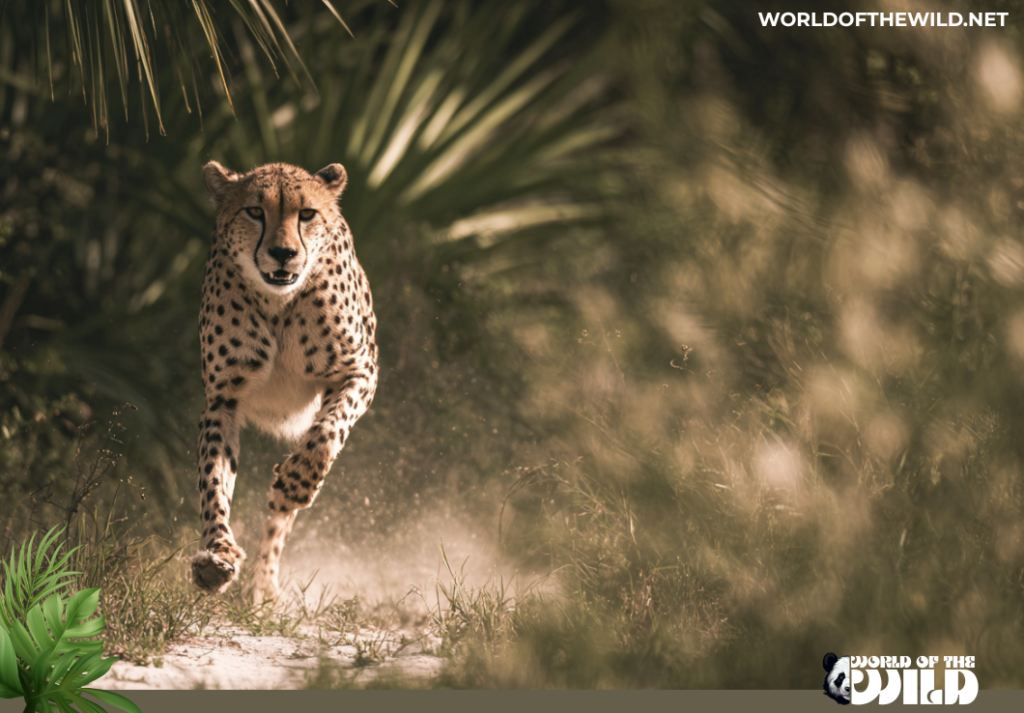
Hunting behavior showcases the cheetah’s incredible adaptations. They typically stalk within 100-300 feet of prey before launching their legendary sprint. The chase itself rarely lasts more than a minute and covers distances of 600-700 feet. During these pursuits, cheetahs can make sharp turns at full speed, using their tail as a counterbalance. Once they bring down prey, usually by tripping it with a paw swipe, they deliver a suffocating throat bite.
Intelligence manifests in their hunting strategies. Cheetahs carefully select prey, typically targeting young, old, or isolated animals. They also show remarkable restraint, conserving energy by abandoning chases that seem unlikely to succeed. After a kill, they must eat quickly—often within 30 minutes—to avoid having their meal stolen by larger predators.
Evolution
The cheetah’s evolutionary story is one of specialization and survival against the odds. The genus Acinonyx first appeared approximately 3.5 to 4 million years ago during the Pliocene epoch. Fossil evidence reveals that ancient cheetahs were once far more diverse, with several species distributed across Africa, Asia, Europe, and even North America.
The most famous extinct relative is the American cheetah (Miracinonyx), which roamed North America until about 12,000 years ago. These prehistoric cheetahs may have helped shape the evolution of pronghorn antelope, which can still run at speeds exceeding 55 mph despite having no natural predator today that requires such velocity—a ghostly echo of ancient predator-prey relationships.
The modern cheetah (Acinonyx jubatus) evolved its current form roughly 1 to 2 million years ago in Africa. The species underwent a severe population bottleneck approximately 10,000 to 12,000 years ago, likely during the last ice age. This catastrophic decline reduced the global population to perhaps just a few dozen individuals, leaving a genetic legacy visible today in the species’ remarkably low genetic diversity. This near-extinction event means modern cheetahs are so genetically similar that skin grafts between unrelated individuals rarely face rejection.
The evolutionary pressures that shaped the cheetah favored extreme specialization for speed. Over millions of years, natural selection refined their anatomy: lengthening their legs, deepening their chest cavity, enlarging their nasal passages, reducing their body mass, and modifying their spine for maximum flexibility. This specialization came with trade-offs—their lightweight build made them vulnerable to larger predators, and their evolution toward speed meant sacrificing the climbing abilities common in other big cats.
Habitat
Cheetahs historically ranged across much of Africa, the Middle East, and parts of Asia, reaching as far east as India. Today, their distribution has contracted dramatically. The vast majority of wild cheetahs now live in southern and eastern Africa, with significant populations in Namibia, Botswana, South Africa, Kenya, and Tanzania. Namibia hosts the world’s largest population, with an estimated 2,500 to 3,000 individuals. Outside Africa, only the critically endangered Asiatic cheetah survives in isolated pockets of Iran’s remote desert regions.
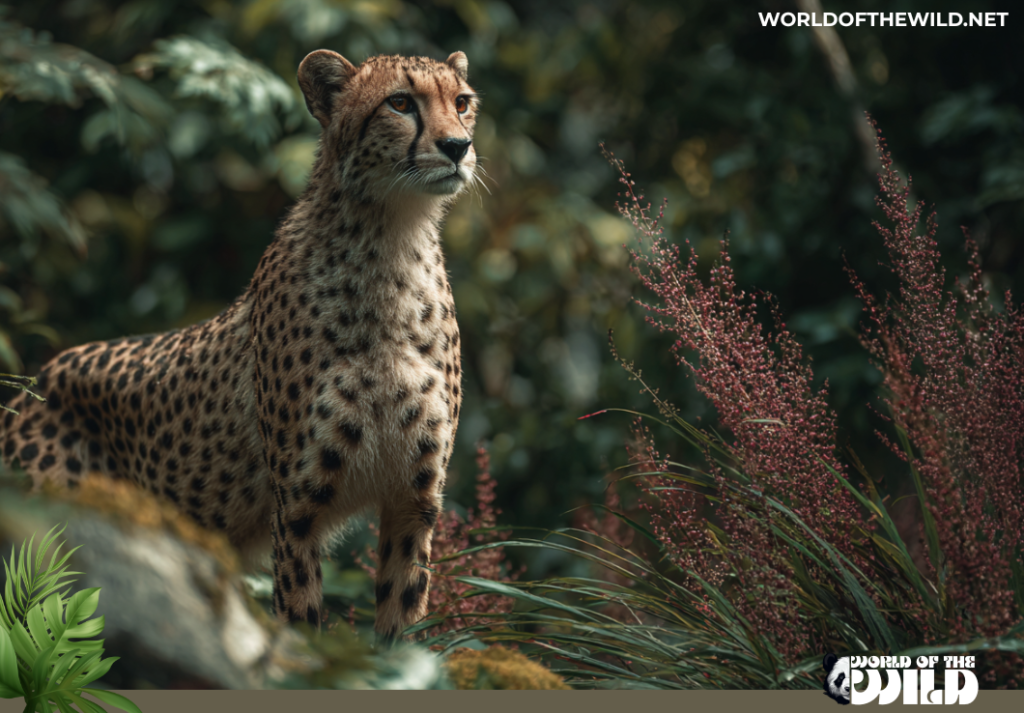
These magnificent cats prefer open habitats where their speed advantage can be fully utilized. African savannas with scattered trees and grasslands represent ideal cheetah territory, offering long sight lines for spotting prey and open ground for high-speed pursuits. They also inhabit scrublands, dry forests, and semi-arid regions, though they generally avoid dense forests where their hunting strategy becomes ineffective.
Cheetahs require territories with adequate prey density, water sources, and suitable denning sites for raising cubs. They favor areas with good visibility—high grass for stalking but open enough for running. Termite mounds, kopjes (rocky outcrops), and elevated perches allow them to scan vast areas for potential prey and approaching threats.
Unlike many big cats, cheetahs have adapted somewhat to human-modified landscapes. They can survive in farmlands and ranchlands, though this often brings them into conflict with livestock owners. In Namibia, roughly 90 percent of cheetahs live on commercial farmland rather than protected reserves, highlighting both their adaptability and the challenges of human-wildlife coexistence.
Male coalitions typically establish territories in areas with high prey density and defend these against other males. Female home ranges are much larger—sometimes exceeding 300 square miles—and overlap with multiple male territories. Females move regularly to find prey and avoid areas where larger predators concentrate.
Diet
Cheetahs are obligate carnivores, meaning their diet consists entirely of meat. Their prey preferences reveal their hunting strategy and physical limitations. Medium-sized ungulates form the core of their diet, with impalas, springboks, Thomson’s gazelles, and Grant’s gazelles being favored targets. These animals typically weigh between 50 to 90 pounds—substantial enough to be worth the energy expenditure of a chase but not so large that they pose significant danger to the relatively lightweight cheetah.
The hunting process is a study in patience and explosive action. Cheetahs rely primarily on sight rather than scent when hunting, spending considerable time on elevated perches scanning the landscape. Once prey is spotted, they begin a careful stalk, using available cover to approach within striking distance. The famous sprint comes last—a calculated risk that depletes enormous energy reserves.
Their kill rate is surprisingly modest compared to other big cats. Success occurs in only 40 to 50 percent of chases, and even successful hunts don’t always result in a meal. After the exhausting sprint, cheetahs need 20 to 30 minutes to recover before they can eat, during which time their kill is vulnerable to theft by lions, leopards, hyenas, or even vultures signaling the location to larger scavengers.
In addition to their preferred medium-sized prey, cheetahs opportunistically hunt smaller animals including hares, birds, and young warthogs. Mothers with cubs often target smaller prey to reduce hunting risks and provide manageable portions for their offspring to practice hunting skills.
Cheetahs must consume their kills quickly, often eating as much as possible in a short window before abandoning the carcass. Unlike leopards, they cannot drag kills into trees, and unlike lions, they lack the size and strength to defend their food aggressively. This vulnerability shapes their entire feeding strategy, favoring speed of consumption over complete utilization of the carcass.
Adult cheetahs typically need to kill every two to five days to meet their nutritional needs, though females with cubs hunt more frequently. They can survive several days without water, obtaining much of their moisture from the blood and body fluids of their prey.
Predators and Threats
Despite being formidable predators themselves, cheetahs face numerous threats from both natural predators and human activities. Their lightweight build and non-aggressive nature make them vulnerable in the African ecosystem.
Lions represent the most significant natural threat, killing both adult cheetahs and their cubs when opportunities arise. These confrontations rarely involve feeding; lions kill cheetahs primarily to eliminate competition. Leopards and spotted hyenas similarly pose dangers, particularly to cheetah cubs. Studies suggest that cub mortality from predation can reach 70 to 90 percent in areas with high concentrations of larger carnivores. This staggering mortality rate means only about one in ten cubs survives to independence.
To mitigate these risks, female cheetahs frequently move their cubs between den sites and hunt during daylight hours when lions and leopards are less active. Despite these adaptations, predation remains a leading cause of cub mortality.
Human-caused threats now pose even greater dangers than natural predators. Habitat loss and fragmentation top the list, as agricultural expansion, urban development, and infrastructure projects carve up the vast territories cheetahs require. This fragmentation isolates populations, reducing genetic diversity and making local extinctions more likely.
Human-wildlife conflict creates serious problems in areas where cheetahs share space with livestock. Farmers and ranchers often kill cheetahs to protect their animals, despite evidence suggesting cheetahs rarely target livestock when wild prey is available. In some regions, cheetahs are captured alive for the illegal pet trade, particularly in Middle Eastern countries where owning exotic cats has become a status symbol. Hundreds of cubs are smuggled annually, with most dying during transport or within months of captivity.
The illegal wildlife trade also targets cheetah skins and body parts, though demand is less intense than for other big cats. Climate change presents an emerging threat, altering prey distributions and potentially increasing conflicts with other predators as resources become scarcer.
Roads and highways fragment habitats and cause direct mortality through vehicle collisions. In areas like Namibia’s farmlands, roadkill represents a measurable cause of cheetah deaths.
Perhaps most insidious is the species’ genetic vulnerability. The severe bottleneck that occurred thousands of years ago left cheetahs with extremely low genetic diversity, making the entire species more susceptible to diseases and less adaptable to environmental changes. This genetic uniformity means a single disease outbreak could potentially devastate populations.
Reproduction and Life Cycle
Cheetah reproduction reflects their solitary nature and the harsh realities of raising vulnerable cubs in a competitive environment. Unlike many big cats, cheetahs don’t have a defined breeding season; females can enter estrus at any time of year, though births may peak during periods when prey is abundant.
When a female enters estrus, which lasts about 14 days, she may mate with multiple males if encountered, though females in territories controlled by coalitions typically mate with those coalition members. The courtship period is relatively brief, with mating occurring multiple times over several days.
Following a gestation period of approximately 90 to 95 days, the female gives birth to a litter of typically three to five cubs, though litter sizes can range from one to eight. Birth occurs in a secluded den—often a rocky outcrop, dense vegetation, or abandoned burrow. The cubs are born blind and helpless, weighing only 5 to 10 ounces, with fuzzy gray-blue fur and a distinctive long, silvery mane called a mantle running along their backs and necks.
This mantle serves multiple purposes. It may provide camouflage, making cubs resemble honey badgers—aggressive animals that predators avoid—or it might simply help break up their outline in tall grass. The mantle gradually disappears as cubs mature, typically fading completely by six months of age.
For the first eight weeks, the mother moves her cubs regularly between den sites to reduce predation risk. Cubs open their eyes at about four to eleven days old and begin following their mother at around six to eight weeks. During these vulnerable early months, the mother hunts alone and returns to nurse her cubs, leaving them hidden for hours at a time.
Around two months of age, cubs start accompanying their mother and begin eating meat, though they continue nursing for another three to six months. The mother teaches crucial hunting skills through a gradual process. Initially, cubs simply observe. Later, she may bring live prey to the den, allowing them to practice killing techniques. By ten to twelve months, young cheetahs actively participate in hunts, though they remain dependent on their mother’s kills.
Independence comes at around 16 to 24 months when the mother leaves her adolescent cubs, often when she enters estrus again. Littermates typically stay together for several additional months, with females eventually dispersing while male siblings often form permanent coalitions.
Sexual maturity arrives at different ages for males and females. Females can breed as early as 20 to 24 months, though many don’t successfully raise cubs until they’re older and more experienced. Males reach sexual maturity around the same age but often don’t establish territories or breed until they’re three to four years old.
In the wild, cheetahs live approximately 10 to 12 years, though few reach maximum age due to predation, injury, starvation, and disease. Captive cheetahs can live 15 to 17 years with proper care. The extended period of cub dependency, combined with high juvenile mortality, means female cheetahs successfully raise relatively few offspring to independence during their lifetime, contributing to the species’ conservation challenges.
Population
The cheetah’s conservation status tells a sobering story of decline. The International Union for Conservation of Nature (IUCN) currently lists the species as Vulnerable, with the Asiatic subspecies classified as Critically Endangered. Global population estimates suggest approximately 7,000 to 7,500 cheetahs remain in the wild, representing a dramatic decline from historical numbers. Just a century ago, an estimated 100,000 cheetahs roamed across their range.
The species has already disappeared from approximately 90 percent of its historic range in Africa and has been completely extirpated from Asia except for the small Iranian population. This geographic contraction reflects the combined pressures of habitat loss, human persecution, and prey depletion.
Population distribution is highly uneven. Southern Africa hosts the majority of remaining cheetahs, with Namibia alone accounting for approximately one-third of the global population. Botswana, South Africa, Kenya, and Tanzania also maintain significant populations. In contrast, populations across West, Central, and North Africa have collapsed dramatically, with the Northwest African cheetah numbering perhaps 250 individuals scattered across the Sahara and Sahel.
The Asiatic cheetah faces the most dire situation. Once ranging from the Arabian Peninsula through the Middle East to India, this subspecies now survives only in Iran’s remote deserts, with fewer than 50 individuals remaining—possibly as few as 20 to 40. Decades of conservation efforts have failed to reverse the decline, and extinction in the wild within the next decade remains a real possibility.
Population trends vary by region. Southern African populations appear relatively stable, particularly in countries with strong conservation programs and significant private land conservation. However, East African populations face increasing pressure from habitat conversion and human-wildlife conflict. Populations in North, West, and Central Africa continue to decline, with local extinctions occurring regularly.
Several factors complicate conservation efforts. The low genetic diversity inherited from the ancient population bottleneck makes cheetahs more vulnerable to diseases and environmental changes. Their large space requirements mean they cannot survive in small, isolated reserves without intensive management. Additionally, roughly 75 to 80 percent of wild cheetahs live outside protected areas, primarily on private or communal lands where conflicts with humans are common.
Conservation initiatives have achieved some success. Community-based conservation programs that work with farmers and ranchers to reduce human-cheetah conflict have shown promising results. Livestock guardian dogs, improved livestock management practices, and compensation schemes help mitigate conflicts. Some countries have established cheetah-specific conservation areas and wildlife corridors to maintain connectivity between populations.
Captive breeding programs exist worldwide, though cheetahs breed poorly in most zoo environments due to stress and behavioral factors. Specialized breeding centers have achieved better success, creating insurance populations and providing animals for reintroduction programs.
Despite these efforts, the overall trajectory remains concerning. Without significant expansion of protected areas, enhanced connectivity between populations, and continued community-based conservation, cheetah numbers will likely continue declining, particularly as human populations expand across remaining cheetah habitat.
Conclusion
The cheetah stands as one of evolution’s most extraordinary achievements—a living embodiment of speed, grace, and precision sculpted over millions of years. Yet this remarkable predator now races not just across African plains but toward an uncertain future. Their story reveals the complex challenges facing wildlife in the twenty-first century: habitat fragmentation, human-wildlife conflict, climate change, and the long shadows cast by genetic bottlenecks thousands of years old.
What makes the cheetah’s plight particularly poignant is that solutions exist. Successful conservation programs demonstrate that with proper protection, community engagement, and adequate space, cheetah populations can stabilize and even recover. The vast ranchlands of Namibia prove that humans and cheetahs can coexist when conflicts are managed thoughtfully.
As we marvel at the cheetah’s incredible sprint, we must ask ourselves whether we’ll allow this magnificent cat to continue its evolutionary race or whether we’ll stand by as it fades into extinction. The cheetah survived an ancient catastrophe that reduced its numbers to a mere handful. It adapted, persisted, and rebuilt. Now it faces challenges not of nature’s making but of ours. Whether the cheetah thrives or disappears in the coming decades will reflect not the animal’s limitations but our own commitment to sharing this planet with the extraordinary diversity of life that makes it remarkable. The fastest land animal on Earth is running out of time, and only we can decide whether the race is already lost or if there’s still time to change the outcome.
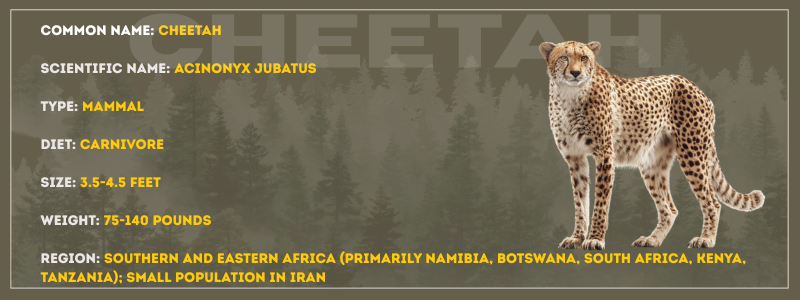
Scientific Name: Acinonyx jubatus
Diet Type: Carnivore
Size: 3.5 to 4.5 feet (body length), plus 25 to 32 inches (tail)
Weight: 75 to 140 pounds (males), 70 to 120 pounds (females)
Region Found: Southern and Eastern Africa (primarily Namibia, Botswana, South Africa, Kenya, Tanzania); small population in Iran
Hungry for More? The hunt doesn’t end here. Dive into our complete collection of Big Cat guides and articles.