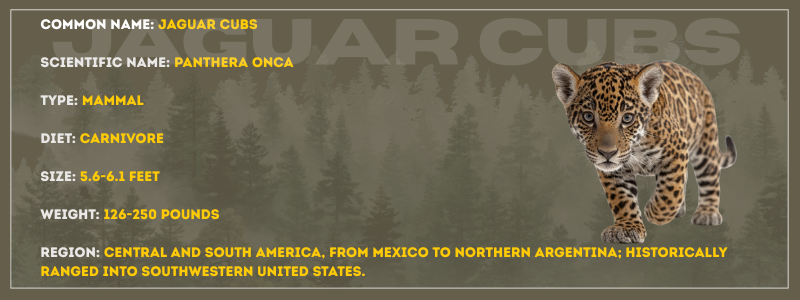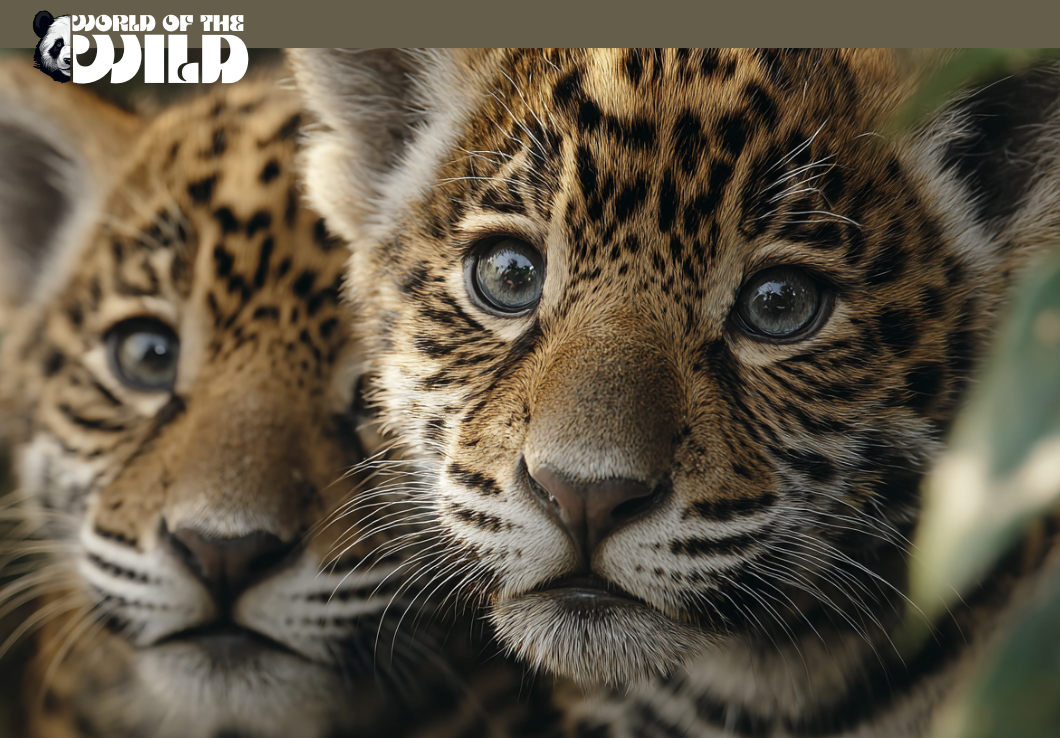

Deep within the emerald embrace of the Amazon rainforest, a tiny spotted form peers out from its hidden den, eyes gleaming with curiosity and fierce potential. Baby jaguar cubs may be among the most adorable creatures on Earth, weighing no more than a pineapple at birth, yet these pint-sized predators carry within them the legacy of evolution’s most perfect ambush hunters. As the largest cats in the Americas and the third-largest worldwide, jaguars represent a critical link in the health of their ecosystems, and their cubs embody both the vulnerability and resilience of an apex predator navigating an increasingly fragmented world. Understanding these remarkable young felines offers us not just a glimpse into nature’s most sophisticated survival strategies, but also a window into the urgent conservation challenges facing one of the planet’s most magnificent carnivores.
Facts
Here are seven captivating facts about baby jaguar cubs that showcase their remarkable nature:
Fingerprint-Unique Spots: Every jaguar cub is born with a completely unique rosette pattern, much like human fingerprints. No two jaguars share the same spot configuration, making each individual identifiable throughout their lifetime.
Born Blind Warriors: Jaguar cubs enter the world completely helpless, with their eyes sealed shut for the first two weeks of life. Despite this vulnerability, they develop incredibly quickly, opening their eyes within 13 days and beginning to explore their surroundings shortly after.
Maternal Protection Tactics: Mother jaguars employ sophisticated anti-infanticide strategies to protect their cubs. When threatened by males, mothers may hide their offspring and engage in elaborate courtship rituals with potential threats, essentially “flirting” to distract male jaguars from discovering and killing their young.
Water Babies: Unlike many big cat cubs, baby jaguars show a natural affinity for water from an early age. Cubs have been observed playing in water, emerging and shaking each paw separately—a behavior more common in jaguars than even in tiger cubs.
Rapid Growth Trajectory: Despite weighing just two pounds at birth, jaguar cubs grow remarkably fast. Male cubs develop faster than females, and within two to four years, these tiny furballs transform into 200-plus pound apex predators.
Extended Education Period: Jaguar cubs remain with their mothers for approximately two years—one of the longest juvenile periods among big cats. During this time, they receive intensive training in hunting, swimming, climbing, and territorial behavior necessary for survival.
Melanistic Mystery: Roughly 10% of jaguar cubs are born with black coats, a condition caused by a dominant genetic allele. These “black panthers” still possess rosette patterns, visible only in certain lighting conditions, and face the same survival challenges as their spotted siblings.
Species
Taxonomic Classification:
- Kingdom: Animalia
- Phylum: Chordata
- Class: Mammalia
- Order: Carnivora
- Family: Felidae
- Subfamily: Pantherinae
- Genus: Panthera
- Species: Panthera onca
The jaguar belongs to the Panthera genus, sharing this prestigious lineage with lions, tigers, leopards, and snow leopards. Since 2017, the jaguar has been classified as a monotypic species—meaning Panthera onca is recognized as a single species without distinct subspecies, despite historical attempts to categorize regional populations differently.
Historically, taxonomists proposed several subspecies based on geographic distribution and slight morphological variations, including Panthera onca arizonensis (Arizona jaguar), P. o. centralis (Central American jaguar), P. o. goldmani (Goldman’s jaguar), P. o. paraguensis (Paraguay jaguar), P. o. peruviana (Peruvian jaguar), and P. o. veraecrucis (Vera Cruz jaguar). However, modern genetic research revealed that these variations represent a clinal north-south gradient rather than discrete subspecies. DNA analysis shows high gene flow between jaguar populations historically, with only geographical barriers like the Amazon River and Darien Strait creating some genetic isolation.
The genus Panthera itself represents one of evolution’s most successful carnivore designs, with the Pantherinae subfamily emerging approximately 10.8 million years ago. The jaguar stands as the only Panthera species native to the New World, making it a unique evolutionary treasure of the Americas.
Appearance
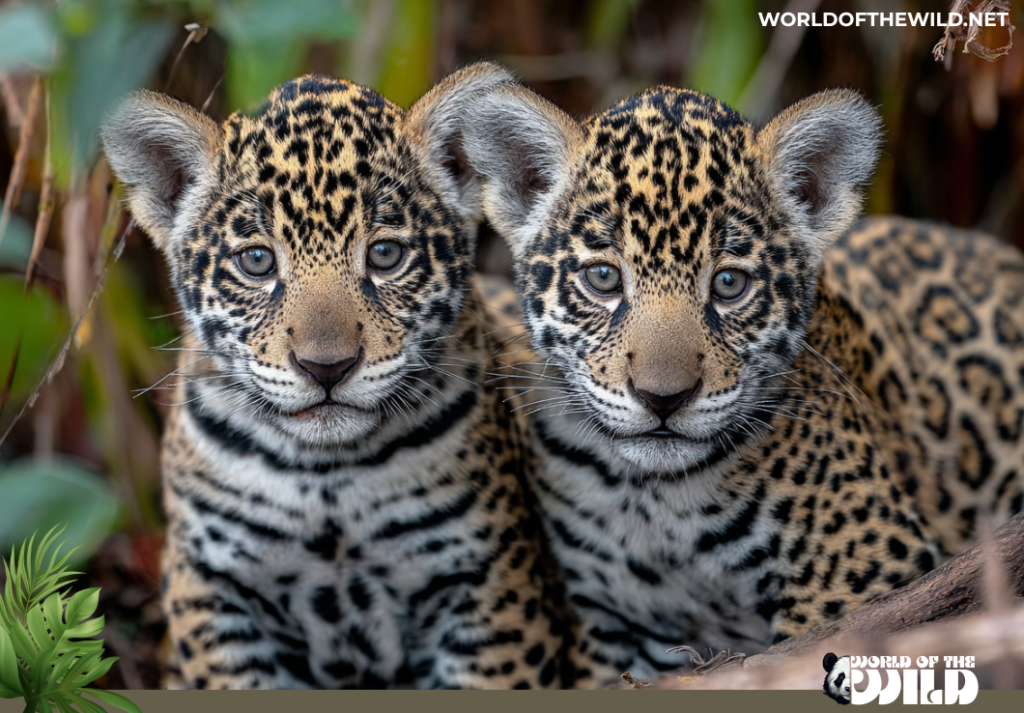
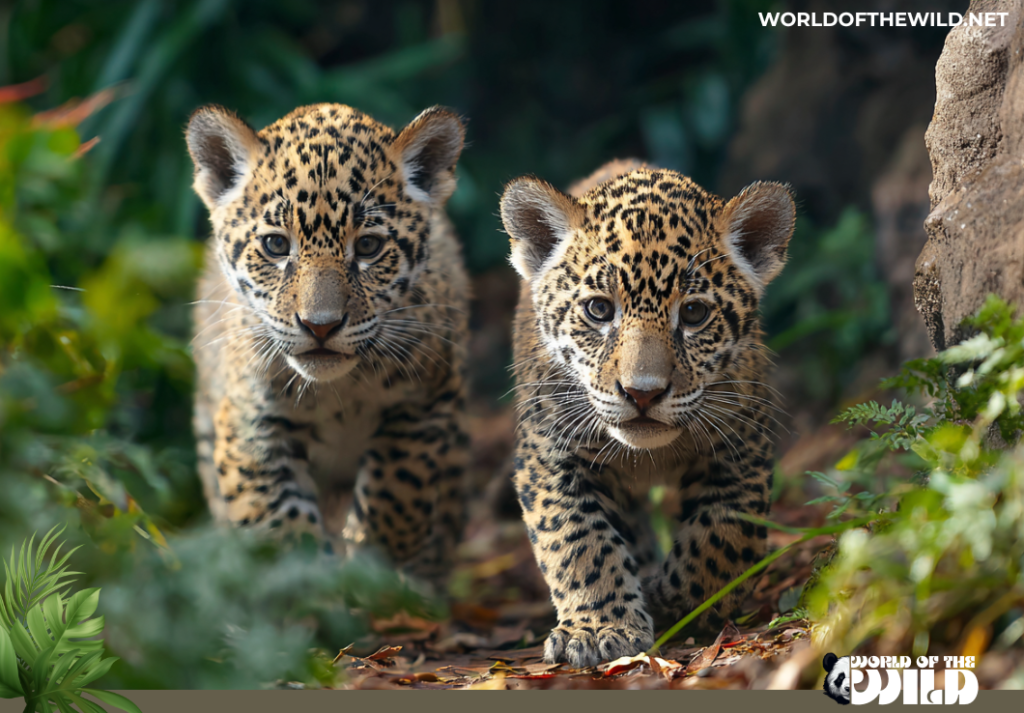
Baby jaguar cubs are born as remarkably small bundles weighing between 1.3 to 2 pounds (600-900 grams)—about the size and weight of a pineapple. Despite their diminutive size at birth, these cubs are already draped in the iconic coat that will define their adult lives.
From the moment they’re born, jaguar cubs display their characteristic coloration: a base coat of tan, pale yellow, or reddish-yellow fur adorned with distinctive black spotted patterns. The spots on a cub’s head and neck tend to be solid black markings, while their body features the beautiful rosette patterns for which jaguars are famous. These rosettes are larger than those found on leopards and contain irregular broken borders with often a central spot—a defining characteristic that distinguishes jaguars from their Old World cousins.
Each cub’s spot pattern is entirely unique, serving as a natural identification system. The rosettes provide crucial camouflage, allowing cubs to blend seamlessly into the dappled shadows of dense forest vegetation. Approximately 10% of cubs are born melanistic (black), though their rosettes remain visible in proper lighting conditions. This coloration results from a dominant allele, unlike in leopards where melanism is recessive.
As they mature, jaguar cubs undergo remarkable growth. Their eyes remain closed for the first two weeks of life, during which their coarse, woolly fur gradually becomes sleeker. By six to eight weeks, cubs are mobile enough to follow their mother on short excursions. Adult male jaguars eventually reach heights of 22 to 32 inches at the shoulder, with body lengths of 3.5 to 6 feet (excluding their distinctively short tail of 18-30 inches—the shortest among big cats).
The physical build of a jaguar cub hints at its future power: even young cubs display the characteristic stocky, muscular frame with shorter legs compared to other Panthera species of similar size. Males can ultimately reach weights exceeding 300 pounds, though most adults weigh between 123-215 pounds. The massive head, particularly pronounced in males, houses the strongest bite force of any big cat—a trait that begins developing during cubhood.
Behavior
Jaguar cubs are born into a world of intensive maternal care and gradually increasing independence. During their first vulnerable weeks, cubs remain hidden in secure dens established in dense vegetation, among rocks, or in holes along riverbanks. Mother jaguars restrict their movements dramatically during this period, confining themselves to a fraction of their normally vast territory to stay close to their helpless offspring.
The early behavior of jaguar cubs is characterized by nursing and bonding with their mother, who is aggressively protective of her young. If she senses danger or disturbance, a mother jaguar will relocate her cubs one at a time, carrying them gently in her powerful jaws to a safer location. Male jaguars play no role in cub rearing and, in fact, pose a significant threat—fathers have been known to kill their own cubs, a behavior that drives mothers to actively conceal their litters from all males.
Play is a critical component of jaguar cub development. Cubs engage in rough play with siblings, including mock threat displays, neck-snapping motions, and attack behaviors that will later serve them in hunting. This play often occurs near water, with cubs displaying the species’ natural affinity for aquatic environments. Young jaguars emerge from water and shake each paw separately—a distinctive behavior observed more frequently in this species than in tigers.
At around six months of age, a crucial transition occurs: cubs begin accompanying their mother on hunting expeditions. This marks the start of their intensive education in survival skills. Cubs learn to hunt by observation and practice, gradually developing the sophisticated techniques required for ambush predation. They master the art of patient stalking, the explosive burst of speed needed for capture, and the iconic jaguar killing bite—a skull-piercing strike delivered with bone-crushing force.
Communication skills develop alongside hunting prowess. By one year of age, cubs have mastered adult vocalizations, including the characteristic “grunt” or “snore” sounds most commonly used, as well as roars that can echo through the forest. Unlike many other species, jaguars develop these vocal skills without learning from other jaguars, suggesting innate neurological programming.
The cubs remain with their mother for approximately two years, during which they absorb knowledge about territorial boundaries, prey selection, and survival strategies. As solitary animals by nature, jaguars use scent marking (urine and feces) and claw marks to communicate territorial boundaries to others. Cubs must learn to interpret these signals and eventually create their own.
Around two years of age, young jaguars face perhaps the most dangerous period of their lives: dispersal. They must leave their mother’s territory and establish their own range, a journey fraught with risks including encounters with established adults, crossing human-dominated landscapes, and finding sufficient prey. This period tests everything they’ve learned and determines whether they’ll successfully transition to independent adult life.
Evolution
The evolutionary story of the jaguar is a tale of epic continental migrations and remarkable adaptation spanning millions of years. The journey begins not in the Americas, but in Asia, where the genus Panthera first originated during the Miocene period, approximately 10.8 million years ago.
The oldest known member of the Panthera lineage is Panthera blytheae, whose fossils were discovered in the Tibetan Himalayas and date to between 4.05 and 5.95 million years ago. This ancient species showed characteristics intermediate between modern snow leopards and other big cats, suggesting the common ancestor of all Panthera species bore resemblance to present-day leopards.
Around 4.6 million years ago, the Panthera lineage underwent rapid diversification, with all five modern species (lion, tiger, leopard, snow leopard, and jaguar) diverging from a single leopard-like ancestor. The first true jaguar ancestor, Panthera gombaszoegensis, appeared in Eurasia approximately 2 million years ago during the Pleistocene epoch. This prehistoric jaguar ranged across Europe, with fossils found in England, Germany, Spain, France, and the Netherlands.
The jaguar’s entrance into the Americas represents one of prehistory’s most significant predator migrations. During the Pleistocene ice ages, when sea levels dropped and exposed the Bering Land Bridge connecting Asia and North America, jaguar ancestors crossed into the New World. Once in North America, they diversified and spread throughout the continent and into Central and South America.
Genetic evidence suggests that modern jaguars (Panthera onca) share a common mitochondrial ancestor from approximately 280,000 to 510,000 years ago, with the center of origin likely in northern South America. From this stronghold, jaguars colonized northward into Mexico, Central America, and the southwestern United States.
Interestingly, Pleistocene jaguars in North America were considerably larger than their modern descendants, leading some paleontologists to classify them as distinct subspecies (Panthera onca augusta and Panthera onca mesembrina). These prehistoric North American jaguars weighed as much as 463 pounds—significantly larger than today’s maximum of around 350 pounds. However, recent genetic analysis of ancient specimens reveals that these large Pleistocene jaguars fall within the diversity of living jaguars, suggesting size variation rather than species-level differences.
As the Earth warmed following the ice ages, jaguars underwent a fascinating evolutionary shift: they shrank. This reduction in body size served multiple adaptive purposes. The more compact form facilitated better heat dissipation in tropical environments and allowed the species to subsist on smaller prey, providing crucial flexibility as megafauna disappeared during the end-Pleistocene extinction event. This adaptability likely saved the jaguar from the fate of many other large American carnivores that went extinct during this period.
Throughout their evolutionary history, jaguars have engaged in occasional hybridization with other Panthera species, particularly lions during periods when their ranges overlapped. This genetic mixing contributed to certain advantageous traits, including their exceptional bite force—the strongest of any big cat. The jaguar’s massive jaw muscles and skull-piercing bite likely evolved as an adaptation to hunting armored prey like caimans and armadillos in the New World, prey types not encountered by their Old World relatives.
The jaguar’s evolutionary success lies in its remarkable adaptability and the perfect storm of characteristics inherited from its lineage: the stealth of a leopard, powerful build, swimming ability, and an unmatched killing bite. This combination has allowed Panthera onca to survive dramatic climate changes, continental migrations, and ecological upheavals across hundreds of thousands of years.
Habitat
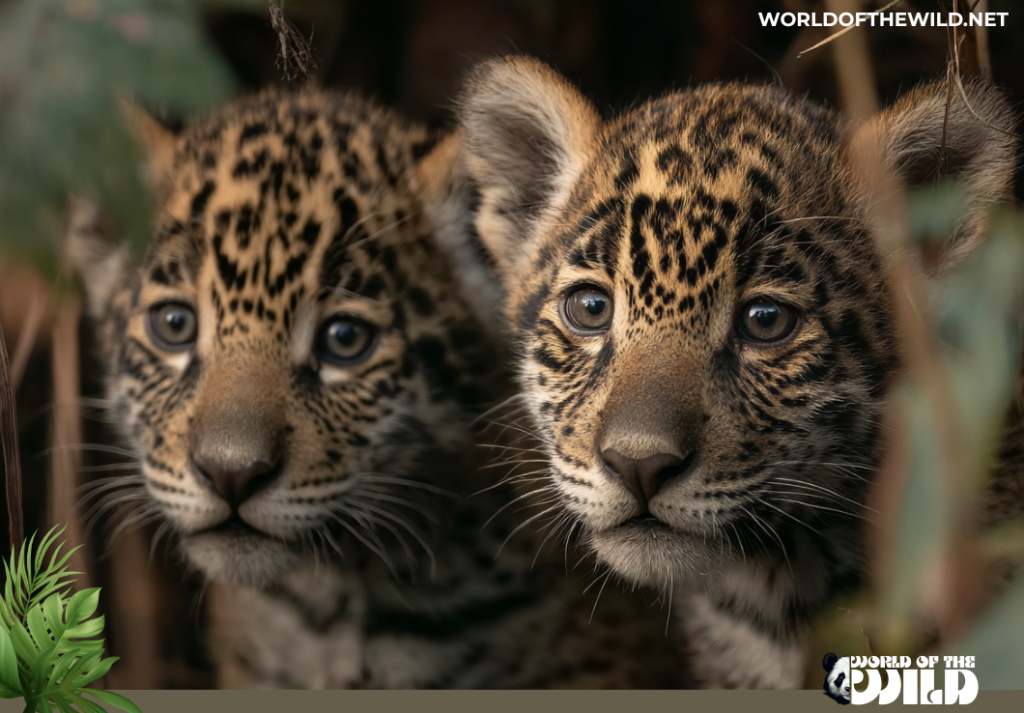
Jaguar cubs are born into some of the most biodiverse and complex ecosystems on Earth. The geographic range of jaguars historically stretched from the southwestern United States through Mexico, Central America, and into South America as far south as northern Argentina—a distribution spanning more than 8,000 miles north to south.
Today, jaguar populations occupy a dramatically reduced range. They have been eliminated from approximately 50% of their historic territory, with regional extinctions in El Salvador and Uruguay. In the United States, jaguars are now mostly seen as occasional wanderers crossing from Mexico into Arizona, New Mexico, and Texas. The species’ current stronghold centers on the Amazon Basin, which harbors roughly 50% of the world’s remaining jaguar population, with additional significant populations distributed across countries including Brazil, Peru, Colombia, Bolivia, Venezuela, Ecuador, and throughout Central America.
The primary habitat where jaguar cubs grow up is tropical and subtropical forest, particularly lowland rainforest characterized by dense vegetation and abundant water sources. Jaguars show a marked preference for habitats near rivers, lakes, wetlands, and streams—a reflection of their exceptional swimming ability and fondness for water. Protected areas like the Pantanal wetlands of Brazil support some of the highest jaguar densities recorded, reaching up to 10 jaguars per 100 square kilometers.
The den where a mother jaguar gives birth and raises her cubs during their first vulnerable months is carefully selected for maximum security. These natal dens may be located in caves, canyons, dense vegetation thickets, holes in riverbanks, or even among the ruins of ancient buildings. The common thread is isolation and concealment—essential for protecting helpless cubs from male jaguars and other predators.
As cubs mature and begin following their mother, they experience the full range of jaguar habitat complexity. The dense rainforest canopy filters sunlight into dappled patterns—perfect camouflage for their rosette-spotted coats. The forest floor is littered with fallen logs, roots, and vegetation that cubs must learn to navigate silently during hunts. Water features prominently in their early experiences; cubs learn to swim, cross rivers, and even hunt aquatic prey.
While jaguars primarily inhabit rainforests, they demonstrate remarkable habitat flexibility. Populations survive in seasonally flooded wetlands (várzea), grasslands (cerrado), coastal forests (Atlantic Forest), dry thorn scrub (Caatinga), and even semi-arid regions. This adaptability has been crucial for the species’ survival, though it cannot compensate for massive habitat loss.
The specific environmental features that define quality jaguar habitat include dense forest cover (primary forest is strongly preferred), reliable water sources, sufficient prey populations, and minimal human presence. Cubs growing up in fragmented landscapes face additional challenges, as they must learn to navigate human-modified areas while seeking to establish territories—a deadly education in the modern world.
Diet
Jaguar cubs begin their lives as obligate carnivores, though their diet initially consists exclusively of their mother’s milk. Nursing continues for the first two to three months of life, with cubs fully weaned by three months of age. Around two and a half months, cubs begin the transition to solid food, tentatively sampling meat brought by their mother.
Once weaned, young jaguars embark on an intensive education in predation. Jaguars are apex predators and opportunistic carnivores with one of the most diverse diets of any big cat, preying on more than 85 different species. Cubs must learn to hunt this remarkable variety of prey, each requiring different techniques and approaches.
The primary food sources that cubs learn to hunt include peccaries (wild pigs), capybaras (the world’s largest rodent), and deer—all medium to large-sized mammals that provide substantial nutrition. As cubs mature, they develop proficiency in hunting more challenging prey. The jaguar’s signature hunting trait is its ability to take down armored and aquatic prey that other big cats cannot efficiently kill.
Young jaguars learn the species’ iconic hunting technique: rather than the typical throat bite used by lions and leopards, jaguars employ a devastating skull-piercing bite. Their massive jaw muscles and specially adapted canine teeth can puncture directly through bone, killing prey instantly. This technique allows them to hunt spectacled caimans, crocodilians, and hard-shelled reptiles like turtles and tortoises—prey virtually unavailable to other big cats.
Cubs must also master the art of fishing and aquatic hunting. Jaguars are exceptional swimmers, and young cats learn to hunt fish and aquatic reptiles with surprising efficiency. They’ve been observed using their tails to tap the water’s surface, attracting curious fish within striking range.
Larger prey on the jaguar menu includes tapirs—massive herbivores weighing up to 700 pounds—and occasionally domestic cattle in areas where wild prey has been depleted. Cubs learn that jaguars can successfully take down prey three to four times their own weight, a testament to their power and specialized killing technique.
The foraging strategy cubs learn emphasizes stealth over speed. Unlike cheetahs that chase prey or lions that engage in prolonged pursuits, jaguars are ambush predators. They stalk silently through dense vegetation, using their rosette patterns to blend with dappled shadows, then explode into action with a short, powerful charge. This patient, energy-efficient hunting style is perfectly suited to dense forest environments.
At around six months of age, cubs begin accompanying their mother on hunts, though they won’t make their first successful kills for several more months. They learn through observation, practice, and gradual participation. By the time they disperse at two years old, young jaguars must be competent hunters capable of catching and killing a wide variety of prey independently—a skill set that determines their survival success.
Predators and Threats
Baby jaguar cubs face a paradoxical existence: they belong to an apex predator species, yet during their vulnerable early months, they are far from invincible. Understanding the threats facing these young cats reveals the complex challenges jaguars encounter throughout their lives.
Natural Predators:
Surprisingly, the greatest natural threat to jaguar cubs comes from within their own species. Male jaguars engage in infanticide, killing cubs that are not their own to bring females back into reproductive readiness sooner and eliminate future competitors. This behavior is so prevalent that it shapes female jaguar maternal strategies—mothers actively hide cubs from all males and may even engage in elaborate courtship rituals with potentially infanticidal males to distract them from discovering hidden offspring.
Beyond conspecific threats, jaguar cubs in certain regions face predation from other large carnivores. In areas where their ranges overlap, pumas (mountain lions) may occasionally prey on young jaguar cubs, though adult jaguars typically dominate in direct confrontations. Large anacondas and caimans in aquatic environments pose additional risks to cubs learning to swim. Black caimans, the largest of the caiman species, are powerful enough to threaten young jaguars near water.
Anthropogenic (Human-Caused) Threats:
The most severe threats to jaguar cubs are human-related, with habitat destruction leading the list. Deforestation driven by industrial agriculture—specifically cattle ranching, soy production, and palm oil plantations—accounts for nearly 70% of forest loss in Latin America. As forests disappear, jaguar cubs are born into increasingly fragmented landscapes where establishing territories becomes progressively more difficult and dangerous.
Habitat fragmentation doesn’t just reduce available space; it isolates populations from one another, creating genetic bottlenecks that threaten long-term species viability. Cubs born in small, isolated populations face higher risks of inbreeding and reduced genetic diversity, making populations more vulnerable to disease and environmental changes.
Direct persecution represents another major threat. Ranchers and farmers kill jaguars in retaliation for livestock predation, a conflict that intensifies as wild prey becomes scarce in degraded habitats. Cubs lose mothers to this conflict, dooming them to starvation before they’ve learned to hunt independently.
The illegal wildlife trade has emerged as a growing threat in recent years. While the commercial fur trade declined after protections were enacted in the 1970s, there’s been a disturbing resurgence in demand for jaguar teeth, paws, claws, and other body parts. These are sold as jewelry or used as substitutes for tiger bone in traditional medicine, primarily in Asian markets. Seizures of jaguar parts at airports and post offices across Latin America indicate this trade is expanding, facilitated by online marketplaces.
Climate change poses an insidious long-term threat. Alterations in rainfall patterns, increased frequency of droughts and floods, and shifting vegetation zones affect prey availability and habitat suitability. Cubs born into these changing environments face an uncertain future where traditional territories may become increasingly unsuitable.
Infrastructure development—roads, dams, and border fences—creates deadly barriers for dispersing young jaguars. The fence along the U.S.-Mexico border, for example, has effectively severed already tenuous connections between northern Mexico and U.S. populations. Roads built for oil and gas extraction provide access for hunters and poachers to previously remote areas.
Competition for wild meat represents an often-overlooked threat. Human hunting for bushmeat reduces prey availability, forcing jaguars—including mothers with dependent cubs—to expand their ranges, venture into dangerous human-dominated areas, or turn to livestock predation, which increases persecution.
The cumulative impact of these threats is sobering: jaguar populations have declined by approximately 50% over the past several decades, with a 20% decline recorded in just 14 years. For jaguar cubs born today, the odds of reaching adulthood and successfully reproducing have never been more challenging.
Reproduction and Life Cycle
The reproductive cycle of jaguars is a fascinating process that begins with the breaking of their typically solitary nature and culminates in the birth of some of the most vulnerable yet potentially powerful predators in the Americas.
Mating and Courtship:
Jaguars do not have a strictly defined breeding season, though mating activities tend to peak during the rainy season in the Amazon (November to March). When females enter estrus, they advertise their reproductive readiness through vocalizations, scent marking, and behavioral changes. Males and females locate each other through deep roars that echo through the forest—a call-and-response ritual that can be heard over considerable distances.
When a male and female come together, they form a temporary association unlike the jaguar’s typical solitary existence. The courtship period involves intense interaction, including what appears to be aggressive “mock fighting” where the female bares her teeth and makes guttural vocalizations. Despite the apparent roughness, this is normal courtship behavior. The pair travels and feeds together, mating numerous times—potentially up to 100 times per day—to ensure successful fertilization.
Following copulation, which typically lasts less than a minute, the pair may remain together briefly before separating. Male jaguars take no role in raising offspring and often pose a direct threat to cubs, necessitating the female’s immediate shift to maternal vigilance.
Gestation and Birth:
The gestation period lasts approximately 90 to 110 days (roughly 100 days on average). As the birth approaches, the pregnant female establishes a secure den in dense vegetation, among rocks, in a riverbank hole, or another secluded location. This den selection is critical—it must provide maximum protection for the helpless cubs that will arrive.
Females typically give birth to litters of one to four cubs, with two being most common. At birth, each cub weighs just 1.3 to 2 pounds and measures only a few inches long. They are born with their eyes sealed shut, coarse woolly fur already displaying their characteristic rosette patterns, and are completely dependent on their mother for survival.
Cub Development:
The early developmental stages unfold rapidly:
- 0-2 weeks: Cubs remain blind, relying entirely on maternal care, nursing frequently, and staying in the den.
- 2-3 weeks: Eyes begin opening (between 3-13 days), allowing cubs to start visually exploring their immediate environment.
- 1 month: Baby teeth emerge, though cubs continue nursing exclusively.
- 2.5-3 months: Cubs begin sampling meat brought by their mother, starting the weaning process.
- 3 months: Fully weaned from milk, now eating solid meat exclusively.
- 6-8 weeks: Cubs are mobile enough to follow their mother on short trips outside the den.
- 6 months: The critical transition occurs—cubs begin accompanying their mother on hunting trips, starting their education in predation.
Throughout this period, the mother provides total care, including nursing, grooming, protection, and eventually education. She is fiercely protective, remaining within a fraction of her normal territory to stay close to cubs. If she detects danger, she relocates cubs individually to a safer den site.
Juvenile Period:
The juvenile period extends for approximately two years—one of the longest among big cats. During this time, young jaguars undergo intensive training in all aspects of survival:
- Hunting techniques for diverse prey
- Swimming and aquatic hunting
- Tree climbing for escape and ambush
- Territorial behavior and scent marking
- Vocalization and communication
- Reading environmental cues
Male cubs develop faster than females, growing more rapidly and reaching larger adult sizes. By one year of age, cubs have mastered most adult vocalizations and behaviors, though they still require maternal guidance and protection.
Dispersal and Sexual Maturity:
Around two years of age, young jaguars face the transition to independence. They leave their mother’s territory and embark on the dangerous journey to establish their own range. This dispersal period is extremely hazardous—young jaguars must navigate unfamiliar terrain, avoid established adults, cross human-dominated landscapes, and secure sufficient prey while learning their new territory.
Females typically reach sexual maturity between 2 and 2.5 years of age, while males mature slightly later at 3 to 4 years. Once independent and sexually mature, jaguars can begin their own reproductive cycles.
Lifespan:
In the wild, jaguars have an average lifespan of 10 to 12 years, though some individuals survive to 16 years under optimal conditions. In captivity, with protection from threats and reliable food sources, jaguars commonly live around 20 years.
A successful female jaguar may produce 10 to 12 cubs over her reproductive lifetime, with typically two-year intervals between litters—the time required to raise cubs to independence. This relatively slow reproductive rate (compared to smaller cats) makes jaguar populations particularly vulnerable to population declines, as recovery from losses takes considerable time.
Population
The conservation status and population dynamics of jaguars paint a picture of a species under significant pressure, though not yet on the brink of extinction.
Conservation Status:
Jaguars are currently classified as Near Threatened on the International Union for Conservation of Nature (IUCN) Red List, based on assessments from 2016. This designation indicates that while jaguars are not immediately facing extinction, they are approaching threatened status and could quickly qualify for a threatened category if current trends continue. The species is protected under CITES Appendix I, which prohibits international commercial trade in jaguars or their parts.
In the United States, jaguars are listed as Endangered under the federal Endangered Species Act, reflecting their critically low numbers in U.S. territories. Various countries throughout the jaguar’s range have implemented legal protections, though enforcement remains inconsistent and often inadequate.
Population Estimates:
Estimating global jaguar populations presents significant challenges due to the species’ elusive nature, vast range, and varying habitat densities. Current estimates suggest approximately 64,000 to 173,000 jaguars remain in the wild, though these numbers carry substantial uncertainty.
Population density varies dramatically across the jaguar’s range:
- Amazon Basin protected areas: Average densities of 3.08 individuals per 100 km², with variation from as low as 0.60 per 100 km² in certain regions to as high as 9.97 per 100 km² in productive várzea floodplains
- Pantanal wetlands: Exceptionally high densities reaching 10.3 jaguars per 100 km², making this one of the world’s premier jaguar strongholds
- Fragmented Atlantic Forest: Significantly lower densities of 2-2.84 per 100 km²
- Deforested regions: Paraguayan Dry Chaco shows densities as low as 0.44-1.6 per 100 km² in heavily deforested areas
Country-specific estimates indicate:
- Brazil harbors the largest population, with the Amazon Basin representing the species’ greatest stronghold
- Peru contains an estimated 22,000 jaguars
- Smaller populations exist throughout Central America, with some populations numbering in the hundreds rather than thousands
Population Trends:
The overall trajectory is decidedly negative. Jaguars have lost approximately 50% of their historic range, with a particularly alarming 20% decline occurring in just 14 years between assessments. The species has been declared regionally extinct in El Salvador and Uruguay, with only occasional wandering individuals detected in the southwestern United States.
Population fragmentation represents an equally serious concern as absolute numbers. Many jaguar populations now exist in small, isolated groups unable to breed with other populations, making them highly vulnerable to local extinction. These isolated populations suffer from genetic bottlenecks, reduced genetic diversity, and increased vulnerability to environmental catastrophes or disease outbreaks.
Conservation Efforts:
Despite these concerning trends, significant conservation initiatives offer hope:
- Jaguar Corridor Initiative: Aims to connect isolated populations through habitat corridors stretching from Mexico to Argentina, allowing genetic exchange and population connectivity
- Jaguar 2030 Conservation Roadmap: A comprehensive international effort to secure 30 priority conservation landscapes by 2030, focusing on strengthening the Jaguar Corridor
- Protected areas: Critical refuges like Iguaçu National Park have seen population recoveries, with jaguars rebounding from near-local extinction to at least 105 individuals in the Green Corridor region
- Community-based conservation: Programs involving local communities in jaguar protection, sustainable coexistence with ranchers, and economic alternatives to habitat destruction
- International cooperation: Joint efforts under CITES and Convention on Migratory Species (CMS) to combat illegal trade and coordinate conservation across international borders
The monitoring of jaguar populations has improved through camera trap networks, genetic sampling, and advanced spatial modeling, providing better data for conservation planning. However, the quality and consistency of data collection vary significantly across the range.
Conclusion
Baby jaguar cubs represent far more than adorable spotted bundles—they embody the future of an entire ecosystem and the legacy of millions of years of evolutionary refinement. Born blind and vulnerable in hidden dens deep within the Americas’ most precious forests, these tiny predators face a gauntlet of natural and human-caused challenges that would daunt even the most battle-hardened conservationist.
From the moment they open their eyes and take their first wobbling steps, jaguar cubs are learning the complex skills necessary to become apex predators: the patient stalk, the explosive charge, the skull-crushing bite that defines their species. They’re absorbing lessons about water, about territory, about the intricate web of life in which they play such a critical role. They are, in essence, miniature warriors in training for a battle that grows more difficult with each passing year.
The sobering reality is that these remarkable animals are losing ground. Half their historic range has vanished. Their populations are fragmented, isolated, and declining. The forests where cubs learn to hunt are falling to chainsaws and bulldozers at alarming rates. The prey they depend on is being depleted. The corridors they need to disperse and find mates are being severed by roads, fences, and development.
Yet within this dire picture, there is hope—and responsibility. The jaguar’s survival depends not on their own ferocity, strength, or adaptability alone, but on whether we choose to make space for them in our world. Every protected hectare of rainforest, every wildlife corridor maintained, every conflict with ranchers resolved through coexistence rather than killing, and every illegal wildlife trade route disrupted represents a lifeline for jaguar cubs yet to be born.
The question facing humanity is simple but profound: Will we allow the roar of the jaguar to echo through American forests for generations to come, or will we permit these magnificent cats to slip silently into extinction? The answer lies not in grand gestures alone, but in the daily choices we make about conservation funding, sustainable agriculture, habitat protection, and our relationship with the natural world.
If you care about the future of jaguar cubs and the pristine ecosystems they inhabit, consider supporting organizations working on jaguar conservation, advocating for protected areas and wildlife corridors, choosing products that don’t contribute to deforestation, and spreading awareness about the plight of these incredible animals. The fate of every baby jaguar cub—current and future—rests in our collective hands.
Quick Reference
Scientific Name: Panthera onca
Diet Type: Carnivore (apex predator)
Size: Adults: 3.5-6 feet body length; 22-32 inches shoulder height | Cubs at birth: just a few inches long
Weight: Adults: 123-350 pounds (males larger than females) | Cubs at birth: 1.3-2 pounds
Region Found: Central and South America, from Mexico to northern Argentina; historically ranged into southwestern United States. Primary stronghold: Amazon Basin, with significant populations in Pantanal wetlands, Atlantic Forest, and throughout tropical regions of the Americas.