
In the vast, windswept emptiness of the High Arctic, where temperatures plummet to bone-chilling extremes and darkness reigns for months at a time, one predator has not only survived but thrived. The Arctic wolf, a ghostly white specter moving across endless fields of ice and snow, represents one of nature’s most remarkable success stories in adaptation. Unlike its southern cousins who have learned to fear humans, this wolf roams regions so remote and inhospitable that it has remained largely unchanged by human contact, offering us a rare glimpse into the pure, unadulterated behavior of a top predator.
The Arctic wolf is fascinating not merely for its ability to withstand some of the harshest conditions on Earth, but for how it has become a living testament to evolution’s power. In a realm where survival seems impossible, these wolves have transformed limitations into advantages, creating a blueprint for resilience that continues to captivate scientists and nature enthusiasts alike.
Facts
- Arctic wolves can survive in temperatures as low as -70°F (-56°C) for weeks at a time without seeking shelter.
- Unlike other wolf subspecies, Arctic wolves are born with blue eyes that eventually change to golden yellow as they mature, but this transition can take up to eight months in the extreme cold.
- Their paws act as natural snowshoes, with fur growing between the pads that provides insulation and prevents ice buildup while improving traction on slippery surfaces.
- Arctic wolves have a lower metabolic rate than other wolf subspecies, allowing them to survive on fewer calories during the scarce prey months of Arctic winter.
- They can go more than a week without eating, then consume up to 20 pounds of meat in a single feeding when prey is available.
- The Arctic wolf’s white coat isn’t purely white—it contains hollow guard hairs that trap air for additional insulation while also helping camouflage them against snow.
- These wolves have smaller ears than other wolf subspecies, an adaptation that reduces heat loss and prevents frostbite in extreme cold.
Species
Kingdom: Animalia
Phylum: Chordata
Class: Mammalia
Order: Carnivora
Family: Canidae
Genus: Canis
Species: Canis lupus
Subspecies: Canis lupus arctos
The Arctic wolf is one of approximately 38 recognized subspecies of the gray wolf (Canis lupus). While taxonomic debates continue among scientists regarding the exact number and classification of wolf subspecies, the Arctic wolf is generally accepted as a distinct subspecies adapted to life in the High Arctic regions.
Other notable subspecies that share lineage with the Arctic wolf include the Northwestern wolf (Canis lupus occidentalis), which inhabits regions just south of Arctic wolf territory; the Great Plains wolf (Canis lupus nubilus); and the extinct Japanese wolf (Canis lupus hodophilax). The Arctic wolf’s closest living relatives are the wolves of northern Canada and Alaska, with which they occasionally interbreed along the boundaries of their ranges, creating genetic overlap zones.
Some researchers have proposed that certain isolated populations of Arctic wolves may represent distinct lineages worthy of separate classification, though this remains a subject of ongoing genetic research.
Appearance
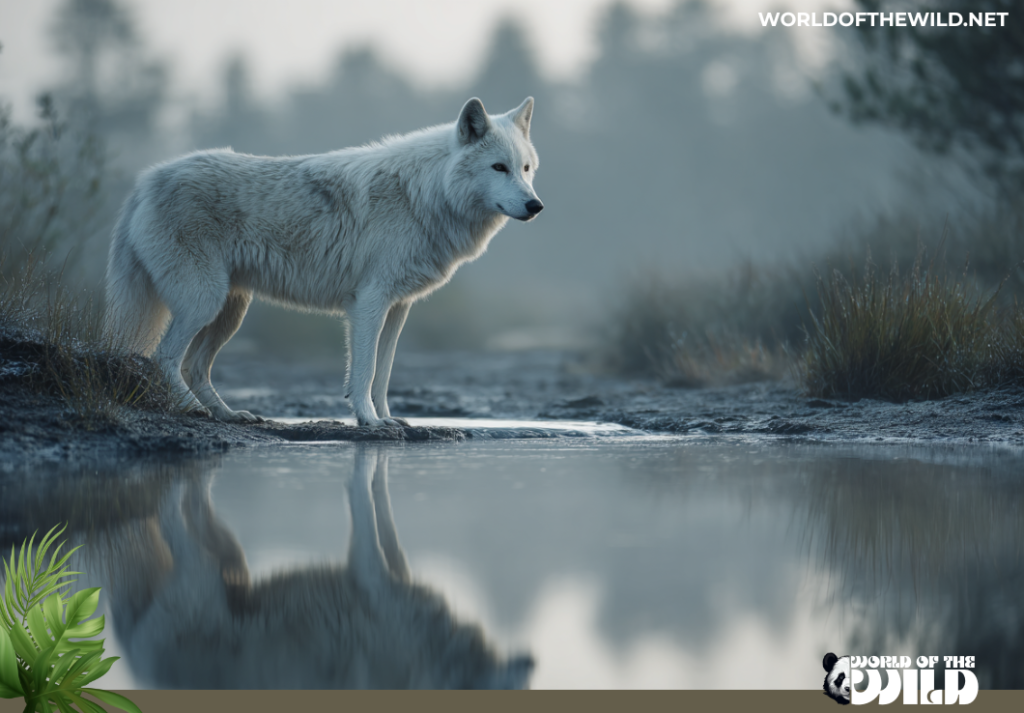
The Arctic wolf presents a striking figure against the polar landscape. Adults typically measure 3 to 5 feet in length from nose to tail base, with tails adding an additional 12 to 20 inches. Standing 25 to 31 inches at the shoulder, these wolves are slightly smaller and more compact than some of their southern relatives—an adaptation that helps reduce surface area and minimize heat loss in frigid environments.
Adult males generally weigh between 70 and 125 pounds, while females are somewhat lighter, ranging from 50 to 85 pounds. However, Arctic wolves in the most northerly regions tend to be larger than those at the southern edge of their range, following a pattern known as Bergmann’s rule, where body mass increases in colder climates.
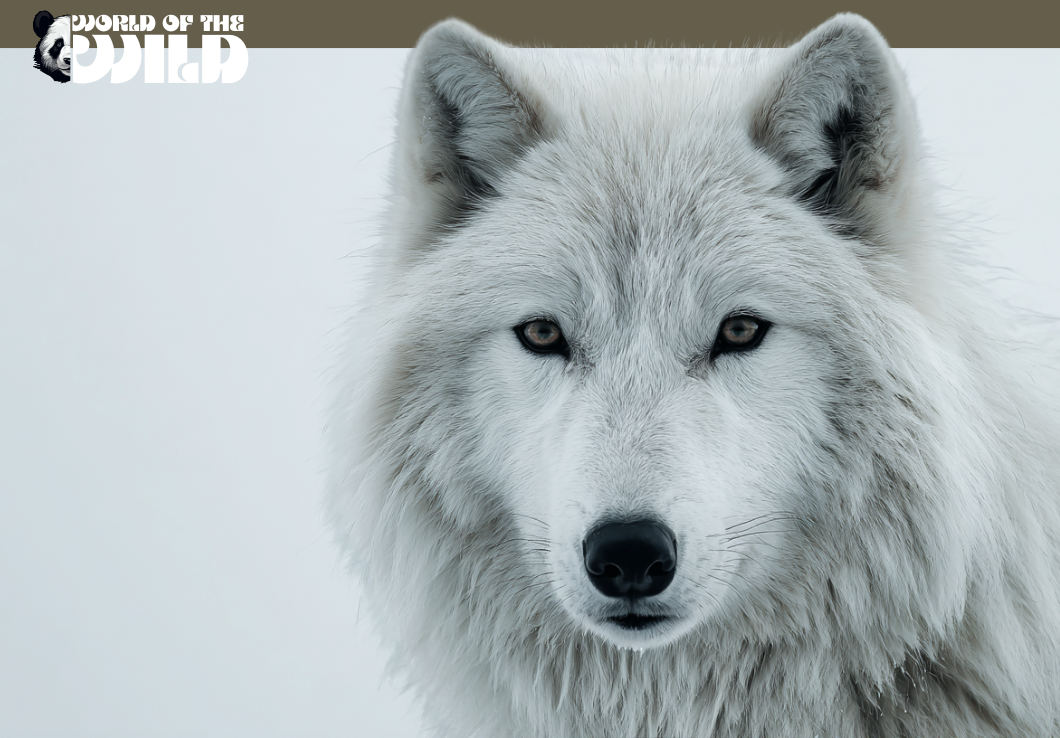
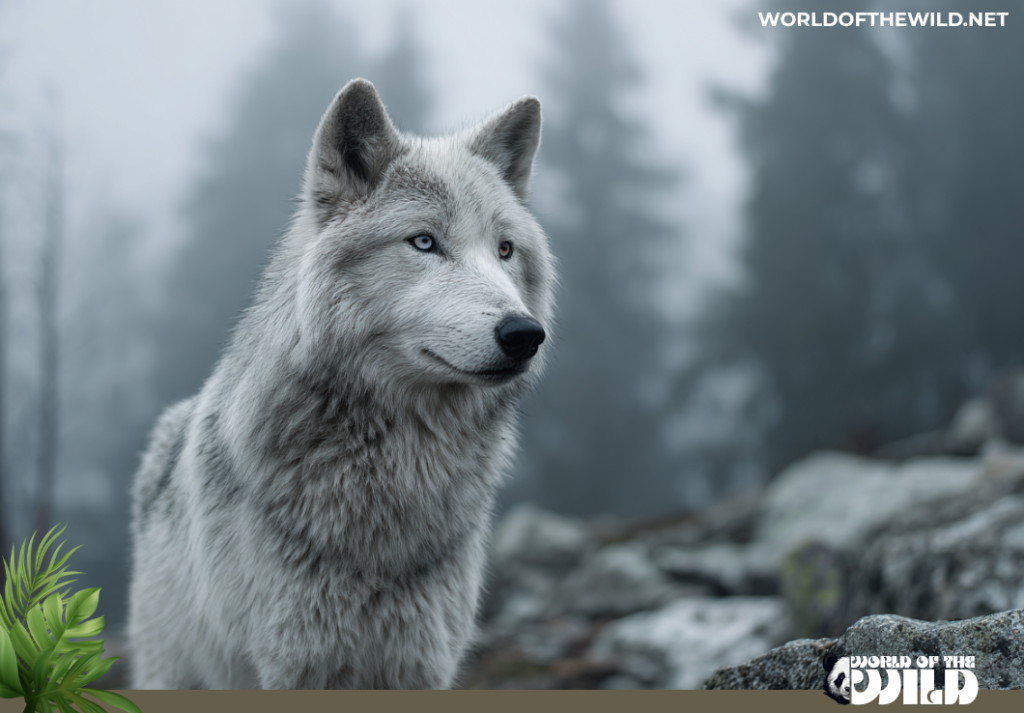
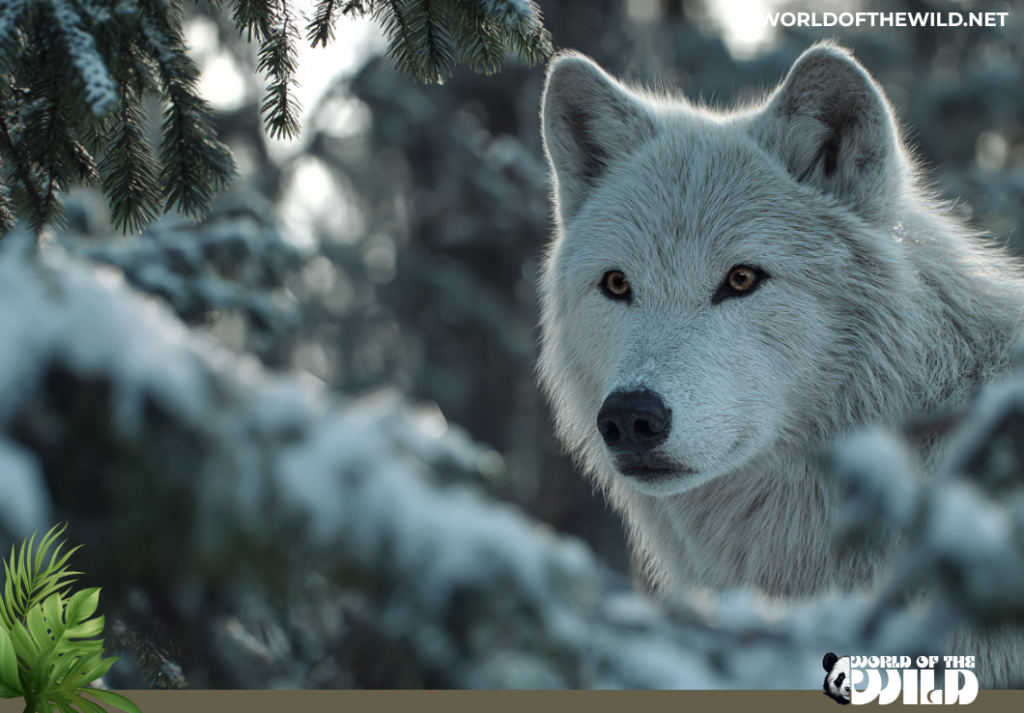
The most distinctive feature of the Arctic wolf is its luxurious coat, which appears white to cream-colored year-round. This double-layered coat consists of a dense, soft undercoat that provides insulation, overlaid with longer guard hairs that repel moisture and wind. The coat is so effective that snow landing on a resting Arctic wolf won’t melt, demonstrating the minimal heat loss from their bodies.
Their faces are broader and more rounded than those of other wolf subspecies, with smaller, more rounded ears positioned higher on the head—features that minimize exposed surface area. Their eyes are typically golden-yellow to amber in adults, though the intensity can vary. The wolves possess powerful jaws filled with 42 teeth designed for gripping, tearing, and crushing bone. Their legs are proportionally shorter than those of other wolves, another cold-weather adaptation, while their large paws distribute their weight effectively across snow and ice.
Behavior
Arctic wolves are highly social animals that live in packs typically consisting of 5 to 10 individuals, though packs of up to 20 wolves have been observed in areas with abundant prey. The pack structure is hierarchical, led by an alpha pair—the dominant male and female—who are usually the only breeding members of the group. This social organization is maintained through a complex system of body language, vocalizations, and scent marking.
Communication among pack members is sophisticated and multifaceted. Howling serves multiple purposes: coordinating the pack before and during hunts, defining territory boundaries, and maintaining contact over vast distances. Each wolf has a distinctive howl, allowing pack members to identify individuals. In addition to howling, Arctic wolves employ barks for alarm, growls for warnings, and whines for submission or greeting. Body posture, tail position, ear orientation, and facial expressions convey dominance, submission, playfulness, or aggression.
The daily life of an Arctic wolf revolves around the pack’s survival. During the brief Arctic summer when prey is abundant and daylight is constant, wolves may be active at any time, adjusting their hunting schedules to prey behavior. In winter, they may travel enormous distances—up to 30 miles in a single day—in search of food, navigating by memory and scent across featureless ice fields.
Hunting is a cooperative endeavor requiring strategy, endurance, and teamwork. Arctic wolves typically hunt in coordinated packs, with different members taking on specific roles. They employ pursuit hunting, chasing prey over long distances until the animal tires. Their incredible stamina allows them to maintain speeds of 25 miles per hour for extended periods, with short bursts reaching 40 miles per hour. The pack often targets the young, old, or weak members of prey herds, though healthy adults are also taken when opportunities arise.
Intelligence is a hallmark of Arctic wolf behavior. They demonstrate problem-solving abilities, learn from experience, and can adapt hunting strategies based on prey behavior and environmental conditions. Young wolves engage in extensive play that serves as training for hunting and social interaction. Arctic wolves also show remarkable memory, returning to successful hunting grounds year after year and remembering the locations of den sites across their territory.
Unlike wolves in more temperate regions that have learned wariness of humans, Arctic wolves display relatively little fear of people due to their limited exposure to human activity. This behavior has made them subjects of valuable field research, as they allow closer observation than most wolf populations would tolerate.
Evolution
The evolutionary story of the Arctic wolf is intimately tied to the broader history of the gray wolf, one of the world’s most successful large predators. The genus Canis first appeared approximately 6 million years ago during the Late Miocene epoch, with early canids evolving in North America before spreading to Eurasia and other continents.
The direct ancestor of modern wolves, Canis lupus, emerged roughly 1 million years ago during the Pleistocene epoch, a time marked by repeated glacial cycles that dramatically shaped the planet’s landscapes and ecosystems. As ice sheets advanced and retreated across the Northern Hemisphere, wolf populations became fragmented and isolated, leading to the development of distinct subspecies adapted to different environments.
The Arctic wolf as we know it today likely diverged from other gray wolf populations between 300,000 and 150,000 years ago, as some wolf groups became isolated in the High Arctic regions during interglacial periods. Cut off from southern populations by vast ice sheets and inhospitable terrain, these wolves evolved specialized adaptations for extreme cold, including their distinctive white coat, compact build, and unique physiological characteristics.
During the Last Glacial Maximum, approximately 20,000 years ago, when ice covered much of North America and Europe, Arctic-adapted wolves had a survival advantage in the frozen landscapes. As the climate warmed and ice retreated, Arctic wolves remained in the far north, occupying the niche left by receding glaciers while other wolf populations expanded into newly available temperate habitats.
Genetic studies have revealed that Arctic wolves share ancient DNA with extinct dire wolves (Canis dirus) and have genetic markers indicating interbreeding with now-extinct Ice Age megafauna predators. Modern Arctic wolves also show evidence of limited genetic exchange with domestic dogs in recent millennia, though far less than other wolf populations due to their geographic isolation.
The Arctic wolf’s evolutionary trajectory demonstrates rapid adaptation in geological terms—a relatively short period in which a generalist predator transformed into a specialist capable of surviving in one of Earth’s most extreme environments.
Habitat
Arctic wolves inhabit the northernmost reaches of North America, specifically the Canadian Arctic Archipelago and the northern coast of Greenland. Their range extends across Ellesmere Island, Axel Heiberg Island, the Queen Elizabeth Islands, and parts of northern Greenland above 67° north latitude. Unlike other wolf subspecies with vast ranges spanning multiple biomes, Arctic wolves are restricted to the High Arctic tundra, making them one of the most geographically limited wolf populations.
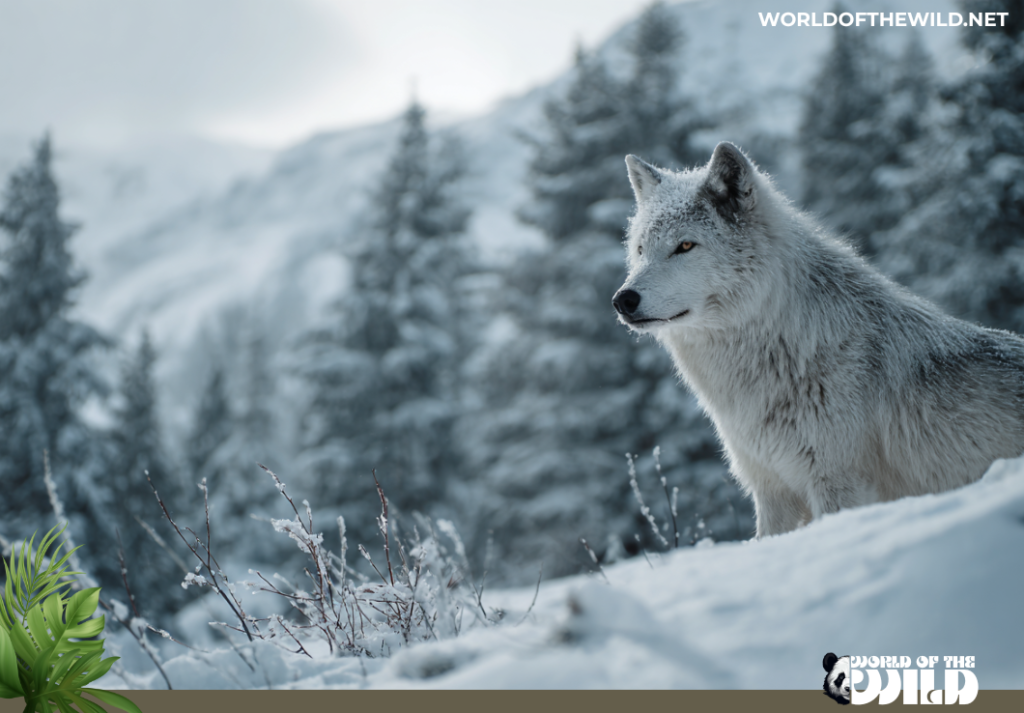
The environment they call home is characterized by extreme conditions that would prove fatal to most mammals. For much of the year, temperatures hover well below freezing, with winter averages between -22°F and -40°F (-30°C to -40°C), and wind chills driving perceived temperatures even lower. The Arctic tundra experiences polar night, a period when the sun doesn’t rise above the horizon for weeks or even months during winter, followed by the midnight sun of summer when continuous daylight prevails.
The landscape itself is stark and seemingly barren—a treeless expanse of permafrost, ice fields, rocky outcrops, and, during the brief summer, tundra vegetation consisting primarily of lichens, mosses, grasses, and low-growing shrubs. Lakes and rivers freeze solid for most of the year, and annual precipitation is surprisingly low, making the Arctic technically a cold desert.
Despite the harsh appearance, this habitat provides crucial resources for Arctic wolves. The rocky terrain offers natural den sites among boulders and cliff faces, protected from the worst weather. Summer brings an explosion of life as migratory prey species arrive and resident animals become active, providing the wolves with abundant hunting opportunities. The open landscape offers excellent visibility for spotting prey across vast distances, while snow and ice allow the wolves to track prey effectively.
Perhaps most importantly, the remoteness of this habitat has shielded Arctic wolves from human persecution and habitat destruction that has decimated wolf populations elsewhere. There are no roads, no permanent human settlements, and minimal human activity throughout most of Arctic wolf territory, allowing these animals to live much as their ancestors did thousands of years ago.
Diet
Arctic wolves are obligate carnivores, meaning they rely entirely on animal protein for survival. Their diet is dictated by the limited prey availability in their harsh environment, making them opportunistic hunters that must capitalize on whatever food sources they can find.
The primary prey species for Arctic wolves are muskoxen and Arctic hares, both of which are well-adapted to the polar environment. Muskoxen, weighing between 400 and 900 pounds, provide an enormous food resource when successfully hunted, with a single kill potentially feeding an entire pack for days. However, muskoxen are formidable opponents with dangerous horns and a defensive strategy of forming circles with vulnerable members protected in the center. Arctic wolves must use coordinated tactics, patience, and endurance to separate individuals from the herd—often targeting calves or elderly animals.
Arctic hares, despite being much smaller (6 to 12 pounds), are crucial to Arctic wolf survival, particularly when larger prey is scarce. These hares are remarkably fast and agile, capable of reaching speeds of 40 miles per hour in short bursts. Wolves hunt them through persistence and numbers, with pack members working together to chase hares toward other waiting wolves.
During the brief Arctic summer, Arctic wolves expand their diet to include caribou, which migrate northward into wolf territory in large herds. A caribou can weigh between 200 and 400 pounds and represents a prized food source. Wolves will shadow migrating herds, selecting weak or young individuals for predation.
Smaller prey items supplement the diet when available, including lemmings, Arctic foxes, ground-nesting birds and their eggs, and occasionally fish. In the most desperate circumstances, Arctic wolves will scavenge carrion, including the remains of marine mammals like seals that have died on ice.
Arctic wolves have evolved remarkable physiological adaptations for their feast-or-famine existence. They can consume up to 20 pounds of meat in a single feeding, storing energy as body fat during times of plenty. Their digestive systems are highly efficient at extracting maximum nutrition from their prey, and they will consume nearly every part of an animal, including bones, fur, and organs, ensuring no calories are wasted in their resource-scarce environment.
Predators and Threats
In their remote Arctic domain, adult Arctic wolves have virtually no natural predators, sitting atop the food chain in one of Earth’s most extreme ecosystems. However, wolf pups are vulnerable during their first few months of life and may fall prey to Arctic foxes, wolverines, or even ravens if left unguarded—though pack members vigilantly protect their young, making such predation rare.
The greatest natural threat to Arctic wolves is the environment itself. Severe winter storms, extreme cold snaps, injuries sustained during hunts (particularly from muskox horns or caribou antlers), starvation during periods of prey scarcity, and sea ice accidents all pose significant dangers. Wolves can fall through thin ice, become separated from their packs during whiteout conditions, or suffer frostbite injuries during extreme weather events.
Anthropogenic threats, while currently less severe than for other wolf populations, are increasing. Climate change represents the most significant long-term threat to Arctic wolves. Rising temperatures are causing dramatic changes to Arctic ecosystems: sea ice is melting earlier and forming later each year, permafrost is thawing, vegetation patterns are shifting, and prey populations are experiencing disrupted migration patterns and population fluctuations. These changes could fundamentally alter the delicate balance that Arctic wolves depend upon.
As Arctic ice melts and northern passages become more navigable, human activity in the region is increasing. Oil and gas exploration, shipping routes, mining operations, and tourism all bring increased human presence to previously untouched Arctic regions. While direct human persecution of Arctic wolves remains minimal due to the remoteness of their habitat, increased human activity brings risks of habitat disturbance, pollution, and potential disease transmission from domestic dogs.
Contaminants represent another growing concern. Persistent organic pollutants and heavy metals like mercury accumulate in Arctic food chains, concentrating in top predators like wolves. These toxins can affect reproductive success, immune system function, and overall health.
Unlike wolves in lower latitudes, Arctic wolves have not experienced widespread hunting, trapping, or poisoning campaigns. However, their limited range and relatively small population make them particularly vulnerable to environmental changes. If climate change continues to accelerate, Arctic wolves could face habitat loss on a scale that their adaptability cannot overcome.
Reproduction and Life Cycle
Arctic wolves follow a reproductive cycle tightly synchronized with the brief Arctic summer, ensuring that pups are born when conditions are most favorable and prey is most abundant. Mating season occurs in late winter, typically between February and March, when the pack’s alpha pair prepares to produce the next generation.
Courtship between the alpha male and female involves increased affection, playfulness, and bonding behaviors. The female comes into estrus once per year, and during this brief window, the pair mates multiple times to ensure successful fertilization. Other pack members generally do not breed, though in rare cases with abundant resources, a beta female may also reproduce.
The gestation period lasts approximately 63 days, with birth occurring in late May or early June—timing that coincides with the Arctic spring when temperatures moderate and prey becomes more available. Prior to giving birth, the pregnant female selects or excavates a den site, often using natural rock formations, caves, or burrows in hillsides that provide protection from weather and predators. The same den sites may be used by successive generations across many years.
A typical litter consists of 4 to 5 pups, though litter sizes can range from 1 to 11 depending on the mother’s age, health, and environmental conditions. Arctic wolf pups are born blind, deaf, and helpless, weighing just one pound. They are covered in dark gray to brownish fur that will lighten as they mature.
For the first three weeks, pups remain in the den, completely dependent on their mother’s milk. The mother rarely leaves them during this vulnerable period, relying on other pack members to bring food. As the pups grow, they begin to emerge from the den, and the entire pack participates in their care—a behavior called alloparenting. Pack members regurgitate food for the pups, play with them, guard them, and teach them essential survival skills.
Weaning begins around 5 to 8 weeks of age, as pups transition to solid food. By 8 to 10 weeks old, the pups are strong enough to travel with the pack, though they still require significant care and protection. The first year is critical for survival, with mortality rates highest during this period due to starvation, predation, and harsh weather.
Young wolves reach sexual maturity between 2 and 3 years of age, though in pack structures, they typically don’t breed until they establish their own pack or assume a dominant position. Some young adults disperse from their natal pack to find mates and establish new territories, though in the limited Arctic wolf range, dispersal opportunities are constrained.
In the wild, Arctic wolves typically live 7 to 10 years, though some individuals may reach 15 years under favorable conditions. In captivity, where they are protected from the elements and food scarcity, Arctic wolves can live up to 18 years. The harsh Arctic environment, injuries from hunting, starvation during lean years, and natural diseases all limit wild lifespan.
Population
The Arctic wolf currently holds the conservation status of “Least Concern” according to the International Union for Conservation of Nature (IUCN), making it one of the few wolf populations not facing immediate threats of extinction. This designation reflects the species’ stable population and the relative protection afforded by its remote habitat.
Estimating the exact population of Arctic wolves presents significant challenges due to the vast, inaccessible terrain they inhabit and the extreme weather conditions that limit research opportunities. Current estimates suggest that approximately 200,000 individuals exist across their range, though some researchers believe this number may be conservative. The population appears stable with no significant declining trends identified in recent surveys.
This relatively healthy status stands in stark contrast to other wolf subspecies, many of which have been extirpated from vast portions of their historical ranges or survive only in small, fragmented populations. The Arctic wolf’s isolation has been its salvation—the very remoteness that makes scientific study difficult has also shielded these animals from the persecution, habitat loss, and human-wolf conflict that has devastated wolf populations in more accessible regions.
However, this seemingly secure status comes with caveats. The Arctic wolf’s entire population is confined to a narrow band of High Arctic habitat in northern Canada and Greenland. This limited range means that any significant environmental change could impact the entire population simultaneously. Unlike more widely distributed species that can buffer losses in one region with stable populations in another, Arctic wolves have no such safety net.
Population density varies considerably across their range, with some areas supporting robust packs while others remain sparsely populated. Islands with good muskox populations generally support higher wolf densities, while areas with limited prey maintain fewer wolves over larger territories.
Recent monitoring suggests that while the overall population remains stable, some localized changes are occurring. Certain regions have seen slight population increases correlated with growing muskox populations, while others show concerning signs of stress potentially linked to changing ice conditions and shifting prey patterns.
The species’ future will likely depend on how rapidly and severely climate change impacts the Arctic ecosystem. Unlike species that can migrate to track their preferred habitats, Arctic wolves occupy the northernmost terrestrial environments on Earth—there is nowhere further north to go.
Conclusion
The Arctic wolf stands as a magnificent testament to life’s tenacity in the face of Earth’s most punishing conditions. Through remarkable adaptations evolved over hundreds of thousands of years—from their insulating white coats and compact builds to their cooperative hunting strategies and feast-or-famine physiology—these wolves have claimed dominion over the frozen north, thriving where few other predators can survive.
Yet this master of the ice now faces an uncertain future. While Arctic wolves currently enjoy population stability and freedom from direct human persecution, the rapid transformation of their environment through climate change threatens to undermine the very adaptations that have made them successful. The Arctic is warming faster than any other region on Earth, and the changes cascading through this ecosystem may ultimately challenge even the Arctic wolf’s remarkable resilience.
The Arctic wolf’s story matters beyond the boundaries of their frozen realm. These animals represent one of the last truly wild wolf populations on Earth, living much as their ancestors did millennia ago, free from the human conflicts that plague other wolf species. They remind us that wildness still exists in the world’s most remote corners—but also that no place is beyond the reach of human influence.
If we are to ensure that Arctic wolves continue to howl across the polar expanse for generations to come, we must confront the global challenge of climate change with the same determination these wolves show in their daily struggle for survival. The fate of the Arctic wolf is, ultimately, intertwined with our own choices about the future of our planet.
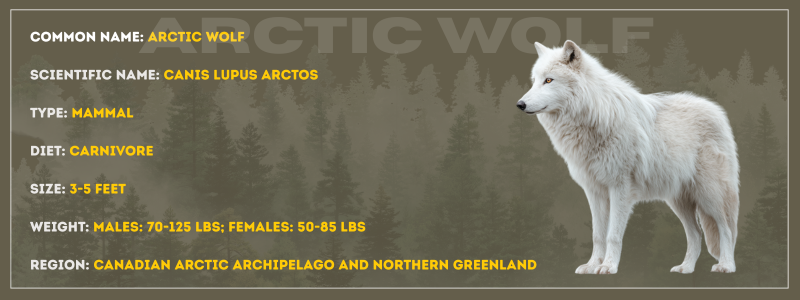
Scientific Name: Canis lupus arctos
Diet Type: Carnivore
Size: 3-5 feet (body length), plus 12-20 inch tail
Weight: Males: 70-125 lbs; Females: 50-85 lbs
Region Found: Canadian Arctic Archipelago and northern Greenland (High Arctic tundra above 67° north latitude)