
High in the thin air of the Tibetan Plateau, where oxygen is scarce and temperatures plummet to bone-chilling extremes, one magnificent creature not only survives but thrives. The yak, a massive bovine with flowing hair that sweeps the ground and lungs three times larger than lowland cattle, has carved out an existence in one of Earth’s harshest environments. For over 10,000 feet above sea level, where most animals would struggle to breathe, the yak reigns supreme as the ultimate symbol of adaptation and resilience. These extraordinary animals have been the lifeline of Himalayan cultures for millennia, providing transportation, milk, meat, fiber, and fuel in regions where few other domestic animals can survive. Beyond their practical importance, yaks represent a remarkable evolutionary success story, a living testament to nature’s ability to sculpt life forms perfectly suited to extreme conditions that would challenge even the hardiest of species.
Facts
1. Yaks have hearts and lungs significantly larger than typical cattle – their hearts are about twice the size and their lungs three times the volume, allowing them to efficiently process oxygen in air that contains 40% less oxygen than at sea level.
2. The name “yak” technically refers only to males – females are called “dri” or “nak” in Tibetan, though English speakers commonly use “yak” for both sexes or say “yak cow” for females.
3. Wild yaks can swim across freezing glacial rivers with ease – despite their massive size and thick coats, they’re surprisingly good swimmers and will cross icy waters that would be fatal to most animals.
4. Yak milk contains nearly twice the fat and protein content of regular cow milk – making it incredibly rich and nutritious, perfect for high-altitude populations requiring dense calories.
5. Their vocalization is more of a grunt than a moo – this is why their scientific name includes “grunniens,” which means “grunting,” reflecting their distinctive low-frequency communication sounds.
6. Yak dung is virtually odorless when dried – Himalayan peoples have used it as fuel for heating and cooking for thousands of years, and it burns slowly with little smoke, making it ideal for high-altitude environments where wood is scarce.
7. Wild yaks can survive in temperatures as low as -40°F (-40°C) – their incredibly dense coat, with up to 8 inches of outer hair and a thick woolly undercoat, provides insulation comparable to the finest technical winter gear.
Species
Kingdom: Animalia
Phylum: Chordata
Class: Mammalia
Order: Artiodactyla
Family: Bovidae
Genus: Bos
Species: Bos grunniens (domestic yak) / Bos mutus (wild yak)
The classification of yaks has been subject to scientific debate, with some taxonomists placing them in their own genus (Poephagus) while others group them with cattle under Bos. Current consensus generally recognizes two distinct forms: the wild yak (Bos mutus) and the domestic yak (Bos grunniens), though they remain the same species and can interbreed.
Wild yaks are significantly larger and more robust than their domesticated cousins, having undergone thousands of years of selective breeding by humans that reduced their size and modified their temperament. Domestic yaks come in various color variations, including black, brown, white, and piebald patterns, while wild yaks are almost exclusively dark brown to black.
Hybrid animals are also common in yak-herding regions. A yak crossed with domestic cattle produces fertile offspring called “dzo” (male) or “dzomo” (female), which are valued for combining the hardiness of yaks with the milk production of cattle. These hybrids occupy an important niche in areas that exist at the margins of yak territory.
Appearance
The yak is an imposing creature built like a living fortress against the elements. Wild yaks stand as the largest native animals in their range, with bulls reaching shoulder heights of 6 to 7 feet and stretching up to 11 feet in length. Adult wild males can weigh an astounding 1,200 to 2,200 pounds, while females are considerably smaller at 500 to 800 pounds. Domestic yaks have been bred to smaller proportions, with males typically weighing 600 to 1,100 pounds and females 400 to 600 pounds.
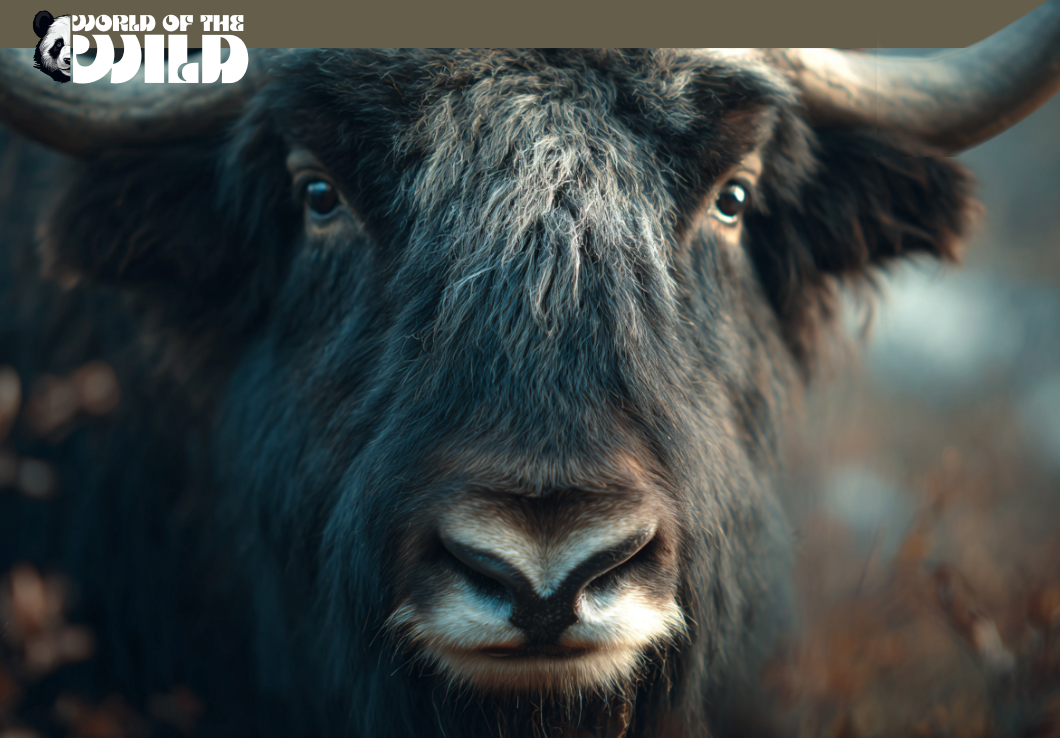
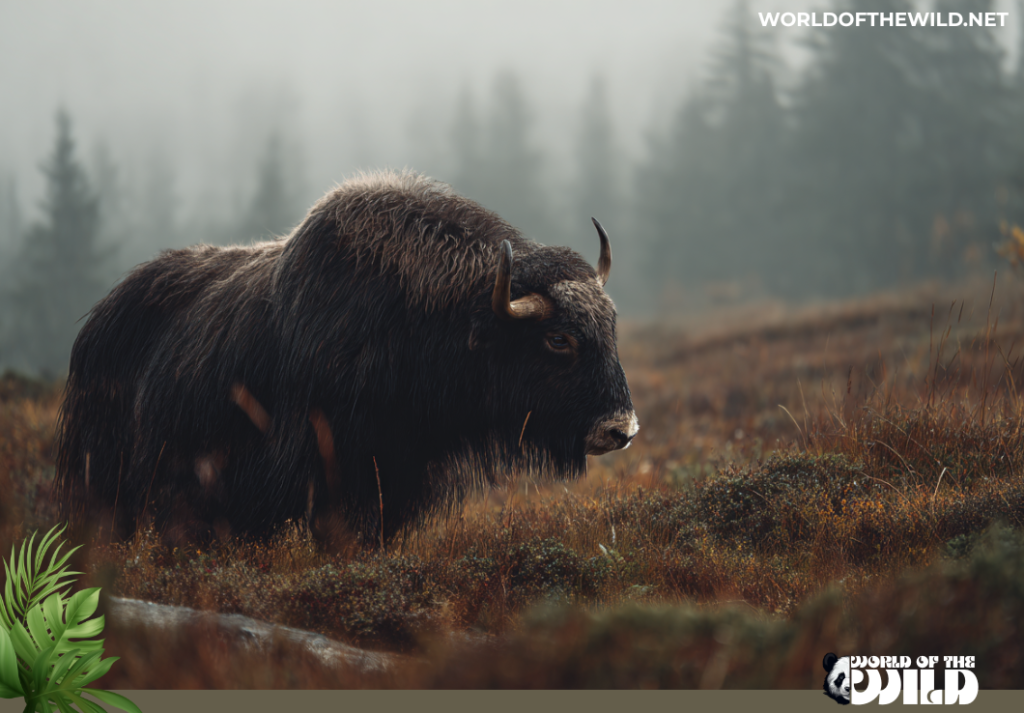
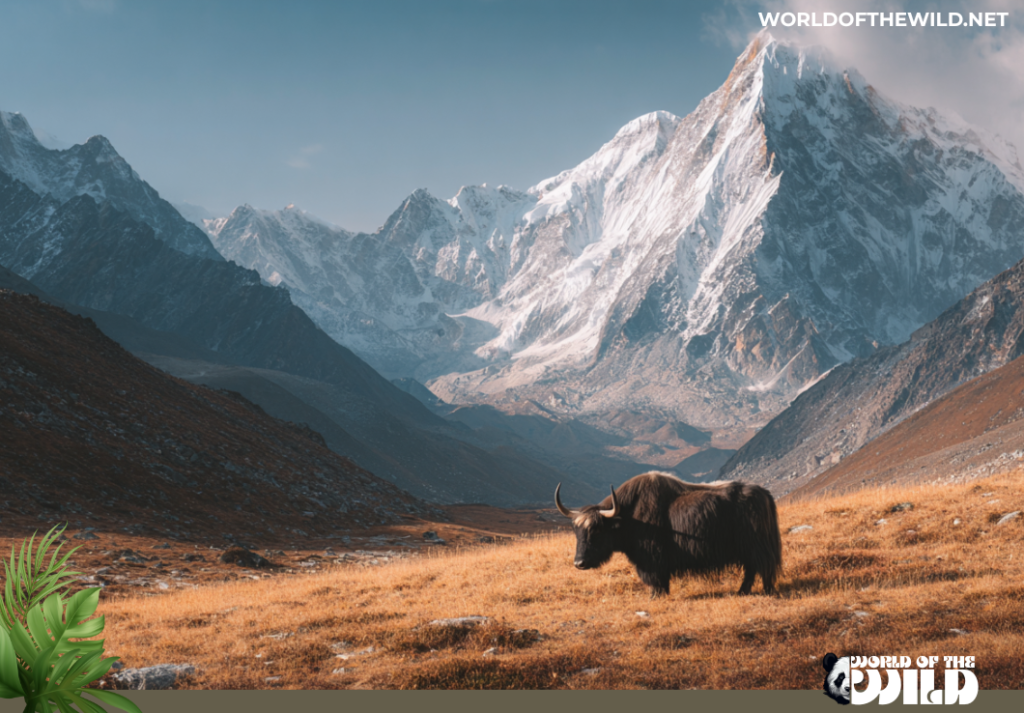
The most striking feature of any yak is its luxurious coat. Long, shaggy hair cascades down their flanks like a curtain, reaching nearly to the ground and creating a distinctive “skirt” that covers their legs and belly. This outer coat can grow up to 8 inches long and hangs in coarse strands, while beneath lies a dense undercoat of incredibly fine wool that provides the primary insulation. The combination creates a two-layer system that traps air and heat with remarkable efficiency.
Their heads are carried low on powerful, humped shoulders, giving them a distinctive profile. Both males and females sport impressive horns that sweep upward and outward from the skull, though male horns are significantly larger, reaching up to 38 inches in length. The horns are smooth, darkly colored, and formidable weapons when needed.
Wild yaks are typically dark brown or black, though very old individuals may show some graying around the muzzle. Domestic yaks display much more color variation, with some populations bred for rusty browns, golden tones, cream colors, or striking piebald patterns of black and white.
Their tails are unique among cattle, resembling a horse’s tail with long, flowing hair that can be used as fly whisks. Their hooves are large and rounded, designed to provide stability on rocky mountain terrain and to distribute weight on snow or soft ground.
Behavior
Yaks are primarily crepuscular, most active during the dawn and dusk hours when they graze extensively on the sparse vegetation of their high-altitude home. During the heat of midday – even in the frigid Himalayas, direct sunlight can create uncomfortable warmth for such well-insulated animals – they often rest and chew their cud, positioning themselves near water sources or in areas with good visibility.
Wild yaks are highly social animals that organize themselves into herds based on sex and age. Female groups with their young may number from 10 to 30 individuals, led by experienced matriarchs who guide the herd to feeding grounds and water sources. Adult bulls typically remain solitary or form small bachelor groups for most of the year, only joining female herds during the autumn rutting season. These herds can temporarily swell to over 100 animals during peak breeding times.
Communication among yaks involves a variety of vocalizations, the most characteristic being a deep, grunting sound quite unlike the mooing of common cattle. They also communicate through body language, using horn displays, head tosses, and postural signals to establish dominance hierarchies and coordinate group movements. When threatened, yaks will form protective circles with calves in the center and present a formidable wall of horns toward potential predators.
One of the yak’s most remarkable adaptations is its ability to detect changes in weather conditions. Herders have long observed that yaks become restless and seek shelter hours before severe storms arrive, apparently sensing barometric pressure changes imperceptible to humans. This sensitivity likely evolved as a survival mechanism in an environment where being caught exposed during a blizzard could prove fatal.
Domestic yaks have retained many wild behaviors while becoming accustomed to human presence. They remain sure-footed mountaineers, capable of navigating treacherous cliff paths while carrying heavy loads. Their intelligence and memory are highly regarded by herders, who report that yaks can remember specific trails and grazing areas year after year.
Evolution
The evolutionary story of the yak begins in the Pleistocene epoch, approximately 2 to 5 million years ago, when the ancestors of modern cattle diversified across Asia. The yak lineage split from other bovines as the Tibetan Plateau underwent dramatic uplift, creating an ecological niche for animals capable of surviving at extreme altitudes.
Fossil evidence suggests that early yak ancestors were lowland animals similar to other primitive cattle. As the Himalayan region rose to its current towering heights through tectonic forces, ancestral yak populations became isolated in increasingly high-altitude environments. This isolation drove intense selective pressure for traits that would become the yak’s hallmarks: enlarged hearts and lungs, more efficient hemoglobin for oxygen transport, dense insulating coats, and the ability to extract nutrition from sparse, tough vegetation.
The wild yak’s closest living relatives are other members of the Bos genus, including domestic cattle, gaur, and banteng. Genetic studies indicate that yaks diverged from the cattle lineage roughly 1 to 5 million years ago, though the exact timing remains a subject of ongoing research. Interestingly, despite their divergence, yaks retain enough genetic similarity to cattle to produce fertile hybrid offspring, suggesting the split is relatively recent in evolutionary terms.
Domestication of the yak occurred approximately 7,000 to 10,000 years ago, making it one of the first livestock species adapted by humans. This domestication likely happened independently in several regions of the Tibetan Plateau as human populations expanded into high-altitude areas and recognized the yak’s unique value. Through selective breeding, early herders developed smaller, more docile animals with enhanced milk production and a variety of coat colors, though they retained the fundamental cold-weather adaptations of their wild ancestors.
The yak’s evolutionary success represents a masterclass in specialization. Where generalist species would fail, the yak’s precisely tuned adaptations allow it to flourish, demonstrating how evolutionary processes can craft organisms perfectly suited to even the most challenging environments on Earth.

Habitat
Wild yaks inhabit some of the most extreme and remote terrain on the planet, making their home across the vast expanse of the Tibetan Plateau and surrounding mountain ranges. Their geographic range historically extended from the Himalayas through the Tibetan highlands into parts of western China, northern Nepal, Bhutan, and far northern India. Today, wild populations have been reduced to scattered locations primarily in the Tibet Autonomous Region of China, with smaller populations in Qinghai, Xinjiang, and isolated pockets in neighboring countries.
The yak’s habitat is characterized by extreme altitude, typically ranging from 13,000 to 20,000 feet above sea level, though they’ve been observed at elevations exceeding 23,000 feet – higher than any other mammal regularly ventures. This is a landscape of alpine meadows, rolling grasslands, and high desert plateaus, punctuated by glacial valleys, rocky slopes, and freezing lakes.
The environment is defined by its harshness: temperatures can plunge to -40°F in winter and even summer nights often drop below freezing. The air is thin, containing roughly 60% of the oxygen available at sea level. Winds sweep across the open plateaus with relentless force, and precipitation is scarce, creating semi-arid conditions despite the cold. Snow cover is inconsistent but can be heavy, forcing yaks to dig through drifts to reach vegetation.
Vegetation in yak habitat consists primarily of hardy grasses, sedges, cushion plants, and dwarf shrubs that have adapted to the short growing season, intense UV radiation, and poor soil conditions. Water sources include glacial melt streams, high-altitude lakes, and seasonal wetlands that provide crucial drinking water and slightly lusher grazing areas.
Wild yaks undertake seasonal migrations, moving to higher elevations during summer months to access fresh grazing and escape biting insects, then descending to relatively lower valleys in winter where snow cover is less severe and temperature extremes are slightly moderated. These migrations can cover substantial distances as herds seek optimal foraging conditions.
Domestic yaks occupy similar habitats, though human herders sometimes guide them to slightly lower elevations or supplemental feeding areas during harsh winter conditions. Their range has expanded through domestication to include high-altitude regions of Mongolia, Russia’s Altai Mountains, and even experimental populations in North America and Europe.
Diet
Yaks are obligate herbivores, specialized for extracting nutrition from the sparse, tough vegetation of high-altitude grasslands. Their digestive system follows the ruminant pattern, with a complex four-chambered stomach that allows them to thoroughly break down fibrous plant material through fermentation and regurgitation.
The primary components of a yak’s diet include various species of hardy grasses and sedges that dominate alpine meadows. These plants are often dry, coarse, and low in nutritional value compared to lowland vegetation, but yaks have evolved remarkable efficiency at processing them. They also consume cushion plants, mosses, lichens, and during summer, the brief flush of forbs and wildflowers that appear during the short growing season.
Yaks are adapted to graze on vegetation growing in extremely poor soil, often on rocky slopes where other grazing animals would find little to eat. Their wide muzzles and flexible lips allow them to selectively pluck vegetation, while their teeth are well-suited to grinding tough, fibrous material. They can even scrape lichens from rocks when other food sources are scarce.
Foraging behavior varies seasonally. During summer, when the alpine meadows produce their maximum vegetation, yaks graze extensively for 8 to 12 hours per day, building up fat reserves for winter. They prefer areas near water sources where vegetation tends to be slightly more abundant and nutritious. In winter, foraging becomes more challenging as snow covers much of the vegetation. Yaks use their large heads and powerful necks to sweep away snow, revealing the dried grasses beneath. They may dig through snow up to a foot deep to access food.
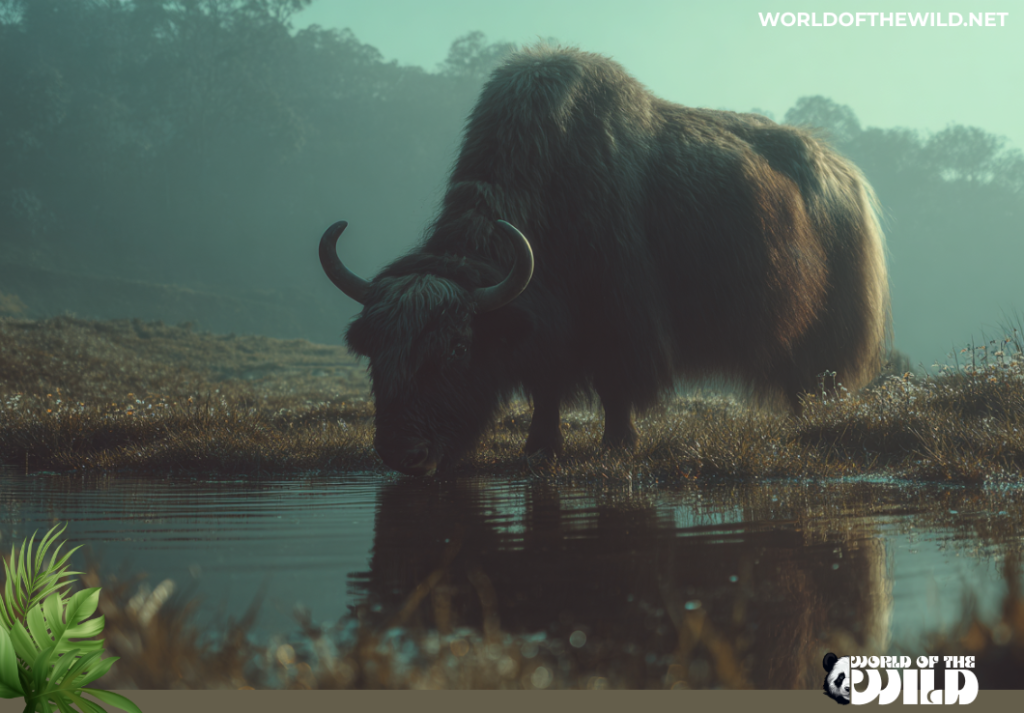
Water intake is essential despite the cold environment, and yaks drink regularly from streams and lakes even when they must break through ice to reach liquid water. Their efficient metabolism allows them to extract maximum nutrition from minimal food intake, an essential adaptation when vegetation is scarce and energy expenditure must be carefully managed.
Domestic yaks in managed herds may receive supplemental feeding during harsh winters, including hay, barley, or other grains, though they remain primarily dependent on natural grazing. Their ability to thrive on low-quality forage makes them far more efficient than cattle or other livestock in high-altitude environments where cultivated feed is difficult to produce.
Predators and Threats
In the harsh realm of the high Himalayas, adult yaks face relatively few natural predators due to their massive size, formidable horns, and tendency to defend themselves aggressively in groups. However, several carnivores pose threats, particularly to calves and weakened individuals.
The Tibetan wolf is the primary predator of wild yaks, hunting in packs that can take down young, sick, or isolated adults. Wolf packs employ sophisticated cooperative hunting strategies, with some individuals driving yaks into terrain where others wait in ambush, or working to separate calves from the protective circle of the herd. Snow leopards occasionally prey on yaks as well, though they typically target younger or smaller individuals, using their stealth and the element of surprise to attack from rocky outcrops. Brown bears in the region will opportunistically prey on yak calves and will scavenge yak carcasses, though they rarely attempt to hunt healthy adults.
The most significant threat to yaks, however, comes from human activities. Wild yak populations have declined catastrophically over the past century, falling from historical numbers estimated in the millions to current populations of only 10,000 to 15,000 individuals. This dramatic collapse stems from multiple anthropogenic pressures.
Habitat loss represents a growing crisis as development expands across the Tibetan Plateau. Mining operations, infrastructure projects, and expanding livestock grazing by domestic animals fragment wild yak habitat and reduce the available range. Competition with domestic yaks and other livestock for grazing areas further squeezes wild populations into increasingly marginal terrain.
Poaching has historically been severe, with wild yaks hunted for their meat, hides, and horns. While legal protections now exist in many areas, enforcement in remote regions remains challenging, and illegal hunting continues. Additionally, wild yaks are sometimes killed by herders who view them as competition for grazing land or as potential disease vectors.
Genetic pollution poses an insidious threat as wild yaks interbreed with domestic or feral yaks, diluting the pure wild gene pool. This hybridization occurs when domestic herds graze in wild yak territory, and over time it could lead to the extinction of genetically pure wild yaks even if animals appearing to be yaks continue to exist.
Climate change now emerges as perhaps the most concerning long-term threat. Rising temperatures on the Tibetan Plateau are altering vegetation patterns, melting glaciers that provide crucial water sources, and changing the fundamental characteristics of the high-altitude environment to which yaks are so precisely adapted. As conditions warm, the unique niche that yaks occupy may shift or disappear, forcing populations into increasingly restricted areas.
For domestic yaks, predation by wolves and snow leopards remains an economic concern for herders, though human management provides some protection. Disease represents a more significant threat to domestic populations, with outbreaks occasionally causing substantial losses.
Reproduction and Life Cycle
The yak breeding season is precisely timed to the harsh rhythms of Himalayan life. Mating occurs during the late summer and early autumn months, typically from July through September, ensuring that calves will be born in the milder late spring or early summer when food is becoming more abundant and weather conditions are most favorable for newborn survival.
During the rut, male behavior transforms dramatically. Bulls that spent most of the year in solitary or bachelor groups seek out female herds, engaging in spectacular displays of dominance. Males bellow their deep grunting calls, thrash vegetation with their horns, and engage in head-to-head pushing contests with rival bulls. These confrontations can be intense, with combatants locking horns and shoving with tremendous force, though serious injuries are relatively rare as the contests typically end when one bull backs down.
Dominant bulls establish temporary breeding rights over female groups, though they must constantly defend their position against challengers. A single male may mate with multiple females during the rutting season. The mating process itself is brief but preceded by elaborate courtship behaviors including the male approaching with lowered head, making vocalizations, and attempting to rest his chin on the female’s rump.
Following successful mating, the gestation period lasts approximately 258 days – about eight and a half months. Pregnant females remain with their herds throughout winter and spring, the developing calf protected within the mother’s body from the brutal external conditions.
Birth typically occurs from May through June. Calving females often separate slightly from the main herd, seeking sheltered locations among rocks or vegetation. Labor is usually quick, and the calf is born remarkably well-developed and mobile. Within minutes of birth, the calf attempts to stand, and within an hour most are able to walk and follow their mother. This rapid development is essential in an environment where predators constantly patrol and weather can turn deadly without warning.
Newborn calves weigh between 25 to 35 pounds and are covered in a thick, woolly coat that provides immediate insulation. The mother licks the calf vigorously to dry and stimulate it, establishing the crucial maternal bond. Within a few hours, mother and calf rejoin the herd, where the presence of many adults provides protection.
Calves nurse exclusively for the first weeks of life, receiving rich, high-fat milk that promotes rapid growth. They begin sampling solid vegetation within a month but continue nursing for six to twelve months, though the primary transition to solid food occurs around three to four months. The mother-calf bond remains strong throughout the first year, with young yaks staying close to their mothers and learning essential survival skills.
Female yaks reach sexual maturity around three to four years of age, while males mature slightly later at four to five years, though young bulls typically don’t successfully breed until they’re large and strong enough to compete with established males, often not until age six or seven. Female yaks typically produce a single calf every other year, as the demands of pregnancy, lactation, and calf-rearing in harsh conditions require a recovery period.
The lifespan of wild yaks in their natural habitat averages 20 to 25 years, though few individuals reach maximum age due to the cumulative effects of predation, harsh weather, disease, and the general wear of high-altitude life. Domestic yaks under human care may live slightly longer, with some individuals reaching 25 to 30 years, though most are utilized for production purposes long before reaching old age.
Throughout their lives, yaks demonstrate remarkable resilience, surviving conditions that would quickly kill most other mammals and perpetuating their species in one of Earth’s most challenging environments.
Population
The conservation status of yaks presents a tale of two species. Domestic yaks number in the millions – estimates suggest between 14 and 15 million worldwide, with the vast majority (approximately 95%) residing in China, particularly across the Tibetan Plateau. Substantial populations also exist in Mongolia, Nepal, Bhutan, India, and smaller numbers in other countries where they’ve been introduced. Domestic yak populations remain stable or are even slowly increasing in some regions as they continue to serve as essential livestock in high-altitude economies.
Wild yaks, however, face a drastically different reality. The International Union for Conservation of Nature (IUCN) currently lists wild yaks as Vulnerable on their Red List of Threatened Species, indicating a species facing a high risk of extinction in the wild. Some conservation biologists argue the status should be elevated to Endangered given the severity of population declines and ongoing threats.
Current estimates place the global wild yak population at approximately 10,000 to 15,000 individuals, with the most reliable surveys suggesting the number may be closer to the lower end of this range. This represents a catastrophic decline from historical populations that likely numbered in the millions just a few centuries ago. The vast majority of surviving wild yaks – perhaps 90% or more – live within China’s borders, primarily in protected areas and remote regions of the Tibetan Plateau in Tibet, Qinghai, and Xinjiang provinces.
Smaller wild populations persist in northern India’s Ladakh region, Nepal’s restricted trans-Himalayan zones, and possibly in extremely remote areas of Bhutan, though numbers in these areas are minimal and fragmented. Many populations exist as isolated groups of fewer than 50 individuals, raising concerns about genetic diversity and long-term viability.
The population trend for wild yaks is decidedly negative. Surveys conducted over the past several decades show continued declines in most regions, with some historical ranges now completely devoid of wild yaks. Only in a few well-protected reserves has the population stabilized or shown slight increases, demonstrating that conservation measures can be effective when properly implemented and enforced.
Several factors complicate population estimates and conservation efforts. The extreme remoteness and harsh conditions of wild yak habitat make surveying difficult, meaning actual numbers could be lower than estimates suggest. Additionally, distinguishing between pure wild yaks and wild-domestic hybrids or feral domestic yaks poses challenges for researchers, potentially inflating counts of genetically pure wild animals.
Conservation initiatives are underway in several countries. China has established numerous protected areas covering portions of wild yak range and has implemented legal protections against hunting, though enforcement remains inconsistent in remote regions. Nepal and India similarly protect wild yaks within national parks and conservation zones. International conservation organizations are working with local communities to develop sustainable coexistence strategies that benefit both yak conservation and human livelihoods.
Conclusion
The yak stands as a living monument to nature’s extraordinary capacity for adaptation, having evolved into a creature so perfectly suited to life at the roof of the world that it can thrive where almost no other large mammal can survive. From their outsized hearts and lungs to their luxurious insulating coats, every aspect of yak biology reflects millions of years of refinement for existence in conditions of extreme altitude, frigid temperatures, and scarce resources. For the human communities of the Himalayas and Tibetan Plateau, yaks represent far more than livestock – they are cultural icons, economic foundations, and partners in survival who have made permanent human habitation of high-altitude regions possible.
Yet this remarkable animal, which has endured ice ages and geological upheavals, now faces its most serious threat from the very species it has served so faithfully. Wild yak populations teeter on the brink, reduced to a fraction of their former abundance by habitat loss, poaching, genetic pollution, and the accelerating impacts of climate change. The contrast between millions of domestic yaks and mere thousands of wild ones underscores a troubling irony: we value yaks enormously for what they provide us, yet we imperil their wild essence.
The future of wild yaks depends on expanded protected areas, rigorous enforcement of hunting bans, management of livestock grazing to reduce competition, and addressing the root causes of habitat degradation. Perhaps most critically, it requires recognizing that wild yaks are not merely the progenitors of domestic animals but irreplaceable components of high-altitude ecosystems with intrinsic worth beyond human utility. These majestic animals have earned their place through eons of evolutionary achievement. Whether they will continue to roam the high plateaus for future generations depends entirely on choices we make today. The wild yak’s survival is a test of our commitment to preserving Earth’s most remarkable adaptations and the magnificent creatures that embody them.
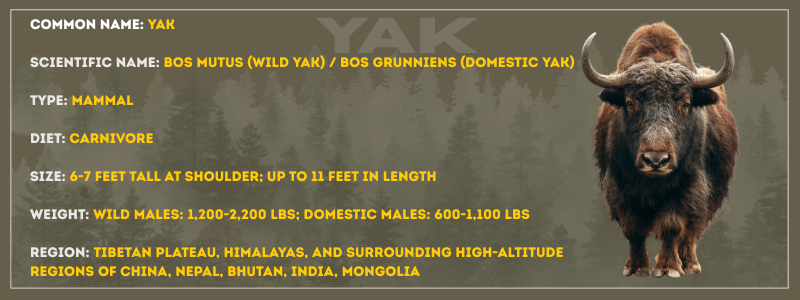
Scientific Name: Bos mutus (wild yak) / Bos grunniens (domestic yak)
Diet Type: Herbivore
Size: 6-7 feet tall at shoulder; up to 11 feet in length
Weight: Wild males: 1,200-2,200 lbs; Domestic males: 600-1,100 lbs; Females considerably smaller
Region Found: Tibetan Plateau, Himalayas, and surrounding high-altitude regions of China, Nepal, Bhutan, India, Mongolia