
Imagine standing at the base of a sheer, sun-scorched cliff face in the heart of the Arabian Desert, the midday heat radiating off the rocks in shimmering waves. Most creatures would have long retreated into the shade, or abandoned the landscape altogether. But hundreds of feet above, moving with the casual grace of an animal utterly unbothered by the impossible terrain, a large, tawny-coated goat picks its way across a ledge no wider than a human hand — its massive, sweeping horns catching the desert sun like a crown of burnished bone.
This is the Nubian Ibex, one of the most remarkable and underappreciated wild animals on Earth. A master of extremes, this creature has evolved to thrive where others cannot — in the jagged, scorching mountains and canyons of North Africa and the Middle East, surviving heat that would fell most mammals, navigating vertical rock faces with supernatural ease, and somehow sustaining itself in some of the most food-scarce environments on the planet. Part mountain goat, part desert specialist, and entirely extraordinary, the Nubian Ibex is a living testament to what millions of years of evolutionary pressure can produce.
Facts
Before we dive deep into the world of this desert icon, here are some quick-fire facts that might surprise you:
- Their coats are literally reflective. The Nubian Ibex has a pale, glossy coat that acts like a mirror, reflecting intense solar radiation rather than absorbing it — a critical adaptation in an environment where temperatures can exceed 104°F (40°C).
- Males grow horns that can stretch longer than a full-grown human arm. The great scimitar-shaped horns of a mature male can reach up to 47 inches (120 cm) in length, making them among the most dramatic headgear in the entire goat family.
- They can survive for extended periods without drinking water. By feeding on dew-moistened vegetation in the early morning and extracting moisture from the plants they eat, Nubian Ibex can go days between direct water sources — a vital skill in their arid homeland.
- Females and males live almost entirely separate lives. Outside of the mating season, the sexes occupy different territories and social structures, with females forming nursery herds and males congregating in bachelor groups or roaming solo.
- Their hooves are biological climbing shoes. Each hoof has a hard, sharp outer edge for gripping rock ledges, combined with a soft, rubbery inner pad that creates suction-like traction on smooth surfaces — an anatomical masterpiece.
- They kneel to eat. When grazing on low vegetation or ground-level herbs, Nubian Ibex often bend their front legs and kneel rather than simply lowering their heads, giving them a peculiarly elegant, almost reverent appearance at mealtimes.
- Population declines are severely underreported. Because they occupy some of the most remote and politically complex terrain in the world — crossing borders between Israel, Jordan, Saudi Arabia, Egypt, and Yemen — accurate population counts remain a genuine scientific challenge.
Species
The Nubian Ibex sits firmly within the rich tapestry of wild goats, belonging to one of nature’s most successful ungulate lineages.
Full Classification:
| Rank | Classification |
|---|---|
| Kingdom | Animalia |
| Phylum | Chordata |
| Class | Mammalia |
| Order | Artiodactyla |
| Family | Bovidae |
| Genus | Capra |
| Species | Capra nubiana |
For much of the 20th century, taxonomists debated whether the Nubian Ibex was truly a distinct species or simply a subspecies of the Alpine Ibex (Capra ibex). Today, the scientific consensus firmly recognizes it as a full species in its own right, differentiated by its geographic isolation, distinct coat coloration, body proportions adapted to desert heat, and unique behavioral ecology.
The genus Capra is a diverse and globally distributed group, and the Nubian Ibex shares its ancestry with several other iconic wild goats. The Alpine Ibex (Capra ibex) of the European Alps is perhaps the most famous relative, once hunted to near extinction before a remarkable conservation recovery. The Siberian Ibex (Capra sibirica) ranges across the mountains of Central Asia and is the largest member of the genus. The critically endangered Walia Ibex (Capra walie), found only in the Simien Mountains of Ethiopia, is the Nubian’s closest African cousin and one of the rarest large mammals on Earth. Rounding out the broader ibex family are the Spanish Ibex (Capra pyrenaica) of the Iberian Peninsula and the West and East Caucasian Tur (Capra caucasica and Capra cylindricornis) of the Greater Caucasus mountains.
Appearance
The Nubian Ibex is a study in elegant, purposeful design — every feature shaped by the demands of life in one of the world’s harshest environments.
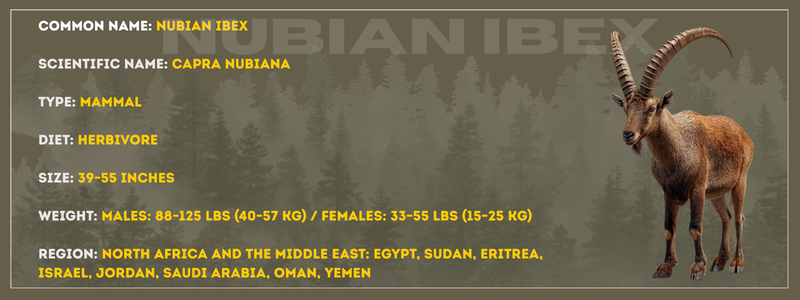
Males (known as billies or bucks) are significantly larger than females (called nannies or does), a classic example of sexual dimorphism. A mature male typically weighs between 88 and 125 pounds (40–57 kg) and stands around 26–31 inches (65–79 cm) at the shoulder, with a body length of approximately 39–55 inches (100–140 cm). Females are noticeably more petite, generally weighing between 33 and 55 pounds (15–25 kg).
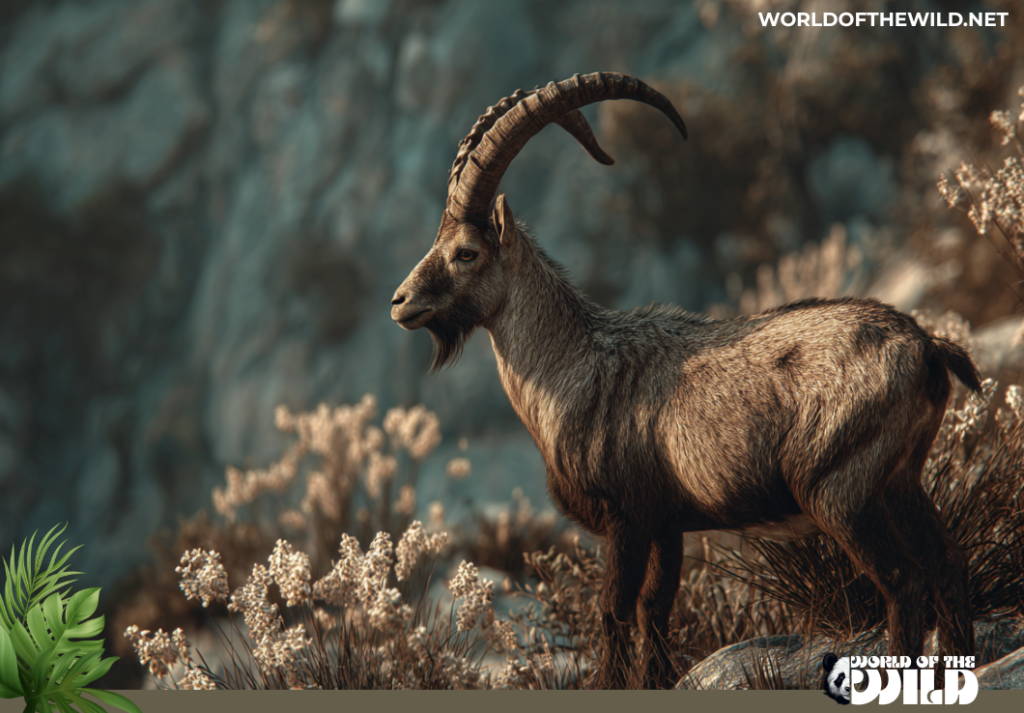
The coat is the animal’s most immediately striking feature. Males wear a rich, sandy-brown to tawny-gold pelage on their upper body, which transitions to a crisp, contrasting white on the belly, inner legs, and rump. This bicolored pattern not only helps with solar heat management but also plays a role in visual communication during social interactions. Females tend toward a more uniform light brown or grayish-brown, lacking the male’s sharper contrast. Both sexes have a distinctive dark stripe running along the spine and dark markings on the legs, giving them a clean, well-defined silhouette against the pale rock of their mountain homes.
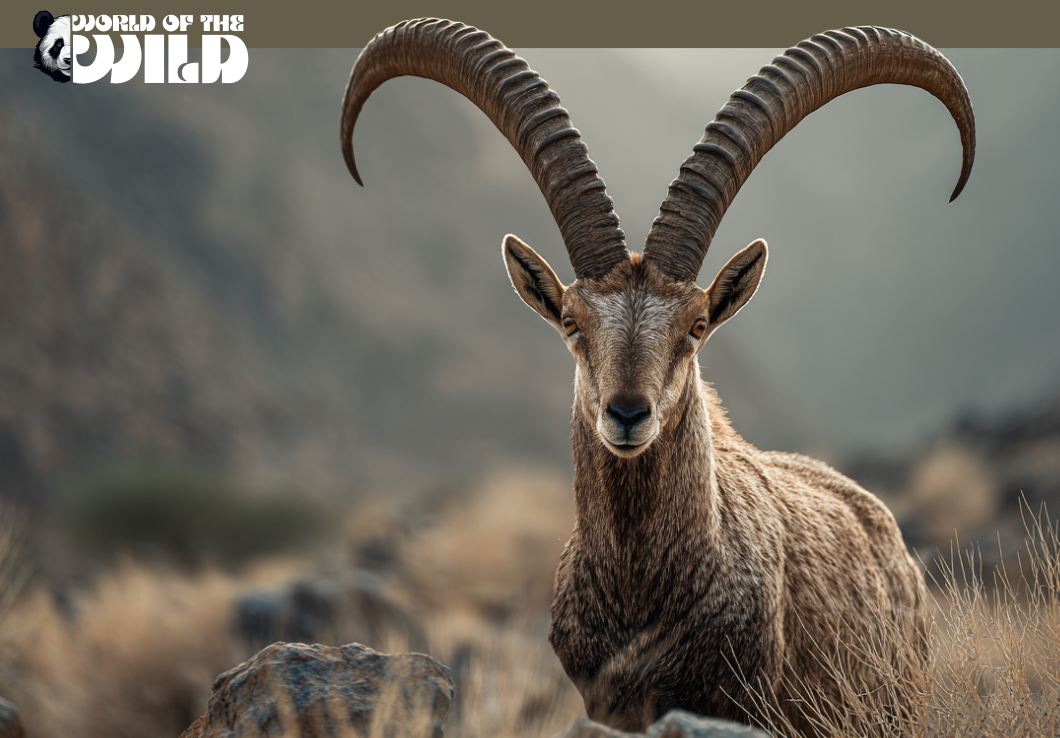
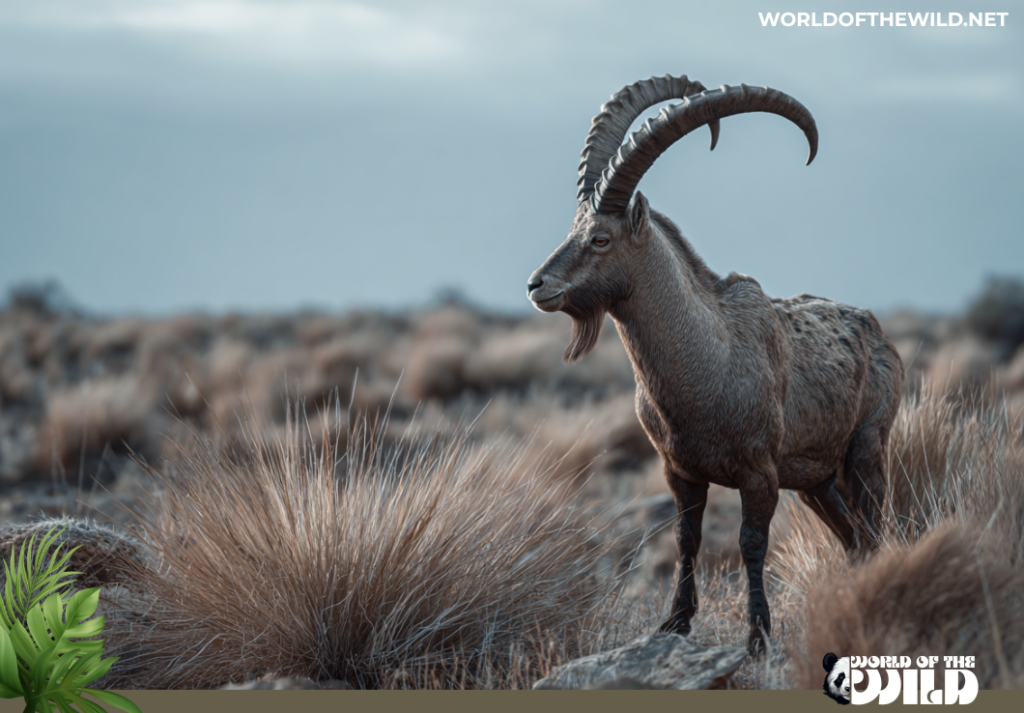
But it is the horns that truly set the Nubian Ibex apart — particularly in males. Long, dramatically curved, and sweeping backward over the shoulders in a great, scimitar-like arc, the horns of a dominant male are a breathtaking sight. Prominent transverse ridges (called knobs or annuli) run along the front face of the horn like the rungs of a ladder; these rings allow researchers to age an animal, as a new ring is added with each passing year. Female horns are far more modest — shorter, straighter, and more lightly ridged — but no less functional as defensive tools.
The Nubian Ibex’s legs are slender but deceptively powerful, and the hooves, as mentioned, are remarkable engineering feats that allow the animal to traverse terrain that would be impassable to virtually any other large mammal.
Behavior
Life for a Nubian Ibex is organized around two fundamental priorities: avoiding predators and managing heat. Both concerns profoundly shape every aspect of the animal’s daily routine and social structure.
The species is most active during the cooler hours of early morning and late afternoon, retreating to the shade of cliff overhangs and rock outcroppings during the punishing midday heat. This crepuscular rhythm is a behavioral adaptation as important as any physical trait. During their active periods, they graze on available vegetation, pick their way across cliff faces in search of mineral-rich rocks to lick, and engage in the complex social dynamics that define ibex society.
Nubian Ibex are decidedly social animals, but their social groups are sexually segregated for most of the year. Females and their young form nursery herds of anywhere from five to thirty individuals, led by experienced older females who know the terrain, the seasonal vegetation patterns, and the escape routes from predators. These matriarchal groups are tight-knit and communicative, using a vocabulary of grunts, bleats, and snorts to signal alarm, maintain contact, and coordinate movement. Males, meanwhile, tend to form looser bachelor groups or range more independently, coming together with females only during the autumn rutting season.
One of the most dramatic behavioral displays in the ibex world occurs during the rut, when males engage in ritualized combat — rising on their hind legs and crashing their enormous horns together with a force and sound that can be heard from considerable distances across rocky canyons. These bouts are fierce but rarely fatal; the thick, heavily ridged horns and the reinforced skull structure of males have co-evolved specifically to absorb this kind of impact.
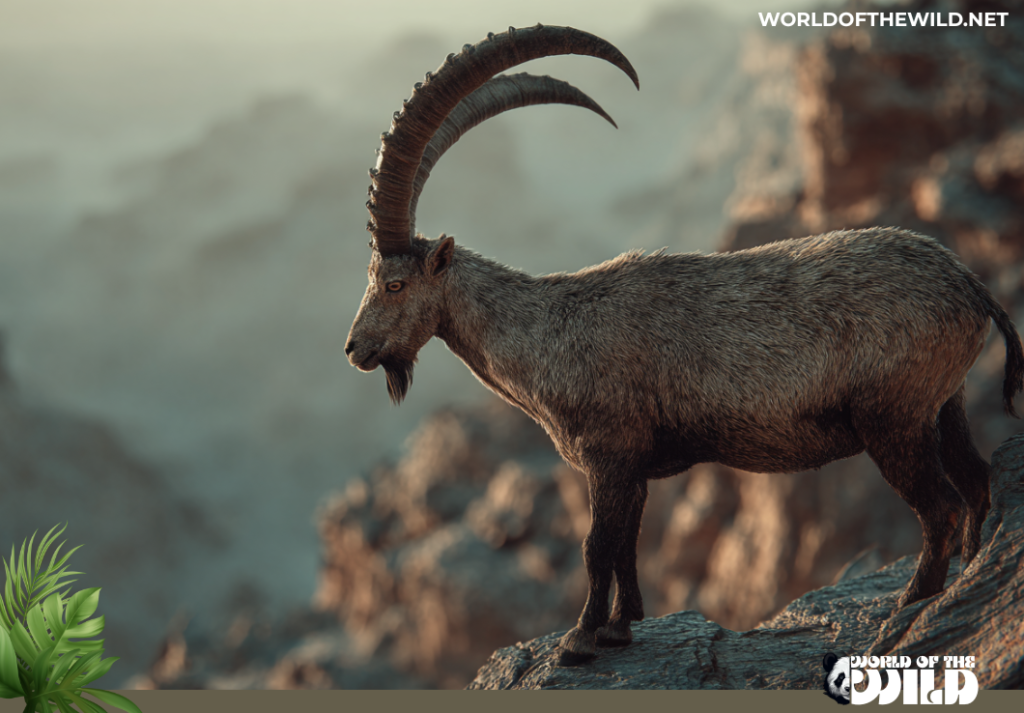
Perhaps the most jaw-dropping behavioral adaptation of the Nubian Ibex is its cliff-climbing ability. These animals have been documented scaling near-vertical rock faces at speed, leaping between ledges seemingly too small to support them, and navigating terrain that would be life-threatening to almost any other creature their size. This skill is not merely impressive — it is their primary defense strategy. When a predator appears, the ibex’s first response is almost invariably to run upward, retreating into the near-vertical cliff faces where pursuit becomes impossible for most hunters.
Evolution
The story of the Nubian Ibex is part of a much broader evolutionary saga that begins tens of millions of years ago with the early bovids — the hoofed, horned mammals that would eventually diversify into cattle, sheep, goats, gazelles, and antelopes.
The direct ancestors of the genus Capra are thought to have emerged in Asia somewhere between 3 and 5 million years ago during the Pliocene epoch, likely in the rugged mountain ranges of what is now Central or South Asia. These proto-goats were already upland specialists, adapted to navigate rocky terrain in competition with other herbivores and in evasion of the large predators of the era. From this ancestral stock, the genus diversified and spread, with different lineages colonizing mountain ranges from Europe to North Africa and the Middle East.
The divergence of the Nubian Ibex from its closest relatives is closely tied to the geological and climatic transformation of North Africa and the Arabian Peninsula. As the Sahara dried and the Arabian Desert expanded over the past several million years, populations of ibex ancestral to the modern Nubian lineage became progressively isolated in mountain refugia — islands of rocky habitat surrounded by expanding desert. This isolation drove the evolution of the suite of desert-specific adaptations that make the Nubian Ibex so distinctive today: its reflective coat, its drought-tolerance physiology, its highly efficient thermoregulation, and its dependence on cliff terrain in an otherwise flat and featureless landscape.
The separation between the Nubian Ibex and the Alpine Ibex lineages is estimated to have occurred somewhere between 1 and 2 million years ago, during the Pleistocene, a period of dramatic climatic cycling that repeatedly reshaped the distribution of plant and animal communities across Eurasia and Africa.
Habitat
The Nubian Ibex calls some of the most dramatic and inhospitable landscape on Earth its home. Its range extends across a crescent of rugged desert terrain stretching from the mountains of northeastern Sudan and Egypt, through the Sinai Peninsula, across the rocky highlands of Israel and Jordan, and into the mountain ranges of Saudi Arabia, Oman, Yemen, and Eritrea.
Within this broad geographic arc, the Nubian Ibex shows a strong and unwavering preference for extremely specific microhabitats. It is above all a creature of steep, rocky desert mountains — specifically the kind of sheer cliff faces, deep wadis (dry riverbeds and canyons), rocky escarpments, and jumbled boulder fields that characterize landscapes like the Negev Desert highlands, the mountains of Wadi Rum in Jordan, the Hijaz Mountains of Saudi Arabia, and the spectacular rocky terrain of Oman’s Hajar Range.
Elevation matters greatly to the Nubian Ibex. While they may venture to lower terrain during the cooler months to access forage, they typically spend the hottest parts of the year at higher elevations where cliffs provide both shade and escape routes. The availability of cliff faces for refuge is arguably the single most critical habitat requirement for this species — more important even than food or water, since without safe refugia, no amount of forage can protect a herd from predation.
The broader environment is classic hot desert or semi-arid: receiving extremely low and unpredictable annual rainfall, experiencing dramatic temperature swings between day and night, and supporting sparse but varied desert vegetation including drought-adapted grasses, shrubs, and trees. Seasonal wadis, which fill briefly with water after rare rainfall events, act as important focal points in the landscape, drawing ibex down from the cliffs to drink and feed on the flush of green vegetation that follows each rain.
Diet
The Nubian Ibex is a strict herbivore, and given the landscape it inhabits, it is a remarkably versatile and opportunistic one. In an environment where plant life is scarce, patchy, and seasonally variable, dietary flexibility is not a luxury — it is a survival requirement.
The backbone of the Nubian Ibex’s diet consists of whatever vegetation is available in its rocky, arid terrain. This includes dry grasses and sedges, the leaves and twigs of desert shrubs such as acacia and saltbush, seasonal wildflowers and herbs that emerge after rain, and the foliage of trees where accessible. They are also known to consume dried plant material and crop stubble, and where their range overlaps with agricultural land, they occasionally venture into farmland to raid crops — a behavior that has brought them into increasing conflict with human communities.
One particularly notable dietary behavior involves mineral licking. Nubian Ibex will seek out and lick exposed mineral-rich rock surfaces to supplement their diet with essential salts and trace elements that are difficult to obtain from vegetation alone in desert environments. This habit draws them to specific geological features and is an important driver of their movement patterns across the landscape.
Foraging largely happens during the cooler morning and evening hours, and the ibex’s digestive system, like that of all ruminants, is well-suited to processing tough, fibrous plant material. They chew their cud during the long midday rest periods in the shade — a quiet, efficient way to continue extracting nutrition from previously swallowed food while avoiding the twin risks of heat and predation.
Predators and Threats
Natural Predators
Despite their remarkable agility and the formidable cliff faces they call home, Nubian Ibex are not without enemies. The leopard (Panthera pardus) is historically the Nubian Ibex’s most significant natural predator, an equally agile and powerful climber capable of pursuing ibex into terrain that other large cats cannot access. Leopard populations across the ibex’s range have declined dramatically in recent centuries, which has reduced but not eliminated this predation pressure. Arabian wolves (Canis lupus arabs) hunt ibex, particularly targeting juveniles and individuals separated from the herd on less precipitous terrain. Golden eagles and other large raptors pose a real threat to kids (young ibex), capable of striking from above before a mother ibex can mount any meaningful defense. Red foxes and striped hyenas may opportunistically target weakened individuals or very young animals.
Human-Caused Threats
The more pressing and existential threats facing the Nubian Ibex are those generated by human activity, and they are numerous and intensifying.
Hunting and poaching have historically been devastating to the species. The Nubian Ibex has been pursued for millennia — for its meat, for its horns as trophies, and in some cultural traditions for its perceived medicinal value. While legal protections now exist across much of its range, enforcement is inconsistent, and illegal hunting remains an ongoing problem in several regions.
Habitat loss and degradation driven by expanding human settlement, infrastructure development, and agricultural expansion is progressively fragmenting and shrinking the ibex’s rocky mountain refuges. As lowland and mid-elevation terrain is converted, ibex populations become increasingly isolated from one another, reducing genetic diversity and resilience.
Competition with domestic livestock is a significant and chronically underappreciated threat. Goats, sheep, and camels graze the same desert vegetation on which ibex depend, and in heavily pastured regions, overgrazing can strip landscapes bare, reducing the ibex’s food supply to a critical degree.
Climate change looms as a long-term destabilizing force, altering rainfall patterns, shifting vegetation zones, and increasing the frequency and intensity of extreme heat events across an already extreme landscape. For a species already living at the edge of thermal tolerance, even modest increases in average temperatures could push populations past critical thresholds.
Reproduction and Life Cycle
The Nubian Ibex follows a seasonal reproductive rhythm tightly synchronized with the cycles of its desert environment. The rutting season — the frenzied, dramatic period during which males compete for access to females — typically unfolds between September and November, when temperatures begin to moderate and the physiological and behavioral cues of shortening days trigger hormonal changes in both sexes.
During the rut, male Nubian Ibex undergo a striking transformation. Already impressive animals, they become hyperactive and aggressive, engaging in the ritualized sparring and full-contact horn-clashing that establishes dominance hierarchies. Dominant males attempt to monopolize access to groups of receptive females, spending relatively little time eating or resting during this period and often losing significant body condition in the process. Courtship involves extensive posturing, the extension of the neck and tongue (a behavior known as the Flehmen response, used to detect female reproductive status through scent), and persistent following of estrous females.
After successful mating, the gestation period lasts approximately 150–165 days — roughly five to five and a half months — meaning that births are timed to occur in spring, typically between March and May. This timing is critical: the spring months bring the brief flush of vegetation that follows winter rains, ensuring that nursing mothers have access to sufficient food to produce milk and that newly weaned kids face a relatively favorable first foraging environment.
Females typically give birth to one or two kids, with twins being common. Birth usually takes place on isolated cliff ledges or in rocky outcroppings — locations chosen specifically for their inaccessibility to predators. Newborn Nubian Ibex are precocial, meaning they are born in a relatively advanced state of development: within hours of birth, kids are on their feet and capable of basic movement. They must be, given the terrain they inhabit. Maternal care is intensive in the first weeks, with the mother keeping the kid or kids close and alert for danger.
Kids grow rapidly and are typically weaned by around six months of age, though they remain with the mother’s group through their first year. Females generally reach sexual maturity at around two years of age; males mature at a similar age but typically do not achieve social dominance and successful breeding until they are considerably older and have grown the large horns and body mass needed to compete effectively with rival males.
In the wild, Nubian Ibex typically live between 10 and 14 years, though individuals may reach 17 years in optimal conditions. In captivity, with veterinary care and consistent food supply, lifespans can extend somewhat further.
Population
The Nubian Ibex is currently classified as Vulnerable on the IUCN Red List of Threatened Species — a designation that reflects genuine and ongoing population declines driven by the combination of threats described above, while acknowledging that the species has not yet reached the crisis point of Endangered or Critically Endangered status.
Global population estimates are inherently uncertain given the remote and politically complex nature of much of the ibex’s range, but current assessments suggest a total wild population somewhere in the range of 1,200 to 4,000 individuals, with significant uncertainty at either end of that estimate. The population in Israel and Jordan is considered the best-studied and most stable subpopulation, benefiting from active conservation management, legal protection, and relatively effective anti-poaching enforcement. Populations in Yemen and parts of Sudan and Eritrea are thought to have declined more sharply and are the most vulnerable, given ongoing political instability, limited conservation infrastructure, and persistent hunting pressure.
The overall population trend is considered decreasing by the IUCN, making continued monitoring and active conservation intervention increasingly urgent. Some localized subpopulations have shown encouraging signs of recovery in response to targeted protections, suggesting that the species is capable of rebounding where threats are effectively managed.
Conclusion
The Nubian Ibex is not merely a goat that lives on cliffs. It is an evolutionary masterpiece — a creature refined over millions of years into one of the most perfectly adapted desert mountain specialists the world has ever produced. Its reflective coat, its engineering-marvel hooves, its drought-tolerant physiology, its deep social bonds, and its breathtaking athleticism on near-vertical rock faces all speak to the extraordinary power of natural selection to produce beauty and function in equal measure.
And yet this magnificent animal faces a future of growing uncertainty. Pressed on all sides by hunting, habitat loss, livestock competition, and the slow burn of a changing climate, the Nubian Ibex is losing ground — not in the metaphorical sense, but quite literally, as the pockets of rocky mountain terrain it calls home shrink and fragment under the weight of expanding human influence.
The good news is that conservation works. Where the Nubian Ibex has been given legal protection, where habitat has been preserved, and where anti-poaching enforcement has been meaningful, populations have stabilized and even grown. The tools to save this species exist. What is needed now is the will to use them — to extend those protections across the full breadth of the ibex’s range, to support the communities living alongside these animals in finding sustainable coexistence, and to ensure that the jagged desert mountains of North Africa and the Middle East remain a place where a great, golden-coated ibex can still pick its impossible way across a sunlit cliff face, horns sweeping toward the sky, entirely at home in the place that made it.
Quick Reference
| Scientific Name | Capra nubiana |
| Diet Type | Herbivore |
| Body Length | 39–55 inches (100–140 cm) |
| Shoulder Height | 26–31 inches (65–79 cm) |
| Horn Length (male) | Up to 47 inches (120 cm) |
| Weight | Males: 88–125 lbs (40–57 kg) / Females: 33–55 lbs (15–25 kg) |
| Region Found | North Africa and the Middle East: Egypt, Sudan, Eritrea, Israel, Jordan, Saudi Arabia, Oman, Yemen |