
There’s a moment that every hiker, camper, and suburban dog owner dreads — the sudden flash of black and white in the underbrush, the slow, deliberate raise of a fluffy tail, and then the unmistakable, eye-watering announcement that you have overstayed your welcome. The skunk is one of North America’s most recognizable creatures, yet despite its fame, it remains one of the most misunderstood. Reduced in popular culture to a punchline or a nuisance, the skunk is, in reality, a remarkably sophisticated animal — a gentle, intelligent, and ecologically vital creature whose infamous defense mechanism represents one of the most extraordinary evolutionary adaptations in the animal kingdom. Look past the smell, and you’ll find a fascinating animal well worth knowing.
Facts
- A skunk can spray its defensive musk with remarkable accuracy at targets up to 10 feet away, and the odor can be detected by humans from nearly a mile downwind under the right conditions.
- Before spraying, skunks go through an elaborate warning ritual — stomping their front feet, hissing, raising their tail, and even doing a handstand — making them one of the most communicative defensive animals in nature.
- Skunk musk is not technically a “spray” in the traditional sense; it is released from two independently controllable muscular scent glands, meaning a skunk can choose to spray from the left, the right, or both simultaneously.
- Despite their reputation, skunks are fastidiously clean animals and will go to great lengths to avoid soiling their own dens or living spaces.
- Skunks are one of the primary predators of honeybees, and they have developed a remarkable resistance to bee stings, allowing them to raid hives with relative impunity.
- A skunk will only spray as a last resort — it carries only enough musk for five or six sprays and can take up to ten days to fully replenish its supply, leaving it temporarily defenseless.
- Skunks are among the few wild animals with a natural resistance to snake venom, including that of the eastern diamondback rattlesnake, making them formidable hunters of venomous serpents.
Species
Skunks belong to the following taxonomic classification:
Kingdom: Animalia Phylum: Chordata Class: Mammalia Order: Carnivora Family: Mephitidae Genus: Multiple (see below) Species: Multiple
The family Mephitidae contains 12 recognized species of skunks spread across four genera, and each brings its own distinct personality and geography to the group.
The Striped Skunk (Mephitis mephitis) is the most familiar and widespread, found across most of North America. It is the archetypal skunk — the one immortalized in cartoons and campfire stories. Closely related is the Hooded Skunk (Mephitis macroura), which inhabits the arid southwestern United States and Central America and sports a dramatic ruff of longer fur around its neck.
The Spotted Skunks of the genus Spilogale are perhaps the most acrobatic of the group. The Eastern Spotted Skunk (Spilogale putorius) and the Western Spotted Skunk (Spilogale gracilis) are smaller, faster, and more agile than their striped cousins, and they are most famous for performing a dramatic handstand display before spraying. The Pygmy Spotted Skunk (Spilogale pygmaea), found only in a narrow strip of western Mexico, is considered vulnerable due to its restricted range.
The Hog-nosed Skunks of the genus Conepatus are the heaviest of the family and are named for their elongated, pig-like snout, which they use to root through soil for insects. Species in this group include the American Hog-nosed Skunk (Conepatus leuconotus) and the Molina’s Hog-nosed Skunk (Conepatus chinga), which ranges across South America. Finally, the Stink Badgers of Southeast Asia — the Sunda Stink Badger (Mydaus javanensis) and the Palawan Stink Badger (Mydaus marchei) — were once classified with true badgers but are now recognized as members of Mephitidae, revealing just how globally successful the musk-based defense strategy has been.
Appearance
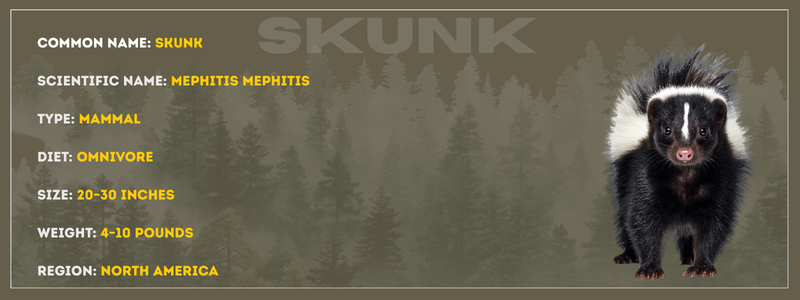
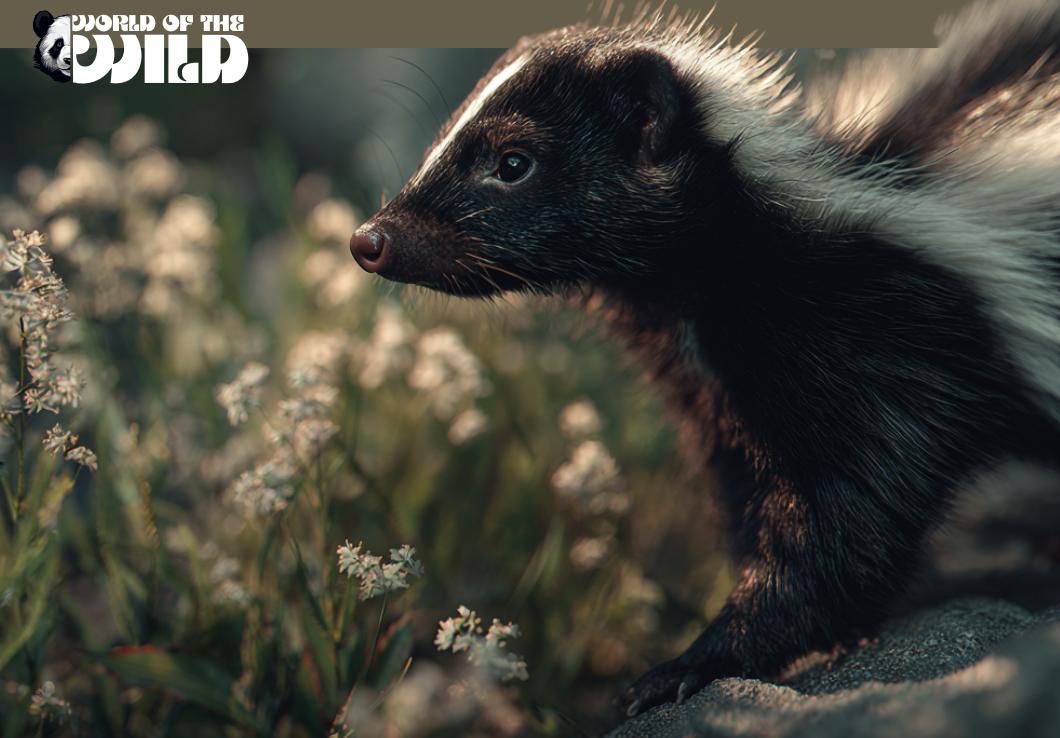
The skunk’s appearance is a masterclass in what biologists call aposematism — the use of striking visual signals to warn potential predators of a dangerous or unpleasant defense. The iconic black-and-white coloration is not camouflage; it is quite deliberately the opposite. It is a neon sign in the natural world, broadcasting a clear and universal message: leave me alone.
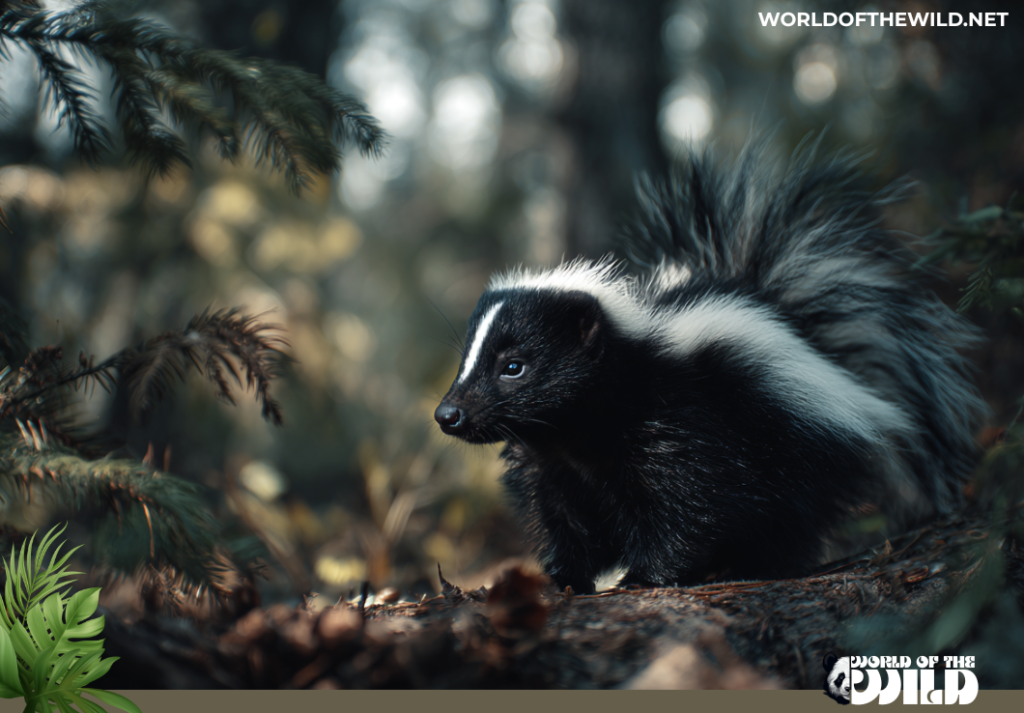
The Striped Skunk, the most familiar species, has a jet-black base coat with two bold white stripes that begin at the top of the head, converge at the shoulders, and run down either side of the back to the base of the large, bushy tail. The tail itself is often a dramatic mix of both black and white fur. Some individuals display a thin white stripe running down the center of the face. There is considerable individual variation — some skunks show broad, prominent stripes while others have narrow stripes or even nearly solid black coats.
In terms of size, a typical adult Striped Skunk is about 20 to 30 inches long, including its tail, and stands roughly 7 to 10 inches at the shoulder. Adults generally weigh between 4 and 10 pounds, though well-fed individuals in suburban environments, with access to garbage and pet food, can occasionally tip the scales at 14 pounds or more. Males tend to be slightly larger than females. The body is compact and somewhat stocky, with short, powerful legs equipped with long front claws well suited for digging. The face is small and pointed, with small, round ears and tiny, beady eyes — reflective of the animal’s relatively poor eyesight, which ranks among the weakest of any North American carnivore.
Spotted Skunks are noticeably smaller, typically weighing less than 2 pounds, and instead of clean stripes, they display a broken pattern of spots and short streaks that gives them a more chaotic but equally striking appearance.
Behavior
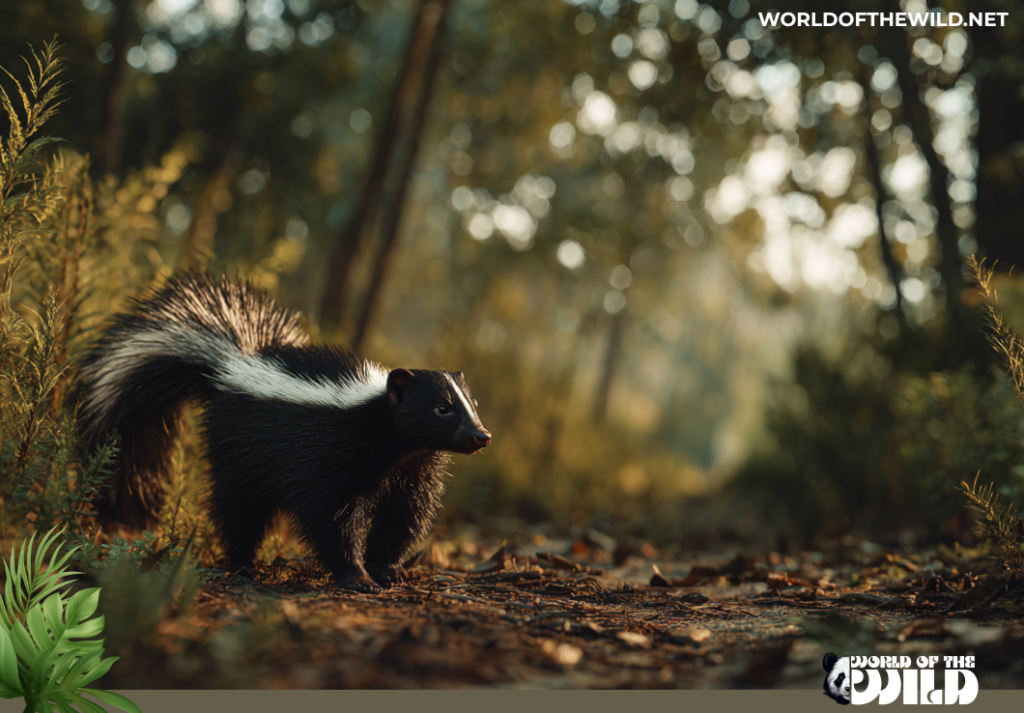
Skunks are primarily nocturnal, spending their days resting in dens — which they may dig themselves or, more commonly, appropriate from other animals such as groundhogs and foxes. At dusk, they emerge to forage, following a largely solitary existence. They are not territorial in an aggressive sense but do maintain loosely defined home ranges that can overlap, particularly among females and juveniles.
Despite being classified under the order Carnivora, skunks are behaviorally and ecologically omnivores of remarkable flexibility. They are opportunistic foragers, ambling through fields, forest edges, and suburban backyards with a slow, deliberate gait that speaks to their confidence in their chemical defense. They have little reason to hurry — few predators are willing to risk an encounter.
Communication among skunks relies heavily on scent, as one might expect. They have musk glands, but also use urine marking to signal presence and reproductive status. Vocalizations are limited but include churring, hissing, whimpering, and bird-like chirping sounds, particularly among young kits communicating with their mothers.
One of the most remarkable behavioral traits of skunks is their patience before deploying their chemical weapon. The warning sequence — stomping, scraping, hissing, and the famous tail-raise — is a genuine effort to resolve conflict without spraying. This restraint makes biological sense: producing musk is metabolically costly, and a skunk without a full supply is a significantly more vulnerable animal. Spotted Skunks take this a step further, rearing up into a handstand and walking forward on their front legs — a spectacular and highly effective bluff display that typically sends predators fleeing before any spray is necessary.
In winter, skunks do not truly hibernate but enter a state of torpor, spending most of their time sleeping in communal dens where groups of females (and occasionally a male) huddle together for warmth. Their body temperature drops slightly and their metabolic rate slows, allowing them to survive on stored fat reserves for weeks at a time. They may emerge on warmer winter nights to forage, which is why fresh skunk tracks in snow are not an unusual sight.
Evolution
The evolutionary history of skunks is a story of successful chemical innovation. The family Mephitidae diverged from other members of the superfamily Musteloidea — which includes weasels, otters, and raccoons — approximately 30 to 40 million years ago during the Eocene and Oligocene epochs. The fossil record indicates that early mephitids were present in both the Old World and the New World, suggesting a broad ancestral distribution that has since contracted dramatically.
For much of taxonomic history, skunks were classified within the family Mustelidae alongside weasels and badgers, with whom they share a common ancestor and several morphological similarities, including a stocky body plan and, in many mustelids, well-developed anal scent glands. It was only in 1997, following molecular phylogenetic analysis, that Mephitidae was formally recognized as a distinct and separate family — a reclassification that highlighted just how early and completely the skunk lineage diverged from its relatives.
The musk-production system itself is an elaboration of the anal scent glands found in many carnivores. What makes skunks unique is the extraordinary refinement and potency of the chemicals involved — primarily thiol compounds (sulfur-containing molecules), specifically (E)-2-butene-1-thiol and 3-methyl-1-butanethiol — and the muscular precision of the delivery mechanism. This system appears to have evolved as a highly effective alternative to the speed, size, or armor that other animals rely on for defense. The evolutionary payoff has been immense: skunks are among the most predator-resistant small mammals in the world.
The relationship between skunks and the great horned owl — one of their few consistent predators — represents a fascinating evolutionary arms race. The owl, which hunts primarily by vision and sound and has a relatively poorly developed sense of smell, is immune to the social pressure that skunk musk exerts on most mammals, and has remained the skunk’s most significant aerial threat throughout its evolutionary history.
Habitat
Skunks are found almost exclusively in the Americas, with the greatest diversity of species in North and Central America. The Striped Skunk enjoys one of the broadest ranges of any North American mammal, inhabiting virtually every habitat type from southern Canada through the United States and into northern Mexico. The Stink Badgers represent a notable exception to the American distribution, having evolved independently in Southeast Asia.
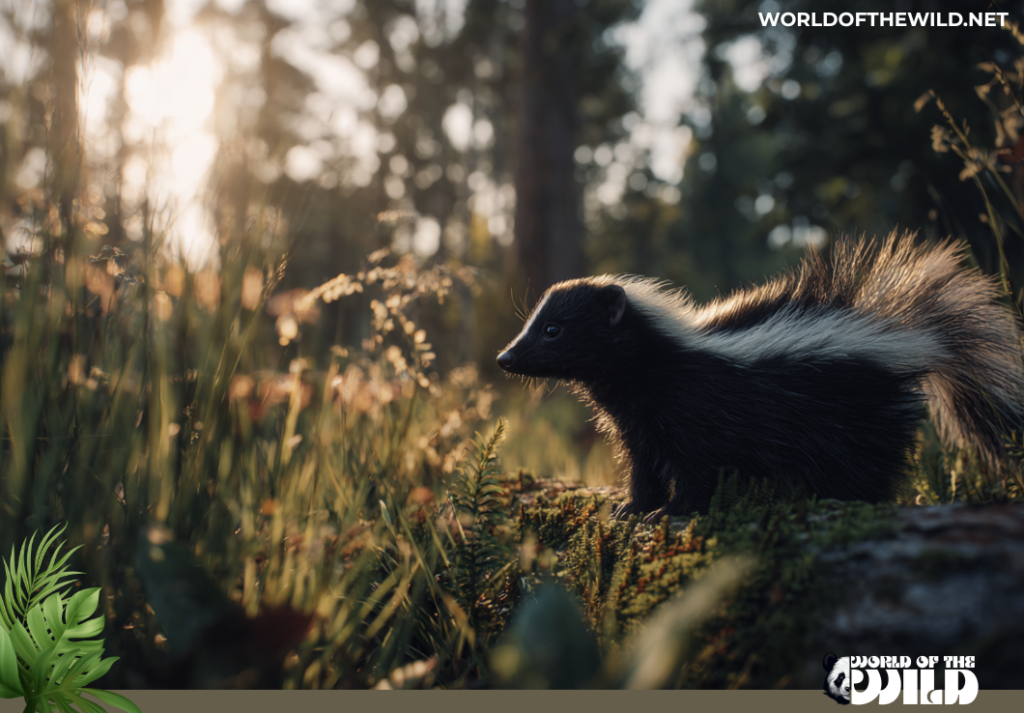
Skunks are generalist habitat specialists — a seemingly contradictory term that captures their ability to thrive in almost any environment that offers food, shelter, and a relative absence of human persecution. They are found in deciduous and mixed forests, grasslands, prairies, brushlands, desert edges, and agricultural landscapes. Critically, they have adapted remarkably well to suburban and even urban environments, where the combination of reduced predation pressure, abundant food waste, and dense denning opportunities has allowed populations to flourish.
The ideal skunk habitat typically features a mosaic of open foraging areas — meadows, fields, and lawn edges — adjacent to wooded or shrubby cover that provides denning sites and daytime shelter. They are seldom found in dense, old-growth forest interiors or in high-elevation alpine zones, preferring the productive edge habitats where multiple ecosystem types meet. Water is not a strict requirement, though skunks will readily use areas near streams and ponds, which support the insects, amphibians, and invertebrates that form a significant part of their diet.
Diet
Skunks are omnivores of considerable dietary breadth, and this flexibility is one of the primary reasons for their ecological success across such a wide range of habitats and seasons. Their diet shifts dramatically with the seasons, reflecting both availability and the skunk’s opportunistic feeding strategy.
In warmer months, insects form the cornerstone of the skunk’s diet. They consume enormous quantities of beetles, grasshoppers, crickets, and their larvae, as well as grubs and earthworms unearthed by their powerful front claws. This insectivorous tendency makes skunks genuinely valuable to farmers and gardeners, as they consume large numbers of agricultural pests. Their taste for cutworms, armyworms, and Japanese beetle grubs in particular makes them unsung heroes of natural pest control.
Beyond insects, skunks readily consume small mammals such as mice and voles, bird eggs and nestlings (when discovered), frogs, salamanders, lizards, and snakes — including venomous species, to which they have developed a notable physiological resistance. They also consume fruits, berries, nuts, and plant material, particularly in late summer and autumn when they are building fat reserves for winter torpor. In suburban areas, skunks exploit garbage, compost, and pet food left outdoors with enthusiasm.
Their beehive-raiding behavior is particularly noteworthy. A skunk will scratch at the entrance of a hive, wait for bees to emerge to investigate, and then snap them up as they appear — rolling the bees on the ground to remove the stingers before swallowing them. Their thick fur and insensitivity to stings make them extraordinarily effective hive predators, to the frustration of beekeepers.
Predators and Threats
For most predators, the skunk’s musk represents an effective and absolute deterrent. However, a handful of species have evolved strategies to circumvent or simply tolerate the chemical defense. The Great Horned Owl (Bubo virginianus) is by far the most significant natural predator of skunks, hunting them from above at night using silent flight and vision rather than the olfactory cues that other predators rely on. The owl’s relatively underdeveloped sense of smell means the musk is far less of a deterrent, and many wild Great Horned Owls carry a persistent skunk odor in their feathers as testament to this dietary preference.
Other occasional predators include coyotes, foxes, bobcats, and badgers, particularly targeting young or weakened individuals. American Black Bears will occasionally kill skunks as well. Large raptors such as eagles have been documented taking skunks on rare occasions. Domestic dogs are a significant cause of skunk mortality, not through predation per se but through the stress and physical injury that encounters cause.
On the human-caused threat side, skunks face several serious pressures. Vehicle strikes represent the single largest source of skunk mortality in North America; their slow gait, nocturnal habits, and tendency to forage along road edges make them tragically vulnerable to traffic. Habitat fragmentation and urban development reduce foraging range and denning sites, and roads fragment populations in ways that impede genetic exchange. Trapping and relocation — often carried out by pest control operators responding to homeowner complaints — is a significant source of mortality, as relocated skunks frequently fail to survive in unfamiliar territory. Rabies is a major concern as well; skunks are one of the primary wildlife reservoirs for the rabies virus in North America, and outbreaks within skunk populations can cause dramatic local population crashes. Pesticide use is an underappreciated threat, reducing insect prey availability and potentially causing direct poisoning in skunks that consume contaminated insects or rodents.
Reproduction and Life Cycle
Skunks are seasonally monestrous, meaning females come into reproductive condition only once per year. Mating season occurs between February and March, shortly after the animals emerge from their winter torpor. Males become unusually active and wide-ranging during this period, traversing large areas in search of receptive females and engaging in competition with rival males — confrontations that involve hissing, stamping, and occasionally the mutual deployment of musk.
Females have a gestation period of approximately 59 to 77 days, and births typically occur between May and June. A litter consists of 4 to 7 kits, though litters as large as 10 have been recorded. Kits are born blind, deaf, and nearly hairless, but remarkably, the characteristic black-and-white patterning is already visible on their skin before their fur has even grown in — confirming that the coloration is intrinsic to the animal’s biology from the very beginning of its life. The scent glands are functional almost immediately, though newly born kits cannot spray effectively for several weeks.
The mother raises her young alone, nursing them in the den for the first several weeks. The kits begin accompanying their mother on foraging trips at around two months of age, following her in a single-file procession that is one of the more endearing sights in North American wildlife. By late summer, the young skunks are largely independent, though siblings and their mother may share a communal winter den during their first season. Young females typically remain in or near their natal range, while young males disperse more widely.
Sexual maturity is reached at 10 to 12 months of age, and skunks in the wild typically live 2 to 4 years, with predation, vehicle strikes, and disease cutting many lives short. In captivity, where these pressures are absent, skunks have lived as long as 10 years.
Population
The Striped Skunk and most of the common North American species are classified as Least Concern by the IUCN Red List, reflecting their broad distribution, habitat flexibility, and relatively stable populations. Precise global population estimates are difficult to obtain for skunks, as they are not systematically surveyed in the way that more charismatic or threatened species are, but the Striped Skunk alone is believed to number in the tens of millions across North America, and in many suburban areas, local densities are actually increasing as urbanization inadvertently provides these adaptable animals with more food and fewer predators.
However, the picture is not uniformly optimistic. The Eastern Spotted Skunk has experienced significant and concerning population declines across much of its historical range, particularly in the Midwest, and has been petitioned for listing under the U.S. Endangered Species Act. The causes of its decline are not fully understood but likely involve a combination of habitat loss, changes in agricultural practices, and reduced prey availability. The Pygmy Spotted Skunk of western Mexico is considered vulnerable due to its extremely restricted and degraded coastal scrub habitat. Several South American Conepatus species face regional pressure from agriculture and road development.
Rabies cycles represent perhaps the most dramatic short-term population dynamic for skunks; local populations can be severely reduced by outbreak years, only to recover as immune individuals repopulate the area over subsequent seasons.
Conclusion
The skunk is, in many ways, the perfect emblem of nature’s ingenuity — an animal that has turned what might seem like a liability into an almost impenetrable suit of armor, winning the evolutionary arms race through chemistry rather than size or speed. It is a diligent insect hunter, a natural pest controller, a prey of owls, and a patient, careful parent. It is also, when encountered on its own terms and at a respectful distance, a genuinely beautiful animal, draped in one of nature’s most striking color schemes.
Our instinct to dismiss, relocate, or eliminate skunks from our neighborhoods reflects a failure to understand the ecological role they play. These animals control agricultural pests, manage rodent populations, and contribute to the rich biodiversity of the edge habitats that define so much of North America’s landscape. For the declining Eastern Spotted Skunk in particular, increased research attention and habitat protection are urgently needed before a species with a far more restricted range than its striped cousin finds itself in genuine danger.
The next time you catch that sharp, sulfurous note drifting through the evening air, consider it an invitation rather than an alarm — a reminder that somewhere nearby, one of nature’s most remarkable and resourceful creatures is going about the quiet, essential business of being wild.
Quick Reference
| Scientific Name | Mephitis mephitis (Striped Skunk) |
| Diet Type | Omnivore |
| Size | 20–30 inches (including tail) |
| Weight | 4–10 pounds (up to 14 lbs in some individuals) |
| Region Found | North America (Canada, United States, Mexico); related species in Central and South America and Southeast Asia |