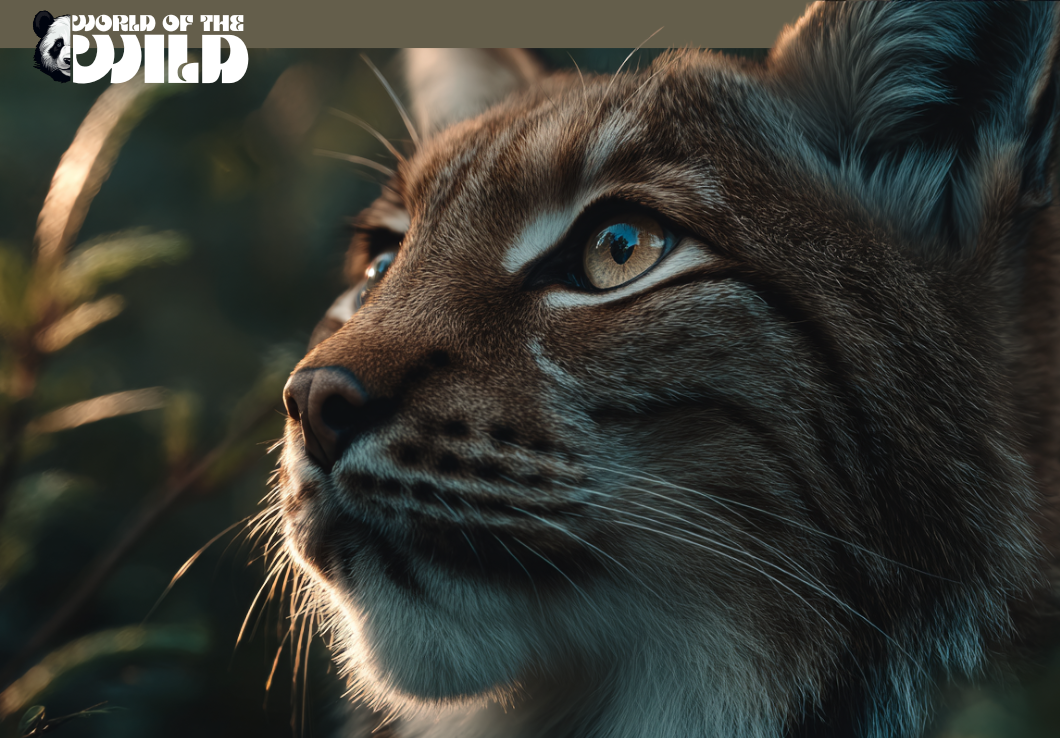

There is a moment, rare and electric, that a handful of lucky hikers and wildlife watchers have experienced deep in the boreal forests of Canada or the mountain wilderness of Europe — a pair of pale, glowing eyes staring back from the shadows, framed by a broad, whiskered face and impossibly large paws, before vanishing without a sound. The lynx does not linger. It simply disappears, like a rumor.
Of all the wild cats that roam the earth, the lynx occupies a uniquely mythological space in our imagination. Ancient Norse mythology associated it with the goddess Freya, and its name is thought to derive from the Greek word leukos, meaning “light” — a reference to its luminous, reflective eyes. And yet, despite its storied reputation, the lynx remains one of the least understood and most elusive predators on the planet. Part ghost, part engineer, and part ecological cornerstone, the lynx is far more than just a pretty face with tufted ears. Understanding this remarkable animal means understanding the delicate thread that connects predator, prey, and the vast wilderness landscapes they share.
Facts
- A lynx’s enormous, snowshoe-like paws can spread to roughly four inches wide, effectively doubling the surface area of contact with snow and allowing it to walk on top of deep powder that would swallow smaller predators whole.
- The Canada lynx and the snowshoe hare are locked in one of the most dramatic boom-and-bust cycles in nature — lynx populations rise and fall almost perfectly in sync with hare populations on a roughly 10-year cycle, a relationship so precise it has been studied for over a century.
- Unlike most cats, the Eurasian lynx has been documented taking down prey many times its own size, including adult roe deer, red deer, and occasionally young moose — a remarkable feat for an animal that typically weighs no more than 66 pounds.
- A lynx’s hearing is so acute that the distinctive black ear tufts, once thought to be purely ornamental, are now believed to function like antennae, funneling sound waves toward the ears to improve directional hearing — particularly useful when hunting beneath a forest canopy.
- Lynx are almost entirely silent hunters. Unlike lions or leopards, they rarely vocalize during a hunt. During breeding season, however, they produce an eerie, loud yowl — often described as sounding disturbingly human — that can carry for miles through a still winter night.
- The Iberian lynx holds the grim distinction of being the most endangered wild cat species in the world, having come perilously close to extinction in the early 2000s with fewer than 100 individuals remaining.
- Lynx have exceptional low-light vision and can spot a mouse from 250 feet away in near-total darkness — a consequence of the high concentration of rod cells in their retinas and a reflective layer behind the retina called the tapetum lucidum.
Species
Classification:
- Kingdom: Animalia
- Phylum: Chordata
- Class: Mammalia
- Order: Carnivora
- Family: Felidae
- Genus: Lynx
- Species: Four recognized species
The genus Lynx contains four distinct and recognized species, each adapted to its own corner of the world.
The Canada Lynx (Lynx canadensis) is the quintessential North American forest cat, found throughout Canada and parts of the northern United States. It is so deeply specialized for hunting snowshoe hares that its population ecology is almost entirely dictated by hare abundance. The Eurasian Lynx (Lynx lynx) is the largest of the four species and the most geographically widespread, ranging from Western Europe through Russia, Central Asia, and into China. It is an opportunistic and powerful hunter capable of taking large ungulates. The Iberian Lynx (Lynx pardinus) is the world’s most endangered wild cat, endemic to the Iberian Peninsula in Spain and Portugal, and historically dependent on European rabbit as its primary prey. The Bobcat (Lynx rufus), while often considered separately due to its more southern range and adaptable nature, is formally part of the Lynx genus and is the most common and widespread wild cat in North America, found from southern Canada all the way through Mexico.
Appearance
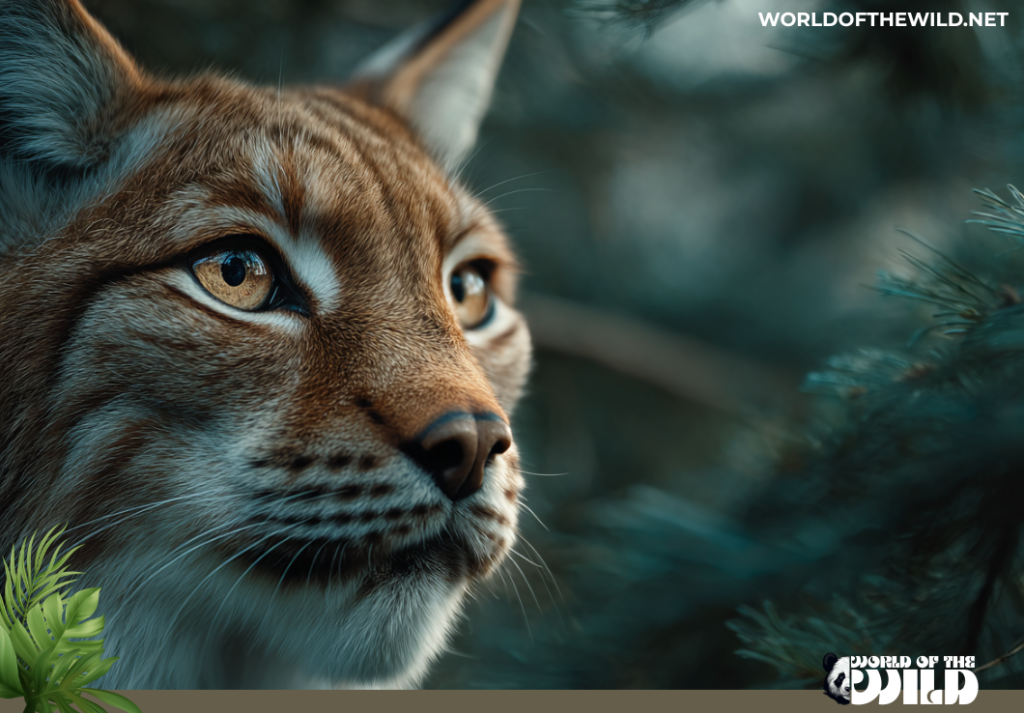
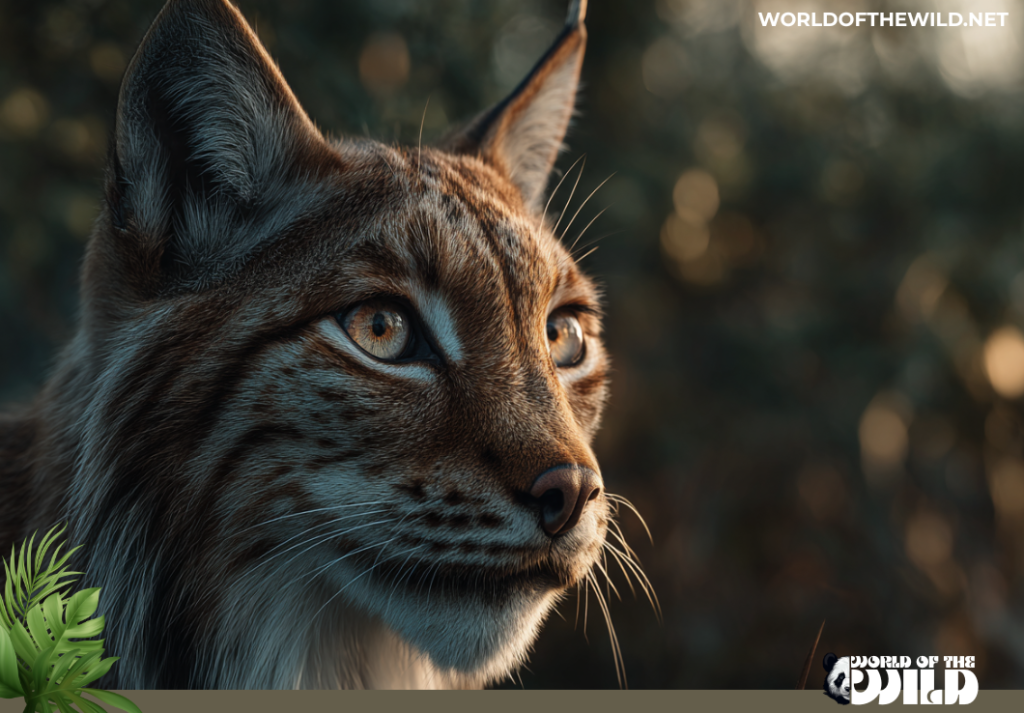
The lynx is built to inspire both admiration and unease. Its body is compact and powerful, giving the impression of coiled tension even at rest. The face is broad and framed by a distinctive facial ruff — a ring of longer fur around the cheeks and jaws that gives the head an almost lion-like quality. Above the eyes, long black ear tufts rise like twin exclamation points, adding to the animal’s alert, intelligent expression. The eyes themselves are striking: pale yellow to gold, wide-set, and fringed with white fur that makes them appear almost luminous.
The coat varies by species but is generally tawny, buff, or grayish-brown, marked with faint spots or streaks that offer excellent camouflage in dappled forest light. The Iberian lynx has the most boldly patterned coat, with dark, clearly defined spots across its body. The Canada lynx, by contrast, has a more uniformly gray-brown coat with indistinct markings — an adaptation to the muted tones of a snow-covered boreal forest.
Perhaps the most distinctive physical feature of any lynx is its feet. The paws are disproportionately large — sometimes wider than a wolf’s — and thickly furred on the underside. In winter, the spread toes and thick fur act like natural snowshoes, distributing the animal’s weight evenly across soft snow. A short, black-tipped bobbed tail is another defining characteristic, shared across all four species. Adult Eurasian lynx are the largest, standing up to 24–28 inches at the shoulder and weighing up to 66 pounds. Canada lynx are notably lighter and leggier, typically weighing 18–24 pounds, while the Iberian lynx and bobcat are smaller still.
Behavior
The lynx is fundamentally a solitary animal. Outside of the mating season and the period when a mother is raising kittens, individuals maintain large, well-defined home ranges and avoid contact with their own kind. These territories are marked with scent — urine, feces, and secretions from scent glands — and scrape markings on trees. Territorial boundaries are generally respected, though confrontations can occur, particularly between males in areas where prey is scarce.
Despite their solitary lifestyle, lynx are not entirely asocial. Radio-collar studies of Canada lynx have revealed occasional, voluntary associations between adult females — sometimes sharing overlapping ranges or even kill sites — suggesting a degree of social flexibility previously unrecognized in the species. Eurasian lynx have also been observed in loose family groupings beyond the typical mother-kitten period.
Hunting behavior is where the lynx truly distinguishes itself. These cats are ambush predators par excellence. They rely on patience, stealth, and explosive short-range speed rather than endurance chasing. A lynx will spend long periods crouched motionless on a rock, log, or elevated vantage point, scanning and listening before a carefully calculated stalk ends in a decisive pounce. They typically kill with a bite to the throat or the back of the skull. Their large paws are not just useful for walking on snow — they are surprisingly effective weapons, used to bat, swipe, and pin prey.
Lynx are largely crepuscular and nocturnal, most active at dawn, dusk, and through the night. They are excellent swimmers and will readily cross rivers and lakes, particularly during their wide-ranging dispersal movements. Young male lynx, dispersing from their mother’s territory, have been documented traveling hundreds of miles in search of unoccupied habitat.
Evolution
The evolutionary history of the lynx begins roughly 4–5 million years ago during the late Miocene epoch, when the ancestral lineage of modern cats was diversifying rapidly across the Old World. The genus Lynx is believed to have originated in Africa or Europe and spread across Eurasia and eventually into North America via the Bering land bridge during periods of lower sea levels in the Pleistocene.
The earliest well-documented lynx ancestor is Lynx issiodorensis, a medium-sized cat that lived in Europe and Africa during the Pliocene epoch, roughly 2–4 million years ago. This animal was somewhat smaller than modern lynx and likely occupied a similar ecological niche as a forest ambush predator. Fossils suggest a gradual increase in body size and specialization over time, with the large paws and ear tufts evolving as the genus spread into colder, snowier environments.
The divergence of the four modern species is thought to have occurred over the past 1–2 million years. The Canada lynx and Eurasian lynx share a more recent common ancestor, while the Iberian lynx likely became isolated on the Iberian Peninsula during the Pleistocene glaciations, driving its divergence from the rest of the genus. The bobcat’s lineage diverged earlier and represents the most genetically distinct branch of the genus. The remarkable prey specialization seen in the Canada lynx — its near-total dependence on snowshoe hare — is a relatively recent evolutionary development, reflecting the unique ecological dynamics of the North American boreal forest.
Habitat
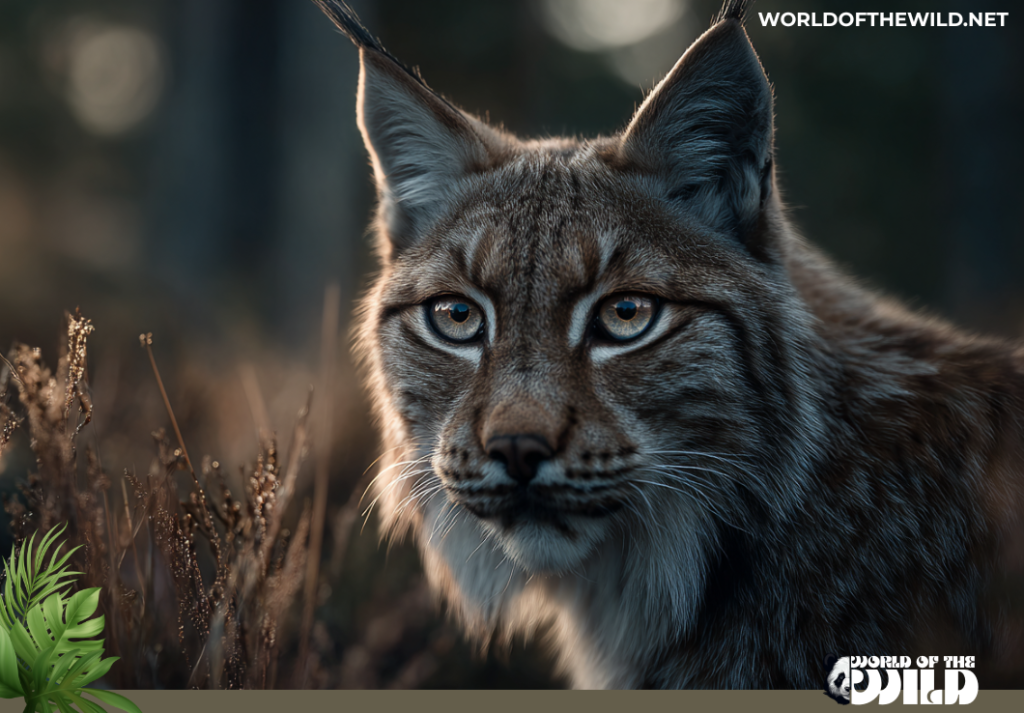
The four lynx species collectively occupy an extraordinary range of environments, from the frozen taiga of Siberia to the scrubby Mediterranean hillsides of Portugal.
The Canada lynx is almost exclusively a creature of the boreal forest — the great belt of spruce, fir, and pine that stretches across northern North America. It thrives in areas with dense undergrowth, fallen logs, and abundant snowpack, all of which suit its hunting style and prey base. In the United States, relict populations persist in isolated pockets of Montana, Idaho, Minnesota, and the Cascade Range of Washington.
The Eurasian lynx has the broadest habitat tolerance of the four species. It occupies temperate and boreal forests across a vast range stretching from Scandinavia and Central Europe through Russia, Mongolia, and into the mountain forests of Central and East Asia. It tends to favor areas with rough terrain, dense forest cover, and healthy populations of deer and other ungulates.
The Iberian lynx historically occupied the entire Iberian Peninsula but is now confined to a handful of protected areas in southern Spain, with a small reintroduced population in Portugal. It favors a Mediterranean scrubland habitat known as maquis — a mosaic of dense shrubs, rocky outcrops, and open glades that supports high densities of European rabbits.
The bobcat is the most habitat-flexible of all, found across an enormous range from southern Canada to central Mexico. It adapts readily to forests, swamps, deserts, scrublands, and even suburban fringes, making it by far the most common wild felid in North America.
Diet
All lynx are obligate carnivores, meaning they depend entirely on animal prey for nutrition. What distinguishes them from most other carnivores, however, is the degree to which certain species specialize on a single prey item.
The Canada lynx is the most extreme specialist. In the boreal forests of Canada, snowshoe hares can account for 75–97% of its diet during peak hare years. When hare populations crash — as they do cyclically — lynx face severe food shortages, their own populations collapsing in near-lockstep. During lean years, they supplement their diet with grouse, squirrels, voles, and occasionally deer carrion, but these alternatives rarely sustain them through a prolonged hare shortage.
The Eurasian lynx is a considerably more versatile predator. Roe deer and red deer fawns are primary prey across much of its range, but it also takes chamois, ibex, wild boar piglets, foxes, hares, and birds. In some studies, single Eurasian lynx have been documented killing a large ungulate roughly every 3–4 days — an impressive energy return for a relatively mid-sized predator.
The Iberian lynx is equally specialized in its own way, with European rabbits constituting the overwhelming bulk of its diet. This dependence proved nearly catastrophic when rabbit populations across the Iberian Peninsula collapsed due to disease outbreaks in the 20th century, directly driving the Iberian lynx toward extinction.
The bobcat is the most generalist feeder of the group, taking cottontail rabbits, snowshoe hares, squirrels, mice, birds, deer, and even porcupines across its wide range.
Predators and Threats
Adult lynx have few natural predators, though they are not invulnerable. Wolves are the primary natural threat in Eurasia and North America, and where wolf populations are healthy, they can significantly suppress lynx numbers through direct predation and competition for prey. Cougars (mountain lions) compete with and occasionally kill bobcats and Canada lynx in areas where their ranges overlap. Large eagles, particularly golden eagles, may take lynx kittens. Bears and wolverines occasionally displace lynx from kills, though direct predation is rare.
The threats posed by humans are far more serious and pervasive. Habitat loss — through logging, agricultural expansion, and urban development — fragments lynx populations and eliminates the large, connected wilderness blocks these cats require. Road networks slice through their ranges, increasing mortality from vehicle strikes and creating barriers to dispersal. In some parts of Europe, lynx are still illegally shot by farmers who view them as threats to livestock and deer hunting interests, despite their protected status.
Climate change represents a slow but accelerating threat, particularly to the Canada lynx. Warming winters reduce snowpack, diminishing the lynx’s competitive advantage over predators like coyotes that struggle in deep snow. Range shifts in prey species further disrupt the delicate ecological balance. In the western United States, changing climate and fire regimes are altering forest structure in ways that may reduce habitat quality for both lynx and snowshoe hares.
For the Iberian lynx, the combination of disease outbreaks in rabbit populations, habitat fragmentation, road mortality, and historical persecution brought the species to the very edge of oblivion. Poaching, though greatly reduced, remains an ongoing concern.
Reproduction and Life Cycle
Lynx are seasonal breeders, and the onset of the breeding season is tightly linked to day length. In the Northern Hemisphere, most lynx species mate between January and April, with the exact timing varying by latitude and species. During this period, the normally silent forests come alive with the haunting yowls and caterwauling of animals advertising their availability and location to potential mates across vast distances.
Males actively seek out females during the rut, often traveling well outside their normal home ranges. Courtship is relatively brief — lasting only a few days — and involves vocalizing, scent marking, and brief physical contact. Males do not play a role in raising offspring after mating.
After a gestation period of approximately 60–74 days depending on species, females give birth in a secluded den — typically a rock crevice, a hollow log, or a thick tangle of fallen timber. Litter sizes range from 1 to 4 kittens, with 2–3 being most common. Kittens are born blind and helpless, weighing only a few ounces, covered in a soft spotted coat that provides camouflage.
The mother alone raises the young. Kittens begin eating meat at around 6–7 weeks and accompany their mother on hunts by autumn. They typically remain with her through their first winter, learning the essential skills of tracking, stalking, and killing. By late winter or early spring of their second year, young lynx disperse — often traveling extraordinary distances to find unoccupied territory. Sexual maturity is typically reached at around 2–3 years of age.
In the wild, lynx typically live 10–15 years, though some individuals have been documented reaching 17 years. In captivity, they may survive into their mid-twenties.
Population
The conservation status of lynx varies dramatically by species, reflecting the very different circumstances each faces.
The Canada lynx is listed as of Least Concern by the IUCN globally, though its populations in the contiguous United States are listed as Threatened under the Endangered Species Act. Population estimates for Canada alone range from 50,000 to several hundred thousand individuals, fluctuating naturally with the hare cycle. In the lower 48 states, the population is far smaller and more fragmented, numbering perhaps only a few thousand.
The Eurasian lynx is also listed as Least Concern globally, though populations across Central and Western Europe were nearly extirpated by the 20th century through hunting and habitat loss. Successful reintroduction programs in Switzerland, Germany, France, and other countries have restored some populations, though they remain fragmented and isolated. Total Eurasian lynx numbers across the full range are estimated in the tens of thousands, with the largest populations in Russia.
The Bobcat is Least Concern with an estimated population of over 2.3 million, making it by far the most secure of the four species.
The Iberian lynx remains the most critically imperiled. Once classified as Critically Endangered with fewer than 100 individuals in the early 2000s, it has been the subject of one of the most intensive and successful conservation programs in the world. Through captive breeding and release, habitat restoration, and rabbit population management, numbers have grown to over 1,000 individuals as of the early 2020s — a genuine conservation success story. However, the species remains Endangered and its recovery fragile.
Conclusion
The lynx is a reminder of how much wilderness still exists in the world — and how quickly it can slip away. From the snowbound forests of the Canadian north to the sun-scorched scrublands of Portugal, these four cats have carved out ecological niches that are both highly specialized and deeply connected to the broader health of their ecosystems. The near-disappearance of the Iberian lynx and its slow, hard-fought return is one of the defining conservation stories of our time — a demonstration of what is possible when resources, political will, and public support align behind a single species.
But the lynx cannot survive on conservation stories alone. It needs large, connected wild spaces. It needs healthy prey populations. It needs winter snow and intact forest. In an era of accelerating habitat loss and climate change, securing those things demands not just sympathy for a beautiful animal, but a genuine commitment to the messy, complicated, expensive work of protecting the landscapes it calls home.
The lynx watches from the shadows. The question is whether we will preserve enough darkness for it to disappear into.
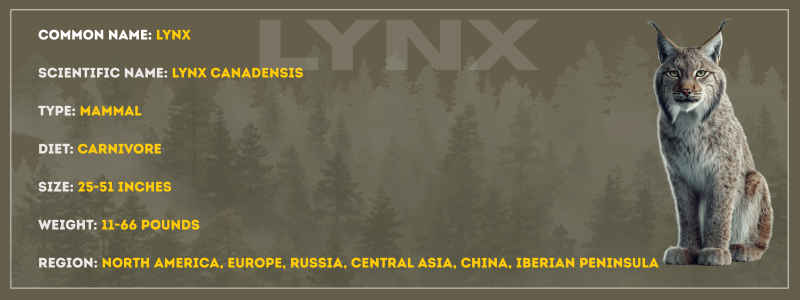
| Scientific Name | Lynx canadensis (Canada Lynx), Lynx lynx (Eurasian Lynx), Lynx pardinus (Iberian Lynx), Lynx rufus (Bobcat) |
| Diet Type | Carnivore (Obligate) |
| Size | 26–51 inches in body length depending on species; 17–28 inches at the shoulder |
| Weight | 11–66 pounds depending on species |
| Region Found | North America, Europe, Russia, Central Asia, China, Iberian Peninsula |