
Imagine swinging through the treetops at breathtaking speed, your arms and legs and tail working in seamless coordination — a living pendulum soaring forty feet above the jungle floor. This is the world of the Black Spider Monkey (Ateles paniscus), one of the most agile, intelligent, and ecologically vital primates in the Western Hemisphere. With limbs so long and slender they seem borrowed from a much larger animal, and a prehensile tail strong enough to support its entire body weight, this creature navigates the canopy of South American rainforests like an acrobat born to the sky.
But the Black Spider Monkey is more than a spectacle of movement. It is a keystone species — a biological cornerstone — whose seed-dispersing habits help sculpt the very forests it calls home. Scientists regard it as one of the most important frugivores in Amazonian ecosystems, making its survival not just a matter of conservation sentiment, but of ecological necessity. Yet this remarkable primate is classified as Endangered, its numbers in freefall due to habitat destruction and hunting. Understanding this animal is the first step toward saving it.
Facts
- The fifth limb: The Black Spider Monkey’s prehensile tail functions as a genuine extra hand. The underside of the tail tip is bare — hairless and covered in sensitive ridged skin similar to fingerprints — allowing it to grip branches with extraordinary precision and even pick up small objects.
- Seed-dispersal superstar: A single Black Spider Monkey can disperse seeds from over 100 plant species in a single day, traveling up to 10 kilometers through the forest. Some tree species in the Amazon cannot successfully reproduce without spider monkeys acting as their primary seed dispersers.
- No opposable thumb: Unlike most primates, spider monkeys have greatly reduced or vestigial thumbs — a trade-off evolution made for faster, more fluid brachiation (arm-swinging locomotion) through the treetops.
- Social complexity rivals great apes: Black Spider Monkeys live in fission-fusion societies, dynamically splitting into smaller subgroups during the day and reconvening at dusk — a social structure once thought unique to chimpanzees and humans.
- An extraordinary gestation: Females give birth only once every two to four years, one of the longest interbirth intervals of any New World monkey. This slow reproductive rate makes population recovery from decline perilously slow.
- Remarkably vocal: Their repertoire includes at least 25 distinct vocalizations, including a loud whinny-like scream audible nearly a mile away, used to coordinate group movements across dense forest terrain.
- Caffeine? No problem: Spider monkeys regularly consume unripe fruits with compounds toxic to most animals, including tannins and alkaloids, thanks to a highly specialized digestive system adapted to processing chemically complex foods.
Species
The Black Spider Monkey sits within one of the most fascinating branches of the primate family tree:
| Rank | Classification |
|---|---|
| Kingdom | Animalia |
| Phylum | Chordata |
| Class | Mammalia |
| Order | Primates |
| Family | Atelidae |
| Genus | Ateles |
| Species | Ateles paniscus |
The genus Ateles contains seven recognized spider monkey species, each adapted to a distinct range within Central and South America. The Red-faced Spider Monkey (A. paniscus) is sometimes used as an alternate common name for this species. Closely related relatives include the White-bellied Spider Monkey (A. belzebuth), the Brown-headed Spider Monkey (A. fusciceps), and the Geoffroy’s Spider Monkey (A. geoffroyi) of Central America.
Some taxonomic authorities recognize two subspecies of Ateles paniscus, though classification remains debated among primatologists. The Black Spider Monkey is the most uniformly dark of all spider monkey species, lacking the paler facial or belly markings seen in its relatives. The family Atelidae also includes the howler monkeys and woolly monkeys, all characterized by large body size, prehensile tails, and long limbs adapted to life high in the canopy.
Appearance
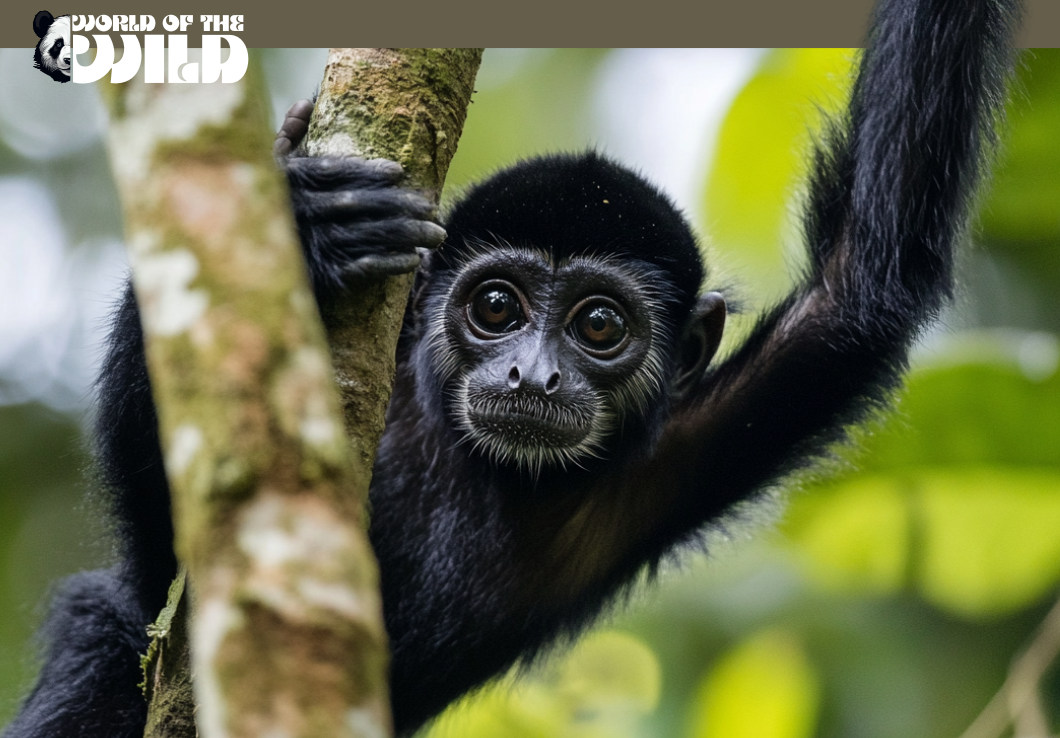
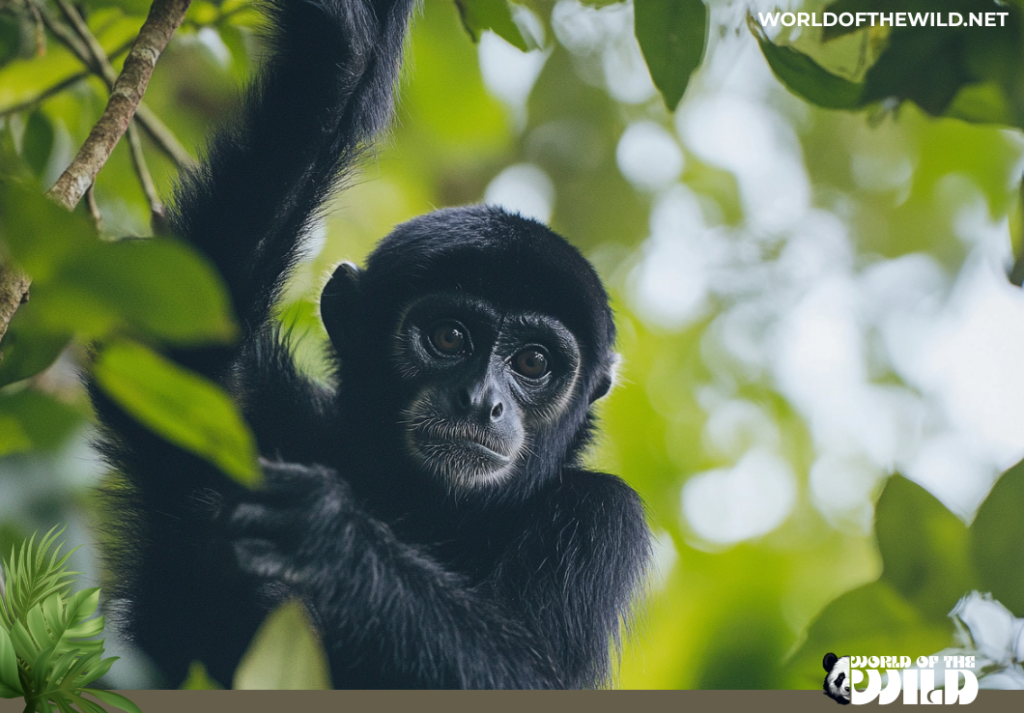
The Black Spider Monkey is a study in elegant austerity. Its coat is almost uniformly jet-black across the body, limbs, and tail — a stark contrast to the bright pink or red skin of its bare face, which intensifies in color with age and sun exposure. The face is surrounded by a fringe of coarser black fur that frames the expressive eyes and gives the animal a distinctive, almost theatrical appearance.
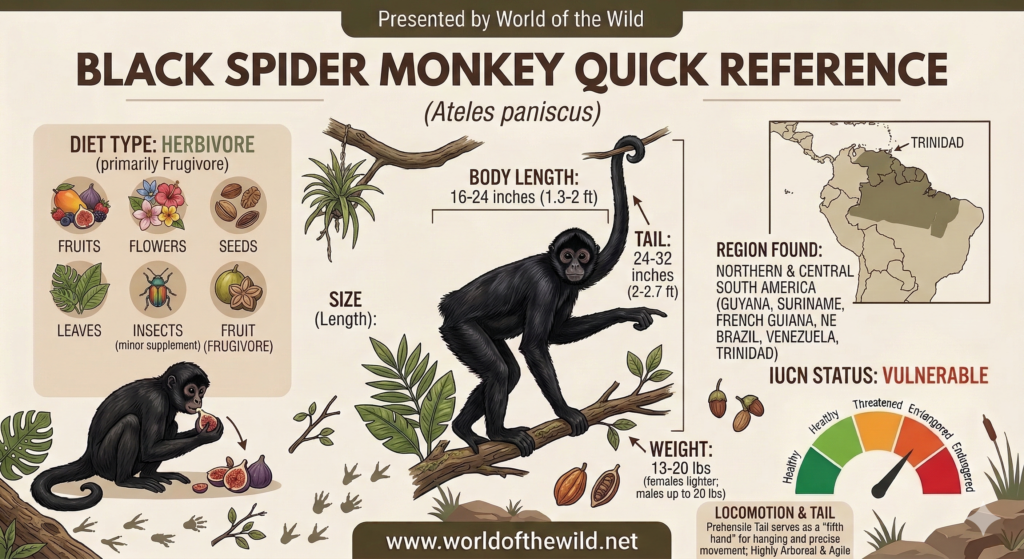
Adult males weigh between 15 and 20 pounds (7–9 kg), while females are slightly smaller, typically ranging from 13 to 17 pounds (6–8 kg). Body length from head to base of tail measures approximately 16 to 24 inches (40–60 cm), but the tail itself adds an extraordinary additional 24 to 32 inches (60–82 cm) — often longer than the body. When fully extended, a spider monkey’s arm span can reach nearly three feet, giving them an enormous reach relative to their body size.
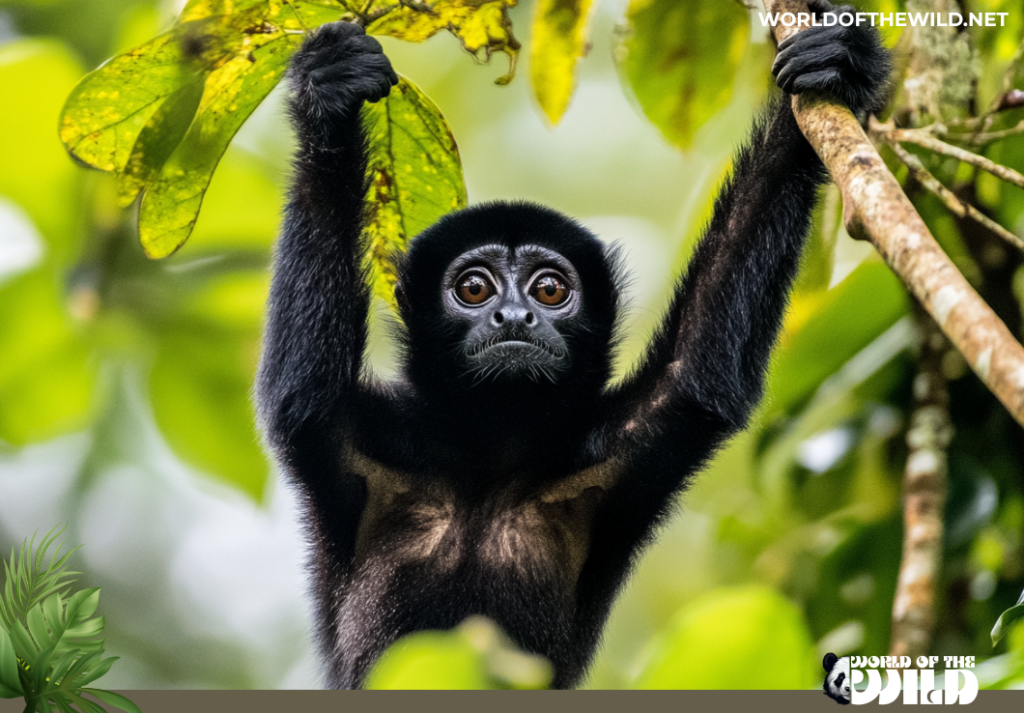
The limbs are extraordinarily slender and elongated, an adaptation so pronounced that the animal’s silhouette through the trees looks more like a living asterisk than a conventional primate. The hands are long and hook-like, with curved fingers designed for swift brachiation. As noted, the thumb is reduced to a small nub or absent entirely, distinguishing spider monkeys from virtually every other primate. Infants are born with slightly lighter coloration that darkens within the first few months of life.
Behavior
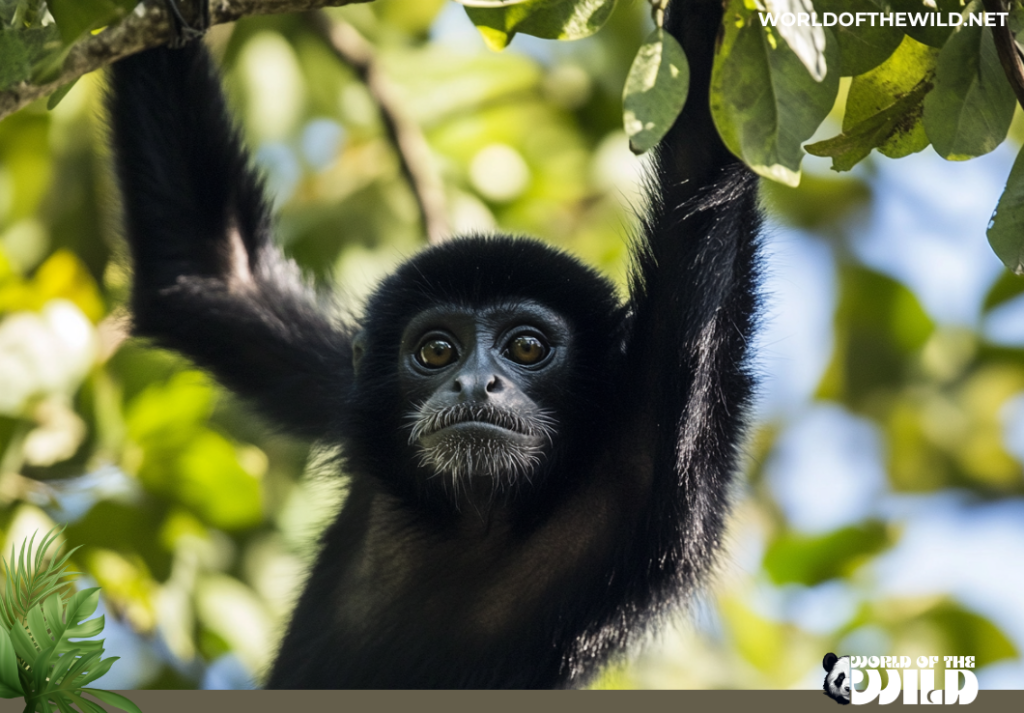
Black Spider Monkeys are intensely social animals that organize themselves into communities of up to 30 individuals. However, these groups rarely travel all together. They use a fission-fusion social system in which the larger community splits each morning into smaller foraging subgroups of two to eight animals, based on food availability, individual relationships, and reproductive status. By evening, subgroups reconvene to sleep in proximity, often in the same stand of tall trees.
Their locomotion is one of nature’s great athletic achievements. Brachiation — swinging arm-over-arm beneath branches — is their primary mode of travel, and they are capable of spectacular leaps across canopy gaps of more than 30 feet. The prehensile tail is used constantly as a safety anchor and a reaching tool, allowing them to hang suspended while feeding, freeing all four limbs simultaneously.
Intelligence in spider monkeys is well-documented. They demonstrate long-term spatial memory, navigating to specific fruiting trees miles apart based on remembered seasonal patterns. They have been observed using tools in captivity and show strong evidence of planning and problem-solving. Males form close coalitions and cooperate to defend territories through loud vocal performances and aggressive displays. Females, remarkably, are the primary decision-makers in the group regarding travel routes and foraging destinations — an unusual trait among primates.
Communication is rich and multi-modal. Long-distance whinny calls are broadcast to coordinate subgroup movements across vast forest areas. Soft chirps and grunts mediate close-range social interactions. Body posture, facial expression, and deliberate shaking of branches all serve communicative roles. When threatened, spider monkeys will bark aggressively, break off branches and drop them toward intruders, and mob predators cooperatively.
Evolution
The story of the Black Spider Monkey stretches back tens of millions of years to the origins of the New World monkeys — the platyrrhines — whose ancestors crossed from Africa to South America approximately 34 to 40 million years ago, likely on natural vegetation rafts during a period when the Atlantic Ocean was considerably narrower. This event, one of the great colonizations in mammalian history, seeded the entire New World primate radiation.
Within the platyrrhines, the family Atelidae diverged roughly 20 to 25 million years ago, developing toward larger body sizes and the prehensile tail — a feature that evolved independently in New World monkeys and is absent in Old World primates. This prehensile adaptation represents one of the most dramatic anatomical innovations in primate evolution, effectively creating a third “hand” that dramatically expands an animal’s ability to exploit the upper canopy.
The genus Ateles likely diversified during the Miocene and Pliocene epochs, with the various modern species separating as South American forests expanded and contracted with glacial cycles. The reduction or loss of the thumb in spider monkeys is considered a derived specialization, occurring relatively recently in evolutionary terms, as selective pressure increasingly favored speed and efficiency in brachiation over manual dexterity. Fossil records for the Atelidae are fragmentary, but molecular phylogenetics has increasingly clarified the relationships within this group.
Habitat
The Black Spider Monkey is a creature of the deep tropics, occurring across a broad arc of northern and central South America. Its range encompasses much of the Guiana Shield — including Guyana, Suriname, French Guiana, and Trinidad — as well as large portions of northeastern Brazil and, historically, adjacent areas of Venezuela. Within this region, it is most commonly found in undisturbed primary tropical rainforest, typically below elevations of 1,500 meters.
Critically, Black Spider Monkeys are considered an old-growth specialist. They are far less tolerant of forest fragmentation or degradation than many other primates, requiring large, continuous tracts of mature forest with an intact, closed canopy. The trees of the upper canopy — particularly large emergent trees with abundant fruit — are not just their food source but their highway, their shelter, and their social arena. Studies consistently show that spider monkey densities drop sharply even in forests that appear superficially intact but have been selectively logged, as the specific large fruiting trees they depend on are often the first to be extracted.
Lowland terra firme forests and gallery forests along river systems are core habitats. Flooded várzea forests are used seasonally. Home ranges for individual communities can span several square kilometers, and the integrity of those ranges — free from roads, agriculture, and hunting — is a non-negotiable requirement for this species’ persistence.
Diet
The Black Spider Monkey is an obligate frugivore — fruit forms the overwhelming majority of its diet, typically accounting for 70 to 90 percent of food intake. Ripe, pulpy fruits from dozens of tree species are consumed year-round, with the monkey’s exceptional spatial memory allowing it to locate patchy, seasonally available food sources efficiently across its large home range.
When fruit is scarce, they supplement their diet with young leaves, flowers, bark, seeds, and occasionally insects or small invertebrates — though animal matter is a minor dietary component. Their digestive systems are specially adapted to handle an enormous variety of secondary plant compounds, including those in unripe or mildly toxic fruits that other animals avoid.
Foraging takes up the majority of the day. Subgroups travel quietly through the canopy in the morning, locating ripe fruit often by scent and memory. They feed while hanging by their tails, using both hands to manipulate food. Large seeds are often swallowed whole and pass through the gut intact, making spider monkeys extraordinarily effective dispersers — depositing viable seeds far from the parent tree. This mutualistic relationship with fruiting trees has been refined over millions of years of coevolution, and the loss of spider monkeys from a forest can trigger measurable changes in tree community composition within decades.
Predators and Threats
In the wild, Black Spider Monkeys must contend with several natural predators. Harpy Eagles (Harpia harpyja), the apex avian predator of the neotropical rainforest, are their most formidable aerial threat. Large felids — particularly jaguars (Panthera onca) and pumas (Puma concolor) — can take spider monkeys that descend lower in the canopy or come to the ground. Large boa constrictors and other snakes may prey on juveniles and infants. Groups respond to these threats with collective mobbing, alarm calls, and branch-dropping.
But natural predation is not what endangers this species. The existential threats to the Black Spider Monkey are overwhelmingly human in origin:
Habitat loss is the primary driver of decline. Deforestation for cattle ranching, soy cultivation, mining, and infrastructure development has eliminated and fragmented enormous swaths of Amazonian forest. Spider monkeys, as old-growth specialists with large home ranges, are among the first species to disappear when forests are degraded.
Hunting is an equally serious threat. Black Spider Monkeys are actively targeted by subsistence hunters throughout their range, prized for their large body size and the quantity of meat they yield. Their bold, curious behavior and habit of gathering in groups to mob perceived threats makes them tragically easy to hunt. Females carrying infants are often killed, with the infants taken for the illegal pet trade.
Climate change presents an emerging long-term threat, as shifting rainfall patterns alter the fruiting cycles of the trees spider monkeys depend on, and increased drought frequency stresses forest systems throughout Amazonia.
Reproduction and Life Cycle
The reproductive biology of the Black Spider Monkey is characterized above all by slowness — a strategy that maximizes investment in each offspring at the cost of very low overall reproductive output.
Females reach sexual maturity at approximately four to five years of age, males slightly later. There is no strict breeding season; mating can occur year-round, though births tend to cluster around periods of peak fruit availability. Mating is promiscuous — females mate with multiple males, and males do not provide direct paternal care.
After a gestation period of approximately 226 to 232 days (roughly 7.5 months), a single infant is born. Twins are extremely rare. The newborn is helpless and clings to its mother’s belly for the first several months, transitioning to her back as it grows. Nursing continues for up to three years, and the mother carries the infant almost continuously for the first year of life.
This intensive maternal investment means that females give birth only once every two to four years — one of the longest interbirth intervals of any primate outside the great apes. A female may produce as few as four to five offspring across her entire reproductive lifetime. Young animals remain with their mother and community for years, learning the forest’s geography, social rules, and foraging strategies through observation.
In the wild, Black Spider Monkeys live approximately 20 to 25 years. In captivity, individuals have survived beyond 40 years, providing invaluable data on longevity, social behavior, and reproductive physiology.
Population
The Black Spider Monkey is classified as Endangered on the IUCN Red List — a designation it has held since 2008 and that reflects decades of accelerating population decline. Precise global population estimates are difficult to establish given the remote, dense terrain these animals occupy, but it is widely accepted that populations have declined by more than 30 to 50 percent over the past 45 years (three generations), with no sign of stabilization.
The species faces particular pressure in Brazil, where deforestation rates in the Amazon have remained alarmingly high despite international attention. Populations in Suriname and French Guiana, where forest cover remains more intact, are considered the most stable. Trinidad’s isolated population is small and genetically vulnerable.
Local extinctions have been documented across the species’ historical range, particularly near human settlements and along agricultural frontiers. Spider monkeys are often described as one of the first primates to disappear as forests are degraded — an ecological “canary in a coal mine” whose presence signals healthy, intact forest and whose absence signals a system already in trouble.
Conservation efforts include the designation of protected areas across the Guiana Shield and Brazilian Amazon, wildlife corridor initiatives, hunting regulation (though enforcement remains weak), and captive breeding programs at a small number of institutions. Community-based conservation models, engaging Indigenous peoples who have historically coexisted with spider monkeys as effective stewards, are increasingly recognized as the most promising long-term approach.
Conclusion
The Black Spider Monkey is, in every sense, a creature of extremes — extreme agility, extreme intelligence, extreme ecological importance, and, tragically, extreme vulnerability. It is a primate that has spent tens of millions of years perfecting its place in one of the world’s most complex ecosystems, and it may lose that place within a few human generations.
What makes its potential extinction especially poignant — and especially consequential — is that it would not simply be the loss of one species. It would be the unraveling of ecological relationships woven over millennia: the tree species that depend on spider monkeys to move their seeds, the forest dynamics shaped by that seed dispersal, the broader web of life sustained by a healthy, diverse canopy. The disappearance of the Black Spider Monkey from a forest does not leave that forest unchanged. It leaves it diminished, structurally impoverished, and less resilient to the cascading pressures it will continue to face.
The good news is that this outcome is not inevitable. Intact forests still stand. Viable populations still survive. And the knowledge, the tools, and increasingly the political will to protect them exist. What is needed is urgency — and the collective recognition that a world in which spider monkeys still swing through the canopy is not just a more beautiful world, but a more functional one. Protecting the Black Spider Monkey means protecting the forest itself.
Quick Reference
| Scientific Name | Ateles paniscus |
| Diet Type | Herbivore (Frugivore — primarily fruit, supplemented by leaves, flowers, and seeds) |
| Body Length | 16–24 inches (1.3–2 ft); tail adds an additional 24–32 inches (2–2.7 ft) |
| Weight | 13–20 lbs (females lighter; males up to 20 lbs) |
| Region Found | Northern and central South America — Guyana, Suriname, French Guiana, northeastern Brazil, Venezuela, Trinidad |