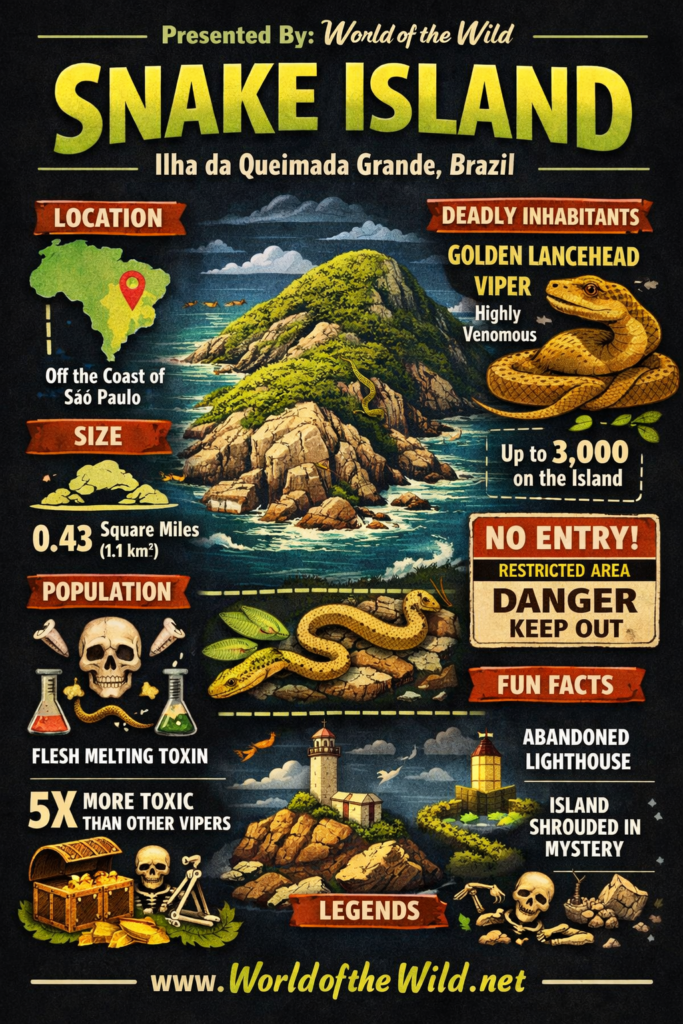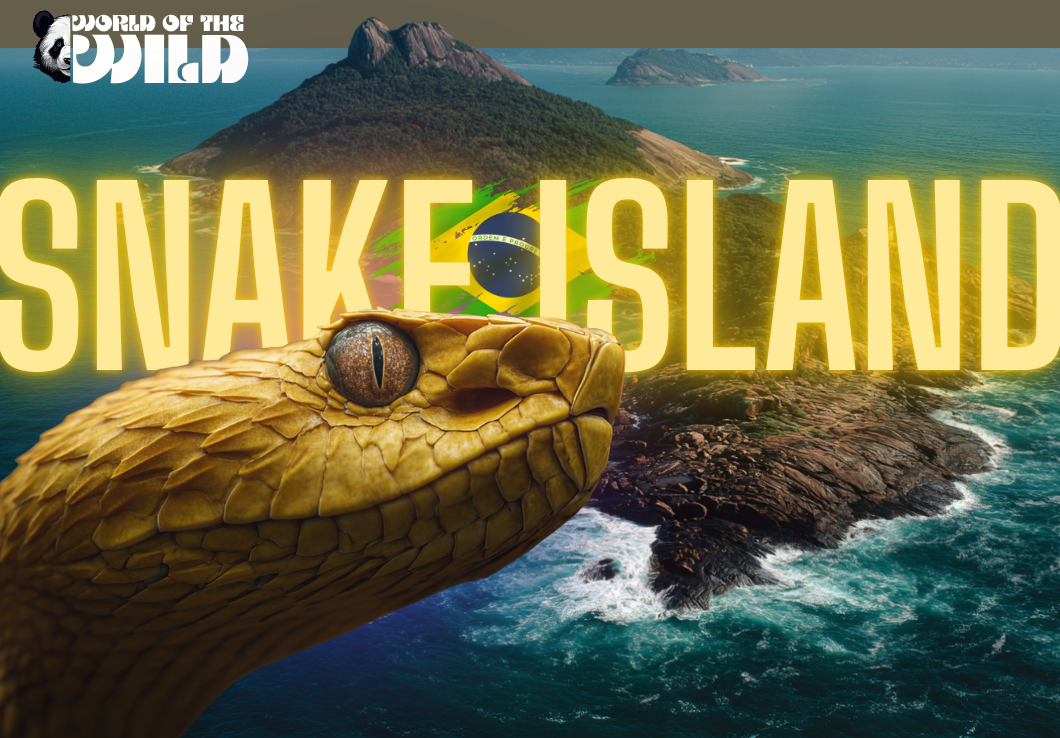

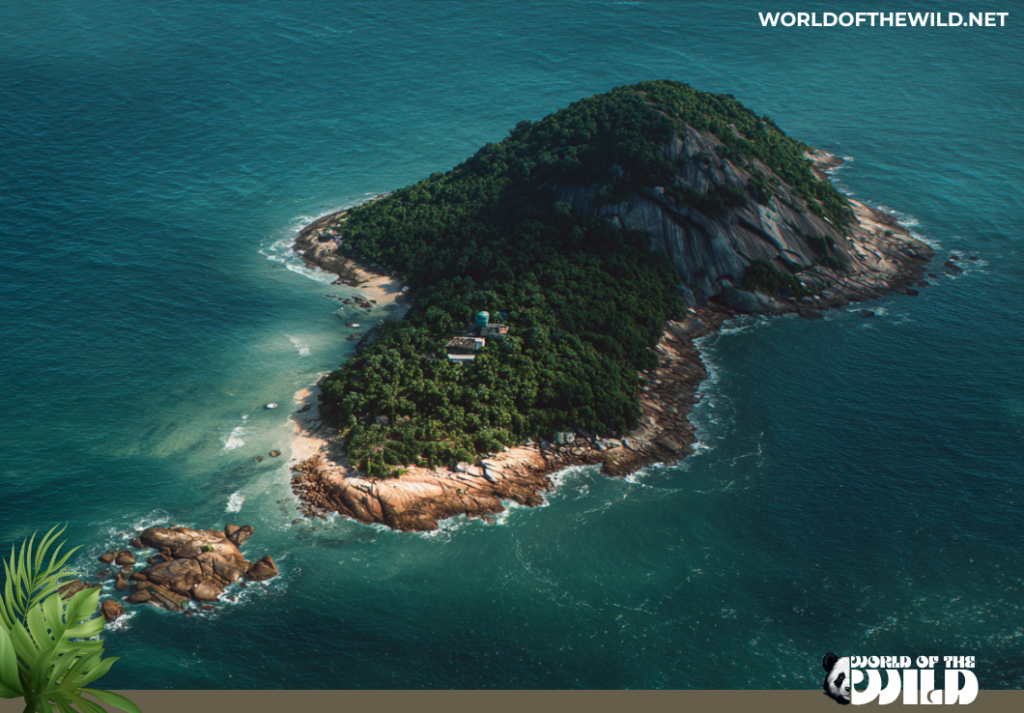
There are places on this Earth that nature has claimed so completely, so absolutely, that humanity has no choice but to stand back and acknowledge who is in charge. Tucked in the steel-blue waters of the South Atlantic Ocean, roughly 33 kilometres off the coast of the Brazilian state of São Paulo, sits one such place. It doesn’t look dangerous from a distance. From the water, it appears as a lush, green jewel of tropical rainforest and rocky cliffs rising to over 200 metres — the kind of island that might inspire daydreams of shipwrecks and buried treasure. But Ilha da Queimada Grande, more commonly known to the world simply as Snake Island, is no paradise. It is, by almost any measure, one of the most dangerous places on the planet. And the reason can be summed up in a single word: snakes.
Thousands and thousands of snakes.
This is the full, extraordinary story of Snake Island — its ancient geological history, the legends and tragedies that gave it its fearsome reputation, the haunted lighthouse that still stands on its slopes, the scientists who brave its dangers in the name of conservation, and the remarkable creature at the heart of it all: the critically endangered golden lancehead pit viper, a snake found absolutely nowhere else on Earth.
A Rock Torn from the Mainland
To understand why Snake Island is the way it is, you have to go back — far back — to the end of the last great ice age, roughly 11,000 years ago. At that time, global sea levels were significantly lower than they are today. The land mass that would become Ilha da Queimada Grande was not an island at all. It was a hill, a promontory, a rocky headland connected to the South American continent. Snakes — most likely jararaca vipers (Bothrops jararaca) — roamed across this landscape freely, living alongside the full complement of mainland predators and prey.
Then the ice melted. Over thousands of years, the oceans swelled and crept inland, slowly drowning the low-lying connections between what had been a continuous landmass. The hill became a peninsula. The peninsula shrank to a thin strip of land. And eventually, the sea closed over that strip entirely, leaving a small, isolated island with a trapped population of snakes and no way home.
This geological severance was the defining moment in the history of Snake Island. With no mammalian predators to threaten them, and no competition for the top of the food chain, the stranded snakes began to multiply. But they faced an immediate and pressing challenge: the island had virtually no ground-level prey. There were no rodents, no lizards, no frogs or small mammals of the kind that Bothrops vipers typically hunt. There was, however, one extraordinary food source: the sky.
Queimada Grande lies directly beneath several migratory bird routes. Twice a year, waves of migratory songbirds arrive on the island — exhausted travellers resting during their long Atlantic journeys. For the stranded snakes, these visiting birds represented the difference between feast and famine. And so, over thousands of years of isolation, something remarkable happened: the snakes evolved.
Evolution in Isolation: How a New Species Was Born
The snakes of Queimada Grande did not merely adapt in small ways. They diverged so dramatically from their mainland relatives that they became an entirely new species — Bothrops insularis, the golden lancehead pit viper. The transformation was driven by one overwhelming evolutionary pressure: the need to catch and kill a bird before it could fly away.
On the mainland, jararaca vipers are ground-level ambush predators. They strike a rodent, inject venom, release their prey, and then patiently track the dying animal using their highly sensitive heat-sensing pit organs and Jacobson’s organ — a chemosensory system that can follow a scent trail with extraordinary precision. This works perfectly well when your prey is a mouse that staggers away and collapses twenty metres away in the undergrowth. It does not work at all when your prey has wings.
The golden lancehead solved this problem in two ways. First, it became an arboreal hunter — spending much of its time coiled in the branches of shrubs and trees, perfectly positioned to strike at birds as they land or pass through. Second, and most significantly, it developed a venom that works with terrifying speed. Unlike its mainland cousin, the golden lancehead does not release its prey after striking. It holds on, injecting venom and waiting for its fast-acting toxins to do their work before the bird can escape into the air. The venom evolved to be not just potent, but almost instantaneously effective — capable of beginning the digestion of muscle tissue before the snake has even swallowed its meal.
The result is one of the most chemically powerful venoms ever documented in a snake. By some analyses, the venom of the golden lancehead is up to five times more potent than that of its closest mainland relative, and it is the fastest-acting venom within the entire Bothrops genus. The effects of envenomation include severe localised pain and swelling, blood blisters, deep bruising, blood in the vomit and urine, intestinal bleeding, kidney failure, haemorrhage in the brain, and profound necrosis — the literal melting of muscle tissue around the bite site. Without treatment, the mortality rate from a lancehead envenomation sits at approximately 7 percent. Even with prompt medical treatment, victims still face a roughly 3 percent chance of death.
For an evolutionary system that developed specifically to catch birds — not humans — those are extraordinary numbers.
The Island Itself: Geography and Environment
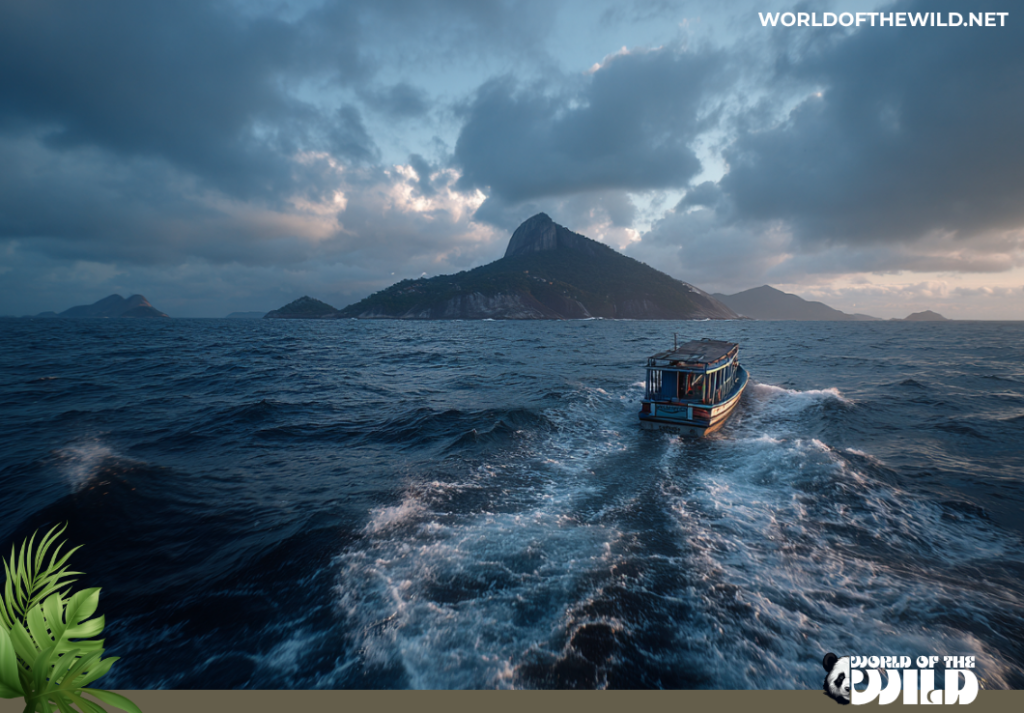
Queimada Grande is small. At just 43 hectares (approximately 106 acres), it is roughly the size of a large urban park. The island rises dramatically from sea level to a peak of 206 metres above sea level, giving it a rugged, almost fortress-like profile when viewed from the water. The coastline is largely inhospitable — steep cliffs and razor-sharp rocks that make landing extremely difficult, something that has historically deterred casual visitors almost as effectively as the snakes themselves.
The terrain of the island is divided between two main environments: open grassland and rocky outcrops toward the lower coastal areas, and a dense subtropical rainforest covering approximately 0.25 square kilometres of the island’s interior. It is in this rainforest that the vast majority of the golden lanceheads reside, hunting from the trees and sheltering in the leaf litter below. The climate is temperate but humid, with temperatures ranging from an average of around 18°C in the cooler months of July and August up to approximately 27°C in the height of summer in February and March. Rainfall can be significant, peaking at around 135 millimetres per month in December, while July can see barely any precipitation at all.
The island has no fresh water sources suitable for human consumption, which adds another layer of danger to any unauthorised visit. Combined with the treacherous landing conditions, the extreme heat and humidity, and — of course — the snakes, Queimada Grande was once voted the most dangerous place in the world by the website Listverse in 2010. It is a designation that is difficult to argue with.
The Name: What Does “Queimada Grande” Actually Mean?
The island’s official Portuguese name — Ilha da Queimada Grande — is often mistranslated or misunderstood. It does not mean “Snake Island.” That is a nickname earned through the island’s infamous reputation. The literal translation of Queimada Grande is closer to “Large Fire” or “Large Burn.” The name has its origins in the attempts of humans to tame the island in the late 19th and early 20th centuries.
According to historical accounts, the Brazilian Navy burned the island’s vegetation in an attempt to reduce the overwhelming population of snakes when lighthouse keepers were stationed there. This practice of queimada — controlled burning — was used repeatedly as a management tool. Separately, in the early 20th century, there were documented attempts by locals to clear the land by fire in order to establish a banana plantation. Those efforts collapsed quickly, not because of the fire, but because of what the fire failed to eliminate: the snakes. The would-be farmers abandoned the project when the true scale of the island’s serpentine population became undeniably apparent.
So the island’s name speaks not to the snakes themselves, but to the futile, repeated, and ultimately unsuccessful human attempts to burn them away.
The Lighthouse and Its Dark History
No element of Snake Island’s story is more evocative — or more haunted — than its lighthouse. Standing on the island’s heights, weathered by decades of Atlantic storms and salt spray, the lighthouse of Queimada Grande is one of the loneliest structures in the world. It was built in the late 19th century to warn passing ships away from the island’s treacherous rocks, and for a time, it was staffed by human keepers and their families who lived, astonishingly, among the snakes.
The lighthouse was automated in 1920 — a decision almost certainly driven by the grim experiences of the keepers who had lived there. Within just a few years of human occupation, three lighthouse keepers were killed by snake bites. The island was simply too dangerous for permanent human habitation. Once the technology existed to automate the light, the Brazilian Navy wasted no time in removing the last of its human staff and leaving the island to its original occupants.
The legends that surround the lighthouse are somewhat more dramatic — and probably embellished over generations of retelling. The most famous story tells of the last lighthouse keeper and his family being killed by golden lanceheads that poured through the windows of their quarters in the dead of night. According to the tale, the family fled into the forest in a desperate attempt to escape — only to run into even more snakes. None survived. Whether this story is true in its details or represents a dramatic conflation of several real tragedies is impossible to say with certainty. What is true is that multiple people were killed by snakebite on the island during the period of human occupation, and that the decision to automate the lighthouse was made quickly and was never reversed.
Today, the lighthouse still stands — no longer crewed by humans, maintained only by the periodic visits of Brazilian Navy personnel who venture onto the island to carry out essential repairs and upkeep. These visits are infrequent, tightly controlled, and conducted with the utmost caution. Even the most hardened naval personnel do not linger on Queimada Grande.
Off-Limits: Why the Island Is Closed to the Public
Since the 1920s, and formalised increasingly rigorously from the mid-20th century onward, Ilha da Queimada Grande has been effectively closed to the general public. The Brazilian Navy enforces a strict prohibition on landings, and access to the island without official authorisation is a criminal matter. The island and its neighbouring islet, Ilha Queimada Pequena to the west, were jointly declared an Area of Relevant Ecological Interest in 1985 by the Brazilian government, placing the entire ecosystem under formal federal protection. Access is now controlled through the Chico Mendes Institute for Biodiversity Conservation (ICMBio), Brazil’s federal conservation authority.
The reasons for the prohibition are dual and mutually reinforcing: the island is dangerous to people, and people are dangerous to the island. On one side of the equation, the risk of a potentially fatal snakebite is genuine and ever-present — the snakes are not aggressive by nature, but they are everywhere, they are venomous, and the nearest medical facility capable of treating a serious envenomation is over 30 kilometres away on the mainland. Time is the critical factor in treating any viper bite, and the logistics of emergency evacuation from Queimada Grande are nightmarish.
On the other side, the golden lancehead is a critically endangered species whose entire global population lives on a 43-hectare island. Any human disturbance — the trampling of habitat, the introduction of invasive species, and above all, the poaching of individual snakes — represents an existential threat to the species. The golden lancehead cannot afford the losses that uncontrolled human access would inevitably bring.
Researchers who obtain special permission to visit the island are required, by law, to be accompanied by a certified medical doctor at all times during their stay. The doctor’s sole purpose is to administer emergency antivenom treatment in the event of a bite — the medical equivalent of bringing a lifeguard to a pool. Protective gear, including reinforced boots and leg armour, is standard equipment for anyone setting foot on the island.
The Snakes: How Many Are There, Really?
One of the most persistent myths about Snake Island is the claim that it is home to approximately one snake per square metre — giving the island a theoretical population of around 430,000 golden lanceheads. This figure has been widely repeated in popular media and has done more than anything else to build the island’s terrifying reputation. It is almost certainly not accurate.
The first rigorous scientific census of the golden lancehead population on Queimada Grande produced a significantly more conservative — though still deeply impressive — estimate of between 2,000 and 4,000 individuals. To put that in perspective, that is between 25 and 50 snakes per American football field, or roughly one to two snakes per 200 square metres. The snakes are concentrated almost entirely in the island’s rainforest area rather than being spread evenly across the whole island, which explains why dense concentrations are sometimes encountered in certain areas while other parts of the island appear almost serpent-free.
Recent genetic and demographic research, including a landmark genome study published in 2025 by scientists at the Butantan Institute in São Paulo, has shed additional light on the population’s history. Analyses of the golden lancehead’s genetic data suggest there were two significant population bottlenecks in the species’ history — one around 50,000 years ago when the population may have reached a historical peak of around 30,000 individuals, and another around 11,000 years ago — corresponding to the final island isolation event — when numbers dropped to approximately 10,000. A more gradual decline followed, reaching roughly 5,000 individuals between 10,000 and 5,000 years ago, which is broadly consistent with the current census estimate.
Equally concerning: in the last fifteen years alone, the golden lancehead population is estimated to have declined by nearly 50 percent, primarily due to poaching and habitat degradation. The species is currently listed as Critically Endangered on the IUCN Red List, the most serious category before extinction in the wild.
The Golden Lancehead: A Portrait of a Remarkable Predator
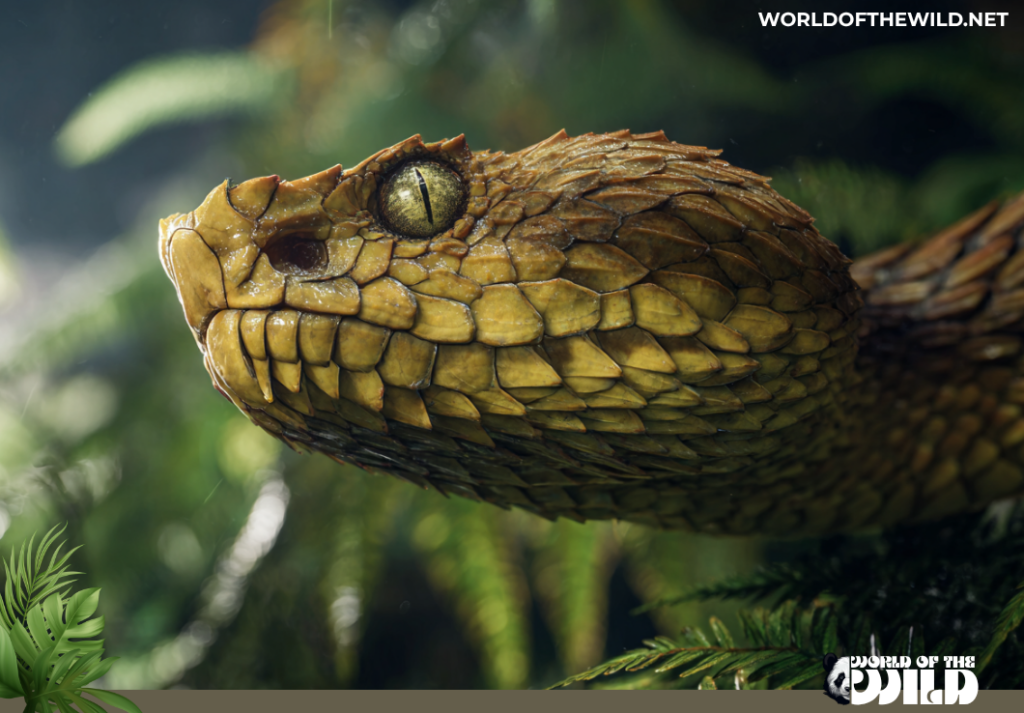
Bothrops insularis is, by any scientific measure, a deeply fascinating animal. It belongs to the subfamily Crotalinae — the pit vipers — a group distinguished by the loreal heat-sensing pits located between the eye and the nostril on either side of the head. These pits allow the snake to detect the infrared radiation emitted by warm-blooded prey with extraordinary precision, effectively giving it a form of thermal vision. Combined with a highly sensitive forked tongue that constantly samples the air for chemical traces, the golden lancehead is an exceptionally well-equipped ambush predator.
In terms of physical appearance, the golden lancehead typically grows to between 70 and 90 centimetres in length, though some individuals have been recorded at up to 118 centimetres. Its body is slender relative to mainland lanceheads — an adaptation to arboreal life in the trees — and its tail is notably longer than that of its closest relative, Bothrops jararaca, an adaptation believed to assist in gripping branches while hunting. The colouration is generally a pale yellowish-brown on the back, overlaid with a series of darker triangular or quadrangular dorsal blotches. The belly is a uniform pale yellow or cream. It is this golden-yellow ventral colouration that gives the species its common name, and in certain lights, the snake has an almost metallic, gilded shimmer that belies its deadly nature.
The head is broad and distinctly triangular — the characteristic “lance head” shape of the Bothrops genus that resembles the tip of a spear — widening sharply from the neck to accommodate the large venom glands that sit behind the eyes. The long, hollow, hinged front fangs can be rotated forward when striking and folded flat against the roof of the mouth when not in use, a system known as solenoglyphous dentition that allows the snake to deliver deep, precise venom injections with great efficiency.
The diet of the golden lancehead changes across its lifespan. Juveniles, whose venom has not yet reached full potency, feed primarily on small ectotherms — lizards, insects, and other invertebrates found on the island. As adults, their diet shifts almost entirely to birds, with two migratory species — the Chilean elaenia (Elaenia chilensis) and the southern house wren (Troglodytes musculus) — forming the principal prey items. Despite records of 41 bird species on the island, the golden lancehead consistently targets only these two, suggesting a degree of prey specificity that remains a subject of scientific interest. The snakes hunt primarily from a stationary position in vegetation, waiting with extraordinary patience for a bird to land within striking distance.
One of the most unusual behavioural adaptations of the golden lancehead concerns how it handles its prey after striking. Most vipers follow a strike-and-release strategy — they bite, inject venom, let the prey run, and then track it using chemosensory ability once it has succumbed. The golden lancehead, by contrast, holds on after striking. This is a direct adaptation to hunting birds: a bird that is released, even a mortally wounded one, can still take flight and land 50 metres away in dense canopy, making tracking extremely difficult. By maintaining its grip, the golden lancehead ensures that its meal cannot escape. This is a unique evolutionary solution to the unique challenges of island bird predation.
Cannibalism has also been documented among golden lanceheads — presumably a response to the scarcity of alternative prey. Large individuals have been observed consuming smaller ones, a grim but effective strategy for surviving periods of limited food availability.
Reproduction in the golden lancehead is viviparous — the females give birth to live young rather than laying eggs, which is typical of most vipers. Mating generally occurs in August and September, and females give birth to litters of approximately 6 to 12 young after a gestation period of around six months. Juveniles are independent from birth and must immediately fend for themselves in one of the world’s most competitive snake populations.
The Scientists Who Dare to Go
Only a tiny number of researchers have ever been granted permission to set foot on Queimada Grande. To do so requires a formal application to ICMBio, detailed justification of the scientific purpose of the visit, approval by the Brazilian Navy, and compliance with strict protocols including the mandatory presence of a medical doctor throughout the expedition. The logistics are considerable, the costs are high, and the dangers are real.
Those who have made the journey describe a deeply strange experience. The island is visually striking — the dramatic cliffs, the dense rainforest, the solitary weathered lighthouse — but the overwhelming sensation is one of being watched. Snakes are visible on every scale and in every direction: coiled in the undergrowth at ankle height, draped over low branches at shoulder height, resting among rocks just off the trail. The golden lancehead, for all its fearsome reputation, is not by nature an aggressive snake. Researchers who have worked on the island report that the vipers are generally calm when encountered, tending to hold their position rather than striking unless directly threatened or accidentally stepped upon. Their venom is designed for birds, not people — but “not designed for people” is a very different thing from “safe for people.”
The most significant programme of scientific research on Queimada Grande has been conducted over decades by a handful of biologists associated with the Instituto Butantan in São Paulo — one of the world’s leading institutions for the study of venomous animals. Researchers including Selma Almeida, Otávio Marques, and Marcio Martins have made repeated expeditions to the island, documenting the population, studying the venom, and building the body of knowledge upon which conservation strategies now depend.
Their work has produced remarkable insights. The venom of the golden lancehead, it turns out, is not merely a killing machine. It is also a potential treasure trove of biomedical compounds. The lance-type venoms of the Bothrops genus have already had a profound impact on modern medicine: captopril, a landmark drug used to treat high blood pressure and heart failure, was directly derived from the venom of the mainland jararaca viper, and by extension from the same ancestral biochemistry that gave rise to the golden lancehead’s toxins. Researchers working on Bothrops venoms have also identified compounds with potential in treating blood clots, improving circulation, and even as candidate anti-cancer agents. The golden lancehead’s specific venom profile, which includes C-type lectins with anticoagulant and platelet-modulating properties, is currently under active investigation.
The implications are significant. A species that the uninformed might dismiss as nothing more than a deadly nuisance may, in fact, carry molecular keys to treating some of the most common and deadly diseases affecting humans worldwide.
The Black Market and the Threat of Extinction
Despite — or perhaps because of — the island’s extreme inaccessibility and the golden lancehead’s extraordinary rarity, the species has become intensely coveted on the black market. Wealthy private collectors, rogue researchers seeking pharmaceutical shortcuts, and opportunistic wildlife traffickers known as “biopirates” have all been known to make illicit visits to Queimada Grande to capture snakes.
The financial incentives are enormous. A single golden lancehead — a species that exists nowhere else on Earth — can command between $10,000 and $30,000 on the illegal wildlife market. This creates a powerful economic pull that even the Brazilian Navy’s patrols cannot fully neutralise. Biopiracy is particularly destructive because it targets the largest, most reproductively mature individuals in the population — precisely the snakes whose survival is most critical for the long-term viability of the species.
Researchers at the Butantan Institute have calculated that the removal of as few as 40 golden lanceheads per year from the island would be sufficient to cause a catastrophic loss of genetic diversity — the kind of genetic bottleneck that could guarantee the species’ eventual extinction through inbreeding, infertility, and reduced adaptive capacity. For a population of only 2,000 to 4,000 individuals on a single island, with no other wild population anywhere in the world, this threshold is terrifyingly easy to breach.
In recognition of this existential threat, the Butantan Institute spent years navigating Brazil’s regulatory bureaucracy to establish an official captive breeding programme on the mainland. After considerable effort — convincing authorities that bringing one of the world’s most feared snakes to the middle of a densely populated city was, in fact, a good idea — expeditions to Queimada Grande eventually brought a founder population of 20 golden lanceheads to a specially constructed facility at the Butantan campus in São Paulo. This captive population represents an insurance policy against the extinction of the species in the wild, and its genetic health is now being monitored against the wild population using the genomic data generated by recent sequencing studies.
Conservation and the Future of Snake Island
The story of Ilha da Queimada Grande is, at its core, a story about the consequences of isolation — geological, evolutionary, and biological. It is a story about what happens when a species is given thousands of years of undisturbed evolutionary time, and about what happens when modern humanity suddenly arrives at the edge of that isolation with its insatiable curiosity, its commercial appetites, and its capacity for both scientific wonder and destructive greed.
The golden lancehead teeters on the edge. Its entire global wild population is confined to a single 43-hectare island. Its numbers have halved in less than two decades. It faces threats from poaching, from habitat degradation linked to occasional fires and the lingering legacy of historical human occupation, and from the fundamental vulnerability of any species with such a catastrophically restricted range. A single hurricane, a major wildfire, a disease outbreak, or a sustained period of poaching could push it past the point of recovery.
And yet the golden lancehead has survived for 11,000 years in one of the most challenging and improbable environments imaginable. It has evolved, adapted, and thrived in conditions that would have driven most species to extinction long ago. It is, in many ways, one of nature’s great success stories — a testament to the extraordinary plasticity of life and to what evolution can achieve given enough time and enough pressure.
The ongoing scientific work at the Butantan Institute, combined with the federal protections and access restrictions maintained by ICMBio and the Brazilian Navy, represents humanity’s best attempt to honour that evolutionary legacy and ensure that this extraordinary creature survives into the future. Whether those efforts will prove sufficient is a question that only time will answer.
Should You Ever Try to Visit?
In a word: no. And not merely because it is illegal — which it absolutely is, without the proper permits and authorisations — but because the island genuinely does not extend the kind of welcome that casual visitors might hope for. The cliffs make landing hazardous at the best of times. There is no fresh water. The heat is considerable. And the snakes, while not naturally aggressive, are present in their thousands in the rainforest, and an accidental encounter — a misplaced foot, a hand lowered carelessly onto a branch — could be fatal before any medical assistance could possibly arrive.
For those who want to see a golden lancehead with their own eyes, there are safer options. The Instituto Butantan in São Paulo maintains a public serpentarium where the species can be viewed in carefully controlled conditions. The São Paulo Zoo also houses a small number of golden lanceheads in its reptile house. These institutions offer something that Queimada Grande never will: the ability to marvel at one of the world’s most remarkable animals from a position of safety.
Snake Island belongs to its snakes. And perhaps, in a world where so many wild places have been lost to human encroachment, that is exactly as it should be.
World of the Wild is dedicated to exploring the most extraordinary places and animals on our planet. If you found this article fascinating, explore our other deep-dives into the world’s most remarkable wildlife.