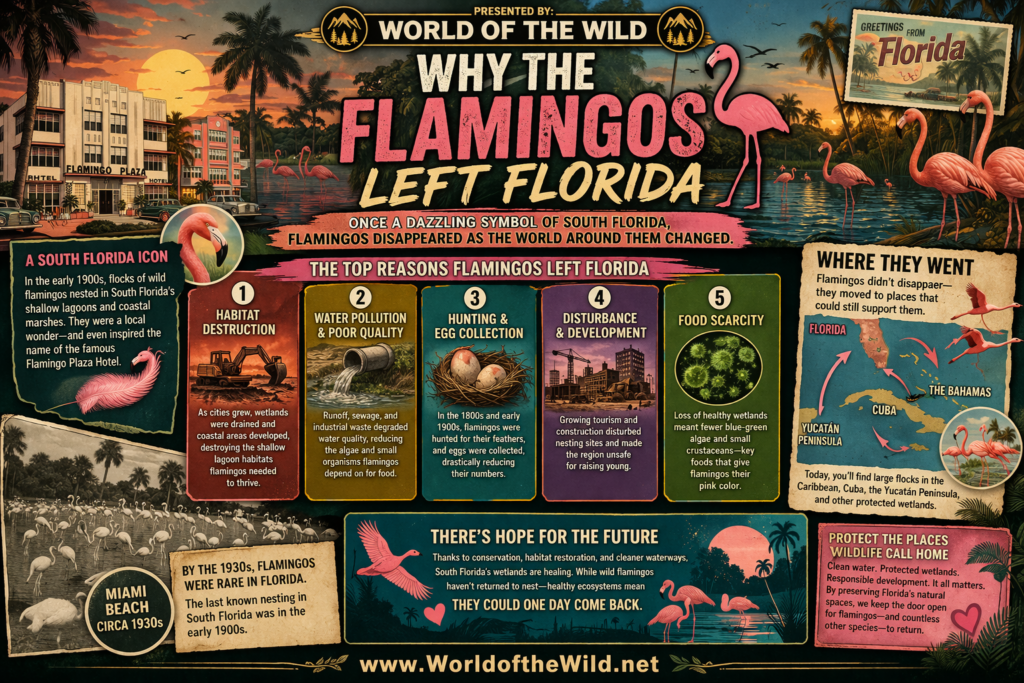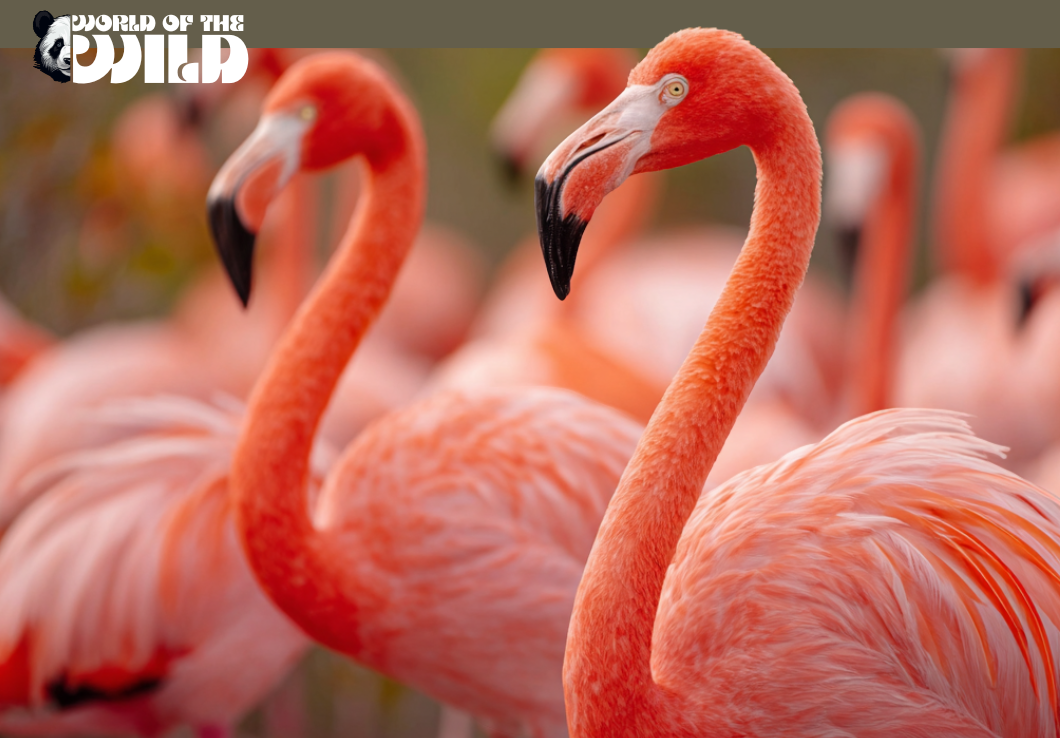

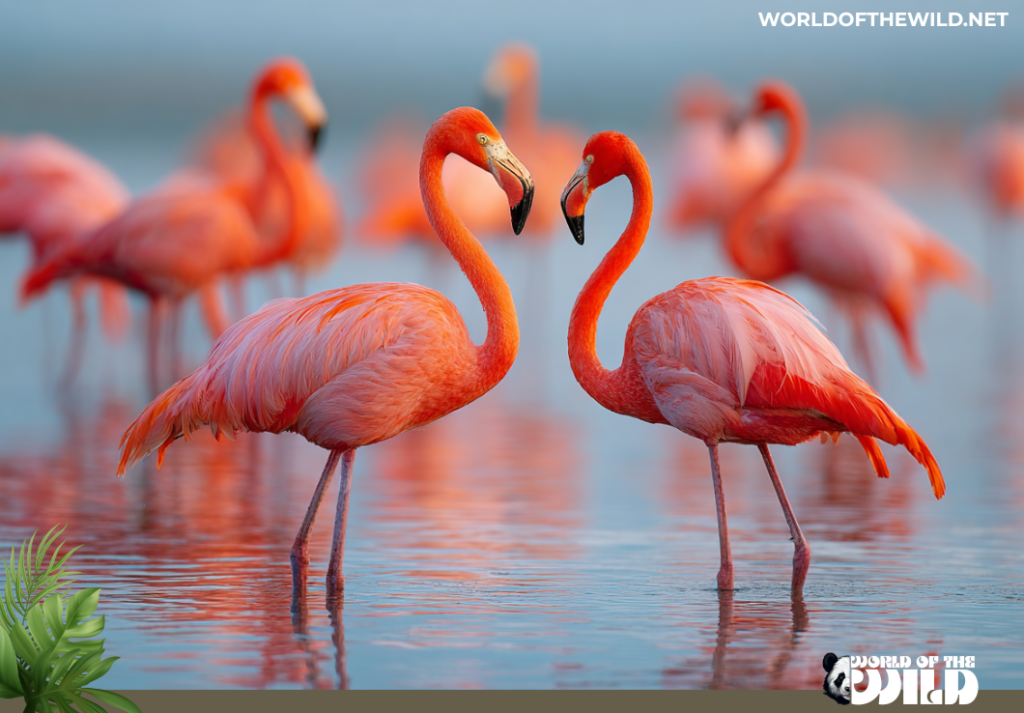
Picture this: you’re standing knee-deep in the warm shallows of Florida Bay, somewhere around the year 1850. The sky is drenched in the colors of a Gulf Coast sunset, and out across the water, a sea of pink stretches toward the mangroves. Not a handful of birds — thousands of them, long-legged and improbably elegant, wading through the shallows in one enormous rosy tide. American flamingos, Phoenicopterus ruber, at home in their northernmost stronghold on the planet.
Now fast-forward to the 20th century. Ask most Floridians where to find a wild flamingo, and they’ll point you toward a gift shop, a neon motel sign, or a plastic lawn ornament. For over a hundred years, the living, breathing bird vanished from its native state — and the story of how that happened, and what’s slowly beginning to change it, is one of the most fascinating conservation tales in American natural history.
Florida’s Original Flamingo Residents
Long before the flamingo became a kitschy symbol of mid-century Florida tourism, it was simply a resident. South Florida and the Florida Keys were likely the northernmost strongholds of the American flamingo’s natural range, and large flocks reaching up to a thousand individuals — with one potential sighting of up to 2,500 birds — were recorded throughout the 19th century by naturalists such as John James Audubon and John George F. Wurdemann, mostly at sites including Marco Island, Cape Sable, and the Florida Keys.
These were not occasional visitors blown off course by Caribbean winds. They were bona fide residents of the Florida ecosystem, wading through the shallow, briny flats and mangrove-fringed coastlines that formed the southern tip of the continent. Historical records show definitive evidence for 19th-century flamingo flocks numbering hundreds to thousands of individuals, with large groups recorded throughout the year.
The great naturalist John James Audubon himself made a trip to Florida in the 1830s specifically to see flamingos — a testament to how well known their presence was. He had spotted one before in Key West, soaring toward a hammock of mangroves, and he knew that the birds congregated in great numbers across the southern tip of the state. He chased them across the waters of South Florida with the obsessive dedication that defined his entire career.
There is even evidence that these birds didn’t merely pass through — they nested here. Scientists searching museum collections found four flamingo egg specimens labeled as having been collected in Florida from the late 1800s, supporting the idea that the birds once raised their young on these shores. A report from 1901 describes a flock of 40 to 50 flamingos on Sugarloaf Key standing near what may have been their characteristic mud nests. The geomorphology of these sites — low, flat, and surrounded by shallow hypersaline waters — closely resembles flamingo nesting habitats across the Caribbean.
Before the arrival of European settlers, Florida was a paradise for wading birds of all kinds. Massive colonies of roseate spoonbills, great egrets, white ibises, wood storks, and many more lived side by side with indigenous communities, including the Seminole, Calusa, Tequesta, and Miccosukee nations. The flamingo was part of that wild, extraordinary tapestry — as natural to Florida as the cypress swamp or the sawgrass prairie.
The Plume Trade: A Massacre Dressed in Fashion
So what happened? How did a bird that numbered in the thousands simply disappear from a landscape it had called home for millennia?
The answer is brutal in its simplicity: people killed them. All of them.
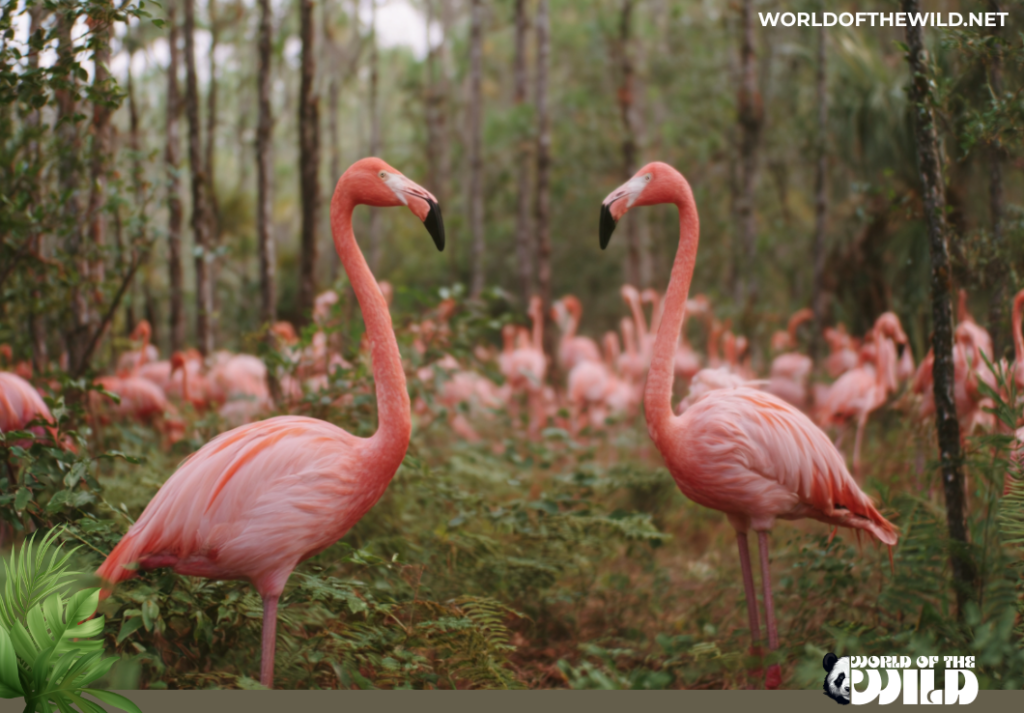
Through the 1800s, flamingos were hunted first for food, then for something far more trivial. The Victorian fashion industry was, by any ecological measure, catastrophic. Women’s hats in the late 19th century were decorated with feathers — sometimes entire birds — and the more spectacular the plumage, the more desirable the accessory. Flamingo feathers, with their otherworldly coral-pink coloring, were among the most prized. Hunters descended on the rookeries and nesting grounds of South Florida and shot birds by the hundreds.
By around 1900, the flamingos had been totally wiped out in South Florida. The last report of a large flock came from naturalist Reginald Heber Howe in 1902, who documented a group of over 500 to 1,000 birds east of Cape Sable. After that, silence. Within a few short years, a species that had graced Florida’s coastlines for thousands of years was functionally gone. It was, in the truest sense, a local extinction driven entirely by human greed.
This wasn’t an isolated tragedy. The same plume trade decimated egret populations across the American South, prompting the founding of the Audubon Society and some of the earliest conservation laws in U.S. history. But the flamingo’s story took a unique and confusing turn — because even after the hunting stopped, the birds didn’t come back. And that absence would spark one of the strangest debates in American ornithology.
The Identity Crisis: Native Bird or Escaped Zoo Animal?
Here is where the flamingo’s Florida story gets genuinely strange.
In the years following the hunting era, occasional flamingo sightings continued to trickle in from South Florida. But instead of being celebrated as signs of a recovering population, they were increasingly dismissed. The reason? A new explanation had emerged, and it fit too conveniently to be questioned.
In the late 1920s and early 1930s, wealthy transplants began moving to Florida, and some of them brought flamingos along — importing the birds to live on their grand estates as living ornaments. Flamingos became established as captive animals in Florida, and from that point forward, any wild sighting was clouded by doubt. Were these birds survivors? Or were they simply runaways?
The most famous of these captive populations was at Hialeah Park Race Track in Miami, where a breeding colony was established in the 1930s and still exists today. The birds at Hialeah became iconic — photographed, celebrated, and deeply associated with Florida’s glamorous mid-century image. But they also muddied the scientific waters almost beyond recovery.
In the 1950s, captive flamingos regularly escaped from Hialeah, and that inconvenient coincidence led experts at the time to conclude that any flamingo spotted in the Florida wild was simply an escapee. By the latter half of the 20th century, the official position of Florida wildlife authorities was that flamingos were not a native species and should be treated as non-native exotics — essentially strangers in their own ancestral home.
For conservationists, this wasn’t just a semantic argument. The classification was critically important for policy. It was easy to envision flamingos in Florida as a conservation success story — people hunted them to extinction, and perhaps efforts should be made to bring them back. But if they were classified as non-native, the conservation target would flip entirely: the goal would be to remove them from the environment. The stakes could not have been higher.
Conchy, a Baby Flamingo, Cracks the Case Wide Open
The turning point came not from a grand scientific expedition, but from a single sick bird found wandering between two airstrips.
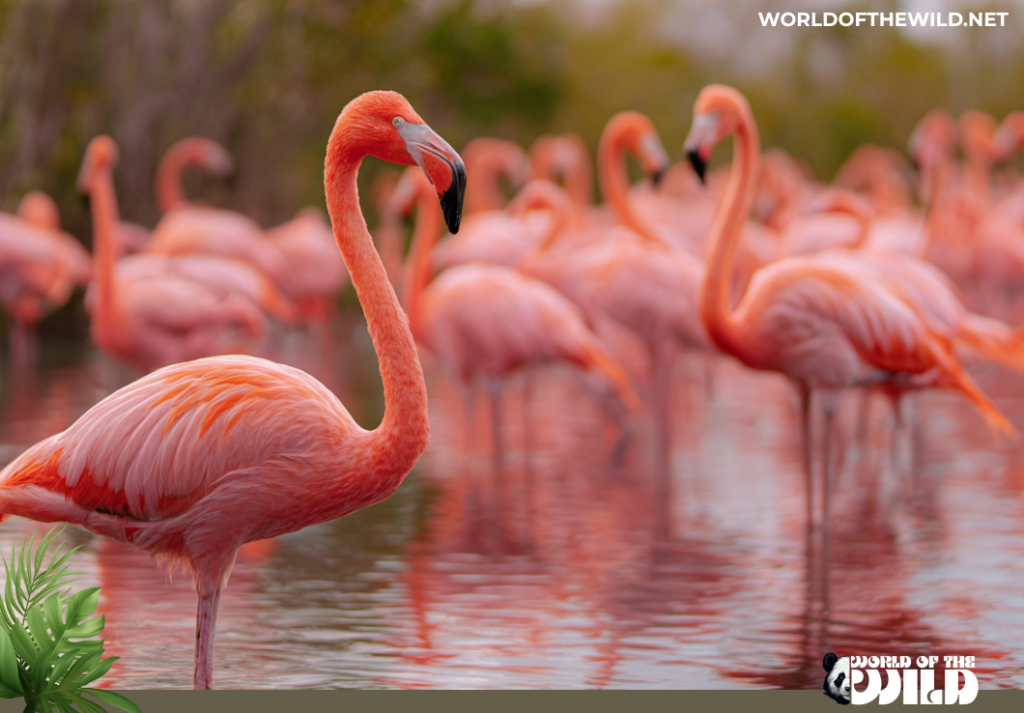
When a wild flamingo showed up at the Naval Air Station Key West in 2015, pilots feared a collision every day the pale pink bird lingered. Nothing airport employees did could spook it into leaving, and it eventually took a team of experts to capture and remove the animal. They named him Conchy. The male American flamingo was taken to Zoo Miami, where researchers discovered he was seriously ill — his liver was damaged from feeding in a polluted body of water near a local restaurant.
What followed was a bureaucratic standoff that illustrated just how consequential the native versus non-native debate had become. When researchers attempted to release Conchy back into the wild, Florida initially blocked it. The state’s position was firm: flamingos were not native, and releasing one would amount to introducing a non-native species into the environment.
Scientists then presented a compelling piece of evidence that changed everything: two flamingos had previously turned up in Florida Bay after being banded as chicks at a nesting colony on Mexico’s Yucatan Peninsula. These weren’t zoo escapees. These were wild birds that had flown to Florida entirely of their own accord, crossing the open Gulf of Mexico on their own wings. The state reversed its decision, and Conchy was fitted with a GPS tracker and set free.
What Conchy did next astonished researchers. For more than two years, the bird didn’t leave Florida. He foraged in Florida Bay, remained healthy, and showed no inclination to return to wherever he had originally come from. Here was a bird that had never been to Florida before — a bird that had been sick, captured, and rehabilitated in captivity — and yet he chose Florida as his home. The habitat, it turned out, was still right.
Meanwhile, a team of scientists led by Zoo Miami conservation ecologist Steven Whitfield was assembling the most comprehensive review of Florida flamingo history ever conducted. Using digitized 19th-century museum records, historical naturalist accounts, flamingo egg specimens from museum collections, and decades of citizen science birding data, the team built an airtight case. Their conclusion turned a century of conventional wisdom on its head: Florida’s native flamingo population had indeed been hunted to local extinction, but the wild birds people were now spotting around the state were not merely zoo escapees. They were genuine wild flamingos, arriving naturally from Caribbean populations that had been slowly recovering.
In 2018, the Florida Fish and Wildlife Conservation Commission formally removed the American flamingo from its list of non-native species. They were native. They always had been. They were supposed to be there.
The Habitat Problem: Why They Still Haven’t Come Back
Reclassifying the flamingo as native was a crucial step — but it didn’t automatically bring the birds back. The problem wasn’t just the hunting. It was what happened to Florida’s wild places in the century that followed.
When estuarine scientist Jerry Lorenz arrived in the Florida Keys in 1989, Florida Bay was undergoing an ecological collapse. A hundred years of draining, diking, and rerouting the flows of the Everglades to create urban and agricultural land had raised the salt content of the bay’s water, making it inhospitable for many of the animals that once thrived there. The famous seagrass beds were dying off in massive swaths, replaced by algal blooms that choked the oxygen from the water and killed fish on a grand scale.
Without healthy, shallow-water flats teeming with the snails, crustaceans, and invertebrates that flamingos depend on for food — and for the carotenoid pigments that give them their extraordinary pink coloring — there was simply nothing for a flamingo to eat. The Everglades had been so comprehensively altered by the 20th century that even if flamingos had wanted to return, the ecosystem couldn’t properly support them.
And the problem extended well beyond Florida’s borders. Of the 30 to 40 flamingo nesting sites that once dotted the Caribbean before 1900, only a handful remain today. Habitat loss across the region has compressed flamingo populations and increased competition for the surviving suitable sites, making natural recolonization of Florida even more challenging.
Flamingos did visit. Lorenz himself spotted 24 birds in Florida Bay in 1992, and 64 in 2004. Banded birds from the Yucatan turned up on Florida’s shores. But none of them stayed. They came, foraged briefly, and left — the habitat wasn’t quite ready to hold them.
A Hurricane Named Idalia Changes Everything
And then, in August 2023, a Category 3 hurricane named Idalia rewrote the story once more.
A flamboyance — the wonderfully theatrical collective noun for a group of flamingos — of somewhere between 300 and 400 birds was likely migrating between the Yucatan Peninsula and Cuba when Idalia intercepted them. The storm captured the flock and deposited birds across a wide swath of the eastern United States, from Florida’s Gulf Coast all the way north to Wisconsin and east to Pennsylvania. It was one of the most spectacular and unexpected wildlife events in recent American history.
Birdwatchers from Tennessee to Ohio woke up to find flamingos standing in their local ponds and parks, birds that had been flung thousands of miles off course by one of the most powerful storms to hit the Gulf Coast in years. The birds likely flew with the storm’s winds rather than fighting them, or perhaps rode in the relative calm of the hurricane’s eye until it broke apart over land.
One flamingo — a young bird quickly nicknamed Peaches by researchers — was rescued near Tampa after nearly drowning in the Gulf, rehabilitated, fitted with a GPS tracker, banded, and released back into the wild. Researchers watched eagerly for data on his movements, hoping to understand how displaced flamingos navigate their way home.
But the most extraordinary part of the Idalia story wasn’t the birds that ended up in Ohio or Pennsylvania. It was the birds that stayed in Florida.
Six months after the hurricane, researchers at Audubon Florida conducted a weeklong statewide survey of flamingo sightings. They received more than 50 credible reports. After carefully removing duplicates, they concluded that at least 100 flamingos had remained in the state. Then, in July 2025, a flock of 125 individuals was photographed in Florida Bay — the largest wild flamingo gathering seen in Florida in well over a century.
“We are thrilled that there are flamingos that have remained in Florida after being blown here by Hurricane Idalia,” said Jerry Lorenz, state director of research for Audubon Florida. “I actually suspect that 100 flamingos is the floor of this new population, and there could be more that were not counted.”
Are They Coming Back for Good?
The question every Floridian — and every wildlife enthusiast — wants answered is simple: are the flamingos here to stay?
The answer, tantalizing and cautious in equal measure, is: maybe. Possibly. The conditions are better than they’ve been in over a century.
Researchers point to one overriding factor when explaining why flamingos that visit Florida today might stay when earlier visitors did not: the Everglades are healing. The Comprehensive Everglades Restoration Plan, one of the largest environmental restoration projects in human history, has been working for decades to undo the hydrological damage of the 20th century — reestablishing the natural flow of freshwater through the system, reducing salinity in Florida Bay, and allowing seagrass beds and fish populations to slowly recover. The shallow, productive flats that flamingos need to thrive are coming back. Not fully, not yet — but measurably.
A 2025 genetic study from the University of Central Florida added another promising layer to the picture. Researchers analyzed flamingos from seven wild populations across the Caribbean and found that modern flamingos show strong genetic variability and that zoo-managed populations are genetically compatible with wild birds. This opens the door to a potential future reintroduction program if natural recovery proves insufficient on its own.
Steven Whitfield and other researchers have formed a Florida Flamingo Working Group, pooling expertise to track birds, identify potential nesting sites via satellite imagery, and build the scientific foundation needed to guide conservation decisions as the population continues to evolve. They are, in essence, preparing for a future that’s beginning to look increasingly possible.
There is also climate change to consider — and in this case, it may work in Florida’s favor. As sea-level rise and intensifying storms threaten low-lying flamingo nesting habitat across the Caribbean, Florida’s coastlines — sitting at the northernmost edge of the flamingo’s range — may become more attractive as an alternative. The birds could be pushed northward by pressures in the south, finding that the recovering Everglades offer exactly what they need.
And then there is Peaches. After being blown in by Idalia, rescued, rehabilitated, and released near Tampa, the GPS tracker failed just days later. The last confirmed sighting placed him on a beach near Marco Island in October 2023. He seemed to vanish. Then, in June 2025, researchers at the Rio Lagartos Biosphere Reserve in Yucatan, Mexico received an email from their counterparts in Florida containing a photograph: Peaches, blue band still clearly visible on his leg, nesting at the reserve. He had made it all the way home, across the Gulf of Mexico, to raise a family.
Those chicks will grow up knowing that Florida exists — that its waters are warm, its flats are food-rich, and the journey is worth making. And one day, some of them may come back.
That is, perhaps, the most hopeful thing of all. Flamingos are not solitary wanderers. They are profoundly social animals whose populations are built on collective memory, with birds following one another to productive feeding and nesting sites across generations. Once Florida becomes part of their learned geography — once enough birds have wintered here and fed here and survived here — the trickle could become a flood.
What Would It Take?
Conservation scientists are clear that natural recovery alone is unlikely to restore a full breeding population to Florida. The genetics are there. The legal protections are in place, with flamingos now covered under the Federal Migratory Bird Treaty Act following their official reclassification as native birds. The scientific knowledge is more robust than it has ever been. What remains is the habitat — and time.
The most critical piece is the continued restoration of the Everglades. Flamingos are, in a very real sense, an indicator species for the health of South Florida’s coastal wetlands. Their return in significant numbers would signal that the broader ecosystem had healed enough to support the full, intricate web of life it once sustained. Protecting and restoring that habitat matters not just for flamingos, but for every wading bird, fish, and invertebrate that depends on Florida’s coastal waters.
Researchers are also urging the public to play a role. If you spot a flamingo in Florida — and sightings are becoming less rare — report it. Give the bird space. The same spectacular appearance that made them targets for hat-makers in the 19th century makes them magnets for curious onlookers today, and a stressed bird is less likely to stay, feed, and establish roots. If you are affecting their movement or behavior, you are too close.
The Pink Birds Are Coming Home
There is something deeply moving about the flamingo’s story — not just as a conservation tale, but as a reflection of what we humans are capable of, for better and for worse. In the space of a few decades, our appetite for fashion and food drove a thriving, ancient population of birds to the edge of oblivion. In the century that followed, our ignorance kept them classified as outsiders in their own home. And now, slowly, imperfectly, we are beginning to make it right.
The flamingos of Florida didn’t leave because they wanted to. They were taken from a place they had inhabited long before the first European ever set foot on the peninsula. The flats of Florida Bay, the shallow margins of Biscayne Bay, the mangrove-fringed shores of the Keys — these were always flamingo country.
The plastic pink lawn ornament that became Florida’s kitschy trademark was, in its strange way, a cultural memory of something real and magnificent. The people who planted those pink birds in their yards were tapping into a collective intuition that flamingos and Florida belong together — even when the living birds themselves were nowhere to be found.
Now, one hurricane, one rehabilitated bird, one painstaking genetics study, and one century of ecological reckoning later, the real thing might be coming back. Not in the thousands-strong flocks that Audubon witnessed, not yet — but in growing numbers, on recovering wetlands, in the warm shallows of a bay that is slowly healing.
Florida’s flamingos are not gone. They never quite were. And if we give the Everglades the chance to breathe and flow again, they may one day return in numbers that would make even John James Audubon put down his rifle and simply watch.
Enjoyed this story? Subscribe to World of the Wild for more deep dives into the creatures that share our planet — and the battles being fought to keep them here.