
Imagine stepping into your backyard on a warm Australian morning, coffee in hand, only to freeze at the sight of a slender, fast-moving shadow slicing through the grass. Before you can even process what you’re seeing, it’s gone — a ghost of copper and dust disappearing into the scrub. That was likely an Eastern Brown Snake, and you were closer to one of the world’s deadliest animals than most people ever dare to be.
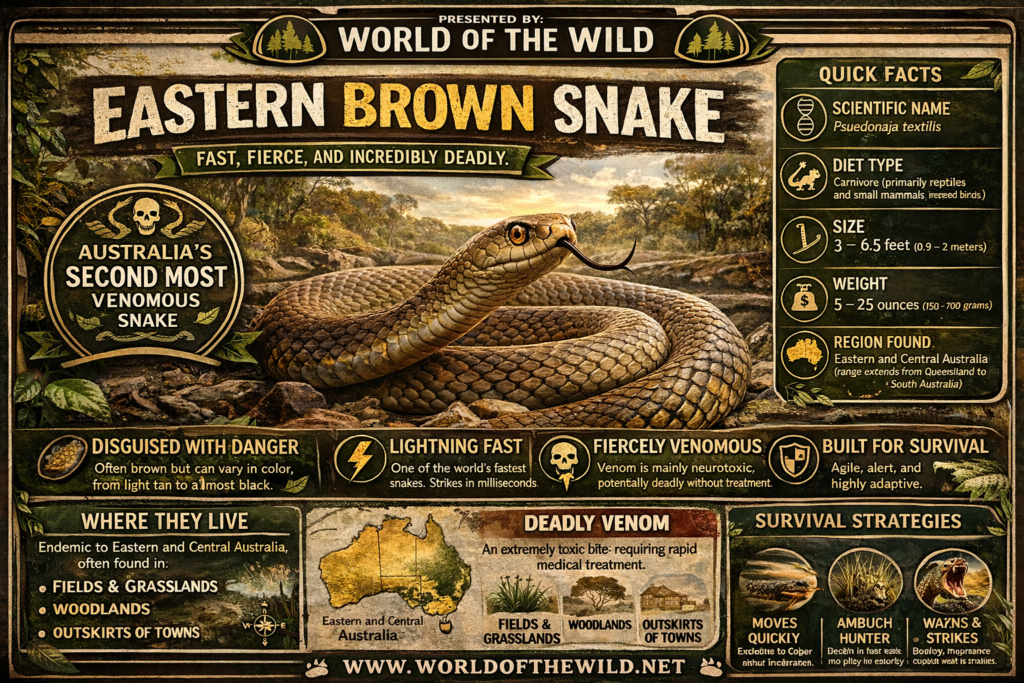
The Eastern Brown Snake (Pseudonaja textilis) has earned a reputation that precedes it like a warning shot. It is responsible for more snakebite fatalities in Australia than any other species — a remarkable distinction in a country already famous for its lethal wildlife. Yet beyond the fear and the headlines lies a creature of extraordinary complexity: a highly evolved predator, a vital cog in Australia’s ecosystems, and an animal whose survival story is as compelling as any on Earth. To dismiss it as simply “dangerous” is to miss the point entirely. The Eastern Brown Snake is one of nature’s most finely tuned machines, and it deserves far more than our fear — it deserves our understanding.
Facts
- Speed over substance: The Eastern Brown Snake can reach speeds of up to 15 kilometers per hour (about 9 mph), making it one of the fastest snakes in Australia — fast enough to close a gap between predator and threat with alarming efficiency.
- A venom cocktail of killers: Its venom contains a devastating mix of neurotoxins, coagulants, and nephrotoxins. The coagulants trigger a condition called Disseminated Intravascular Coagulation (DIC), which essentially causes the blood to clot uncontrollably throughout the body, depleting clotting factors and paradoxically leading to uncontrolled bleeding.
- Tiny doses, massive consequences: The Eastern Brown Snake delivers one of the smallest venom volumes of any dangerously venomous snake — often less than 4 milligrams per bite — yet that microscopic amount is enough to kill an adult human.
- An urban adapter: Unlike many wildlife species retreating from human expansion, Eastern Brown Snakes have actively thrived in agricultural and suburban environments, largely because farming introduced mice and rats — their preferred prey — in enormous numbers.
- Blind at birth: Hatchlings emerge from eggs completely reliant on instinct, with no parental guidance whatsoever. Within minutes of breaking free of their shells, they are fully venomous and entirely on their own.
- Color is deceptive: Despite the name “brown,” Eastern Browns display a remarkable spectrum of colors ranging from pale cream and orange to near black — making visual identification unreliable and occasionally dangerous for the untrained eye.
- Most bites occur on the hands and feet: Statistical records consistently show that the majority of Eastern Brown Snake envenomations occur when people attempt to handle or kill the snake, underscoring that the snake bites defensively, not aggressively.
Species
The Eastern Brown Snake sits within a rich and well-defined taxonomic lineage:
| Rank | Classification |
|---|---|
| Kingdom | Animalia |
| Phylum | Chordata |
| Class | Reptilia |
| Order | Squamata |
| Family | Elapidae |
| Genus | Pseudonaja |
| Species | Pseudonaja textilis |
The genus Pseudonaja — commonly known as the brown snakes — contains several species, all native to Australia and New Guinea. The Eastern Brown’s closest relatives include the Western Brown Snake (Pseudonaja mengdeni), the Dugite (Pseudonaja affinis) of Western Australia, and the Speckled Brown Snake (Pseudonaja guttata). These species share morphological and behavioral similarities but occupy largely different geographic ranges.
Within Pseudonaja textilis itself, taxonomists have identified several subspecies, though classification has shifted considerably with advances in genetic analysis. The Papua New Guinean Eastern Brown Snake (Pseudonaja textilis textilis) and the New Guinean Brown Snake (Pseudonaja textilis pughi) represent notable geographic variants, differing slightly in coloration and scale counts from their mainland Australian counterparts. Recent molecular studies continue to refine the boundaries between these populations, and it is widely anticipated that further taxonomic revisions will emerge as genomic data improves.
Appearance
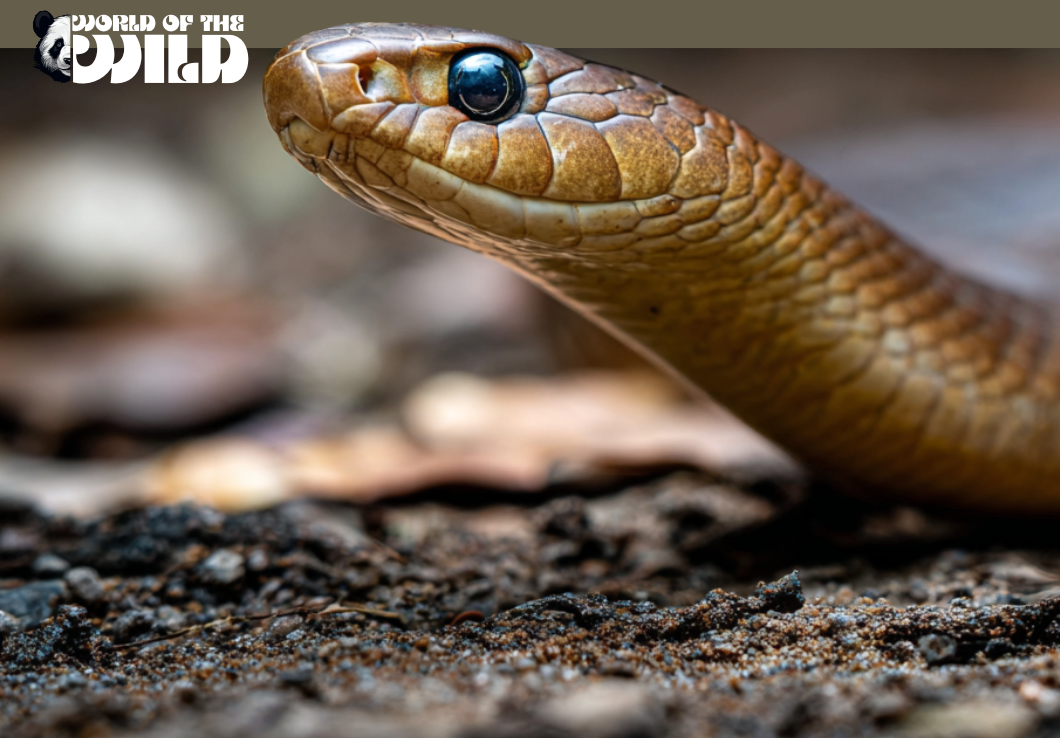
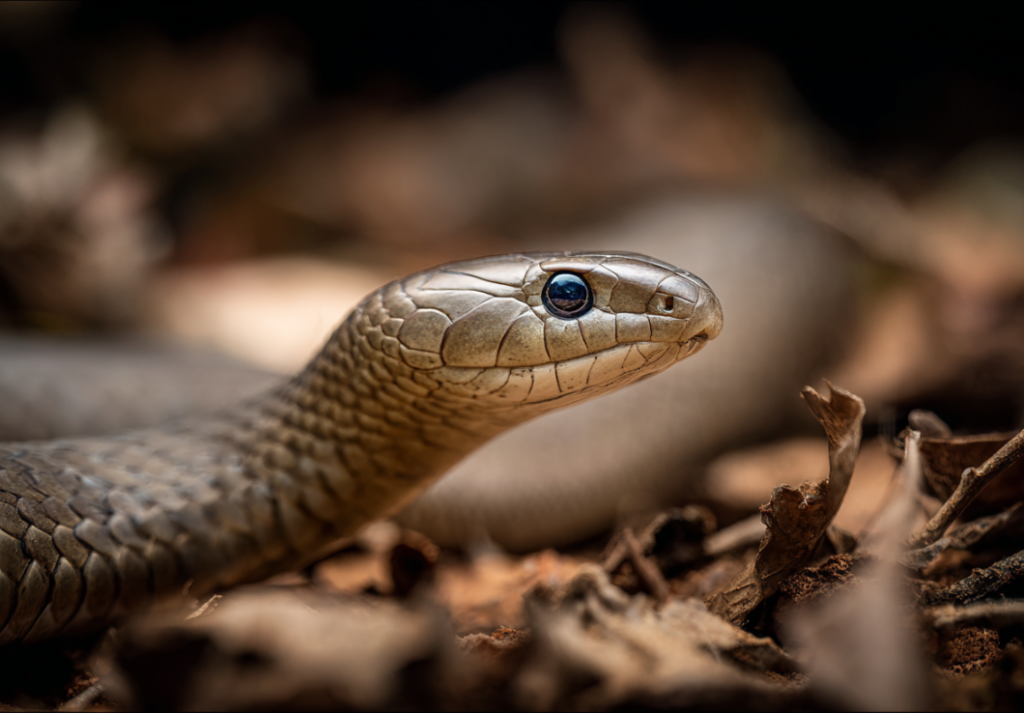
The Eastern Brown Snake is a study in elegant minimalism. It possesses a slender, streamlined body built for speed and agility rather than brute constriction. Adults typically measure between 1.5 to 1.8 meters (roughly 5 to 6 feet) in total length, though exceptionally large individuals have been recorded approaching 2.4 meters (nearly 8 feet). Despite their length, they are relatively lightweight, with most adults weighing between 0.5 and 1.5 kilograms (1.1 to 3.3 pounds).
The dorsal coloration — the snake’s back — ranges widely from pale tan and orange-brown to rich mahogany and near-black, often uniform but sometimes banded, particularly in juveniles. Young Eastern Browns frequently display bold dark banding, a black-tipped head, and dark neck markings that fade as they mature, leading to occasional misidentification in the field. The ventral (belly) surface is generally cream, yellow, or orange, sometimes with orange or grey blotching.
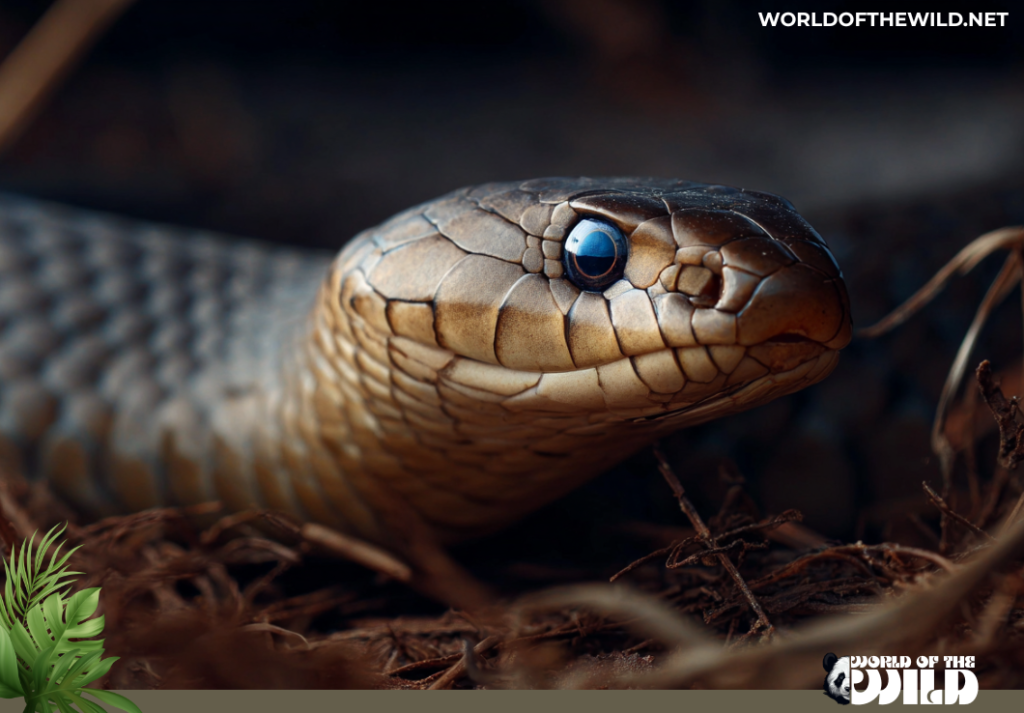
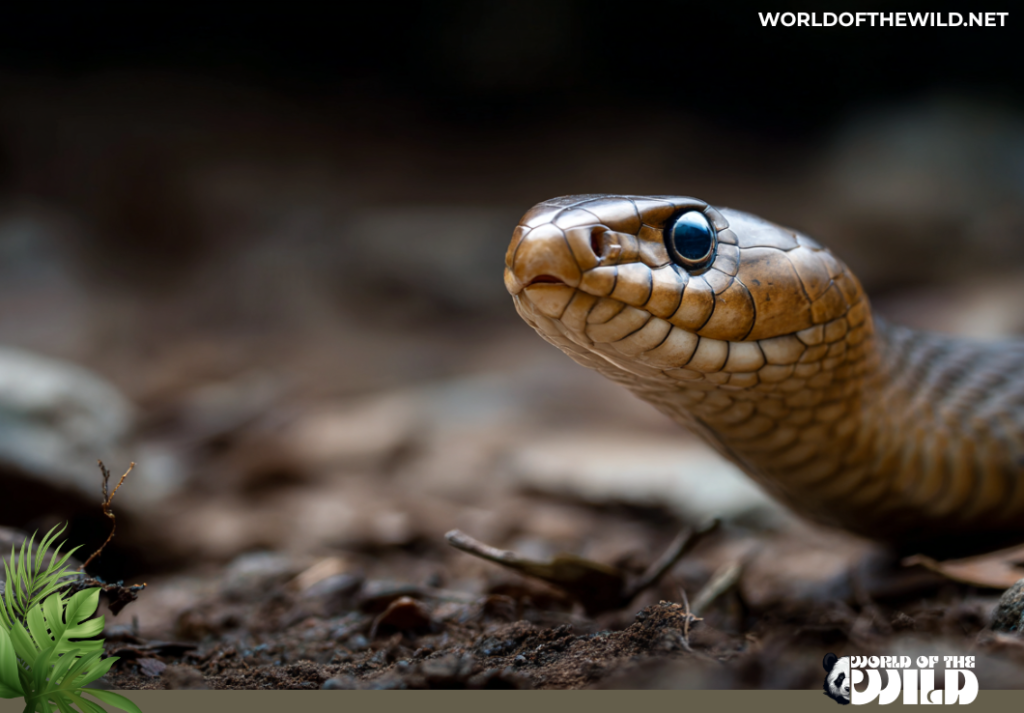
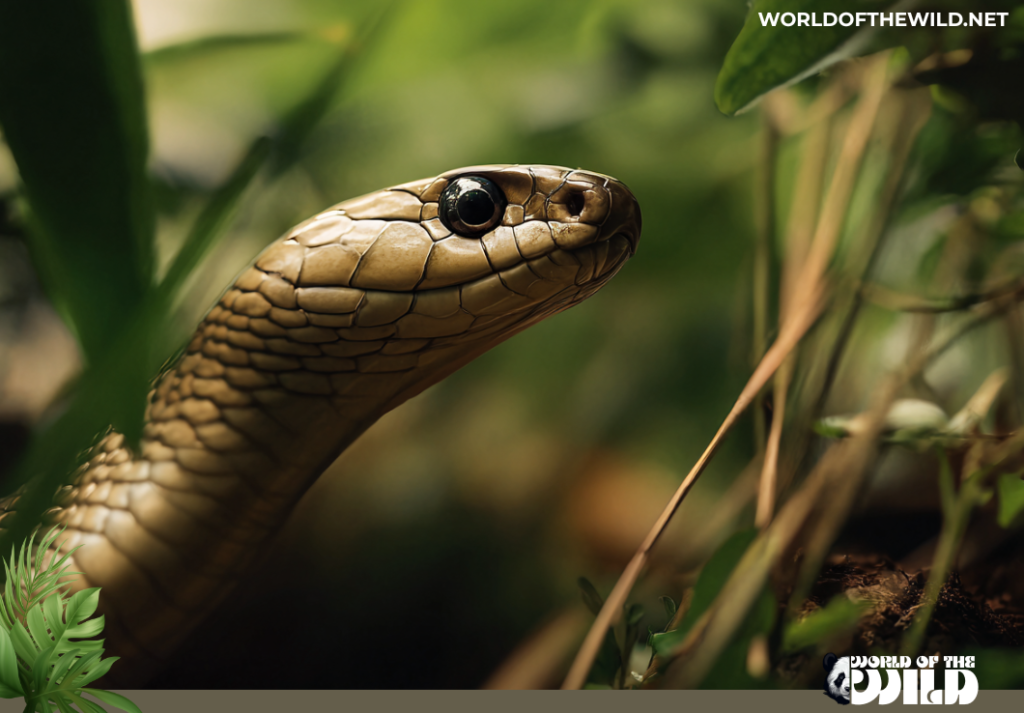
The head is narrow and not particularly distinct from the neck — a subtle but important field marker when comparing it to some other species. The eyes are moderately sized with round pupils, and the scales are smooth and glossy, giving the snake a sleek, almost polished appearance when in good health. In strong sunlight, a healthy Eastern Brown seems almost to shimmer as it moves — a flash of color and motion that can appear almost beautiful before the rational brain catches up.
Behavior
The Eastern Brown Snake is a diurnal species, meaning it is primarily active during the day — a habit that brings it into frequent and occasionally dangerous contact with humans. On particularly hot days, it may shift to a more crepuscular pattern, becoming most active in the cooler hours of early morning and late afternoon.
By nature, Eastern Browns are solitary animals, coming together only for mating. They are highly alert and fast-moving, relying on speed and camouflage as their primary defenses. Despite their fearsome reputation, Eastern Browns are not inherently aggressive — they are in fact quite shy and will choose flight over confrontation in virtually every situation where escape is possible. When cornered or threatened, however, they adopt a characteristic defensive posture that has become iconic: rearing up into an S-shaped curve, flattening the neck slightly, and opening the mouth to reveal the pale interior — a warning display meant to deter rather than to initiate attack.
Their foraging strategy is active and deliberate. Eastern Browns are pursuit hunters, using their sharp eyesight and chemosensory abilities — sampling the air and ground with their forked tongue and processing chemical signals through the Jacobson’s organ in the roof of the mouth — to track prey. They are remarkably persistent hunters, capable of following scent trails with impressive accuracy across varied terrain.
One of the most notable behavioral adaptations of this species is its tolerance of human-modified environments. Agricultural land, in particular, provides an almost ideal habitat: vast open areas, abundant rodent prey, and plenty of ground cover in the form of corrugated iron sheets, timber piles, and hay bales — all of which serve as perfect retreats.
Evolution
The Eastern Brown Snake belongs to the family Elapidae, a group that includes cobras, mambas, kraits, and sea snakes — all characterized by their hollow, fixed front fangs and fast-acting venom. Elapids are believed to have originated in Asia and colonized Australia approximately 10–15 million years ago, arriving via island-hopping during periods of lower sea levels across the ancient Tethys seaway.
Australia’s geological isolation played a defining role in the evolution of its snake fauna. As the continent drifted northward after separating from Gondwana, the resident snake lineages diversified in relative isolation, filling ecological niches that elsewhere might be occupied by different predators. This process of adaptive radiation led to Australia becoming the only continent where venomous snakes outnumber non-venomous ones — and the Elapidae became the dominant snake family.
The genus Pseudonaja likely diversified within Australia itself, with ancestral forms adapting to the increasingly arid conditions that characterized the continent as it moved into drier climatic zones during the Miocene and Pliocene. The Eastern Brown’s particular physiological and behavioral traits — high venom toxicity, speed, daytime activity, and affinity for open country — reflect millions of years of selective pressure in an environment where prey could be scarce and competition fierce.
Interestingly, the arms race between venomous snakes and their prey in Australia appears to have driven some remarkably sophisticated venom chemistry. The procoagulant toxins found in Eastern Brown venom, for example, are among the most complex and medically challenging encountered anywhere in the world.
Habitat
The Eastern Brown Snake is one of Australia’s most geographically widespread reptiles. Its range covers much of eastern, central, and southern Australia, stretching from the Cape York Peninsula in Queensland down through New South Wales, Victoria, and into South Australia. It also occurs across much of the interior of the continent and has established populations in parts of Papua New Guinea and the western islands of the Torres Strait.
The species shows a strong preference for open habitats: grasslands, open woodlands, shrublands, farmland, and the margins of forests. It tends to avoid dense rainforest and heavily forested terrain, which limit its speed advantage and hunting effectiveness. Rocky outcrops, creek banks, and the edges of agricultural fields are particularly favored, as these environments offer a combination of thermal regulation opportunities, prey availability, and shelter.
Critically, Eastern Browns are highly thermoregulation-dependent, as all reptiles are. They require access to sun-exposed basking sites to raise their body temperature to operational levels — typically above 28°C (82°F) — before becoming fully active. Corrugated iron sheets, rock piles, fallen timber, and even road surfaces serve as important thermal refuges in modified landscapes.
Their adaptation to agricultural environments is arguably the most ecologically significant aspect of their habitat use. The introduction of European farming practices brought with it enormous populations of house mice and rats, and the Eastern Brown followed the food — moving into paddocks, grain silos, shearing sheds, and even suburban gardens with remarkable success.
Diet
The Eastern Brown Snake is a carnivore, and an opportunistic and effective one at that. Its diet is diverse but heavily skewed toward small mammals, particularly mice and rats — a preference that has made it a remarkably successful inhabitant of agricultural landscapes. In addition to rodents, Eastern Browns readily consume lizards, frogs, small birds, bird eggs, and even other snakes, including smaller members of their own species.
Hunting is primarily visual and chemosensory. The snake actively patrols its territory, tongue-flicking constantly to sample chemical signatures left by prey animals. Once prey is located and within striking range, the Eastern Brown delivers a rapid, precise bite, injecting venom that acts quickly to immobilize the target. Unlike constrictors, it does not wrap around prey — it strikes, sometimes releases, and then follows the scent trail of the envenomated animal until it succumbs. Prey is consumed headfirst, aided by flexible jaw ligaments that allow the snake to swallow animals considerably wider than its own head.
In terms of ecological importance, Eastern Browns provide significant pest control services for Australian farmers. A single snake can consume dozens of rodents per year, making them — though often misunderstood and killed on sight — genuine allies of the agricultural sector.
Predators and Threats
Despite being one of the most venomous snakes on the planet, the Eastern Brown Snake does have natural enemies. Monitor lizards (goannas) are significant predators, particularly of eggs and juvenile snakes. The Red-bellied Black Snake (Pseudechis porphyriacus) is largely immune to brown snake venom and will actively prey upon Eastern Browns where their ranges overlap. Birds of prey, including kookaburras and various raptors, will take juveniles and smaller individuals. In some regions, feral cats and domesticated dogs occasionally kill Eastern Browns, though they risk serious injury in doing so.
The most pervasive and significant threats to the Eastern Brown Snake, however, are human-caused:
Persecution and intentional killing remain the leading direct cause of death for this species. Misidentification, fear, and cultural attitudes lead to enormous numbers being killed by people who encounter them. This is not only ecologically damaging but is also, ironically, the primary reason most people are bitten — provoking a snake in the act of trying to kill it.
Road mortality is a serious and underappreciated threat, particularly in agricultural regions where roads bisect the snake’s open-country habitat. The snakes’ habit of basking on warm bitumen at night and during cool mornings makes them highly vulnerable to vehicle strikes.
Habitat modification and land clearing, while having less impact on Eastern Browns than on many other species due to their adaptability, still affect populations in some regions by reducing shelter opportunities and altering prey availability.
Secondary rodenticide poisoning is an emerging concern. Eastern Browns feeding on mice that have ingested anticoagulant rodenticides can accumulate lethal doses of the compounds in their own tissues.
Reproduction and Life Cycle
Eastern Brown Snakes are oviparous — they lay eggs rather than giving birth to live young. Mating typically occurs in spring and early summer (September through December in the Southern Hemisphere), triggered by warming temperatures and increasing day length.
Males engage in striking combat rituals during the breeding season, engaging in wrestling bouts in which two males intertwine their bodies and attempt to pin each other to the ground. These contests, sometimes mistaken for mating behavior by observers, can be prolonged and intense, with the victor gaining access to nearby females. There is no evidence of direct aggression between males that results in biting — the combat is ritualized rather than lethal.
After mating, a female will gestate internally for a period before depositing a clutch of 10 to 35 eggs, typically in a sheltered location — beneath rocks, in soil cracks, under debris, or in disused animal burrows. The eggs are leathery and elongated, and the female provides no further parental care after laying. Incubation takes approximately 90 to 95 days, with hatchlings emerging in late summer and autumn — typically February through March.
Hatchlings measure roughly 27 to 35 centimeters (about 11 to 14 inches) at birth and are fully venomous and independent from their first moments of life. Mortality among juveniles is high, with predation, exposure, and competition taking a significant toll in the early months.
Eastern Brown Snakes typically reach sexual maturity at around 2 to 3 years of age. In the wild, lifespan is estimated at 7 to 15 years, with captive individuals occasionally surpassing 15 years under ideal conditions.
Population
The Eastern Brown Snake is currently classified as Least Concern on the IUCN Red List of Threatened Species — a designation that reflects its broad geographic range, high adaptability, and relatively stable population numbers across most of its range. Unlike many Australian reptile species that have declined sharply in recent decades, the Eastern Brown has benefited from the same agricultural expansion that has devastated other wildlife, leveraging introduced rodent populations as an abundant, reliable food source.
That said, regional variations in population health are significant. In some heavily developed areas, numbers have declined due to road mortality, persecution, and habitat fragmentation. In other regions — particularly agricultural zones — populations are dense and in some cases appear to be expanding.
No reliable global population estimate exists for this species, as comprehensive surveys are logistically challenging across such a vast range. Expert consensus suggests that populations are currently stable to increasing in most areas, though long-term trends may shift as rodenticide use increases and climate change alters temperature and rainfall patterns across the continent.
The species’ conservation status, while currently secure, should not invite complacency. The ecological role it plays — as predator, pest controller, and prey for higher-order animals — makes its continued health a matter of broader environmental significance.
Conclusion
The Eastern Brown Snake is a creature that forces us to confront an uncomfortable truth: the animals we fear most are often the ones we understand least. Here is a snake that has survived and thrived for millions of years in one of Earth’s most demanding environments, that controls rodent populations farmers depend on, that has evolved a venom system of breathtaking biochemical sophistication — and yet it is most commonly encountered as a creature to be killed on sight.
The key takeaways are simple but important. The Eastern Brown Snake is not a predator hunting humans; it is a predator avoiding them. The vast majority of bites occur when people attempt to interfere with the animal. The most effective way to coexist with this species is the same approach that works with most of nature’s more formidable inhabitants: observe from a safe distance, leave it alone, and let it do its job.
As Australia’s landscapes continue to change — through urban expansion, agriculture, and climate disruption — the Eastern Brown Snake will continue to adapt. The question is whether we will adapt too: from fear to respect, from reflexive killing to informed coexistence. In a world where biodiversity is contracting at an alarming rate, even the creatures that frighten us deserve our protection. Perhaps especially those creatures.
The Eastern Brown Snake doesn’t need our love. But it has earned our respect — and it is long past time we gave it.
Quick Reference
| Scientific Name | Pseudonaja textilis |
| Diet Type | Carnivore (small mammals, lizards, frogs, birds, eggs, other snakes) |
| Size | 59–71 inches (approx. 5–6 feet); exceptional individuals up to ~94 inches (~7.8 feet) |
| Weight | 1.1–3.3 pounds (0.5–1.5 kg) |
| Region Found | Eastern, central, and southern Australia; parts of Papua New Guinea and Torres Strait Islands |