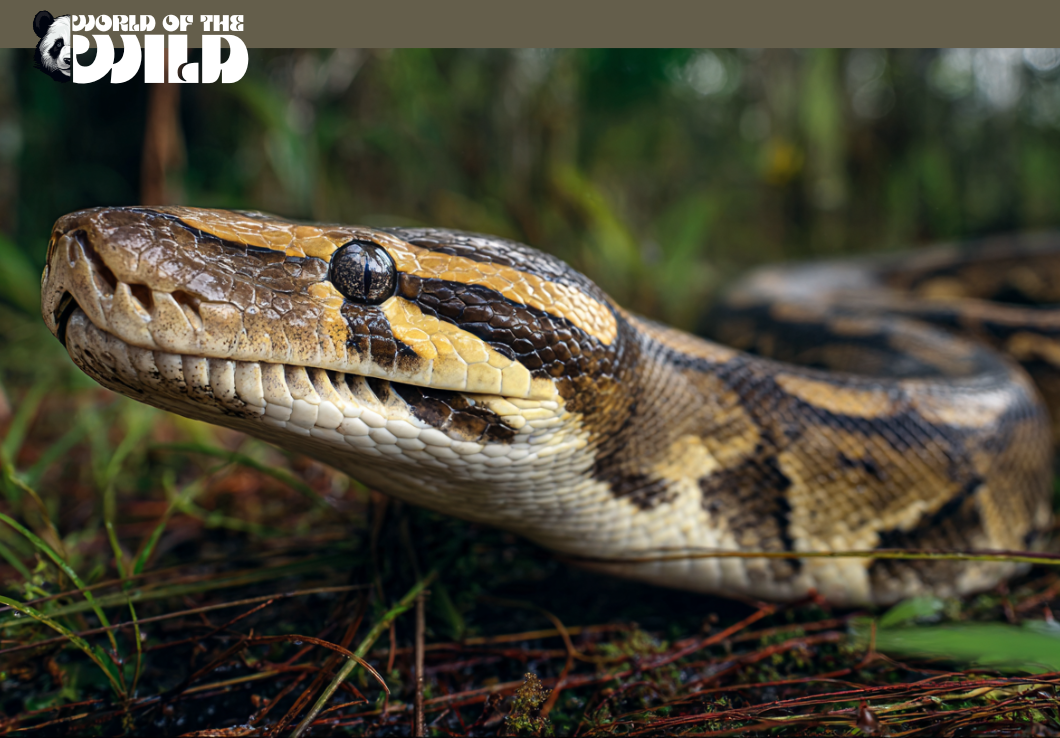

There are few creatures on Earth that command attention quite like the Burmese python. Stretching longer than a pickup truck, capable of swallowing a deer whole, and silent enough to stalk prey through the dark without a sound — this snake is the stuff of both legend and nightmare. But beyond the fear and fascination, the Burmese python is a biological marvel: a finely tuned predator that has thrived for millions of years, navigating swamps and forests across Southeast Asia with quiet, unhurried authority.
In recent decades, the Burmese python has stepped out of the shadows of its native jungles and into the headlines of conservation science — not just because of what it is, but because of what it has become in places where it doesn’t belong. In the Florida Everglades, it is an ecological crisis wearing scales. At home in Asia, it is a vulnerable species in quiet decline. Understanding this snake — its biology, its behavior, its place in the web of life — has never been more urgent or more fascinating.
Facts
- Burmese pythons are among the top five longest snakes in the world, with confirmed wild specimens exceeding 18 feet in length.
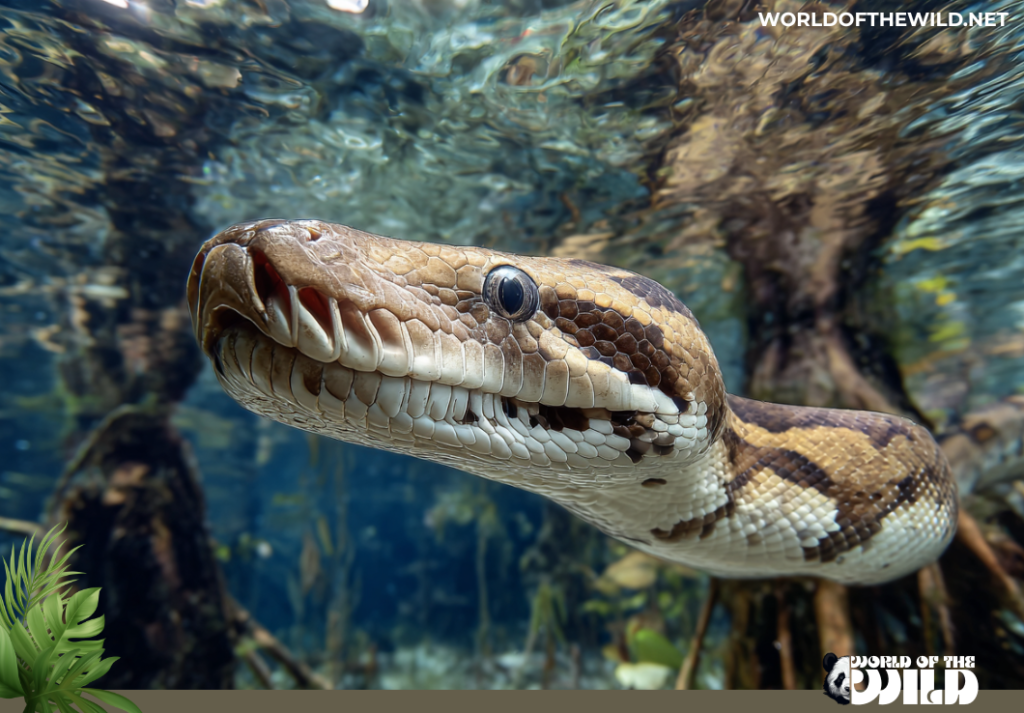
- Despite their immense size, they are remarkably agile swimmers and can remain submerged underwater for up to 30 minutes at a time.
- They possess vestigial pelvic bones — the remnants of legs from their four-limbed ancestors — visible as small claw-like spurs on either side of the cloaca.
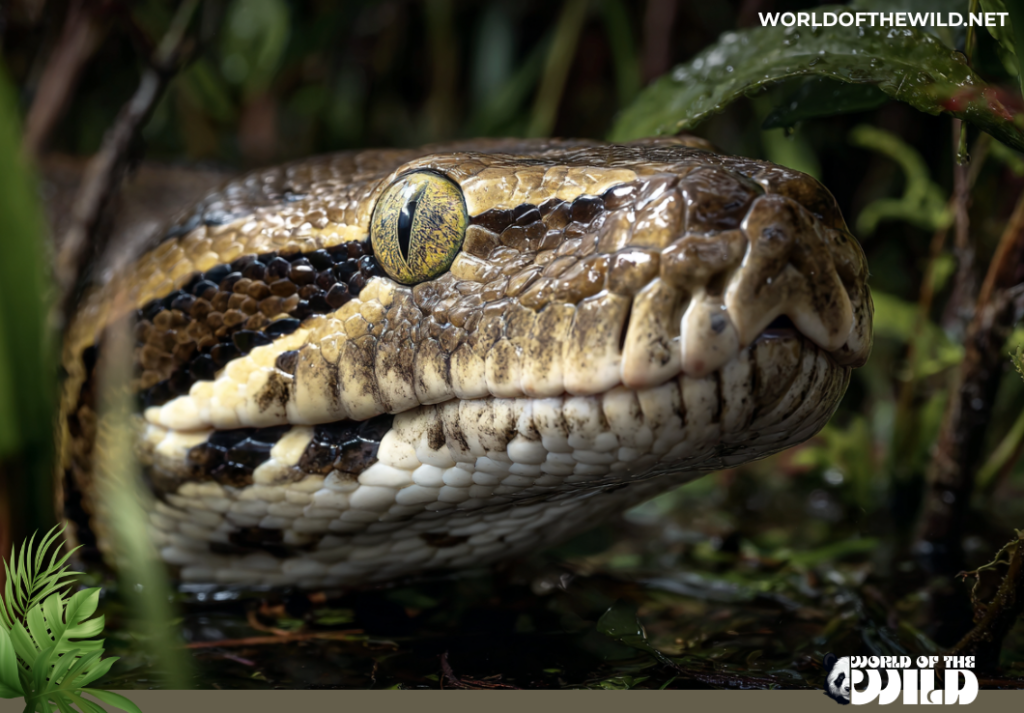
- Their heat-sensing pit organs, located along the lips, allow them to detect the infrared radiation emitted by warm-blooded prey, essentially giving them a thermal imaging system.
- A female Burmese python is the rare example of a snake that actively incubates her eggs by shivering her muscles to generate body heat — a behavior almost unheard of among reptiles.
- In the Florida Everglades, studies have shown that Burmese python presence has been linked to staggering declines in native mammal populations — some species showing drops of up to 99% in certain survey areas.
- Burmese pythons can go without food for over a year by dramatically slowing their metabolism — a survival trick that makes them extraordinarily resilient in harsh conditions.
Species
The Burmese python sits within one of the most ancient and successful lineages in the reptile world. Its full taxonomic classification is as follows:
- Kingdom: Animalia
- Phylum: Chordata
- Class: Reptilia
- Order: Squamata
- Family: Pythonidae
- Genus: Python
- Species: Python bivittatus
Historically, the Burmese python was classified as a subspecies of the Indian python (Python molurus), known as Python molurus bivittatus. Genetic and morphological research eventually elevated it to full species status, recognizing its distinct characteristics and geographic range.
Within the species, two recognized subspecies exist. The nominate subspecies (Python bivittatus bivittatus) is the large, widespread form found across mainland Southeast Asia. The second, Python bivittatus progschai, is a dwarf island population native to the Indonesian island of Bali, which remains significantly smaller than its mainland relatives due to insular dwarfism — an evolutionary phenomenon in which island populations shrink over generations due to limited resources.
The Burmese python’s closest relatives within the Python genus include the Indian python (Python molurus), the reticulated python (Malayopython reticulatus) — which holds the record for the world’s longest snake — and the African rock python (Python sebae), another enormous constrictor found on a different continent but sharing many biological traits.
Appearance
The Burmese python is a snake built for power. Adults typically range from 8 to 19 feet in length, though exceptional individuals have been documented exceeding 20 feet. Females are considerably larger than males, a pattern known as sexual size dimorphism that is common among large constrictors. The heaviest individuals can tip the scales at 200 pounds or more, though most wild adults fall between 100 and 160 pounds.
The body is thick and muscular, with a girth that can approach that of a telephone pole in large adults. The skin is covered in smooth, overlapping scales arranged in a distinctive and beautiful pattern: a tan or golden-brown background overlaid with irregular dark brown blotches edged in black, creating a pattern that resembles a mosaic or puzzle piece design. The belly is generally pale white to yellowish. This coloration provides exceptional camouflage in the dappled light of tropical forests, leaf litter, and shallow waterways.
The head is large, wedge-shaped, and distinctly broader than the neck, with a prominent central stripe running from the snout through the eye and along the neck. The eyes are small relative to the head size, with vertically elliptical pupils that are well-adapted for low-light conditions. Along the upper and lower lips, rows of heat-sensing pit organs appear as small indentations — a defining feature of the Pythonidae family that sets them apart from most other snakes.
Near the base of the tail, both males and females possess pelvic spurs — the vestigial remnants of a once-functional hindlimb skeleton. In males, these spurs are notably larger and are actively used during courtship and mating.
Behavior
The Burmese python is fundamentally a solitary, ambush predator. It does not roam large territories in active pursuit of prey. Instead, it relies on patience, camouflage, and the element of surprise — often waiting motionless for hours or even days near game trails, water sources, or mammal burrows before striking with explosive speed.
Movement is largely crepuscular and nocturnal, with most activity occurring during the cooler hours of dusk, night, and dawn. During the heat of the day, these snakes seek shade in dense vegetation, hollow logs, or the burrows of other animals. Despite their size, they are capable of moving through thick underbrush with surprising silence.
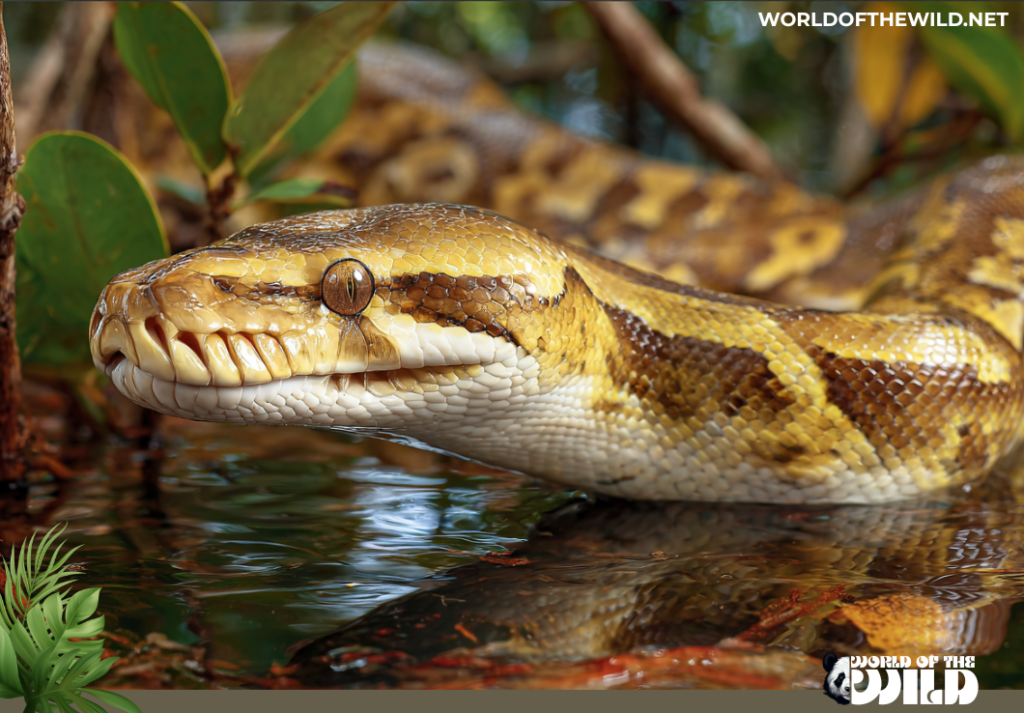
Burmese pythons are strong swimmers and are rarely far from water. They are frequently found in or near rivers, marshes, swamps, and flooded grasslands. Swimming is effortless — their body undulates in a lateral wave, and they hold their head just above the surface with the practiced ease of a creature that has been doing this for millions of years.
Communication is limited compared to social animals. Like most snakes, they use chemical signals through tongue-flicking to detect pheromones in the environment, which is especially important during the breeding season when males track females across considerable distances. Hissing serves as a warning display when threatened, and the snake may also adopt a defensive coiling posture, hiding its head beneath its body.
One of the most remarkable behavioral traits of the Burmese python is its constriction method. After striking and seizing prey with backward-curved teeth, the snake rapidly throws loops of its body around the animal. Contrary to popular belief, the python does not crush its prey — it applies sustained, precise pressure that prevents the prey’s cardiovascular system from functioning, leading to rapid loss of consciousness. The snake’s ability to sense the prey’s heartbeat allows it to maintain exactly the right pressure, releasing its grip the moment the heart stops.
Intelligence in snakes is difficult to assess by conventional standards, but Burmese pythons have demonstrated a capacity for learning and spatial memory in captivity, recognizing their caretakers and responding differently to novel versus familiar stimuli.
Evolution
The story of pythons is one of the oldest chapters in the book of modern reptiles. The family Pythonidae diverged from other snakes approximately 70 to 80 million years ago, during the Late Cretaceous period — a time when non-avian dinosaurs still walked the Earth. The ancestors of modern pythons are believed to have originated in the ancient southern supercontinent of Gondwana, before its breakup distributed proto-python lineages across what would become Africa, Asia, and Australia.
Snakes themselves evolved from limbed lizard ancestors, and the vestigial pelvic spurs found in pythons are living fossil evidence of this transition. Fossil pythons discovered in ancient sediment layers reveal that early members of the lineage were already large constrictors, suggesting that the ambush predator body plan was established early and proved remarkably successful.
Within the Python genus, the divergence of what would become the Burmese python likely occurred during the Miocene and Pliocene epochs, as shifting climates and the geological transformation of Southeast Asia shaped distinct regional populations. The separation of the Burmese python from its closest relative, the Indian python, reflects the deep evolutionary history of the Indian subcontinent’s collision with Asia and the resulting geographic barriers that allowed populations to diverge over millions of years.
The extraordinary metabolic flexibility of Burmese pythons — the ability to slow digestion, reduce organ size during fasting, and rapidly regenerate organ mass after feeding — is considered an evolutionary adaptation to feast-or-famine conditions in the wild, and has made them subjects of considerable interest in biomedical research into organ regeneration and metabolic disease.
Habitat
In their native range, Burmese pythons inhabit the tropical and subtropical regions of South and Southeast Asia. Their range spans a broad geographic corridor that includes Myanmar (Burma), Thailand, Laos, Cambodia, Vietnam, southern China, Nepal, Bangladesh, and several Indonesian islands including Java and Bali.
Within this range, they are strongly associated with lowland tropical forests, grasslands, marshes, swamps, river valleys, and the edges of agricultural land. They show a particular affinity for areas near permanent water sources, and are frequently found in mangrove forests — dense coastal habitats where land and sea blur into a tangle of roots, tidal channels, and rich biodiversity. The combination of water access, dense vegetative cover, and abundant prey makes these environments ideal.
Altitude is generally a limiting factor; Burmese pythons prefer lowland environments below 2,000 meters, though they have been recorded at higher elevations in some parts of their range.
In the United States, a feral population has established itself in South Florida, primarily within the Greater Everglades ecosystem. This subtropical wetland — with its warm temperatures, abundant water, and prey-rich environment — closely mirrors the pythons’ native habitat in key ways, enabling them to thrive and reproduce with alarming success. The Florida population is now estimated to number in the tens of thousands, perhaps more, and represents one of the most significant invasive species crises in American conservation history.
Diet
The Burmese python is a strict carnivore and an apex ambush predator within its ecosystem. Its diet is broad and opportunistic, shifting with the snake’s size and the prey available in a given habitat.
Juvenile pythons begin their lives preying on small lizards, frogs, and mice, using their size-appropriate hunting skills to target prey they can easily overpower. As they grow, so does the scale of their ambitions. Adult Burmese pythons are capable of consuming large mammals including deer, pigs, goats, and primates, as well as wading birds, waterfowl, and even small crocodilians. There are documented cases of pythons consuming adult white-tailed deer in the Everglades, prey that may weigh as much as the snake itself.
The hunt follows a deliberate, patient sequence. The snake locates prey using a combination of vision, chemosensory tongue-flicking, and heat detection via pit organs. Once within range, it strikes with sudden speed, anchoring the prey with dozens of recurved teeth while immediately beginning the process of constriction. After the prey is subdued, the python positions itself to swallow head-first, unhinging its remarkably flexible jaw to accommodate animals far wider than its own skull.
Following a large meal, a Burmese python may not need to eat again for weeks or even months. The digestive process is extraordinary — the snake’s stomach acid and enzymes can dissolve bone, and the entire metabolic machinery ramps up dramatically after a meal before returning to near-dormancy during fasting periods.
Predators and Threats
In their native range, adult Burmese pythons have few natural predators owing to their size and power. Large mugger crocodiles (Crocodylus palustris) and saltwater crocodiles (Crocodylus porosus) are among the few animals capable of challenging a large python. King cobras (Ophiophagus hannah) — the world’s longest venomous snake — are known to prey on pythons, particularly juveniles and younger adults. Large birds of prey such as eagles may take juvenile or small snakes when the opportunity arises.
Humans represent by far the most significant threat to Burmese pythons in their native range. The species faces several compounding human-caused pressures:
Habitat destruction is the foremost threat. Rampant deforestation, the conversion of wetlands to agriculture, and rapid urban development across Southeast Asia have dramatically reduced the quality and extent of viable python habitat.
Commercial exploitation has long taken a significant toll. Burmese pythons are heavily targeted for the international leather trade — their distinctive skin is used for high-end fashion accessories including belts, handbags, and shoes. They are also collected for the exotic pet trade, sold in markets across Asia and exported globally, and consumed as food in parts of their native range.
Traditional medicine creates additional pressure, as python parts — fat, blood, and organs — are used in various traditional remedies across parts of Asia.
In Florida, ironically, the Burmese python faces active eradication efforts by humans — annual hunting programs, trained detection dogs, and even radio-tagged “Judas snakes” used to locate breeding aggregations. These efforts, while valuable for conservation of native species, highlight the complex dual nature of this animal’s relationship with humanity.
Reproduction and Life Cycle
Burmese pythons reach sexual maturity at 2 to 3 years of age, though females generally do not begin reproducing successfully until they are large enough — typically around 4 to 5 years old. Mating season in the wild occurs during the cooler, drier months, roughly from late November through early spring, corresponding to a period of reduced activity in many parts of their range.
During this time, females release pheromones that attract males from considerable distances. When multiple males locate the same female, courtship involves ritualized combat — males intertwine their bodies and attempt to press their rival to the ground, with the victor earning mating rights. The male uses his pelvic spurs to stimulate the female during courtship, a behavior rooted in their ancient limbed ancestry.
Females are oviparous, meaning they lay eggs rather than giving birth to live young. A clutch typically ranges from 12 to 36 eggs, though exceptionally large females can produce clutches of over 100 eggs in a single season. After laying, the female coils tightly around the clutch in a remarkable display of maternal behavior rare among reptiles. By rhythmically contracting and relaxing her muscles — a process called shivering thermogenesis — she is able to raise the temperature of the nest by several degrees above ambient temperature, actively incubating the eggs for the roughly 60 to 90 days until they hatch.
Once the eggs hatch, the female’s parental involvement ends. Hatchlings emerge fully formed and independent, measuring roughly 18 to 24 inches in length and immediately capable of hunting. They receive no further care and must fend for themselves from their very first day.
With adequate food and appropriate conditions, Burmese pythons in captivity have lived for 20 to 30 years, with some individuals surpassing this. Wild lifespans are believed to be shorter due to environmental pressures, disease, and predation of juveniles, though precise data from wild populations is limited.
Population
The Burmese python is currently listed as Vulnerable on the IUCN Red List of Threatened Species. This designation reflects genuine and ongoing concern about the health of wild populations throughout the species’ native range in Asia.
Precise global population estimates are difficult to establish given the secretive nature of this snake and the challenges of surveying dense tropical habitats. However, there is broad consensus among herpetologists and wildlife biologists that native populations have declined significantly over recent decades, driven primarily by habitat loss and commercial harvesting. Some regional populations in heavily deforested or intensely harvested areas are considered locally depleted or functionally eliminated.
The picture is dramatically different in Florida. The invasive population in South Florida — believed to have originated from escaped or released pets following Hurricane Andrew in 1992 — has grown into one of the most robust and ecologically impactful invasive animal populations in the world. Estimates of the Florida population vary widely, from tens of thousands to potentially over 100,000 individuals, reflecting both the scale of the invasion and the extreme difficulty of accurately surveying this cryptic species in dense Everglades habitat.
The overall conservation trajectory for this species is one of concern in its homeland and crisis in its adopted range — a paradox that underscores how human actions, from habitat destruction to the exotic pet trade, can reshape the story of a species in profoundly unpredictable ways.
Conclusion
The Burmese python is many things at once: a marvel of evolutionary engineering, a cultural icon, an ecological disaster, and a species quietly sliding toward vulnerability in the lands where it has always belonged. It reminds us that nature does not operate in simple narratives. The same qualities that make an animal extraordinary — its adaptability, its resilience, its capacity to thrive — can become the ingredients of catastrophe when human decisions transport it beyond its ecological context.
In Southeast Asia, protecting the Burmese python means protecting the wetlands, forests, and river valleys that make up the living fabric of one of the world’s most biodiverse regions. It means challenging the illegal wildlife trade and rethinking land use in places where ancient ecosystems are being converted to monocultures at staggering speed.
In Florida, it means confronting the long and costly consequences of the exotic pet trade — a lesson written not in ink but in the disappearance of raccoons, rabbits, foxes, and wading birds from landscapes that once teemed with them.
Whether you see the Burmese python as a wonder or a warning, it demands our attention. And perhaps that, more than anything, is what makes it one of the most significant animals of our time.
Quick Reference
| Scientific Name | Python bivittatus |
| Diet Type | Carnivore (ambush predator) |
| Size | 96–228 inches (8–19 feet); exceptional individuals exceed 240 inches (20 feet) |
| Weight | 70–200+ pounds |
| Region Found | Native: Myanmar, Thailand, Vietnam, Laos, Cambodia, southern China, Bangladesh, Nepal, Indonesia. Invasive: South Florida, USA |