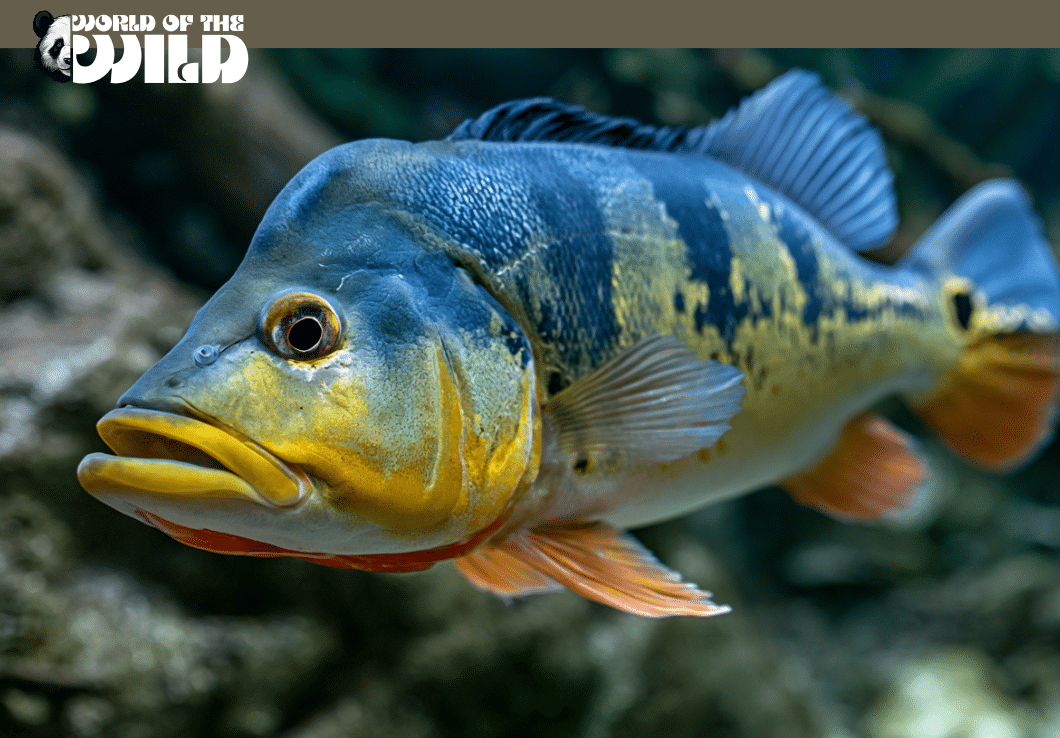

Imagine casting your line into the glassy waters of an Amazon tributary, the air thick with the calls of unseen birds and the hum of the jungle pressing in from all sides. Then — explosion. The water erupts in a violent, technicolor burst as something powerful and impossibly beautiful launches itself skyward, shaking its head with furious intent. That is your first encounter with the Peacock Bass, and it is one you will never forget.
The Peacock Bass is not just a fish — it is an experience. Revered by sport fishers as one of the most thrilling freshwater game fish on the planet, celebrated by biologists for its ecological complexity, and admired by anyone fortunate enough to witness its dazzling coloration up close, this species occupies a singular place in the freshwater world. Native to the rivers and lakes of South America’s Amazon basin, the Peacock Bass combines raw predatory power with breathtaking beauty in a way that few creatures — aquatic or otherwise — can match. Whether you are an angler chasing the catch of a lifetime, a naturalist fascinated by evolutionary biology, or simply a lover of wild things, the Peacock Bass deserves your full attention.
Facts
- The Peacock Bass is not actually a bass at all. Despite its common name, it belongs to the family Cichlidae, making it a cichlid — a group it shares with tilapia, oscars, and hundreds of other tropical freshwater fish.
- The iconic “eye spot” on its tail — the ocellus — is believed to confuse predators by mimicking an eye, potentially misdirecting attacks away from the fish’s vulnerable head.
- Peacock Bass are ambush predators of extraordinary speed. Studies have shown they can accelerate to strike speed in milliseconds, generating one of the most explosive attacks in freshwater fishing.
- In South Florida, introduced Peacock Bass populations have dramatically altered local ecosystems, reducing native fish diversity in some canals by as much as 75% following their introduction in the 1980s.
- Males of some species display color so intense — electric greens, vivid golds, burning oranges — that they are frequently compared to tropical birds, which is precisely where their common name originates.
- Peacock Bass are highly territorial and will aggressively defend nesting sites against fish many times their own size — including other Peacock Bass.
- Unlike many freshwater fish, Peacock Bass are dedicated parents, with both males and females actively guarding eggs and fry for weeks after hatching.
Species
The Peacock Bass belongs to the following taxonomic classification:
- Kingdom: Animalia
- Phylum: Chordata
- Class: Actinopterygii
- Order: Cichliformes
- Family: Cichlidae
- Genus: Cichla
- Species: Multiple (see below)
The genus Cichla is considerably more diverse than scientists once believed. For decades, only a handful of species were recognized, but landmark taxonomic revisions — most notably the work of Kullander and Ferreira in 2006 — expanded the recognized species count dramatically.
Today, approximately 15 to 16 valid species are recognized within the genus Cichla, with ongoing molecular and morphological research continuing to refine that number. Among the most notable species are:
- Cichla ocellaris — The Butterfly Peacock Bass, perhaps the most widely recognized species and the one most commonly associated with the common name “Peacock Bass.” It features the classic three vertical bars and a prominent ocellus. This is also the species introduced to South Florida.
- Cichla temensis — The Speckled Peacock Bass or Tucunaré Açu, considered the largest and most prized of all Peacock Bass by anglers. It is the dominant game fish of the upper Rio Negro and surrounding blackwater river systems.
- Cichla monoculus — Known as the Monoculus Peacock Bass, this species is widespread across much of Amazonia and is often confused with C. ocellaris due to overlapping ranges and similar markings.
- Cichla kelberi — A smaller species found primarily in central Brazil, frequently stocked in reservoirs and popular in Brazilian sport fishing.
- Cichla piquiti — Endemic to the Araguaia and Tocantins river basins, this species is notable for its striking blue-green coloration.
- Cichla melaniae — Found in the Xingu River basin, this species has adapted to the unique, fast-flowing waters of that region.
The diversity within Cichla reflects millions of years of evolution shaped by the extraordinary geographic and hydrological complexity of the Amazon and Orinoco river systems.
Appearance
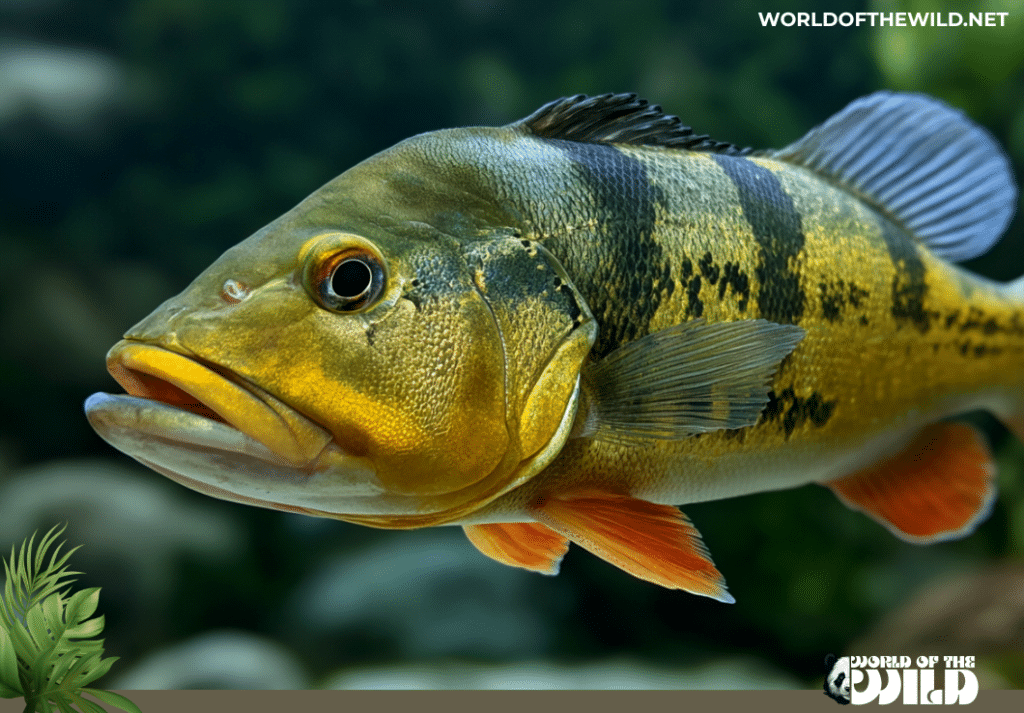
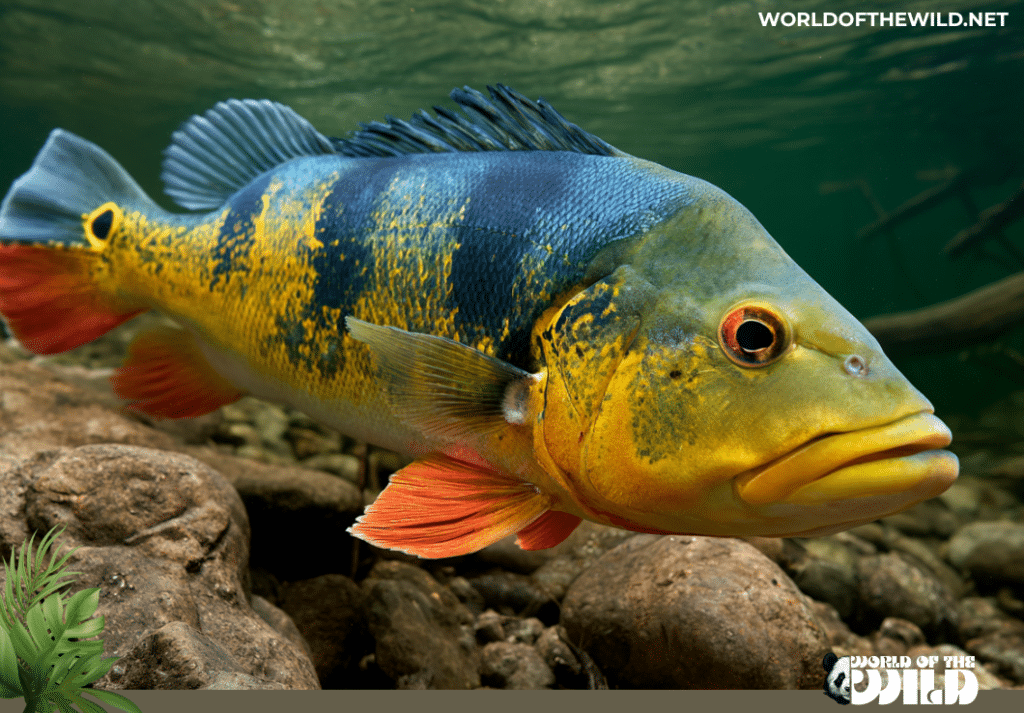
The Peacock Bass is, by any measure, a spectacular animal. Its body is powerfully built — laterally compressed, deep-chested, and streamlined for explosive short-distance bursts of speed. The overall profile is unmistakably that of a predator: a large, slightly upturned mouth built for engulfing prey, a strong caudal fin shaped for rapid acceleration, and a dorsal fin divided into a spiny forward section and a softer, more rounded rear section.
Size and Weight: Size varies considerably by species. The most commonly encountered species, Cichla ocellaris, typically reaches lengths of 12 to 20 inches and weights of 2 to 6 pounds in the wild. The true giant of the genus, Cichla temensis, regularly exceeds 24 to 30 inches in length and can weigh 10 to 15 pounds, with exceptional individuals reaching 27 pounds — the current all-tackle world record. Lengths of up to 30 inches (2.5 feet) are achievable in optimal conditions.
Coloration and Markings: Coloration is what truly sets the Peacock Bass apart. The base body color ranges from golden-yellow to deep olive-green, overlaid with vivid lateral markings that differ by species. Most species display three dark, irregular vertical bars or blotches along their sides — the hallmark of the genus. The belly is typically bright yellow or orange, intensifying dramatically during the breeding season in males.
The most distinctive feature of virtually all Cichla species is the ocellus — a large, circular, eye-like spot ringed in gold on the upper base of the tail fin. This marking is the direct inspiration for the “peacock” name, echoing the eye-spots on a peacock’s tail feathers.
During spawning, male Peacock Bass undergo a remarkable transformation, with colors deepening to almost surreal intensity. A pronounced nuchal hump — a fat-filled dome that develops on the forehead — is also a defining feature of breeding males, particularly in Cichla temensis, and signals reproductive fitness.
Behavior
The Peacock Bass is fundamentally a creature of aggression, intelligence, and precision. It is a solitary apex predator for much of its life, occupying defined territories within lakes, river margins, and flooded forests that it defends vigorously.
Hunting Strategy: The Peacock Bass is primarily a visual, ambush predator that relies on stealth, speed, and remarkable eyesight. It typically holds position near submerged structure — fallen trees, rocky outcrops, weed beds, or undercut banks — and launches explosive attacks on prey passing within range. Unlike many predatory fish that pursue prey over long distances, the Peacock Bass has evolved for the devastating short sprint, capable of accelerating from a standstill to full strike speed in a fraction of a second.
Territorial and Social Behavior: Outside of the breeding season, Peacock Bass are largely solitary and highly territorial. They will aggressively chase, bluff, and attack other fish — including much larger ones — that encroach on their home range. During the breeding season, however, they form monogamous pairs that cooperate closely in nest guarding and fry protection.
Intelligence and Adaptability: Anglers who target Peacock Bass consistently remark on what appears to be a high degree of behavioral intelligence. Fish in heavily pressured waters become remarkably wary of lures, learning to identify artificial baits with impressive speed. In South Florida’s canal system, introduced populations have adapted to feeding on non-native prey fish within just a few generations, demonstrating significant behavioral flexibility.
Communication: Like many cichlids, Peacock Bass likely communicate through body language, color changes, and potentially low-frequency vibrations produced by their swim bladder. Aggressive displays involve flared gill covers, lateral body presentations, and intensified coloration — vivid visual signals in the clear-to-tannin-stained waters they inhabit.
Evolution
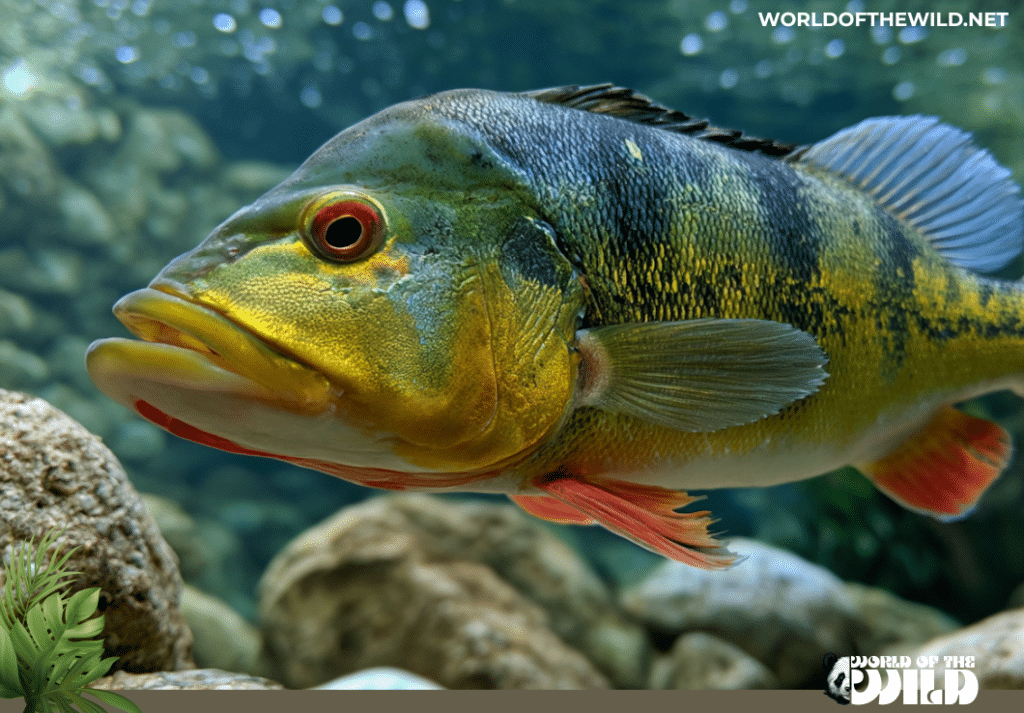
The cichlid family (Cichlidae) to which the Peacock Bass belongs represents one of the most extraordinary examples of adaptive radiation in the vertebrate world. Cichlids are estimated to have originated approximately 100 to 130 million years ago, during the Cretaceous period, when the supercontinent Gondwana was still fragmenting. Their subsequent diversification — producing more than 1,700 recognized species today — rivals that of any other vertebrate family.
The genus Cichla itself is considered part of the “Heroini” tribe of Neotropical cichlids, a lineage that colonized South America as the continent drifted into geographic isolation. Molecular phylogenetic analyses suggest that Cichla diverged from its closest cichlid relatives somewhere between 15 and 30 million years ago, during the Miocene epoch — a period of profound geological and climatic transformation across South America.
The extraordinary diversity seen within Cichla today is believed to be a product of vicariant speciation — the process by which populations become geographically isolated by shifting river courses, rising and falling water levels, and the dynamic rearrangement of drainage basins that has characterized Amazonia over millions of years. The Amazon River system is, in effect, an evolutionary engine of staggering power, and the Peacock Bass is one of its most impressive products.
The nuchal hump seen in breeding males — and retained year-round in some populations — is thought to be a sexually selected trait that evolved under the pressure of mate choice, signaling both health and genetic quality in a visually oriented species.
Habitat
The Peacock Bass is fundamentally a creature of the tropical freshwaters of South America, with its range centered on the Amazon and Orinoco river basins — two of the largest and most biodiverse river systems on Earth.
Geographic Range: The natural range of Cichla species spans much of northern and central South America, including Brazil, Venezuela, Colombia, Peru, Guyana, Suriname, French Guiana, and Bolivia. Different species are adapted to different sub-basins within this vast region. Cichla temensis, for example, is largely restricted to blackwater river systems like the Rio Negro and upper Orinoco, while Cichla ocellaris has a broader distribution across both clearwater and whitewater habitats.
Beyond their native range, Peacock Bass have been introduced — both deliberately and accidentally — to South Florida (USA), Puerto Rico, Hawaii, Panama, Cuba, Singapore, Malaysia, Japan, and several other tropical and subtropical regions, where their voracious predatory habits have made them both beloved by anglers and feared by conservationists.
Habitat Characteristics: Within their range, Peacock Bass favor warm, shallow, well-oxygenated waters with abundant structure. They are particularly associated with:
- Flooded forests (várzea and igapó): Seasonally inundated forest margins that provide extraordinary structural complexity and shelter for prey fish.
- River margins and backwaters: Areas of slower current with submerged roots, logs, and vegetation.
- Tropical lakes and reservoirs: Impoundments throughout Brazil support thriving populations, particularly of reservoir-stocked species like C. kelberi.
- Clear and blackwater rivers: Many species, especially C. temensis, are highly associated with the tea-colored, acidic blackwater rivers of the Guiana Shield.
Water temperatures in the range of 75°F to 86°F (24°C to 30°C) are optimal. The Peacock Bass is intolerant of cold water and cannot survive temperatures below approximately 60°F (15.5°C) for extended periods — a fact that naturally limits its invasive spread in introduced regions.
Diet
The Peacock Bass is an unambiguous carnivore and one of the most effective piscivores (fish-eating predators) in the freshwater world. Its diet is dominated overwhelmingly by fish, supplemented opportunistically by other animal prey.
Primary Food Sources:
- Small and medium-sized fish constitute the vast majority of the diet at all life stages beyond the juvenile phase. In Amazonian waters, this includes tetras, characins, juvenile cichlids, silversides, and dozens of other species. In South Florida, introduced populations feed heavily on introduced prey species such as gizzard shad and various exotic cichlids.
- Crustaceans, particularly shrimp and small crabs, are taken opportunistically, especially in certain habitat types.
- Insects and aquatic invertebrates are consumed by juveniles before they transition to a primarily piscivorous diet.
- Frogs, small lizards, and even small birds have been documented as rare prey items for large adults, reflecting the opportunistic and aggressive nature of the species.
Hunting Method: The Peacock Bass is a classic lurk-and-lunge predator. It stations itself near cover, aligns its body toward potential prey, and erupts in a short, devastating burst of speed, engulfing prey in its cavernous mouth. Its upturned mouth is well-adapted for targeting prey near the water’s surface, and surface strikes — creating explosive, highly visible eruptions of spray — are common and are among the most dramatic sights in freshwater fishing.
Peacock Bass are also known to actively herd prey fish into confined areas — against shorelines, into shallow bays, or beneath overhanging vegetation — before launching coordinated attacks. This behavior, particularly observed in younger fish that sometimes move in small, loose groups, reflects a degree of cooperative or at least parallel predatory strategy.
Predators and Threats
Natural Predators: Adult Peacock Bass, particularly large individuals, occupy the apex predator position in many of the freshwater systems they inhabit and have relatively few natural predators. However, they are not entirely without enemies:
- Large river dolphins (Inia geoffrensis, the boto or pink river dolphin) are capable of preying on mid-sized Peacock Bass in Amazonian river systems.
- Giant otters (Pteronura brasiliensis) are known to prey on cichlids, including Peacock Bass, within their shared range.
- Large wading birds — herons, storks, and kingfishers — prey on juveniles and smaller individuals.
- Caimans will opportunistically take any fish they can catch, including Peacock Bass.
- Larger, cannibalistic Peacock Bass represent a significant threat to juveniles, even when guarded by parents.
Human-Caused Threats: The Peacock Bass faces a range of anthropogenic pressures across its range:
- Habitat destruction is the most pervasive and serious threat. Deforestation across the Amazon basin — driven by agriculture, cattle ranching, soy production, and logging — degrades river systems through sedimentation, increased water temperatures, altered hydrology, and the loss of flooded forest habitat that is critical to the species’ reproductive and feeding ecology.
- Dam construction has significantly altered river flow regimes across South America, inundating upstream habitats while dewatering others, and blocking migratory movements of prey species.
- Overfishing is a concern in accessible areas, particularly around major urban centers and popular sport fishing destinations, where unregulated catch pressure can reduce local populations.
- Climate change poses a growing long-term threat, with altered rainfall patterns, increased water temperatures, and more severe drought events all capable of disrupting the seasonal flood pulses that Peacock Bass depend on for reproduction and feeding.
- Pollution, particularly from mercury used in illegal gold mining operations (garimpagem) that are widespread in Amazonia, accumulates through the food chain and has been detected in Peacock Bass tissue in heavily mined areas.
Reproduction and Life Cycle
The reproductive biology of the Peacock Bass is among the most elaborate and behaviorally rich of any freshwater fish, reflecting the advanced parental care strategies characteristic of the cichlid family as a whole.
Spawning Season and Triggers: Breeding is closely tied to seasonal hydrology. In Amazonian systems, Peacock Bass typically spawn during the falling water season — as floodwaters recede and water levels drop — which concentrates fish and prey in lakes and river channels, providing ideal conditions for raising fry. Water temperature and photoperiod likely also serve as spawning cues.
Courtship and Nest Preparation: Breeding pairs form monogamous bonds and select a nest site together. Males become intensely colored during courtship, with deepened body hues, a more pronounced nuchal hump, and increased aggression toward rival males. The pair typically selects a hard substrate for spawning — a flat rock, a submerged log, a sandy clearing, or even a concrete surface in reservoir settings — which they clean meticulously before egg deposition.
Egg Laying and Incubation: Females deposit eggs directly onto the cleaned substrate in tightly packed adhesive masses. Clutch sizes are impressive — typically ranging from 3,000 to over 10,000 eggs depending on the size and species of the female. Both parents actively guard the nest, fanning the eggs with their fins to oxygenate them and chasing away any intruder — regardless of size — with remarkable tenacity. Eggs typically hatch within 48 to 72 hours under tropical temperatures.
Parental Care and Juvenile Development: After hatching, the larvae (wrigglers) are often moved to shallow depressions or kept in tight schools directly supervised by both parents. The fry school is guarded for 2 to 4 weeks post-hatching, with the parents herding the cloud of young fish through shallow water and launching aggressive defensive responses to any perceived threat. Juvenile Peacock Bass begin feeding on tiny invertebrates and gradually transition to small fish as they grow.
Growth Rate and Lifespan: Peacock Bass are fast-growing by freshwater fish standards. Under good conditions, Cichla temensis can reach 10 to 12 inches within the first year. Sexual maturity is typically reached at 1 to 2 years of age. Lifespan in the wild is estimated at 6 to 10 years for most species, though some individuals in protected or low-fishing-pressure environments may live somewhat longer.
Population
IUCN Conservation Status: The conservation status of Cichla species varies. Most species, including Cichla ocellaris and Cichla temensis, are currently listed as Least Concern by the IUCN Red List, reflecting their wide distribution across the relatively intact Amazon basin. However, several species with more restricted ranges — particularly those endemic to specific river drainages — face greater vulnerability.
Global Population Estimate: No precise global population estimate exists for Peacock Bass as a group, given the difficulty of surveying fish populations across millions of square kilometers of remote tropical waterways. However, across the broad expanse of the Amazon and Orinoco basins — which together encompass some of the largest remaining intact tropical river ecosystems on Earth — Peacock Bass populations are believed to be large and, in many areas, stable.
Population Trends and Concerns: While broad-scale populations remain relatively healthy, localized declines are documented in areas subject to intense fishing pressure, significant habitat degradation, or the hydrological disruption caused by large dam projects. The ongoing and accelerating deforestation of the Amazon — which has lost more than 20% of its original forest cover and faces continued pressure — represents the most significant long-term threat to population stability.
In contrast to their native range, introduced populations in South Florida have flourished dramatically. The Florida Peacock Bass population, descended from 20,000 Cichla ocellaris introduced by the Florida Fish and Wildlife Conservation Commission between 1984 and 1987, now numbers in the hundreds of thousands and has become a self-sustaining fishery — though at significant ecological cost to native fish communities.
Conclusion
The Peacock Bass is, in every sense of the word, extraordinary. It is a fish that stops you in your tracks — whether you encounter it as a shimmering blur exploding from beneath a lily pad on a Florida canal, a trophy photograph from the legendary blackwater rivers of the Amazon, or a jewel-bright display in a natural history museum. It is a creature that has mastered its environment so completely that it reshapes every ecosystem it enters, a parent of unexpected devotion, a predator of jaw-dropping efficiency, and a product of one of the most remarkable evolutionary stories on the planet.
But the world in which the Peacock Bass evolved and thrives — the vast, ancient, irreplaceable Amazon basin — is under pressure unlike anything it has faced in its long geological history. Chainsaws, cattle, gold dredges, and rising waters are rewriting the landscape at a speed that evolution cannot answer. The Peacock Bass may be classified as Least Concern today, but the habitats that sustain it are anything but secure.
Supporting organizations that work to protect Amazonian river systems, making informed choices about products that drive deforestation, and advocating for responsible, science-based fisheries management are not abstract, distant gestures — they are the difference between a future where this spectacular animal continues to erupt from tropical waters in a blaze of gold and green, and one where it exists only in photographs. The Peacock Bass has earned its place at the top of the freshwater world. It is up to us to make sure that world survives.
Quick Reference
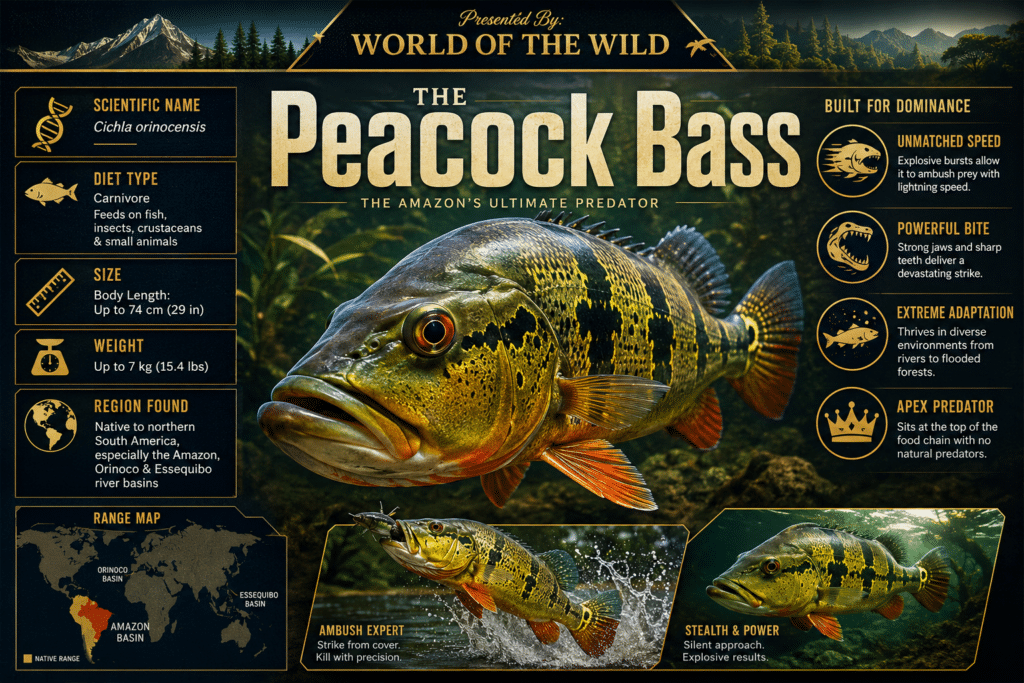
| Scientific Name | Cichla spp. (e.g., Cichla ocellaris, Cichla temensis) |
| Diet Type | Carnivore (primarily piscivore) |
| Size | 12–30 inches (1–2.5 feet), depending on species |
| Weight | 2–27 lbs (typical range 2–15 lbs; record: ~27 lbs) |
| Region Found | Amazon & Orinoco basins, South America; introduced populations in South Florida (USA), Puerto Rico, Hawaii, SE Asia, and other tropical regions |