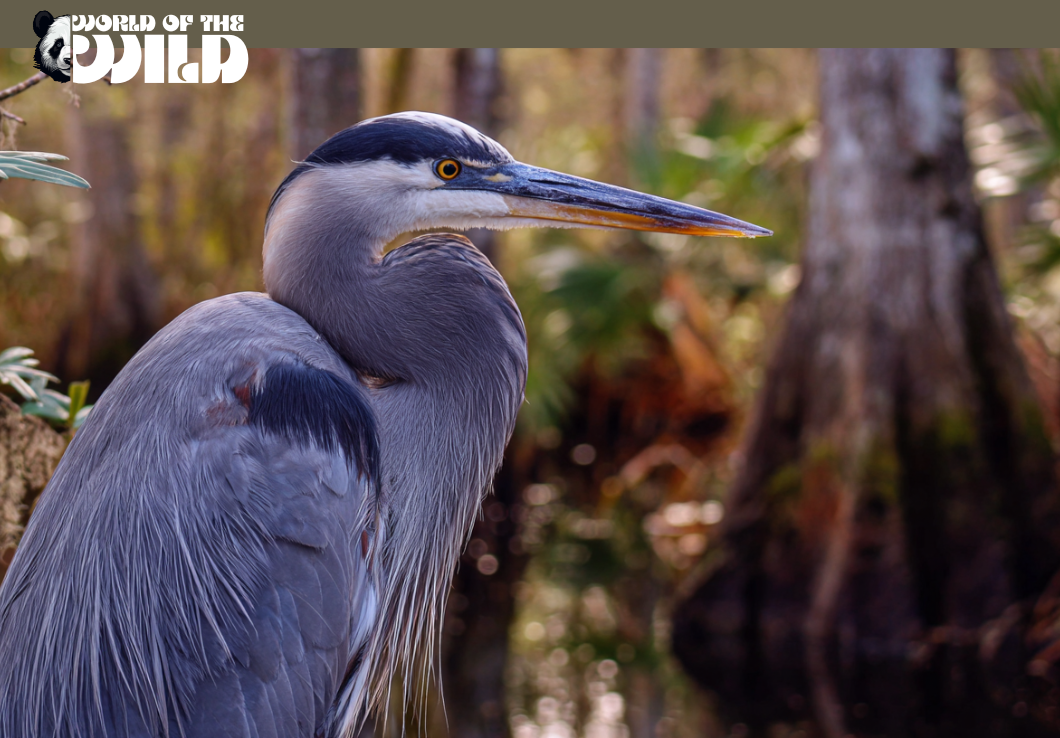

Standing motionless at the water’s edge like a statue carved from twilight, the great blue heron embodies patience personified. This majestic wading bird, with its prehistoric silhouette and lightning-fast reflexes, commands attention wherever it appears. Whether perched regally on a fallen log, stalking through shallow marshes with deliberate steps, or gliding overhead with slow, powerful wingbeats, the great blue heron is one of North America’s most iconic wetland residents. The great blue heron is fascinating not merely for its striking appearance, but for its remarkable adaptations that have allowed it to thrive for millions of years. This living connection to the age of dinosaurs has mastered the art of survival across an enormous range of habitats, from the frozen coastlines of Alaska to the tropical mangroves of South America. Its specialized hunting techniques, complex social behaviors, and ability to hunt both day and night make it one of nature’s most successful predators. The great blue heron reminds us that evolution creates masterpieces—creatures so perfectly adapted to their environment that they become an inseparable part of the landscape itself.
Facts
Here are some remarkable facts about the great blue heron that showcase just how extraordinary this bird truly is:
They can hunt in complete darkness. Great blue herons possess an exceptionally high percentage of rod-type photoreceptors in their eyes, granting them superior night vision that allows them to hunt successfully even in low-light conditions.
Despite their massive size, they weigh only 5-6 pounds. Thanks to hollow bones—a feature shared by all birds but particularly pronounced in herons—these four-foot-tall birds are surprisingly lightweight, making flight more efficient despite their impressive wingspan.
They have self-cleaning feathers. Great blue herons possess specialized “powder down” feathers on their chest that continually grow and fray into a fine powder. They comb this powder through their feathers with a fringed claw on their middle toe, using it like a washcloth to remove fish slime and oils from their plumage.
Their neck is a high-speed striking mechanism. Thanks to specially shaped vertebrae in their neck, great blue herons can strike at prey with incredible speed and precision, extending their neck from its characteristic S-curve to snag fish, frogs, or even small mammals in a fraction of a second.
They can swallow prey larger than their narrow neck. Despite having a seemingly slender throat, great blue herons can consume fish much wider than their neck appears, thanks to extremely elastic skin and powerful digestive capabilities.
They’re prehistoric survivors. Heron fossils date back approximately 60 million years to the Paleocene epoch, and great blue heron fossils specifically have been found dating back 1.8 million years—meaning these birds have witnessed the entire span of human evolution.
Their breeding colors change dramatically. During breeding season, the great blue heron undergoes a stunning transformation: the lores (bare area in front of the eyes) turn bright blue, the iris becomes reddish, the yellow bill takes on an orange hue, and the legs transform to pinkish-orange.
Sounds of the Blue Heron
Species
The great blue heron belongs to an ancient lineage of wading birds with a fascinating taxonomic history:
Kingdom: Animalia
Phylum: Chordata
Class: Aves
Order: Pelecaniformes
Family: Ardeidae (Herons, Egrets, and Bitterns)
Genus: Ardea
Species: Ardea herodias
The scientific name comes from Latin ardea and Ancient Greek erōdios, both meaning “heron.” The great blue heron was one of many species originally described by Carl Linnaeus in his groundbreaking 18th-century work, Systema Naturae.
Subspecies and Regional Variations
The great blue heron is divided into four to five recognized subspecies, each adapted to specific geographic regions:
Ardea herodias herodias – The nominate subspecies, ranging from southern Canada through much of the western continental United States to Central America. This is the most widespread form.
Ardea herodias fannini – The Pacific Coast subspecies, inhabiting areas from Washington to southeastern Alaska. These birds are notably darker in dorsal coloration, have longer wings, and sport shorter bills than the nominate subspecies.
Ardea herodias wardi – The southeastern subspecies found throughout the southeastern United States. These birds are markedly larger and paler than the nominate form.
Ardea herodias cognata – The Galapagos subspecies, endemic to the Galapagos Islands. This isolated population has adapted to the unique island ecosystem.
Ardea herodias occidentalis – Perhaps the most intriguing subspecies, found in southern Florida, the Florida Keys, and the Caribbean. This population includes the famous “great white heron,” an all-white color morph that has sparked considerable debate among ornithologists. Some researchers believe these white birds may represent a separate species entirely. Additionally, intermediate birds known as “Wurdemann’s herons” can be found where dark and white forms overlap—these remarkable birds possess the body of a typical great blue heron but the white head and neck of the great white heron.
The great blue heron forms a superspecies with its Old World counterpart, the grey heron (Ardea cinerea), as well as the cocoi heron (Ardea cocoi) of South America. These closely related species occupy similar ecological niches in their respective continents.

Appearance
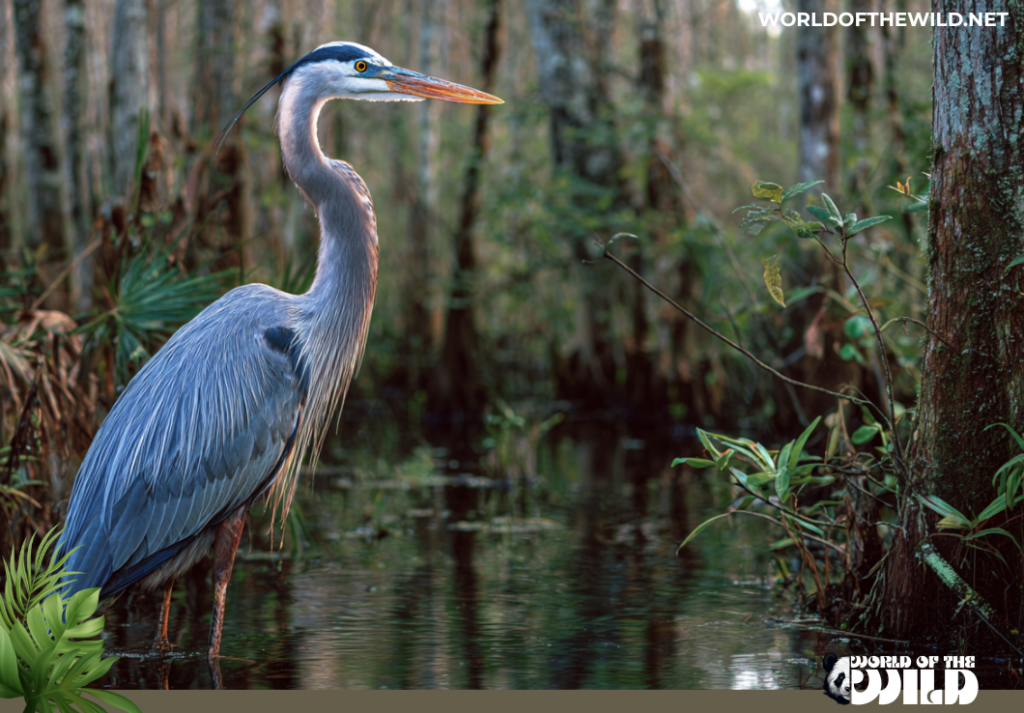
The great blue heron is an unmistakable bird, commanding attention with its imposing size and elegant proportions. As the largest heron native to North America, it ranks as one of the most sizeable wading birds on the continent—surpassed globally only by the goliath heron and white-bellied heron.
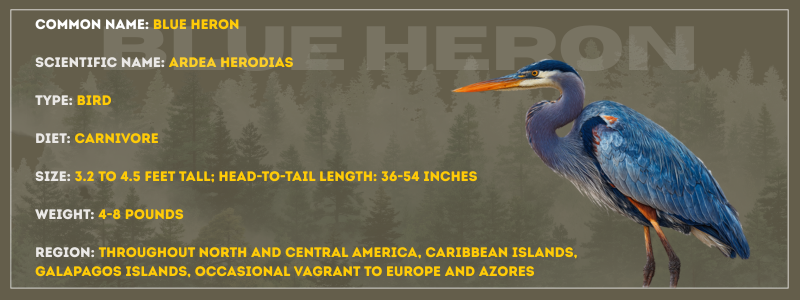
Size and Build: Adult great blue herons stand between 3.2 to 4.5 feet tall (91-137 cm), with a head-to-tail length reaching up to 54 inches. Their wingspan is truly impressive, spanning 5.5 to 6.5 feet (167-201 cm), allowing for graceful, effortless flight. Despite this commanding presence, they weigh a mere 4 to 8 pounds (1.8-3.6 kg), with males averaging slightly heavier than females.
Coloration: The great blue heron’s plumage is a study in subtle sophistication. The back, wings, and sides display a beautiful slate-gray coloration with a slight azure-blue tint—hence the “blue” in their common name. The flight feathers are particularly striking in their slaty-gray hue. The neck is rusty-gray adorned with elegant black and white streaking running down the front, creating a striking pattern. The head is predominantly white or very pale, contrasted by a distinctive black crown stripe that extends into dramatic black plumes reaching from just above the eye to the back of the head. These plumes become particularly pronounced during breeding season.
Distinctive Features: The bird’s long, dagger-like bill is typically dull yellowish but transforms to bright orange at the onset of breeding season. The long, powerful legs are gray, also turning orangey-pink during breeding displays. Red-brown thighs and paired red-brown and black stripes along the flanks add additional coloration. The lores—the bare patch of skin between the eye and bill—change color seasonally, shifting from yellowish to vivid green or blue during the breeding period, while the iris reddens.
Plumage Details: During breeding season, great blue herons develop ornamental plumes on the lower neck and lower back, giving them an especially regal appearance. These long, flowing feathers play an important role in courtship displays.
Juvenile Appearance: Young great blue herons are noticeably duller than adults, with darker overall coloration, a dull blackish-gray crown lacking the white center and prominent plumes of mature birds. Their flank pattern is only weakly defined, and the bill is dull gray-yellow rather than the vibrant orange of breeding adults. The iris in juveniles is yellow, becoming progressively more vivid as they mature.
Sexual Dimorphism: The species exhibits only minor differences between sexes. Males are slightly larger than females and possess slightly longer ornamental plumes, but these distinctions are subtle enough that even experienced observers may have difficulty distinguishing males from females in the field.
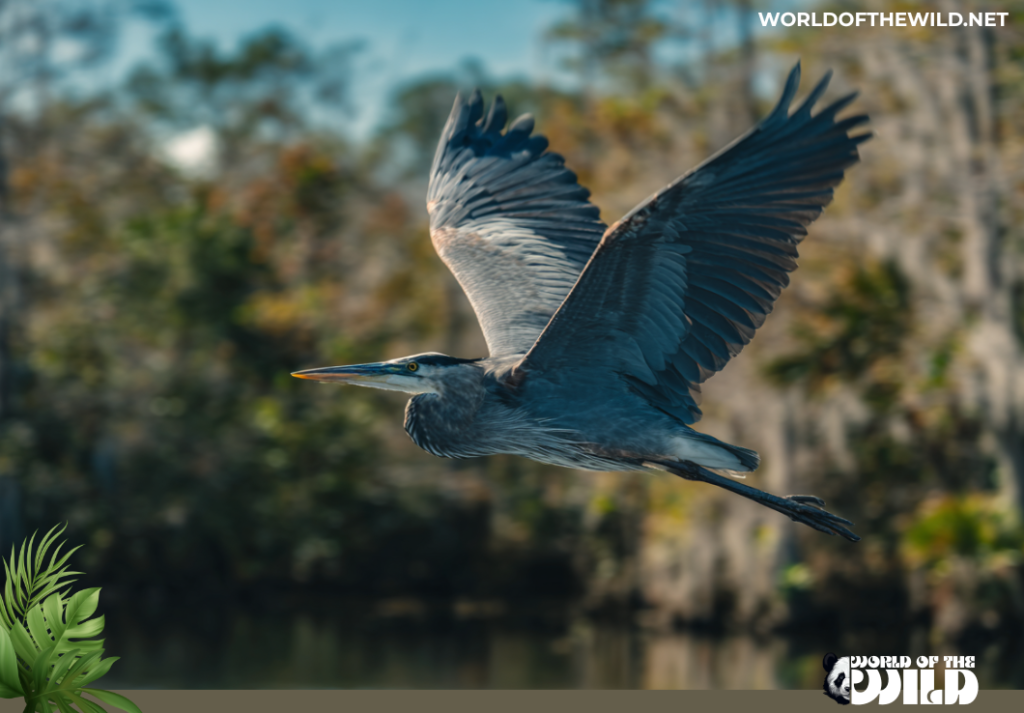
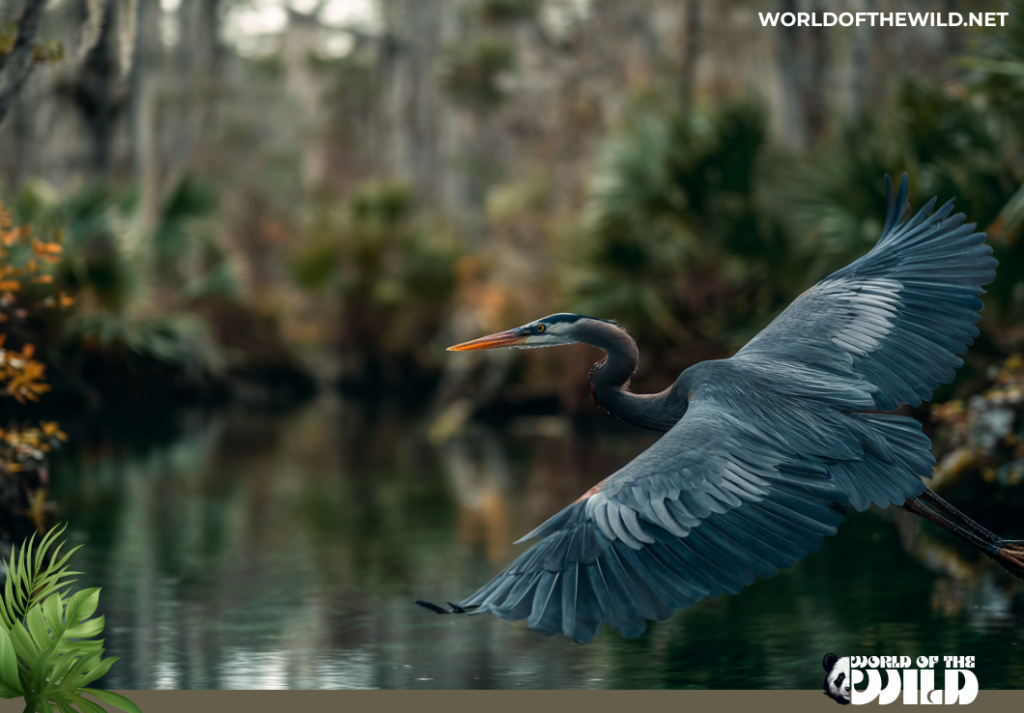
In Flight: When airborne, the great blue heron is instantly recognizable by its unique flying posture. Unlike cranes (with which they are often confused), herons fly with their necks curved back into a distinctive S-shape, their heads hunched onto their shoulders. Their long legs trail behind their bodies, dangling conspicuously as they prepare to land. The slow, deep wingbeats give them a graceful, almost prehistoric appearance as they cruise overhead.
Behavior
The great blue heron exhibits a fascinating array of behaviors that demonstrate both remarkable patience and explosive action, combined with complex social dynamics and sophisticated adaptations.
Hunting Strategy: The great blue heron is the embodiment of patience. This bird employs a “sit-and-wait” hunting strategy, standing motionless for extended periods—sometimes for hours—as it scans the water for prey. When wading, it moves with exaggerated slowness, taking long, deliberate steps through shallow water with minimal disturbance. Once prey is spotted, however, the heron transforms instantly into a lightning-fast predator. Using its specialized neck vertebrae, it extends its S-curved neck with incredible speed, striking with pinpoint accuracy to either grab prey in its mandibles or impale larger fish with its dagger-like bill. After capturing spiny fish, herons have been observed shaking their catch to break or relax the sharp spines before swallowing.
Day and Night Activity: Unlike many wading birds, great blue herons are crepuscular and can hunt effectively both day and night. They are most active during dawn and dusk when fish activity peaks, but their exceptional night vision allows them to continue foraging after sunset. Some individuals have even been observed hunting throughout the night near artificial lighting.
Territorial Behavior: Away from breeding colonies, great blue herons are fiercely territorial about their feeding grounds. When an intruder enters their territory, they perform dramatic threat displays: approaching with head thrown back, wings fully outstretched, and bill pointing skyward. This intimidating posture usually convinces other herons to find their own fishing spot. Interestingly, they may also direct this defensive behavior toward gulls and even curious humans who venture too close.
Social Structure: While typically solitary feeders, great blue herons are social nesters. They congregate in breeding colonies called “heronries” or “rookeries,” which can range from just a few pairs to impressive gatherings of 500 or more nesting pairs. These colonies are often situated in trees near water, though ground nesting also occurs on predator-free islands. Outside of breeding season, herons may gather in loose groups at night, with flocks of over 100 individuals roosting together for safety.
Communication: Great blue herons are relatively quiet birds, but they possess a repertoire of vocalizations. Their most common call is a harsh, guttural “fraunk” or “kraak,” often described as having an almost prehistoric quality. This call is typically heard when the bird is disturbed or during flight. Near the nest, they may emit softer greeting calls. During courtship, they engage in more elaborate vocalizations as part of their display repertoire.
Temperature Regulation: On hot days, great blue herons employ an interesting cooling mechanism. They droop their wings away from their body and open their beaks wide, then rapidly flutter their throat muscles in a behavior called “gular fluttering”—the avian equivalent of panting. The drooped wings increase airflow around the body, helping to dissipate excess heat.
Intelligence and Adaptability: Great blue herons demonstrate impressive problem-solving abilities and adaptability. They quickly learn to exploit new food sources, including fish hatcheries (sometimes to the consternation of fish farmers, though studies show they primarily consume diseased fish). In urban areas, some individuals have learned to wait near human habitation for scraps. They can switch seamlessly between aquatic and terrestrial hunting, stalking rodents in fields when fish are scarce.
Swimming Ability: While not commonly observed, great blue herons are capable swimmers and have been documented swimming in deep water with apparent comfort and grace—a surprising behavior for a wading bird.
Seasonal Migration: Northern populations are migratory, traveling south to warmer climates when waters freeze. However, some hardy individuals remain in northern areas year-round if they can find open water and alternate prey like mice and voles. Pacific Coast populations may be year-round residents, even as far north as southeastern Alaska. Southern populations typically stay in one area throughout the year.
Evolution
The great blue heron represents an ancient lineage of birds with a fossil record stretching back through the mists of deep time, offering us a glimpse into the evolutionary history of modern avian life.
Ancient Origins: All modern birds, including herons, are descendants of theropod dinosaurs—specifically a group called Paraves that lived during the Jurassic Period approximately 160 million years ago. The evolutionary split that eventually led to birds began when small, bipedal dinosaurs like Velociraptor started developing feathers. The earliest known bird, Archaeopteryx lithographica, lived about 155 million years ago and represented a transitional form, possessing both reptilian features (sharp teeth, long bony tail) and avian characteristics (feathered wings and tail).
The Heron Family Emerges: Herons as a distinct family (Ardeidae) first appear in the fossil record during the Paleocene to Eocene epochs, approximately 60 to 38 million years ago. This was a time when the earth’s climate was significantly warmer and extensive aquatic habitats covered much of the planet—perfect conditions for the evolution and radiation of wading birds. Despite this ancient lineage, heron fossils are exceptionally rare even by avian standards, with fewer than 40 identified fossil species known to science.
Development of Modern Forms: By the Miocene epoch (about 23 to 5 million years ago), birds closely resembling modern heron genera had evolved and diversified. Fossil evidence from this period includes representatives of contemporary genera such as Nycticorax (night herons), Ardea (great herons), Egretta (egrets), and Ardeola (pond herons). During the Miocene’s extensive aquatic habitats, herons radiated into the various ecological niches we see today: day and night herons, large and small species, and specialists for different aquatic environments.
Recent Evolutionary History: Great blue heron fossils specifically date back to the Pleistocene epoch, approximately 1.8 million years ago—the same period when the first human ancestors appeared. A particularly well-preserved specimen was recovered from a 14-million-year-old site in Nebraska, demonstrating that herons closely resembling modern great blue herons have existed for an extraordinarily long time.
Key Evolutionary Adaptations: Several crucial evolutionary innovations have made herons such successful predators:
- Specialized neck vertebrae that allow the characteristic S-curve and rapid strike mechanism
- Hollow bones throughout the skeleton, reducing weight for more efficient flight
- High rod-cell density in the retina for exceptional night vision
- Powder down feathers for maintaining waterproof plumage in aquatic environments
- Long legs and toes perfectly adapted for wading and weight distribution on soft substrates
- Dagger-like bills ideal for striking and capturing slippery prey
- Lack of crops and gizzards (unlike most birds), replaced by especially tough stomach lining and strong acids to digest whole prey
Convergent Evolution: Interestingly, great blue herons are often compared to pterosaurs—the flying reptiles that dominated the skies during the Mesozoic Era. While pterosaurs and herons are only distantly related (pterosaurs evolved about 80 million years before birds), they exhibit remarkable similarities in appearance due to convergent evolution. Both evolved large wingspans and streamlined bodies to meet similar environmental requirements for flight and hunting in aquatic environments.
Relationship to Modern Species: The great blue heron forms a closely related superspecies complex with the grey heron (Ardea cinerea) of Europe, Asia, and Africa, and the cocoi heron (Ardea cocoi) of South America. These three species likely shared a common ancestor and represent divergent evolution as populations became geographically isolated and adapted to their respective continents.
Habitat
The great blue heron is one of North America’s most widely distributed and adaptable wetland birds, occupying an impressive range of habitats across a vast geographic territory.
Geographic Range: The great blue heron’s range is truly continental in scope. During breeding season, these birds can be found throughout most of North America, from Alaska and northern Canada southward through the contiguous United States, into Mexico, Central America, the Caribbean islands, and extending to northern South America, including parts of Colombia and Venezuela. They even inhabit the remote Galapagos Islands, where an endemic subspecies has evolved. Occasionally, vagrant individuals have been recorded in the Azores and rarely in Europe.
Habitat Versatility: What makes the great blue heron particularly remarkable is its exceptional habitat flexibility. While most herons are restricted to specific wetland types, the great blue heron thrives in an astonishing variety of aquatic and semi-aquatic environments:
Freshwater Habitats: Rivers, streams, lakes, ponds, reservoirs, irrigation ditches, freshwater marshes and swamps, flooded meadows, and beaver ponds. They show a particular affinity for shallow waters where they can wade effectively. Interestingly, the recovery of beaver populations in eastern North America has significantly benefited great blue heron populations, as beaver dams create ideal patchworks of marshes and shallow water feeding areas.
Saltwater Habitats: Coastal bays and estuaries, tidal flats, mangrove swamps, salt marshes, rocky shorelines, kelp beds (along the Pacific Coast), and coral reef environments (in tropical areas). The “great white heron” form is found almost exclusively in shallow marine waters along the coast of southern Florida and throughout the Caribbean.
Terrestrial Habitats: Great blue herons regularly forage away from water in grasslands, agricultural fields, meadows, and even urban parks when hunting for rodents and other terrestrial prey. This ability to hunt on land gives them a significant survival advantage, especially during winter when water bodies freeze.
Nesting Habitat Requirements: Most breeding colonies are located within 2 to 4 miles of prime feeding areas. Heronries are typically established in isolated areas with minimal human disturbance: islands in lakes or rivers, secluded swamps, stands of tall trees near water’s edge, and sometimes on structures like duck blinds or specially constructed platforms. Trees near water are the preferred nesting substrate, though ground nesting occurs on predator-free islands. Nesting herons have been recorded in trees exceeding 100 feet in height, though 20-60 feet is more typical.
Climate Tolerance: The great blue heron demonstrates remarkable climate adaptability. They thrive in environments ranging from subtropical mangrove swamps in southern Florida to the temperate rainforests of the Pacific Northwest to the subarctic coastline of Alaska. Some individuals even survive harsh northern winters, remaining in areas where most water freezes, by switching to terrestrial prey and exploiting any remaining patches of open water.
Habitat Associations: Along the Pacific Coast, great blue herons have been observed perched atop floating kelp beds, patiently waiting for fish to swim past—a unique foraging strategy. In desert regions, they frequent desert rivers and irrigation canals. In agricultural areas, they may be found hunting in rice paddies and flooded crop fields.
Elevation Range: While primarily found at low elevations near sea level, great blue herons can also be found at moderate elevations, hunting along mountain streams and lakes, demonstrating their remarkable ecological flexibility.
Migration and Seasonal Habitat Use: Northern populations that migrate south often winter in coastal estuaries and marshes, utilizing habitats different from their breeding territories. Year-round residents in moderate climates may shift locally between different habitat types depending on prey availability and seasonal conditions.
Diet
The great blue heron is an opportunistic carnivore with one of the most varied diets of any heron species, eating virtually anything it can catch and swallow.
Primary Food Sources: While fish constitute the primary component of their diet, great blue herons are far from being exclusively fish-eaters. Their menu includes an impressive array of prey:
Fish: The foundation of their diet includes a wide variety of species: minnows, sunfish, bass, perch, catfish, salmon, herring, eels, and many others. They can consume fish up to half their own body weight and routinely catch prey that seems impossibly large for their slender necks. The specialized elastic skin of their throat allows them to swallow surprisingly bulky fish whole.
Amphibians: Frogs, toads, salamanders, and newts feature prominently, especially in freshwater marshes and wetlands.
Reptiles: Snakes (including water snakes and garter snakes), lizards, turtles, and even young alligators occasionally fall victim to these persistent hunters.
Crustaceans: Crabs, crayfish, shrimp, and other crustaceans provide protein-rich meals, particularly in coastal and estuarine environments.
Mammals: Small rodents form a significant portion of their diet, particularly during winter. Mice, voles, pocket gophers, shrews, moles, and young muskrats are all prey. They stalk these terrestrial prey items in fields and meadows with the same patience they employ when fishing.
Birds: Great blue herons are skilled at capturing other birds, including rails, ducklings, young terns and gulls, coots, grebes, and even small herons. They’ve been observed catching small birds in flight and raiding nesting colonies of colonial waterbirds.
Insects and Invertebrates: Dragonflies, grasshoppers, aquatic insects, and various invertebrates supplement their diet, especially during certain seasons.
Unusual Prey: These adaptable hunters have been recorded eating a remarkable variety of items, from Pacific lampreys to young birds of many species to aquatic invertebrates of all kinds.
Hunting Techniques: The great blue heron employs several sophisticated hunting methods:
Stand-and-Wait: The classic heron hunting technique involves standing perfectly still in shallow water, sometimes for hours, waiting for prey to swim within striking distance. Their patience is legendary.
Slow Wade: Alternatively, they walk very slowly through shallow water with measured, deliberate steps, minimizing disturbance while scanning for prey beneath the surface.
Bill Stab: For larger fish, herons use their sharp, pointed bill to impale prey with a rapid forward thrust of their specialized neck, a strike that can occur in a fraction of a second.
Grab: Smaller prey is simply grabbed in the powerful mandibles and manipulated for swallowing.
Prey Preparation: After capturing fish with sharp spines or scales, herons shake their catch vigorously to break or bend the spines and stun the prey before attempting to swallow it. They almost always swallow prey headfirst to allow fins and scales to fold flat against the body.
Terrestrial Hunting: When hunting on land, herons walk slowly through fields, using their keen eyesight to spot the movement of rodents in grass. They pounce with remarkable speed, using the same strike mechanism they employ for fishing.
Opportunistic Feeding: Great blue herons are not above scavenging and have been observed frequenting human habitation in some areas (particularly the Florida Keys and Galapagos Islands) for food scraps. They also congregate at fish hatcheries, though research indicates they primarily consume diseased or dying fish rather than healthy stock.
Feeding Schedule: While they can hunt throughout the day, great blue herons are most active during the crepuscular hours of dawn and dusk when fish activity peaks. Their exceptional night vision allows successful nocturnal hunting as well.
Daily Food Requirements: An adult great blue heron requires approximately 1-2 pounds of food per day to maintain its energy needs, though this varies based on season, temperature, and activity level.
Predators and Threats
Despite their impressive size and formidable hunting prowess, great blue herons face various natural predators and, increasingly, anthropogenic threats throughout their lives.
Natural Predators:
Avian Predators: Large birds of prey pose the most significant threat to adult great blue herons. Bald eagles, golden eagles, red-tailed hawks, and turkey vultures occasionally prey on adults and juveniles. However, these attacks are relatively uncommon given the heron’s size. Great horned owls may hunt herons at night, particularly during the nesting season when adults are preoccupied with chicks.
Mammalian Predators: Raccoons represent perhaps the most significant mammalian threat, particularly to eggs and chicks in nesting colonies. They are adept climbers and will raid nests for both eggs and helpless nestlings. Black bears, when they can access colonies, may also destroy nests and consume eggs and young. Coyotes, foxes, and bobcats occasionally take juvenile birds that have fallen from nests or young fledglings learning to fly.
Egg and Nestling Predators: The eggs and young chicks face numerous threats: American crows, common ravens, gulls, raccoons, opossums, snakes, and even other herons have been observed raiding nests. This predation risk is one reason great blue herons nest colonially—the collective vigilance of many pairs provides better protection than isolated nesting would offer.
Defense Mechanisms: Adult great blue herons are formidable defenders. Their sharp, dagger-like bills can inflict serious injury on would-be predators. When threatened at the nest, they employ aggressive displays, vocalizations, and strikes with their powerful beaks. Their colonial nesting strategy also provides safety in numbers, with multiple pairs alert to danger.
Human-Caused Threats:
Habitat Loss and Degradation: This represents the most serious long-term threat to great blue heron populations. Wetland drainage for agriculture and development, coastal development destroying estuarine habitats, clear-cutting of nest trees, and disturbance of breeding colonies all impact populations. In rapidly developing areas like the lower Fraser Valley in British Columbia, significant habitat destruction has resulted in the abandonment of numerous colonies.
Chemical Pollution: Water pollution poses both acute and chronic threats. Historical contaminants like DDT and PCBs, while reduced in many areas, still persist in some habitats and can accumulate in heron tissues through biomagnification. Newer industrial chemicals, particularly polybrominated diphenyl ethers (PBDEs), are increasing exponentially in heron tissues and may be approaching toxicologically significant levels. Mercury contamination in waterways, particularly in the southern Florida “great white heron” population, has been linked to population declines.
Human Disturbance: Breeding colonies are extremely sensitive to human presence. Disturbance during the nesting season can cause adults to temporarily abandon nests, leaving eggs and chicks vulnerable to predators and temperature extremes. Repeated disturbances may lead to complete colony abandonment. Activities like motorboating, logging, recreational activities near colonies, and increased traffic can all force herons to relocate.
Climate Change: Changing weather patterns affect prey availability, alter wetland habitats, shift migration patterns and timing, and may increase the frequency of extreme weather events that can destroy nests and colonies.
Fishing Gear Entanglement: Herons occasionally become entangled in fishing line or gill nets, leading to injury or death.
Vehicle Strikes: Herons flying low over roads, particularly near wetlands, are sometimes struck by vehicles.
Historical Threats: In the late 19th and early 20th centuries, great blue herons were extensively hunted for their plumes, which were fashionable decorations for women’s hats. The species declined significantly during this period. The Lacey Act (1900) and the Migratory Bird Treaty Act (1918) provided crucial protection that allowed populations to recover.
Disease: While not well-documented, herons can be affected by avian diseases, parasites, and may be vulnerable to certain fish-borne parasites accumulated through their diet.

Reproduction and Life Cycle
The great blue heron’s breeding biology is a fascinating combination of elaborate rituals, colonial cooperation, and devoted parental care that ensures the next generation’s survival.
Breeding Season: The timing of breeding varies considerably with latitude. In northern populations, breeding typically begins in late winter to early spring (February to April), while southern populations may begin earlier or breed twice in a single year. Some tropical populations may breed year-round.
Colonial Nesting: Great blue herons are colonial nesters, establishing “heronries” or “rookeries” that can range from just a handful of pairs to massive colonies containing 500 or more nests. These colonies are often mixed, with great blue herons nesting alongside other heron species, great egrets, and sometimes cormorants. The communal nesting provides enhanced predator detection and defense.
Mate Selection and Courtship: Great blue herons exhibit serial monogamy—they are faithful to a single partner during a breeding season but typically select a new mate the following year. Males arrive at the colony first and compete for prime nesting sites, typically claiming existing nests from previous years when available.
Courtship Displays: Male courtship displays are elaborate and theatrical:
- Stretching the neck vertically upward with the bill pointing skyward
- Flying in circles above the colony with the neck fully extended
- Stretching the neck forward with all head and neck feathers erected
- “Bill-snapping” or “bill-clappering”—rapidly snapping the bill shut multiple times
- Offering sticks to potential mates as symbolic nest gifts
When a female accepts a male’s overtures, the pair engages in greeting ceremonies that involve elaborate posturing, mutual preening, and further stick-presenting rituals.
Nest Construction: Nest building is a cooperative effort with distinct gender roles. Males gather most of the nesting material—sticks from the ground, nearby trees and shrubs, and sometimes “stolen” from unguarded or abandoned nests. The female does most of the actual construction, weaving the sticks into a platform structure with a shallow cup. She lines this cup with softer materials: pine needles, moss, reeds, dry grass, mangrove leaves, or small twigs.
The construction process can take anywhere from 3 days to 2 weeks for a new nest. Nests are reused and added to year after year, with some well-established nests growing to impressive dimensions—up to 4 feet across and nearly 3.5 feet deep. These massive structures can weigh hundreds of pounds and may be used by different pairs over many years.
Nest Location: Nests are most commonly placed in tall trees 20 to 60 feet above the ground or water, though some have been recorded over 100 feet high. Less commonly, herons nest on the ground (typically only on predator-free islands), in low shrubs or bushes, in mangroves, or on human-made structures such as duck blinds, channel markers, or specially constructed platforms.
Eggs and Incubation: Females typically lay 3 to 5 pale blue eggs, though clutches can range from 2 to 7 eggs. The eggs are laid at intervals of 2 to 3 days. Both parents share incubation duties, taking turns warming the eggs over a period of 25 to 30 days. The attentive parent exchanges places with its mate through a formal “nest relief ceremony” that includes ritualized posturing and vocalizations.
Hatching and Nestling Period: Chicks hatch asynchronously (in the order they were laid), covered in down and with their eyes open. Hatchlings have gray eyes that gradually brighten to the yellow of adults over several months. The newly hatched chicks are helpless and require constant care and feeding.
Both parents participate in feeding the young through regurgitation. Adults return to the nest with crops full of partially digested food, which they regurgitate for the chicks. Young herons compete aggressively for food, and in times of food scarcity, older and larger siblings may kill younger, weaker siblings—a harsh but evolutionarily adaptive strategy known as siblicide.
Growth and Development: Young herons grow rapidly. By about 4 weeks of age, they begin to stand and move around the nest. At around 6 to 7 weeks, they start “branching”—moving onto nearby branches to exercise their wings and explore. First flight typically occurs at approximately 60 days after hatching, though juveniles usually remain near the nest for another 2 to 4 weeks while they perfect their flying skills.
Fledging and Independence: Young herons leave the nest at about 65 to 90 days of age. However, parents may continue feeding fledglings for several more weeks as the youngsters develop their hunting skills. Young herons often remain near the natal colony for some time, practicing hunting techniques in nearby waters before dispersing more widely.
Juvenile Survival: The first year of life is the most dangerous. Many young herons perish from starvation, predation, disease, or accidents as they learn to hunt and navigate their environment. Those that survive their first year have a much better chance of reaching adulthood.
Sexual Maturity: Great blue herons typically reach sexual maturity and begin breeding at 2 years of age, though some may not breed until age 3.
Lifespan: In the wild, great blue herons that survive the juvenile period can live 15 to 20 years on average. The oldest recorded wild great blue heron was found in Texas at an age of at least 24 years and 6 months, demonstrating that these birds can achieve considerable longevity under favorable conditions.
Annual Reproductive Cycle: After the breeding season concludes, heronries are abandoned until the following year. Parents and juveniles disperse, with northern populations migrating south for the winter. The annual cycle begins anew as adults return to breeding grounds the following spring, often to the same colony but seeking new mates.
Population
The great blue heron’s population status reflects both historical challenges and recent conservation successes, painting an overall picture of a species that has rebounded from past threats but still faces localized concerns.
Conservation Status: The great blue heron is currently classified as “Least Concern” by the International Union for Conservation of Nature and Natural Resources (IUCN). This designation indicates that the species faces no immediate threat of extinction and maintains stable to increasing populations across most of its range.
Global Population Estimate: Partners in Flight, a consortium of conservation organizations, estimates the global breeding population at approximately 700,000 individuals. The IUCN provides a broader estimate of 500,000 to nearly 5 million mature individuals. The Continental Concern Score rates the species at 8 out of 20, indicating low conservation concern at the continental scale.
Population Trends: According to the North American Breeding Bird Survey, great blue heron populations have remained stable and even increased across the United States between 1966 and 2019. This represents a remarkable recovery from historical lows. Several factors have contributed to this positive trend:
Historical Context: Great blue heron populations suffered significant declines in the late 19th and early 20th centuries due to hunting for the millinery trade (feather industry). Heron plumes were highly sought after as decorations for women’s fashionable hats, leading to widespread persecution. The species was also often shot simply because it made a conspicuous and easy target.
Legal Protections: The implementation of critical legislation proved instrumental in the species’ recovery:
- The Lacey Act of 1900 banned the interstate and international trade of wildlife parts
- The Migratory Bird Treaty Act of 1918 provided federal protection for all migratory birds, including herons
- These laws effectively ended the commercial hunting and allowed populations to rebound
Ecological Benefits: The recovery of North American beaver populations has indirectly benefited great blue herons, particularly in eastern North America. Beaver dams create extensive networks of marshes and wetland habitats ideal for heron feeding and nesting.
Regional Variations: While the species thrives continentally, some regional populations face challenges:
Pacific Coast Population (fannini subspecies): This population in British Columbia has been designated as “Special Concern” by Canada’s Committee on the Status of Endangered Wildlife (COSEWIC). The estimated population is approximately 9,500 to 11,000 breeding adults. Threats include habitat destruction in rapidly developing areas like the lower Fraser Valley, human disturbance at colonies, and rising levels of industrial pollutants like PBDEs.
Great White Heron Population (occidentalis subspecies): The white form in southern Florida and the Caribbean has experienced notable population declines. Elevated mercury levels in local waterways are suspected as a contributing factor. This population may number several thousand individuals but requires continued monitoring.
Distribution: Great blue herons are found year-round across much of their range, with the species present throughout the United States, southern Canada, Mexico, Central America, the Caribbean, and northern South America. They are one of the most widespread and commonly observed wading birds in North America.
Population Resilience Factors: Several characteristics contribute to the species’ overall population stability:
- Highly adaptable habitat requirements
- Opportunistic and varied diet
- Ability to exploit human-modified landscapes
- Colonial nesting providing protection
- Wide geographic range buffering against localized threats
- Good reproductive rate in favorable years
Ongoing Monitoring: Despite the generally positive population status, continued monitoring is essential. Herons serve as important bioindicators of wetland health—their populations reflect the overall condition of aquatic ecosystems. Protecting wetland habitats, maintaining water quality, minimizing disturbance at breeding colonies, and addressing emerging contaminant threats remain priorities for ensuring the long-term conservation of this magnificent species.

Conclusion
The great blue heron stands as one of nature’s most magnificent success stories—a living link to the age of dinosaurs that has not merely survived but thrived across millions of years of evolutionary history. From its specialized hunting adaptations and striking physical presence to its complex social behaviors and remarkable ecological flexibility, this bird embodies the elegance and resilience of the natural world.
What makes the great blue heron truly remarkable is not just its prehistoric pedigree or impressive size, but its ability to adapt and persist in an ever-changing landscape. Whether standing motionless at the edge of a pristine wilderness lake or stalking through an urban park pond, hunting fish in Alaskan coastal waters or catching mice in agricultural fields, the great blue heron demonstrates nature’s extraordinary capacity for adaptation. Its recovery from the devastating impacts of the plume trade serves as a powerful reminder of what thoughtful conservation legislation can achieve.
Yet the great blue heron’s story is far from complete. While populations are currently stable across most of their range, localized threats persist: habitat destruction continues to fragment and eliminate critical wetlands, chemical pollutants accumulate in food chains, and human disturbance disrupts breeding colonies. Climate change looms as an emerging threat that may fundamentally alter the aquatic habitats upon which these birds depend.
The great blue heron asks something simple of us: protect the wetlands, maintain water quality, and preserve the quiet spaces where ancient rhythms continue uninterrupted. These are not just heron habitats—they are the kidneys of our landscape, the nurseries of countless species, and irreplaceable natural treasures. Every great blue heron we see standing sentinel at the water’s edge is a testament to the health of our shared environment.
As we move forward, let us ensure that future generations can experience the thrill of watching a great blue heron’s lightning-fast strike, the majesty of its slow wingbeats against a sunset sky, and the patient, timeless presence of this remarkable bird standing at the water’s edge—a living masterpiece painted in shades of blue and gray, a survivor from the depths of time, and a symbol of wildness in our modern world.
Species Information Summary
Scientific Name: Ardea herodias
Diet Type: Carnivore (Piscivore and opportunistic predator)
Size: 3.2 to 4.5 feet tall (91-137 cm); Head-to-tail length: 36-54 inches
Weight: 4-8 pounds (1.8-3.6 kg)
Region Found: Throughout North and Central America (from Alaska and northern Canada to northern South America), Caribbean islands, Galapagos Islands, occasional vagrant to Europe and Azores
Where the Grass Meets the Sky.” Ready to come face-to-face with these beautiful birds? Dive into the heart of the Everglades and discover a wilderness like no other. From airboat thrills to hidden cypress domes, your expedition starts here