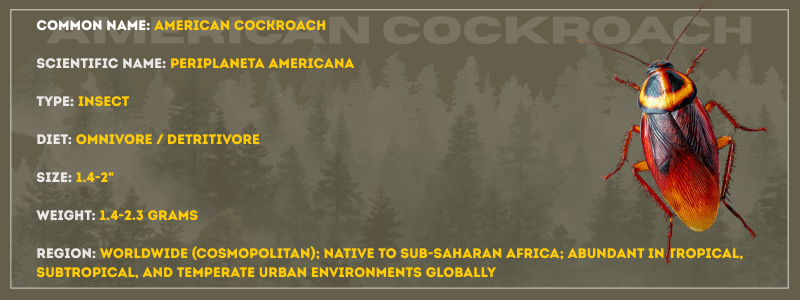

Few creatures on Earth have earned quite as visceral a reaction as the cockroach. Spot one scurrying across a kitchen floor late at night, and the primal instinct kicks in instantly — a shriek, a jumped-upon chair, a frantic search for a shoe. But before you bring that sole down, consider this: the animal you’re looking at is a marvel of biological engineering, a creature so perfectly adapted to survival that it has outlasted the dinosaurs, navigated two mass extinction events, and colonized nearly every corner of the globe. The American Cockroach — despite what its name implies — is far more ancient, widespread, and fascinating than its reputation as a household pest suggests.
Periplaneta americana is the largest of the common cockroach species, and in many ways the most impressive. It can run faster than most insects its size, survive radiation levels that would kill a human dozens of times over, navigate using an internal compass, and go weeks without food or water. It is, by virtually any measure, one of nature’s most successful animals. This is the story of that animal — not the pest, but the phenomenon.
Facts
Here are some quick, surprising facts about the American Cockroach that might just change how you see this misunderstood insect:
- They can run up to 3.4 miles per hour, which relative to their body size makes them one of the fastest land animals on the planet. Scaled up to human proportions, that would be equivalent to a person sprinting at over 200 miles per hour.
- They can survive without their head for up to a week. Because they breathe through tiny holes called spiracles distributed along their body and do not require their brain to regulate basic functions, a decapitated cockroach continues to move, groom, and respond to stimuli before eventually dying of thirst.
- Their brains are distributed throughout their body. Cockroaches possess a series of nerve ganglia (essentially mini-brains) along their thorax and abdomen, meaning they can process sensory information and coordinate movement even if the central brain is removed.
- They have been in space. In 2007, a Russian cosmonaut brought cockroaches aboard the Foton-M3 spacecraft. The eggs produced in microgravity hatched into cockroaches that grew faster and were reportedly more robust than their Earth-born counterparts.
- They can hold their breath for up to 40 minutes and survive submerged in water for about 30 minutes, making conventional traps and flooding far less effective than most people assume.
- American Cockroaches have been documented showing rudimentary “group decision-making.” Research has shown that cockroaches collectively choose shelter sites in a process that resembles democratic consensus — the group tends to consolidate in one location rather than split into multiple smaller groups.
- They produce an aggregation pheromone in their feces that actively attracts other cockroaches. This chemical communication is so potent that even commercial cockroach traps now mimic these pheromones as bait.
Species
Classification
| Rank | Classification |
|---|---|
| Kingdom | Animalia |
| Phylum | Arthropoda |
| Class | Insecta |
| Order | Blattodea |
| Family | Blattidae |
| Genus | Periplaneta |
| Species | Periplaneta americana |
Related Species
The genus Periplaneta contains several closely related species that are frequently confused with the American Cockroach. The Australian Cockroach (Periplaneta australasiae) is similar in size but slightly smaller and distinguished by a pale yellow margin along the front edge of its pronotum and yellow streaks on its forewings. Like its American cousin, it is not native to the country in its name.
The Brown-banded Cockroach (Supella longipalpa) is a smaller, lighter-colored species that, unlike the American Cockroach, prefers drier and higher locations within structures — it is commonly found in upper cabinets and behind picture frames rather than near water sources.
The German Cockroach (Blattella germanica), despite being the most common household pest cockroach globally, is actually a much smaller and distinct species from a different family, though it shares many behavioral traits.
The Smokybrown Cockroach (Periplaneta fuliginosa) is another Periplaneta cousin found primarily in the southeastern United States, distinguished by its uniformly dark mahogany-brown coloring and its preference for outdoor, wooded environments.
Within Periplaneta americana itself, there are no widely recognized subspecies, though regional populations do show some variation in behavioral traits and tolerance to environmental conditions, particularly temperature and humidity thresholds.
Appearance
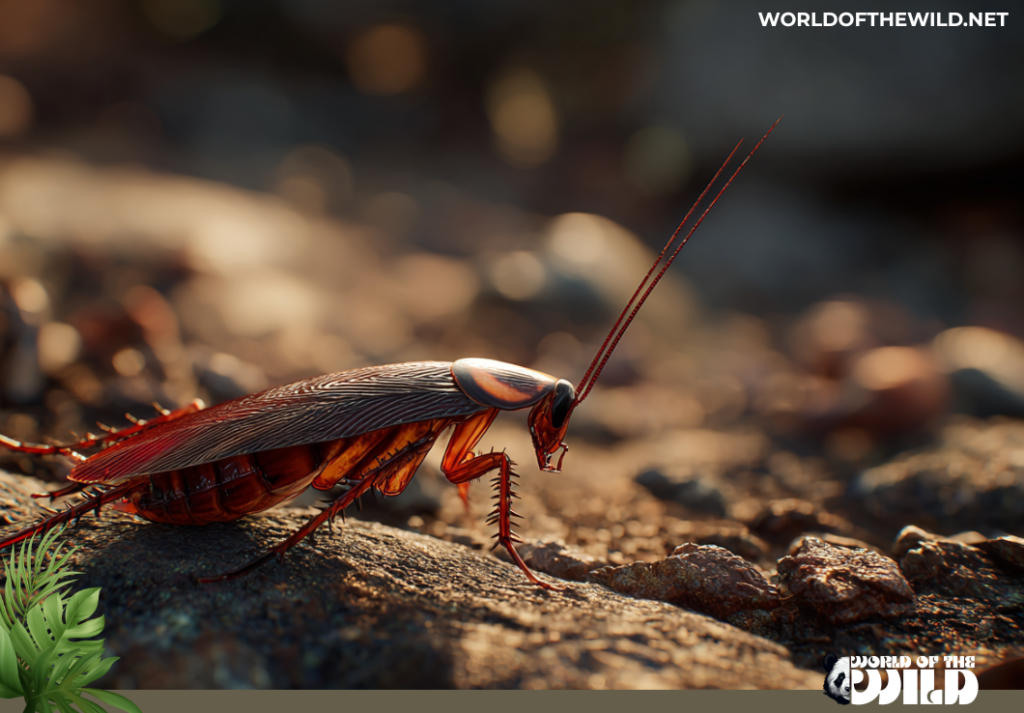
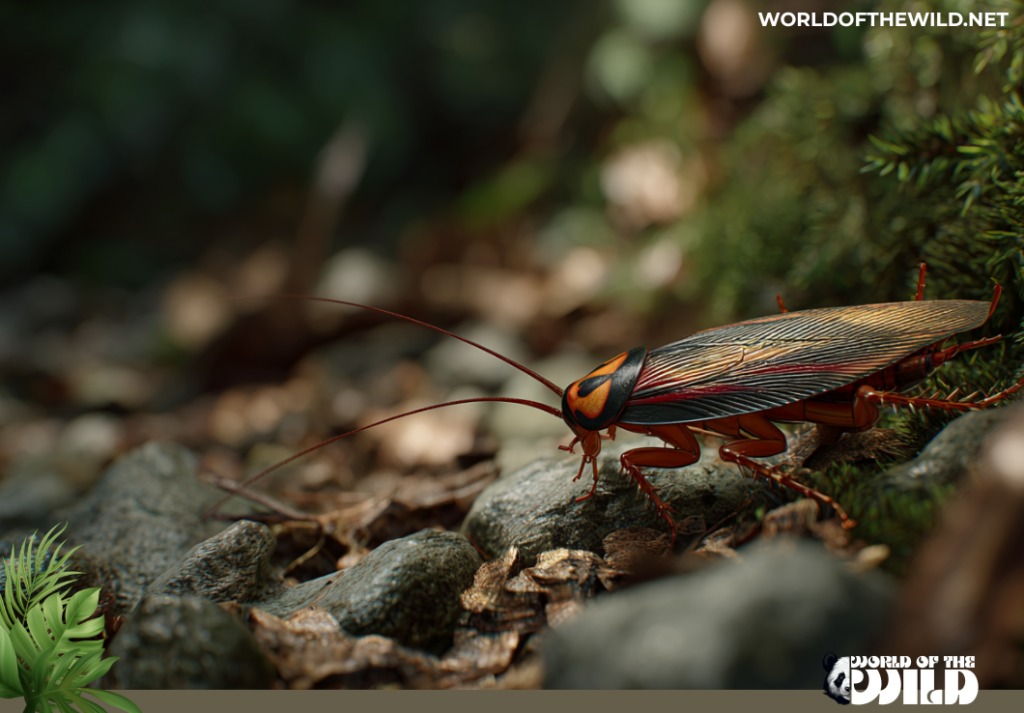
The American Cockroach is the largest cockroach species commonly encountered in and around human structures. Adults typically measure between 1.4 and 1.6 inches (35–40 mm) in length, though specimens reaching 2 inches (50 mm) are not unheard of in tropical environments. The body is flattened and oval in profile — a shape perfectly suited to slipping beneath doors, through pipe gaps, and into wall voids.
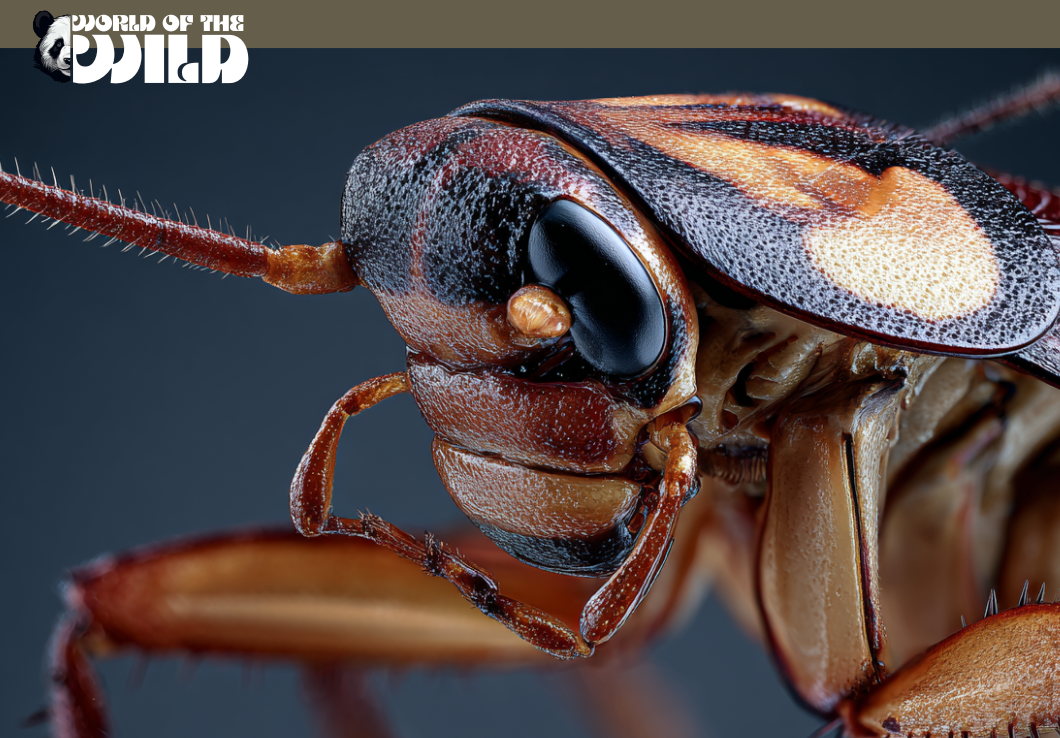
The coloration is a rich, glossy reddish-brown to mahogany, with a distinctive pale yellow or cream-colored border running around the edges of the pronotum, the shield-like plate covering the thorax. This “halo” marking is one of the most reliable identifying features of the species and sets it apart from many of its relatives.
Both males and females possess wings. The male’s wings extend slightly beyond the tip of the abdomen, while the female’s wings just barely reach the abdomen’s end. Despite being fully winged, American Cockroaches are reluctant fliers. They are capable of short gliding flights — most often used when disturbed in warm conditions — but rely overwhelmingly on their six strong, spiny legs for locomotion.
The antennae are long and threadlike, often exceeding the body length, and are in constant motion — acting as olfactory, tactile, and even hygrometric sensors. The compound eyes are large and wrap partially around the head, providing a wide field of vision. Six sensory hairs called cerci at the tip of the abdomen detect minute air currents, giving the cockroach an almost preternatural ability to sense an approaching threat before it arrives.
Behavior
The American Cockroach is primarily nocturnal, spending daylight hours hidden in warm, dark, moist crevices and becoming active after dark to forage, mate, and explore. They are thigmotactic by nature, meaning they actively seek out tight, enclosed spaces where their bodies can make contact with surfaces on multiple sides simultaneously. This behavior drives them into wall voids, beneath appliances, and inside plumbing fixtures — places that also happen to provide warmth and proximity to water.
While they are not social insects in the way that ants or bees are, American Cockroaches do engage in a form of group living based on chemical communication. Pheromones secreted in feces, cuticle waxes, and glandular secretions guide other cockroaches to safe harborage sites, suitable food sources, and potential mates. Research has confirmed that groups of cockroaches will choose a single shelter by a form of quorum sensing — once a critical number of individuals has settled in a location, the aggregation pheromone signals accelerate dramatically, drawing remaining individuals to join the majority.
Their intelligence, while limited by vertebrate standards, is impressive for an insect. American Cockroaches can learn to avoid stimuli they have previously associated with danger, can navigate mazes, and have even been trained in laboratory settings to associate neutral stimuli with rewards. This cognitive flexibility contributes significantly to their ability to adapt to changing environments and evade novel threats.
One of their most remarkable physical adaptations is their escape response. Triggered by the cerci detecting air displacement from an approaching hand, shoe, or predator, the response activates in as little as 8.2 milliseconds — faster than the blink of a human eye. The cockroach does not consciously process the threat; a hardwired neural circuit from the cerci to the leg muscles bypasses the brain entirely, initiating a directional sprint away from the air displacement source.
Evolution
The cockroach lineage is extraordinarily ancient. Roach-like insects first appeared in the fossil record during the Carboniferous Period, approximately 320 million years ago, when vast coal swamps covered much of the landmass that would eventually become Europe and North America. These early “roachoids” were not the direct ancestors of modern cockroaches, however — they differed in significant ways, most notably in that the female carried her egg case internally for an extended period, a trait later modified in the lineage.
Modern cockroaches belonging to the order Blattodea, which also includes termites (termites are now understood to be derived social cockroaches), began appearing in the fossil record during the Triassic and Cretaceous periods. The family Blattidae, to which Periplaneta americana belongs, was well established by the Cretaceous and survived the mass extinction event 66 million years ago that wiped out the non-avian dinosaurs.
The genus Periplaneta itself appears to have originated in Africa, and molecular clock analyses suggest that Periplaneta americana diverged from its closest relatives somewhere in the range of 20 to 30 million years ago. The species is not, despite its name, native to the Americas. Its African origins are well supported by genetic and fossil evidence. It was introduced to the Americas via the transatlantic slave trade and Portuguese trade ships in the early 1600s, spreading globally through maritime commerce.
Habitat
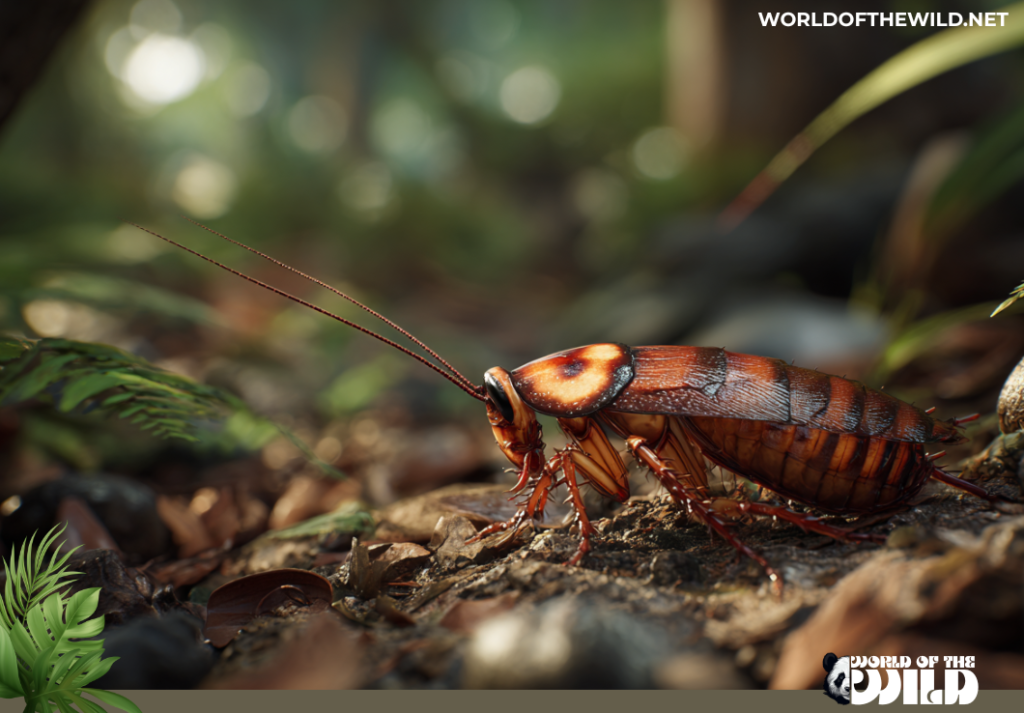
Despite its common name, the American Cockroach is originally a tropical and subtropical African species. Today, it has achieved a cosmopolitan distribution, inhabiting every continent except Antarctica and occurring in virtually every country touched by major shipping routes.
In its natural and preferred habitat, Periplaneta americana thrives in warm, humid environments. Temperatures between 70°F and 85°F (21–29°C) represent its ideal range, and it requires access to water to survive, being significantly less drought-tolerant than some other cockroach species. In tropical climates, it can be found outdoors year-round in leaf litter, beneath bark, in tree hollows, in sewers, and around rotting organic matter.
In temperate regions, the species is primarily a peridomestic insect — meaning it lives in close association with human structures. It is found abundantly in commercial and residential sewage systems, steam tunnels beneath city streets, boiler rooms, bakeries, restaurants, food storage facilities, and the utility spaces of large buildings. In cities like New York, Houston, and New Orleans, enormous populations thrive entirely within the underground sewer infrastructure, emerging at night through storm drains and utility access points.
The critical habitat requirements are warmth, moisture, and darkness. Given these three conditions, the American Cockroach can establish itself in almost any enclosed space.
Diet
The American Cockroach is a true omnivore with a notably broad dietary range. In the wild, it functions primarily as a detritivore — consuming decaying organic matter including decomposing plant material, dead insects, fungal growth, and animal waste. This makes it an important, if unappreciated, contributor to nutrient cycling in many ecosystems.
In human-associated environments, the species is famously indiscriminate in its feeding. It will readily consume food scraps, grease, starchy materials, book bindings (for the glue and paste), soap, hair, leather, and even other cockroaches under conditions of food scarcity. One of its more peculiar documented dietary behaviors is the consumption of the wing scales of other insects, which provide essential nutrients difficult to obtain in a degraded organic diet.
The cockroach locates food primarily through chemosensory organs on its antennae and mouthparts, following chemical gradients in the air over considerable distances. Once food is located, they are capable of consuming surprisingly large quantities relative to their body size before returning to harborage. Like many omnivores that evolved in feast-or-famine conditions, they are capable of slowing their metabolism significantly during food scarcity, allowing survival without food for up to a month.
Predators and Threats
Natural Predators
The American Cockroach has no shortage of natural enemies. Ground-foraging birds — including starlings, sparrows, and domestic chickens — readily consume cockroaches encountered in outdoor settings. Several mammal species, including rats, mice, opossums, and hedgehogs, prey on them opportunistically.
Among invertebrates, the Emerald Jewel Wasp (Ampulex compressa) has one of the most extraordinary predator-prey relationships with the American Cockroach. The wasp delivers a precisely targeted venom injection directly into specific ganglia within the cockroach’s brain, temporarily disabling its escape reflex and reducing it to a docile zombie state. The wasp then uses the cockroach’s own antennae as a leash to walk it to a burrow, where it lays an egg inside the cockroach — which remains alive as a living food source for the developing larva.
Centipedes, large spiders, toads, geckos, and monitor lizards are also significant predators, particularly in tropical environments. The parasitic tachinid fly Anastatus periplanetae and certain parasitic wasps target cockroach egg cases, while entomopathogenic fungi such as Metarhizium anisopliae can infect and kill individuals.
Anthropogenic Threats
Despite its resilience, the American Cockroach faces genuine threats from human activity, particularly within the context of its urban and peridomestic populations.
Pesticide resistance is a significant and growing concern — not for the cockroach, but for pest management professionals. Populations exposed to repeated chemical treatments evolve resistance rapidly, sometimes to multiple classes of insecticides simultaneously. This is driving significant investment in non-chemical management approaches, including biopesticides, pheromone disruption, and habitat modification.
From a broader ecological perspective, the global homogenization of insect communities — driven by habitat destruction, climate change, and the spread of invasive species — poses indirect threats to cockroach populations in their native African habitats, even as urban populations worldwide continue to thrive. Climate change is also expanding the geographic range of outdoor populations in temperate regions, an ironic consequence of warming for a species already regarded as indestructible.
Urban pest control programs, while rarely eliminating cockroach populations entirely, do exert significant pressure on individual colonies and may disrupt local population dynamics in ways that are not fully understood.
Reproduction and Life Cycle
The American Cockroach reproduces through a process involving egg cases called oothecae (singular: ootheca). Each ootheca is a dark-brown, purse-shaped capsule approximately 0.4 inches (8–10 mm) long, containing an average of 14 to 16 eggs arranged in two parallel rows. The female produces her first ootheca within a week of mating, and under favorable conditions will continue to produce one every one to two weeks, generating 15 to 90 oothecae over her lifetime — representing a potential reproductive output of several hundred offspring.
Courtship and mating behavior involves pheromone signaling. Males detect female sex pheromones and will perform a characteristic wing-raising display before copulation, which typically lasts 30 to 60 minutes. Females can store sperm from a single mating and use it to fertilize multiple subsequent oothecae.
Unlike some cockroach species that carry oothecae until hatching, the female American Cockroach glues her egg case to a hidden surface near a food source within one or two days of producing it, depositing it in a protected location. The eggs develop over 30 to 60 days depending on temperature, hatching into pale white nymphs that darken to the characteristic brown within hours.
Nymphs pass through six to fourteen instars (molting stages) over a developmental period of 6 to 12 months under typical conditions. With each molt, they grow progressively larger and more similar to adults, with wing pads appearing in the later instars. Adults live for approximately one year after reaching sexual maturity, giving a total lifespan of 1.5 to 2 years, though some individuals in laboratory conditions have lived beyond 3 years.
Population
The American Cockroach is classified as a species of Least Concern on the IUCN Red List, and this designation, if anything, understates its abundance. No reliable global population estimate exists — the numbers are, in practical terms, incalculable. Sewer systems alone in major metropolitan areas harbor populations in the tens or hundreds of millions per city. Houston, Texas, is colloquially referred to as one of the cockroach capitals of North America, with the warm, humid climate and extensive storm drain network supporting population densities that routinely surprise even experienced pest control professionals.
Global population trends for the species are largely stable to increasing. Urbanization, which creates vast networks of underground infrastructure providing ideal thermal and moisture conditions, has been a net positive for the species’ global abundance. Climate warming is pushing the outdoor range of the species further from the equator in both hemispheres, opening previously unsuitable temperate zones to colonization.
The species’ remarkable adaptability, including its capacity to evolve pesticide resistance within just a few generations, ensures that it is unlikely to face population pressure from human control efforts at any meaningful scale. If anything, the greatest long-term threat to the species’ most evolutionarily significant populations — those in their native sub-Saharan African habitats — comes from habitat degradation and loss of the forest and savanna ecosystems that support wild, non-commensal populations.
Conclusion
The American Cockroach is a study in contradiction. It is simultaneously one of the most reviled animals on the planet and one of the most biologically remarkable. It has been on Earth for hundreds of millions of years, survived cataclysms that remade the planet, colonized every inhabited continent, and evolved chemical, neural, and behavioral adaptations that continue to inspire genuine scientific inquiry. Researchers studying its distributed neural architecture have drawn direct inspiration for advances in robotics. The Emerald Jewel Wasp’s interaction with it has illuminated new understanding of how the nervous system can be surgically targeted. Its pheromone communication systems are being reverse-engineered for next-generation pest management tools.
It would be easy — and perhaps comforting — to dismiss the cockroach as nothing more than a pest. But doing so means missing one of the great evolutionary stories of life on this planet. This is an animal that has watched entire kingdoms of life come and go, that has threaded itself into the fabric of human civilization, and that will, in all likelihood, still be here long after us.
The next time one appears in your kitchen at midnight, before you reach for the spray, take just a moment to consider what you’re really looking at. You’re looking at 320 million years of relentless, brilliant, infuriating survival.
That deserves at least a moment of grudging respect.
Quick Reference
| Attribute | Detail |
|---|---|
| Scientific Name | Periplaneta americana |
| Diet Type | Omnivore / Detritivore |
| Size | 1.4 – 2.0 inches (males slightly longer) |
| Weight | 0.003 – 0.005 lbs (1.4 – 2.3 grams) |
| Region Found | Worldwide (cosmopolitan); native to sub-Saharan Africa; abundant in tropical, subtropical, and temperate urban environments globally |