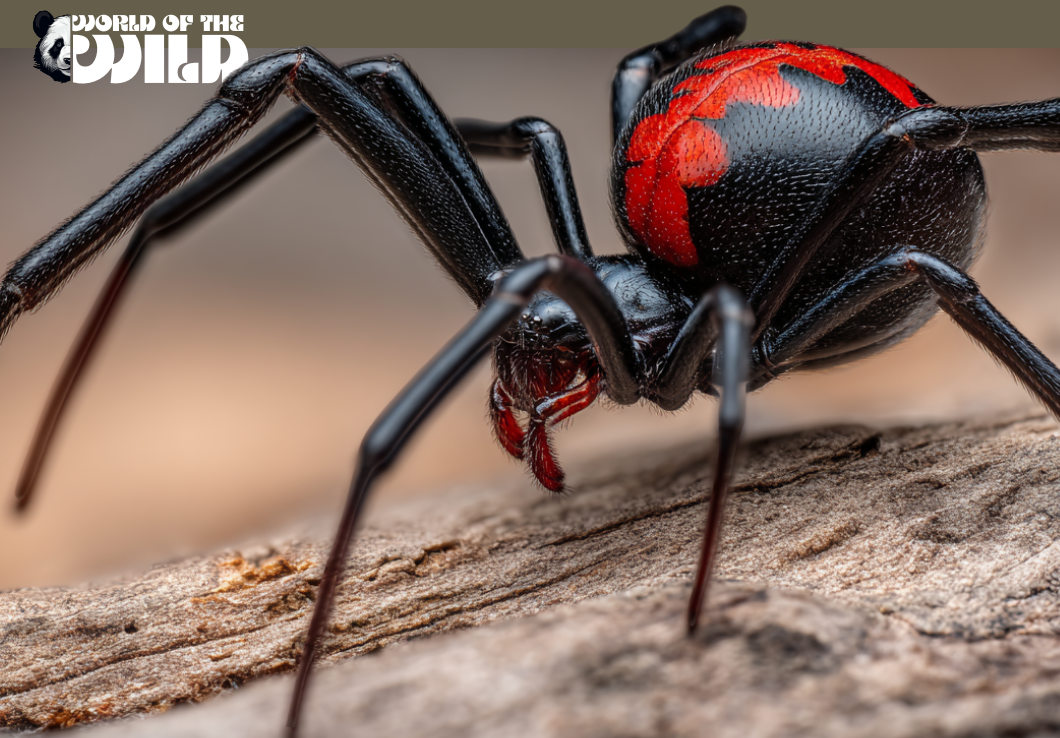

There’s a reason Australians check under their toilet seats. In a country already legendary for its deadly wildlife, one small spider has managed to capture imaginations — and inspire genuine fear — like few creatures on Earth. The Redback Spider (Latrodectus hasselti) is a deceptively delicate-looking arachnid whose crimson stripe serves as one of nature’s most unmistakable warning labels. Weighing less than a gram yet packing a venom capable of sending a grown adult to the emergency room, the Redback is a masterpiece of evolutionary efficiency. Found lurking in garden sheds, beneath park benches, and inside discarded shoes across Australia and beyond, this spider has woven itself into the cultural and ecological fabric of the continent. But beyond the fear and folklore, the Redback is a genuinely extraordinary animal — a survivor, a hunter, and one of the most fascinating creatures in the natural world. Let’s pull back the web and take a closer look.
Facts
- Males are sometimes willingly eaten during mating. In a bizarre twist of reproductive strategy, male Redbacks will often somersault directly into the female’s fangs mid-copulation. Research suggests this actually improves fertilization success — the male’s sacrifice quite literally fuels the next generation.
- Only females are dangerous to humans. Male Redbacks are so tiny — roughly 3–4mm — that their fangs cannot penetrate human skin. It is exclusively the larger female that poses a medical threat.
- Antivenin was introduced in 1956, and not a single confirmed death has occurred since. Before its development, Redback bites were potentially fatal, particularly for children and the elderly.
- The Redback is a close relative of the Black Widow. Both belong to the genus Latrodectus, and their venoms share similar neurotoxic compounds, targeting the nervous system in comparable ways.
- A female can store sperm for up to two years after a single mating encounter, fertilizing multiple egg sacs long after the male is gone — or digested.
- Redbacks are thriving in urban environments. Unlike many wildlife species pushed back by human development, Redbacks have actively benefited from urbanization, colonizing cities, suburbs, and industrial zones with remarkable success.
- Their silk is among the strongest biological materials on Earth relative to its weight, capable of withstanding the struggles of large insects, lizards, and even small snakes trapped in the web.
Species
The Redback Spider sits firmly within the family of cobweb spiders and belongs to a genus famous worldwide for producing venomous widow spiders. Here is its full taxonomic classification:
| Rank | Classification |
|---|---|
| Kingdom | Animalia |
| Phylum | Arthropoda |
| Class | Arachnida |
| Order | Araneae |
| Family | Theridiidae |
| Genus | Latrodectus |
| Species | L. hasselti |
The genus Latrodectus contains roughly 31 recognized species, all commonly referred to as widow spiders. The Redback’s closest relatives include the Southern Black Widow (Latrodectus mactans) of North America, the European Black Widow (Latrodectus tredecimguttatus), and the Katipo (Latrodectus katipo) of New Zealand — a critically endangered species with which the Redback can interbreed, raising significant conservation concerns for the native Katipo.
No formally recognized subspecies of Latrodectus hasselti currently exist, though regional variation in coloration and web architecture has been observed across its range. The brown widow (Latrodectus geometricus), an invasive species now spreading globally, is another genus member occasionally confused with the Redback.
Appearance
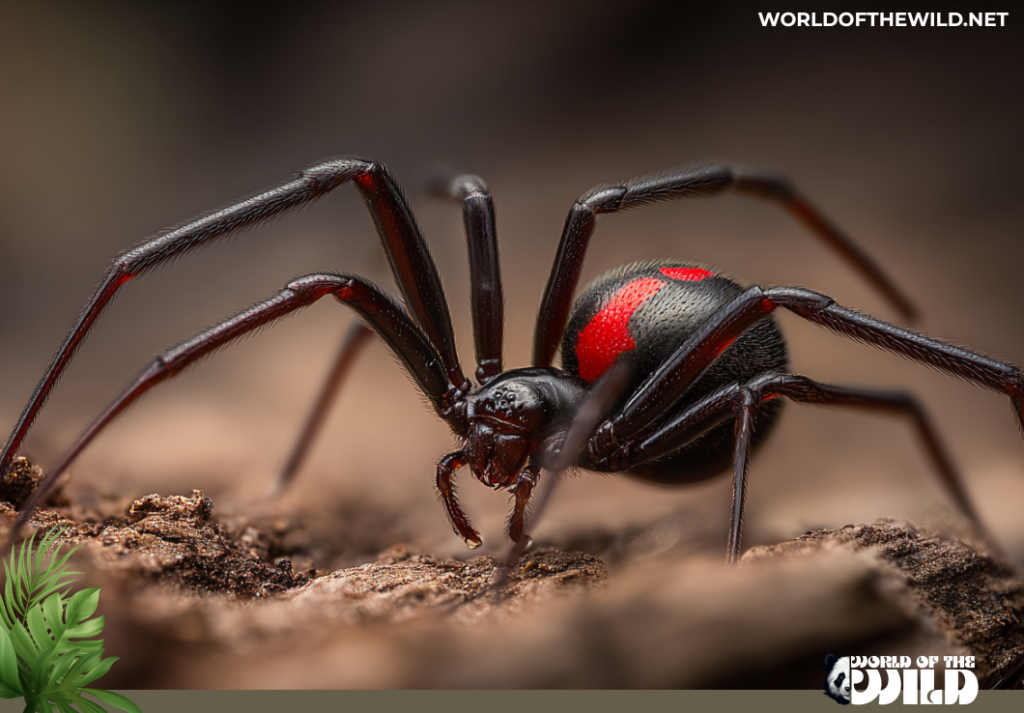
The Redback Spider is a study in contrasts — elegant and sinister in equal measure. The female, the larger and more widely recognized of the two sexes, typically has a body length of 8–15mm, with her legs extending her total span to roughly 25–30mm. Her body is a deep, glossy black, occasionally dark brown, and bears the species’ defining feature: a vivid red or orange-red stripe running longitudinally along the upper surface of her abdomen. On the underside, an hourglass-shaped red or orange marking further distinguishes her. In juveniles and some adult females, white markings or broken lines may also appear alongside the red stripe, adding subtle complexity to the pattern.
The male is barely recognizable as the same species. Measuring only 3–4mm in body length, he is pale brown with white markings and lacks the striking red stripe entirely — an almost invisible creature by comparison. His diminutive size is not merely cosmetic; it is a direct consequence of the extreme sexual size dimorphism that defines widow spiders.
The abdomen is soft, round, and bulbous, housing the vital organs and silk glands. Eight simple eyes are arranged in two rows, though like most web-builders, the Redback relies more on vibration than vision for detecting prey.
Behavior
The Redback is a solitary, sedentary predator that constructs an irregular, tangled web of exceptional strength. Unlike the orb-weaver’s geometric artistry, the Redback’s web is deliberately messy — a three-dimensional tangle of dry silk above and a series of vertical, sticky trip threads below that anchor to the ground. When an insect walks through these trip lines, it is yanked upward, leaving it suspended and helpless.
Females are largely stay-at-home hunters, rarely leaving their webs once established. They are most active at night, retreating to a funnel-shaped silk retreat during daylight hours. Their patience is extraordinary; a well-positioned female may inhabit the same web location for months or even years.
Communication between individuals is primarily vibrational and chemical. Females lay down pheromone trails on their silk that males detect from considerable distances, sometimes traveling far to locate a potential mate — a journey that frequently ends with the male being consumed.
Redbacks are remarkably tolerant of heat and drought, capable of surviving extended periods without food or water — an adaptation that suits the harsh Australian climate. In laboratory conditions, females have been known to survive over two years without a meal.
When threatened, a Redback does not typically flee or attack aggressively. Instead, it curls its legs and drops from the web, playing dead — a passive defense strategy that has served the species well across millennia.
Evolution
The story of the Redback begins deep in arachnid evolutionary history. Spiders first appeared on Earth approximately 380 million years ago, during the Devonian period, and have since diversified into over 45,000 known species. The family Theridiidae, to which the Redback belongs, is thought to have diverged from ancestral cobweb-weaving lineages roughly 200 million years ago, during the Triassic.
The genus Latrodectus likely originated in the Old World — Africa or the Mediterranean region — and diversified across multiple continents through a combination of dispersal and vicariance as landmasses shifted over geological time. The Redback’s specific lineage is believed to have reached Australia via long-distance wind dispersal, a known mechanism by which spiders colonize new territory through ballooning — releasing silk threads to catch air currents and travel vast distances.
Genetic studies suggest that the Redback and its New Zealand cousin, the Katipo, share a relatively recent common ancestor, likely within the last few million years, and remain genetically close enough to produce viable offspring when they meet.
The evolution of sexual cannibalism in this lineage is one of the more intriguing puzzles in evolutionary biology. Current evidence suggests it evolved as a male reproductive strategy rather than simply female aggression — males that are consumed during mating copulate for significantly longer periods, increasing the likelihood that their sperm, not a rival’s, fertilizes the eggs.
Habitat
The Redback Spider is predominantly associated with Australia, where it has been recorded across virtually every region of the continent, from the arid deserts of the interior to the humid coastal fringe. Beyond Australia, it has established populations in New Zealand, Japan, Southeast Asia, and has been detected in parts of Europe and the Middle East through accidental transport via shipping containers and cargo.
Within Australia, the Redback shows a strong preference for disturbed, human-modified environments. It thrives in urban and suburban settings — beneath garden furniture, inside letterboxes, behind outdoor toilets, in piles of rubble, under bark, and within dense shrubs. This synanthropic nature (the tendency to live in association with humans) has made it one of the most commonly encountered venomous animals on the continent.
The species is highly adaptable to arid conditions, making it particularly successful in the dry interior of Australia where few other spiders survive. It requires only a sheltered, dry location with sufficient prey traffic to sustain itself. Webs are typically built close to the ground, often in sheltered, dark recesses that offer protection from wind and rain.
Diet
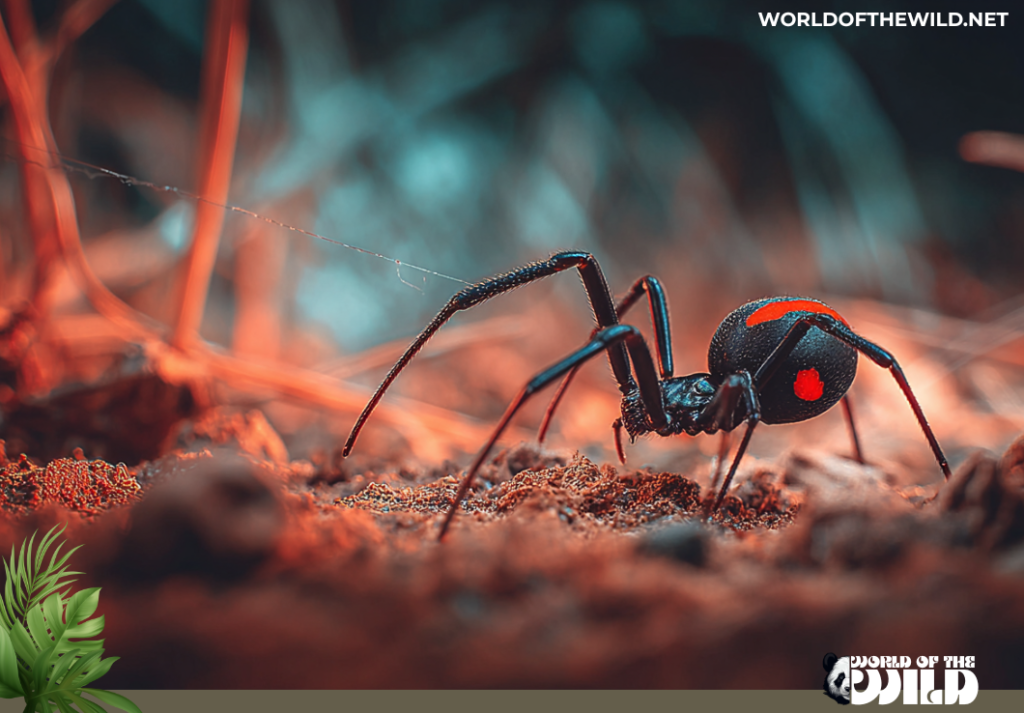
The Redback is an opportunistic carnivore of impressive ambition for its size. Its primary diet consists of insects — beetles, grasshoppers, cockroaches, and flies make up the bulk of its meals. However, the strength of its web and the potency of its venom allow it to take prey far beyond what its small frame might suggest.
Documented prey items include lizards, mice, and even small snakes — creatures many times larger than the spider itself. When a large prey item is ensnared in the trip threads, the Redback responds rapidly, throwing additional silk over the struggling animal to immobilize it before delivering a venomous bite that begins the process of extra-oral digestion, liquefying the prey’s internal tissues for consumption.
The venom of the Redback contains alpha-latrotoxin, a powerful neurotoxin that causes the rapid release of neurotransmitters at nerve junctions, leading to intense pain, sweating, nausea, and in severe cases, systemic illness in humans. In prey animals, it acts swiftly and lethally. Females require substantially more food than males to fuel egg production and their longer lifespans, and they are significantly more active hunters as a result.
Predators and Threats
Despite its fearsome reputation, the Redback Spider has a range of natural predators. The most notable is the Daddy Long-Legs Spider (Pholcus phalangioides), which is widely believed — with growing scientific support — to be capable of killing and consuming Redbacks despite the latter’s more potent venom. Other predators include wasps, particularly spider-hunting wasps of the family Pompilidae, which paralyze Redbacks to provision their nests as food for larvae. Lizards, centipedes, and various bird species also prey on them opportunistically.
In terms of human-caused threats, the Redback faces a relatively unique situation among wildlife: urbanization has benefited rather than harmed the species. Unlike most animals, the Redback has flourished alongside human expansion. Its greatest threat is arguably invasive competition — particularly from the Brown Widow (Latrodectus geometricus), which is spreading aggressively through the same urban habitats.
The Redback itself, however, poses an invasive threat to other species. In New Zealand, its interbreeding with and displacement of the native Katipo has been identified as a significant contributing factor to the Katipo’s critically endangered status. The Redback’s accidental global spread via shipping represents a genuine ecological concern in regions where it has established feral populations.
Reproduction and Life Cycle
Reproduction in the Redback Spider is one of nature’s more extreme processes. Males mature in approximately 90 days and spend much of their short adult lives wandering in search of females, detecting them through pheromones embedded in the female’s silk. Upon locating a web, the male typically spends several hours courting the female through vibrational signaling before mating begins.
During copulation, the male frequently performs a somersault that positions his abdomen directly over the female’s fangs. In approximately 65% of observed matings, the female begins consuming the male while copulation continues. Far from being disadvantageous, this behavior has been shown to extend copulation duration significantly, increasing sperm transfer and reproductive success. Males that are consumed fertilize more eggs than those that survive.
Females produce up to 10 egg sacs over a lifetime, each containing roughly 250 eggs, though not all eggs survive to hatching. Egg sacs are spherical, papery, and white, and are carefully guarded within the web. Eggs hatch in approximately 14 days, with spiderlings undergoing their first moult within the sac before emerging.
Females can live for two to three years under favorable conditions. Males, by contrast, survive for only a matter of months — and frequently less, given the hazards of mating. Spiderlings disperse through ballooning, climbing to elevated points and releasing silk threads to catch wind currents, potentially traveling considerable distances.
Population
The Redback Spider is currently listed as a species of Least Concern by the IUCN Red List. Its global population is considered stable and robust, with no significant downward trends documented at the species level. Within Australia, the Redback remains one of the most commonly encountered venomous animals, with an estimated 2,000 bites reported annually in Australia alone — though the vast majority result in no severe medical complications thanks to the availability of antivenin.
The species’ successful colonization of urban environments has likely increased its overall numbers over the past century in parallel with Australian urbanization. Populations have also been recorded expanding in Japan and parts of Southeast Asia, where accidental introductions through cargo trade have established viable feral colonies.
While the Redback as a species faces no meaningful conservation concern, its global spread does raise ongoing ecological and biosecurity questions, particularly regarding its impact on native spider communities — most acutely in New Zealand, where its interaction with the endangered Katipo continues to be monitored closely.
Conclusion
The Redback Spider is far more than a symbol of Australian danger — it is a triumph of evolutionary ingenuity. In a world where so many species struggle to adapt to human presence, the Redback has quietly turned our cities and suburbs into ideal hunting grounds, thriving precisely where other wildlife retreats. Its venom, its extraordinary mating ritual, its silk, and its patience all tell the story of an animal shaped over millions of years into a near-perfect predator at the micro-scale.
Yet the Redback’s story also carries a cautionary note. The same adaptability that makes it a conservation success is making it an invasive concern elsewhere, silently threatening native species like New Zealand’s Katipo. Nature rarely offers simple narratives — and the Redback is no exception.
The next time you hesitate before reaching under a garden chair or into an old shoe, take a moment to appreciate the extraordinary creature that may be watching from the shadows. Respect, not just fear, is what the Redback deserves — and understanding it is the first step toward living alongside it wisely.
Quick Reference
| Scientific Name | Latrodectus hasselti |
| Diet Type | Carnivore (opportunistic predator) |
| Size (Female) | 0.3–0.6 inches body length (~0.05 ft); leg span up to ~1.2 inches |
| Size (Male) | ~0.12–0.16 inches body length |
| Weight | Female: ~0.002–0.004 lbs (under 2 grams); Male: less than 0.001 lbs |
| Region Found | Australia (continent-wide); also New Zealand, Japan, Southeast Asia, and isolated populations in parts of Europe and the Middle East |