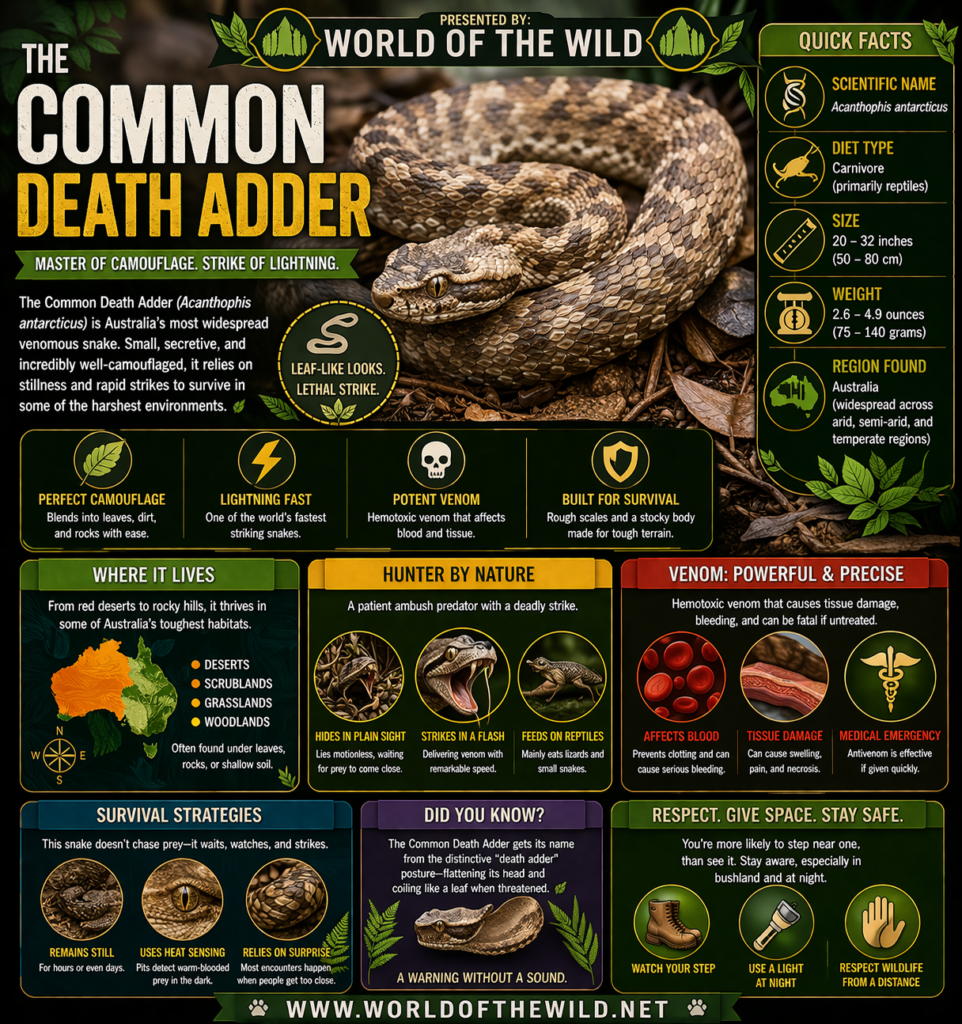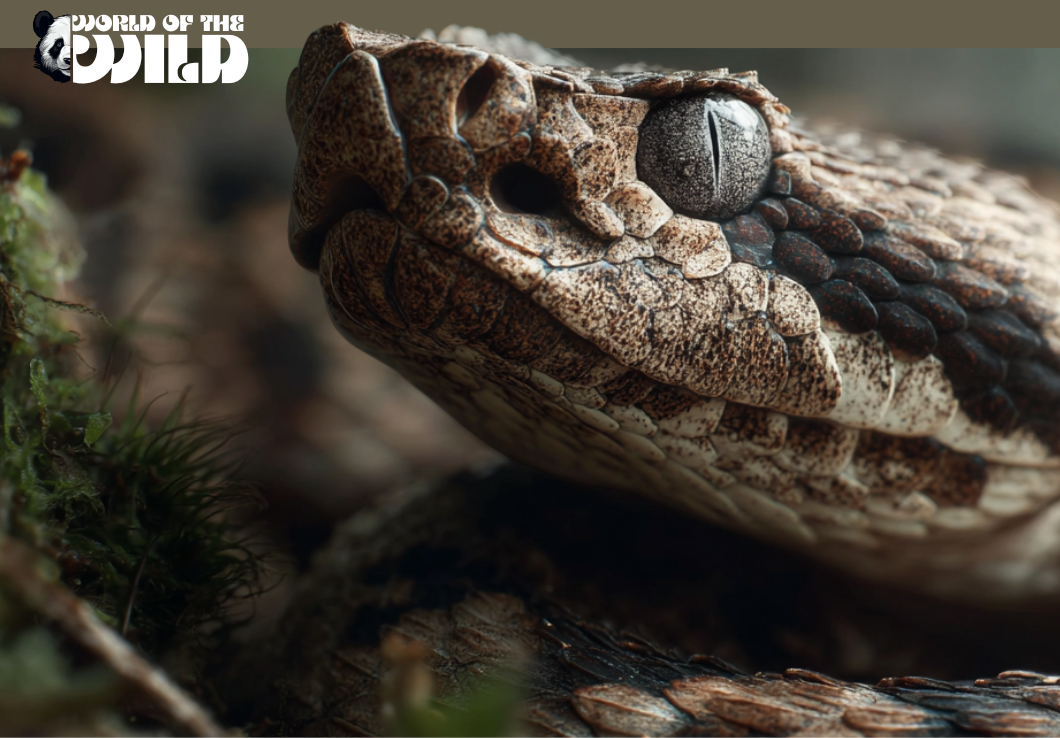

In the sun-scorched landscapes of Australia, where danger often hides in plain sight, few creatures embody the art of deadly deception quite like the Common Death Adder (Acanthophis antarcticus). Squat, cryptic, and astonishingly patient, this snake doesn’t chase its prey — it waits. And when it strikes, it does so with one of the fastest reflexes of any snake on Earth. Despite its fearsome name, the Death Adder is not actually an adder at all, but a member of the elapid family — the same group that includes cobras and mambas. That twist alone tells you this animal has more than a few surprises up its scaly sleeve. Whether you’re a seasoned herpetologist or a curious nature enthusiast, the Common Death Adder is a creature that demands your attention, your respect, and perhaps a healthy dose of caution.
Facts
- Lightning reflexes: The Common Death Adder can complete a full strike-and-retract sequence in as little as 0.13 seconds — one of the fastest strikes recorded in the snake world.
- Fake worm, real trap: Death Adders practice a behavior called caudal luring, wiggling the tip of their tail to mimic a small worm or grub, actively drawing prey toward them.
- Misidentified family: Despite the name “adder,” this snake is not a viper. It’s an elapid — evolutionarily closer to a cobra than to a true adder.
- Venom efficiency: Their venom is predominantly neurotoxic and, before antivenom was developed, bites had a fatality rate estimated at around 50% in untreated humans.
- Stillness as survival: A Death Adder can remain completely motionless for days at a time, relying on its extraordinary camouflage rather than escape to avoid detection.
- Live birth: Unlike many reptiles, Death Adders are viviparous — they give birth to live young rather than laying eggs.
- Declining recognition: Many Australians cannot reliably identify the Death Adder because it looks so unlike the stereotypical “snake” — its stout body and broad head resemble a harmless skink or even a dried leaf more than a serpent.
Species
The Common Death Adder occupies a well-defined position in the tree of life:
- Kingdom: Animalia
- Phylum: Chordata
- Class: Reptilia
- Order: Squamata
- Family: Elapidae
- Genus: Acanthophis
- Species: Acanthophis antarcticus
The genus Acanthophis contains several closely related species, making it a compact but fascinating group. The Northern Death Adder (Acanthophis praelongus) occupies the tropical north of Australia and southern New Guinea, and tends to be slightly more slender than its common cousin. The Desert Death Adder (Acanthophis pyrrhus) is adapted to arid inland regions and displays a striking reddish coloration that blends seamlessly with red desert soils. The Pilbara Death Adder (Acanthophis wellsi) is found in the rocky Pilbara region of Western Australia and was only formally described as a separate species in relatively recent decades. The New Guinea Death Adder (Acanthophis laevis) ranges through Papua New Guinea and surrounding islands, representing the group’s expansion beyond the Australian continent. Taxonomic revisions continue, and some authorities recognize additional species or subspecies within the group, reflecting the complexity of their evolutionary radiation across Australasia.
Appearance
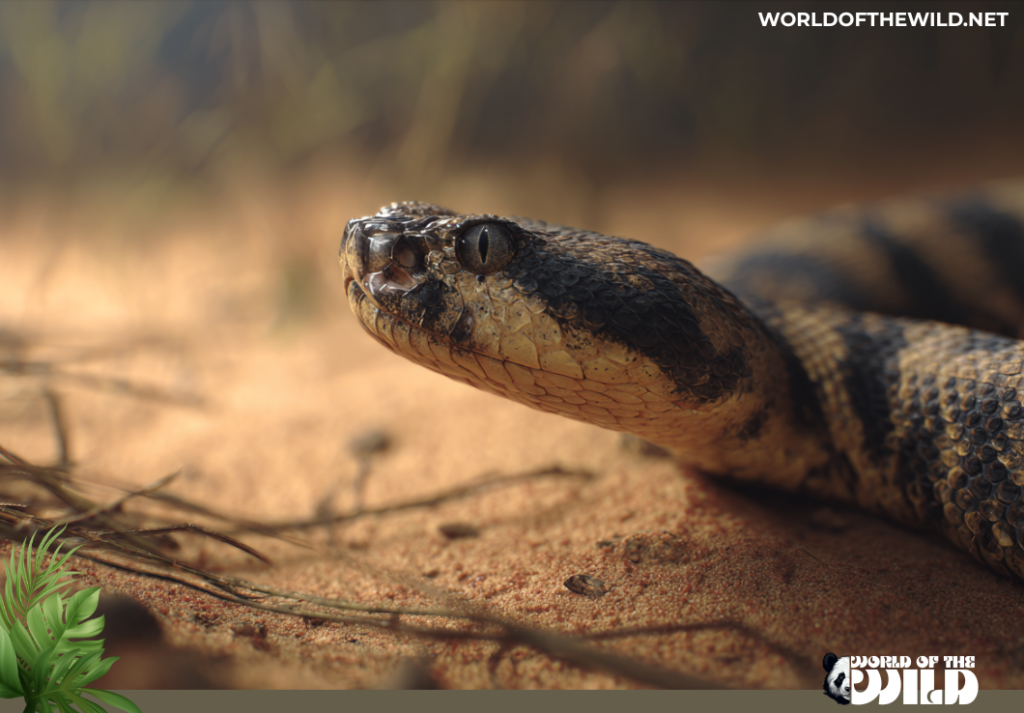
The Common Death Adder is, in a word, deceptive — and its appearance is the first layer of that deception. Rather than the sleek, elongated form most people associate with dangerous snakes, the Death Adder is remarkably stout. Adults typically measure between 18 and 35 inches in length, though specimens approaching 40 inches have been recorded. Despite this modest length, their girth is substantial, giving them a heavyset, almost toad-like profile when coiled.
The head is broad, distinctly triangular, and clearly defined from the neck — a shape that herpetologists call “lance-head” or “arrowhead.” The eyes are medium-sized with vertical, cat-like pupils, perfectly suited for low-light hunting. The scales are keeled (ridged along the center), giving the skin a rough, textured appearance rather than the glossy sheen of some other snakes.
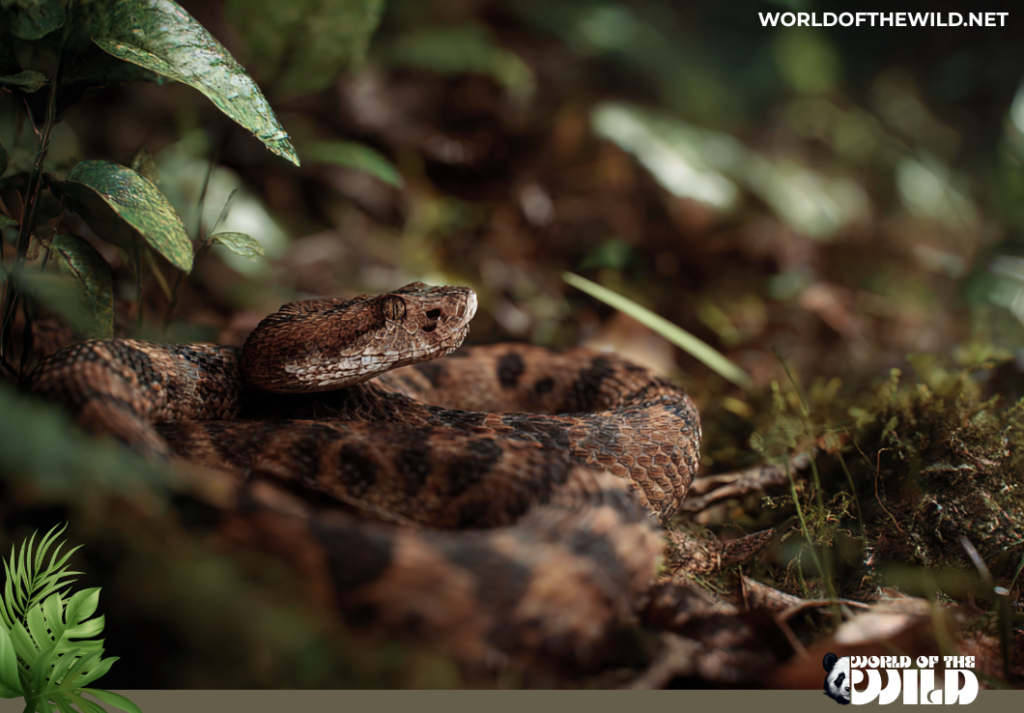
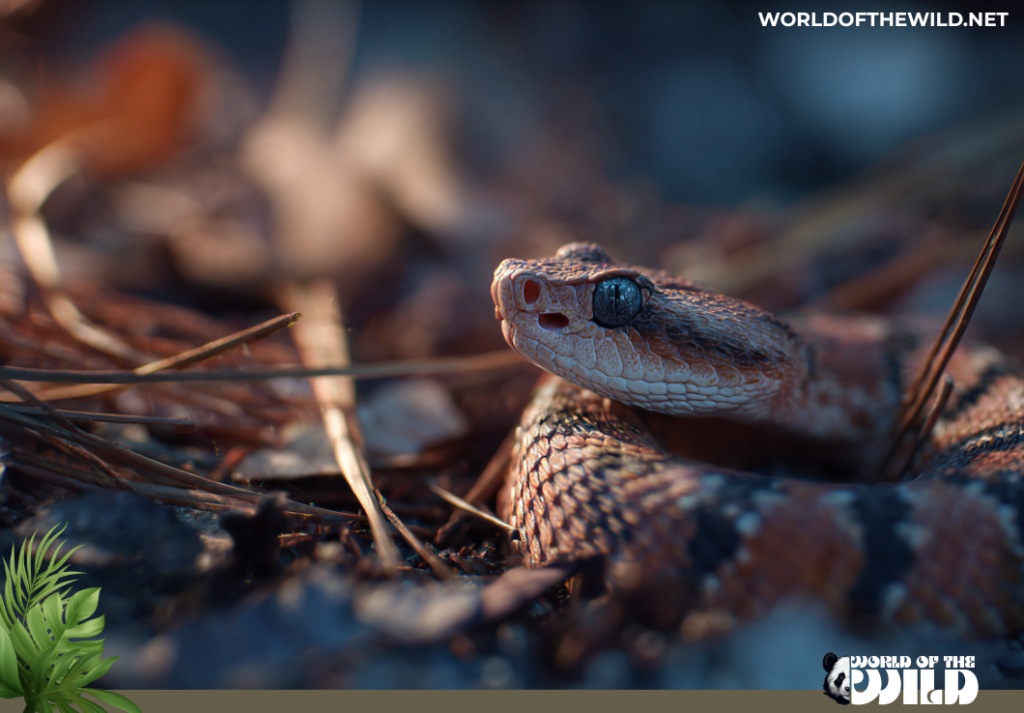
Coloration varies considerably but is almost always cryptic. Most individuals display banded patterns in combinations of brown, grey, reddish-brown, or black, with lighter crossbands and a paler, cream-colored belly. This patterning mimics leaf litter, bark, and rocky ground with remarkable fidelity. The tail tip — a crucial tool in their hunting strategy — is typically thin, worm-like, and often lighter or darker in contrast to the rest of the body, enhancing its lure-like appearance. In terms of weight, adults generally fall between 0.3 and 0.7 pounds, though larger individuals can exceed this range.
Behavior
The Common Death Adder is the embodiment of ambush predation, and its entire behavioral repertoire is built around the strategy of stillness. Unlike most snakes, which are active foragers that cover significant ground in search of prey, the Death Adder is what ecologists call a “sit-and-wait” predator. It selects a concealed location — beneath leaf litter, among rocks, or under low vegetation — and simply waits, sometimes for many hours or even days.
What elevates the Death Adder beyond passive waiting, however, is its remarkable caudal luring behavior. The snake slowly undulates the tip of its thin, worm-like tail just above the ground, creating the illusion of a small invertebrate. Small lizards, frogs, and mammals, drawn in by what appears to be an easy meal, are met with a lightning-fast strike they never anticipated.
Death Adders are primarily nocturnal or crepuscular, most active during the cooler hours of dusk and dawn, though they may bask during the day in cooler months. They are solitary animals and do not engage in complex social structures. Communication is largely limited to chemical signals via the tongue and Jacobson’s organ — the snake’s primary sensory tool for detecting prey and potential mates. When threatened, a Death Adder will flatten its body, form a loose S-shape, and may hiss audibly, though flight is rarely their first response. Their supreme confidence in camouflage means they often simply hold their position when approached, which unfortunately contributes to many accidental bites.
Evolution
The evolutionary story of the Common Death Adder is one of convergence — the phenomenon by which unrelated lineages independently evolve strikingly similar traits. The Death Adder belongs to Elapidae, a family whose members are generally slender, fast-moving, and visually oriented hunters. Yet the Death Adder has evolved to look and behave much more like a viper — stocky, heavily keeled, and ambush-oriented — despite sharing no close ancestry with true vipers.
This is a textbook case of convergent evolution driven by similar ecological pressures. Elapidae is thought to have originated in Africa or Asia, with ancestral lineages dispersing into the Australian continent sometime during the Cenozoic Era, likely between 20 and 30 million years ago, as Australia drifted northward and began experiencing greater biological interchange with Asia. Once established in Australia’s diverse and often arid ecosystems, various elapid lineages diversified dramatically.
The ancestors of Acanthophis appear to have moved into ecological niches better exploited by ambush tactics, and natural selection progressively shaped them toward the short, wide-bodied, cryptically patterned form we see today. Their venom — a potent neurotoxic cocktail — evolved in parallel, fine-tuned for rapid immobilization of prey rather than the slow digestion of tissue targeted by some hemotoxic venoms. Fossil evidence for early Acanthophis is sparse, but molecular phylogenetic studies suggest the genus diversified relatively recently in geological terms, with the current species assemblage likely taking shape within the last several million years.
Habitat
The Common Death Adder occupies a broad swathe of eastern and southern Australia, ranging from Queensland down through New South Wales and into South Australia and parts of Victoria. Its distribution broadly follows regions with moderate to high vegetation cover and an adequate supply of prey — notably lizards, frogs, and small mammals.
Within this range, the Death Adder is a habitat generalist with a talent for disappearing into almost any terrestrial environment. It thrives in sclerophyll forests and woodlands — those classic Australian landscapes dominated by eucalypts and wattles with deep leaf litter underfoot — which provide both excellent camouflage and a steady supply of skinks and geckos. It is also found in heathlands, coastal shrublands, and grasslands, wherever ground cover is sufficient to offer concealment.
Unlike some of its relatives, the Common Death Adder is less associated with true desert environments, preferring areas that receive at least moderate rainfall. Rocky outcrops and the margins of wetlands and creek lines are also favored, providing shelter and a reliable concentration of prey species. Crucially, the Death Adder is a ground-dwelling species and is rarely observed climbing or entering water. Temperature regulation is achieved through selective basking in partially shaded spots rather than full sun exposure, which helps explain their preference for well-vegetated terrain over open ground.
Diet
The Common Death Adder is a strict carnivore, and a highly effective one. Its diet is composed primarily of small vertebrates, including lizards, frogs, and small mammals such as mice and small rats. Juvenile Death Adders tend to focus more heavily on lizards and frogs given their smaller gape size, while adults are capable of taking larger mammalian prey as their body size increases.
The hunting method is built around the caudal luring technique described earlier. Once prey investigates the wriggling tail tip and moves within range, the Death Adder strikes with extraordinary speed, injecting venom through its relatively long, hollow fangs. The venom is primarily neurotoxic, containing potent post-synaptic neurotoxins that block the transmission of nerve signals to muscles, leading to paralysis. Pre-synaptic neurotoxins, which disrupt the release of neurotransmitters, are also present, and some components can contribute to blood clotting disruption.
Once bitten, prey is typically held briefly or released and tracked via scent. Digestion is slow and metabolically efficient — the Death Adder, like all snakes, can sustain itself on relatively infrequent meals, an adaptation well-suited to an ambush lifestyle where days may pass between successful strikes. Water intake occurs primarily by drinking from surface sources or absorbing moisture through the skin during rain events.
Predators and Threats
Despite being a highly capable predator itself, the Common Death Adder is not without its enemies. In the wild, several species prey upon it, most famously the monitor lizards (goannas) of the genus Varanus, which are largely immune to elapid venom and actively hunt snakes. Various raptors — including brown falcons, kookaburras, and sea eagles — take Death Adders opportunistically, particularly juveniles and smaller adults caught in the open. Some snake species, including the mulga snake (Pseudechis australis), are also documented predators.
However, the most significant threats facing the Common Death Adder are human-driven. The devastating introduction of the cane toad (Rhinella marina) across northern and eastern Australia has been catastrophic. Death Adders readily strike at cane toads in response to their movement, ingesting enough bufotoxin to kill the snake. This has caused dramatic localized population crashes in areas where cane toads have invaded.
Habitat clearing for agriculture and urban development reduces the complex ground-level vegetation structure the Death Adder depends upon. Altered fire regimes, particularly more frequent and intense wildfires driven by climate change, can strip away the leaf litter and low vegetation that provide both camouflage and prey. Road mortality is a meaningful source of death, as Death Adders absorb warmth from sealed roads at night and are struck by vehicles. Persecution by humans also occurs, as the snake’s habit of remaining still when encountered leads to deliberate killings out of fear.
Reproduction and Life Cycle
Mating in the Common Death Adder typically occurs in spring and early summer, following a period of reduced winter activity. Males engage in combat with rival males over access to females — intertwining and attempting to pin each other to the ground in a behavior called ophidian combat, though biting is relatively rare between conspecifics. Males locate females primarily through chemical cues, following pheromone trails deposited by receptive females.
The Common Death Adder is viviparous — females retain developing young internally, providing them with oxygen and nutrients through a placenta-like structure before giving live birth. This reproductive strategy is considered an adaptation to cooler climates, as it allows the female to thermoregulate during gestation, keeping developing embryos at more stable temperatures than buried eggs would experience. After a gestation period of approximately three to five months, females give birth to litters typically ranging from three to fifteen young, though litters of up to 32 have been documented in exceptional cases.
Neonates are fully formed and venomous from birth, measuring roughly 6 to 8 inches in length. There is no parental care after birth — the young are immediately independent and must fend for themselves. Juveniles face high predation pressure and mortality in their first year. Sexual maturity is typically reached between two and three years of age. In the wild, Common Death Adders are estimated to live between 10 and 15 years, while individuals in captivity have been recorded living beyond 20 years under optimal conditions.
Population
The Common Death Adder is currently listed as Least Concern on the IUCN Red List, reflecting the fact that it remains relatively widespread across its core range in eastern and southern Australia. However, this broad classification masks significant regional variation in population health. In many areas, particularly in the tropical north where cane toad invasion has been most severe, local populations have undergone dramatic declines — in some cases, near-complete local extirpation.
Precise global population estimates are difficult to establish given the species’ cryptic nature and the inherent challenges of surveying such a well-camouflaged animal. What researchers do know is that populations in cane-toad-affected zones have fared considerably worse than those in the south and west. Some northern populations that were once described as locally common have not been recorded in years. Ongoing habitat fragmentation due to land clearing continues to create isolated populations that may be vulnerable to local extinction events.
Conservation efforts are ongoing, including research into conditioned taste aversion — training Death Adders and other native predators to avoid cane toads by offering small, non-lethal toad encounters before the animals encounter full-sized toxic toads in the wild. Captive breeding programs and public education campaigns also contribute to awareness and protection of this ecologically important species.
Conclusion
The Common Death Adder is far more than a feared name on a list of Australia’s dangerous wildlife. It is an evolutionary masterpiece — a patient, precise, and perfectly camouflaged predator that has carved out a unique ecological role through millions of years of adaptation. Its story is one of biological ingenuity, from its lightning-fast strike to its tail-luring theatrics and its convergent resemblance to entirely unrelated snakes on the other side of the world.
Yet for all its evolutionary success, the Death Adder faces threats it was never adapted to deal with — invasive species, habitat loss, and a changing climate reshaping the landscapes it depends upon. The cane toad alone has redrawn the species’ effective range in ways no natural predator ever could.
Understanding animals like the Common Death Adder matters not just for the sake of the species itself, but because every apex predator and ambush specialist removed from an ecosystem creates a ripple effect through the food web. If you’re in Death Adder country — watch where you step, learn to identify what you’re looking at, and appreciate the extraordinary creature that’s been there, perfectly still, watching you far longer than you realized.
Quick Reference
| Scientific Name | Acanthophis antarcticus |
| Diet Type | Carnivore |
| Size | 18–35 inches (1.5–2.9 feet); occasionally up to ~40 inches |
| Weight | 0.3–0.7 lbs (occasionally up to ~1 lb in larger adults) |
| Region Found | Eastern and southern Australia (Queensland, New South Wales, South Australia, Victoria) |