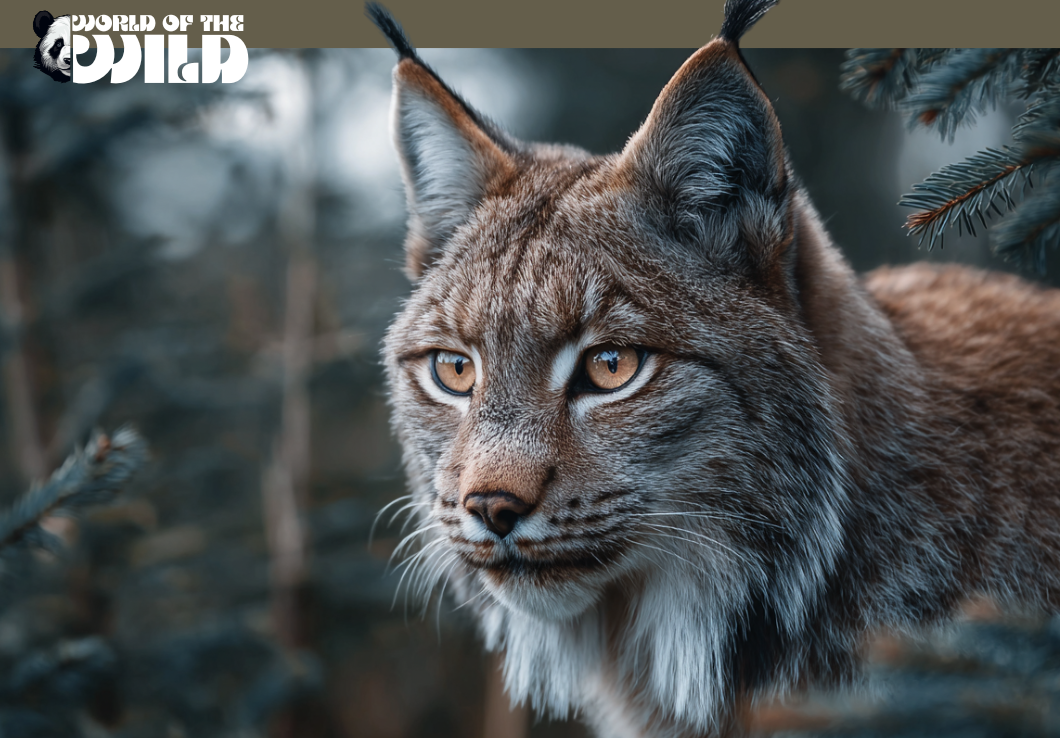

Deep in the snow-draped boreal forests of North America, a pair of luminous yellow eyes peers through the darkness. Before you can be certain of what you saw, it’s gone — vanished like a whisper into the frozen white. This is the Canadian Lynx (Lynx canadensis), one of the most elusive and enigmatic wild cats on the continent. Equal parts ghost and predator, this medium-sized feline has spent millennia perfecting the art of survival in some of the harshest environments on Earth. Its oversized paws act like snowshoes, its tufted ears catch the faintest rustle beneath a blanket of snow, and its fate is so intricately tied to a single prey species that the two have become one of nature’s most famous ecological love stories. To study the Canadian Lynx is to peer into the elegant, unforgiving machinery of the wild — and to understand just how fragile that machinery can be.
Facts
- Snowshoe hares make up roughly 75–90% of the Canadian Lynx’s diet, and lynx populations rise and fall in near-perfect synchrony with hare population cycles, creating one of the most well-documented predator-prey dynamics in all of ecology.
- Their paws are disproportionately enormous — nearly as wide as a human hand — and act as natural snowshoes, distributing the animal’s weight evenly across deep snow so it can run on the surface where other predators would sink and flounder.
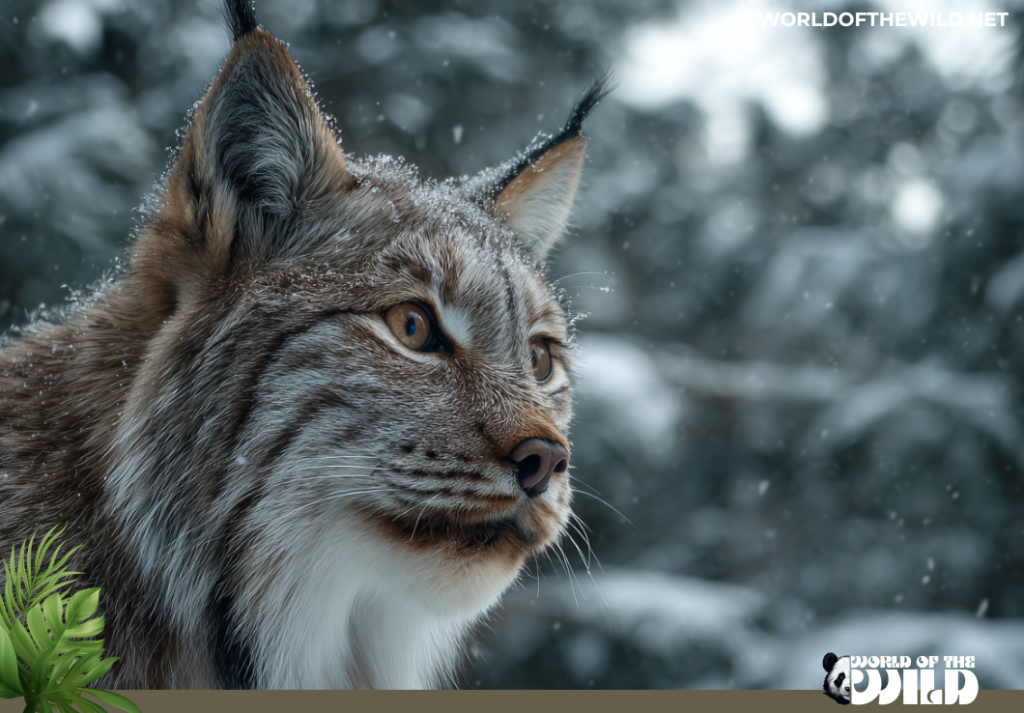
- Lynx can hear a mouse from 250 feet away, thanks to their distinctive black ear tufts, which are thought to function like antennae, funneling sound waves toward the inner ear for enhanced directional hearing.
- During periods of hare scarcity, Canadian Lynx have been documented traveling over 600 miles in search of food, making them one of the most wide-ranging wanderers among North American carnivores.
- They are almost completely silent hunters, relying on stealth rather than speed, and can remain motionless for hours while waiting to ambush prey.
- Lynx have a specialized retinal structure that gives them exceptional low-light vision, making them highly effective nocturnal hunters even on the darkest winter nights.
- A lynx’s facial ruff — the distinctive frame of longer fur surrounding its face — isn’t just for aesthetics. It likely helps channel scent molecules toward the nose, sharpening olfactory detection in dense forest environments.
Species
The Canadian Lynx belongs to the following taxonomic classification:
- Kingdom: Animalia
- Phylum: Chordata
- Class: Mammalia
- Order: Carnivora
- Family: Felidae
- Genus: Lynx
- Species: Lynx canadensis
The genus Lynx contains four recognized species worldwide: the Canadian Lynx (Lynx canadensis), the Eurasian Lynx (Lynx lynx), the Iberian Lynx (Lynx pardinus), and the Bobcat (Lynx rufus). Of these, the Canadian Lynx and the Bobcat are the only two native to North America, and the two species overlap in range across parts of the northern United States, occasionally interbreeding in contact zones.
Within Lynx canadensis, taxonomists have historically recognized up to three subspecies: L. c. canadensis (the widespread mainland form), L. c. mollipilosus (found in parts of western Canada and Alaska), and L. c. subsolanus (the Newfoundland lynx, which is geographically isolated and shows slightly distinct morphological traits). However, modern genetic studies have challenged the distinctiveness of these subspecies, and many researchers now treat the species as largely monotypic. The Newfoundland population, nonetheless, remains a subject of interest due to its isolation and potential genetic divergence.
The Canadian Lynx is most closely related to the Eurasian Lynx, and the two species diverged from a common ancestor approximately 2–2.5 million years ago following the colonization of North America via the Bering land bridge.
Appearance
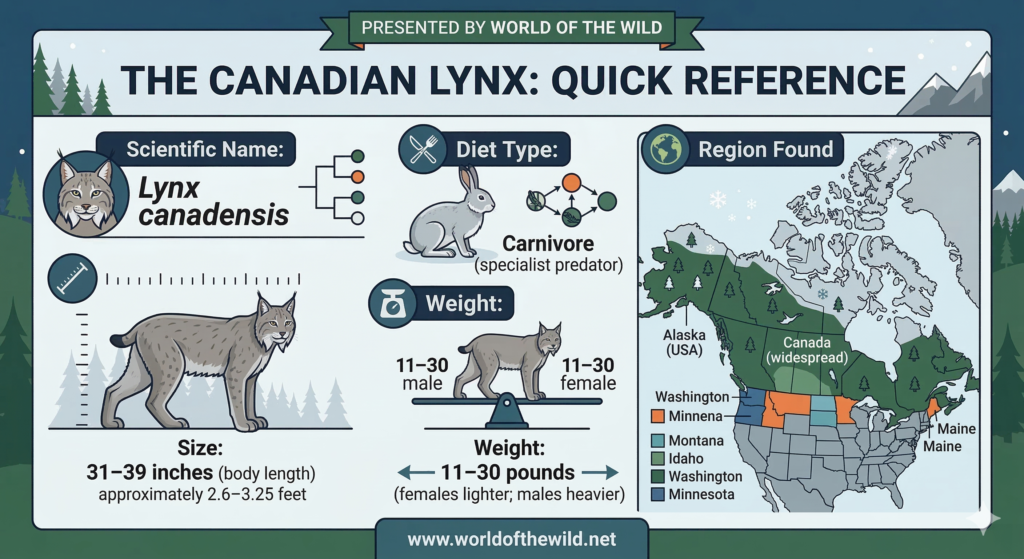
The Canadian Lynx cuts a striking figure in the winter landscape. It is a medium-sized cat with a compact, muscular body built for cold-weather endurance rather than explosive bursts of tropical speed. Adults typically measure 31 to 39 inches in body length, with a notably short tail of just 2 to 5 inches that appears to have been bluntly clipped — tipped entirely in black, unlike the banded tail of the bobcat.
In terms of weight, males generally range from 18 to 30 pounds, while females are somewhat lighter, averaging between 11 and 20 pounds. The legs are long relative to body size, and the hind legs are proportionally longer than the forelegs, giving the lynx a distinctively rump-high stance that is immediately recognizable in the wild or in tracks.
The coat is one of the lynx’s most beautiful features — a dense, soft fur that shifts seasonally from a buffy grayish-brown in summer to a thick, silvery gray in winter. This coat is not only gorgeous but also functional, providing insulation against temperatures that regularly plummet well below freezing. The fur on the chest and belly is paler, sometimes nearly white, and faint spotting or mottling may be visible under certain lighting conditions, though it is far less pronounced than in species like the ocelot.
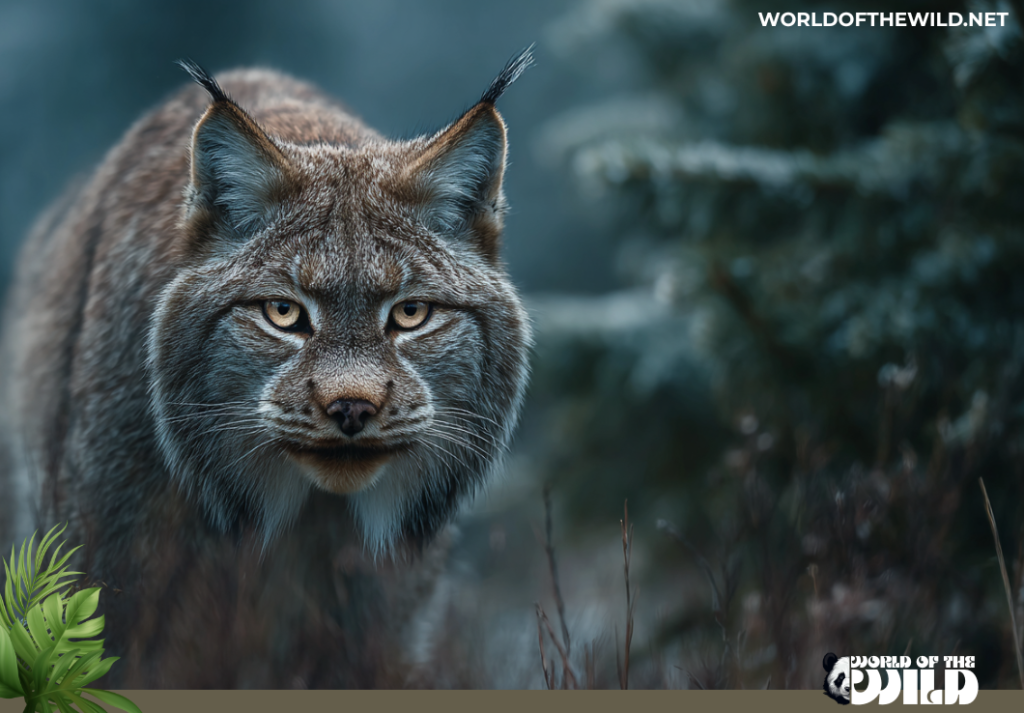
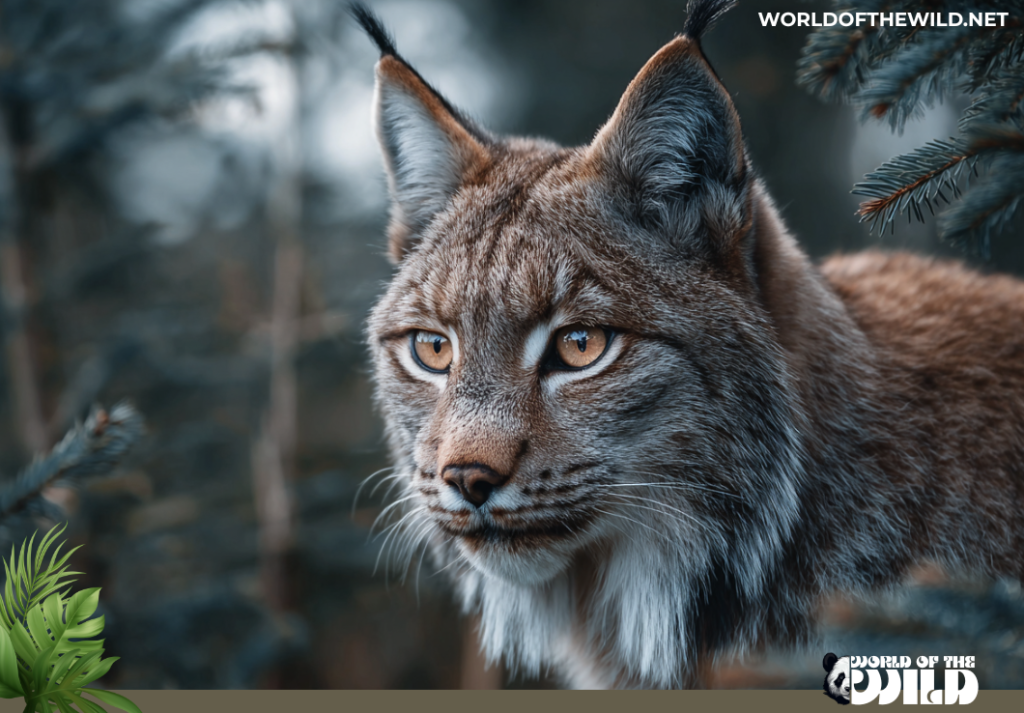
Perhaps the most iconic features are the long black ear tufts (up to one inch in length) that crown each triangular ear, and the broad facial ruff that frames the face in longer, pale fur — giving the lynx an almost wise, owl-like expression. The eyes are large, pale yellow to amber in color, with round pupils that expand dramatically in darkness. The paws, as mentioned, are enormous and heavily furred between the toes, functioning as built-in snowshoes and leaving tracks that can be deceptively large — sometimes resembling those of a mountain lion to the uninitiated.
Behavior
The Canadian Lynx is, above all else, a creature of solitude. Adults are largely solitary outside of the mating season, with each individual maintaining a well-defined home range that can span anywhere from 8 to over 300 square miles depending on prey availability and habitat quality. Males typically hold larger territories that may overlap with those of several females but rarely overlap with the territories of other males. Boundaries are marked through urine spraying, feces deposits, and scratch marks on trees.
Communication, while infrequent, can be surprisingly loud when it does occur. During mating season, lynx produce an array of eerie vocalizations — yowling, growling, hissing, and a haunting, almost human-like cry that can carry across vast distances. For most of the year, however, they are nearly silent, preferring to communicate through scent and body language.
Lynx are primarily crepuscular and nocturnal hunters, most active during the low-light hours of dawn and dusk, though in winter when snowshoe hare activity peaks at night, they adjust accordingly. Their hunting strategy relies almost entirely on stealth and patience rather than pursuit. A lynx will often stalk its prey to within a few yards before launching a sudden, decisive pounce — killing with a precise bite to the skull or back of the neck.
What makes the lynx particularly remarkable from a behavioral standpoint is its extraordinary dietary specialization. While many predators are opportunistic generalists, the Canadian Lynx has evolved to be almost entirely dependent on a single prey item: the snowshoe hare. This specialization is so complete that when hare populations crash — as they do on a roughly 8–11 year cycle — lynx populations crash shortly thereafter. When hares boom, lynx boom. This interdependence, tracked meticulously for centuries through Hudson’s Bay Company fur records dating back to the 1800s, is one of ecology’s most celebrated and studied phenomena.
Lynx also display remarkable navigational intelligence, capable of remembering the locations of successful hunting areas across enormous territories and returning to them seasonally. Young lynx engage in extensive exploratory dispersal that hones spatial memory and familiarity with landscape features.
Evolution
The evolutionary lineage of the lynx stretches back approximately 3.2 to 4 million years to a common ancestor shared with other members of the Felidae family. The genus Lynx is believed to have originated in Eurasia during the Pliocene epoch, with early forms spreading westward across the Northern Hemisphere as climates cooled and boreal habitats expanded.
The ancestor of the Canadian Lynx, often associated with Lynx issiodorensis — a larger ancestral lynx from Eurasia — crossed into North America via the Bering land bridge during the Pliocene or early Pleistocene, somewhere between 1.5 and 2.5 million years ago. Once established in North America, populations diverged and adapted to the specific ecological conditions of the boreal forest, leading to the highly specialized snowshoe hare predator we know today.
During the Pleistocene, lynx ranged much more broadly across North America, including into the southern United States, as colder climates pushed boreal habitats further south. As the last ice age waned approximately 10,000 years ago and warming temperatures drove the boreal belt northward, lynx populations contracted accordingly. This climatic tracking has continued into modern times, making the Canadian Lynx something of a living barometer for the health of northern forest ecosystems.
Fossil evidence and molecular phylogenetics together paint a picture of a lineage that has been exceptionally successful at occupying a narrow ecological niche — cold-climate, snow-adapted, hare-dependent predation — for millions of years. The oversized paws, dense insulating coat, and specialized sensory apparatus are not recent innovations but the product of deep evolutionary refinement.
Habitat
The Canadian Lynx is quintessentially a creature of the boreal forest — the vast, circumpolar belt of coniferous woodland that stretches across Canada, Alaska, and dips into the northern fringe of the contiguous United States. Within the United States, viable populations persist in parts of Montana, Idaho, Washington, Minnesota, and Maine, where suitable habitat fragments remain.
The lynx’s preferred environment is dense, mature coniferous and mixed forest dominated by spruce, fir, and pine, with a thick understory of shrubs that provides both cover for the lynx and habitat for snowshoe hares. It is not a creature of open spaces; it thrives where visibility is limited and the landscape is complex with fallen logs, dense brush, and varied topography that rewards an ambush predator.
Snow is not a hindrance to the lynx — it is a strategic advantage. The animal’s specialized paws allow it to hunt efficiently in deep, fluffy snow that immobilizes or slows competing predators like coyotes and bobcats. In fact, research has shown that the lynx’s competitive advantage over these species is directly tied to snow depth; where snow is shallow or absent, the lynx’s specialized adaptations provide little benefit, and it faces increased competition.
Elevation matters as well. In the mountainous terrain of the American West, lynx are found at mid-to-high elevations where deep snowpack persists well into spring and where dense subalpine forests provide the structural complexity they require. Home range sizes vary dramatically with prey density — in areas with abundant hares, a lynx may need only a small territory to meet its needs, while in lean years, it may wander hundreds of miles.
Diet
The Canadian Lynx is a dedicated carnivore, and one of the most specialized large predators in North America. Its dietary strategy is built almost entirely around a single prey species: the snowshoe hare (Lepus americanus). In most habitats and most years, snowshoe hares constitute anywhere from 75 to 90 percent of the lynx’s diet, and the metabolic demands of the average adult lynx — roughly one hare every one to two days — mean that the health of local hare populations is existentially important.
When hare numbers decline, lynx do not simply pivot to alternative prey with ease. They will consume grouse, ptarmigan, squirrels, voles, and other small mammals, and occasionally take larger prey such as white-tailed deer or caribou calves when opportunity presents itself. However, these alternatives cannot fully compensate for the caloric and nutritional loss when hares disappear, and during population crashes, lynx body condition deteriorates, reproduction declines, and individuals may starve or undertake massive dispersal journeys in search of hare-rich territories.
Hunting technique is a masterclass in patience. The lynx typically uses a stalk-and-ambush strategy, moving slowly and silently through dense cover until it is close enough for a short, decisive rush. It may also employ a sit-and-wait tactic at natural hare runways, remaining motionless for extended periods. The killing bite is typically delivered to the back of the skull or the nape of the neck — swift, efficient, and precise.
In winter, their superior adaptation to deep snow gives them a decided edge. Studies using tracking data have shown that lynx are significantly more successful hunters in deep snow conditions than competitors like the coyote, which sinks and struggles where the lynx glides.
Predators and Threats
In its natural environment, the adult Canadian Lynx has few genuine predators. Wolves, cougars (mountain lions), and occasionally wolverines have been documented killing lynx, but such events are relatively rare and typically involve young, injured, or nutritionally compromised individuals. The greatest natural threat to the lynx is not predation but starvation — particularly during the cyclic crashes of snowshoe hare populations.
The more significant and pressing threats are human-caused:
Habitat loss and fragmentation represent the most pervasive long-term threat. Industrial logging, road construction, and residential development fragment the contiguous boreal forest that lynx require, isolating populations and reducing genetic diversity. Roads in particular are deadly — vehicle collisions are a documented cause of lynx mortality across their range.
Climate change poses an increasingly serious threat to the species. As global temperatures rise, the southern boundary of reliable deep snowpack — the lynx’s competitive moat against other predators — is creeping northward. Warmer winters reduce snow depths, allowing generalist predators like coyotes and bobcats to expand into lynx territory and outcompete them. The boreal forest itself is being pushed northward, and its composition is changing.
Incidental trapping remains a concern in parts of the range where lynx are not directly targeted but may be caught in traps set for other furbearers such as bobcats or coyotes. In the United States, the listing of the lynx as a threatened species under the Endangered Species Act has prompted regulatory safeguards, but illegal and incidental trapping still occurs.
Prey base collapse, driven by habitat degradation or direct hare hunting by humans, compounds the vulnerability of lynx populations already stressed by climatic shifts.
Reproduction and Life Cycle
The Canadian Lynx’s reproductive cycle is, like so much of its biology, deeply intertwined with the availability of snowshoe hares. In years of hare abundance, females are well-nourished, reproduce reliably, and raise large litters. In lean years, reproduction may be partially or entirely suppressed — a remarkable physiological adaptation to resource scarcity.
Mating occurs from late February through March, when the winter forest suddenly comes alive with the eerie calls of searching adults. Males may travel great distances to locate receptive females and will engage in vocalizations and scent-marking to advertise their presence. Courtship is brief and intense, and females may mate with more than one male.
Gestation lasts approximately 63 to 70 days, after which a litter of typically 1 to 4 kittens (though litters of up to 8 have been recorded in exceptional years of hare abundance) is born in late May or early June. Births take place in a secluded den — often a hollow log, a rocky crevice, or dense brush pile — that provides warmth and protection.
Kittens are born with their eyes closed, covered in a soft, spotted coat that provides camouflage during the vulnerable early weeks. The mother provides all parental care; males play no role in raising offspring. Eyes open at around 10 to 17 days. Weaning begins at 5 months, but family groups remain together well into the fall and sometimes through the first winter, with young lynx learning critical hunting skills by accompanying their mother.
Sexual maturity is reached at approximately 21 to 23 months, and females typically give birth for the first time at around two years of age. In the wild, Canadian Lynx live an average of 10 to 12 years, though individuals up to 14 years old have been documented. In captivity, they may live into their late teens.
Population
The Canadian Lynx is classified as Least Concern on the IUCN Red List at the global level, reflecting the relatively stable and large populations found across the vast boreal forests of Canada and Alaska. Canada is home to the stronghold of the species, with an estimated 160,000 to 250,000 individuals distributed across the country’s northern forests, though these numbers fluctuate dramatically with the hare cycle.
In the United States, however, the picture is considerably more concerning. The U.S. Fish and Wildlife Service listed the contiguous United States population of Canadian Lynx as Threatened under the Endangered Species Act in 2000. Population numbers in the lower 48 states are small — likely numbering only in the hundreds across fragmented subpopulations in Montana, Idaho, Washington, Minnesota, and Maine — and these populations face mounting pressure from habitat degradation and climate change.
Population trends in Canada remain broadly stable but are subject to the dramatic oscillations of the hare cycle, which can cause lynx numbers to plummet by 80 to 90 percent in a matter of a few years before rebounding. The concern among conservationists is that as climate change disrupts snowpack reliability and the composition of boreal forests shifts, the long-term carrying capacity of even core Canadian habitats may decline. The southernmost populations in the United States are considered the most vulnerable and are of particular conservation concern, as their persistence depends on the maintenance of specific high-elevation, deep-snowpack habitats that are among the most climate-sensitive landscapes in North America.
Conclusion
The Canadian Lynx is more than just a beautiful and elusive predator — it is an ecological indicator species, a living thermometer for the health of the boreal north. Its intimate dependence on the snowshoe hare teaches us that in nature, no creature exists in isolation; every species is woven into a web of relationships that sustains or diminishes it. The lynx’s plight in the southern reaches of its range is a preview of what climate disruption can do to even the most resilient and ancient of evolutionary partnerships.
To protect the Canadian Lynx is to protect the integrity of entire forest ecosystems — the clean rivers, the carbon-sequestering trees, the countless other species that depend on the same habitats. It requires bold commitments to reducing carbon emissions, protecting old-growth boreal forest from industrial exploitation, and managing the landscapes where lynx and humans coexist.
The next time the temperature drops and fresh snow blankets the northern woods, somewhere out there a set of enormous, silent paws is moving through the darkness. The ghost of the northern forest is still out there. The question is whether we will do enough to ensure it always will be.
Quick Reference
| Field | Details |
|---|---|
| Scientific Name | Lynx canadensis |
| Diet Type | Carnivore (specialist predator) |
| Size | 31–39 inches (body length); approximately 2.6–3.25 feet |
| Weight | 11–30 pounds (females lighter; males heavier) |
| Region Found | Canada (widespread), Alaska (USA), northern contiguous United States (Montana, Idaho, Washington, Minnesota, Maine) |